
财务造假追责

Search documents
从“零散治理”向“系统治理”转变 上市公司严监管迈入新阶段
Shang Hai Zheng Quan Bao· 2026-01-25 18:51
Core Viewpoint - The regulatory environment for listed companies in China's capital market has entered a new phase of strict enforcement, with over 10 companies facing investigations or penalties in early 2026, signaling a "zero tolerance" approach to violations [1]. Group 1: Regulatory Actions and Trends - In 2025, more than 90 listed companies received administrative penalties, and 8 companies announced criminal judgments against executives for various violations, including fraud and insider trading [1][2]. - The shift from "scattered governance" to "systematic governance" is evident, with a focus on collaborative regulation involving judicial and administrative measures [1][2]. - The introduction of a comprehensive accountability system is highlighted, where not only top executives but also ordinary employees and external accomplices are held responsible for financial fraud [4][5]. Group 2: Criminal Prosecutions and Penalties - Significant criminal penalties have been imposed, such as a 37 million yuan fine on Zijing Storage and prison sentences for 10 executives ranging from 2.5 to 7.5 years [2]. - The case of Kangde Xin, which involved a seven-year systematic fraud, resulted in a total fine of 410 million yuan and lengthy prison sentences for key executives [2]. - The regulatory framework now includes severe penalties for accomplices in fraud cases, as seen in the cases of Yuebo Power and ST Guangdao, where external personnel were fined for their involvement [4][5]. Group 3: Market Ecosystem and Compliance - The regulatory approach aims to reshape the credit infrastructure of the capital market through a combination of administrative enforcement, criminal accountability, and civil recovery [6]. - The introduction of a whistleblower system is expected to enhance internal compliance and make fraudulent activities more difficult to conceal [6]. - The upcoming implementation of the "most stringent delisting rules" is anticipated to increase the number of delisting cases, reinforcing the message that delisting does not exempt companies from accountability [7].
4.3万余名投资者获赔7.7亿余元!金通灵特别代表人诉讼案作出先行判决
证券时报· 2025-12-31 13:44
Core Viewpoint - The article discusses the recent ruling by the Nanjing Intermediate Court regarding the special representative lawsuit against Jintongling Securities, which resulted in over 43,000 investors receiving compensation exceeding 770 million yuan, highlighting the increasing application of special representative lawsuits in China's capital market [1][2]. Group 1: Legal Developments - The Nanjing Intermediate Court's ruling is a preliminary judgment that establishes the liability of the listed company, with further judgments on the responsibilities of the company's executives and related intermediaries to follow [2]. - The special representative lawsuit system is recognized as a significant method for holding financial fraud accountable, enhancing the cost of violations in the capital market, and protecting the rights of small and medium investors [3][4]. Group 2: Regulatory Context - The recent ruling aligns with the new "National Nine Articles," which aims to strengthen the regulatory framework against financial fraud and improve the accountability mechanisms in the capital market [4][5]. - The China Securities Regulatory Commission (CSRC) has adopted a "zero tolerance" approach towards financial fraud, increasing enforcement efforts and enhancing civil liability support mechanisms, including the application of special representative lawsuits [4][5]. Group 3: Case Examples - The Jintongling case involved six years of financial fraud, with the company inflating revenue by over 1.3 billion yuan and profits by 500 million yuan, currently undergoing bankruptcy restructuring [5]. - Other notable cases include Kangmei Pharmaceutical and Meishang Ecological, which are also significant financial fraud cases under special representative lawsuits [5]. Group 4: Investor Protection Initiatives - The China Securities Investor Services Center plays an active role in representing investors in lawsuits, focusing on establishing suitable plaintiffs, preparing legal arguments, and ensuring effective communication with represented investors [6][7]. - The Supreme Court and CSRC have emphasized the importance of supporting investor protection institutions in ordinary representative lawsuits, enhancing the collaborative effect of both special and ordinary representative lawsuits in safeguarding investor rights [7]. Group 5: Future Directions - There is a call for timely modifications to the judicial interpretations of representative lawsuits to refine the conditions for initiating special representative lawsuits and improve the operational mechanisms [10]. - The China Securities Investor Services Center plans to update its business rules to enhance the selection criteria and mechanisms for representative lawsuits, ensuring a solid foundation for the regular advancement of these lawsuits [10].



皮海洲:让“造假1年就判刑”成为一种常态
Xin Lang Cai Jing· 2025-08-04 02:53
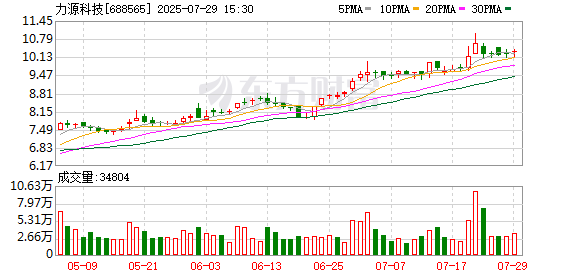
Core Viewpoint - The case of Liyuan Technology's actual controller, Shen Wanzhong, being sentenced to one year in prison for financial fraud within a year is a rare occurrence in the A-share market, highlighting increased regulatory scrutiny and enforcement against financial misconduct [1][2][3]. Group 1: Financial Fraud Case Details - Liyuan Technology's financial fraud involved prematurely recognizing the progress of 11 water treatment projects, resulting in inflated revenue and profit figures. The 2021 annual report overstated revenue by 104 million yuan and profit by 27 million yuan, accounting for 24.71% and 68.23% of the reported amounts, respectively [1]. - Shen Wanzhong, as the chairman and general manager at the time, was held accountable for both administrative and criminal responsibilities due to his role in the fraud [1][3]. Group 2: Regulatory Environment - The rapid response from regulatory bodies, with the Zhejiang Securities Regulatory Bureau issuing a warning letter within five months of the initial report of false records, indicates improved regulatory efficiency [3]. - The case exemplifies a shift in the enforcement landscape, where financial fraud can lead to criminal charges without the need for prolonged periods of misconduct, contrasting with previous norms that often required multiple years of fraud for significant penalties [2][4]. Group 3: Implications for the Industry - The hope is that the precedent set by this case will lead to more companies and responsible individuals facing similar consequences for financial fraud, thereby enhancing the deterrent effect against such behaviors in the future [4].
这家公司实控人被判刑!财务造假刑事追责力度明显提升
Zheng Quan Ri Bao Zhi Sheng· 2025-07-29 14:08
Core Viewpoint - The recent criminal sentencing of the actual controller of Liyuan Technology highlights the increasing severity of penalties for financial fraud in China's capital markets, reflecting a broader trend of stricter enforcement against financial misconduct [2][6]. Group 1: Company Overview - Liyuan Technology announced that its actual controller, Shen Wanzhong, was sentenced to one year in prison with a one and a half year probation and fined 3.3 million yuan for the crime of illegally disclosing important information [2]. - The sentencing is linked to a financial fraud case from 2021, where the company was found to have inflated revenue and profits through premature recognition of project progress [4][5]. - Following the sentencing, Shen Wanzhong resigned from his positions as chairman and director of the company, although he retains shareholder rights [5]. Group 2: Financial Misconduct Details - In 2021, Liyuan Technology inflated its revenue by 15.42 million yuan in the first half, 21.68 million yuan in the third quarter, and over 104 million yuan for the entire year, representing significant percentages of the reported figures [4]. - The company faced administrative penalties from the Zhejiang Securities Regulatory Bureau, including a fine of 10 million yuan for the financial misconduct [4][5]. Group 3: Industry Trends - There has been a notable increase in cases where companies and their executives face criminal charges for financial fraud, indicating a tougher regulatory environment [6][7]. - Recent cases include multiple companies, such as Jinjiao Port and Ruisi Kanda, where executives have been arrested for similar offenses, reflecting a systemic crackdown on financial misconduct [7][8]. - The Chinese government has intensified its efforts to combat financial fraud, with new regulations and guidelines aimed at enhancing accountability and deterring future violations [9][10].
多家中介机构收千万罚单
第一财经· 2025-06-30 14:16
Core Viewpoint - The regulatory environment regarding financial fraud is becoming increasingly stringent, with a focus on holding intermediary institutions accountable alongside the companies involved in fraudulent activities [1][3][7]. Summary by Sections Regulatory Actions - The China Securities Regulatory Commission (CSRC) has recently issued a series of administrative penalties targeting intermediary institutions, including several accounting firms such as Da Xin, Zhong Xi, and Zhong Shun [3][4]. - These penalties are primarily due to the failure of these firms to perform due diligence in their auditing processes, resulting in false records and significant omissions in their reports [3][4]. Penalty Statistics - As of June 30, 2025, the CSRC and stock exchanges have disclosed 118 penalty orders involving nearly 40 accounting firms, with 16 firms facing administrative penalties [6]. - The total amount of fines reached 197 million yuan, representing an approximate 94% increase compared to the same period last year [6][5]. Notable Cases - Da Xin was penalized for issuing false audit reports for companies like Xingxing Technology and Guanghui Logistics, with total fines amounting to 17.99 million yuan [3][4]. - Zhong Shun and Zhong Xi also faced penalties for their inadequate auditing practices, with fines of 3.51 million yuan and 500,000 yuan respectively [4]. Trends in Penalties - The number of penalties and the total amount of fines imposed on accounting firms have significantly increased compared to the previous year, with a 45% rise in the number of firms penalized [6]. - Since the implementation of the revised Accounting Law on July 1, 2024, the total fines against accounting firms for involvement in financial fraud cases have reached 775 million yuan, a 3.75-fold increase from the previous period [6]. Enforcement Strengthening - The average penalty multiplier for accounting firms has risen from 1.66 to 2.45, indicating a tougher stance on financial fraud [7]. - The regulatory authorities have emphasized a "zero tolerance" policy towards financial fraud, with a comprehensive approach to hold all parties involved accountable, including issuers, controlling shareholders, and intermediary institutions [7][8].

整理:昨日今晨重要新闻汇总(6月28日)
news flash· 2025-06-28 00:22
Domestic News - The 16th meeting of the 14th National People's Congress Standing Committee concluded, passing the newly revised Public Security Administration Punishment Law and the Anti-Unfair Competition Law [2] - The Ministry of Commerce spokesperson stated that China will approve export applications for controlled items that meet conditions, while the U.S. will correspondingly lift a series of restrictive measures against China [2] International News - Trump announced the cessation of all work related to lifting sanctions on Iran, indicating potential airstrikes if Iran continues its enrichment activities [3] - The U.S. Senate rejected a proposal to limit Trump's military action authority against Iran [3] - Trump has terminated all trade negotiations with Canada [3] - The EU and the U.S. are reportedly confident in reaching a tariff agreement before the end of July [3] - U.S. Treasury Secretary Mnuchin suggested that trade negotiations may conclude before September, hinting at a possible extension of the negotiation deadline [3] Economic Indicators - The central bank held its second-quarter meeting, recommending an increase in the intensity of monetary policy adjustments [4] - The China Securities Regulatory Commission is rigorously investigating financial fraud cases, holding accomplices accountable for the first time [4] - The Shanghai and Shenzhen stock exchanges plan to adjust the price fluctuation limit for risk-warning stocks on the main board to 10% [4] - From January to May, the total profit of large-scale industrial enterprises in China reached 27,204.3 billion yuan, a year-on-year decrease of 1.1% [4] - From January to May, the total operating revenue of state-owned and state-controlled enterprises fell by 0.1% year-on-year, with total profits down by 2.8% [4] Market Performance - The S&P 500 and Nasdaq indices both reached new highs [4] - OPEC+ is considering a significant increase in oil production [4] - Federal Reserve's Kashkari expects two rate cuts starting in September, with tariff impacts becoming evident [4] - Russia plans to reduce military spending and is preparing for new negotiations with Ukraine, remaining open to talks with the U.S. [4] - U.S. consumer spending unexpectedly declined in May, with moderate inflation rising, leading traders to increase bets on three rate cuts by the Federal Reserve in 2025 [4]
6月27日重要资讯一览
Zheng Quan Shi Bao Wang· 2025-06-27 14:05
Group 1 - The People's Bank of China suggested increasing the intensity of monetary policy adjustments to support technological innovation and boost consumption, while focusing on stabilizing the real estate market [2] - The China Securities Regulatory Commission (CSRC) emphasized strict enforcement against financial fraud, aiming to dismantle the fraud ecosystem while offering leniency for those who cooperate with investigations [2] - The Shanghai and Shenzhen Stock Exchanges proposed to adjust the price fluctuation limit for risk warning stocks from 5% to 10%, aligning it with other main board stocks [3] Group 2 - From January to May, state-owned enterprises reported a slight decrease in total operating revenue by 0.1% year-on-year, totaling 3,280.625 billion yuan, and a profit decline of 2.8%, amounting to 165.145 billion yuan [3] - Shenzhen Dapu Microelectronics Co., Ltd. had its initial public offering application accepted by the Shenzhen Stock Exchange, marking it as the first unprofitable company to be accepted on the ChiNext board [3] Group 3 - Xiaomi's automotive division reported that the order volume for the Xiaomi YU7 exceeded 240,000 units within 18 hours of sale [5] - Qinan Co. is planning to acquire 99% of Yigao Company, leading to a stock suspension starting June 30 [5] - Vanke expressed confidence in its ability to address challenges and is committed to resolving due debts [5] - Tianfeng Securities confirmed that its business operations are normal and there are no undisclosed significant matters [5] - Zhongguang Fanglei reported no significant changes in its operational situation or external environment [5] - Defu Technology's subsidiary signed a designated agreement for lithium battery copper foil products [5] - Ouma Software's controlling shareholder is planning to transfer company shares, which may lead to a change in control [5] - Zhongrun Resources intends to change its stock name to "Zhaojin Gold" [5] - Shijia Photon is planning to acquire control of Fuke Xima, leading to a stock suspension starting June 30 [5] - Dongyue Silicon Material's affiliated company has had its application for listing on the Sci-Tech Innovation Board accepted [5]
最高法、证监会:依法加大对财务造假等犯罪行为的追责力度
news flash· 2025-05-15 08:39
Group 1 - The Supreme Court and the China Securities Regulatory Commission (CSRC) issued guidelines to strictly enforce fair law enforcement and judicial services to support the high-quality development of the capital market [1] - The guidelines emphasize the prevention and resolution of risks in the capital market, supporting the risk disposal work of securities, futures, and fund management institutions [1] - There is a focus on handling cases related to listed companies' risk resolution, private fund risk resolution, bond defaults, and illegal securities activities, with judicial safeguards provided under relevant laws [1] Group 2 - The guidelines call for increased accountability for financial fraud and strengthen the guidance and supervision of local people's courts, ensuring strict standards in the trial of financial fraud cases [1] - The aim is to improve trial efficiency and promptly punish illegal activities, with a focus on significant typical cases to enhance deterrent effects [1] - The guidelines also stress the importance of combating illegal financial activities in the securities issuance sector to protect public property [1] Group 3 - In the bankruptcy liquidation and reorganization processes of securities, futures, and fund management institutions, there will be enhanced communication and coordination with regulatory bodies and local governments [1] - The guidelines support regulatory authorities in taking necessary measures regarding the assets and operations of management institutions during risk disposal [1] - There is a unified approach to handling cross-regional economic crimes in the private fund sector, ensuring fair compensation for affected investors and consistent standards in case handling [1]