
资本市场财务造假综合惩防体系

Search documents
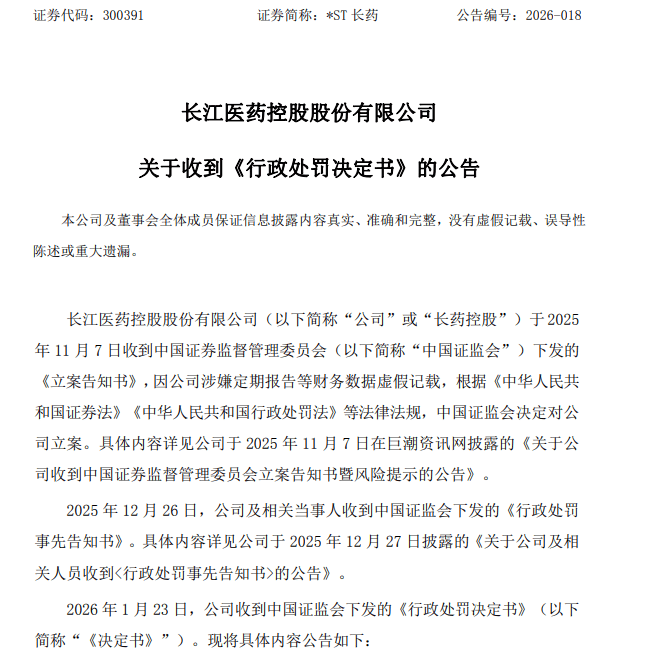
财务造假!300391,强制退市!
Sou Hu Cai Jing· 2026-01-24 04:16
Group 1 - *ST Changyao has been found to have committed violations related to financial reporting, including the acquisition of 52.75% of Hubei Changjiang Star Pharmaceutical Co., Ltd. in November 2020, which was subsequently consolidated into its financial statements [2] - From 2021 to 2023, subsidiaries of Changjiang Star fabricated inventory and sales documents, leading to inflated revenues of 215.32 million, 283.74 million, and 233.63 million yuan for the respective years, representing 9.12%, 17.57%, and 19.51% of reported revenues [3] - The inflated total profits for the same years were 56.40 million, 63.38 million, and 43.71 million yuan, accounting for 35.62%, 88.23%, and 6.42% of the reported total profits [3] Group 2 - The company has been warned that its financial reporting from 2021 to 2023 contains false records, which may lead to the termination of its stock listing under the revised rules of the Growth Enterprise Market [3] - As of January 23, *ST Changyao's stock has experienced a continuous rise, with a total increase of 109.09%, reaching a price of 0.92 yuan per share and a market capitalization of 322 million yuan [4] Group 3 - The current regulatory environment is increasingly focused on combating financial fraud, with multiple departments collaborating to strengthen oversight and enforcement against such practices [6] - A recent meeting highlighted a shift in regulatory strategy from reactive punishment to proactive prevention and comprehensive accountability across all parties involved, including major shareholders and intermediaries [6] - The establishment of a comprehensive prevention and punishment system aims to enhance the integrity of the capital market, ensuring that fraudulent activities are met with severe consequences and that investors have avenues for compensation [6]


证监会两年内处罚会计所80家次 财务造假综合惩防体系震慑力持续升级
Zhong Guo Jing Ying Bao· 2026-01-17 03:45
Core Viewpoint - The regulatory scrutiny on accounting firms in China's capital market has intensified significantly, with the China Securities Regulatory Commission (CSRC) imposing substantial penalties to combat financial fraud and enhance market integrity [1][5][6]. Regulatory Actions - In 2024 and 2025, the CSRC penalized a total of 80 accounting firms and 209 individuals, with total fines amounting to 1.073 billion yuan (approximately 10.73 billion) [1]. - The penalties included 30 instances in 2024, totaling 599 million yuan, and 50 instances in 2025, totaling 474 million yuan [1][2]. - The frequency and severity of penalties have increased, with a 66.67% rise in the number of firms penalized in 2025 compared to 2024 [3]. Specific Cases - In September 2024, the CSRC issued a record fine of 325 million yuan against PwC Zhongtian for its audit of Evergrande, which was nearly equivalent to the total fines imposed on over 50 firms in the previous three years [2]. - In December 2025, Yongtuo Accounting Firm became the first firm banned from providing securities services since the implementation of the securities audit registration system in 2020, with a fine of 65.28 million yuan [3]. Individual Accountability - In 2024, 77 individuals were penalized, with fines totaling 29.1 million yuan, and 7 individuals faced bans from the securities market for 3 to 7 years [2]. - In 2025, the number of penalized individuals rose to 132, with total fines of 46.155 million yuan, marking increases of 71.43% and 58.61% respectively [3]. Systemic Improvements - Experts emphasize that strengthening accountability for accounting firms is crucial for building a comprehensive system to prevent financial fraud in the capital market [5][6]. - The CSRC's approach includes a "zero tolerance" policy towards violations, aiming to enhance the quality of audits and ensure the reliability of financial information [6]. Recommendations for Future Actions - Suggestions include implementing a "double penalty" system that holds both firms and individual auditors accountable, increasing fines for serious violations, and establishing a mechanism linking personal integrity records to professional qualifications [7][8]. - There is a call for improved collaboration among regulatory bodies to create a comprehensive accountability system that integrates administrative, civil, and criminal measures against accounting firms [8][9].
一线“哨兵”监管枢纽!上交所资本市场财务造假惩防体系独特作用凸显
Zhong Guo Jing Ying Bao· 2026-01-13 05:55
Core Viewpoint - The Shanghai Stock Exchange (SSE) is intensifying its crackdown on financial fraud, emphasizing the importance of restoring market integrity and pricing logic through strict enforcement measures [1][6]. Group 1: Actions Against Financial Fraud - In 2025, the SSE publicly condemned 23 cases of severe financial fraud [2][4]. - Six companies faced mandatory delisting due to significant violations, with *ST Suwu being a notable example, having inflated revenue by 1.771 billion and costs by 1.695 billion from 2020 to 2023 [2][3]. - The SSE is pursuing accountability for nine delisted companies, ensuring that penalties are enforced even after delisting [3][5]. Group 2: Comprehensive Punishment System - The SSE is implementing a comprehensive punishment system that includes administrative penalties, civil compensation, and criminal accountability for financial fraud [5][6]. - For companies not facing mandatory delisting, the SSE has issued risk warnings (ST treatment) to 14 firms involved in financial fraud, promoting timely disciplinary actions [4][6]. Group 3: Role of the SSE in Market Regulation - The SSE acts as a frontline regulator and a key hub for market oversight, utilizing advanced technology and real-time monitoring to detect anomalies in company disclosures and trading behaviors [6][7]. - The SSE has sent out 55 regulatory letters and requested 29 corrective announcements from companies between December 1 and December 26, 2025, highlighting its proactive approach [7]. - The SSE's disciplinary actions serve as critical evidence in civil lawsuits and support criminal prosecutions, creating a cohesive enforcement chain [7].
从四方面完善制度严惩财务造假公司
Guo Ji Jin Rong Bao· 2026-01-12 14:41
Core Viewpoint - The recent meeting held by the China Securities Regulatory Commission (CSRC) highlights the serious issue of financial fraud among listed companies, indicating a need for stricter enforcement and penalties to protect investors and restore confidence in the capital market [1][2]. Group 1: Financial Fraud Characteristics - Financial fraud in listed companies is increasingly occurring earlier, with some companies engaging in fraudulent activities in their first year of listing [2]. - The duration of financial fraud is extending, with some companies committing fraud for four to five consecutive years [2]. - The amounts involved in financial fraud are escalating, with cases now involving hundreds of millions or even billions, reflecting a significant increase from earlier instances [2]. - The motivations for financial fraud are becoming more diverse, including evading delisting, meeting performance targets, satisfying financing needs, and stabilizing stock prices [2]. Group 2: Regulatory Actions and Penalties - The CSRC has intensified its crackdown on financial fraud, with 159 cases investigated since 2024, resulting in penalties totaling 8.1 billion yuan [2]. - Serious actions have been taken against 43 cases involving major shareholders or actual controllers, with 112 cases referred to law enforcement for criminal investigation, and 18 companies facing mandatory delisting [2]. - Despite these measures, the persistence of financial fraud suggests that the current penalties may still be insufficient, indicating a need for further regulatory improvements [3]. Group 3: Recommendations for Improvement - A "fraud equals delisting" principle should be established, mandating immediate delisting for any company found guilty of fraud, regardless of the duration or amount involved [3]. - All financial fraud cases should be subject to representative litigation, allowing investors to participate in lawsuits without needing to opt-in actively, thereby increasing the likelihood of compensation [3]. - Full compensation for investor losses must be ensured, addressing past failures where affected investors did not receive adequate restitution [3]. - All parties involved in fraudulent activities, including major shareholders and intermediaries, should bear joint liability for compensation, with provisions for freezing and auctioning shares to cover investor losses if necessary [4].
行业研究|行业周报|投资银行业与经纪业:政策持续净化资本市场生态,建议重视板块业绩高增长预期-20260112
Changjiang Securities· 2026-01-12 08:12
Investment Rating - The report maintains a "Positive" investment rating for the non-bank financial sector [7] Core Insights - The non-bank sector has shown strong performance this week, with brokers experiencing increased trading activity while maintaining historical highs. The insurance sector is expected to see improved long-term ROE and valuation recovery, indicating a rising cost-effectiveness for overall allocation [2][4] - Recommendations include stable profit growth and dividend rates for Jiangsu Jinzu, high dividend yield for China Ping An, and companies with strong business models and market positions like China Pacific Insurance. Additional recommendations include New China Life, China Life, Hong Kong Stock Exchange, CITIC Securities, Dongfang Caifu, Tonghuashun, and Jiufang Zhitu Holdings based on performance elasticity and valuation levels [4] Market Performance - The non-bank financial index increased by 2.6% this week, with a year-to-date performance of 2.6%, ranking 21 out of 31 sectors. The average daily trading volume in the two markets reached 28,519.51 billion yuan, up 34.00% week-on-week, with a daily turnover rate of 2.77%, up 61.14 basis points [5][15] - The market has seen a recovery in trading activity, with the Shanghai Composite Index rising by 5.11% and the bond index declining by 0.23%. Long-term interest rates have increased, with the 10-year government bond yield rising by 3.09 basis points to 1.8782% [5][39] Insurance Sector Overview - In November 2025, the cumulative premium income reached 57,629 billion yuan, a year-on-year increase of 7.56%. Life insurance premiums increased by 9.06%, while property insurance premiums rose by 3.88% [19][20] - The total assets of insurance companies reached 40.65 trillion yuan, with life insurance companies holding 35.75 trillion yuan, reflecting a stable asset allocation with a slight decrease in deposit proportions and an increase in bond and equity fund allocations [25][26] Brokerage and Investment Business - The brokerage business has seen a recovery in trading volumes, with a two-market average daily trading volume of 28,519.51 billion yuan, indicating a gradual recovery in profitability as commission rates stabilize [40] - The investment business has also rebounded, with the Shanghai Composite Index increasing by 2.79% and the ChiNext Index by 3.89%. The proportion of equity investments in brokerage assets is approximately 10%-30%, while bond investments account for 70%-90% [44] Financing Activities - In December 2025, equity financing reached 663.12 billion yuan, a 30.9% increase, while bond financing totaled 7.34 trillion yuan, up 4.0%. This indicates a positive trend in financing activities, with expectations for increased stock underwriting in the future [51] - The asset management sector saw a rebound in new issuance, with 61.14 billion units issued in December, a 39.0% increase compared to previous months [53]

2024年以来累计查办资本市场财务造假案件159起
Jing Ji Ri Bao· 2026-01-11 00:53
Core Viewpoint - The Chinese capital market is intensifying efforts to combat financial fraud, with multiple departments collaborating to establish a comprehensive prevention and punishment system, signaling a strong commitment to eliminate fraudulent practices [1][2]. Group 1: Regulatory Actions - Since July 2024, the regulatory environment has become more stringent, with the China Securities Regulatory Commission (CSRC) handling 159 financial fraud cases and imposing fines totaling 8.1 billion yuan [2]. - The regulatory framework has shifted from a single-agency approach to a collaborative effort involving 12 ministries, enhancing the overall enforcement capability [3]. - The comprehensive punishment and prevention system is evolving from reactive measures to proactive governance, focusing on prevention, real-time monitoring, and post-incident penalties [3][6]. Group 2: Accountability and Enforcement - The accountability framework has expanded to include not only listed companies but also major shareholders, actual controllers, intermediary institutions, and third-party collaborators, addressing the issue of low penalties for violations [3][4]. - There is a clear emphasis on a multi-faceted accountability approach, ensuring that all parties involved in financial fraud are held responsible, thereby enhancing market fairness [4]. - The regulatory bodies are actively dismantling the notion of escaping consequences through delisting or restructuring, as evidenced by the forced delisting of 18 companies involved in severe fraud [4][5]. Group 3: Systemic Improvements - The ongoing development of the comprehensive prevention and punishment system is crucial for the healthy operation of the capital market and reflects a significant shift in governance philosophy [3][7]. - Future efforts will focus on enhancing legal frameworks, improving administrative and criminal coordination, and reinforcing internal controls within companies to prevent fraud at the source [6][7]. - The integration of technology, such as big data and artificial intelligence, is expected to improve the detection and prevention of fraudulent activities, facilitating early intervention [6].
筑牢不敢假、不能假、不想假防线 2024年以来累计查办资本市场财务造假案件159起
Jing Ji Ri Bao· 2026-01-10 21:58
Core Viewpoint - The Chinese capital market is intensifying efforts to combat financial fraud, with multiple departments collaborating to establish a comprehensive prevention and punishment system, signaling a strong commitment to eliminate fraudulent practices [1][2]. Regulatory Collaboration - Financial fraud is described as a cancer in the capital market, undermining the authenticity of information disclosure and harming the rights of small investors. Since July 2024, regulatory enforcement has significantly increased, with the China Securities Regulatory Commission (CSRC) handling 159 cases of financial fraud and imposing fines totaling 8.1 billion yuan [2][3]. Systematic Enforcement - The regulatory approach has evolved from isolated actions by the CSRC to a coordinated effort involving 12 ministries, enhancing the overall regulatory force. The punishment system has shifted from post-incident penalties to a comprehensive governance model that includes prevention, monitoring, and punishment [3][4]. Comprehensive Accountability - The crackdown on financial fraud involves a full-chain accountability approach, targeting not only listed companies but also major shareholders, actual controllers, intermediary institutions, and third-party collaborators. This aims to address the low cost of illegal activities and high cost of rights protection for investors [4][5]. Proactive Prevention - The fight against financial fraud is characterized as a long-term battle for market confidence and financial security, requiring both high-pressure deterrence and source prevention. The construction of a comprehensive prevention and punishment system is entering a critical phase [5][6]. Legal and Regulatory Enhancements - There is a need to improve laws and regulations to ensure that enforcement is based on clear legal frameworks. This includes enhancing administrative, criminal, and civil collaboration to effectively combat financial fraud and the complicity of third parties [6][7]. High-Quality Market Development - The development of a high-quality capital market relies on high-quality listed companies and a transparent information environment. The comprehensive prevention and punishment system aims to ensure that fraud is severely punished, accomplices are held accountable, and investors have avenues for compensation, thereby stabilizing market expectations [7][8].
12部门少见同框!证监会新年首会吹响围剿财务造假集结号
Sou Hu Cai Jing· 2026-01-07 17:11
Core Viewpoint - The Chinese Securities Regulatory Commission (CSRC) is intensifying efforts to combat financial fraud in the capital market through a comprehensive and collaborative approach involving multiple government departments [1][3]. Group 1: High-Level Meeting - The meeting, chaired by CSRC Chairman Wu Qing, included leaders from 11 key departments such as the Supreme People's Court and the Ministry of Public Security, marking a significant cross-departmental initiative to address financial fraud [3]. - The meeting emphasized a problem-oriented and systematic approach to build a comprehensive prevention and punishment system against financial fraud [3]. Group 2: Achievements in Regulation - Since 2024, the CSRC has handled 159 financial fraud cases, resulting in 111 administrative penalties totaling 8.1 billion yuan [5]. - The regulatory framework focuses on both punishing primary offenders and holding accomplices accountable, with 43 major shareholders and actual controllers facing serious consequences [5]. Group 3: Multi-Dimensional Accountability - The comprehensive prevention and punishment system aims to break the limitations of single-department operations, creating a multi-dimensional accountability network that includes administrative enforcement, criminal penalties, civil compensation, and integrity constraints [7]. - The CSRC has established a new norm of "early detection, quick punishment, and strict correction" in administrative enforcement [7]. Group 4: Targeting the Fraud Ecosystem - The regulatory efforts have expanded the scope of enforcement from just listed companies to the entire fraud benefit chain, addressing the complex ecosystem of financial fraud involving insiders, upstream and downstream partners, and intermediary institutions [9]. - The case of Yuebo Power in 2025 set a precedent for holding third-party accomplices accountable, with fines imposed on companies that facilitated fraudulent activities [9]. Group 5: Cross-Departmental Collaboration - Effective operation of the comprehensive prevention and punishment system relies on clear roles and close cooperation among various departments, including the CSRC, Supreme People's Court, Ministry of Public Security, and others [11]. Group 6: Investor Protection Enhancements - The investor protection mechanism is becoming a key focus, with initiatives such as supporting representative lawsuits and encouraging proactive compensation from major shareholders of companies at risk of significant violations [12]. - Since 2024, a representative lawsuit resulted in compensation of over 280 million yuan for 7,195 investors, showcasing the effectiveness of the new legal framework [12]. Group 7: Long-Term Mechanism - The goal of the comprehensive prevention and punishment system is not only to address current issues but also to establish a long-term mechanism for the healthy development of the capital market [14]. - The principle of "no exemption after delisting" has been firmly established, with investigations initiated against 91 delisted companies since 2024 [14]. Group 8: Market Ecology Purification - The ongoing comprehensive prevention and punishment actions are seen as crucial for the long-term health of the capital market, promoting a fair competitive environment for quality companies [15]. - The collaboration among departments is interpreted as a necessary step for the comprehensive reform of the Chinese capital market, enhancing its international competitiveness [15].
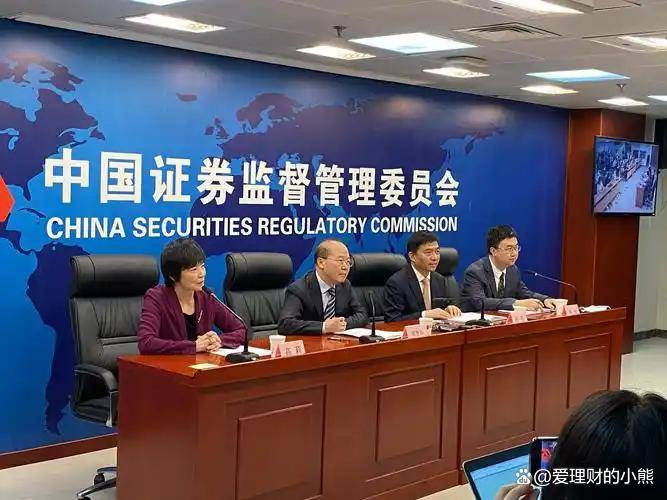
扎牢惩防体系制度篱笆 财务造假打击力度再升级
Zheng Quan Shi Bao Wang· 2026-01-07 08:55
Core Viewpoint - Regulatory authorities are intensifying their crackdown on financial fraud in the capital market, signaling a "zero tolerance" approach with severe penalties for major violations [1][2][4]. Group 1: Regulatory Framework and Actions - A comprehensive punishment and prevention system against financial fraud is being established, involving 12 regulatory departments including the CSRC, Supreme People's Court, and Ministry of Public Security [2][4]. - Since 2024, the CSRC has handled 159 financial fraud cases, resulting in 111 administrative penalties totaling 8.1 billion yuan [2]. - The regulatory focus has shifted from post-incident investigations to a balanced approach that includes pre-compliance mechanisms, real-time monitoring, and strict post-incident accountability [1][4]. Group 2: Enforcement and Penalties - The crackdown includes penalties for both companies and individuals involved in financial fraud, with some facing market bans for up to 10 years [3]. - A total of 18 companies have faced forced delisting due to severe fraud, and investigations are ongoing for 91 delisted companies to prevent evasion of accountability [2][4]. - The regulatory framework aims to create a strong deterrent against financial fraud, enhancing the overall market ecosystem [3]. Group 3: Investor Protection and Governance - The CSRC is committed to enhancing investor protection through measures such as supporting representative lawsuits, which allow investors to collectively pursue claims [7][8]. - A new round of corporate governance initiatives will focus on improving transparency, board independence, and internal control systems to bolster investor confidence [6][8]. - The shift in investor protection from passive compensation to proactive rights protection reflects a significant evolution in governance philosophy within the capital market [8].
首席点评:中韩举行会谈
Shen Yin Wan Guo Qi Huo· 2026-01-06 06:08
1. Report Industry Investment Rating - The report provides a bias assessment for various varieties, with some considered bullish (2) and others bearish (2). Bullish varieties include multiple stock indices (IH, IF, IC, IM), bonds (TF, TS), rubber, rebar, hot - rolled coils, iron ore, silver, copper, lithium carbonate, cotton, sugar, corn; bearish varieties include crude oil, methanol, apple, and container shipping to Europe [5]. 2. Core Viewpoints of the Report - **Macroeconomic Outlook**: The global economy shows signs of change, with the US economy facing challenges such as a decline in the ISM manufacturing index, while China's economy has positive signals like the improvement of manufacturing PMI. The Fed's expected interest - rate cuts and global easing monetary policies will have an impact on various asset prices [1][11]. - **Asset Price Trends**: Precious metals are expected to have a long - term upward trend due to factors such as inflation relief, weak employment, and supply - demand gaps. Copper prices are at a high level, affected by factors such as supply shortages and market sentiment. Oil prices are expected to be bearish in the short term, but the global oil market supply - demand balance will not change significantly in the next 12 months [2][3][13]. - **A - share Market**: The A - share market is expected to form a long - term and stable upward trend under the influence of supply - side reform, RMB appreciation, capital inflows, and policy support [10]. 3. Summary of Each Section 3.1 Daily Main News 3.1.1 International News - On January 5th, China and South Korea signed a memorandum of understanding on cooperation in safeguarding children's rights and well - being, aiming to strengthen exchanges and cooperation in the field of children's development [6]. 3.1.2 Domestic News - The national parenting subsidy in 2026 is open for application starting from January 5th. As of now, 31 provinces have issued parenting subsidies in 2025, with over 24 million people receiving them and a subsidy issuance rate of about 80% [7]. 3.1.3 Industry News - The China Securities Regulatory Commission held a symposium on promoting the cross - departmental work of the comprehensive prevention and control system for financial fraud in the capital market, emphasizing the need to improve the system, strengthen coordination, and combat financial fraud [8]. 3.2 Overseas Daily Earnings - The report provides the daily earnings data of various overseas assets on January 4th and 5th, including stock indices (S&P 500, C STOXX50, FTSE China A50 futures), the US dollar index, oil prices (ICE Brent crude oil), precious metals (London gold, London silver), and other commodities. Most assets showed an upward trend [9]. 3.3 Morning Comments on Major Varieties 3.3.1 Financial - **Stock Indices**: US stock indices rose, and the A - share market also increased significantly. It is expected that supply - side reform in 2026 will drive up commodity prices and resource - related stocks. The appreciation of the RMB is expected to attract overseas funds, and the A - share market is expected to form a long - term upward trend [10]. - **Bonds**: Bond prices fell slightly. Overseas events and changes in the US economic data affected the bond market. China's economic data showed improvement, and the government's policies are expected to support the short - term bond futures prices [11][12]. 3.3.2 Energy and Chemicals - **Crude Oil**: Overseas oil prices rebounded after a sharp decline. Venezuela has large oil reserves, but its future is uncertain, and short - term risks may affect production. The global oil market supply - demand balance will not change significantly in the next 12 months, and oil prices are expected to be bearish [13]. - **Methanol**: Methanol prices rose at night. The开工 rate of coal - to - olefin plants decreased slightly, while the overall methanol plant's operating rate increased. Coastal methanol inventories rose significantly, and short - term methanol prices are expected to be weak [14]. - **Polyolefins**: Polyolefin futures rebounded and then fell. Downstream demand has peaked, and the cost support is low. Polyolefin prices may move sideways in the future [15]. - **Glass and Soda Ash**: Glass futures fell slightly, and soda ash futures mainly declined. Both are in the process of inventory digestion. Glass inventory digestion is accelerating under the supply - contraction pattern, while soda ash still needs time for supply - demand digestion [16]. 3.3.3 Metals - **Precious Metals**: Gold and silver continued to rebound. The weak US economy, expected interest - rate cuts, and supply - demand gaps support the long - term upward trend of precious metals, although short - term fluctuations may occur [17][18]. - **Copper**: Copper prices rose at night, reaching a new high. The supply of concentrates is tight, and the global copper supply - demand situation is expected to turn to a shortage. Short - term copper prices are more affected by market sentiment [19]. - **Zinc**: Zinc prices rose at night. The supply of zinc concentrates is temporarily tight, and the overall zinc supply - demand difference is not obvious. Attention should be paid to the market sentiment, the US dollar, and downstream demand [20]. - **Aluminum**: Aluminum prices rose, reaching a new high. The macro - level focuses on employment and interest - rate cut expectations. The supply of electrolytic aluminum is stable in the short - to - medium term, and demand is still acceptable. Attention should be paid to the impact of the approaching Spring Festival on downstream demand [21]. 3.3.4 Black Metals - **Coking Coal and Coke**: The prices of coking coal and coke fell slightly at night. The production of domestic clean coal decreased, while the Mongolian coal customs clearance volume remained high. The iron - water production and the profitability of sample steel mills were stable. The short - term market is expected to fluctuate [22]. 3.3.5 Agricultural Products - **Protein Meal**: The prices of soybean and rapeseed meal fluctuated and rose at night. Brazilian soybean planting and harvesting progress is similar to previous years, and the US soybean export sales are lower than expected. The domestic market is affected by supply expectations and state - reserve auctions [23][24]. - **Oils and Fats**: The price of soybean oil fluctuated and rose at night, while palm and rapeseed oils were weak. The inventory of Malaysian palm oil is expected to increase, and the supply - demand situation of oils and fats will not improve significantly in the short term [25]. - **Sugar**: The price of sugar futures oscillated. Internationally, Brazilian sugar production is coming to an end, and the supply pressure is relieved. Domestically, the sugar production season has begun, and the supply is increasing. The import policy and production cost support the price, but the short - term price is expected to remain low [26]. - **Cotton**: The price of cotton futures was strong. Although the new cotton harvest is good, the sales progress is fast. There are rumors that the cotton planting area in Xinjiang may decrease, and the improvement of Sino - US relations is also beneficial to cotton exports [27]. 3.3.6 Shipping Index - **Container Shipping to Europe**: The price of container shipping to Europe opened high and fluctuated. The SCFIS European line index rose, and shipping companies continued to raise prices. Due to the late Spring Festival, the demand and price - support from shipping companies exceeded expectations. As the Spring Festival approaches, the price inflection point may become clear [28][29].