星恒电源

Search documents
飞哥携手锂电产业链企业领袖恭贺新春①
高工锂电· 2026-02-17 11:08
Group 1 - The lithium battery industry is experiencing a dual trend of rapid growth in energy storage while facing challenges in the power battery sector, particularly with the shift towards solid-state technology [2] - Major battery manufacturers are receiving strong orders in energy storage, leading to calls for capacity expansion, while upstream material prices are rebounding sharply, impacting profit growth [2] - The global pace of electrification is slowing, creating a "chilling effect" in the industry, but the strong momentum in energy storage remains a positive factor [2] Group 2 - The lithium battery industry is entering a critical phase of technological breakthroughs and expanding application scenarios, with a focus on innovation and collaboration for sustainable development [14][22] - Companies are emphasizing long-term strategies and technological innovation to adapt to the evolving market landscape, particularly in energy storage and solid-state battery development [28][49] - The industry is witnessing a structural improvement with increasing penetration rates in electric vehicles and rapid deployment of energy storage systems across various sectors [21][22]




飞哥对话冯笑:星恒电源如何玩转小动力市场?
高工锂电· 2026-02-12 07:05
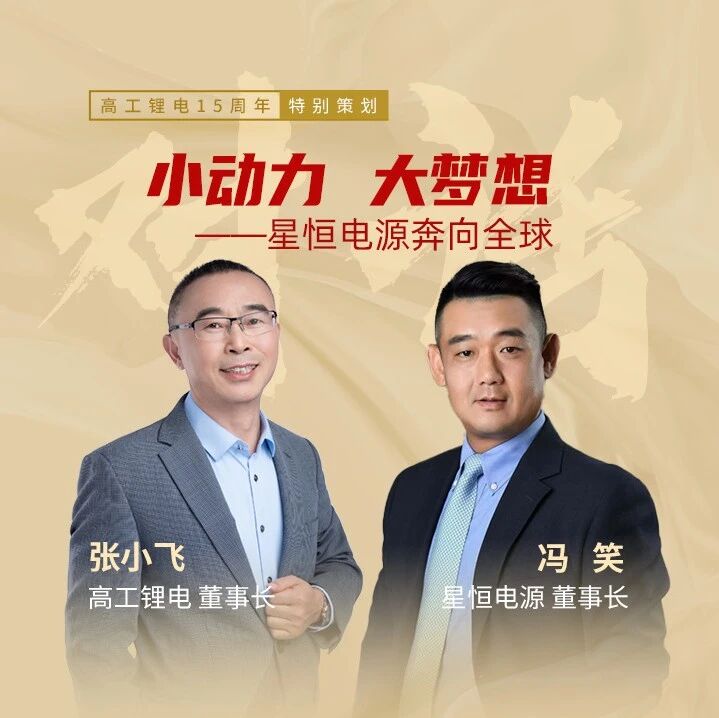
中国锂电产业 20年,从无到有、从追随到引领。2025年是高工锂电成立15周年,过去一 年高工锂电特别策划了系列对话,遍访锂电创变者,回望产业来时路,探寻未来新动能。 当所有目光都聚焦于电动汽车赛道时,有一家企业却凭借独特的战略定力,在看似不起眼的 "小动力"领域构建起全球化的商业版图——星恒电源。 "电力是水的话,我们其实是做瓶子的。" 对话中,星恒电源董事长兼总裁冯笑用这样一个 充满烟火气的比喻,定义星恒的核心使命。但这家中国最早的动力电池企业之一,要做的绝 非普通"瓶子"。 在全球电动化浪潮中,冯笑看到了一个更广阔的 "星辰大海"。冯笑表示, "我们定义的是 20~25亿的人群,未来十年是我们潜在的客户" 。从印度、巴基斯坦的街头,到非洲、南 美的家庭,他坚信 "future is electric" 已是不争的趋势,而星恒要做的正是为这轮变革提 供最基础、最普适的能源"容器"。 星恒的战略始终带有强烈的独立思考色彩。冯笑鲜明反对盲目跟风巨头,在他看来,电池产 业需要的不是同质化内卷,而是基于场景、站在终端角度的创新, "这才是一个百花齐放的 产业"。 正是这种 "基于独立思考以及烟火气"的创新理念 , ...
3度电+是电摩性能基准线
高工锂电· 2026-02-11 07:01
摘要 "3度电+"成电摩普及关键门槛。 短途出行领域的电动化与锂电化进程持续加速,全球电动摩托车市场正迅速崛起。 为何是 "3度电 + "? 源于真实场景的 精准洞察 星恒提出 "3度电+"的理念,并非凭空设定,而是基于对全球用户真实出行场景的精准洞察,以及对其锂电池产品100亿公里级骑行数据的深度验证。 这一主张的背后,是国内外电动化进程中涌现出的共性需求。无论是国内从电动自行车向电摩的 结构性 升级,还是海外燃油摩托车的电动化转换,消 费者的核心诉求都聚焦于 "可靠、实用、无焦虑"。 数据的支撑更为具体。根据《 2024年度中国主要城市通勤监测报告》,国内主要城市居民的周通勤里程普遍达到80-100公里,低电量电摩已难以满 足日常需求。而在海外市场,参考新能源汽车的普及规律,当电动产品的实用续航达到同级燃油车50%以上时,替代进程将显著加速。鉴于主流燃油 摩托车的续航普遍在200公里左右,这意味着电摩需要实现100公里以上的续航,才能形成有说服力的替代方案。 与此同时,电摩若要在性能上真正对标燃油摩托车,还需满足均速 50km/h、极速100km/h以上的动力要求。综合"续航破百"与"速度过百"这两项硬 ...
锂电池两轮车市场“反击战”
高工锂电· 2026-02-05 10:45
Core Viewpoint - The competition among lithium battery companies in the two-wheeler market is focusing on product upgrades and channel restructuring as they adapt to the new national standards for electric bicycles [3][4]. Product Upgrades - The introduction of the new national standards has led to a significant decline in lithium battery applications, with lead-acid battery usage surging by 13.4% in Q3 and over 90% in Q4 [3]. - Both lead-acid and lithium battery companies are launching higher capacity and lighter batteries, targeting consumer demands for power, fast charging, and safety [3][4]. - The safety upgrades for lithium batteries include the implementation of Battery Management Systems (BMS) and reduced plastic usage, enhancing overall safety and performance [6][9]. - New lithium battery products are generally offering capacities of 24Ah, 30Ah, or more, significantly improving the range of electric bicycles to meet consumer commuting needs [10][11]. Channel Restructuring - Major lithium battery companies like BYD and Guoxuan High-Tech are actively establishing direct sales stores and online channels to counter traditional dealer monopolies [5][12]. - As of now, 31 companies in the electric bicycle industry have obtained 748 new national standard CCC certificates, with over 276 new models available for consumers [5]. - The establishment of direct sales and authorized stores allows battery companies to maintain control over product sales and improve after-sales service, which is crucial for consumer trust and battery recycling [14].


锂电池“抢滩”电摩市场
高工锂电· 2026-01-28 12:26
Core Viewpoint - The electric motorcycle (e-motorcycle) market is experiencing a dual increase in inventory and exports for 2025, influenced by new national standards and the ban on fuel motorcycles, leading to a complex market dynamic [1][2]. Market Overview - In 2025, the total sales of fuel and electric motorcycles are projected to be approximately 21.97 million units, with exports accounting for about 13.37 million units and domestic sales around 8.6 million units, indicating that exports represent 60% of total sales, surpassing domestic sales [2]. - Domestic sales of motorcycles are expected to decline by 3.45% year-on-year, while exports are anticipated to grow by 21%, highlighting the significance of overseas markets amid domestic restrictions [3]. Electric Motorcycle Performance - The sales of electric motorcycles in 2025 are estimated at 3.5062 million units, reflecting a modest year-on-year growth of only 1.14%, with a penetration rate of approximately 16% for new energy vehicles [4]. - Despite the sluggish growth in sales, production of electric motorcycles reached 3.6118 million units in 2025, marking a year-on-year increase of 6.03%, with December alone seeing a production of 339,100 units, a month-on-month increase of 7% [4]. Inventory and Production Dynamics - The production of electric motorcycles exceeding sales is attributed to manufacturers' strategies to stockpile inventory in response to uncertainties brought by new national standards [5][6]. - The implementation of the new standards has led to a resurgence of lead-acid motorcycles, with market share rebounding to 77% in Q3 and exceeding 90% in Q4 [12]. Export Trends - The export growth of electric motorcycles is notable, with an increase of 18.1% in 2025, indicating a trend where domestic brands are thriving in international markets [4][18]. - Southeast Asia is identified as a significant market for electric motorcycles, driven by a large "oil-to-electric" transition potential, although initial purchase costs remain a barrier compared to fuel motorcycles [19]. Competitive Landscape - The electric motorcycle market is characterized by a diverse range of players, including established brands and new entrants, with a focus on high-performance lithium batteries that meet the demands for power and range [14][15]. - Companies like Yadea, Aima, and Niu are actively expanding their presence in the European market, targeting both budget-conscious consumers and high-end segments [23]. Future Outlook - The evolving landscape of electric motorcycles, influenced by regulatory changes and market dynamics, suggests that manufacturers will need to adapt strategies to maintain competitiveness and capitalize on export opportunities [20][22].

全球短途出行电动化加速,星恒推出全新电摩锂电技术与产品
Jing Ji Wang· 2026-01-27 09:55
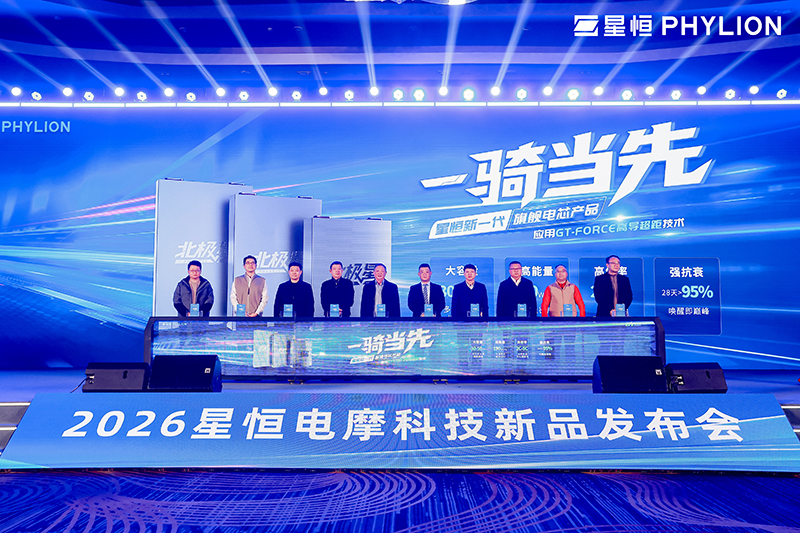
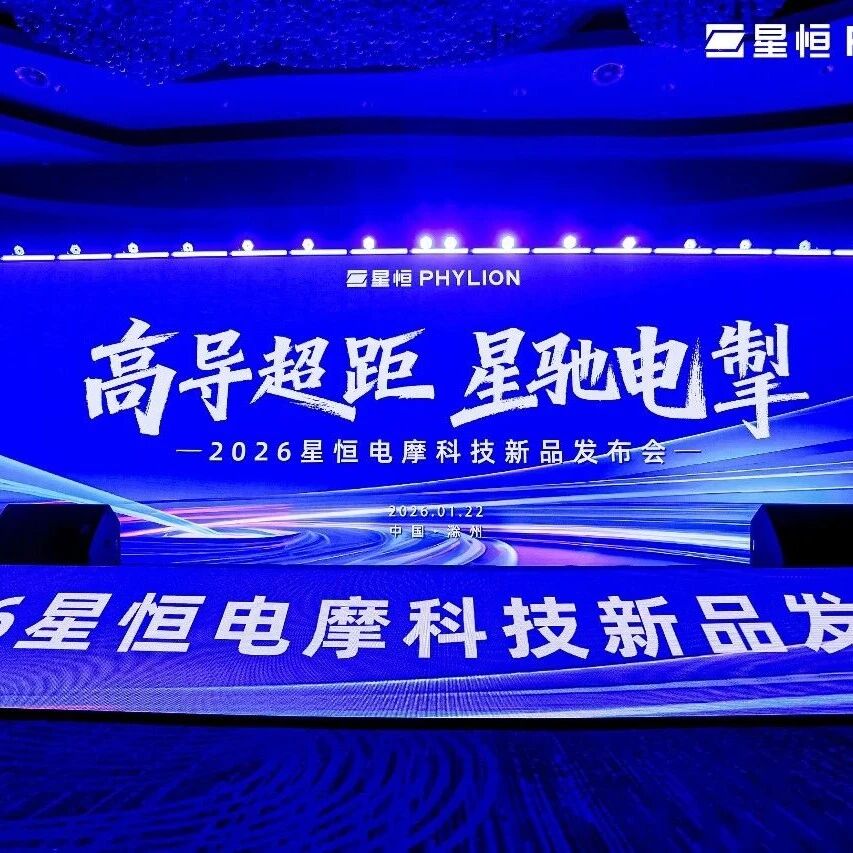
基于此,星恒电源董事长、总裁冯笑提出对电摩"锂电基因"进行系统性重组,以定义面向未来的"新物种",并设 定清晰坐标:以 "100公里续航"为里程碑,以"3度电+"电池为主流配置。 为此,星恒构建了覆盖产能、技术、产品、市场、生态与方案的六大支柱体系。其中,与全球超50家主流车企的 深度协同,标志着其作为产业生态组织者与标准定义者的角色,完全契合产业链向技术深耕与生态协同转型的"长 期主义"趋势。 在全球出行领域,一场静默但深刻的能源变革正聚焦于两轮与三轮。这个规模庞大且仍在高速增长的市场——全 球数以亿计的日常通勤与物流运输高度依赖于此,其全面电动化的进程,正成为检验新能源技术普惠性与实用性 的关键战场。 针对这一全球性的市场需求与产业升级核心痛点,1月22日,小动力锂电池行业企业星恒电源举办了以"高导超距 星驰电掣"为主题的电摩科技新品发布会。会上,星恒集中发布了GT-Force高导超距技术、北极星大容量电池以及 FAR游骑兵系列电摩锂电等一系列创新成果,旨在系统性解决高性能、长续航与高安全、低成本难以兼顾的产业 难题,满足市场对极致体验与普惠出行的双重期待,锚定并开启一个以"3度电+"为标志的高性能短出行 ...
2025年磷酸锰铁锂市场盘点:产量2.85万吨,激增206.5%
鑫椤锂电· 2026-01-26 08:03
Core Viewpoint - The article highlights the significant growth potential of manganese iron phosphate production, projecting a production increase from 28,500 tons in 2025 to over 500,000 tons by 2030, driven by advancements in electric vehicle technology and increasing demand in various sectors [2][5]. Group 1: Production Growth - The production of manganese iron phosphate is expected to reach 28,500 tons in 2025, representing a year-on-year growth of 206.5% [2]. - By 2026, production is anticipated to rise to 70,000 tons, and by 2030, it is projected to exceed 500,000 tons [2]. Group 2: Key Drivers of Growth - The price increase of cobalt raw materials has led to a surge in the prices of ternary cathode materials, enhancing the price competitiveness of manganese iron phosphate [5]. - Trade frictions have prompted significant stocking and export actions in overseas digital markets, resulting in increased shipments of manganese iron phosphate [5]. - Technological improvements, such as element doping and carbon coating, have addressed issues related to manganese leaching, low conductivity, low packing density, and low specific capacity [5]. Group 3: End-Use Applications - In the power sector, Guoxuan High-Tech's "Qicheng Second Generation Cell" achieves an energy density of 240 Wh/kg and supports 5C fast charging, allowing a 60 kWh battery to charge to 80% in just 12 minutes [6]. - In the two- and three-wheeled electric vehicle market, Star Power has successfully industrialized manganese iron phosphate batteries, with major domestic brands using these batteries in 70% of their products, achieving over 10 million units sold globally [6]. - In consumer electronics, Henan Hengyi Lithium Energy's new battery, utilizing manganese iron phosphate and nano-silicon carbon, boasts double the capacity, a 30% increase in lifespan, and improved charging efficiency [6]. Group 4: Competitive Landscape - Leading companies in the manganese iron phosphate sector include Hanchuang Nano, Rongbai Science and Technology, Times Rui Xiang, Defang Nano, and Zhiliang New Materials [7]. - Hanchuang Nano has a stable production line of 15,000 tons and is accelerating a 30,000-ton expansion project [8]. - Rongbai Science and Technology has seen its manganese iron phosphate product shipments in the first half of 2025 exceed the total for 2024, with a 103% year-on-year increase in Q3 2025 [8]. - Times Rui Xiang's 20,000-ton manganese iron phosphate project was completed and began production in April 2025, achieving industry-leading performance [8].

破局小动力锂电池难题:星恒电源推出GT-Force高导超距技术
Huan Qiu Wang Zi Xun· 2026-01-26 07:28
Group 1 - The small power lithium battery market is rapidly expanding from a "billion-level" to a "trillion-level" due to increased user demand for short-distance transportation tools, accelerated "oil-to-electric" transitions in Southeast Asia, and policies promoting carbon neutrality [1] - Star Power has launched the Polaris high-capacity battery and FAR Ranger series electric motorcycle lithium batteries, addressing challenges in range, safety, and cost faced by the electric two-wheeler and three-wheeler market [1][2] - The prevalence of low-quality "knockoff lithium batteries" poses safety risks and threatens the industry's reputation, highlighting the need for standardized, safe, and affordable lithium batteries [2] Group 2 - The Polaris high-capacity battery features advanced precursor material systems and "high-conductivity ultra-distance technology," aiming to provide high-performance power solutions with a range of 100 kilometers for electric motorcycles and three-wheelers [2] - Star Power is actively involved in drafting national mandatory standards (GB-36672) for lithium batteries used in electric motorcycles and three-wheelers, which aims to eliminate unsafe non-standard products and promote healthy industry development [2] - China has become the largest producer and consumer of lithium batteries globally, with a competitive industry chain, and the small power lithium battery sector is seen as a "second growth curve" for China's lithium battery industry as it expands internationally [2]
星恒勇闯新世界,电摩锂电瞄准3度电+
高工锂电· 2026-01-23 10:29
Core Viewpoint - The introduction of "3 degrees of electricity" combined with lithium batteries is becoming a watershed moment in the electric motorcycle market, reshaping product structures and user experiences [4]. Group 1: Market Strategy - Global two-wheeler manufacturers are refining their commercialization strategies for the electric motorcycle market, focusing on high-end, intelligent, and commuting experiences in domestic and European/American markets, while addressing "oil-to-electric" demands in Southeast Asia and Africa [2]. - The domestic market is expected to see a relaxation of motorcycle bans by 2025, with a more developed charging infrastructure and higher consumer capacity for electric motorcycles, emphasizing improved commuting experiences and entertainment [5]. Group 2: User Demands - Key user demands for electric motorcycles include range, fast charging, and safety, leading to a focus on high-capacity, high-safety, and ultra-fast charging technologies [3]. Group 3: Battery Technology - The "3 degrees of electricity" standard is crucial for achieving a 100-kilometer range, which is seen as a milestone for the widespread adoption of electric motorcycles [6]. - The 74V50Ah product defines the high-end electric motorcycle standard, achieving a real-world range of over 120 kilometers, while the 74V100Ah super large single cell targets high-performance electric motorcycles [7]. Group 4: International Market Potential - The overseas market is targeted by the company to penetrate countries along the "Belt and Road" initiative, focusing on regions where two-wheelers are essential for daily needs, with a significant emphasis on high-capacity batteries [10]. - In Africa, Asia, and Latin America, electric motorcycles must achieve breakthroughs in range to compete with gasoline motorcycles, with a vision to recreate a "new star" in these markets [11][12]. Group 5: Product Launches and Collaborations - The company has launched the Ranger series for overseas markets, featuring configurations like "dual 80" and "dual 100" for range and speed, positioning itself as a preferred solution for "oil-to-electric" transitions [14]. - Strategic partnerships have been established with leading domestic brands and top overseas companies to enhance market penetration and product offerings [14]. Group 6: Battery Innovation - To achieve the "3 degrees of electricity" capacity breakthrough, the company utilizes a dual-material approach with lithium manganese and lithium iron phosphate, alongside advanced stacking technology and GT-Force high-conductivity technology [15]. - The North Star battery is the first power-type 50Ah battery in the market, featuring a dual-material system [16]. - Innovations in stacking technology and the integration of advanced manufacturing processes have significantly improved battery performance, safety, and cost optimization [18][19]. Group 7: Performance Standards - The new standards for high-performance batteries include a 33% increase in package discharge performance, stable range breakthroughs exceeding 100 kilometers, and a comprehensive safety system [20].
重磅消息!宁德时代发布行业首款实现量产钠离子电池,-40℃极寒仍可保持90%电量【附钠离子电池行业市场分析】
Qian Zhan Wang· 2026-01-23 07:26
Core Viewpoint - CATL has launched the first mass-produced sodium-ion battery for light commercial vehicles, showcasing significant advancements in low-temperature performance and cycle life, addressing key industry challenges in cold climates [2][5]. Group 1: Product Launch and Features - CATL introduced the 45kWh sodium-ion battery pack with an energy density of 175Wh/kg and a cycle life exceeding 10,000 times, achieving certification under the new national standard GB 38031-2025 [2]. - The battery maintains 90% usable capacity at -40°C and can be charged immediately at -30°C, solving winter range and charging issues for commercial vehicles in northern regions [2]. - Mass production is set to begin in July 2026, with plans to introduce both charging and battery swapping modes [2]. Group 2: Market Potential and Competitive Landscape - Sodium-ion batteries are seen as a potential alternative to lithium-ion batteries due to their lower cost and resource advantages, with sodium being significantly more abundant and cheaper to extract [5]. - The technology has attracted substantial investment and research resources, with major companies like Guoxuan High-Tech, BYD, AVIC Lithium Battery, and Times New Energy actively developing sodium-ion battery solutions [5][6]. - Despite the advantages, the commercial development of sodium-ion batteries is still in its early stages, with actual shipments in China reaching only 0.7GWh in 2023, indicating a need for further exploration of commercialization pathways [6]. Group 3: Future Outlook - The sodium-ion battery industry is transitioning from sample validation to commercial application, with expectations that by 2026, sodium batteries will enter a phase of large-scale application, significantly reducing lifecycle costs for users [9]. - As production scales up and energy density improves, costs are projected to decrease by half within the next two to three years, paving the way for sustainable commercialization [9].