
Athene

Search documents
一篇价值2000亿美元的终局论:AI在2028年带来席卷世界的经济危机
Xin Lang Cai Jing· 2026-02-27 10:31
编者按:最近,独立研究机构 Citrini Research 提出一个"未来回顾式"的经济思想实验:如果未来几年人工智能(AI)技术不仅实现了所有预期,而且极致 地推动了生产率,经济真的会更繁荣吗? 他们的回答是:不一定——甚至可能引发经济与金融体系的系统性危机。 发布推文已经有近2800万阅读。大众对于AI替代人类的排斥感与金融精英对结构性风险的担忧正在合流。 首席在昨天的推文里简要阐述了一下报告的主要观点,并请用户们做了一个简单的投票,结果如下: | Al+机器人会带来经济繁荣吗? 单选 | | | --- | --- | | 会提升人类的平均收入 | 48票 15% | | 会降低人类的平均收入 | 104票 33% | | 不好说,看Al能否达到人类智能 | 60票 19% | | 人会背锅, Al永远不会 | 54票 17% | | 未来人类可以自由选择是否需要工作,生存物资取之不尽了。 | 51票 16% | 回顾过去半个多月,从MiniMax与智谱AI市值在港股迅速逼近甚至超越快手、京东、携程开始,市场已清晰感知到一场不只是"技术突破"的资本重估。中 国以春节联欢晚会为代表,将AI推向全民叙事; ...




CitriniResearch:全球智能危机的发展进程及其后果-20260226
CitriniResearch· 2026-02-26 01:45
分享 reface 前⾔ at if our AI bullishness continues to be right...and what if that's actually bearish? 果我们的对 AI 的乐观持续正确……而这反而成了利空,会怎样? at follows is a scenario, not a prediction. This isn't bear porn or AI doomer fan-fiction. e sole intent of this piece is modeling a scenario that's been relatively underexplored. Our nd Alap Shah posed the question, and together we brainstormed the answer. We wrote this t, and he's written two others you can find here. 下情景为设想,而非预测。这并非唱空轰动或人工智能末日主义同人文。本文唯一 的,是对一个相对较少被探讨的情景进行建模。我 ...
AI越繁荣,经济越萧条,一夜爆火2028推演长文,引发华尔街巨头恐慌
3 6 Ke· 2026-02-25 08:28
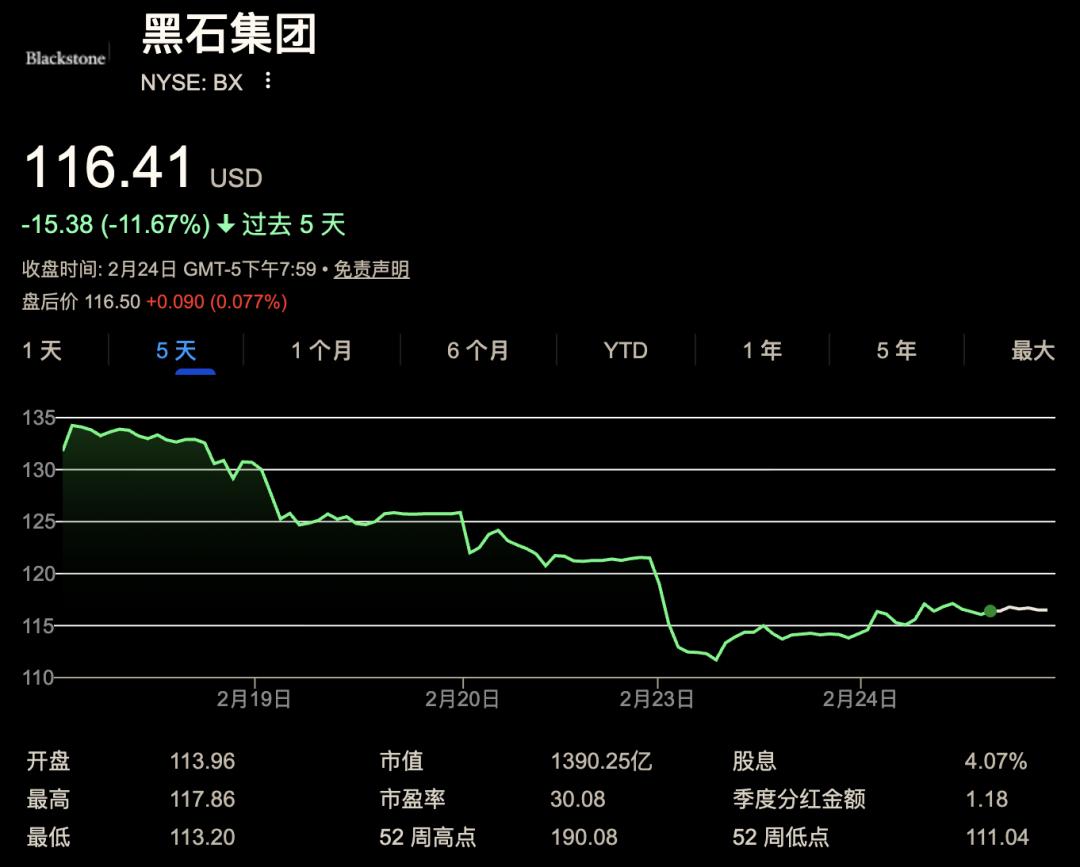
就在这两天,由 CitriniResearch 执笔的文章《2028年全球智能危机》在美国投资者间引发病毒式传播,阅读一夜间已迅速达到千万级! 这篇文章通过推演,构想了两年后Agent大规模普及,对人类社会与经济结构的剧烈冲击: 在2028年,尽管人工智能带来的生产力提升超出预期,但由于其彻底颠覆了传统白领就业市场,最终引发了「经济瘟疫」。 企业利润与算力霸权大幅扩张,但普通家庭收入急剧收缩,导致核心消费动力衰竭,形成了仅有数字繁荣而缺乏广泛收益的「幽灵GDP」。 同时,随着SaaS服务、中介行业及传统金融支付模式因「交易摩擦消失」而面临结构性崩塌,风险经由私募信贷市场蔓延至人寿保险与住房按揭领域,最 终可能将全球经济拖入系统性重定价的深渊。 文章的核心逻辑链条是: 第一轮负反馈发生在实体经济:AI能力提升 → 裁员增加、工资降级 → 消费疲弱 → 企业利润被挤压 → 企业购买更多AI能力 → AI能力继续提升。 随后它进入金融层面:收入降低开始侵蚀房贷 → 银行损失、收紧信贷 → 财富效应破裂 → 反馈回路加速。 而这两条回路又被迟缓的政策响应进一步放大。 市场对此推演迅速作出反应。 截至昨日收盘,文中点名 ...


Apollo Global Management Touts $40T Private Credit Opportunity, AI Financing and Fund XI at BofA Conference
Yahoo Finance· 2026-02-16 17:03
Core Viewpoint - Apollo Global Management emphasizes the expansive nature of private credit, viewing it as a $40 trillion asset class that includes various forms of debt beyond traditional direct lending, such as commercial and residential real estate debt and asset-backed securities [5][18]. Group 1: Private Credit Landscape - Apollo identifies the growth of sponsor-backed direct lending as a significant development in non-investment-grade financing, noting its rise from zero to $2 trillion [1]. - The firm argues that the evolution of banking post-global financial crisis has shifted more financing activity toward non-bank investors, suggesting that the anticipated slowdown in private credit growth overlooks broader economic changes [5][6]. - Zelter expresses skepticism about the size and speed of an equity monetization cycle, indicating that the U.S. IPO market is relatively small compared to the private equity asset base, which is estimated at $5 trillion to $6 trillion [1][4]. Group 2: Strategic Priorities and Fundraising - Apollo is focusing on origination and multi-channel distribution, with plans to raise Fund XI between $22 billion and $25 billion, targeting a first close before mid-year [4][14]. - The firm has invested billions in origination platforms, emphasizing that access to attractive investments is the limiting factor rather than capital raising [6]. - Apollo's private wealth channel has expanded its product offerings, with eight products raising over $500 million each last year [13]. Group 3: AI Infrastructure and Financing - Apollo estimates that AI infrastructure capital needs will reach $5 trillion to $7 trillion over the next five years, indicating a selective financing approach where the firm has a structural advantage [11][12]. - The firm prefers bespoke, contract-backed deals with minimal residual risk, as illustrated by a recent transaction involving a sale-leaseback of chips [12]. Group 4: Retirement Services and Market Expansion - Apollo remains confident in Athene's growth in fixed annuities, supported by a strong balance sheet and competitive operating costs [15]. - The company highlights a "retirement crisis" in the U.S. and identifies potential growth opportunities in various international markets, including Japan, Korea, and Australia [16]. Group 5: Market Dynamics and Liquidity - Zelter notes that while private credit may evolve to trade more like liquid markets, the premium for offering private solutions at scale is likely to persist [9]. - Apollo has facilitated liquidity in high-grade capital solutions, trading nearly $10 billion of these assets last year [10].

Apollo Global Management (NYSE:APO) 2026 Conference Transcript
2026-02-11 14:52
Summary of Apollo Global Management Conference Call Company Overview - Apollo Global Management (NYSE: APO) was founded in 1990, initially focusing on private equity, and has evolved into a diversified global alternative asset manager with over $900 billion in assets under management, making it one of the five largest alternative managers globally [4][4][4]. Industry Insights - The current macroeconomic environment is characterized by a resilient economy, potential interest rate cuts by the Federal Reserve, and an anticipated acceleration in IPO and M&A activities [4][4]. - Despite a robust market, there are concerns about tight spreads, heightened geopolitical risks, and muted private equity realizations [5][5]. - The private credit market is viewed as a significant growth area, with a broader definition encompassing various forms of financing beyond traditional direct lending [11][11][13]. Key Themes and Strategic Priorities - Apollo's leadership emphasizes the importance of origination in maintaining growth momentum, focusing on sectors such as the global industrial renaissance and public-private convergence [20][20][21]. - The firm has invested billions in origination platforms to enhance its capital solutions across investment-grade and non-investment-grade markets [19][19][19]. - The private credit asset class is estimated to be around $40 trillion, indicating a vast opportunity beyond direct lending [13][13]. Private Credit Market - The private credit market has evolved significantly, with a focus on non-investment grade financing, which has grown from zero to approximately $2 trillion [12][12]. - Apollo's strategy includes educating investors about the broader opportunities within private credit, which encompasses commercial real estate debt, residential real estate debt, and asset-backed securities [13][13][16]. AI Infrastructure Financing - The market for AI infrastructure financing is projected to require $5-7 trillion over the next five years, with Apollo focusing on providing capital in a structurally advantageous manner [31][31][33]. - The firm aims to avoid speculative investments and instead seeks opportunities where it can add bespoke value [32][32]. Retirement Services and Athene - Athene, Apollo's retirement services business, is positioned as a market leader in fixed annuities, benefiting from a strong balance sheet and low operational costs [43][43]. - The competitive landscape is becoming more crowded, but Apollo believes it can maintain its market share through its diverse capital-raising channels [44][44][46]. - The firm is exploring growth opportunities in international markets, particularly in Japan, Korea, Taiwan, and Australia, as well as expanding its presence in the UK [51][51][52]. Future Outlook - Apollo is optimistic about its growth trajectory, particularly in private credit and retirement services, and is focused on maintaining quality and excellence in its operations [26][26][29]. - The firm anticipates a successful fundraising for Fund XI, aiming to replicate the success of previous funds with a target of $22 billion to $25 billion [40][42]. Conclusion - Apollo Global Management is navigating a complex macroeconomic landscape while focusing on strategic growth areas such as private credit and retirement services. The firm is committed to maintaining its competitive edge through innovation in capital solutions and expanding its global footprint [4][4][19][43].
KKR (NYSE:KKR) 2026 Conference Transcript
2026-02-09 19:02
KKR 2026 Conference Call Summary Company Overview - KKR (NYSE: KKR) is one of the world's largest asset managers, overseeing approximately $744 billion in assets under management (AUM) as of year-end 2025. The company has a diversified platform that includes private equity, credit, infrastructure, real assets, and insurance [3][5]. Macro Economic Outlook - The macroeconomic environment is described as nuanced, influenced by factors such as rates, inflation, geopolitics, fiscal deficits, and public policy. KKR anticipates increased transaction activity in 2026, with a better deal flow compared to 2025 [5][6]. - The company is optimistic about early signs of market recovery despite recent volatility [6]. Financial Performance and Market Position - KKR's management fees increased by 35%, fee-related earnings rose over 50%, and adjusted net income grew in the mid-40s percentage range over the past two years. Capital raising in the last 12 months was up 90% compared to the previous year [7][8]. - The market is perceived to undervalue KKR's diversified business model, which includes significant contributions from private equity, real assets, and credit strategies [9][10]. Strategic Acquisition - KKR announced the acquisition of Arctos, which is expected to enhance its position in the sports asset class and the secondary market. The acquisition aligns with KKR's M&A strategy focused on large addressable markets [12][13]. - The deal is anticipated to create a business worth over $100 billion, leveraging KKR's global reach and capital access [13]. Fundraising Environment - KKR raised approximately $130 billion in 2025, up 90% from two years prior. The company aims to exceed its target of raising $300 billion between 2024 and 2026 [18][19]. - The institutional market is showing signs of recovery, with significant capital raised in both private equity and infrastructure products [19][20]. Adjusted Net Income Target - KKR has set a target of over $7 per share of Adjusted Net Income (ANI) for 2026, supported by growth in management fees, capital markets business, and operating leverage [26][27]. - The company has $18.6 billion in embedded gains and expects to generate over $900 million in monetization-related revenue [30][31]. Insurance Business Strategy - KKR's insurance business, Global Atlantic, is expected to generate around $1 billion in operating income in 2026. The strategy involves elongating liabilities and scaling third-party capital to enhance returns [34][37]. - The company is focused on migrating its portfolio into alternative investments, which is anticipated to yield cash income starting in 2027 and 2028 [35][36]. Wealth Management Platform - KKR emphasizes client experience as the primary KPI, with a focus on delivering exceptional investment performance. The company has introduced a two-year soft lock on its private equity vehicles to enhance durability [40][45]. - The wealth management channel is seen as an area for robust growth, with significant potential for capital raising as individual investors increase their allocation to alternatives [41][42]. Credit Market Insights - KKR manages approximately $135 billion in private credit, with a focus on asset-based finance and direct lending. The company remains optimistic about credit fundamentals despite market noise [55][56]. - The asset-based finance market is expected to grow significantly, with KKR positioned to capitalize on opportunities in this space [58][59]. Infrastructure and Real Estate Growth - KKR's infrastructure business has grown to about $100 billion in AUM, driven by global demand for infrastructure spending. The company is well-positioned to capture market share as client allocations to infrastructure increase [62][63]. - Real estate values are believed to have bottomed out, but capital raising remains challenging. KKR is preparing to take advantage of market recovery when it occurs [66][67]. Capital Markets Business - KKR's capital markets business is expected to grow, with opportunities arising from global expansion and partnerships, particularly with its insurance business. The company believes it has not yet reached its full potential in this area [68][69]. Conclusion - KKR is navigating a complex macroeconomic environment while positioning itself for growth through strategic acquisitions, diversified business models, and a focus on client experience. The company is optimistic about achieving its financial targets and capitalizing on market opportunities in the coming years [72][73].

Apollo Management(APO) - 2025 Q4 - Earnings Call Transcript
2026-02-09 14:32
Financial Data and Key Metrics Changes - The company generated record combined fee-related earnings (FRE) and spread-related earnings (SRE) of $5.9 billion, driving adjusted net income of $5.2 billion, which is up 14% year-over-year, equating to $8.38 per share [4][6] - FRE for the year was $2.5 billion, reflecting a 23% increase year-over-year, while SRE was $3.4 billion, normalized to a 9% increase year-over-year [6][34] - The company achieved record inflows of $228 billion, marking the third consecutive record year for both Athene and Asset Management [6][7] Business Line Data and Key Metrics Changes - The origination volume crossed the $300 billion mark, with a robust consistent spread of 350 basis points over treasuries [6][7] - In the individual market, inflows exceeded $18 billion, with nine strategies raising over $500 million annually [9] - Athene's net invested assets grew by 18% year-over-year to $292 billion, with record inflows of $83 billion driven by retail and funding agreements [31][36] Market Data and Key Metrics Changes - The company reported that all buckets of credit increased by 8%-12%, with hybrid value up 16% for the year [8] - The global wealth business raised $18 billion, up nearly 50% year-over-year, indicating strong demand across multiple client types and geographies [30] - The institutional business had a record year, with $15 billion in new mandates from third-party insurance [28] Company Strategy and Development Direction - The company is transitioning from serving one market to six markets, including individuals, insurance, and traditional asset managers, requiring different products and investments in technology [8][9] - The focus is on a total portfolio approach, which opens up debt and equity buckets to private assets, enhancing competition with public assets [10][11] - The company aims for 20%+ FRE growth in 2026, with a strong emphasis on maintaining quality alongside scale [11][40] Management's Comments on Operating Environment and Future Outlook - Management highlighted the increasing demand for retirement income and the global retirement crisis, expecting approximately $85 billion of inflows in 2026 [11][12] - The outlook for SRE growth remains durable, with a reaffirmed expectation of 10% growth on average through 2029 [12][41] - Management emphasized the importance of a principal mindset in investing, focusing on long-term ownership rather than short-term market trends [13][14] Other Important Information - The company plans to increase the annual per-share dividend by 10% from $2.04 to $2.25 starting in Q1 2026, reflecting a commitment to returning capital to shareholders [40] - The company has returned approximately $1.5 billion to shareholders through dividends and repurchases during the year [39] Q&A Session Summary Question: Implications of the ARI transaction on SRE - Management indicated that the ARI transaction helps de-risk the year and supports the goal of 10% SRE growth, but it should not be assumed to be additive [46][50] Question: Dynamics in the non-traded BDC space and ADS - Management noted that the philosophy of portfolio construction in ADS has resonated well, with net new assets increasing over $5 billion last year despite market turbulence [52][53] Question: Interaction with LPs regarding private allocations - Management expects increased dispersion among managers and a shift in institutional allocations towards private assets, driven by public market volatility [57][60] Question: Origination opportunities and margin profile - Management highlighted the globalization of origination strategies and the focus on quality and scale, with expectations for continued growth in FRE margins [73][75]
Apollo Management(APO) - 2025 Q4 - Earnings Call Transcript
2026-02-09 14:30
Apollo Global Management (NYSE:APO) Q4 2025 Earnings call February 09, 2026 08:30 AM ET Speaker4Good morning and welcome to Apollo Global Management's fourth quarter 2025 earnings conference call. During today's discussion, all callers will be placed in listen-only mode, and following management's prepared remarks, the conference call will be opened for questions. Please limit yourself to one question, then rejoin the queue. This conference call is being recorded. This call may include forward-looking state ...
Apollo Commercial Real Estate Finance to Sell Loan Portfolio to Athene, Targets $12.05 Book Value
Yahoo Finance· 2026-01-31 15:33
Core Viewpoint - Apollo Commercial Real Estate Finance (ARI) plans to sell its loan portfolio to Athene, which is expected to be a transformational deal aimed at addressing the valuation gap between ARI's market price and the intrinsic value of its assets [4][10]. Financial Details - The transaction is expected to deliver approximately $1.4 billion of net cash to ARI [1][7]. - After the repayment of most financing facilities and transaction expenses, ARI anticipates a common equity book value per share of about $12.05 [2][7]. - The purchase price for the loan portfolio is set at 99.7% of total loan commitments, excluding two loans with a principal balance of $146 million [3][7]. Strategic Implications - The sale is designed to close a long-standing valuation gap, as ARI's stock has traded at an average of about 0.76 of net book value for several years [9][11]. - Management plans to evaluate commercial real estate-related strategies to unlock additional value, including potential M&A opportunities [12][13]. - If no new asset strategy is identified by year-end, ARI's board may explore all strategic alternatives, including dissolution [14]. Governance and Transaction Process - The transaction has been approved by ARI's board following a recommendation from a special committee of independent directors [15]. - A 25-day go-shop period will allow for additional interest in the portfolio before a stockholder vote [17][18]. - Apollo has agreed to a 50% reduction in ARI's annual management fee and will reimburse up to $10 million of transaction expenses [16].

Apollo Commercial Real Estate Finance (NYSE:ARI) Update / briefing Transcript
2026-01-28 14:32
Summary of Apollo Commercial Real Estate Finance (NYSE: ARI) Conference Call Company Overview - **Company**: Apollo Commercial Real Estate Finance, Inc. (ARI) - **Date of Call**: January 28, 2026 - **Speaker**: Stuart Rothstein, CEO Key Points Transaction Announcement - ARI has entered into a definitive agreement with Athene to sell its loan portfolio for a purchase price of **99.7%** based on total loan commitments, net of asset-specific CECL reserves, excluding two loans with a principal balance of **$146 million** expected to be repaid prior to closing [3][4] - The transaction is expected to provide ARI with approximately **$1.4 billion** of net cash after repayment of financing facilities and transaction expenses [4][6] Financial Implications - Post-transaction, ARI's common equity book value per share is expected to be approximately **$12.05** [4] - The purchase price represents a **23% premium** to ARI's recent trading levels and multiyear average price-to-book ratio [6] - ARI intends to pay a first-quarter dividend of **$0.25** per share, consistent with recent levels, targeting an approximately **8%** annualized yield based on post-transaction book value per share [7] Strategic Rationale - The transaction aims to close the valuation gap for ARI, as its common stock has traded at an average of **0.76** of net book value despite improving credit quality [5] - The sale validates ARI's book value and provides liquidity and balance sheet strength [6] - ARI's management will evaluate new commercial real estate strategies and consider strategic M&A opportunities to unlock additional value for stockholders [8][9] Future Outlook - If a new asset strategy or strategic transaction is not identified by year-end, Apollo intends to recommend exploring all strategic alternatives, including dissolution [9] - The management team will leverage Apollo's broader investment platform and origination capabilities to explore new strategies [9][10] - Apollo has agreed to a **50% reduction** in ARI's annual management fee rate, paid in shares of ARI common stock, to align interests with stockholders [10] Market Context - The demand for ARI's yield-generating assets is high in the private institutional market, which has influenced the timing of the transaction [5][6] - The strategic review will consider both internal and external opportunities, including potential M&A within the Apollo umbrella [39] Additional Considerations - The transaction includes a **25-day go-shop period** for the special committee to solicit additional interest in the portfolio [10][28] - ARI retains net equity interest in real estate properties valued at approximately **$466 million** as of September 30, 2025 [5] Conclusion - The transaction is viewed as a decisive step to unlock value not reflected in ARI's public market valuation, providing immediate validation of book value and positioning ARI for a new chapter with enhanced flexibility and liquidity [11]