
Delta Electronics

Search documents
Transition Investment Strategy _Grid Growth - Capex Upcycle to Continue_ Glover_ Grid Growth - Capex Upcycle to Continue
2026-02-02 02:22
Summary of Key Points from the Conference Call Industry Overview - The focus is on the **grid and electrical equipment** sector, particularly in the context of global investment trends and structural demand drivers across regions including **China, ASEAN, the US, and the EU** [2][3][10]. Core Insights and Arguments - **Structural Upcycle**: Analysts believe the current upcycle in grid equipment is structural rather than cyclical, supported by high manufacturing utilization and multi-year order visibility across **APAC** [3][10]. - **Investment Needs**: Global grid investment reached approximately **$450 billion** in 2025, but this is still below the estimated **$1 trillion** needed annually by 2050 to meet demand [4]. - **Aging Infrastructure**: About **45%** of global grid assets are over **20 years old**, with significant replacement needs emerging, particularly in the US where the average transformer is around **40 years old** [4][10]. - **OEM Backlogs**: Equipment suppliers are experiencing unprecedented demand, with average selling prices for transformers increasing by approximately **75%** since 2019, and high-voltage cable costs nearly doubling [5][10]. Regional Developments - **China**: The 15th Five-Year Plan mandates a record investment of **RMB 4 trillion** by 2030, a **40%** increase from previous plans, focusing on high-voltage expansion to support renewable energy [7]. - **ASEAN**: Leaders have agreed to accelerate the ASEAN Power Grid, aiming to double cross-border capacity by 2040, supported by an **$800 billion** financing initiative [7]. - **US**: Federal programs, including a **$65 billion** grid modernization fund, are pushing utilities to enhance and expand networks [7]. - **Europe**: The European Commission has introduced a new Grid Package requiring **€584 billion** in transmission investment by 2030 [7]. Capacity and Constraints - Manufacturing capacity for grid equipment is tight across APAC, with Japan operating at nearly **100%** utilization. Expansion plans are in place, but skilled labor shortages and input constraints remain significant challenges [12]. - Orderbooks are strong, particularly in Korea, where companies report **30%** year-over-year growth in orderbooks, with lead times extending to **3-4 years** [13]. Pricing Dynamics - Anticipated price increases in China due to potential tariff adjustments in the 2026 regulatory cycle are expected to support average selling price hikes and margin expansion [14]. - Japan's Hitachi aims to increase EBITDA margins from **13-15%** to **16-20%** by FY30, indicating a focus on disciplined pricing and higher-value products [14]. Demand Drivers - Demand is driven by a multi-year structural grid upgrade cycle across APAC, with significant needs for replacement and modernization of aging infrastructure, as well as the integration of digital automation and smart grid technologies [15][16]. Investment Recommendations - Companies positioned at the core of structural grid equipment demands, such as **NARI Technology**, **Hitachi**, and **Hyundai Electric**, are highlighted as key beneficiaries of the ongoing investment cycle [18][19]. - NARI Technology is particularly noted for its alignment with China's domestic grid investment priorities, with expectations of sustained pricing uplift and market share gains [18]. Conclusion - The combination of aging infrastructure, rising demand from renewable energy, and the need for modernization and digitalization in grid systems suggests a robust growth outlook for the grid equipment sector across APAC, with favorable pricing power and earnings durability anticipated [10][11].


大中华区科技硬件:成本上涨会改变 2026 年盈利展望吗-Greater China Technology Hardware Will Input Cost Hike Change the 2026 Profit Outlook
2026-01-29 02:42
Summary of Greater China Technology Hardware Conference Call Industry Overview - The conference focused on the Greater China Technology Hardware sector, specifically addressing the impact of input cost hikes on profit outlook for 2026 [4][8]. Core Insights - **Opportunities in AI and Server Upgrades**: There are significant opportunities in AI GPU and ASIC server/rack design upgrades, particularly with the upcoming Vera Rubin platform and Kyber architecture [8][8]. - **AI ASIC Server Expansion**: The magnitude of AI ASIC server upgrades and volume expansion is primarily centered around TPU and Trainium platforms [8][8]. - **Share Price Upside Potential**: Analysts see potential for share price upside in the near term due to various factors including AI server power solutions and capacity expansion across the tech hardware supply chain [8][8]. - **Risks Identified**: - Consumer electronics demand, particularly for smartphones and PCs, is being negatively impacted by rising memory costs [8][8]. - Anticipated lower business momentum in the second half of 2026 due to pull-forward builds in the first half [8][8]. - Raw material price hikes (copper, nickel) and supply tightness are expected to create margin headwinds [8][8]. - Supply shortages may delay shipment pace, affecting overall market performance [8][8]. Key Stock Ideas - **AI Server Hardware**: Recommended stocks include Wistron, FII/Hon Hai, Wiwynn, Delta Electronics, AVC, BizLink, King Slide, Accton, Chenbro, Gold Circuit, Innolight, FIT, and Fositek [8][8]. - **Edge AI Companies**: Notable mentions include Xiaomi, Luxshare, and Lenovo [8][8]. Valuation Comparison - A detailed valuation comparison of various companies within the Greater China Technology Hardware sector was provided, including metrics such as market cap, EPS estimates, P/E ratios, and target prices [10][10]. - Companies highlighted include Lite-On Tech, Delta, Hon Hai, Foxconn Tech, and others, with specific price targets and ratings [10][10]. Additional Considerations - The report emphasizes the importance of considering Morgan Stanley Research as one of several factors in investment decision-making, acknowledging potential conflicts of interest [4][5]. This summary encapsulates the key points discussed in the conference call, providing insights into the current state and future outlook of the Greater China Technology Hardware industry.
AI 价值链全景解析-各标的实际 AI 上行空间几何?谁是被低估的赢家-AI Value Chain Putting it all together - how much AI upside does each name really have, and who might be an underappreciated winner
2026-01-28 03:02
Summary of Key Points from the Conference Call Industry Overview - The focus is on the U.S. Semiconductors industry, particularly the AI value chain and its implications for various companies involved in hardware and semiconductor verticals [1][2] Core Insights and Arguments - A top-down framework is constructed to dimension the AI upside across sectors from 2025 to 2027, aimed at simplifying comparisons across different companies [2][19] - The analysis updates the breakdown of data center capital expenditures (capex) to reflect rising prices for DRAM and NAND, estimating an increase of approximately $70,000 per rack for server DRAM and $35,000 per rack for storage costs, raising all-in capex from $5.9 million to $6.0 million per rack [3][21] - Incremental revenue estimates per gigawatt (GW) of capacity are derived from market share estimates across nine key hardware/semiconductor verticals, with a regression analysis used to estimate margins on incremental AI revenue [4][23] Company-Specific Insights - **Unimicron and Ibiden** are highlighted as having significant upside potential, particularly in ABF substrate and HDI, with Unimicron expected to benefit from large opportunities [5][27] - **Nvidia (NVDA)** and **Broadcom (AVGO)** are identified as industry favorites, with Nvidia's AI substrate upgrade expected to double content generation [5][27] - **Intel (INTC)** and **Cisco** are noted to have lower exposure to AI opportunities compared to their market prominence, with Intel facing challenges in capturing market share [6][28][31] - **Delta Electronics** is rated as outperforming, with a price target of NT$1,300, benefiting from increased electrical content in AI data centers [13][30] - **MediaTek** is expected to see growth from the TPU ramp, while memory/storage players like **SanDisk**, **Samsung**, **Micron**, **SK Hynix**, and **KIOXIA** are projected to benefit from rapid memory price surges [6][30] Financial Metrics and Valuations - The report includes a detailed ticker table with performance metrics for various companies, including EPS and adjusted P/E ratios, indicating that Unimicron has room for growth while Intel appears expensive relative to its AI opportunities [9][29] - **Nvidia** is rated outperform with a target price of $275, while **AMD** is rated market perform with a target of $225, reflecting high expectations for AI growth [11][12] Additional Considerations - The analysis acknowledges that estimates of AI upside are imprecise and that valuations are influenced by various non-AI factors, suggesting that investors should consider their own assumptions for more accurate estimates [20][26] - The report emphasizes the importance of understanding the nuances of each company's position within the AI landscape, including their ability to adapt to evolving data center requirements [20][30] Conclusion - The semiconductor industry is poised for significant growth driven by AI, with specific companies like Unimicron and Ibiden positioned to capture substantial market share. However, challenges remain for established players like Intel, highlighting the dynamic nature of the sector and the need for careful analysis of individual company prospects [5][6][27][30]


Budget 2026 could drive a power shift in India’s semiconductor push
The Economic Times· 2026-01-22 05:23
Core Insights - India's government aims to be among the top four semiconductor manufacturing nations by 2032, with four companies set to begin commercial production in 2026 [1] - Significant investments are being made in semiconductor manufacturing, with Micron's ATMP facility in Gujarat costing over Rs 22,500 crore and Tata Electronics' fab in Dholera estimated at nearly Rs 91,000 crore [1][2] - The upcoming Budget is critical for transitioning the India Semiconductor Mission (ISM) from a subsidy-led program to a long-term industrial strategy [4] Investment and Capacity - Micron Technology's ATMP facility in Gujarat has an investment of Rs 22,516 crore with phased ramp-up [2] - Tata Electronics, in partnership with Powerchip Semiconductor Manufacturing Corp, plans a fab in Dholera with an investment of approximately Rs 91,000 crore, targeting an output of 50,000 wafers per month [2] - Other projects include CG Power's investment of Rs 7,600 crore for 15 million chips per day in Sanand, and Tata Semiconductor's Rs 27,000 crore investment in Assam for 48 million chips per day [2] Industry Demand and Support - India's internal semiconductor demand is projected to account for nearly 10% of global consumption over the next five years, indicating a strong case for domestic manufacturing [5] - Continued policy support similar to ISM 1.0 is essential to maintain momentum and prevent greenfield projects from relocating [6][7] - The FY27 Budget is expected to prioritize direct capital subsidies over long-term operating support due to the capital-intensive nature of semiconductor manufacturing [9] Infrastructure and Ecosystem Development - There is a need for semiconductor-ready infrastructure, including land, water, and power grids, which are often under state jurisdiction [13] - Competitive selection models for clusters and anchor investments are recommended to align state strengths with semiconductor manufacturing needs [14] - A national skills pipeline and technical tie-ups with global companies are critical for training in semiconductor technologies [19] Long-term Strategy and Governance - ISM 2.0 should adopt a long-term, milestone-linked investment model, with support extending beyond fabs to include suppliers and skilled talent [25] - A dedicated governance body is recommended to track metrics such as capex committed and project completion [19] - The upcoming Budget will be closely monitored for signals of continuity and strategic clarity in India's semiconductor ambitions [24]


Stocks Rise As Tech Meltup Accelerates
ZeroHedge· 2026-01-16 13:33
Market Overview - Futures are higher, with S&P 500 futures up 0.3% and Nasdaq 100 contracts up 0.4%, driven by enthusiasm for technology stocks [1] - The Russell 2000 has outperformed the S&P 500 for ten consecutive sessions, showing a relative performance improvement of over 600 basis points this year [4] Corporate News - JB Hunt Transport Services Inc. reported a 4% decline in shares after quarterly revenue missed estimates, indicating ongoing weakness in freight demand [5] - Kraft Heinz shares fell 1.1% following a downgrade by Morgan Stanley to underweight [5] - Mosaic's shares dropped 6% due to a significant decline in North American fertilizer demand [5] - PNC Financial Services Group Inc. shares rose 3% after reporting a 9% increase in fourth-quarter revenue, surpassing analysts' expectations [5] - Regions Financial shares fell 4% after reporting lower EPS and total loans than expected, with a forecast of declining net interest income [5] Technology Sector - The Mag 7 stocks are mostly higher in premarket trading, with Nvidia up 0.8% and other tech firms like AMD and Microsoft also showing gains [3] - TSMC's strong earnings and capital expenditure forecast have fueled optimism regarding the AI boom [4] - OpenAI and Microsoft are facing legal challenges over claims related to funding and operational changes [3] Economic Indicators - The first week of the earnings season has seen 89% of the 28 companies reporting so far beating expectations, indicating a positive outlook for the broader economy [9] - US stock funds experienced inflows of $36.5 billion in the week ending January 14, reflecting investor confidence [10] - Yield premiums on corporate debt have narrowed significantly, with a record $435 billion in bonds issued in the first half of January [11] Central Bank Insights - Five regional Fed bank presidents indicated that the central bank is well-positioned to wait for further data before making rate cuts, with no changes expected at the upcoming meeting [12] - Fed officials have expressed a need to maintain a restrictive monetary policy to combat inflation [37] Global Market Trends - European stocks dipped slightly but are on track for their fifth consecutive weekly advance, with health care stocks outperforming [13] - Asian stocks rose, particularly in Taiwan, supported by TSMC's positive outlook for AI demand [15] - The Japanese yen strengthened as Finance Minister Katayama indicated readiness for potential currency intervention [16]





PC 与服务器:AI 及云服务商通用服务器需求强劲,推高 PC 零部件价格压力-PCs and Servers_ AI and CSP general server strength drives component pricing pressure for PCs
2026-01-15 06:33
Summary of J.P. Morgan's PC and Server Market Analysis Industry Overview - The analysis focuses on the **PC and server markets**, highlighting trends and forecasts for shipments and demand in the coming years. Key Points on PC Market - **Shipment Growth Forecasts**: - Adjusted global PC shipment growth forecast for 2025 is **+8%**, while a decline of **-9%** is expected in 2026 [1] - **Demand Trends**: - Anticipated downside in PC unit demand due to **memory-driven product price hikes** [1][4] - A significant **20%+ increase** in product prices has been noted recently, impacting consumer PC demand [4] - Forecasts indicate **10%** decline in consumer PC shipments and **7%** decline in commercial PC shipments for 2026 [11] - **Commercial PC Demand**: - Muted refresh demand is expected this year, with a potential pause in demand from **2Q26** onwards [1][11] - **Competition**: - Increased competition in mainstream PCs due to new model launches from major players like **Dell** and **Apple** [4] Key Points on Server Market - **General Server Demand**: - Strong demand from **US Cloud Service Providers (CSPs)** is expected to continue into 2026, particularly for storage servers driven by AI inference activities [4] - Forecasted **30%+ growth** in CSP server shipments, offset by a single-digit decline in enterprise server demand [11] - **AI Server Growth**: - Notable ramp-up in **GB300 server shipments** is expected, with estimates of **50-70k NVL72 rack shipments** this year, driven by strong AI server demand [4] - Anticipated growth in **ASIC server demand**, particularly for TPU servers [4] - **Overall Server Shipment Growth**: - Total server shipment growth forecast for 2026 is **14.6%**, up from previous estimates of **+4.6%** [11] Key Companies Mentioned - **Positive Outlook**: - Companies such as **Wiwynn**, **Hon Hai**, and **Quanta** are favored in the server ODM space [1] - For server components, **ASPEED**, **Delta**, **Jentech**, and **Lotes** are highlighted [1] - **Cautious Outlook**: - Companies like **ASUSTek**, **Micro-Star**, and **Compal** are viewed with caution due to expected challenges in the PC segment [1] Additional Insights - **Memory Component Costs**: - A significant increase in memory component costs is expected, leading to at least **double YoY memory costs** in the upcoming quarters [4] - **Market Dynamics**: - The report indicates a prolonged supercycle in general servers driven by AI demand, with potential risks from component supply constraints [4] This summary encapsulates the critical insights from the J.P. Morgan analysis on the PC and server markets, providing a comprehensive overview of expected trends, challenges, and opportunities within the industry.
麦格米特:布局全球 AI 供电领域,但需关注生产执行与研发进展;首次覆盖,评级:中性
2026-01-14 05:05
Summary of Megmeet (002851.SZ) Conference Call Company Overview - **Company**: Megmeet Electric Co., Ltd. - **Founded**: 2003 - **Listed**: 2017 - **Market Share**: 3% in global embedded power supply market as of 2024 - **Key Competitors**: Delta Electronics, Lite-On - **Recent Performance**: Share price increased by 260% since October 2024 due to recognition as an NVIDIA MGX ecosystem partner [21][30] Key Industry Insights - **Transition**: Megmeet is shifting from automation and control to becoming a global player in AI server power supply [1] - **Market Potential**: Expected to capture 5% of the global AI server power supply market by 2030, with 8% in custom ASIC supply chains and 3% within the NVIDIA ecosystem [22][39] - **Growth Forecast**: Anticipated total sales CAGR of 28% from 2025 to 2030, primarily driven by server power supply breakthroughs [10][29] Core Investment Debates 1. Market Share Potential - **Forecast**: 5% global market share by 2030, with a focus on custom ASICs [22][39] - **NVIDIA Ecosystem**: Positioned as a secondary supplier to mitigate risks associated with single suppliers [22][39] - **800V DC Architecture**: Transition starting in 2027 may favor established players due to reliability and trust [22][39] 2. Valuation Check - **Current Valuation**: Trading at 79x 12-month forward P/E, higher than the average of 72x since October 2024 [2][23] - **Earnings Forecast**: Projected earnings CAGR of 58% from 2025 to 2030, but 6-19% below consensus for 2025-2027 due to manufacturing challenges [2][26] 3. R&D and Product Cycle - **Product Gaps**: Significant gap in high-efficiency product portfolio compared to tier-1 peers [3][24] - **Competition**: Increasing entrants in the market may intensify competition for next-gen products [3][24] - **Monitoring**: Close observation of product iterations and customer validation is essential [3][24] Financials & Valuation - **Target Price**: Set at Rmb 86.8, implying a 14% downside from current levels [4][26] - **Long-Term Growth**: Expected 27% LT earnings CAGR from 2028 to 2030 [4][26] - **Risk-Reward Profile**: Balanced, with upside potential contingent on faster order wins and production [4][26] Additional Insights - **R&D Focus**: Higher percentage of sales allocated to R&D compared to global peers, though absolute expenditure remains small [30][36] - **Capital Expansion**: Plans to raise Rmb 2.7 billion for production upgrades, particularly in Thailand [48][49] - **Management Team**: Experienced leadership with backgrounds in major companies like Huawei and Emerson [30][35] Conclusion - **Investment Outlook**: While Megmeet shows potential for growth in the AI server power supply market, challenges in execution and competition must be closely monitored. The current valuation reflects optimistic market share expectations that may not align with projected growth rates.

Delta Electronics to expand manufacturing footprint in India amid semiconductor push
BusinessLine· 2026-01-14 01:20
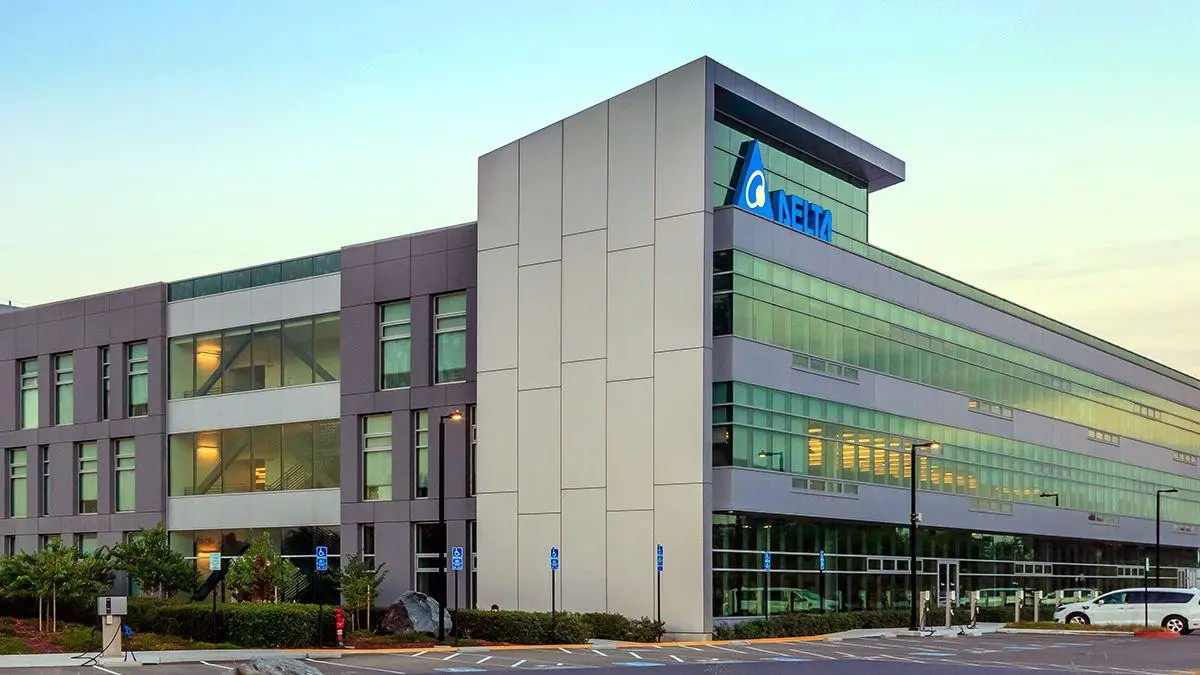
Delta Electronics plans to nearly ramp up its manufacturing footprint in India to support the country's expanding semiconductor and electronics manufacturing ecosystem, aligning with India's 'Make in India' push.Reflecting confidence in India's industrial and policy momentum, Sanjeev Srivastava, Business Head - Industrial Automation SBP, Delta Electronics India, told ANI on Tuesday, "India is at an inflexion point in manufacturing, especially in semiconductors and electronics, and expanding our factory bas ...
把握全球增长机遇-AI 在亚洲供应链的更广泛深度渗透_ Seizing the Global Growth Opportunity_ A broader and deeper AI presence in the Asian supply chain
2026-01-13 02:11
Summary of Key Points from the Conference Call Industry Overview - Focus on the Asia technology (hardware) sector, particularly the AI supply chain, as a priority investment area for 1H26 due to its significant influence on earnings growth amid concerns over smartphone/PC demand and auto production recovery [2][12] Core Themes and Stock Recommendations 1. **AI Supply Chain Investment**: - Emphasis on investing in the AI supply chain, which is expected to drive earnings growth despite potential slowdowns in other sectors [2][12] - Anticipation of clearer benefits from AI for earnings in 2026, with no signs of slowdown heading into 2027 [12] 2. **Under-the-Radar AI Themes**: - Five notable themes identified: 1. **Power Consumption**: Opportunities in power supply, power rack products, capacitors, and power semiconductors. Companies to watch include Delta Electronics, Panasonic HD, Murata Mfg., Taiyo Yuden, and Renesas Electronics [6][25] 2. **Data Transmission**: Advancements in large-scale data transmission technologies, with companies like Fujikura and Mitsubishi Electric highlighted [6][25] 3. **Niche Components**: Price stabilization and increases in demand for components like MLCCs and substrates, with key players including Murata Mfg. and SEMCO [6][25] 4. **Physical AI Integration**: Companies like Hitachi and Mitsubishi Electric are leading in embedding AI into industrial applications [6][27] 5. **Software/Services Disruption**: Generative AI's potential to improve productivity in Japan's software industry, with Fujitsu and NEC as key players [6][27] 3. **High-Profile Sub-Sectors**: - Continued growth in foundry, memory, semiconductor production equipment, AI servers, and edge AI, with recommended stocks including TSMC, Samsung Electronics, and Hon Hai [30][31] Market Dynamics and Risks - **Top-Down Risks**: - Concerns regarding valuations, implementation risks, over-investment, monetization challenges, and funding sources, particularly with emerging players in the market [13] - **Bottom-Up Perspective**: - Fundamentals differ from the IT bubble of 2000, with a larger scale and longer timeline for AI infrastructure development, and sound supply chain management in Asian hardware [14][16] Technological Advancements - **Power Consumption Trends**: - Significant rise in power consumption for AI servers, with expectations for voltage increases to 800V and beyond, creating business opportunities for power-related products [33][38] - **Data Transmission Innovations**: - Transition to higher communication speeds (800-1.6Tbps) and co-packaged optics (CPO) expected to enhance industry value [58][59] Conclusion - The Asia technology sector, particularly the AI supply chain, presents substantial investment opportunities driven by technological advancements and evolving market dynamics. Key players and themes are positioned to benefit from these trends, while investors should remain cautious of potential risks associated with rapid market changes.
亚洲股票与主题策略:适应范式重塑的稳健投资组合-Asia Equity & Thematic Strategy Robust Portfolios for Reshaping Paradigms
2026-01-09 05:13
Summary of Key Points from the Investor Presentation Industry Overview - The Asia Pacific region is undergoing significant changes in growth and corporate strategies, as well as reforms in capital markets to enhance competitiveness in emerging technologies and multipolar supply chains [1][4]. Core Views and Recommendations - **Market Positioning**: The company recommends maintaining tight market-risk positions relative to benchmarks, with a slight preference for Japan over emerging markets (EM) in 2026 [7]. - **Country Allocations**: - Small Overweights (OWs) are suggested for India, Brazil, UAE, and Singapore. - Underweights (UWs) are recommended for Saudi Arabia, Indonesia, and Taiwan [7]. - **China Outlook**: The company holds a moderately constructive view on China with an Equal Weight (EW) recommendation, but does not anticipate significant reflation until 2027 [7]. Thematic Insights - The top thematic focus areas identified include: - AI Path in China - Diabesity Ecosystem - AI & Healthcare [7]. Earnings and Valuations - **Earnings Projections**: - The base-case earnings for the TOPIX index are projected to be ¥185 (+9%) for F3/25, ¥198 (+7%) for F3/26, and ¥225 (+14%) for F3/27 [8][12]. - The consensus EPS for the same periods is ¥188 (+10%), ¥201 (+7%), and ¥223 (+11%) [12]. - **Valuation Targets**: - The TOPIX index is currently at 3,538 with a target of 3,600 for December 2026, reflecting a 2% increase [8]. - The MSCI EM index is at 1,467 with a target of 1,400, indicating a -5% outlook [8]. Market Performance Rankings - The performance rankings for various countries from 2016 to 2026 show Japan consistently leading, followed by Hong Kong and India, with significant fluctuations in other markets like Brazil and South Africa [9]. Forward P/E Ratios - The forecasted 12-month forward P/E ratios are: - Japan: 15.0x - Emerging Markets: 13.0x - China: 12.7x [17]. Additional Insights - The company emphasizes the importance of considering potential conflicts of interest in its research, as it engages in business with covered companies [5]. - The earnings estimate revisions for various markets indicate a mixed outlook, with Japan showing positive growth while other regions like India and Australia face downward revisions [19]. This summary encapsulates the critical insights and recommendations from the investor presentation, highlighting the strategic focus on Asia Pacific markets and the anticipated trends in earnings and valuations.