
Gazprom

Search documents
Serbia's NIS seeks new sanctions waiver to allow crude oil imports
Reuters· 2026-02-13 10:36
Core Viewpoint - Serbia's NIS is seeking a new sanctions waiver from the U.S. to facilitate crude oil imports while awaiting the completion of a sale to Hungary's MOL [1] Group 1: Company Operations - NIS operates Serbia's only oil refinery located in Pancevo and supplies 80% of the fuel needs in Serbia [1] - The company has filed a motion to the U.S. Office of Foreign Assets Control on February 12 for the waiver, which is crucial for its operations [1] Group 2: Sanctions and Waivers - The U.S. imposed sanctions on NIS in October as part of measures against Russia's energy sector due to the war in Ukraine [1] - A previous waiver allowing NIS to operate is set to expire on February 20, and the company emphasizes the importance of its operations for the Serbian economy [1] Group 3: Stakeholder Information - Gazprom Neft holds a 44.9% stake in NIS, while Gazprom holds 11.3%, and the Serbian government has a 29.9% stake [1] - Hungary's MOL signed a binding agreement to acquire the stakes held by Russian companies in NIS on January 19 [1]

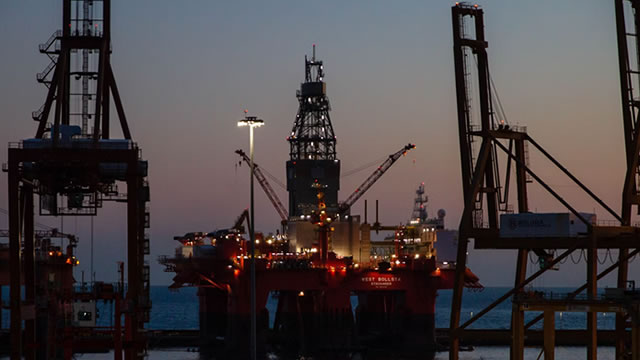
OPEC+ Maintains Oil Output Pause for Q1 2026; American Airlines Boosts Caribbean Service; Gazprom Refinery to Restart
Stock Market News· 2026-01-04 12:38
OPEC+ Oil Output Decision - OPEC+ has decided to maintain a pause in oil output hikes for the first quarter of 2026 to ensure market stability amid global oversupply concerns [2][3] - The group, which accounts for approximately half of the world's oil supply, previously agreed to suspend production increments for January, February, and March [2] - Oil prices experienced a significant decline of over 18% in 2025, marking the steepest drop since 2020, prompting a cautious approach to market management [3] American Airlines Expansion - American Airlines Group Inc. has enhanced its service to the Caribbean by adding over 3,700 additional seats, coinciding with the resumption of scheduled service on January 4 [4][5] - The airline is deploying larger aircraft and operating extra flights to accommodate higher demand and assist customers affected by recent airspace restrictions [5] Gazprom's NIS Refinery Restart - Gazprom's NIS refinery in Serbia is set to restart operations by January 18, following a temporary operating license from the U.S. Treasury Department [6][7] - The license allows NIS to resume crude oil procurement and processing, enabling the refinery to operate at full capacity [7] - Negotiations are ongoing between Gazprom and MOL for the sale of the Russian majority stake in NIS, with hopes for a swift conclusion to ensure fuel supply for Serbia [7]


Oil Awaits a Catalyst as Brent Treads Water
Yahoo Finance· 2026-01-02 16:00
Oil Market Overview - Oil prices have remained stagnant, with ICE Brent trading around $60 per barrel on the first trading day of 2026, despite ongoing geopolitical tensions in Russia-Ukraine and Venezuela [2] - In 2025, oil prices experienced a significant decline of 19% year-over-year, marking the largest annual drop since 2020 and the third consecutive year of price decreases, the longest negative streak on record [3] Geopolitical Influences - The U.S. administration has imposed sanctions on four Venezuelan oil tankers, including the Della and Valiant, increasing pressure on the Maduro government [4] - Russian pipeline gas exports to Europe have plummeted to their lowest level in 50 years, with deliveries falling to 18 billion cubic meters in 2025, a 90% decrease from the peak in 2019 [9] Industry Developments - Harbour Energy has taken over operations of Mexico's largest untapped oil field, the Zama field, previously managed by the heavily indebted Pemex [5] - OPEC+ is expected to maintain current production quotas during their meeting on January 4, 2026, as market conditions suggest oversupply risks with Brent prices around $60 per barrel [7] Regional Energy Dynamics - Egypt has signed a memorandum of understanding to supply natural gas to Lebanon, which currently lacks import infrastructure and faces declining domestic gas output [6] - Serbia's state oil company NIS has received a waiver from the U.S. Treasury, allowing it to continue operations while seeking buyers for Gazprom's 11% stake in the company [8]
Russia’s Pipeline Gas Sales to Europe Plunge to 50-Year Low
Yahoo Finance· 2025-12-30 17:00
Russia’s pipeline gas exports to Europe collapsed by 44% in 2025, falling to their lowest level since the mid-1970s, according to Reuters calculations. The drop marks the clearest statistical endpoint yet for what was once Moscow’s most lucrative and politically potent energy relationship. The decline was driven primarily by the closure of the Ukrainian transit route at the start of the year, leaving TurkStream as the only remaining pipeline corridor for Russian gas into Europe. Even that route now serve ...
波黑塞族共和国预期其石油产品不会因潘切沃炼油厂停产而受到重大冲击
Shang Wu Bu Wang Zhan· 2025-12-06 14:12
Core Viewpoint - The oil distribution market in the Republika Srpska of Bosnia and Herzegovina is currently stable despite the production halt at the Serbian Pancevo refinery, but the long-term impacts remain uncertain [1] Group 1: Current Market Situation - The main issues are arising from fuel supply disruptions at NIS and Gazprom gas stations, while other distributors have different suppliers [1] - Crna Gora Oil Company has a supply contract with Croatia's INA, and other distributors are importing oil through the ports of Ploče and Koper [1] Group 2: Regional Impact - The current state of NIS in Serbia is detrimental to the entire region, with previously operational refineries in Sisak, Pancevo, Rijeka, Skopje, and Brod, now only Rijeka and Skopje retaining partial capacity [1] - The oil and petroleum products market is unpredictable, influenced by actions of major global players, with smaller markets often facing collateral impacts [1] Group 3: Price Changes - Due to a decline in global crude oil prices, fuel prices at gas stations in the Republika Srpska have decreased by 5 pfennigs per liter [1] - The halt in production at the Pancevo refinery is attributed to U.S. sanctions against NIS, which resulted in a shortage of raw materials and the cessation of operations [1]
CPC Cuts Fail to Lift Brent as Saudi Pricing Undercuts Rally
Yahoo Finance· 2025-12-05 16:19
Oil Market Overview - Oil prices remained rangebound this week, with ICE Brent hovering around $63 per barrel as markets reacted to higher Russian oil export loadings and potential military action in Venezuela [2] - The curtailment of Kazakhstan's CPC Blend exports has been a bullish factor, but this was offset by Saudi Arabia's weak pricing for January, indicating lukewarm Asian demand signals for January-February 2026 [2] Saudi Aramco Pricing Strategy - Saudi Aramco has reduced its January official selling price for Asia-bound grades by 20-60 cents per barrel compared to December, with the Arab Light grade set at a $0.60 per barrel premium to Oman/Dubai, the lowest since January 2021 [3] Chinese Oil Purchases - Chinese independent refiners in Shandong province have been purchasing large volumes of Iranian crude at discounts exceeding $8 per barrel compared to Brent, sourced from bonded storage following the last 2025 import quota issued by Beijing [4] Chevron's Investment in Gas - Chevron announced the approval of a $2 billion Stage 3 expansion of the Gorgon LNG project off Australia's northwestern coast, focusing on the Geryon and Eurytion fields [5] Turkey's Gas Deal with Russia - Turkey's BOTAS has extended its natural gas import deal with Gazprom for another year, securing 16 billion cubic meters (bcm) of supply via the Blue Stream pipeline and 6 bcm from the Turkish Stream conduit [6] Chile-Argentina Oil Agreement - Chile's ENAP has signed a $12 billion term deal with Argentina's major oil producers, including YPF, Vista Energy, Shell, and Equinor, to purchase crude oil from Vaca Muerta over the next 7 years, fulfilling 35% of the company's total requirements [7] PetroChina's Gas Storage Acquisition - PetroChina has acquired three natural gas storage companies for $5.7 billion, marking one of the largest M&A deals in 2025, aimed at enhancing its geographic coverage and capacities for gas-driven power peak-shaving [8]
中俄天然气大战?普京要体面价格,中国坚守原则,这场博弈如何?
Sou Hu Cai Jing· 2025-12-03 11:57
Core Viewpoint - The article discusses the geopolitical and energy dynamics between Russia and China, particularly focusing on the construction of the "Power of Siberia 2" gas pipeline, which aims to reshape energy exports and economic relations in the context of the ongoing Russia-Ukraine conflict [1][22]. Group 1: Energy Strategy and Market Dynamics - Following the Russia-Ukraine conflict, Russia has lost approximately 70% of its energy export market, prompting a strategic pivot towards China as a new market for its natural gas [3][14]. - The "Power of Siberia 2" pipeline is expected to transport up to 50 billion cubic meters of gas annually, which is about one-third of Russia's previous exports to Europe [9][14]. - The project is not only an economic initiative but also a strategic lifeline for Russia, aiming to demonstrate its ability to adapt and reshape its export landscape despite Western sanctions [5][22]. Group 2: Technical and Logistical Challenges - The pipeline will span over 2,600 kilometers, starting from the Yamal Peninsula and passing through Mongolia before reaching northern China, facing significant technical and geographical challenges [9][10]. - The construction involves complex negotiations regarding route selection, environmental assessments, and investment sharing among the three countries involved [10][12]. Group 3: Pricing Negotiations and Economic Implications - Pricing has emerged as a central issue in negotiations, with Russia seeking a "decent" price that reflects its economic interests and national dignity, while China insists on market-driven pricing [7][18]. - Initial investment for the pipeline is projected to exceed $13 billion, with ongoing maintenance and transportation costs also being significant factors in the negotiations [16][18]. - The outcome of these pricing discussions will have profound implications for Russia's economic recovery in the Far East, China's energy security, and the overall energy landscape in Eurasia [20][23].
2026-27 年欧洲天然气展望:美国液化天然气供应充足,推动欧洲价格下跌与库存需求上升-European Natural Gas Outlook 2026_2027_ Abundant US LNG drives lower prices and storage needs in Europe. Thu Nov 20 2025
2025-11-27 05:43
Summary of European Natural Gas Outlook 2026/2027 Industry Overview - The European natural gas market has undergone significant changes due to the Russia-Ukraine war, leading to a sharp decline in Russian pipeline supplies to Europe, with Russian flows to Northwest Europe (NWE) falling to zero in September 2022 after the Nord Stream pipeline explosions [1][2][3] - Currently, TurkStream is the only remaining conduit for Russian pipeline gas to Europe, accounting for about 10% of pre-war average volumes [1][2] Key Points and Arguments Storage Levels and Prices - Europe entered the winter season with natural gas storage levels at 83% (79% in NWE), significantly lower than previous years [2][3] - Despite low inventories, European natural gas prices have remained stable, attributed to rising global LNG supply [2][10] - Forecasts predict TTF prices to average 28.75 EUR/MWh in 2026 and 24.75 EUR/MWh in 2027, which are 3-4 EUR/MWh below current forward prices [2][73] LNG Supply Dynamics - The abundance of US LNG is diminishing the importance of storage in Europe, with the US emerging as a key supplier and pricing point for global natural gas [2][21] - Global LNG export capacity is projected to increase by 70 Bcm/year in 2026 and 66 Bcm/year in 2027, leading to lower global gas prices [20][21] - NWE is expected to absorb 60% of new LNG capacity from upcoming export projects without exerting upward pressure on global LNG prices [46] Demand Trends - NWE natural gas demand is expected to remain flat, driven by renewable energy expansion, energy efficiency improvements, and electrification of heating [22][23] - Gas-for-power demand has seen a year-over-year decrease of 3%, primarily due to robust renewable generation [23][29] - Industrial natural gas demand in NWE is estimated to be 18% below 2021 levels, with limited recovery signs [33][36] Russian Gas Supply Outlook - Total Russian natural gas deliveries to Europe are projected to decline to approximately 36 Bcm in 2025, down from 150 Bcm in 2021 [53] - TurkStream is expected to deliver about 16 Bcm in 2025, with long-term contracts primarily to Hungary and Slovakia [57][58] - The resumption of Ukrainian gas transit is anticipated to be a significant negotiation point in any ceasefire discussions, with volumes potentially reaching 15 Bcm/year by mid-2027 [69] Additional Important Insights - The market's bearish sentiment persists despite various bullish factors, primarily due to the anticipated increase in global LNG supply [19][70] - The EU's sanctions on Russian LNG, effective from 2026, may lead to a gradual phase-out of Russian gas, with Hungary and Slovakia negotiating exceptions for their long-term contracts [67][68] - The overall outlook suggests that supply availability will dominate market dynamics, with expectations of oversupply conditions as new LNG projects come online [74]
中俄爆发利益之争?普京希望中国出个体面价格,这场博弈将如何?
Sou Hu Cai Jing· 2025-11-17 06:05
Core Insights - The article discusses the geopolitical and energy dynamics surrounding the construction of the "Power of Siberia 2" gas pipeline, which aims to transport natural gas from Russia to China, highlighting the shift in energy markets post the Ukraine conflict [1][3][6]. Group 1: Pipeline Overview - The "Power of Siberia 2" pipeline is a strategic project for Russia, connecting the Yamal Peninsula gas fields to northern China, with a total length exceeding 2,600 kilometers and an annual capacity of 50 billion cubic meters, which is about one-third of Russia's previous exports to Europe [9][21]. - The pipeline's construction is seen as a means for Russia to break free from Western sanctions and stabilize its economy while providing China with a more diversified energy supply [6][22]. Group 2: Economic Implications - Russia's energy sector has faced unprecedented challenges since the Ukraine conflict, losing its dominant European market, which previously accounted for 70% of its gas exports [1][9]. - The construction cost of the pipeline exceeds $13 billion, and the ongoing negotiations between Russia and China focus on achieving a mutually acceptable pricing structure, with Russia seeking a "decent price" to compensate for lost European revenues [21][30]. Group 3: Geopolitical Context - The project involves not only Russia and China but also Mongolia, which plays a crucial role in balancing interests and ensuring its own economic benefits from transit fees and infrastructure improvements [19][30]. - The shift in energy flow from Russia to China signifies a major geopolitical realignment, with Europe needing to seek alternative energy sources, potentially increasing energy costs and affecting industrial competitiveness [19][26]. Group 4: Negotiation Dynamics - The negotiations are characterized by differing economic philosophies, with Russia emphasizing strategic cooperation and China adhering to market principles, leading to a complex and prolonged bargaining process [23][30]. - Both countries are aware of their respective leverage in negotiations, with China no longer being in a position of urgent need for energy, thus enhancing its bargaining power [7][23].
全球液化天然气分析 2035_液化天然气供应增长凸显需求侧基础设施必要性-Global LNG Analyzer 2035_ Rising LNG supply underscores need for demand-side infrastructure
2025-11-07 01:28
Summary of Global LNG Market Analysis Industry Overview - The global LNG market is entering a multi-year period of unprecedented supply expansion, with approximately **400 Bcm/year** of new projects under construction and scheduled to come online between **2025 and 2035** [6][21][50] - The US leads the export project pipeline, accounting for **51%** of total capacity under construction, followed by Qatar (**17%**), Canada/Mexico (**10%**), and the UAE (**3%**) [6][21][26] Demand Dynamics - Demand growth in key established LNG markets—China, Japan/South Korea, and Europe—is slowing [6][21] - China is expected to see LNG imports peak at **120 Bcm** in **2032** [6][21] - Japan and South Korea are increasingly prioritizing nuclear and renewables, reducing reliance on imported LNG and coal, with projected growth of **15 Bcm** in LNG imports between **2025 and 2035** [6][21] - European LNG imports are projected to grow moderately by **26 Bcm** over the next decade [6][21] Emerging Markets - The onus to accommodate new LNG supply is shifting to emerging LNG markets in APAC (Taiwan, India, Thailand, Pakistan, Bangladesh, Indonesia), where demand is expected to more than double from **127 Bcm** in **2025** to **280 Bcm** by **2035** [6][21] - However, the APAC gas market faces significant challenges, including tightening regasification capacity and limited gas storage infrastructure [6][21] Infrastructure Needs - Upgrading demand-side infrastructure will be critical for global LNG demand growth to keep pace with the anticipated supply expansion [6][21] - The spread between US and global natural gas prices is expected to narrow, with the US emerging as the marginal supplier [6][21] Regional Insights North America - The US is projected to add approximately **26 Bcm/year** of liquefaction capacity in **2026**, with significant growth expected in **2028 and 2029** [31] - Canada is also expanding its LNG export capacity, with projects like LNG Canada and Coastal GasLink pipeline [32][33] Middle East - Qatar's LNG capacity increases represent the second-largest source of new supply after the US, with significant projects like North Field East and North Field South [34][38] Africa - Africa is the third-largest region for new LNG export capacity additions, led by Mozambique LNG and Nigeria [75][76] - Security concerns in Mozambique and operational challenges in Nigeria may hinder capacity utilization [80] Australia and the Pacific - Australia's LNG exports are expected to marginally increase in the near term but face long-term challenges due to resource constraints and regulatory risks [56][60] - Indonesia is undergoing a transformation in its natural gas sector, with new offshore discoveries expected to boost production [68] Conclusion - The global LNG market is poised for significant changes driven by supply expansions, shifting demand dynamics, and the need for infrastructure upgrades. Emerging markets in APAC will play a crucial role in absorbing new supply, while established markets face challenges in growth. The interplay between supply and demand will shape pricing and operational strategies in the coming years [6][21][50]
