Isar Aerospace

Search documents
奋起直追SpaceX:欧洲、加拿大、日本都在发力,就连印度也在整活...
Hua Er Jie Jian Wen· 2026-01-12 13:12
Core Insights - A global competition around low Earth orbit satellite internet is intensifying, with various countries and commercial space companies aiming to challenge SpaceX's dominance in satellite communications, which is tied to both commercial interests and national security [1] Group 1: SpaceX Developments - The FCC has approved SpaceX to deploy an additional 7,500 second-generation Starlink satellites, bringing the total approved to 15,000, with approximately 9,400 currently operational [2] - SpaceX is projected to complete 154 launches by 2025, accounting for over 80% of total U.S. launches, and controls nearly two-thirds of active satellites globally [2] - The FCC has set strict deployment deadlines for SpaceX, requiring 50% of the second-generation satellites to be operational by December 2028 and the remaining by December 2031 [2] Group 2: European Initiatives - The European Space Agency has approved a record €22 billion funding plan, with approximately €900 million allocated to support five startups aiming to enhance Europe's launch capabilities [3] - Germany's Isar Aerospace is one of the leading challengers, having raised over €500 million and planning to produce more than 30 rockets annually [3] - Geopolitical factors, including tensions with the U.S. and the implications of the Russia-Ukraine war, are driving Europe to strengthen its space sector [3] Group 3: Canadian Efforts - Canada is investing nearly CAD 183 million over three years to improve domestic launch capabilities, with Kepler Communications recently launching 10 low Earth orbit satellites [5] - Kepler aims to enhance its optical relay network, utilizing advanced technology to significantly improve data transmission speeds [5] - The Canadian government has allocated CAD 81.8 billion over five years to bolster defense capabilities, which includes support for space initiatives [5] Group 4: Japanese Plans - Japan is developing a "Japanese version of Starlink" with a budget of ¥150 billion (approximately USD 960 million) to support domestic satellite communication services [6] - This initiative is driven by concerns over reliance on foreign satellite communications, especially highlighted during natural disasters [6] Group 5: Indian Challenges - India's ambitions in the global commercial space sector are facing setbacks due to recent launch failures, raising concerns about the reliability of its rockets [7] - Despite these challenges, India continues to show growth potential in heavy-lift capabilities, successfully launching its largest rocket for commercial purposes [7] Group 6: Chinese Developments - China is accelerating its reusable technology updates, which could significantly reduce launch costs and facilitate the deployment of low Earth orbit satellites [9] - The country has applied for frequency resources for over 200,000 satellites, indicating a strategic national focus on satellite communications [9]
家族办公室押注国防科技:全球富豪争夺新战场
3 6 Ke· 2025-11-26 23:27
Core Insights - The defense technology sector is transitioning from a historically sensitive area to a core growth engine for global capital, driven by private capital, particularly family offices, which are becoming key players in this evolution [1][8] Investment Trends - Notable private wealth groups, such as the Porsche-Piëch family, are significantly investing in dual-use technologies and defense, with investments in companies like Isar Aerospace and Quantum-Systems [2] - The investment activity is not limited to European families; American families, like the Michels family, are also increasing their investments in defense technology, focusing on autonomous aircraft and anti-drone systems [4] Market Performance - The aerospace and defense index in Europe has surged approximately 53% this year, outperforming the European Stoxx 50 index, which rose by 8.3% [5] - In the U.S., the aerospace and defense ETF has increased by 37.34% from the beginning of the year to November 21, significantly outpacing the broader market [5] - The MSCI Europe Aerospace and Defense Index has risen by 73% over the past 12 months, far exceeding the 13% increase of the MSCI Europe Index [5] Venture Capital Activity - Venture capital investments in defense have accelerated, with the number of deals exceeding 99 and total investments reaching $6.7 billion in 2024, marking a fivefold increase in single investments over the past decade [7] - Funding is shifting from aerospace companies to a broader range of defense technologies, including unmanned maritime systems and directed energy weapons [7] Family Offices' Role - Family offices are among the earliest private investors in defense technology due to their flexible decision-making and shorter approval chains, with over 2,000 family offices in Europe actively investing in dual-use technologies [8][10] - These family offices are increasingly forming alliances and funds to invest in defense technology, leveraging their industry resources and networks [10] Challenges in Defense Investment - Despite the attractive returns, private capital faces challenges such as value conflicts, reputation risks, and limited exit strategies in the defense sector [11][12] - The long investment cycles and high professional barriers in defense technology require specialized knowledge and patience from investors [16][18] Future Outlook - Dual-use technologies are viewed as the most promising investment direction in defense, as they can serve both commercial and military markets, providing clearer exit paths [19][20]


锗价高位回落,未来怎么看?
Minmetals Securities· 2025-04-25 08:16
Investment Rating - The industry investment rating is "Positive" [4] Core Insights - The price of germanium has surged significantly in the second half of 2024, driven by a substantial increase in supply from regions rich in germanium resources such as Guangxi and Inner Mongolia. The total germanium production from major domestic companies is estimated to be around 183 tons, with an increase of approximately 37 tons, accounting for 20% of the total production [1][13] - The demand for germanium is expected to be greatly boosted by the advancement of commercial satellite projects, with projections indicating that by 2030, the demand for germanium from commercial satellites could reach about 70 tons, representing a 38% increase compared to the current demand [15] - The long-term price center for germanium is anticipated to rise above 10,000 yuan per kilogram, supported by the high production costs in the Inner Mongolia region, which is a significant source of supply [19][20] Summary by Sections 1. Germanium Price Trends - In the second half of 2024, germanium prices soared to a peak of 18,850 yuan per kilogram, before retreating to around 15,000 yuan per kilogram in early 2025 due to increased supply and export restrictions [12][13] 2. Supply Sources - Inner Mongolia's Xilin Gol League is a crucial source of new germanium supply, with proven reserves of 3,458 tons, accounting for 68% of China's total germanium reserves and 38% of the world's reserves. The Ulan Tuogai open-pit mine in this region is currently the largest germanium mine in China [2][19] 3. Production Costs - The complete production cost of germanium in Inner Mongolia is estimated to be over 10,000 yuan per kilogram, which may serve as a future price equilibrium point [20] 4. Demand Projections - The G60 and GW satellite constellation plans are projected to significantly increase germanium demand, with annual increments expected to reach 2,600 tons by 2030 [18] 5. Market Overview - The overall performance of the non-ferrous metals sector has shown fluctuations, with the Shenyin Wanguo Metal New Materials Index reporting a decrease of 0.89% month-on-month but a year-on-year increase of 23.19% [22][24]


全球太空暗战升级!订单、融资不断;GEO与LEO竞争格局未定;D2D正在成为通信技术新潮丨商业航天大事记
创业邦· 2025-03-16 10:37
Milestones - The Long March 8 rocket successfully launched 18 satellites into orbit from China's first commercial spaceport, marking the operational use of the launch site and validating its dual-launch capability [1][3] - The Qianfan constellation, operated by Shanghai Yuanxin Satellite Technology Co., is China's first large-scale low-Earth orbit commercial satellite network, designed for broadband communication and internet access [3] Company Developments - Intuitive Machines' IM-2 lunar lander mission ended prematurely after the lander tipped over, but it completed some scientific tasks before battery depletion, providing valuable experience for future lunar exploration [4][5][6] - Apex Space's first satellite, Aries SN1, has been operational for a year and has been utilized by defense agencies for sensitive payloads [7][8] - Isar Aerospace secured its first Asian customer, ElevationSpace, for its Spectrum rocket, which is set to launch a 200 kg spacecraft in 2026 [9][10] - Maxar Space Systems announced a mysterious commercial GEO satellite order from an undisclosed client, indicating ongoing interest in the GEO market despite a shift towards LEO [11][12] - Thales Alenia Space won an order from SKY Perfect JSAT for the JSAT-31 satellite, which features a fully software-defined design [13][14][15] - NASA praised the success of the Blue Ghost 1 mission as evidence of the Commercial Lunar Payload Services (CLPS) program's effectiveness [16] - Firefly Aerospace's upcoming INCUS mission will deploy three small satellites to study cloud convection, scheduled for launch in 2026 [17][18] - Argotec introduced a modular satellite platform, Hawk Plus, designed for flexible mission requirements [19][20] - Viasat and Space42 signed a memorandum to jointly develop a direct-to-device satellite prototype, aiming to enhance global connectivity [21][22][23] - SES announced a strategic partnership with Lynk Global to enter the direct-to-device market, supporting satellite constellation development [24][25] - Rocket Lab plans to acquire Mynaric to strengthen its position in space communications, with an initial purchase price of $75 million [26][27] - Relativity Space appointed Eric Schmidt as CEO to accelerate the development of the Terran R rocket, which has a backlog of $2.9 billion in orders [28][29][30] - Swissto12 is set to build small GEO satellites focused on the Asian market, utilizing patented 3D printing technology [31][32] - Star Catcher Industries received funding from Space Florida to test its satellite power transmission technology [33][34][35] - Danti is expanding its AI-driven Earth data search engine to a broader government market, integrating various data sources for real-time insights [37][38] Financing Activities - Xingtiangong completed a D-round financing, focusing on the development of its reusable Hyperbola-3 rocket [40][41] - Deep Blue Aerospace raised nearly 500 million RMB for the development of its Nebula series reusable rockets [42][43][44] - SatixFy received £1.8 million from the UK Space Agency to develop advanced satellite reconfiguration software [45][46][47]
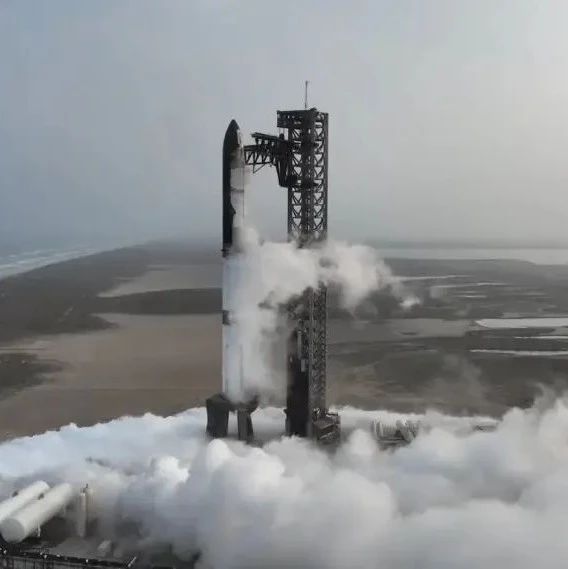
SpaceX“星舰”取消第八次试飞任务;3D打印“水凝胶”有望用于载人火星任务丨商业航天大事记
创业邦· 2025-03-04 10:43
Milestones - Firefly Aerospace's "Blue Ghost Mission 1" successfully landed on the Moon on March 2, 2025, carrying 10 scientific instruments for future lunar missions [4][5] - Rocket Lab reaffirmed its plan for the first launch of the Neutron rocket in the second half of 2025, despite previous reports suggesting a delay to 2027 [6][7] - Virgin Galactic plans to start assembling its new Delta-class suborbital spaceplane in March 2025, with test flights expected in spring 2026 [8][9] - Isar Aerospace completed the static fire test of its Spectrum rocket, with the first test flight expected to take place in Norway [10][11] - SpaceX canceled the eighth test flight of its Starship due to an unspecified technical issue [13][14] - China successfully launched the Long March 2C rocket, adding two SuperView remote sensing satellites to its constellation [15][16] - Kapta Space announced its goal to develop space-based radar systems using metasurface technology, having secured $5 million in seed funding [17][18] - 3D-printed hydrogels are being developed as radiation protection for astronauts on Mars missions, with plans for mass production by 2026 [19][20] - NASA's "Lunar Pioneers" and the private asteroid probe "Odin" encountered issues after the IM-2 mission launch [21][22] - Varda Space's capsule successfully landed in Australia, carrying critical data for hypersonic vehicle development [23][24] - Swissto12 signed a contract with SES for electronic control antennas, marking a significant milestone for the company [25][26][27] - SpaceX's Falcon 9 successfully launched Intuitive Machines' second lunar lander, "Athena," carrying various payloads for lunar exploration [28][29] - Blue Origin completed its tenth crewed suborbital flight of the New Shepard vehicle [30][31] Company Developments - The FAA is considering awarding a $2.4 billion telecommunications infrastructure contract to SpaceX's Starlink service instead of Verizon [32][33] - Airbus incurred an additional €300 million in costs for its space projects, totaling €1.3 billion for 2024 [34] Financing Activities - Skylo Technologies raised $30 million to expand its direct-to-smartphone satellite services [36][37] - Magdrive secured $10.5 million in seed funding to develop its electric propulsion systems and establish a U.S. office [38][39] - OQ Technology received up to €17.5 million in EU funding to accelerate its direct-to-smartphone satellite communication service development [40][41]