
RoboSense

Search documents
RoboSense12月激光雷达交付突破18万台
Zheng Quan Shi Bao Wang· 2026-01-08 01:36
Core Viewpoint - RoboSense achieved a record delivery of over 180,000 LiDAR units in December, setting a new monthly delivery record [1] Company Summary - RoboSense's LiDAR delivery in December surpassed 180,000 units, indicating strong demand and operational efficiency [1]
“中国激光雷达公司,落后了!”
半导体行业观察· 2025-12-23 01:18
Core Viewpoint - The article discusses the declining reputation of LiDAR sensors in the automotive industry and explores the potential for Western LiDAR companies, particularly Voyant Photonics, to innovate with new technologies like FMCW LiDAR based on silicon photonics [1][4]. Group 1: Industry Trends - The investment boom in the LiDAR sector was driven by the autonomous vehicle craze, leading to the rise of SPACs [2]. - Chinese LiDAR suppliers, such as Hesai and RoboSense, have gained significant momentum, capturing 93% of the passenger vehicle market and 89% of the overall LiDAR market [4]. - The attempts of Western companies to penetrate the Chinese market have largely failed, as the market is considered inaccessible [4]. Group 2: Technological Innovations - FMCW LiDAR is viewed as superior to traditional ToF LiDAR due to its ability to directly measure speed, better sunlight interference resistance, and higher distance resolution [10]. - Voyant Photonics aims to leverage silicon photonics technology to create compact and affordable LiDAR sensors for various applications beyond automotive [7][10]. - The company has developed six generations of silicon photonic technology and plans to release its Carbon series FMCW LiDAR products in 2025, which will feature advanced capabilities [12]. Group 3: Competitive Landscape - There are 15 to 20 companies developing silicon photonic FMCW LiDAR, with American firms being particularly active [14]. - SiLC Technologies stands out among competitors for its maturity in FMCW development, while Voyant focuses on integrated beam control to eliminate complex mechanical components [15]. - The potential for Voyant to enter the automotive market remains uncertain, with suggestions that it could sell packaged photonic chips to existing LiDAR manufacturers [16].

激光雷达先驱,或破产,都怪大客户?
3 6 Ke· 2025-11-18 02:05
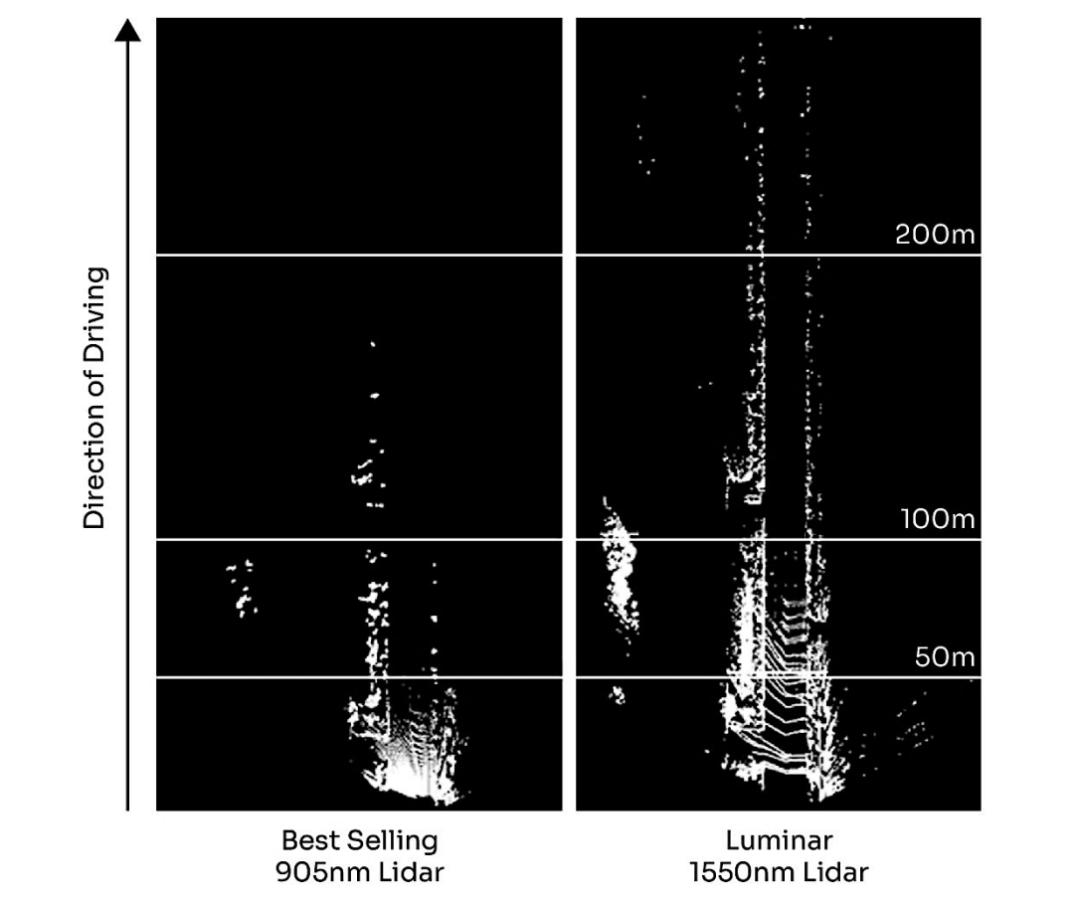
Core Insights - Volvo has canceled its five-year contract with Luminar due to the latter's failure to meet contractual obligations, aiming to limit supply chain risks [1] - Luminar is facing severe financial difficulties, including loan defaults and potential bankruptcy, as it struggles to maintain its business operations [1][8] Company Overview - Luminar, founded by Austin Russell in 2012, specializes in advanced lidar technology for automotive applications, utilizing a 1550nm wavelength for enhanced safety and performance [2][6] - The company has historically relied on partnerships with major automotive manufacturers, notably Volvo, which has significantly contributed to its credibility and market presence [7] Recent Developments - The conflict between Luminar and Volvo became public on October 31, when Volvo announced it would not use Luminar's lidar in its upcoming models, leading Luminar to claim significant losses and halt further commitments [9] - Luminar's CEO has indicated a strategic shift towards non-automotive markets and is considering asset sales or a complete business sale due to uncertainties stemming from the Volvo partnership [8][10] Market Context - The global automotive lidar market is projected to grow significantly, with a compound annual growth rate (CAGR) of 28% from 2024 to 2030, indicating increasing competition and demand for lidar technology [11] - Chinese lidar manufacturers are gaining market share, with companies like Hesai Technology and RoboSense leading the market, while Western firms face challenges in cost and market penetration [15][14] Technological Insights - Luminar's lidar technology offers superior resolution and detection range compared to competitors, with a resolution potential 17 times greater than lower wavelength lidar systems [4][2] - The lidar industry is evolving, with advancements in technology such as VCSELs and new receiver designs enhancing performance and reducing costs, which may impact Luminar's competitive position [16]

激光雷达先驱,或破产,都怪大客户?
半导体行业观察· 2025-11-18 01:40
Core Viewpoint - Volvo has canceled its five-year contract with Luminar due to Luminar's failure to meet contractual obligations, highlighting the increasing tensions between the two companies and Luminar's precarious financial situation, which may lead to bankruptcy [2][12][15]. Group 1: Luminar's Technology and Market Position - Luminar, founded by Austin Russell in 2012, has developed advanced lidar technology using a 1550nm wavelength, which offers significant advantages in safety and performance for automotive applications [4][6]. - The company claims that its 1550nm lidar can achieve 17 times the photon emission potential and four times the detection range compared to lower wavelength alternatives [6][8]. - Luminar's lidar technology has been integrated into various automotive models, with Volvo being a key partner, which has significantly contributed to Luminar's credibility and market presence [10][11]. Group 2: Financial Performance and Strategic Challenges - In Q3 2025, Luminar reported revenues of $18.7 million, a 20% quarter-over-quarter increase, primarily driven by sensor deliveries and non-recurring engineering revenue [13]. - The CEO emphasized a strategic shift towards non-automotive markets and the importance of LSI photon business, which now accounts for one-third of Luminar's annual revenue [13]. - The uncertainty surrounding the partnership with Volvo has raised concerns about Luminar's future, leading to potential asset sales or business divestitures [13][14]. Group 3: Industry Trends and Competitive Landscape - The global automotive lidar market is projected to grow from $861 million in 2024 to $3.804 billion by 2030, with a compound annual growth rate (CAGR) of 28% [17]. - Chinese lidar manufacturers are gaining market share, with companies like Hesai Technology and RoboSense leading the market, while Western firms face challenges due to higher costs and slower adoption rates [20][21]. - The average price of lidar systems is expected to decrease significantly, with entry-level models projected to cost around $200 post-2025, driven by advancements in technology and increased production [23].

RoboSense LiDARs Joins NVIDIA DRIVE Platform To Boost Autonomous Driving Technologies
Yahoo Finance· 2025-09-30 18:58
Core Insights - NVIDIA Corporation (NASDAQ:NVDA) is recognized as one of the best semiconductor stocks with significant upside potential [1] - The collaboration between NVIDIA and RoboSense enhances the development of autonomous driving systems by providing high-definition 3D perception data [1][2] - RoboSense's CEO highlighted that the integration of their LiDAR technology with NVIDIA's platform will accelerate the commercialization of intelligent vehicles, such as Robotaxis [2] Company Developments - The NVIDIA DRIVE AGX platform is now compatible with RoboSense's E1, EMX, and EM4 digital LiDARs, which are crucial for autonomous driving technology [1][2] - RoboSense is noted for manufacturing a unique >500-beam digital main LiDAR (EM4) and a fully solid-state blind-spot LiDAR (E1) [2] Market Impact - The EM4+E1 solution offers long-range precision and eliminates blind spots, making it a preferred choice for Robotaxi developers [3] - RoboSense's 520-beam LiDAR is being integrated into next-generation Advanced Driver Assistance Systems (ADAS) by automakers like Zeekr and IM, indicating strong market demand [3]

人形机器人考察要点_市场展望、组件与具身人工智能-Humanoid Robot tour takeaways_ market outlook, components and embodied AI
2025-09-18 13:09
Summary of Conference Call Notes on Greater China Industrials (Humanoid Robots and Autonomous Driving) Industry Overview - The humanoid robot and autonomous driving (AD) sectors in China are expected to experience rapid expansion over the next decade, with significant growth anticipated in factory settings within 2-3 years and further opportunities in commercial and household applications in the long term [1][1] - The current bill of materials (BOM) cost for a fully-functional humanoid robot is approximately US$50-60k, with expectations for rapid cost reductions in the next five years due to improved product design and economies of scale [1][1] - Stricter regulations in the AD sector are anticipated to create more opportunities for AD components, particularly for LiDAR technology, which will benefit from new long-distance object detection requirements [1][1] Key Players and Developments Dobot - Dobot is a leading global collaborative robot (COBOT) brand, achieving a 47% year-over-year growth in 6-axis COBOT sales in the first half of 2025, indicating market share gains [8][8] - The company has entered the humanoid robot market, launching its first prototype in early 2025 and planning deployment in manufacturing and business scenarios [9][9] RoboSense - RoboSense is focusing on its new EMX LiDAR products, which offer superior precision and detection distance compared to competitors, with expectations to ship 600-700k units in 2025 and 1.5 million units in 2026 [10][10] - The company is also exploring opportunities in the lawn mower, unmanned delivery, and robotaxi industries, with significant partnerships established [11][11] Zhaowei Machinery & Electronics - Zhaowei has launched new dexterous hand models for humanoid robots and aims for a 10-15% global market share in this segment [12][12][13][13] - The BOM cost of the dexterous hand is estimated to account for 20-30% of the total BOM cost of a humanoid robot [13][13] Googol Technology - Googol Technology specializes in high-end control systems for advanced manufacturing and sees strong growth potential in humanoid robots due to its expertise in multi-degree-of-freedom (DoF) controlling [14][15] Minieye - Minieye is making progress with its smart driving solutions, including iPilot and iRobo, and anticipates significant growth in the penetration of front-view camera modules and driver monitoring systems due to new safety regulations [16][17] Leju Robotics - Leju targets to deliver over 1,000 units of robotics in 2025, focusing on stability and durability for large-scale applications [18][18] Orbbec - Orbbec is a leading player in robot vision systems, holding over 70% market share in 3D vision systems for service robots in China [21][21][22][22] UBTECH - UBTECH aims to ship 500 humanoid robots in 2025 and 2,000-3,000 units in 2026, with expectations for BOM cost reductions in the coming years [23][23][24][24] LK Tech - LK Tech is focusing on magnesium alloy technology for humanoid robots, which offers lightweighting and other advantages, and has signed cooperation agreements for R&D projects [25][26][26] Technology Insights - The competition between VLA (Vision-Language-Action) and world model technologies for embodied AI is highlighted, with data availability being a key bottleneck [3][3] - The vision system of humanoid robots is evolving, with depth cameras becoming the mainstream choice for enhancing sensing and navigation capabilities [22][22] Market Outlook - The humanoid robot market is expected to grow significantly, with projections of 3 million units shipped by 2030, leading to substantial opportunities for component suppliers [13][13] - The average selling price (ASP) of humanoid robots is expected to decline to approximately RMB150k (~US$20k) by 2026-2028 due to scale effects [20][20] Conclusion - The humanoid robot and AD sectors in Greater China are poised for significant growth, driven by technological advancements, regulatory changes, and increasing market demand. Key players are actively innovating and expanding their product offerings to capture market share in this rapidly evolving landscape.

RoboSense LiDARs Supported on NVIDIA DRIVE Platform, Accelerates the Advancement of Autonomous Driving Technologies
Prnewswire· 2025-09-12 09:47
Core Insights - RoboSense has announced that its E1, EMX, and EM4 digital LiDARs are compatible with the NVIDIA DRIVE AGX platform, enhancing the development and testing cycles for autonomous driving technologies [1][2] - The integration of RoboSense's LiDARs with NVIDIA's platform aims to accelerate the commercialization of Robotaxi and intelligent vehicles, marking a significant shift in the automotive industry towards more advanced autonomous driving systems [2][3] Company Overview - RoboSense, founded in 2014, is an AI-driven robotics technology company based in Shenzhen, China, with a mission to become a global leader in robotics technology platforms [6] - The company has established a strong presence in the automotive sector, being the only one to mass-produce a digital main LiDAR with over 500 beams and a fully solid-state blind-spot LiDAR [3] Product Details - The EM4 LiDAR, which will enter mass production in Q3 2025, utilizes an integrated SPAD-SoC and VCSEL chip to deliver superior performance for intelligent vehicles and Robotaxi applications [3] - RoboSense's dual-LiDAR solution (EM4+E1) provides both long-range perception and near-field blind-spot elimination, making it a preferred choice among leading automotive players [3][5] Industry Trends - The automotive industry is transitioning from Level 2 (L2) to Level 3/4 (L3/L4) autonomous driving, necessitating higher performance sensors and AI computing platforms with greater processing capabilities [2] - The collaboration between RoboSense and NVIDIA is indicative of a broader trend towards deep integration of advanced sensors and AI technologies in the development of autonomous driving systems [2][4] Market Adoption - Multiple automakers are adopting RoboSense's EM4 or EM4+E1 LiDAR for next-generation advanced driver-assistance systems (ADAS) and autonomous vehicle products, with several new models already launched [5] - Notable examples include the Zeekr 9X and the new-generation IM LS6, both of which integrate RoboSense's 520-beam LiDAR in their ADAS solutions [5]
中国汽车零部件:聚焦激光雷达 —— 智能驾驶之眼
2025-08-25 01:38
Summary of the Conference Call on the China Auto Parts Sector - LiDAR Industry Overview - The focus is on the **China Auto Parts Sector**, specifically the **LiDAR** technology within the context of smart driving and autonomous vehicles [2][3]. Key Insights 1. **Growth of Smart Driving**: The smart driving theme has been pivotal in the auto supply chain since 2020, with significant growth in related technologies such as smart cockpits and driving controllers [3][8]. 2. **LiDAR Adoption Forecast**: LiDAR adoption in China is projected to increase from approximately **10%** currently to **50%** by **2030**, driven by decreasing costs and increasing integration in economy segment cars [3][10]. 3. **Market Size Expansion**: The global LiDAR market is expected to grow from **US$1.3 billion** in **2025** to **US$6.5 billion** by **2030**, representing a **37% CAGR** [4][9]. 4. **Chinese Suppliers' Dominance**: Chinese companies, particularly **Hesai** and **RoboSense**, are forecasted to capture **70%** of the global LiDAR market share by shipments by **2030**, with a combined share of **42%** [5][16]. Market Drivers 1. **ADAS Penetration**: The growth in Advanced Driver Assistance Systems (ADAS) is a primary driver for LiDAR adoption, with expectations for the global PV ADAS LiDAR market to reach **Rmb35.8 billion** by **2030**, growing at a **40% CAGR** [21][24]. 2. **Technological Advancements**: Continuous improvements in technology and system integration are expected to stabilize LiDAR prices, which have dropped from **US$800** to **US$200** over the past three years [11][23]. 3. **Autonomous Mobility Growth**: The development of autonomous vehicles, including robotaxis and robotic lawnmowers, is anticipated to further drive LiDAR demand, with the market for these applications projected to grow from **Rmb2.8 billion** in **2025** to **Rmb10.9 billion** by **2030** [88][89]. Pricing Dynamics - The current price of **US$200** for entry-level LiDAR is deemed affordable for economy segment cars, leading to expectations of limited price declines over the next five years [11][23][74]. - The cost of LiDAR is projected to constitute **1-2%** of the total cost of an ADAS system in economy cars priced below **Rmb150k** [73][74]. Competitive Landscape - **Hesai** and **RoboSense** are highlighted as the leading LiDAR suppliers, with strong partnerships with major automakers and significant order backlogs [5][8]. - The report emphasizes the importance of technological diversification among leading Chinese suppliers to maintain competitive advantages [21][88]. Consumer Trends - High consumer acceptance of driving assistance features is noted, with **93%** of Chinese consumers considering these features essential or desirable [36][42]. - Interest in fully autonomous vehicles is also high, with around **80%** of Chinese consumers expressing interest [37][42]. Regulatory Environment - The regulatory landscape in China is seen as favorable for the advancement of ADAS technologies, with clear policies supporting the deployment of these systems [30][32]. Conclusion - The LiDAR market in China is positioned for substantial growth, driven by technological advancements, increasing adoption in vehicles, and strong consumer demand for enhanced driving assistance features. The dominance of Chinese suppliers in this space is expected to continue, supported by favorable market conditions and regulatory frameworks.