Souq

Search documents
中国人闯沙特
投资界· 2025-10-19 07:44
Core Viewpoint - The article discusses the cultural clash between Chinese workers and Saudi labor practices in the context of large-scale projects in Saudi Arabia, highlighting the differences in work ethics, labor conditions, and the impact of local regulations on foreign workers [4][5][9]. Group 1: Labor Culture Clash - Chinese workers in Saudi Arabia work under extreme conditions, often exceeding 12 hours a day, with monthly earnings around 28,000 RMB, which is double the domestic salary for similar roles [7][8]. - The work ethic of Chinese laborers is driven by a belief that "time is money," leading to a high-pressure environment to meet deadlines, contrasting sharply with the more relaxed approach of local Saudi workers who adhere to religious practices and shorter work hours [5][9]. - The Saudi labor market is characterized by a high percentage of foreign workers, with approximately 15.7 million expatriates, making up 44.4% of the total population, which creates a unique dynamic in labor relations [5][9]. Group 2: Economic and Social Implications - The "Kafala" sponsorship system in Saudi Arabia creates a significant divide between local and foreign workers, leading to disparities in pay and working conditions based on nationality [11][12]. - Local Saudi workers enjoy substantial benefits due to oil wealth, including high starting salaries and extensive vacation time, which can lead to a lack of motivation among the youth [13]. - The article highlights the psychological impact of wealth on Saudi youth, with a significant percentage experiencing mental health issues, indicating a disconnect between material wealth and personal fulfillment [13]. Group 3: Business Strategies and Adaptations - Chinese companies are adapting to local labor laws by initially hiring a large number of Saudi workers to meet regulatory requirements, then selectively retaining the most capable individuals for critical roles [19][20]. - There is a growing trend among Chinese firms to respect local customs and integrate local practices into their operations, such as adjusting work schedules around prayer times [19][20]. - Successful partnerships in the region often rely on local connections and trust-building, as exemplified by the collaboration between Chinese companies and established local businesses [15][16]. Group 4: Future Outlook - The article concludes that mutual respect and understanding between Chinese enterprises and Saudi society are essential for overcoming cultural barriers and achieving sustainable business success [22]. - The experiences of companies like JD Logistics and Sinopec in adapting to local conditions serve as examples of how cross-cultural collaboration can lead to shared benefits [20][21].


当中国“卷王”遇见“松弛感”沙特工人
虎嗅APP· 2025-10-15 09:50
Core Viewpoint - The article discusses the cultural clash between Chinese workers and Saudi labor practices in the context of large-scale construction projects in Saudi Arabia, highlighting the differences in work ethics, labor conditions, and the impact of local regulations on foreign labor [2][3][4]. Group 1: Labor Dynamics - Saudi Arabia has approximately 15.7 million foreign residents, making up 44.4% of the total population, with foreign labor being crucial to the economy [3]. - Chinese workers in Saudi Arabia often work over 12 hours a day under extreme conditions, earning around 28,000 RMB per month, which is double the domestic salary for similar positions [5][6]. - The work culture in Saudi Arabia is influenced by religious practices, with local employees adhering to a more relaxed schedule, including multiple prayer breaks and shorter working hours during Ramadan [6][7]. Group 2: Wage Disparities - The article highlights a significant wage gap based on nationality, with Western experts earning up to five-digit salaries in USD, while experienced Chinese engineers earn between 3,000 to 8,000 USD per month [11]. - South Asian workers earn significantly less, with monthly salaries ranging from 200 to 600 USD, illustrating a stark contrast in living conditions and opportunities based on nationality [11][10]. Group 3: Cultural Integration Challenges - The "Kafala" sponsorship system in Saudi Arabia creates a divide between local and foreign workers, limiting the autonomy of foreign laborers [9][10]. - Chinese companies are adapting by localizing their workforce and respecting local customs, such as prayer times, to improve integration and productivity [17][18]. Group 4: Business Environment - Business operations in Saudi Arabia heavily rely on personal networks and relationships, making it essential for foreign companies to establish local partnerships to succeed [14][15]. - The article emphasizes the need for Chinese companies to adapt their business strategies to the local context, moving away from a purely efficiency-driven approach to one that respects local customs and practices [22][21].
出海必争地,再不去就晚了,特朗普靠中东之行逆风翻盘?
凤凰网财经· 2025-05-18 05:58
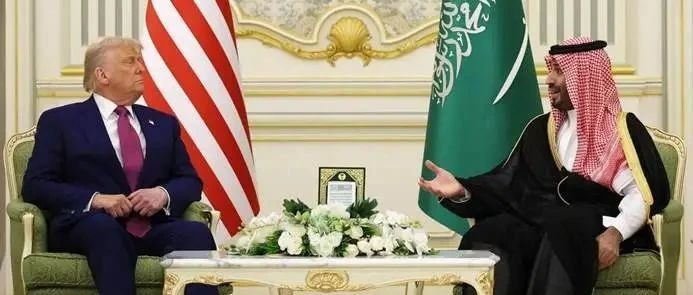
Group 1 - The core viewpoint of the article highlights the significance of Trump's Middle East visit, focusing on economic cooperation and substantial investments from Saudi Arabia to the U.S. [1] - Saudi Arabia has committed to investing $600 billion over the next four years, with plans to increase this to $1 trillion, covering sectors such as energy, defense, and technology [1] - A historic military sales agreement worth $142 billion was signed between Saudi Arabia and the U.S., encompassing five key areas including air force capabilities and missile defense [1] Group 2 - Trump's first visit to the Middle East comes after the imposition of global tariffs, which has led to significant market volatility and criticism from various political figures [2][4] - The article discusses the retaliatory measures taken by countries like India and the EU in response to Trump's tariff policies, indicating a broader impact on international trade relations [5][6] - The strategic importance of the Middle East is emphasized, as it serves as a global energy hub and a critical area for U.S. geopolitical interests [7] Group 3 - The Middle East is increasingly viewed as a strategic location for global enterprises, driven by its financial resources and energy reserves, with oil and gas accounting for nearly 60% of global supplies [10] - Economic growth in the Gulf states, particularly Saudi Arabia and the UAE, is projected to be robust, with GDP growth rates of 4.4%-5.3% and 4.9% respectively [10] - The region is undergoing economic diversification, with Saudi Arabia's Vision 2030 reform plan aiming to reduce reliance on oil and promote sectors like renewable energy and digital economy [13] Group 4 - The demographic structure of the Middle East, with a significant portion of the population under 25, is driving new consumer trends in entertainment, e-commerce, and technology [14] - The e-commerce market in the region is expected to reach $82 billion by 2025, with a notable increase in online shopping during Ramadan [14] - Local e-commerce platforms like Souq and Noon are highlighted as key players in the market, alongside the growing presence of Chinese cross-border e-commerce [15]