
Weave Communications, Inc.

Search documents
Why Weave Communications Stock Flopped on Friday
Yahoo Finance· 2026-02-20 23:56
Weave Communications (NYSE: WEAV) published its latest earnings release on Friday, and it'll probably spend the weekend wishing it hadn't. Mr. Market wasn't happy about the company's slight bottom-line miss, and punished Weave by selling out of its equity. By the end of the day, the company's shares had fallen by almost 5%. Focused on health Weave, which specializes in communications solutions for healthcare businesses, released its final set of 2025 figures. The fourth quarter saw the company earn reven ...

Weave Communications, Inc. Q4 2025 Earnings Call Summary
Yahoo Finance· 2026-02-20 13:30
Core Insights - The company achieved 17% year-over-year revenue growth in Q4, marking the 16th consecutive quarter of meeting or exceeding the high end of revenue guidance [1] - Performance was driven by strong adoption of payments and new location additions, particularly in the specialty medical vertical which saw record growth in Q4 [1] - Management attributes their competitive advantage to a 'data moat' built on billions of patient interactions and authorized integrations with practice management systems that horizontal AI providers cannot replicate [1] Business Model and Strategy - The platform is evolving from a communication tool into an 'orchestration layer' that treats patient interactions as single persistent threads across voice, text, and AI agents [1] - Strategic positioning focuses on capturing the practice's labor budget by automating administrative tasks like scheduling and billing, which are the largest components of SMB cost structures [1] Financial Performance - Gross margin reached a record 73.3%, driven by cloud infrastructure efficiencies and the amortization of older phone hardware and payment terminals [1] - The specialty medical vertical, currently at roughly 1% market penetration, is positioned as the primary growth engine due to its large addressable market and increasing integration depth [1]
Raymond James Downgrades Weave on Timing of Catalysts and SMB Software Pressure
Financial Modeling Prep· 2026-01-06 22:20
Core Viewpoint - Raymond James downgraded Weave Communications from Strong Buy to Outperform and reduced its price target to $10.00 from $12.00, reflecting a more challenging environment for small and mid-sized business software companies [1][2] Group 1: Company Performance and Initiatives - Weave continues to gain traction in growth initiatives, particularly in Specialty Medical, which has become its second-largest market by locations [2] - Progress in multi-office deployments includes a recent win covering over 600 locations, alongside a growing pipeline for its AI receptionist and automation solution, TrueLark [3] - Additional growth opportunities are identified through deeper integrations, improved product packaging, potential ARPC expansion via AI and payments offerings, and broader go-to-market partnerships [3] Group 2: Future Outlook - Although initiatives are expected to take time to materialize, there is a path toward re-accelerating growth and a return to a more consistent beat-and-raise pattern [4] - Shares are trading at 2x the 2026 sales estimate, but a full re-rating is unlikely until organic growth acceleration becomes more visible or the company shows a clearer path toward long-term profitability [4]


通胀数据提振市场,美股三大指数齐创新高
Feng Huang Wang· 2025-10-24 23:21
Market Overview - The three major indices reached historical closing highs due to moderate inflation data, leading investors to believe that the Federal Reserve can maintain its rate-cutting path, which supports higher valuations in the U.S. economy and stock market [1] - The Dow Jones index rose by 1.01% to 47,207.12 points, the S&P 500 index increased by 0.79% to 6,791.69 points, and the Nasdaq index climbed by 1.15% to 23,204.87 points [2] Inflation Data - The U.S. Consumer Price Index (CPI) for September rose by 3% year-on-year and 0.3% month-on-month, slightly below economists' expectations of 3.1% and 0.4% respectively; the core CPI, excluding food and energy, also fell short of expectations [6] - Following the CPI report, traders increased bets that the Federal Reserve would cut rates in its remaining meetings this year, with the probability of a December rate cut rising from approximately 91% to 98.5% [6] Stock Performance - Major bank stocks strengthened, with JPMorgan Chase, Wells Fargo, and Citigroup each rising about 2%, while Goldman Sachs and Bank of America also saw gains [6] - The S&P 500 index has increased by 15% year-to-date, and the Nasdaq has risen by 20% [6] Technology Sector - Major tech stocks saw gains, with Nvidia up 2.25%, Microsoft up 0.59%, Apple up 1.25%, Google up 2.70%, and Amazon up 1.41%; however, Tesla fell by 3.40% [7] Company News - AMD and IBM both reached historical highs, with AMD rising by 7.63% and IBM by 7.88%, following IBM's announcement that its quantum computing algorithms can run on AMD chips [8] - Morgan Stanley plans to allow institutional clients to use Bitcoin and Ethereum as collateral for loans, indicating a shift towards integrating cryptocurrencies into traditional finance [10] - Eli Lilly announced its acquisition of Adverum Biotechnologies for $3.56 per share, with potential additional payments based on the success of its experimental gene therapy product [11] - JD Logistics plans to purchase 3 million robots, 1 million unmanned vehicles, and 100,000 drones over the next five years to enhance its logistics supply chain [13]


3 Overlooked Stocks Where Rewards Outweigh the Risks
MarketBeat· 2025-10-20 11:25
Group 1: Weave Communications - Weave Communications has a market value of just over $500 million and specializes in communication software for small to medium-sized businesses, generating recurring revenue through industry-specific SaaS [2][3] - The company reported a 16% year-over-year revenue increase to nearly $59 million, exceeding estimates, and improved free cash flow to $3.4 million in the first half of the year [2][3] - A recent acquisition of TrueLark, which provides AI scheduling and customer service software, is expected to enhance Weave's offerings, particularly in its fast-growing medical business segment [3][4] - Analysts estimate a potential upside of nearly 130% for Weave shares, despite risks such as lack of profitability and competition from larger firms like Salesforce [4] Group 2: PubMatic - PubMatic operates as a supply-side advertising platform, enabling publishers to monetize digital content, and has achieved consistent profitability for ten years [5][6] - The company experienced a 19% year-over-year revenue growth, although shares are down approximately 45% year-to-date due to platform changes from a DSP partner [6][8] - PubMatic's ownership of its infrastructure allows it to maintain strong free cash flow and profitability, distinguishing it from larger ad-tech competitors [7][8] - Analysts project over 53% upside potential for PubMatic shares, indicating a possible recovery despite cyclical ad spending and economic factors [8] Group 3: Zeta Global - Zeta Global is a marketing technology firm leveraging AI for data processing and personalized outreach, with a total addressable market that is rapidly expanding [9][10] - The company reported a 35% year-over-year revenue increase to $308 million and generated net cash of $42 million from operating activities, reflecting a 35% year-over-year growth [10][11] - Zeta Global's free cash flow improved by 69% year-over-year to $34 million, prompting the company to raise its revenue and adjusted EBITDA guidance [11] - Despite challenges in profitability and regulatory concerns regarding data privacy, analysts see a 58% upside potential for Zeta shares, making it appealing to investors [12]


中国自动驾驶十年沉浮
3 6 Ke· 2025-07-09 02:45
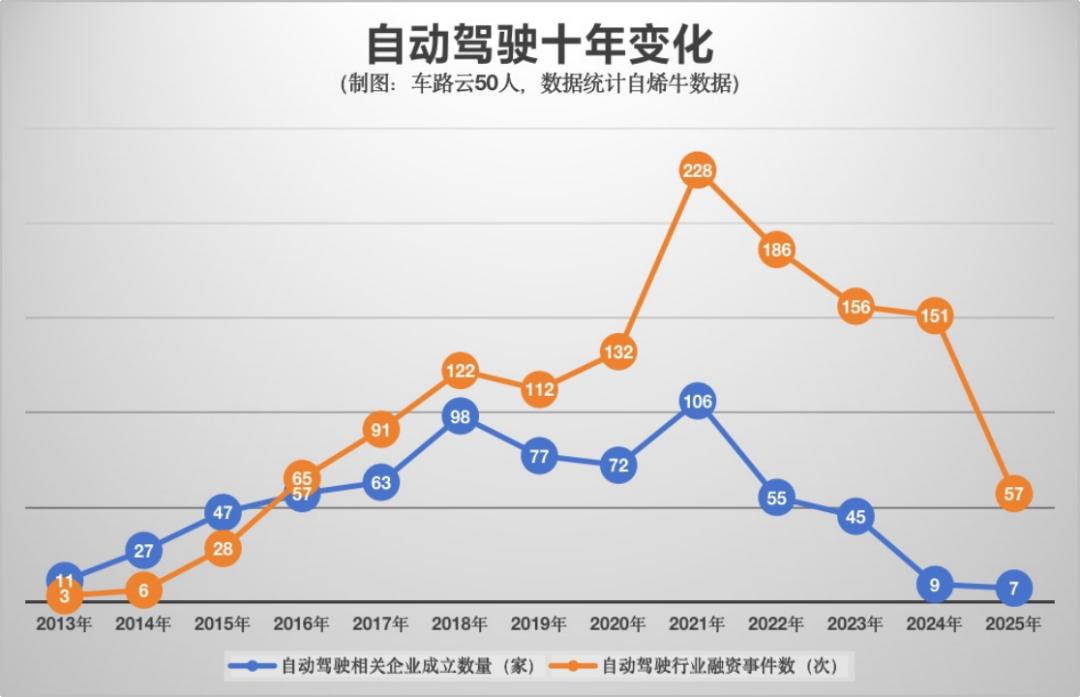
Core Viewpoint - The development of autonomous driving in China over the past decade has been marked by both significant advancements and notable setbacks, leading to a cautious and regulated environment for the industry [9][10][19]. Group 1: Historical Context and Initial Developments - In 2015, the Chinese government issued "Made in China 2025," highlighting autonomous driving as a key direction for the automotive industry's transformation [2]. - The first domestic autonomous bus test occurred in August 2015, marking a significant milestone in the industry [3][4]. - Baidu's autonomous vehicle showcased its capabilities in mixed traffic conditions in October 2015, further establishing the potential for autonomous driving in urban environments [5][6]. Group 2: Regulatory Changes and Industry Response - A fatal accident involving a vehicle in NOA mode led to stricter regulations, prohibiting misleading terms like "autonomous driving" in marketing [11][12]. - Companies such as Xiaomi, Li Auto, and others adjusted their marketing language to comply with new regulations, shifting from "smart driving" to "assisted driving" [14]. - The regulatory environment has led to a more cautious approach to testing and deploying autonomous vehicles in China [14]. Group 3: International Developments and Market Expansion - In contrast to China's regulatory tightening, international markets, particularly in the U.S. and the Middle East, are embracing autonomous driving technologies [15][16]. - Companies like Waymo and Tesla are making significant strides in commercializing autonomous taxi services and expanding operational areas [15][16]. - Chinese companies are increasingly looking to international markets for growth, with Baidu and Pony.ai establishing partnerships in the UAE for deploying autonomous fleets [17][18]. Group 4: Industry Challenges and Market Dynamics - The autonomous driving sector has experienced a rollercoaster of growth and decline, with many startups facing challenges due to regulatory pressures and market saturation [20][21]. - The number of new autonomous driving companies surged until 2018, but the industry faced a downturn following high-profile accidents and regulatory scrutiny [21][24]. - By 2021, the industry saw a resurgence driven by the pandemic, with a focus on contactless delivery and logistics applications [25][26]. Group 5: Financial Performance and Market Sentiment - Despite initial optimism, many newly listed autonomous driving companies have seen their market valuations decline significantly post-IPO [30][31][32]. - Companies like Horizon Robotics have bucked the trend, experiencing growth due to their strategic positioning as a key supplier for major automotive manufacturers [33]. - The market is witnessing a consolidation phase, with only a few companies expected to survive and thrive in the competitive landscape [37]. Group 6: Legislative and Regulatory Needs - The lack of comprehensive national legislation on autonomous driving in China is seen as a major barrier to the industry's growth and commercialization [42][45]. - In contrast, countries like the UK and the US have made significant legislative progress, establishing clear frameworks for the operation of autonomous vehicles [43][44]. - Industry experts advocate for the urgent need to develop a robust legal framework in China to facilitate the safe and effective deployment of autonomous driving technologies [45]. Group 7: Future Outlook - The next decade is expected to bring further maturation of the autonomous driving industry, with a focus on safety, regulatory compliance, and sustainable business models [48][49]. - The industry is moving towards a more pragmatic approach, emphasizing the integration of technology into everyday life rather than mere technological showcase [48].

广州拥有24家“独角兽”企业,接近韩国和日本两国总和
Guang Zhou Ri Bao· 2025-06-26 11:49
Group 1 - The core viewpoint of the article highlights Guangzhou's status as a hub for unicorn companies, with 24 unicorns currently, maintaining its position as the 11th globally and 4th domestically [1][2] - Notable changes include the successful IPOs of WeRide and Pony.ai, which are no longer on the list, with WeRide valued at 16 billion and Pony.ai at 34 billion [1] - New entrants to the unicorn list include chip manufacturer XinYueNeng and tech company QuWan, indicating a robust entrepreneurial ecosystem in Guangzhou [1] Group 2 - Deloitte's chairperson emphasized that Guangzhou's government plays a crucial role in fostering innovation by breaking down barriers and providing resources for businesses [1] - IDG Capital has invested over 8 billion in 56 companies in Guangzhou, focusing on sectors like new energy, autonomous driving, and advanced manufacturing, aligning with the city's "12218" modernization industrial system [1]