不良资产管理

Search documents
金融行业信用风险展望(2025年12月)
Lian He Zi Xin· 2026-01-14 11:07
Investment Rating - The report indicates a stable credit level for the local Asset Management Company (AMC) industry, with no rating adjustments noted for 2025 [8][39]. Core Insights - The local AMC industry is entering a phase of strict regulation, marked by the release of the "Interim Measures for the Supervision and Administration of Local Asset Management Companies" in July 2025, which establishes a unified regulatory framework [8][9]. - The industry is experiencing a trend of returning to its core business, with a reduction in the number of institutions and a clear differentiation in the competitive landscape, leading to a pronounced head effect [8][12]. - As of mid-2025, the industry has seen a slowdown in asset and net asset growth, although profitability has shown signs of recovery, and overall debt repayment risks remain moderate [8][12]. - The financing environment for local AMCs has improved, with a diversification of financing methods and a notable decrease in bond issuance costs [36][55]. Industry Policy and Regulatory Environment - The regulatory framework has shifted to a "strict regulation + encouragement of business development" approach since 2024, guiding AMCs to focus on their core business and enhance risk management [9][10]. - The new regulations require local AMCs to standardize operations and strengthen risk control, introducing quantitative regulatory indicators that will reshape the industry’s business ecology [9][10]. Industry Competition Status - The number of local AMCs has decreased, with a trend of internal license consolidation continuing, leading to a more competitive environment [12][13]. - The industry is witnessing a clear division between state-owned and private AMCs, with state-owned entities receiving more support from local governments due to their role in mitigating regional financial risks [16][18]. Industry Operating and Financial Conditions - The overall asset quality of local AMCs has been under pressure, particularly due to the real estate market downturn, which has affected asset valuations and liquidity [27][21]. - As of mid-2025, the net asset growth rate for local AMCs was recorded at 3.73%, indicating a strong capital position despite a slowdown in growth [28][29]. - Profitability indicators have shown a rebound in the first half of 2025, with total profits and net profits increasing by 25.35% and 21.13% year-on-year, respectively [30][31]. Financing and Debt Repayment Levels - The financing environment has improved, with an increase in the number of local AMCs issuing bonds, and the overall credit level remains stable [39][40]. - The industry has seen a significant decrease in bond issuance costs, with average financing costs dropping by approximately 35 basis points in 2025 [55][57]. - The debt repayment indicators are at a moderate level, with cash reserves covering short-term debts remaining stable [37][36].
中信金融资产(2799.HK)首次覆盖报告:拨云见日 双轮启航
Ge Long Hui· 2025-12-19 21:48
Core Viewpoint - The company is transitioning to a new business model that combines non-performing asset management and long-term equity investments, with the latter becoming a new stabilizing force for performance [1]. Group 1: Financial Performance Projections - The company is expected to achieve a year-on-year increase in net profit attributable to shareholders of 7.4%, 11.0%, and 8.6% from 2025 to 2027, reaching 10.33 billion, 11.46 billion, and 12.45 billion yuan respectively, with corresponding EPS of 0.13, 0.14, and 0.16 yuan, and BVPS of 0.83, 0.98, and 1.13 yuan [1]. - A valuation of 2x PB for 2025E is assigned to the company, resulting in a target price of 1.16 HKD, with an initial coverage rating of "Buy" [1]. Group 2: Non-Performing Asset Management - The company has been adjusting its structure since 2022, focusing on both the disposal of existing assets and maintaining acquisition pace while accelerating impairment provisions [2]. - New non-performing debt assets are projected to be 48.3 billion, 47.3 billion, and 49.1 billion yuan from 2022 to 2024, showing a year-on-year decrease of 44.38%, 2.20%, and an increase of 3.80% respectively; the balance of non-performing debts is expected to decline to 444.9 billion, 398.5 billion, and 342.9 billion yuan, with year-on-year changes of -9.36%, -10.43%, and -13.96% [2]. - Due to accelerated impairment, the income from non-performing asset disposals is forecasted to drop to 28.6 billion, 15.9 billion, and 3.8 billion yuan from 2022 to 2024, reflecting a year-on-year decline of 17.03%, 44.59%, and 76.12% [2]. Group 3: Long-Term Equity Investment - Long-term equity investments are positioned as a new stabilizing force to counteract industry cycles, providing steady returns and long-term value [2]. - The company prefers investments in blue-chip state-owned enterprises and industry leaders that offer stable cash flows, strong dividend capabilities, mature governance, and potential synergies with its ecosystem [2].
广发证券:给予中国信达“增持”评级 不良资产管理业务保持稳健
Zhi Tong Cai Jing· 2025-12-18 08:03
Core Viewpoint - China Cinda (01359) is participating in a merger transaction between CICC (601995) and Cinda Securities (601059), which is expected to result in a significant change in its shareholding structure and a one-time tax-adjusted gain of approximately RMB 20 billion [1] Group 1: Merger and Shareholding Changes - As of the announcement date, China Cinda holds 2.6 billion shares of Cinda Securities A-shares, accounting for approximately 78.67% of its equity. Following the merger, it is expected to no longer hold any A-shares of Cinda Securities and will receive 1.3 billion shares of CICC, representing about 16.71% of CICC's equity on a fully diluted basis [1] - The proposed merger is anticipated to generate a one-time post-tax gain of around RMB 20 billion for China Cinda, primarily due to the change in accounting treatment from cost method to fair value for the merger [1] Group 2: Business Performance and Asset Management - In the first half of 2025, despite a decline in disposal scale due to economic conditions, the acquisition scale of operational non-performing assets has continued to grow, indicating potential for an upward cycle. The internal rate of return for acquisition business in H1 2025 is 8.7%, slightly down from 8.9% for the entire previous year [2] - Revenue from the acquisition and restructuring business in H1 2025 is reported at RMB 676 million, a decrease of 65.5% year-on-year. The net amount of acquisition and restructuring assets has decreased from RMB 28.485 billion at the end of 2024 to RMB 24.948 billion by mid-2025, indicating an orderly clearance process [2] Group 3: Asset Quality and Investment - The investment balance for non-performing asset management is reported at RMB 211.12 billion at the end of 2024 and RMB 208.29 billion by mid-2025. New investments in H1 2024 and H1 2025 were RMB 16.16 billion and RMB 30.41 billion, respectively, with revenues of RMB 4.09 billion and RMB 1.75 billion, showing a continuous increase in investment and solidification of asset value [3] Group 4: Profit Forecast and Investment Recommendation - The company is expected to achieve a net profit attributable to shareholders of RMB 3.7 billion in 2025, representing a year-on-year growth of 21%. The corresponding BVPS is projected to be RMB 4.35, with a target price of HKD 1.89 per share, based on a 0.4x PB valuation for 2025 [4]

靴子落地,动能蓄势待发!海德股份迎海南封关新机遇
Zheng Quan Shi Bao Wang· 2025-11-28 14:22
Group 1 - Company received a notice from the China Securities Regulatory Commission regarding historical non-operating fund occupation, which has been fully repaid as of April 24, 2025 [1] - The company reported that its production and operational activities are normal and orderly, and the incident will not have a significant impact on its operations and management [1] - The company has completed the rectification of the fund occupation issue, confirmed by regulatory authorities and accountants, indicating a typical "negative news has landed" scenario [1] Group 2 - The third-quarter report for 2025 shows robust operational resilience and clear growth potential, with net cash flow from operating activities reaching 1.267 billion yuan, a year-on-year increase of 782.20% [2] - As of September 30, 2025, the company's cash balance was 340 million yuan, a 166.37% increase from the end of the previous year, indicating enhanced short-term payment capability [2] - The company's equity attributable to shareholders reached 5.392 billion yuan, a 3.27% year-on-year growth, reinforcing its risk resistance [2] Group 3 - The company is well-positioned to benefit from the special policy dividends of the Hainan Free Trade Port, which is entering a critical implementation phase [2] - The company’s existing business in non-performing asset management and capital management aligns well with the regional policies, providing opportunities for deep collaboration [3] - The company’s strong operating cash flow and optimized financial structure support its ability to seize opportunities in cross-border business expansion [3]

6000亿资产管理公司迎新掌门
21世纪经济报道· 2025-10-11 06:28
Core Viewpoint - The article discusses the appointment of Xiang Dang as the new chairman of China Great Wall Asset Management Co., Ltd., highlighting his extensive experience and risk management approach in the asset management industry [1][2]. Group 1: Leadership Transition - Xiang Dang will officially take over the chairman position after the retirement of the previous chairman, Li Junfeng, in December 2024, leading an asset management company with over 600 billion yuan in assets [1]. - Xiang Dang holds a Ph.D. in Technology Economics and Management from Chongqing University and has over 26 years of experience in the financial asset management sector [1]. Group 2: Professional Background - Xiang Dang began his career in 1999 at China Cinda, where he held various positions, accumulating significant frontline experience [1]. - From 2010 to 2019, he progressively advanced within the China Cinda system, eventually becoming the president assistant before joining Great Wall Asset Management as vice president in 2020 [1]. Group 3: Management Style and Team - Xiang Dang is known for his stable and pragmatic work style, focusing on business quality and recovery effectiveness rather than merely pursuing scale and profit [2]. - The management team of Great Wall Asset has been clarified post-adjustment, including key figures such as Hu Yongkang and Wang Chengwei [2]. Group 4: Company Overview - Great Wall Asset is one of the five national financial asset management companies, established in December 2016 with a registered capital of 46.8 billion yuan [3]. - The company has a service network across 30 provinces, autonomous regions, municipalities, and Hong Kong, with 32 subsidiaries and 8 holding companies [3].


2025年上半年地方资产管理公司行业分析
Lian He Zi Xin· 2025-08-07 07:15
Investment Rating - The report does not explicitly state an investment rating for the local asset management company (AMC) industry [2] Core Insights - The demand for resolving non-performing assets (NPAs) has increased due to fluctuations in the domestic macroeconomic environment, providing significant growth opportunities for the NPA management industry [4] - The local AMCs play a crucial role in the diversified market structure of the NPA management industry, primarily focusing on the acquisition, management, and disposal of NPAs [9][10] - The regulatory environment has evolved, with the establishment of a unified regulatory framework aimed at promoting the healthy development of the local AMC industry [12][20] Summary by Sections Industry Overview - The NPA management industry is characterized by a supply chain that includes upstream sources of NPAs, midstream management companies, and downstream investors [4][6] - The primary sources of NPAs include banks, non-bank financial institutions, and non-financial institutions, with banks being the traditional and largest source [5] Market Dynamics - The local AMCs have stabilized in number since 2021, with 59 recognized by regulatory authorities as of mid-2025, predominantly state-owned [9][10] - The development of local AMCs is closely correlated with the scale and quality of NPAs in their respective regions, influenced by local economic and regulatory environments [10] Regulatory Environment - The regulatory framework has shifted from a lenient approach to a more stringent one since 2019, with the introduction of the "153 Document" and the recent "Interim Measures for the Supervision and Management of Local Asset Management Companies" [11][12] - The new regulations emphasize compliance, risk management, and a return to core business functions for local AMCs, establishing specific quantitative indicators for monitoring [12][21] Business Trends - The local AMC industry is experiencing diversification in market supply, disposal methods, and financing channels, with a growing emphasis on "investment banking" style asset processing [15][16] - There is a noticeable internal differentiation within the industry, with state-owned AMCs receiving more support compared to their private counterparts, which face increasing operational challenges [17][18] Future Outlook - The local AMC industry is expected to continue evolving, with opportunities arising from economic recovery, real estate risk resolution, and financial institution reforms, despite facing significant competitive and regulatory pressures [20][21]
中国信达减持方正证券,再次“轮空”!
券商中国· 2025-07-30 23:33
Core Viewpoint - China Cinda's plan to reduce its stake in Founder Securities has once again ended without execution, indicating potential issues with the stock price not meeting expectations [2][9]. Summary by Sections Reduction Plans - China Cinda announced a plan to reduce its holdings by up to 82.32 million shares, approximately 1% of the total share capital, between April 29 and July 28, with a potential market value exceeding 600 million yuan at the time [2][3]. - As of July 28, the deadline for the reduction plan, China Cinda did not sell any shares and continues to hold 7.2% of Founder Securities [4]. Historical Context - China Cinda has made five reduction plans since becoming a shareholder of Founder Securities, with only three being executed, and two plans remaining unfulfilled [6]. - The first reduction attempt was in November 2022, which did not result in any sales by the deadline in May 2023 [7]. - The second attempt in July 2023 resulted in a 1% reduction, raising 784 million yuan, with the share price ranging from 8.65 to 10.06 yuan per share [7]. - The third attempt in April 2024 also failed to meet the target, with only a 0.15% reduction achieved [8]. Market Conditions - The failure of the latest reduction plan is attributed to changes in market conditions, particularly the stock price of Founder Securities not reaching the expected levels [9][10]. - During the planned reduction period, the stock price fluctuated between 7.28 yuan and 8.63 yuan, which is lower than the prices during previous successful reductions [10]. Financial Performance - Founder Securities is expected to report a net profit of 2.296 billion to 2.432 billion yuan for the first half of 2025, reflecting a year-on-year increase of 70% to 80% [11].


河北资产港交所IPO,聚焦不良资产管理,2023年亏损上亿
Ge Long Hui· 2025-07-18 08:31
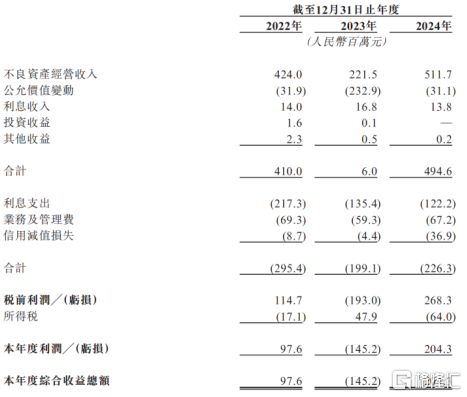
Core Viewpoint - Hebei Asset Management Co., Ltd. has submitted an application for an IPO on the Hong Kong Stock Exchange, aiming to enhance its competitive position in the non-performing asset management industry and capitalize on strategic opportunities arising from the economic transformation in Hebei Province [1][5]. Company Overview - Hebei Asset is the only local asset management company in Hebei with the qualification to acquire and dispose of non-performing financial assets in bulk [1]. - The company is controlled by Hebei Provincial Government's State-owned Assets Supervision and Administration Commission, with Hebei Construction Investment Group holding 56.5% of the voting rights [1]. Market Position - In 2024, Hebei Asset ranks second in the province for newly acquired non-performing assets by original value, with a market share of 24.4% [1]. - The company leads the market with a 47.2% share of non-performing assets acquired from small and medium-sized banks in Hebei [1]. Financial Performance - The company's non-performing asset management revenue for 2022, 2023, and 2024 is approximately RMB 424 million, RMB 222 million, and RMB 512 million, respectively [2][3]. - Net profit for 2022 was about RMB 98 million, while 2023 saw a net loss of RMB 145 million due to fair value losses on non-performing assets; the company is expected to return to profitability in 2024 with a net profit of RMB 204 million [2][3]. Industry Insights - The market for non-performing asset management services in China is projected to reach RMB 5.8 billion in 2024, with a compound annual growth rate of 28.0% from 2024 to 2029 [2]. - Non-performing asset management involves acquiring distressed assets at a discount and enhancing their value through management and restructuring [2]. Risks and Challenges - The supply of non-performing assets is influenced by macroeconomic conditions, asset quality, and the willingness of financial institutions to sell [4]. - The company faces operational risks related to the quality of its asset portfolio, with a significant fair value loss recorded in 2023 [4]. - High concentration risk exists, with the top five clients contributing 66.6% of revenue and the top five suppliers accounting for 69% of purchases in 2024 [4].
地方AMC迎监管新规 行业合规经营水平将提高
Zheng Quan Ri Bao· 2025-07-16 16:14
Core Viewpoint - The introduction of the "Interim Measures for the Supervision and Administration of Local Asset Management Companies" is a significant step in enhancing the regulatory framework for local asset management companies (AMCs) in China, aimed at improving risk management and compliance within the industry [1][2]. Summary by Sections Regulatory Framework - The new measures establish a unified regulatory framework for local AMCs, clarifying their business scope, operational regions, and primary responsibilities [1][3]. - The measures emphasize the importance of corporate governance, internal control systems, and risk management frameworks for local AMCs [1]. Business Operations - Local AMCs are permitted to engage in various activities, including the acquisition, management, and disposal of non-performing assets, as well as acting as bankruptcy administrators and providing consulting services [2]. - The measures set clear operational boundaries, prohibiting local AMCs from engaging in practices such as guaranteeing principal and fixed returns, facilitating false asset reporting, and creating hidden local government debts [2]. Industry Trends - The introduction of these measures is expected to lead to a higher level of industry standardization and a return to core responsibilities for local AMCs, focusing on the management of non-performing assets [3]. - The measures are anticipated to drive local AMCs to innovate their business models and enhance their internal and compliance management capabilities, thereby playing a unique role in revitalizing assets and supporting the real economy [3].
金融监管总局发布地方AMC新规:统一监管框架,划定五条展业红线
券商中国· 2025-07-15 23:16
Core Viewpoint - The article discusses the implementation of the "Interim Measures for the Supervision and Administration of Local Asset Management Companies" by the Financial Regulatory Bureau, aimed at standardizing the operations of local asset management companies (AMCs) and enhancing their focus on core responsibilities while effectively serving local needs [1][2]. Regulatory Framework - The new measures are a significant step in establishing a unified regulatory framework for local AMCs, addressing previous issues of fragmented management and regulatory oversight [3][4]. - The provincial financial management institutions are designated as the primary supervisory bodies for local AMCs, ensuring accountability and coordination with the Financial Regulatory Bureau [4]. Business Scope and Restrictions - The measures delineate the business scope for local AMCs, allowing them to engage in the acquisition, management, and disposal of non-performing assets, while prohibiting activities outside this scope [7][8]. - Five key operational restrictions are established, including prohibitions against guaranteeing principal and fixed returns, facilitating false reporting for financial institutions, and engaging in illegal debt recovery practices [9][10]. Risk Management Requirements - The measures introduce specific risk management requirements, including limits on concentration risk, liquidity risk, and related party transactions [11][12][14]. - Local AMCs are required to maintain a minimum level of high-quality liquid assets to cover net cash outflows for the next 30 days [13]. Industry Outlook - The importance of local AMCs is highlighted, with projections indicating that the scale of non-performing asset management will reach RMB 16,877 billion by 2029, with a compound annual growth rate of 14.8% from 2024 to 2029 [6].