
长期股权投资

Search documents
百大集团股份有限公司关于对上海证券交易所业绩预告相关事项监管工作函回复的公告
Shang Hai Zheng Quan Bao· 2026-02-10 18:12
Core Viewpoint - The company has received a regulatory letter from the Shanghai Stock Exchange regarding its performance forecast and has provided detailed responses concerning its investment in Hangzhou Industrial Trust (杭工信) and the associated fair value losses [1][4]. Group 1: Investment in Hangzhou Industrial Trust - The company reported a significant fair value loss of approximately 94.4 million yuan related to its investment in Hangzhou Industrial Trust, with the investment amounting to 306 million yuan and a book value of 220 million yuan as of mid-2025 [1][4]. - The fair value losses for the years 2023 and 2024 were 11.32 million yuan and 37.43 million yuan, respectively [1]. - The company is required to disclose the financial and operational data of Hangzhou Industrial Trust for the past three years, including total assets, liabilities, net assets, operating income, and net profit [1]. Group 2: Fair Value Measurement and Losses - The company classifies its equity investment in Hangzhou Industrial Trust as a financial asset measured at fair value, with changes recognized in profit or loss [2][3]. - The fair value measurement methodology includes using market prices when available, or estimating based on the financial performance of the underlying assets when market prices are not available [3][14]. - The company confirmed that the significant fair value losses were due to substantial changes in Hangzhou Industrial Trust's financial condition, leading to continuous net losses and a decrease in net assets over the past three years [4][17]. Group 3: Financial Assets and Performance - As of the end of 2023, 2024, and mid-2025, the company's financial assets measured at fair value were valued at 1.526 billion yuan, 1.692 billion yuan, and 1.697 billion yuan, respectively, with corresponding fair value losses of -171 million yuan, 23.568 million yuan, and -3.8297 million yuan [5][17]. - The company has also reported its trading financial assets, non-current assets due within one year, and other non-current financial assets, with respective values of 1.229 billion yuan, 110 million yuan, and 358 million yuan as of mid-2025 [5]. Group 4: Long-term Equity Investments - The company's long-term equity investments were valued at 580 million yuan, 579 million yuan, and 584 million yuan at the end of 2023, 2024, and mid-2025, respectively [17][18]. - The company uses the equity method for accounting its long-term equity investments, reflecting its significant influence over the invested companies [18][22]. - The company has confirmed that there are no significant impairment risks associated with its long-term equity investments, as the underlying companies have shown stable operational performance [24][25].

险资新年第一举!太保举牌上海机场,去年险资41次举牌创十年新高
第一财经· 2026-01-13 13:46
Core Viewpoint - In 2026, insurance capital has resumed its trend of significant shareholding increases, with a notable example being the increase in Shanghai Airport shares by Taibao Asset, marking the first major investment of the year [3][4]. Group 1: Recent Trends in Insurance Capital - The past two years have seen a resurgence in insurance capital's shareholding activities, with 41 instances of shareholding increases in 2025, up from 20 in 2024, approaching the historical peak of 62 in 2015 [4][3]. - Analysts attribute this new wave of shareholding to a low-interest-rate environment, which has shifted focus towards dividend stocks and long-term equity investments to enhance return on equity (ROE) [3][7]. Group 2: Characteristics of Recent Shareholding Activities - The current wave of shareholding differs from previous peaks, as it is driven by the need for stable cash returns from high-dividend stocks and the optimization of asset allocation in a declining interest rate environment [7][8]. - The introduction of new accounting standards has created a dilemma for stock investments, leading to a preference for high-dividend stocks that can stabilize profit fluctuations [8][20]. Group 3: Key Players and Their Strategies - The "Ping An Group" has been the most active, participating in 15 shareholding increases, primarily targeting bank and insurance stocks [13][15]. - Other notable participants include Changcheng Life and Ruizhong Life, which have diversified their targets compared to Ping An's focused approach [13][15]. Group 4: Preferred Investment Targets - Bank stocks have been the most favored, with 17 instances of shareholding increases, accounting for 41.5% of the total [15][18]. - The average dividend yield of the targeted companies has increased to approximately 5.0%, making them attractive for long-term investment [19]. Group 5: Future Outlook - The trend of insurance capital increasing shareholdings is expected to continue into 2026, driven by the ongoing demand for high dividend yields and ROE [22]. - Policies encouraging long-term capital market participation are anticipated to provide further opportunities for insurance capital investments [22].


一年四度“举牌”,平安看中了招行什么?
Huan Qiu Lao Hu Cai Jing· 2026-01-09 12:17
Core Viewpoint - Ping An Life has significantly increased its stake in China Merchants Bank (CMB), reaching 20.07% of CMB's H-shares by December 31, 2025, triggering regulatory disclosure requirements. This move is driven by the potential for long-term equity investment accounting benefits and high dividend yields from CMB [1][3][9]. Investment Activity - Ping An Life has made four separate acquisitions of CMB H-shares throughout 2025, starting with an initial purchase of 1.89 million shares for approximately 72.54 million HKD, reaching a 5% stake by January 10, 2025. Subsequent purchases increased its stake to 10%, 15%, and finally 20% by the end of the year [3][4]. - As of the end of 2025, Ping An Life holds approximately 922 million shares of CMB H-shares, with a book value of 43.96 billion CNY, up from 8.09 billion CNY at the time of the first acquisition [4]. Financial Implications - The net asset value of Ping An Life's holdings in CMB is approximately 50.75 billion CNY, exceeding its book value by 4.19 billion CNY. If Ping An Life appoints a director to CMB, it could recognize around 6.79 billion CNY in non-operating income [2][10]. - The trend of insurance capital appointing directors to banks has been increasing, with several insurance companies, including Dajia Life and Xinhua Life, making similar moves to enhance their influence and financial reporting [2][10]. Market Context - CMB has been experiencing declining performance metrics, with revenue growth slowing significantly since 2022. The bank's revenue growth fell from 14.04% in 2021 to 4.08% in 2022, and further into negative territory in 2023 and 2024 [5][6]. - The retail banking sector, which is crucial for CMB, has seen a decrease in profitability due to lower net interest margins and a decline in retail loan demand. The average cost of retail deposits has risen, while the average yield on retail loans has decreased, leading to a higher cost-to-income ratio [5][6]. Accounting Considerations - The new accounting standards allow insurance companies to classify equity investments at fair value, which can stabilize reported earnings. This has led to a preference for high-dividend stocks like CMB, as dividends can be recognized as investment income without affecting profit and loss statements [7][8]. - The potential for recognizing significant non-operating income through equity method accounting is a key driver for insurance companies like Ping An Life to increase their stakes in banks, especially those trading below book value [9][10].
健康元:公司通过控股子公司丽珠集团间接持有新元素药业的股权比例较低
Mei Ri Jing Ji Xin Wen· 2026-01-06 08:49
Core Viewpoint - The company holds a 6.1% stake in New Element Pharmaceuticals through its subsidiary, Lizhu Group, which is classified as a long-term equity investment. The listing of New Element Pharmaceuticals on the Hong Kong Stock Exchange is not expected to have a significant financial impact on the company [1]. Group 1 - The company indirectly holds a 6.1% stake in New Element Pharmaceuticals through its subsidiary, Lizhu Group, which has a 47.18% ownership [1]. - The investment in New Element Pharmaceuticals is categorized as a long-term equity investment [1]. - The successful listing of New Element Pharmaceuticals will not have a major financial impact on the company [1].

天齐锂业股份有限公司关于公司重要参股公司签署重大合同的进展公告
Shang Hai Zheng Quan Bao· 2025-12-29 21:13
Group 1 - The core point of the article is the partnership agreement signed between Sociedad Química y Minera de Chile S.A. (SQM) and Corporación Nacional del Cobre de Chile (Codelco) to develop lithium and potassium resources in the Atacama salt flat, which involves the merger of Codelco's subsidiary Minera Tarar into SQM's subsidiary Salar S.A. [2] - The agreement establishes the rights and obligations of both parties and aims to enhance the production and subsequent sales of lithium and other products [2]. - The Chilean Financial Market Commission (CMF) ruled that the partnership agreement should be analyzed and decided by SQM's board rather than a special shareholders' meeting, rejecting a request for an injunction from Tianqi Lithium's subsidiary [3][4]. Group 2 - Tianqi Lithium's subsidiary filed an administrative review against the CMF's decision, which was later rejected, leading to a lawsuit filed in Chilean court [5][6]. - On December 27, 2025, SQM announced the completion of its strategic cooperation with Codelco, with the joint venture named Nova Andino Litio SpA, although it remains subject to a condition pending a ruling from the Chilean Supreme Court regarding Tianqi Lithium's appeal [7]. - The partnership agreement is expected to impact the investment returns and dividend amounts that the company holds in SQM, with ongoing assessments of its financial implications [8].

天齐锂业(09696) - 公司重要参股公司签署重大合同之进展情况
2025-12-29 13:33
香港交易及結算所有限公司及香港聯合交易所有限公司對本公告的內容概不負責,對其準確性 或完整性亦不發表任何聲明,並明確表示,概不對因本公告全部或任何部分內容而產生或因倚 賴該等內容而引致的任何損失承擔任何責任。 Tianqi Lithium Corporation 天齊鋰業股份有限公司 (於中華人民共和國註冊成立的股份有限公司) (股份代號:9696) 公司重要參股公司簽署重大合同之進展情況 茲提述天齊鋰業股份有限公司(「本公司」或「公司」)日期為2024年6月3日、2024 年6月19日、2024年7月29日、2025年11月12日及2025年11月24日之公告(「該等 公告」),內容有關本公司重要參股公司SQM與Codelco簽署合夥協議及本公司全 資子公司提起訴訟的事宜。除非文義另有所指,本公告所用詞彙與該等公告所界 定者具有相同涵義。 對公司的影響 根據SQM的公告,交易仍受一項解除性條件約束,即有待智利最高法院就公司全 資子公司天齊智利提起的上訴作出裁決。 進展情況 智利當地時間2025年12月27日,SQM披露稱已完成其與Codelco之間的戰略合 作,合營公司SQM Salar名稱將變更為Nova ...
中信金融资产(2799.HK)首次覆盖报告:拨云见日 双轮启航
Ge Long Hui· 2025-12-19 21:48
Core Viewpoint - The company is transitioning to a new business model that combines non-performing asset management and long-term equity investments, with the latter becoming a new stabilizing force for performance [1]. Group 1: Financial Performance Projections - The company is expected to achieve a year-on-year increase in net profit attributable to shareholders of 7.4%, 11.0%, and 8.6% from 2025 to 2027, reaching 10.33 billion, 11.46 billion, and 12.45 billion yuan respectively, with corresponding EPS of 0.13, 0.14, and 0.16 yuan, and BVPS of 0.83, 0.98, and 1.13 yuan [1]. - A valuation of 2x PB for 2025E is assigned to the company, resulting in a target price of 1.16 HKD, with an initial coverage rating of "Buy" [1]. Group 2: Non-Performing Asset Management - The company has been adjusting its structure since 2022, focusing on both the disposal of existing assets and maintaining acquisition pace while accelerating impairment provisions [2]. - New non-performing debt assets are projected to be 48.3 billion, 47.3 billion, and 49.1 billion yuan from 2022 to 2024, showing a year-on-year decrease of 44.38%, 2.20%, and an increase of 3.80% respectively; the balance of non-performing debts is expected to decline to 444.9 billion, 398.5 billion, and 342.9 billion yuan, with year-on-year changes of -9.36%, -10.43%, and -13.96% [2]. - Due to accelerated impairment, the income from non-performing asset disposals is forecasted to drop to 28.6 billion, 15.9 billion, and 3.8 billion yuan from 2022 to 2024, reflecting a year-on-year decline of 17.03%, 44.59%, and 76.12% [2]. Group 3: Long-Term Equity Investment - Long-term equity investments are positioned as a new stabilizing force to counteract industry cycles, providing steady returns and long-term value [2]. - The company prefers investments in blue-chip state-owned enterprises and industry leaders that offer stable cash flows, strong dividend capabilities, mature governance, and potential synergies with its ecosystem [2].
上市公司以“换股”的方式购买资产,究竟是怎么回事?
Sou Hu Cai Jing· 2025-12-12 08:37
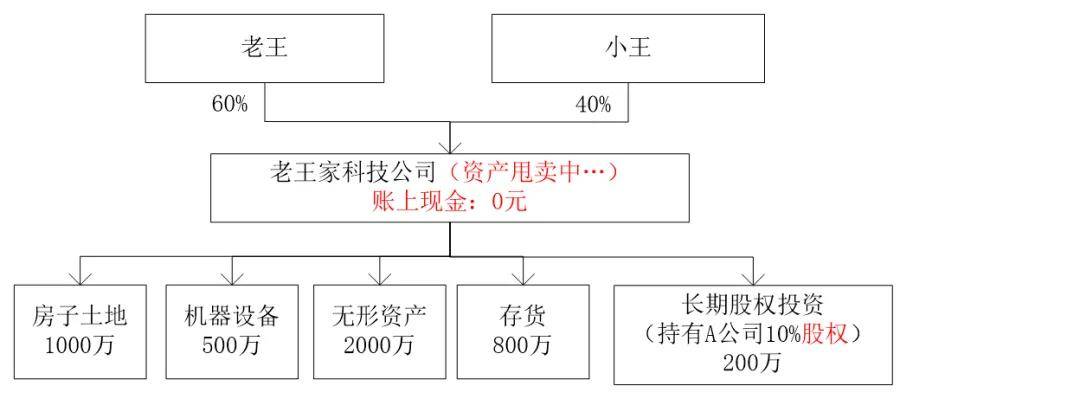
Core Viewpoint - The article discusses the concept of "share swap" as a method for acquiring control of a listed company, particularly when cash is insufficient for the transaction [1]. Group 1: Asset Definition and Seller's Perspective - The term "asset" is broadly defined, encompassing various items that a seller may possess, such as real estate, machinery, intangible assets, and inventory [3]. - The example seller, "Old Wang Technology Company," holds a long-term equity investment representing a 10% stake in Company A, which is considered an asset available for sale [3][5]. Group 2: Buyer's Perspective and Transaction Details - The buyer, "Qian Duo Duo Technology," has 50 million yuan in cash and intends to purchase assets from Old Wang Technology Company, including real estate (10 million), machinery (5 million), intangible assets (20 million), and inventory (8 million), totaling 43 million yuan [7]. - After the asset purchase, Qian Duo Duo Technology has 7 million yuan remaining in cash [7]. Group 3: Share Swap Mechanism - To acquire the 10% stake in Company A, valued at 25 million yuan, Qian Duo Duo Technology opts to issue new shares instead of using cash, as its cash reserves are insufficient [11]. - The share issuance is calculated at a price of 10 yuan per share, resulting in the need to issue 2.5 million new shares to cover the cost of the equity stake [11][13]. - This share swap creates a new shareholder relationship, where Old Wang Technology Company becomes a shareholder in Qian Duo Duo Technology post-transaction [13]. Group 4: Conclusion on Share Swap - The article concludes that share swaps are a common acquisition method for companies lacking cash, allowing them to use their own shares as a payment tool, particularly advantageous for publicly listed companies due to the market value of their shares [15].
AMC与险资的投资交集: 银行股何以成为“核心锚点”
Zhong Guo Zheng Quan Bao· 2025-12-03 22:22
Core Viewpoint - AMC has increased its stake in China Everbright Bank, with CITIC Financial Assets raising its shareholding to 9% as part of a strategic investment plan aimed at enhancing financial performance and achieving strategic synergy [1][2]. Group 1: AMC's Investment Actions - From July 24 to November 27, CITIC Financial Assets acquired 275 million A-shares and 315 million H-shares of Everbright Bank, raising its total shareholding from 8% to 9% [2]. - As of the end of Q3 2025, CITIC Financial Assets holds a total of 4.739 billion shares in Everbright Bank, with the bank's total assets reported at 7.2 trillion yuan, showing steady growth since the beginning of the year [2]. - This is not the first increase in stake by CITIC Financial Assets, which previously raised its holdings from 7.08% to 8% earlier in July 2025 [2]. Group 2: Broader Investment Strategy - CITIC Financial Assets is also planning to invest up to 26 billion yuan in China Bank, indicating a broader strategy in the banking sector [3]. - As of mid-2025, CITIC Financial Assets held 4.71% of China Bank and 7.93% of Everbright Bank, with respective market values of 63.174 billion yuan and 19.313 billion yuan [3]. Group 3: Insurance Capital Involvement - Insurance capital has been actively increasing its holdings in bank stocks, with a reported increase of 2.689 billion shares in Q3, bringing total holdings to over 47 billion shares valued at over 400 billion yuan [5]. - The average dividend yield for A-share listed banks exceeds 4%, with some banks like Industrial Bank and Changsha Bank yielding over 6%, making them attractive to institutional investors [6]. Group 4: Market Dynamics and Investment Appeal - In a low-interest-rate environment, insurance capital is shifting towards equity markets, with banks being favored due to their stable operations and attractive dividend returns [7]. - The banking sector is generally undervalued, with most banks trading below a price-to-book ratio of 1, indicating a "broken net" status, which enhances their investment appeal [7]. - Despite challenges such as narrowing interest margins, banks are maintaining stable profitability through improved asset management and risk control, supported by positive policy signals aimed at stabilizing the banking sector [7].

东莞控股(000828) - 东莞控股投资者关系活动记录表
2025-11-26 08:10
Group 1: Financial Performance - The company's gross profit margin for the first three quarters of the year is 69.72%, up from 68.16% in the same period last year [3] - The net profit of the subsidiary companies, Dongneng and Kangyi Chuang, for the first three quarters is -18.67 million, with a year-on-year loss reduction of approximately 15% [2] - The company's monetary funds have decreased by 28.17% year-on-year due to a reduction in borrowing scale [3] Group 2: Investment and Expansion Plans - The company is currently working on the expansion project of the Dongshen Expressway, with the goal of extending the toll collection period beyond June 30, 2027 [2] - The company has acquired a 27.1% stake in Dongguan Securities, with investment income expected to be recognized from July 2025 [3] - The capital structure for the Dongshen Expressway expansion project is planned to be 25% from company funds and 75% from bank loans [3] Group 3: Stakeholder Engagement - As of November 20, 2025, the number of shareholders is 25,336 [2] - The company held an online performance briefing on November 21, 2025, to engage with investors [2]
