不良资产处置服务

Search documents
海南自贸港新春强势出圈!金融跨境结算实现突破 文旅消费持续火爆,物流增速亮眼,海南成万众向往宜居家园
Xin Lang Cai Jing· 2026-02-04 12:20
Group 1 - Intercontinental Oil and Gas focuses on oil exploration and development, with significant operations in Kazakhstan and the Malacca Strait, benefiting from the Hainan Free Trade Port's zero-tariff policy which will reduce equipment import costs and enhance cross-border energy trade efficiency, with a projected 30% increase in trade scale over the next three years [1][34] - Jinpan Technology, a leading manufacturer of high-end power distribution equipment, will benefit from reduced raw material costs and a 15% corporate income tax reduction, enhancing profitability and enabling expansion into the ASEAN power equipment market [2][35] - Hainan Airlines, a major player in the aviation sector, expects a significant increase in passenger traffic due to the visa-free policy for 86 countries and duty-free upgrades, with projected passenger volume exceeding 80 million by 2026 [3][36] Group 2 - Junda Co., a top photovoltaic cell manufacturer, anticipates growth in its solar business due to reduced equipment costs and tax incentives, with plans to participate in Hainan's integrated wind and solar storage projects [4][37] - Caesar Travel, a comprehensive tourism service provider, expects a doubling of cross-border tourism business and a significant increase in tourist arrivals, with projections of 180 million visitors by 2026 [5][38] - Xinda A, a diversified company focusing on motorcycle manufacturing and coal mining, aims to leverage the zero-tariff policy to enhance profitability and expand into the electric vehicle market [6][39] Group 3 - ST Huluwawa, a leading pediatric pharmaceutical company, will benefit from reduced raw material costs and tax incentives, with plans to expand into the ASEAN pharmaceutical market [8][40] - Hainan Ruize, a construction industry leader, anticipates a surge in infrastructure demand with projected investments exceeding 100 billion by 2026, benefiting from the Hainan Free Trade Port's policies [9][42] - Hainan Airport, a key player in airport operations, expects a doubling of cargo business and significant passenger growth due to the visa-free policy and duty-free upgrades [10][43] Group 4 - Hainan Development, an investment platform, anticipates a substantial increase in duty-free sales, projected to exceed 100 billion by 2026, benefiting from the Hainan Free Trade Port's policies [11][45] - Hainan Highway, a major highway operator, expects a significant increase in traffic volume, projected to exceed 200 million vehicles by 2026, benefiting from the integration of tourism and real estate [20][56] - Hainan Rubber, the world's largest natural rubber producer, aims to expand its market presence in ASEAN due to favorable trade policies and tax incentives [21][57]


金融行业信用风险展望(2025年12月)
Lian He Zi Xin· 2026-01-14 11:07
Investment Rating - The report indicates a stable credit level for the local Asset Management Company (AMC) industry, with no rating adjustments noted for 2025 [8][39]. Core Insights - The local AMC industry is entering a phase of strict regulation, marked by the release of the "Interim Measures for the Supervision and Administration of Local Asset Management Companies" in July 2025, which establishes a unified regulatory framework [8][9]. - The industry is experiencing a trend of returning to its core business, with a reduction in the number of institutions and a clear differentiation in the competitive landscape, leading to a pronounced head effect [8][12]. - As of mid-2025, the industry has seen a slowdown in asset and net asset growth, although profitability has shown signs of recovery, and overall debt repayment risks remain moderate [8][12]. - The financing environment for local AMCs has improved, with a diversification of financing methods and a notable decrease in bond issuance costs [36][55]. Industry Policy and Regulatory Environment - The regulatory framework has shifted to a "strict regulation + encouragement of business development" approach since 2024, guiding AMCs to focus on their core business and enhance risk management [9][10]. - The new regulations require local AMCs to standardize operations and strengthen risk control, introducing quantitative regulatory indicators that will reshape the industry’s business ecology [9][10]. Industry Competition Status - The number of local AMCs has decreased, with a trend of internal license consolidation continuing, leading to a more competitive environment [12][13]. - The industry is witnessing a clear division between state-owned and private AMCs, with state-owned entities receiving more support from local governments due to their role in mitigating regional financial risks [16][18]. Industry Operating and Financial Conditions - The overall asset quality of local AMCs has been under pressure, particularly due to the real estate market downturn, which has affected asset valuations and liquidity [27][21]. - As of mid-2025, the net asset growth rate for local AMCs was recorded at 3.73%, indicating a strong capital position despite a slowdown in growth [28][29]. - Profitability indicators have shown a rebound in the first half of 2025, with total profits and net profits increasing by 25.35% and 21.13% year-on-year, respectively [30][31]. Financing and Debt Repayment Levels - The financing environment has improved, with an increase in the number of local AMCs issuing bonds, and the overall credit level remains stable [39][40]. - The industry has seen a significant decrease in bond issuance costs, with average financing costs dropping by approximately 35 basis points in 2025 [55][57]. - The debt repayment indicators are at a moderate level, with cash reserves covering short-term debts remaining stable [37][36].
从典型案例看资产管理公司重塑发展模式 评《中国特殊资产行业发展研究2025》
Jin Rong Shi Bao· 2025-12-29 01:32
Core Insights - The article discusses the evolving role of Asset Management Companies (AMCs) in China, particularly in managing non-performing assets and addressing financial risks in various sectors [1][2][4]. Group 1: Role of AMCs - AMCs were initially established to handle non-performing assets of banks, aiding in the reform of state-owned banks and enterprises [2]. - The book "Research on the Development of China's Special Asset Industry 2025" highlights the significant contributions of AMCs in risk resolution across key sectors such as real estate and local government debt [2][3]. - AMCs are increasingly involved in optimizing resource allocation and enhancing capital structures of enterprises, as seen in various case studies [3][5]. Group 2: Business Model Upgrades - AMCs are transitioning from traditional asset disposal to a more integrated approach that includes financial restructuring and risk management for enterprises [4]. - The shift towards a "three deep" model emphasizes in-depth restructuring to alleviate financial distress, moving away from rapid asset turnover [4]. - The emergence of direct services to real enterprises reflects a proactive risk prevention strategy, utilizing diverse methods such as bankruptcy restructuring and market-oriented debt-to-equity swaps [4][5]. Group 3: Enhancing Client Relationships - AMCs are expanding their focus from asset management to institutional collaboration, aiding struggling enterprises while fostering partnerships with industry leaders [5]. - The emphasis on identifying quality investors and providing tailored financial services is crucial for successful restructuring outcomes [5]. Group 4: High-Quality Development - The article underscores the need for AMCs to enhance their professional capabilities, operational mechanisms, and institutional frameworks to support high-quality development [7][8]. - Continuous improvement in investment research, banking capabilities, and innovation is essential for AMCs to navigate the complexities of the financial landscape [7]. - The establishment of a robust regulatory and assessment framework is necessary for AMCs to effectively fulfill their roles in risk management and economic stability [8].
中国中信金融资产辽宁分公司服务实体经济发展取得新成效
Xin Hua Wang· 2025-11-28 01:42
Core Viewpoint - China CITIC Financial Asset Management Co., Ltd. Liaoning Branch has demonstrated significant achievements in supporting the real economy and enhancing its core business capabilities, contributing to the revitalization of the region [1][2]. Group 1: Support for the Real Economy - The company has accumulated a total of 28.59 billion yuan in the acquisition of non-performing asset debts, facilitating the implementation of major projects with regional influence [1]. - In the manufacturing sector, the company has acquired related non-performing debts amounting to 12.429 billion yuan, providing strong support for the healthy development of real enterprises [1]. - The company has implemented a debt-to-equity swap project for steel enterprises, aiding in structural optimization and efficiency improvement [1]. - The company successfully acquired the first inclusive asset package from state-owned banks in Liaoning, assisting green energy enterprises in overcoming temporary operational difficulties [1]. - The company has accumulated 1.922 billion yuan in non-performing debt principal from small and medium-sized banks, effectively supporting the stable operation of the local financial system [1]. - The company actively participates in the restructuring of key risk enterprises, providing tailored relief plans to help businesses resume production and stabilize employment [1]. Group 2: High-Quality Development - The company has achieved steady growth in main business income and operating profit through continuous reform and strengthening of core business capabilities [2]. - By actively allocating assets, improving customer marketing mechanisms, and exploring localized business models, the company's market competitiveness has been further enhanced [2]. - The company plans to leverage its professional advantages to continue focusing on key areas such as non-performing asset disposal, risk resolution for small financial institutions, and relief for real enterprises, contributing more financial strength to the comprehensive revitalization of Liaoning [2].

中信金融资产举办2025年资产招商推介会
Jin Rong Shi Bao· 2025-11-13 01:33
Core Insights - The event "2025 Asset Investment Promotion Conference" was jointly held by China CITIC Financial Assets and Alibaba Assets in Wuhan, showcasing assets exceeding 83 billion yuan, including warehousing logistics, industrial land, and commercial hotel assets [1] - The conference attracted nearly 100 industry institutions and over 200 industry professionals, indicating strong interest and participation in the asset management sector [1] - CITIC Financial Assets aims to explore new business models for asset disposal and value extraction, emphasizing its commitment to serving the real economy and mitigating financial risks [1] Summary by Sections Event Overview - The conference featured an asset scale of over 83 billion yuan, covering various asset types and distributed across Hubei, Shanghai, Jiangsu, and Zhejiang [1] - The event included an online live broadcast through Alibaba's platform, enhancing outreach and market engagement [2] Company Strategy - CITIC Financial Assets has organized promotional activities this year, with a total asset scale exceeding 300 billion yuan promoted [2] - The company has launched a "Weekly Selection" series on its WeChat account, releasing 161 asset promotions involving high-quality assets from over 30 provinces [2] Industry Positioning - CITIC Financial Assets is focused on its counter-cyclical adjustment role, promoting principles of mutual benefit, resource sharing, and cooperative success [2] - The company aims to become a benchmark in the non-performing asset industry, contributing to financial risk prevention and supporting the real economy [2]
宏伟蓝图指明方向 全国性AMC明确高质量发展新方位
Zhong Guo Zheng Quan Bao· 2025-11-09 20:14
Core Insights - The 20th Central Committee's Fourth Plenary Session outlines a grand blueprint for economic and social development during the "14th Five-Year Plan" period, aiming for the basic realization of socialist modernization by 2035, guiding national Asset Management Companies (AMCs) to focus on their main responsibilities and serve the real economy [1] Group 1: AMC's Role and Responsibilities - National AMCs are actively enhancing their capabilities in supporting enterprise risk alleviation, asset disposal, and revitalization of existing assets, fulfilling their role as a financial stabilizer [1][3] - The "14th Five-Year Plan" period saw AMCs like China Orient successfully assist companies like Zhongli Group in restructuring, alleviating nearly 10 billion yuan in debt, and preserving over 2,600 jobs [2][3] - AMCs are increasingly focusing on investing in distressed companies that still hold social significance and align with industrial development directions, leveraging their professional advantages to provide rescue financing [2][3] Group 2: Financial Data and Performance - From early 2021 to mid-2023, China Cinda acquired over 900 billion yuan in financial non-performing assets, significantly contributing to financial risk resolution [3] - In the first half of 2023, CITIC Financial Asset's acquisition of non-performing debt exceeded 120 billion yuan, supporting the stable operation of the financial system [3] - The annual report from the Credit Reference Center indicates a rapid expansion of AMCs in the personal financial non-performing asset sector, with cumulative acquisitions surpassing 10 billion yuan since 2021 [3] Group 3: Strategic Focus for the Future - AMCs are set to enhance their risk prevention and resolution capabilities, actively participating in the reform of small financial institutions and addressing local government debt risks [4] - The development of technology finance, green finance, inclusive finance, and digital finance is emphasized as crucial for building a strong financial nation [4] - AMCs are committed to supporting the development of new productive forces and modern industrial systems, with specific initiatives in sectors like semiconductor manufacturing and renewable energy [5][6]
地方资产管理公司须聚焦主业合规发展
Jin Rong Shi Bao· 2025-08-07 02:30
Core Viewpoint - The introduction of the "Interim Measures for the Supervision and Administration of Local Asset Management Companies" by the Financial Regulatory Bureau aims to enhance the operational safety and competitive capabilities of local asset management companies by enforcing stricter regulations and promoting a focus on core business areas [1][3][4]. Group 1: Regulatory Framework - The new regulations will curb the blind expansion of local asset management companies into non-core areas, thereby enhancing their operational safety and enabling them to better fulfill their role in mitigating regional financial risks [1][6]. - The measures fill a regulatory gap by providing unified rules for local asset management companies, guiding them towards standardized operations and promoting healthy industry development [2][3]. Group 2: Market Dynamics - Local asset management companies have grown significantly, with around 60 institutions now playing a crucial role in preventing and resolving local financial risks while supporting regional economic development [2]. - The share of local asset management companies in the primary market for non-performing assets has been increasing, presenting them with favorable opportunities as small and medium financial institutions intensify their asset disposal efforts [2][3]. Group 3: Compliance and Risk Management - The regulations set critical limits, including a 30% threshold for core business investments in non-performing assets, a leverage cap of three times net assets, and a 10% concentration limit on single client investments, which will guide local asset management companies towards compliant development [4][5]. - The emphasis on compliance is expected to lead to differentiation within the industry, where compliant firms will thrive while those that previously engaged in risky practices will face significant pressure to return to their core business [4][7]. Group 4: Competitive Landscape - The local asset management companies are expected to seek differentiated development paths in the increasingly competitive landscape, where they face challenges from national financial asset management companies and foreign investment firms [7][8]. - Collaboration among different types of institutions is anticipated, allowing local asset management companies to engage in joint investments or acquisitions, thereby fostering a cooperative yet competitive environment [8].
德商产投服务拟与广州方华成立合资企业 拓展不良资产领域相关业务
Zhi Tong Cai Jing· 2025-08-05 14:09
Group 1 - The core point of the article is the establishment of a joint venture between Chengdu Deshang Fengzhi Technology Co., Ltd. and Guangzhou Fanghua Property Management Co., Ltd. to engage in the non-performing asset sector [1] - The joint venture will have a registered capital of RMB 1 million, with Deshang Fengzhi holding 65% and Fanghua holding 35% of the equity [1] - The collaboration aims to explore market opportunities in the non-performing asset sector, enhancing both parties' market competitiveness and expanding business scale [1] Group 2 - The agreement aligns with the strategic development directions of both companies, promoting mutual benefits and commercial goals [1] - The terms of the joint venture agreement are considered fair and reasonable, serving the overall interests of the company and its shareholders [1]
海德股份:调整蓄力长期发展,不良资产业务根基稳固
Zheng Quan Shi Bao Wang· 2025-07-15 00:48
Group 1 - The core viewpoint of the articles highlights the expected decline in the net profit of Haide Co., with projections ranging from 135 million to 175 million yuan for the first half of 2025, attributed to the gradual recovery of principal from acquisition and restructuring businesses, leading to a decrease in revenue from these operations [1] - The company is focusing on risk control in the field of non-performing asset investment, successfully recovering non-performing assets while preparing for new market opportunities [1][2] - The company’s business layout remains consistent, with new projects in the principal recovery stage, indicating a strategic approach aligned with the characteristics of the non-performing asset management industry [1][2] Group 2 - The industry environment shows a record high of 3.8 trillion yuan in non-performing asset disposal in 2024, indicating a growing market for asset management companies (AMCs) supported by policy [2][3] - Haide Co. is strategically advancing its business in familiar sectors such as energy and listed companies, utilizing diverse methods like restructuring and revitalization to enhance asset value while mitigating risks [2] - The company has established comprehensive partnerships with banks and local AMCs, strengthening its competitive position in the industry [3]
省级地方AMC,首次冲刺港股上市!
Sou Hu Cai Jing· 2025-07-01 15:50
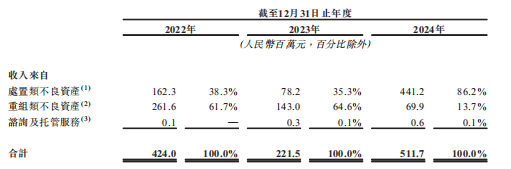
Core Viewpoint - Hebei Asset Management Co., Ltd. has submitted its initial public offering (IPO) application to the Hong Kong Stock Exchange, marking the first local Asset Management Company (AMC) attempting to list in Hong Kong, which could potentially break the deadlock for local AMCs seeking capital market access [1][8]. Company Overview - Hebei Asset is the only licensed local AMC in Hebei Province, with total assets amounting to 7.556 billion RMB as of the end of 2024. The company aims to raise funds to strengthen its capital base and optimize its capital structure [1][2]. - The company was established in 2015 and is controlled by the Hebei Provincial State-owned Assets Supervision and Administration Commission. It underwent a transformation into a joint-stock company in June 2023, with a total share capital of 2 billion shares [2]. Market Position and Performance - According to a report by Zhaoshang Consulting, Hebei Asset ranks second in the province for new acquisitions of non-performing assets (NPAs) in 2024, holding a market share of 24.4%. It ranks first among local AMCs in the province for NPAs acquired from small and medium-sized banks, with a market share of 47.2% [2]. - The company’s revenue from NPA management has fluctuated significantly over the past three years, with revenues of 424 million RMB in 2022, 221.5 million RMB in 2023, and projected revenues of 511.7 million RMB in 2024 [3][4]. Revenue Breakdown - The revenue from NPA management is primarily derived from two categories: - Disposal-type NPAs, which accounted for 86.2% of total revenue in 2024, a significant increase from previous years [3]. - Restructuring-type NPAs, which saw a decline in revenue from 261.6 million RMB in 2022 to 69.9 million RMB in 2024 [3][4]. Business Strategy and Future Outlook - The company plans to expand its business related to NPAs to enhance its competitive position in the market. The NPA management industry in Hebei Province is expected to grow, with a projected market size of 322 billion RMB by 2029 and a compound annual growth rate of 7.7% from 2024 to 2029 [5]. - The successful listing of Hebei Asset could serve as a reference for other local AMCs, potentially leading to a wave of local AMCs seeking to list in Hong Kong [8]. Industry Context - The AMC industry is characterized by high capital intensity and faces challenges such as limited financing channels for local AMCs, which do not possess financial licenses. The industry has seen increased regulatory scrutiny and competition, necessitating local AMCs to find ways to expand their capital and business operations [6][7].