中华文明

Search documents
考古新成果阐释中华文明突出特性(考古中国)
Ren Min Ri Bao· 2026-02-28 00:26
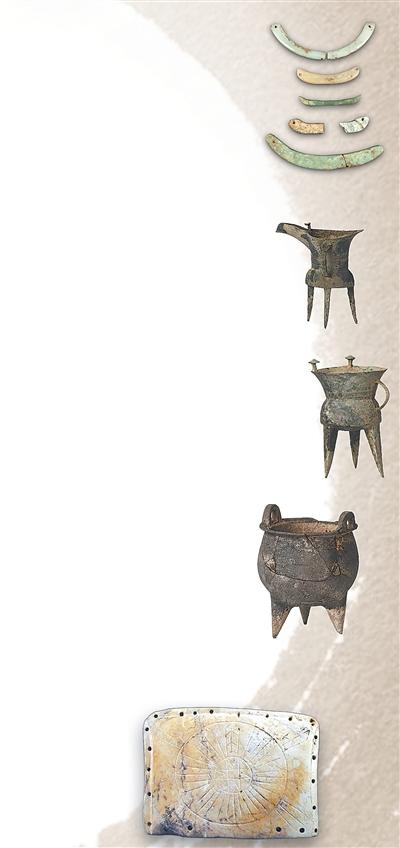
图片自上而下分别为河南南阳黄山遗址出土的玉璜,山西西吴壁遗址墓葬出土的铜、陶礼器,安徽凌家 滩遗址出土的玉版。 资料图片 前不久,2025年中国考古新成果于中国社会科学院考古论坛发布,首次在"六大发现"之外增设研究成果 发布环节。由高星、付巧妹、张弛等学者领衔的10项重要研究成果,涵盖从旧石器早期到唐代的漫长历 史,涉及微痕分析、古DNA测序、聚落考古等多种技术方法,从中可以看到中国考古学正从由发现主 导向由前沿科技与理论推动的深刻转型。 解读文明赓续的脉络 中华文明的连续性不仅载录于史书典籍中,更镌刻在物质文化与基因血脉的深处。多学科手段、方法的 运用,使我们有能力借古人不经意间留下的一鳞半爪,窥见文明赓续的脉络。 利用微痕分析与残留物检测技术,高星团队确认云南甘棠箐遗址中35件木质材料系古人类精心制作、长 期使用的专业工具,主要用于挖掘植物根茎等作为食物。为测定这些木器的年代,古生物地层学、古地 磁学、光释光和电子自旋共振等多种方法被交叉使用,最终检验、确认它们制作于距今约30万年前的旧 石器时代早期,是迄今东亚地区所见最古老的木器。这项发表于国际知名学术期刊《科学》上的研究, 有力反驳了过往认为中国旧石 ...

文博日历丨材质混搭、配色绝美 这一罐尽藏东方汉韵
Xin Lang Cai Jing· 2026-02-24 22:23
一个漆罐能有多精致? 这件西汉来的"明星产品" 以极致工艺呈现一眼惊艳的华美 一起认识 金箍水晶釦嵌玉镶料漆罐 重工打造 这个罐罐浑身是宝 金箍水晶釦嵌玉镶料漆罐 从这个长长的名字就能看出 它,用料十足! 来看汉代人超强审美 除了多种不同材质的混搭 整器集金、银、铜、玉 水晶、料器于一身 罐口颈部与圈足部镶嵌了铜扣 外面套加水晶扣 上肩部和近底部各镶嵌一周银带饰 罐肩部两只对称玉质铺首环耳 给它增添了一丝灵动 耳两边和下腹部 分别镶嵌有覆、仰式桃形蓝料片饰 并浅浮雕圆点纹 细节满满 罐腹部围一圈金质的带状箍 蓝色的料珠点缀其中 16块青玉桃形牌饰分列金箍两侧 对称美学拿捏~ 2000多年前的这个罐子 生动诠释了什么叫"浑身是宝" 撞色搭配 这个漆罐还把色彩搭配 玩出了高级感 它外髹黑漆、内髹红漆 整体配色沉稳大气 漆罐外镶嵌的 水晶莹润、金箍耀目 青玉温润、蓝料明艳 堪称汉代"百宝嵌"工艺的杰出代表 此外 器物露胎处的黑漆地 和青玉桃形牌饰上 勾勒描绘着变形鸟兽纹 设计匠心独运,制作精细繁复 具有极高的工艺美学价值 凤鸟盘绕 古人的日常用品自带祝福 除了堪当"C"位的用料和工艺 这件漆罐上的凤鸟纹样 还让它自 ...
车马遗迹里的文明印记
Xin Lang Cai Jing· 2026-02-16 05:42
(来源:廊坊日报) 转自:廊坊日报 新华社郑州2月12日电(记者 袁月明)立春已过,河南安阳洹河两岸,泛起青绿。 外观似青铜巨鼎的殷墟博物馆中,不少游客慕名而来,走进殷墟车马遗迹展厅,一睹3000多年前商王 朝"车辚辚、马萧萧"的壮观景象。 在殷墟出土的甲骨文中,"马"字是象形文字,似一匹侧立的骏马,长脸、大眼、鬃毛飞扬,形象而生 动。 "整个展厅有25座殷墟发掘出土的车马遗迹,矩阵式陈列。"据殷墟博物馆党总支书记、常务副馆长赵清 荣介绍,殷墟出土的马车采用了很多青铜饰件,构造精巧而复杂,充分显示了当时高超的青铜铸造技 术。 殷墟,是我国历史上第一个文献可考、为考古发掘所证实的商代晚期都城遗址,也是我国考古发掘次数 最多、持续时间最长的古代都城遗址。 据不完全统计,殷墟至今已出土马车上百辆。随着考古研究的深入,商代马车的结构、功能逐渐清晰。 "马车是世界古文明重要的交通和运输工具,商人学习了马车制造技术,并因地制宜,发挥创新精神, 对其进行了科学改良。"中国社会科学院考古研究所研究员、安阳工作站站长何毓灵说,"这充分体现出 殷商时期中原王朝的开放包容、不断创新、融会贯通。" "该车马坑南北长42.6米,东西宽 ...
龙马精神:中华文明生生不息的哲学密码
Xin Lang Cai Jing· 2026-02-15 00:05
新春伊始,"龙马精神"寓意绵长。融合了龙的超凡神力与马的忠诚勤勉的龙马,是中国古代神话中的经 典形象。它以刚健、明亮、热烈、高昂、升腾、饱满、昌盛之姿,成为国人自我砥砺的精神图腾。其精 神源起上古,传于经典,融合了中华文化中神话、哲思、审美与文学等诸般意象,"尚自强而有为,负 重任而致远",气势浩然,成就大国之象。 注:本义马腾空跃起,引申为飞跃奋进、蓬勃昂扬。 谱》中龙马图 清宫《兽 源出山海 自强不息 龙马传说发轫于上古,《山海经》之《中山经》称:"凡岷山之首……其神状皆马身而龙首。"《周易》 乾卦以龙为征,描述事物从发生到繁荣的循环过程,核心直指"天行健,君子以自强不息"的精神实质。 易经说卦以八种动物分居八方,乾位为马,取意马行千里,与龙偕行。古书中的龙马意象是后世龙马精 神的重要来源,进而逐步演化成中华文明刚健有为的价值原则与积极进取的精神态度。 龙与马的结合,完美承载了"刚健、明亮、奋发、进取"的"乾德"精神。自强不息的"乾德"是中国古代理 想人格代表——君子所应具有的最核心品质之一。正如梁启超先生在《论君子》中所说:"乾象言,君 子自励犹天之运行不息,不得有一暴十寒之弊……且学者立志,尤须坚忍强 ...
卷中藏文韵 书香伴新春
Xin Lang Cai Jing· 2026-02-11 22:53
Group 1 - The core viewpoint emphasizes the importance of reading in building a culturally rich society and enhancing national cultural literacy, highlighted by the implementation of the "National Reading Promotion Regulations" on February 1 [1] - The publication "The Six Dialogues of Party History" records significant discussions by Mao Zedong during the New Democratic Revolution, reflecting the core values and experiences of the Communist Party of China [1] - The book "Innovation and Practicality Promote Development" addresses key theoretical issues such as the impact of artificial intelligence on the economy and the promotion of private sector growth [2] Group 2 - "The Economic History of the People's Republic of China" showcases the remarkable economic achievements under the leadership of the Communist Party over the past 70 years [2] - The book "Awakening: Science and Scientists in the War of Resistance" highlights the contributions of Chinese scientists during the Anti-Japanese War, showcasing their integration of Western technology with national needs [3] - "My War Story: Oral Histories of 20 Anti-Japanese Veterans" presents personal accounts from veterans, providing a panoramic view of the war efforts and experiences of the Eighth Route Army [3] Group 3 - "The Great Battlefield: Field Investigation Notes on the Anti-Japanese War" employs a micro-historical approach to document key battles through field research, enhancing the understanding of the war's realities [4][5] - "Connecting with a Thousand Years: The Cultural Heritage of Chinese Libraries" explores the significance of libraries in preserving Chinese cultural heritage and their evolution from private collections to public institutions [6] - "Thinking Across Millennia: 115 Artifacts of Ancient China" presents a selection of artifacts to help readers understand the origins and development of Chinese civilization [7] Group 4 - "Poetry China" and "Chinese Painting: From Yuan to Qing" offer insights into traditional Chinese poetry and painting, showcasing their historical significance and cultural richness [8] - "Humanity's Broad House" by Chen Yan delves into the complexities of human nature through narratives based on personal experiences during the 1990s housing allocation [10] - "The Salty Joke" by Liu Zhenyun uses humor to reflect on ordinary people's lives, illustrating the resilience and adaptability of individuals in the face of life's challenges [11] Group 5 - "Double Medicine" recounts the historical battle against malaria, emphasizing the role of traditional medicine in modern breakthroughs [12] - "Wukong's Journey: China's Plan for Dark Matter Exploration" details the development of the "Wukong" satellite, symbolizing China's advancements in scientific research [13] - "The World Inside China" provides a comprehensive view of Chinese civilization from a global perspective, highlighting its historical and cultural significance [14]
“玉文化与中华文明——中国历史研究院珍藏玉器展”在京展出
Xin Lang Cai Jing· 2026-02-09 20:19
(来源:工人日报) 本报讯 (记者陈俊宇)一部镌刻于玉石之上的中华文明史,一次贯通八千年的精神巡礼。2月5日,"玉 文化与中华文明——中国历史研究院珍藏玉器展"在中国考古博物馆开幕。展览汇聚中国历史研究院珍 藏的155件(组)珍贵玉器,自新石器时代肇始,纵贯夏商周、秦汉以至明清,系统阐释玉文化在中华 文明起源、形成和发展中的历程,凝练呈现中华文明五大突出特性的精神标识。 展览以"玉出东方""玉见文明""玉礼天下""玉润中华"四大篇章为轴,清晰构建了中华玉文化的完整演进 框架,系统阐释了中华玉文化如何从文明初萌的星火,最终融为中华民族精神的血脉。 值得关注的是,展览创新引入互动项目《神奇考古队之寻玉篇》。观众可佩戴设备,化身考古队员,在 虚拟空间亲手使用"金手铲"发掘,进行沉浸式考古体验。 本次展览由中国历史研究院主办、中国考古博物馆、中国历史研究院考古研究所承办,辽宁省文物考古 研究院、浙江省文物考古研究所、郑州市文物考古研究院和巴林右旗博物馆作为支持单位。展览将持续 至2026年10月31日。 值此新春马年到来之际,展览特别展出了商代妇好墓出土的玉马。这匹小巧的玉马是本次展览的"明星 展品",玉质温润、造型 ...
骐骥驰骋:以“马的精神”开辟中国式现代化新局面
Xin Lang Cai Jing· 2026-02-08 18:30
Core Concept - The article emphasizes the significance of the "spirit of the horse" as a representation of Chinese civilization, highlighting its attributes of resilience, hard work, and collective effort in the context of national development and cultural identity [1][17]. Group 1: Historical Context - The horse has been a companion to humans for over 6,000 years, with archaeological evidence of domesticated horses in China dating back approximately 4,000 to 3,600 years [2]. - Historical texts and practices, such as the governance of horse management in ancient China, illustrate the horse's integral role in the development of Chinese civilization and its military prowess [2]. - The characteristics of the Mongolian horse, such as endurance and loyalty, symbolize the dialogue between nomadic and agricultural cultures in China [2]. Group 2: Cultural Significance - The "spirit of the horse" embodies the essence of Chinese civilization, reflecting values such as perseverance, responsibility, and the pursuit of excellence [3]. - The concept of "self-improvement" and "thick virtue" are central to Chinese culture, with the horse serving as a metaphor for these ideals [3][13]. - The horse's attributes resonate with the collective spirit of the Chinese people, emphasizing unity and collaboration in achieving common goals [9][8]. Group 3: Modern Implications - The "spirit of the horse" is relevant in the context of China's modernization efforts, with the call for innovation and resilience in the face of challenges [4][7]. - The article discusses the importance of cultural self-awareness and the need to integrate the "spirit of the horse" into contemporary practices to foster national unity and progress [18]. - The achievements in various sectors, such as technology and infrastructure, are seen as manifestations of this spirit, showcasing the collective effort and determination of the Chinese people [7][12].
以博物馆为媒,让中华文明可触可感
Xin Lang Cai Jing· 2026-02-07 22:52
Core Viewpoint - The importance of museums in protecting, inheriting, researching, and displaying human civilization is emphasized, with a focus on enhancing the influence of Chinese culture and making cultural relics more accessible to the public [2][3]. Group 1: Museum Development and Impact - Since the 18th National Congress, the number of registered museums in China has reached 7,046, with an average of one museum for every 200,000 people, and over 500,000 educational activities held annually [2]. - Museums are increasingly seen as educational institutions, breaking down barriers to expand cultural reach and allowing the public to engage with the vast history of humanity and civilization [2][3]. - Innovative exhibitions and interactive experiences in museums, such as traditional costume tours and themed courses, are making cultural heritage more relatable and engaging for visitors [2][3]. Group 2: Economic and Cultural Significance - Museums are not only preserving cultural value but also generating economic benefits, with exhibitions attracting millions of visitors and significantly boosting local economies, as seen with a cultural exhibition in Shanghai that generated over 35 billion yuan in comprehensive consumption [3]. - The concept of "one exhibition lights up a city" illustrates how museums can drive urban development and cultural tourism, creating new consumption scenarios that integrate culture, tourism, and commerce [3]. - Museums serve as platforms for international cultural exchange, showcasing Chinese artifacts abroad and fostering mutual understanding and friendship among nations [3][4]. Group 3: Cultural Identity and Future - The ongoing "museum fever" reflects a deep recognition and pursuit of Chinese cultural roots, as families and young people increasingly engage with exhibitions as part of their cultural experiences [4][5]. - Historical and cultural heritage is portrayed as not only a reflection of the past but also a significant influence on the present and future, emphasizing the importance of preserving these legacies for future generations [4][5].
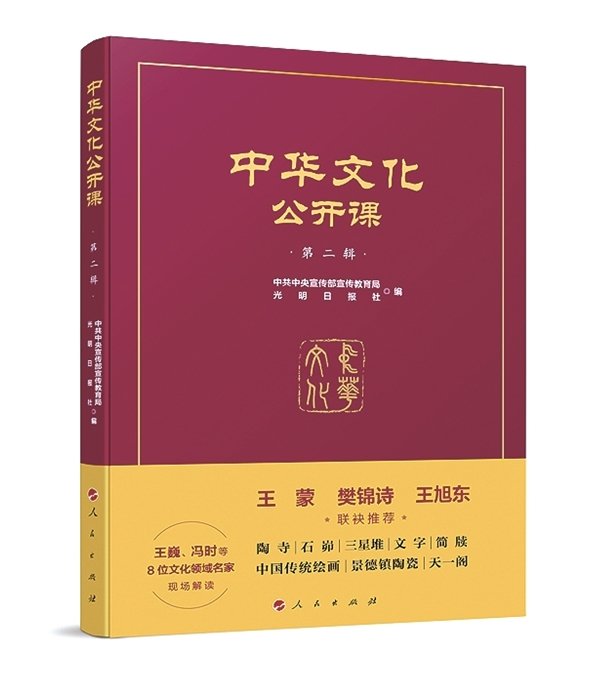
在赓续文脉中传递文明之光——读《中华文化公开课(第二辑)》
Xin Lang Cai Jing· 2026-01-30 19:46
作者:孙庆伟(西北大学校长) 中央宣传部宣传教育局、光明日报社组织编写的"核心价值观百场讲坛"文化传承发展主题图书《中华文化公 开课(第二辑)》近期出版,探寻文明密码、解析文明基因,带领我们领略中华文明的博大精深。这是继该 书第一辑之后,又一部践行习近平文化思想,增强历史自觉、坚定文化自信的文化普及力作。 《中华文化公开课(第二辑)》 陶寺遗址出土 的彩绘大双耳罐 资料图片 彰显文明成就之高。文明成就,不仅表现为物质遗存的体量和壮美,还体现在技术工艺的精湛、艺术思想的 深邃,更体现在社会组织的体系化和治理能力的专业化上。从规模上看,陶寺遗址面积达到400多万平方 米,包括不同功能的宫城及宫殿区、手工业生产区、居民区、墓葬区等,有着规整的布局与宏大的体量;石 峁遗址则分为皇城台、内城和外城,城内面积逾400万平方米,以气势恢宏的石砌城墙、结构复杂的城门体 系与错落有致的建筑群落,成为北方地区早期国家都邑的典型代表。从技艺上看,三星堆先民将青铜器分体 铸造再熔接的技术发展到了极致,器形巨大、造型诡谲的神树、立人像与面具等,不仅需要高超的冶金技 术,更融入了独有的艺术想象力和信仰体系。宋代绘画形成了完备的体系和成熟 ...
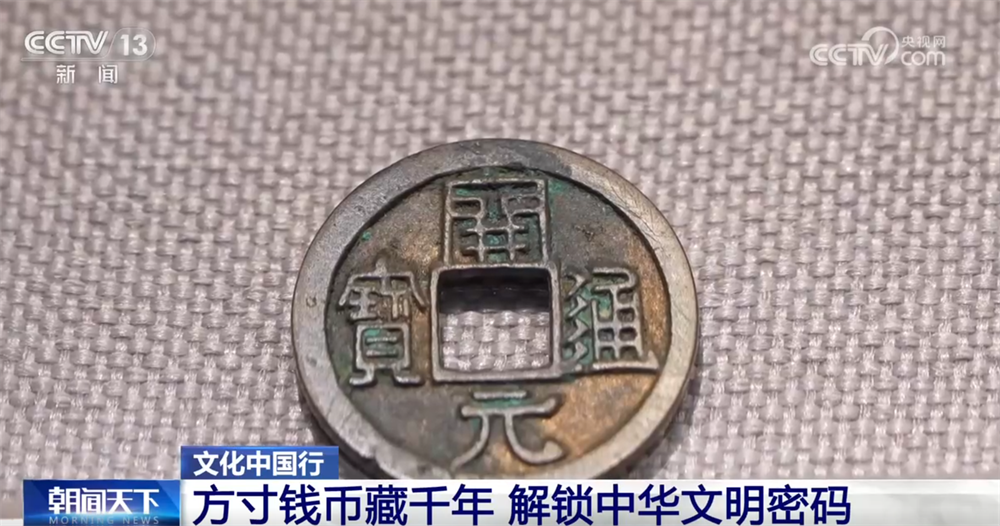
文化中国行|中国钱币“铺展”鲜活历史长卷 解锁中华千年文明密码
Yang Shi Wang· 2026-01-29 03:11
央视网消息:一枚小小钱币,藏着千年中华文明!从贝币、铜钱到纸币,再到如今的数字人民币,中国钱币不仅是金融工具,更是一部鲜 活的历史长卷。1月29日,咱们一起走进中国钱币博物馆,从方寸钱币里解锁中华文明的密码。 在中国钱币博物馆,正在展出的《中国货币通史陈列》展,汇集了2900多件(套)历代钱币,从商周的海贝、春秋的刀布到秦半两、汉五 铢、唐开元,再到北宋后发行的纸质货币……参观者可以透过钱币材质、形制、文字的演变,深入了解中国两千多年社会政治、经济、文化的 变迁。 中国古代钱币不仅是衡量经济的工具,也是文化的载体。比如,汉字中与钱有关的字词"财""货""购"等,都带有"贝"字旁,源自货币最初 的模样——海贝。海贝质地坚硬、外形美丽、小巧玲珑,"宝贝"一词也由此而来。形制上,中国钱币从春秋战国时期由农耕工具演变而来 的"布币",到秦朝统一形制,蕴含"天圆地方"宇宙观的方孔圆钱秦"半两",无不体现着古人对自然、社会和哲学的思考。 古人的智慧更铸进了钱币的工艺里。钱币的叠铸、翻砂等传统工艺体现着当时铸造技艺的高峰,如今作为现代精密铸造与规模化生产的工 业原型,依然活跃在机械制造、艺术文创等多个领域。 钱币还是文字的 ...