
中国哲学社会科学自主知识体系

Search documents
探索哲学社科知识体系的生长逻辑
Xin Lang Cai Jing· 2026-02-04 22:38
Group 1 - The core viewpoint emphasizes the importance of establishing an autonomous knowledge system in Chinese philosophy and social sciences, rooted in independence and openness [1][2][4] - Autonomy is identified as the foundation for constructing a distinctive Chinese philosophical and social science knowledge system, requiring a focus on real issues and the application of Marxist dialectics [2][3] - The development of a discourse system must align with Chinese practices and culture, drawing wisdom from traditional culture while formulating core concepts like "common prosperity" [2][3] Group 2 - Openness is essential for enriching the autonomous knowledge system, advocating for global dialogue and the absorption of valuable civilizational achievements [4][5] - The construction of the knowledge system should assert China's subjectivity, showcasing Chinese academic identity and gaining discourse power in the international academic arena [4][5] - A dialectical unity approach is proposed to integrate autonomy and openness, ensuring that research is both independent and globally relevant [5][6] Group 3 - The knowledge generation process should extract concepts from both practical experiences and traditional culture, supporting the originality of the theoretical framework [6][7] - Institutional processes must be established to translate the theoretical framework into actionable mechanisms, including data sharing and international dialogue [7]
2025理论学术研究观点要览(上)
Xin Lang Cai Jing· 2026-01-06 05:03
Group 1 - The core viewpoint of the articles emphasizes the importance of the 15th Five-Year Plan in guiding China's economic and social development, highlighting the need for strong party leadership and a focus on high-quality development [1][2] - Scholars stress the necessity of building a new development pattern that strengthens domestic circulation and facilitates dual circulation, aiming for common prosperity and improved living standards [2] - The articles discuss the significance of deepening reforms to activate the full potential of China's modernization, with a focus on effective market and government collaboration [1][2] Group 2 - The construction of a unified national market is identified as a foundational requirement for the new development pattern, enhancing the resilience of supply chains and improving consumer welfare [7][8] - The articles analyze the negative impacts of "involution" in competition, which leads to unsustainable practices and hinders the development of a modern industrial system [9][10] - Suggestions for addressing involution include enhancing technological innovation, optimizing industry structures, and improving the business environment [11] Group 3 - The emergence of "patient capital" is highlighted as essential for long-term investment strategies that support innovation and enhance corporate resilience [12][13] - Policy recommendations for fostering patient capital include improving capital market structures and developing diverse operational models for investment [13] Group 4 - The impact of artificial intelligence (AI) on labor markets is a significant concern, with studies indicating that AI technologies may replace certain high-skilled jobs while also creating new employment opportunities [14][15] - The articles note that AI's integration into businesses is increasing the demand for flexible labor, particularly affecting lower-skilled positions [15] Group 5 - The transformation of Chinese enterprises' internationalization strategies is discussed, moving from product export to brand and rule export, with an emphasis on overseas investment [16][17] - Recommendations for enhancing international competitiveness include strengthening patent protections and leveraging digital platforms to boost trade [17] Group 6 - The political science discourse focuses on the governance model of "China's governance," emphasizing the importance of top-level design and information mechanisms in managing a large-scale nation [18][19] - The articles also compare Western democratic challenges with China's governance, highlighting the need for a re-evaluation of democratic theories in the context of global south experiences [20][21]
中国社会科学院首届青年学术大会召开
Ren Min Ri Bao· 2025-12-31 04:11
Core Viewpoint - The first Youth Academic Conference of the Chinese Academy of Social Sciences was held, focusing on the theme of promoting academic integration and discussing the future of academia [1] Group 1: Conference Themes - The conference featured six sub-forums covering topics such as the interpretation of Xi Jinping's cultural thoughts, the implementation of the spirit of the 20th Central Committee's Fourth Plenary Session, organized scientific research, talent development, research on Chinese-style modernization, and international studies [1] - Young scholars engaged in deep discussions on various topics including the promotion of high-quality economic and social development during the 14th Five-Year Plan period and the importance of integrating personal academic pursuits with national development [1] Group 2: Awards and Recognition - The conference announced the winners of the first Chinese Academy of Social Sciences Youth Excellent Research Achievement Award [1] - The president of the Chinese Academy of Social Sciences emphasized the importance of understanding the origins and future direction of academic exploration, urging young scholars to embody thoughtfulness and commitment in their academic endeavors [1]
立时代潮头 发思想先声 为党和人民述学立论建言献策
Xin Lang Cai Jing· 2025-12-27 15:37
Core Viewpoint - The recent provincial philosophy and social sciences conference emphasized the importance of aligning research with national strategies and local development goals, aiming to contribute to the construction of a Chinese autonomous knowledge system in philosophy and social sciences [2][3]. Group 1: Commitment to National Strategy - The conference highlighted the commitment of philosophy and social science workers to serve national strategies, local development, and grassroots communities, aiming to accelerate the modernization of Jiangsu [2][3]. - Participants expressed a strong desire to contribute to the construction of an autonomous knowledge system in philosophy and social sciences, reflecting the need for high-quality research to support decision-making [5][6]. Group 2: Research and Innovation - Emphasis was placed on the need for strategic, forward-looking, and policy-oriented research to address major practical issues in Jiangsu's development, particularly in relation to the "14th Five-Year Plan" [5][6]. - The importance of integrating theoretical research with practical governance and modernization efforts was underscored, with calls for high-quality decision-making support through empirical research [5][6]. Group 3: Cultural and Educational Responsibilities - Social science workers are tasked with the responsibility of promoting cultural values and ethical standards in academic research, ensuring that their work contributes positively to society [8][9]. - The need for a strong cultural foundation and the promotion of red culture were identified as key elements in enhancing regional identity and contributing to the broader cultural landscape [6][7]. Group 4: Interdisciplinary Collaboration - The conference called for enhanced interdisciplinary collaboration and the establishment of mechanisms for ongoing cooperation across different fields to address complex societal challenges [7]. - The integration of artificial intelligence with philosophy and social sciences was highlighted as a necessary step to advance research and knowledge systems [7].

贯彻落实党的二十届四中全会精神权威访谈丨为谱写中国式现代化新篇章提供有力理论和智力支持——访中国社会科学院院长、党组书记高翔
Xin Hua Wang· 2025-12-25 00:28
Core Viewpoint - The article emphasizes the importance of philosophy and social sciences as tools for understanding and transforming the world, highlighting the role of the Chinese Academy of Social Sciences (CASS) in supporting the theoretical and intellectual foundations for China's modernization efforts [1]. Group 1: Contributions of CASS - CASS has made significant contributions to the development of Chinese philosophy and social sciences during the 14th Five-Year Plan period, guided by Xi Jinping's thoughts [2]. - The research and interpretation of the Party's innovative theories have deepened, with CASS prioritizing the study of Xi Jinping's thoughts as a political, theoretical, and academic task [2]. - CASS has published key educational materials and significant works, including the sixth batch of training materials and nine lecture series on Xi Jinping's economic thoughts [2]. Group 2: Knowledge System Construction - CASS has made solid progress in building a Chinese autonomous knowledge system, focusing on the "three major systems" of philosophy and social sciences [3]. - The organization has published various historical texts and increased support for less popular academic fields, enhancing the public accessibility of archaeological museums [3]. - CASS has strengthened its new-type think tank construction, improving its organizational structure and research capabilities [3]. Group 3: International Academic Exchange - CASS is set to host the first World Classical Studies Conference in 2024 and establish a Chinese Classical Civilization Research Institute in Athens, promoting cultural exchange between China and the West [3]. - The organization has engaged in various international academic forums to share China's narrative and enhance its global academic influence [3]. Group 4: Mechanism and Talent Development - CASS is implementing a philosophy and social sciences innovation project to improve its research mechanisms and adapt to the evolving demands of the field [4]. - The establishment of interdisciplinary research platforms and talent development programs aims to cultivate young scholars and enhance the academic environment [4]. Group 5: Implementation of the 15th Five-Year Plan - The 15th Five-Year Plan emphasizes the innovation of Marxist theory research and the construction of an autonomous knowledge system in philosophy and social sciences [5]. - CASS aims to address significant national and global questions through systematic and innovative academic insights [6]. Group 6: Emphasis on Traditional Culture - CASS is committed to studying the origins and development of Chinese civilization and enhancing the role of historical research in understanding national identity [8]. - The organization is also focused on regional and country-specific studies to strengthen international academic dialogue and enhance China's global academic standing [8]. Group 7: Research Paradigm Innovation - CASS is exploring new methodologies in philosophy and social sciences through the integration of artificial intelligence, aiming to transform research paradigms [9]. - The organization is establishing research platforms and databases to support interdisciplinary collaboration and innovation in academic research [11].
黑龙江、浙江、广东、中国社科院组织开展多种形式宣讲活动
Xin Hua She· 2025-12-20 23:55
Group 1 - Various regions in China, including Heilongjiang, Zhejiang, and Guangdong, have organized diverse forms of promotional activities to disseminate the spirit of the 20th Central Committee's Fourth Plenary Session, utilizing engaging methods to ensure the message resonates with the public [1][2][3] - In Heilongjiang, innovative approaches such as AI Talk micro-videos have been introduced to facilitate understanding of the session's spirit, making it accessible and memorable for the audience [1] - Zhejiang has hosted over 50,000 grassroots promotional events, achieving 100% coverage across counties, focusing on youth engagement through modern formats like open mic and AI interaction [2] Group 2 - Guangdong has mobilized approximately 20,000 promotional teams and 100,000 speakers, conducting over 80,000 events to deepen the understanding of the session's spirit among the local population [3] - The Chinese Academy of Social Sciences has established high-level academic and youth lecturer teams to conduct in-depth research and interpretation of the session's themes, promoting its integration into academic and social practices [4] - Members of the lecturer teams have committed to leveraging their expertise to transform the promotional process into opportunities for theoretical innovation and social service, contributing to the implementation of the session's spirit [5]
学习贯彻党的二十届四中全会精神丨黑龙江、浙江、广东、中国社科院深入基层一线宣讲 推动四中全会精神落地生根
Yang Guang Wang· 2025-12-20 03:52
Group 1 - The core message emphasizes the importance of grassroots promotion of the spirit of the 20th Central Committee's Fourth Plenary Session through diverse and targeted outreach activities across various regions, including Heilongjiang, Zhejiang, and Guangdong [1][2] - Heilongjiang has organized a team of officials, educators, and cultural venue guides to deliver presentations in schools, enterprises, and communities, using relatable language and local examples to ensure the message resonates with the public [1] - Zhejiang has innovated its approach by integrating online and offline methods, utilizing engaging formats like skits and AI interactions to reach younger audiences, particularly university students and new job seekers [1][2] Group 2 - Guangdong's grassroots outreach involves speakers from various fields addressing local issues and responding to community needs, thereby ensuring the spirit of the plenary session is deeply understood and internalized [2] - The Guangdong provincial leader highlighted the session's guidance on integrating primary, secondary, and tertiary industries, particularly in developing rural特色产业, to enhance local economic growth [2] - The Chinese Academy of Social Sciences is mobilizing renowned experts and young scholars to form high-level academic teams that will promote the plenary session's spirit through research and practical applications across different regions [2][3]
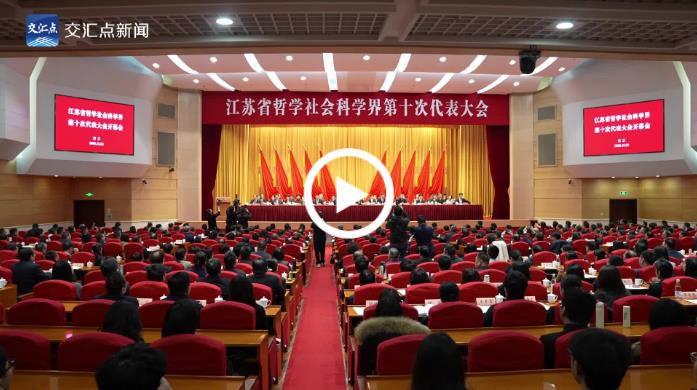
省社科联九届十次常务理事会会议在宁召开
Xin Hua Ri Bao· 2025-12-15 23:54
Core Viewpoint - The meeting of the Jiangsu Provincial Social Science Federation emphasizes the importance of advancing high-level social science development in alignment with national strategies and the need for significant contributions to the province's economic and social progress [1] Group 1: Meeting Highlights - The meeting reviewed the work report of the 9th Council of the Jiangsu Provincial Social Science Federation, highlighting the achievements in promoting social sciences since the last representative assembly [1] - The Federation aims to build a strong social science province over the next five years, focusing on addressing major national issues with practical solutions [1] Group 2: Future Goals - The social science community in Jiangsu is tasked with interpreting Chinese practices through Chinese theories, contributing to the establishment of an independent knowledge system in philosophy and social sciences [1] - The Federation aims to play a significant role in the modernization of Jiangsu, aligning with the "strong, prosperous, beautiful, and high" new development goals [1] Group 3: Organizational Changes - The meeting included discussions on the draft revision of the Constitution of the Jiangsu Provincial Social Science Federation and approved personnel adjustments, including the appointment of Wang Chengbin as the vice chairman of the 9th Council [1]
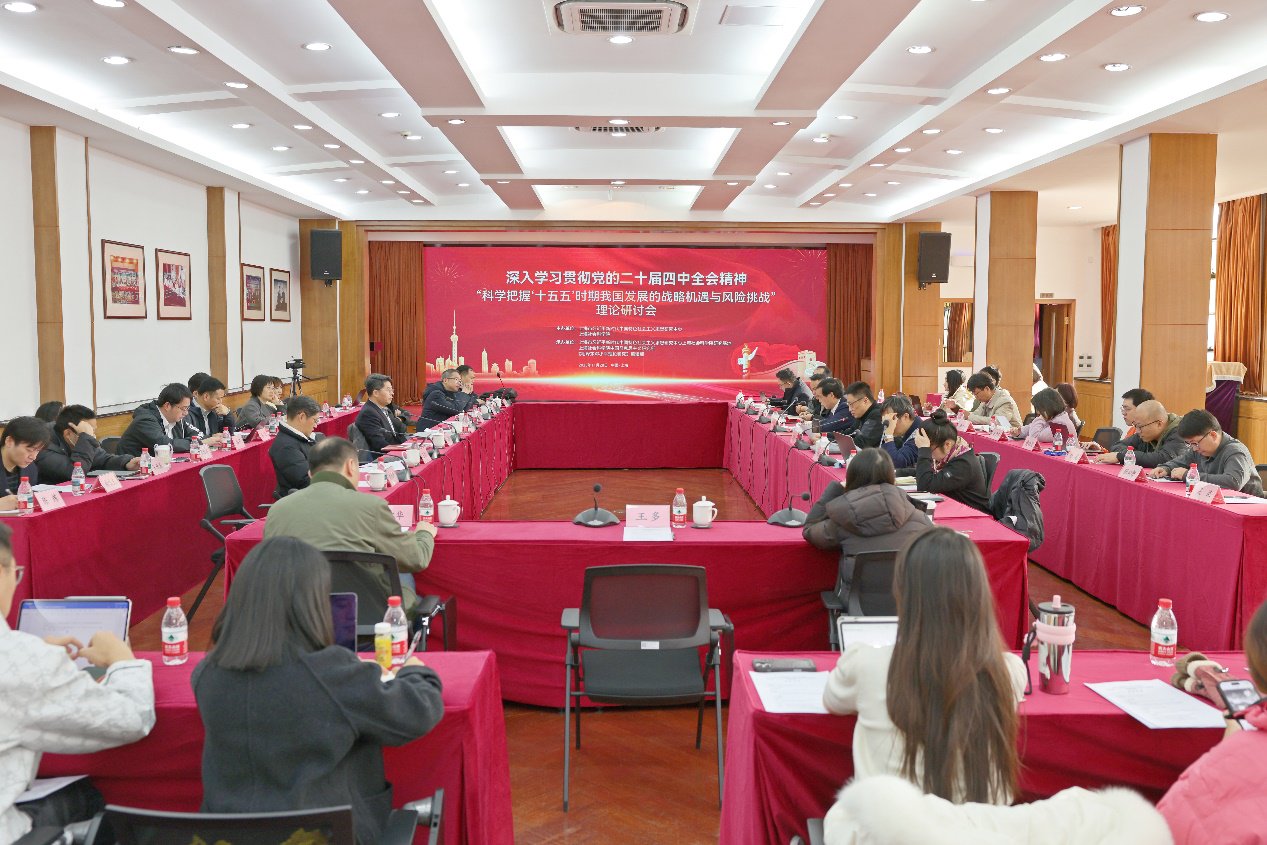
“科学把握‘十五五’时期我国发展的战略机遇与风险挑战”理论研讨会在上海社会科学院召开
Xin Lang Cai Jing· 2025-12-01 06:55
Core Viewpoint - The seminar focused on understanding the strategic opportunities and risks during China's 14th Five-Year Plan period, emphasizing the importance of integrating the spirit of the 20th National Congress into research and practice [1][3]. Group 1: Strategic Opportunities and Risks - The 14th Five-Year Plan period is seen as a critical time for achieving socialist modernization, coinciding with significant global power shifts and changes in international order [4]. - The international environment has shifted from a focus on "peace and development" to recognizing the coexistence of strategic opportunities and risks, with increasing uncertainties [5]. - The competition between China and the U.S. is framed not just as a bilateral rivalry but as a contest between two modernization paths, with the 14th Five-Year Plan being a decisive period for these competing models [6]. Group 2: Political and Cultural Context - The seminar highlighted the need for a unified political system that integrates the leadership of the Party, the role of the people, and the rule of law, which is essential for contemporary Chinese political development [7][8]. - The construction of a Chinese autonomous knowledge system is deemed necessary, emphasizing the integration of Marxist principles with traditional Chinese culture [9]. Group 3: Economic and Social Development Goals - The seminar identified three major areas of risk and challenge for the next five years: maintaining an average economic growth rate of around 5%, achieving military goals, and navigating the complexities of U.S.-China relations [8]. - The need for a coordinated approach to address these challenges was emphasized, ensuring that the goals of the 14th Five-Year Plan are met effectively [8]. Group 4: International Relations and Perception - The U.S. perception of China is characterized by extreme views, which complicates the geopolitical landscape and poses new risks during the 14th Five-Year Plan [10]. - Strengthening people-to-people exchanges and improving mutual understanding between China and the U.S. is seen as vital for stabilizing bilateral relations and fostering a more predictable international environment [10].
省社科联第二十一次主席办公会(扩大)在宁召开
Xin Hua Ri Bao· 2025-11-05 22:31
Core Viewpoint - The meeting held by the Jiangsu Provincial Social Science Federation aims to implement the spirit of the 20th Central Committee's Fourth Plenary Session and to plan for the development of philosophy and social sciences during the 15th Five-Year Plan period [1] Group 1 - The meeting emphasized the importance of recognizing the historical significance of the 20th Central Committee's Fourth Plenary Session and aligning thoughts and actions with its spirit [1] - The meeting conveyed the need to contribute wisdom and strength from the Jiangsu social science community to achieve the goals and strategic measures of the 15th Five-Year Plan [1] - Reports were shared by relevant member units regarding the construction of an independent knowledge system in Chinese philosophy and social sciences, as well as the development status during the 14th Five-Year Plan [1] Group 2 - Suggestions for key tasks, innovative measures, and opinions to be included in the provincial 15th Five-Year Plan for philosophy and social sciences were proposed [1]