
交通综合治理

Search documents
【权威发布】2026年北京小客车指标配额公布
Xin Lang Cai Jing· 2026-02-15 05:19
Core Points - In 2026, Beijing will allocate a total of 100,000 conventional small car indicators and an additional 80,000 new energy indicators [1] - The allocation of conventional small car indicators includes 20,000 for ordinary use and 80,000 for new energy vehicles [1] - The configuration of ordinary small car indicators will occur in two phases on June 26 and December 26, with 10,000 indicators allocated each time [1] Allocation Details - For conventional small car indicators, 19,200 will be for families and individuals combined, while 800 will be for units, with separate lotteries for each [1] - The new energy small car indicators will consist of 59,200 for families, 14,800 for individuals, and 5,000 for units, with the allocation for families, individuals, and units scheduled for May 26 [1] - The allocation method for new energy indicators will prioritize families based on total points, followed by personal applicants based on application time [2] Verification Process - Families that qualify for new energy indicators will undergo verification of their relationship and marital status by relevant authorities [2] - The results of the allocation will be published on May 26, and families can check their status through the Beijing small car indicator management system [2]
北京:增发8万个新能源车指标
财联社· 2026-02-15 05:12
Group 1 - The core viewpoint of the article is that Beijing has announced the allocation of small car indicators for 2026, which includes 100,000 conventional car indicators and an additional 80,000 new energy indicators [1] - The allocation of conventional car indicators includes 20,000 ordinary indicators, with 19,200 designated for families and individuals, and 800 for units, which will be distributed in two phases on June 26 and December 26 [1] - The new energy car indicators will be allocated on May 26, with 59,200 for families, 14,800 for individuals, and 5,000 for units [1] Group 2 - The allocation method for the new energy indicators involves ranking families based on total points, with the top 60,000 families receiving the indicators after the initial allocation of 59,200 [2] - For personal new energy indicators, after the allocation of 14,800, the next 20,000 applicants will be selected based on the order of their application time [2] - The results of the new energy indicator allocation will be announced on the same day, May 26, along with the ranking of families and individuals [3]

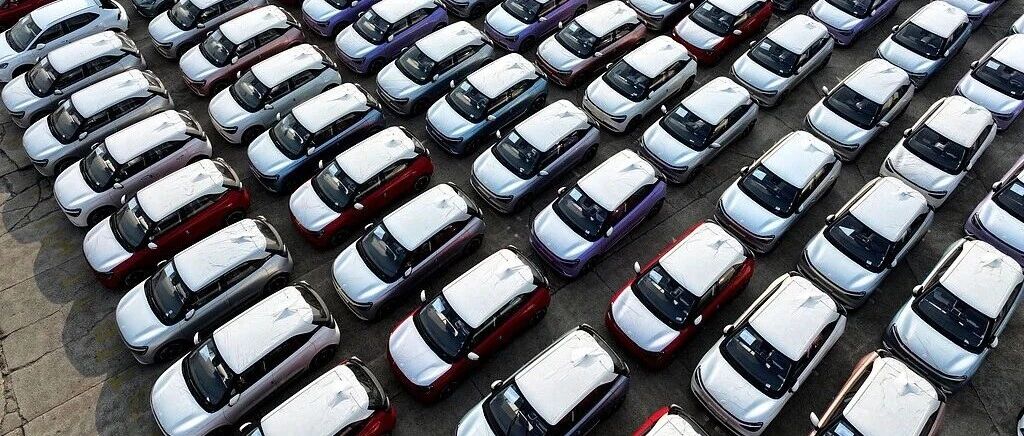
2026北京增发8万个新能源小客车指标
Xin Lang Cai Jing· 2026-02-15 02:08
Group 1 - The core point of the article is the announcement of Beijing's 2026 small passenger car quota and allocation ratio, which includes a total of 100,000 conventional car quotas and an additional 80,000 new energy car quotas [1] - The conventional small passenger car quota consists of 20,000 ordinary quotas and 80,000 new energy quotas, with specific allocations for families, individuals, and units [1] - The allocation of ordinary small passenger car quotas will occur in two phases on June 26 and December 26, with 10,000 quotas distributed in each phase [1] Group 2 - The new energy small passenger car quotas will be allocated on May 26, with 59,200 for families, 14,800 for individuals, and 5,000 for units [1] - The allocation method for the new energy quotas involves ranking families based on total points, with ties broken by the registration time in the car quota management system [2] - Verification of family relationships and marital status will be conducted by relevant Beijing authorities for families that qualify for the new energy car quotas [2]
董亦军:以生命之光践行一心为民
Yang Shi Wang· 2026-02-05 21:48
Core Viewpoint - The article highlights the contributions and legacy of Dong Yijun, a former deputy director of the Beijing Public Security Bureau, who dedicated his life to public service and community welfare, particularly in traffic management and administrative reforms [1][2] Group 1: Traffic Management Initiatives - Dong Yijun addressed traffic congestion issues around Beijing Children's Hospital, where daily patient visits reached nearly 10,000, by implementing effective vehicle flow solutions [1] - Under his leadership, the Beijing traffic comprehensive governance was advanced, introducing tailored traffic management plans for schools, hospitals, tourist attractions, and commercial areas [1] Group 2: Administrative Reforms - Dong Yijun was committed to reform and innovation, significantly increasing online services at the Beijing Public Security Bureau from 40 to over 150 items [2] - He initiated the "one window, one network, one time" approach, implementing 123 measures to facilitate public services and business operations [2] - He also expanded service points for electric bicycle registration from over 200 to more than 700, ensuring coverage across urban and suburban areas [2]
本市将实施二环路综合大修工程
Xin Lang Cai Jing· 2026-02-03 18:43
Group 1 - The Beijing Municipal Transportation Commission has released the "2026 Beijing Comprehensive Transportation Governance Action Plan," which includes plans to open 71 "broken roads" this year and implement comprehensive repairs and environmental upgrades on the Second Ring Road [1] - The action plan aims to complete 3.96 million square meters of urban road repairs this year, along with comprehensive repairs and environmental upgrades on the Fourth Ring Road [1] - The plan includes the completion of 30 municipal congestion alleviation projects and the management of 60 traffic congestion sections and 40 congested intersections [1] Group 2 - The city will promote the construction of 103 rail transit micro-centers and enhance connectivity between rail transit stations and surrounding facilities [2] - The plan includes the addition of at least 20 new "short-frequency and fast" bus routes to connect rail transit stations, as well as the opening and adjustment of 30 bus routes in areas with weak rail transit coverage [2] - A special governance action for non-motorized vehicle parking and travel will be conducted, aiming to add 100,000 non-motorized vehicle parking spaces across the city, with 50,000 in the central urban area [2]
北京二环路综合大修工程将实施
Xin Lang Cai Jing· 2026-02-02 23:10
Core Viewpoint - Beijing's Transportation Committee has released the "2026 Beijing Comprehensive Transportation Governance Action Plan," focusing on green transportation development and infrastructure improvements for the year. Group 1: Green Transportation Development - The plan aims to complete the renovation of the Apple Garden Station on Line 1 and promote the construction of 103 rail micro-centers [1][2] - A minimum of 20 new "short-frequency and fast" bus routes will be added to connect with rail stations [3] - The proportion of ground bus stops within 50 meters of rail stations will increase from 91% to 93% [2] Group 2: Infrastructure Improvements - A total of 396 million square meters of urban road repairs will be completed, including comprehensive renovations of the Second and Fourth Ring Roads [4] - The plan includes the construction of new roads and the opening of 71 "broken roads" to improve last-mile connectivity [4] - The city will enhance pedestrian pathways by adding 20 kilometers of new walkways and widening 80 kilometers of existing ones [4] Group 3: Traffic Management and Optimization - The plan includes 30 city-level congestion relief projects and the management of 60 congested road sections and 40 intersections [5] - The city will implement a special governance action for non-motorized vehicles, adding 100,000 new parking spaces for bicycles [7] - Smart traffic initiatives will see the addition of 500 non-site enforcement monitoring devices and the total number of interconnected traffic signals reaching 8,000 [8]
北京核心区公交车站将错时共享
Xin Lang Cai Jing· 2026-02-02 16:59
Group 1: Transportation Improvements - The 2026 Beijing Transportation Comprehensive Governance Action Plan aims to alleviate issues related to tourist bus parking and passenger drop-off in core scenic areas by implementing shared bus stop usage during off-peak hours [1] - The Xiong'an R1 line, connecting Xiong'an New Area to Beijing Daxing International Airport, is expected to be operational by mid-2026, facilitating a one-hour commute to key business districts in Beijing [2] - The plan includes the addition of 35,000 parking spaces in central urban areas, with 20,000 from new potential spaces and 5,000 from utilizing civil air defense projects [3] Group 2: Parking Management - The initiative will explore night-time limited parking around residential areas to increase parking resources, allowing parking from 7 PM to 7 AM the next day [3] - The action plan promotes "alternating traffic" management measures, with at least 20 points for optimization and improvement [4] - There will be enhanced management and maintenance of previously improved under-bridge spaces, including upgrades to 11 specific bridges [4]
今年北京中心城区将挖潜新增机动车停车位2万个
Jin Rong Jie· 2026-02-02 10:36
Core Viewpoint - The "2026 Beijing Traffic Comprehensive Governance Action Plan" has been released, focusing on increasing parking resources and improving traffic management in the city center [1] Group 1: Parking Initiatives - The plan aims to create an additional 20,000 parking spaces in the central urban area this year [1] - It includes the addition of 10,000 paid off-peak shared parking spaces [1] - The initiative will explore limited-time night parking around residential areas through measures such as line marking and signage [1] Group 2: Traffic Management Measures - There will be enhanced enforcement of illegal parking in key areas such as strict management streets, "no parking alleys," and around parking lots [1] - The implementation of "alternating traffic" management measures will be promoted, with a goal to optimize and renovate at least 20 "alternating traffic" points [1]
“大交通”下好交通综治“一盘棋” 首都交通高质量发展开创新局面
Xin Lang Cai Jing· 2026-01-26 00:26
Core Viewpoint - Beijing is advancing its transportation infrastructure through comprehensive governance, aiming for a high-quality development of its transportation system by 2025, with a focus on integration, efficiency, and addressing public needs. Group 1: Transportation Network Expansion - By 2025, the total operational mileage of urban rail transit in Beijing will reach 909 kilometers, with 91% of rail stations allowing bus transfers within 50 meters [1][18] - The opening of new subway lines, including the 8th line's Dahuamen Station and the 17th line's Panjiayuan West Station, will enhance connectivity and increase the number of transfer stations to 106 [1][17] Group 2: Addressing Public Needs - The city plans to open 53 "dead-end roads" and implement 30 major traffic improvement projects by 2025, significantly reducing congestion and improving access [1][26] - Over 50,000 new parking spaces will be created to alleviate parking difficulties in central urban areas [1][26] Group 3: Systematic Governance and Collaboration - A collaborative governance model is being established, involving city, district, and community levels to enhance transportation management and address complex urban mobility challenges [1][27][28] - The city is implementing a "one street, one policy" approach to traffic governance, promoting tailored solutions for local issues [1][28][29] Group 4: Infrastructure and Space Utilization - The city is transforming underutilized bridge spaces into public areas, with 251 bridges set for renovation by 2025, enhancing urban aesthetics and functionality [1][20][21] - The renovation of bridges like Guomao Bridge and Yansha Bridge aims to improve urban vitality and connectivity [1][22] Group 5: Future Outlook - The "14th Five-Year Plan" has seen the addition of 118 kilometers of highways and 182 kilometers of new subway lines, with a focus on sustainable and efficient transportation solutions [1][32] - The upcoming "15th Five-Year Plan" will continue to prioritize convenience, smoothness, and green initiatives in the transportation sector [1][32]
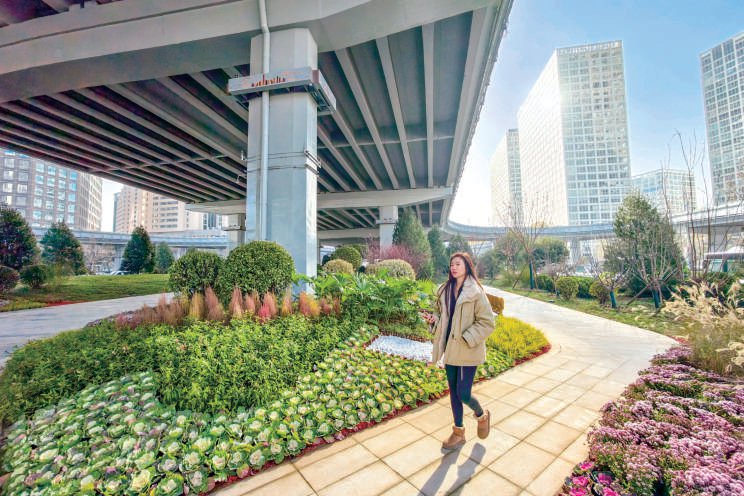
北京地铁总里程达909公里 居全国首位
Jin Rong Jie· 2026-01-25 01:48
Core Viewpoint - The Beijing government is focusing on transportation improvements, highlighting the expansion of the subway system and optimization of public transport services [1] Group 1: Transportation Infrastructure - The total length of Beijing's subway has reached 909 kilometers, ranking first in the country [1] - Three new subway lines have been opened, adding 30 kilometers to the operational length [1] - The city has optimized 242 bus routes, achieving a transfer rate of 91% within 50 meters between buses and subways [1] Group 2: Urban Mobility Management - The government is enhancing the management of electric bicycle parking [1] - Over 50,000 new motor vehicle parking spaces have been added in the central urban area [1]