
信贷成本

Search documents
中国银行业-2025 年四季度总结:营收前景改善,信贷成本或为 2026 年关键分化驱动因素-China – Banks 4Q25 Wrap-Improving revenue outlook, credit cost likely key divergent driver for 2026
2026-04-01 09:59
Summary of 4Q25 Results for Chinese Banks Industry Overview - The report focuses on the Chinese banking sector, highlighting the performance of major banks such as CCB (China Construction Bank), BOC (Bank of China), CITIC, Industrial Bank, and PAB (Ping An Bank) in 4Q25 and their outlook for 2026 [1][2][9]. Key Points Revenue and Profit Growth - Signs of stabilizing Net Interest Margin (NIM) and healthy fee income growth were observed in 4Q25, with expectations for above-peer revenue and profit growth in 2026 for CCB, BOC, CITIC, Industrial Bank, and PAB [1][2]. - Revenue growth improved to 2.2% YoY in 4Q25 from 0.6% YoY in 3Q25, with BOC leading at 9.2% YoY growth, followed by Industrial Bank and CITIC at 7.7% and 6.9% respectively [17][23]. NIM and Non-Interest Income - NIM pressure moderated in 4Q25, with banks reporting sequential rebounds. Most banks expect milder NIM pressure in 2026, supporting positive Net Interest Income (NII) growth [2][14]. - Fee income growth accelerated to 8.6% YoY in 4Q25, up from 4.8% YoY in 3Q25, driven by strong retail Asset Under Management (AUM) growth and active capital markets [3][15]. Credit Quality and Costs - Non-Performing Loan (NPL) ratios remained stable for most banks, with proactive write-offs and improving corporate NPL ratios offsetting retail credit quality pressures [4]. - Citic Bank showed a notable decline in NPL ratios, while PSBC and ICBC experienced increases. Expectations for credit costs to rebound for PSBC and ICBC could impact profits despite better revenue growth [4][19]. Earnings and Dividend Outlook - CCB, BOC, CITIC, and Industrial Bank are positioned to achieve healthy earnings with below-peer Risk-Weighted Asset (RWA) growth, allowing for potential future dividend payouts [5]. - The average dividend payout ratio for major banks is projected to remain stable, with slight declines noted for some banks [12]. Management Guidance and Future Outlook - Management from various banks provided guidance for 2026, with CITIC Bank targeting over 3% revenue growth and PAB expecting a return to growth in its retail business [20]. - Banks are cautious about the 2026 outlook, with expectations for income primarily from trading rather than a drop in bond yields [18]. Additional Insights - The report indicates that banks with strong retail AUM growth will continue to see healthy fee income growth in 2026, with several banks confident in their non-interest income growth prospects [3][15]. - Investment income varied significantly in 4Q25, with banks generally cautious about the outlook for 2026 [18]. Conclusion - The Chinese banking sector shows signs of recovery with improving revenue growth, stable credit quality, and a positive outlook for 2026. Key players like CCB, BOC, CITIC, Industrial Bank, and PAB are expected to lead in revenue and profit growth, supported by stable NIM and healthy fee income. However, caution remains regarding credit costs and overall market conditions.




大摩:渣打集团首季开局强劲 财富管理业务表现强劲
Xin Lang Cai Jing· 2026-03-19 08:03
Core Viewpoint - Morgan Stanley's report indicates that Standard Chartered Group (02888) has had a promising start to 2026, with the first quarter's business trends continuing last year's strong performance. The wealth management business has shown robust performance year-to-date, with net new fund inflows remaining strong. Non-recurring income rebounded from a weak fourth quarter of the previous year, although it is compared to a strong first quarter of 2025, resulting in a high comparative base. The target price for Standard Chartered (STAN.L) is set at 1,865 pence, with a rating of "Overweight" [1][6]. Financial Performance - The management reiterated guidance that net interest income and costs for the fiscal year 2026 will remain roughly flat year-on-year. Looking beyond 2026, even in a volatile environment, management is comfortable with credit costs being maintained at 30 to 35 basis points over the entire cycle [1][6]. Business Strategy - Standard Chartered's strategy remains focused on distribution-led businesses and large international corporations in corporate, financial institutions, and commercial banking sectors. The focus in corporate and investment banking continues to shift towards affluent and wealth management while reducing exposure to unsecured consumer loans, which supports confidence in long-term credit quality [1][6]. Geopolitical Impact - Management believes that recent geopolitical events have not had a direct impact on employees or operations. From a credit perspective, the focus remains on core corporate and investment banking markets in the UAE, Qatar, and Saudi Arabia, where 80% of the risk exposure is investment-grade, targeting large multinational companies, financial institutions, and government-related entities. These portfolios are viewed as low risk [2][7]. Credit Exposure - In wealth management and retail banking, the credit exposure is primarily in UAE mortgage loans, which have a low loan-to-value ratio. The bank exited the SME business in the Middle East several years ago. Management maintains a cautious stance regarding the first phase of impact but feels reassured. The potential second phase impact depends on the duration of geopolitical uncertainties, but current guidance remains unchanged [2][7].

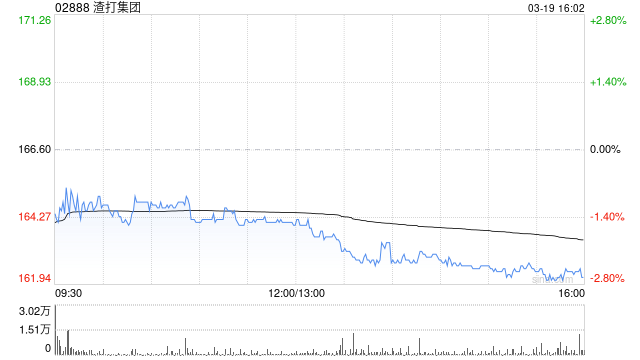
大摩:渣打集团(02888)首季开局强劲 财富管理业务表现强劲
智通财经网· 2026-03-19 07:10
Group 1 - Morgan Stanley reports that Standard Chartered Group (02888) has had a strong start to 2026, with first-quarter business trends continuing last year's momentum [1] - Wealth management business has shown robust performance year-to-date, with net new fund inflows remaining strong [1] - Non-recurring income rebounded due to market volatility, although it is compared to a strong first quarter of 2025, resulting in a high year-on-year comparison base [1] Group 2 - Management has reiterated guidance for net interest income and costs to remain roughly flat year-on-year for the fiscal year 2026 [1] - Management is confident about maintaining credit costs at 30 to 35 basis points over the entire cycle, even in a volatile environment [1] - The strategy remains focused on distribution-led business and large international corporations in corporate, financial institutions, and commercial banking sectors [1] Group 3 - Recent geopolitical events have not had a direct impact on employees or operations, according to management [2] - The focus remains on core corporate and investment banking markets in the UAE, Qatar, and Saudi Arabia, with 80% of the risk exposure being investment-grade [2] - In wealth management and retail banking, credit exposure is primarily in UAE mortgage loans, which have low loan-to-value ratios [2]
花旗:上调东亚银行(00023)评级至“买入” 估值吸引目标价升至16港元
智通财经网· 2026-02-16 09:27
Core Viewpoint - Citigroup's report indicates that East Asia Bank (00023) is expected to outperform market expectations in its fundamental operations, with an attractive valuation. The bank's investment rating has been upgraded from "Neutral" to "Buy," and the target price has increased from HKD 14.9 to HKD 16 [1] Group 1: Financial Performance and Projections - East Asia Bank aims to increase its Return on Equity (ROE) to 7% by 2028, compared to 3.1% in 2025 and market expectations of 5.1%. Key drivers include stable net interest income, a projected annual growth rate of 14% in non-interest income from fiscal years 2025 to 2028, and an annual cost increase of less than 5% [1] - The bank's credit costs are expected to decrease to below 60 basis points by fiscal year 2028 [1] Group 2: Dividend Expectations - The bank's dividend target for 2028 is projected to double compared to 2025 levels, suggesting a potential dividend of approximately HKD 1.2 per share by 2028. The forecasted ROE at that time is expected to reach 6%, which, while below the management's target, is still significantly higher than the general market forecast of 5.1% [1]

瑞银:维持对香港本地银行股的谨慎看法 上调中银香港及东亚银行目标价
Zhi Tong Cai Jing· 2025-12-23 06:26
Core Viewpoint - UBS maintains a cautious outlook on Hong Kong bank stocks, projecting that market focus will shift to banks' profit prospects for next year, with net interest income and credit costs being the main drivers [1] Group 1: Profit Forecasts - UBS forecasts that the net profit growth for Bank of China Hong Kong (02388) and Bank of East Asia (00023) will remain flat for 2026, with expected per-share dividends increasing by 2% to 3% [1] - Target prices for Bank of China Hong Kong and Bank of East Asia have been raised to HKD 40 and HKD 13.5 respectively, reflecting a decrease in the cost of equity following interest rate cuts [1] Group 2: Interest Income and Market Conditions - Despite a backdrop of the Federal Reserve's interest rate cut cycle, the one-month Hong Kong Interbank Offered Rate (HIBOR) has rebounded, with the average for the fourth quarter so far at 3.19%, up 113 basis points from the third quarter, providing strong support for banks' net interest income [1] - It is anticipated that net interest income for Hong Kong bank stocks in the fourth quarter will exceed that of the third quarter, with market forecasts likely to be revised upwards [1] Group 3: Credit Risk - UBS warns that while net interest income for Hong Kong bank stocks has improved, the risk of non-performing loans has also increased in the second half of the year, leading to an upward adjustment in credit cost forecasts for Bank of China Hong Kong and Bank of East Asia [1]

瑞银:维持对香港本地银行股的谨慎看法 上调中银香港(02388)及东亚银行(00023)目标价
智通财经网· 2025-12-23 06:25
Core Viewpoint - UBS maintains a cautious outlook on Hong Kong bank stocks, projecting that the market focus will shift to banks' profit prospects for next year, with net interest income and credit costs being the main drivers [1] Group 1: Company Projections - UBS forecasts that the net profit growth for Bank of China Hong Kong (02388) and East Asia Bank (00023) will remain flat in 2026, with expected per-share dividend growth of 2% to 3% [1] - The target prices for Bank of China Hong Kong and East Asia Bank have been raised to HKD 40 and HKD 13.5, respectively, reflecting a decrease in the cost of equity following interest rate cuts [1] Group 2: Market Conditions - Despite the improvement in net interest income for Hong Kong banks, the risk of non-performing loans has increased in the second half of the year, leading to an upward adjustment in credit cost forecasts for Bank of China Hong Kong and East Asia Bank [1] - The average one-month Hong Kong Interbank Offered Rate (HIBOR) has risen to 3.19% in the fourth quarter, up 113 basis points from the third quarter, providing strong support for banks' net interest income [1] - It is anticipated that the net interest income for Hong Kong bank stocks in the fourth quarter will exceed that of the third quarter, with market forecasts likely to be revised upward [1]
大行评级丨瑞银:对香港银行股保持审慎看法 上调中银香港及东亚银行的目标价
Ge Long Hui· 2025-12-23 03:24
Group 1 - The core viewpoint of the report indicates that despite the Federal Reserve's interest rate cut cycle, the one-month Hong Kong Interbank Offered Rate (HIBOR) has rebounded, narrowing the gap with the US overnight financing rate [1] - The average one-month HIBOR for the fourth quarter is reported at 3.19%, which is an increase of 113 basis points compared to the third quarter, providing strong support for banks' net interest income [1] - It is anticipated that net interest income for Hong Kong banks in the fourth quarter will exceed that of the third quarter, with market forecasts likely to be revised upwards [1] Group 2 - UBS warns that while net interest income for Hong Kong banks shows improvement, the risk of non-performing loans has also increased in the second half of the year [1] - Looking ahead to 2026, UBS maintains a cautious outlook on Hong Kong bank stocks, expecting market focus to shift towards banks' profit prospects for the next year, with net interest income and credit costs being the main driving factors [1] - The forecast for Bank of China Hong Kong and Bank of East Asia indicates that net profit growth will remain roughly flat in 2026, with expected per-share dividends increasing by 2% to 3% [1] Group 3 - UBS reiterates a "neutral" rating for Bank of China Hong Kong and Bank of East Asia, raising target prices to HKD 40 and HKD 13.5 respectively, reflecting a decrease in the cost of equity following interest rate cuts [1]
【环球财经】银河国际:大华银行一次性大额拨备引担忧 维持“持有”评级
Xin Hua Cai Jing· 2025-11-11 09:28
Core Viewpoint - CGS International maintains a "Hold" rating on UOB but lowers the target price from SGD 38.30 to SGD 36.50 due to concerns over the bank's earnings recovery following a significant one-time provision in Q3 2025 to address risks in the US and Greater China commercial real estate sectors [1][2]. Group 1: Financial Performance - UOB recorded a special provision of SGD 479 million in Q3 2025, with credit costs reaching 55 basis points, significantly higher than the bank's previous guidance of 25-30 basis points for the fiscal year [1]. - The increase in provisions is attributed to declining transaction valuations in the US and Greater China commercial real estate markets, necessitating write-downs on loan book asset values [1]. - UOB decided to recognize an additional general provision of SGD 615 million, bringing the total general provision for Q3 to SGD 687 million [1]. Group 2: Earnings Forecast - CGS International has significantly reduced UOB's earnings per share (EPS) forecasts, cutting the 2025 fiscal year EPS estimate by 18.8%, and lowering the 2026 and 2027 fiscal year EPS estimates by 13.1% and 10.4%, respectively [2]. - Despite UOB management's positive signals regarding credit costs normalizing in Q4 and FY 2026, market concerns about high credit costs are expected to persist in the short term [2].

中国银行业_2025 年三季度预览_大型国有银行同比增长势头可能延续-China Banks_ Q325 preview_ Positive YoY growth momentum for large SOE banks likely to continue
2025-10-23 13:28
Summary of Key Points from the Conference Call Industry Overview - **Industry**: Chinese Banking Sector - **Context**: The conference call discusses the upcoming Q3 earnings results for large state-owned enterprises (SOE) banks, joint stock banks (JSBs), and regional banks in China, highlighting expected performance trends and key metrics. Core Insights and Arguments - **Positive Growth Momentum**: Large SOE banks are expected to continue showing positive year-over-year (YoY) growth in revenue, profit before provisions (PPOP), and net profit, driven by strong non-interest income, particularly from investment and trading activities. However, net interest income (NII) may decline on average YoY [2][3][4] - **Joint Stock Banks Performance**: Select JSBs are anticipated to report positive net profit growth, aided by reduced impairment charges, although revenue and PPOP growth may remain subdued [2][3] - **Regional Banks Challenges**: Most regional banks are likely to experience a slowdown in both revenue and net profit growth, attributed to weakened investment and trading income [2][3] - **Key Operating Metrics**: - NIM (Net Interest Margin) is projected to decline slightly by 2 basis points (bps) on average across all bank types. - Loan growth YoY is expected to remain stable for large SOE and regional banks, while select JSBs may see a slight increase of 3.6% YoY. - Credit costs are expected to decline YoY, with large SOE banks, JSBs, and regional banks recording reductions of 8, 11, and 6 bps respectively [2][3] Investment Sentiment - **Market Performance**: MSCI China Banks and MSCI China Banks-A have gained 21.3% and 12.4% year-to-date as of October 17, 2025, but have underperformed the broader MSCI China index, which rose by 32.7% [3] - **Investor Preferences**: Investors are likely to favor banks with sustained positive YoY net profit growth and improving NIM and asset quality trends. The performance of investment and trading income, along with credit costs, will be critical differentiators in the upcoming earnings season [3][4] Bank-Specific Expectations - **ICBC**: Expected to show the largest improvement in net profit growth, with a YoY increase of 2.5% in Q3 compared to 1.4% in Q2. It is highlighted as a preferred stock with a dividend yield of 5.8% for 2025E [4] - **ABC**: Anticipated to have the highest YoY net profit after tax (NPAT) growth among large SOE banks at 3.6% in Q3, outperforming the average of 2.1% [4] - **CITIC**: Expected to lead JSBs with a YoY NPAT growth of 6.6% in Q3, significantly above the average of 2.1% for select JSBs [4] - **Regional Banks**: BONJ is flagged for robust growth, while BOCD may face notable deceleration [4] Defensive Investment Strategy - **Defensive Names**: Given the soft macro conditions and trade uncertainties, there is a constructive outlook on defensive bank stocks. Dividend yields have become attractive, exceeding 5% for H-shares and 4% for A-shares [6] Financial Forecasts - **Q325E Forecasts**: - Core earnings for major banks show varied performance, with ICBC expected to decline by 2.7%, CCB increasing by 2.1%, and ABC decreasing by 1.5% YoY. - NII is projected to decline for most banks, with ICBC at -4.5% and ABC at -3.7% YoY. - Non-interest income is expected to see significant growth for some banks, with estimates of 110% for certain institutions [7] Additional Insights - **Credit Cost Trends**: The average credit cost across banks is expected to decline, with ICBC at 0.43% and CCB at 0.56% for 2025E, indicating improved asset quality [9] - **NIM Trends**: The quarterly NIM for major banks is projected to decline, with ICBC at 1.24% and CCB at 1.36% for Q325E, reflecting ongoing pressure on interest margins [8] This summary encapsulates the key points discussed in the conference call, providing insights into the performance expectations and investment sentiment within the Chinese banking sector.


大行评级丨花旗:微降中银香港目标价至40.9港元 维持“买入”评级
Ge Long Hui· 2025-10-13 06:37
Core Viewpoint - Citigroup reports that Bank of China Hong Kong is expected to announce its Q3 2025 operating results in late October, forecasting an operating profit of HKD 11.2 billion, representing a quarter-on-quarter decrease of 18% and a year-on-year decline of 14% [1] Financial Performance - Total revenue is projected to decrease by 6% year-on-year to HKD 17.3 billion, primarily due to weakened trading income [1] - Net interest margin is expected to remain resilient, benefiting from improved funding costs and normalization of HIBOR [1] - Credit costs are anticipated to remain high at approximately 40 basis points, given the ongoing pressure in the commercial real estate market [1] Stock Performance and Ratings - Bank of China Hong Kong's stock price has recently retreated from its September highs, likely influenced by outflows of southbound funds and market concerns regarding net interest margin and trading income [1] - Citigroup's earnings forecasts for Bank of China Hong Kong for 2025 and 2026 are 1% and 3% higher than market consensus, respectively [1] - The rating is maintained at "Buy," with a slight adjustment of the target price from HKD 41 to HKD 40.9 [1]