
全域增量时代

Search documents
宁德时代,“寒地反击”
财联社· 2026-01-25 14:20
Core Viewpoint - The explosive growth of the new energy commercial vehicle market has not allowed CATL (300750.SZ) to remain complacent, as its market share in the commercial vehicle battery segment has declined significantly, prompting a strategic shift towards sodium batteries as a new growth point [1][5]. Group 1: Market Position and Challenges - CATL holds a dominant position in the domestic battery market with a total installation volume of 333.57 GWh, accounting for 43.42% of the market share [4]. - In the commercial vehicle sector, CATL's installation volume was 79.74 GWh, representing a 49.17% market share, but this is a decrease of 11.90 percentage points year-on-year [1][5]. - The company faces increasing competition from second-tier battery manufacturers, necessitating a rapid response to maintain its leading position [1][5]. Group 2: Sodium Battery Development - CATL has introduced the Tianxing II commercial vehicle battery solution, featuring the industry's first mass-produced sodium battery, which performs well in extreme cold conditions, retaining over 92% usable power at -20°C [1][2]. - The sodium battery is expected to address the performance decline of lithium batteries in cold regions, making it a key technology for capturing incremental market opportunities [1][2]. - The company plans to expand sodium battery applications beyond commercial vehicles to passenger cars and even construction machinery as production capacity increases [2][3]. Group 3: Technical Advantages and Future Outlook - Sodium batteries offer significant advantages in terms of wide temperature range performance and higher safety, which can reduce system integration and management costs [3]. - The resource accessibility of sodium compared to lithium is expected to enhance energy independence, with a goal to achieve cost competitiveness with lithium batteries within two to three years [3][6]. - CATL aims to improve the energy density of sodium batteries to match that of current lithium iron phosphate batteries within three years, enhancing their market viability [6]. Group 4: Product Strategy and Innovations - The Tianxing II series includes tailored solutions for light commercial vehicles, such as a long-range version with a 253 kWh battery capable of 800 km range and a low-temperature version that can operate at -30°C [2][7]. - The company has developed a hybrid system combining ternary and lithium iron phosphate technologies, allowing for continuous energy density growth while controlling costs [6][7]. - This innovative approach enables CATL to meet high-end market demands without relying solely on expensive ternary materials, thus balancing performance and cost [7].



宁德时代加码低空经济构建“全域增量”
Zheng Quan Ri Bao Wang· 2025-11-25 10:11
Core Viewpoint - CATL has launched the world's first "sea and air integrated low-altitude economic solution," marking a significant breakthrough in extending low-altitude infrastructure to vast water areas, thus promoting the scale development of the low-altitude economy and opening new pathways for energy transition and industrial upgrading [1] Group 1: Company Developments - The "sea and air integrated low-altitude economic solution" combines a zero-carbon water airport with eVTOL aircraft, representing a practical implementation of CATL's vision for a "full-scale incremental era" in the new energy industry [1] - CATL's chairman, Zeng Yuqun, emphasized that the new energy industry is transitioning from "local breakthroughs" to "full-scale incremental growth," highlighting the need to expand usage scenarios for true incremental growth [1] Group 2: Industry Implications - This solution allows CATL's battery products to extend from passenger vehicles, commercial vehicles, and electric ships to the low-altitude aviation sector, creating a zero-carbon three-dimensional transportation ecosystem that covers land, sea, and air [1] - The continuous technological innovation and scenario expansion will synergize with CATL's businesses in power batteries, energy storage, and zero-carbon industries, collectively opening new growth spaces in the new energy sector [1]
宁德时代生态企业发布海空一体方案,共筑“全域增量”零碳生态
Jing Ji Wang· 2025-11-24 09:12
Core Insights - CATL's subsidiary, Fei Aviation Technology, launched the world's first "sea and air integrated low-altitude economic solution," combining a "zero-carbon water airport" with eVTOL aircraft, marking a significant advancement in low-altitude infrastructure and applications [1][2] - This solution aims to transition low-altitude economy from pilot demonstrations to large-scale development, opening new pathways for energy transition and industrial upgrading [1][5] Group 1: Solution Overview - The innovative solution consists of a "zero-carbon water airport" and eVTOL aircraft, equipped with energy storage and intelligent scheduling systems, addressing traditional low-altitude infrastructure challenges such as site selection and deployment speed [2][5] - The water-based eVTOL takeoff and landing sites can accommodate industrial-grade aircraft, enhancing efficiency and reducing overall costs [2][5] Group 2: Application Scenarios - The solution is designed to activate resources along coastlines and water bodies, providing rapid low-altitude economic infrastructure for coastal and inland cities [5][6] - Key application scenarios include: - Energy platform operations: Enhancing personnel and spare parts transport efficiency by over ten times [6] - Emergency rescue: Establishing a network for drone search and eVTOL response, reducing response time by 50% [6] - High-frequency commuting: Enabling minute-level commutes between urban areas and islands [6] - Sea and air tourism: Creating new consumption hotspots through "flight+" experiences [6] - Mobile airport clusters: Rapidly networking multiple water airports for distributed, high-throughput operations [6] Group 3: Strategic Vision - The low-altitude economy is positioned as a future industry under the "14th Five-Year Plan," transitioning from pilot projects to systematic and large-scale development [7] - CATL's battery products are expanding from vehicles to low-altitude aviation, fostering a "zero-carbon" transportation ecosystem that integrates land, sea, and air [7] - The company aims to drive high-quality development in the new energy industry, moving from rapid growth to a "full-domain incremental era" through continuous innovation and collaboration with ecosystem partners [7]

以场景拓展驱动全域增量,宁德时代开启低空经济“海空一体”时代
Zhong Guo Qing Nian Bao· 2025-11-23 14:48
Core Insights - The "Sea and Air Integrated Low-altitude Economic Solution" was officially launched on November 22, featuring a combination of "zero-carbon water airports" and eVTOL aircraft, marking a significant breakthrough in low-altitude infrastructure [2][3] - This innovative solution aims to extend low-altitude infrastructure to vast water areas, enhancing efficiency and reducing overall costs while addressing traditional industry pain points such as site selection and slow deployment [2][3] Company Developments - The solution includes adaptable water-based eVTOL takeoff and landing sites for industrial-grade aircraft, enabling rapid deployment of low-altitude economic infrastructure in coastal and inland water cities [3] - The solution is expected to expand applications in five core scenarios: energy platform operations, emergency rescue, high-frequency commuting, sea and air tourism, and mobile airport operations [3] Industry Trends - The low-altitude economy is at a critical window for systematic and large-scale development, as highlighted in the "14th Five-Year Plan" [3] - The integration of the "Sea and Air Integrated Low-altitude Economic Solution" signifies a potential market expansion for battery products from passenger vehicles to low-altitude aviation, contributing to the establishment of a zero-carbon transportation ecosystem [3]

宁德时代稳步拓展全球化布局 助力“零碳未来”建设
Zhong Guo Jin Rong Xin Xi Wang· 2025-11-19 12:09
Core Insights - The chairman of CATL, Zeng Yuqun, stated that the new energy industry is transitioning from "localized breakthroughs" to a "global incremental era" [1][3] - CATL plans to establish 1,000 battery swap stations by the end of the year, with a global expansion target of 30,000 stations [1][5] - In the first three quarters of 2025, China's lithium battery exports reached nearly 200 GWh, with CATL contributing nearly 60% [1][3] Group 1: Industry Achievements and Future Strategy - Zeng Yuqun highlighted the achievements of the Chinese new energy industry over the past decade, emphasizing the role of electric vehicles, lithium batteries, and photovoltaics as new export pillars [3] - The total export value of the "new three items" exceeded 900 billion yuan, with lithium batteries contributing nearly 400 billion yuan, accounting for over 40% [3] - CATL's global battery output reached nearly 200 GWh, creating approximately 150,000 jobs across 13 production bases, with the Yibin base alone employing 30,000 people [3][5] Group 2: Financial Performance and Production Capacity - In the first three quarters of 2025, CATL reported cumulative revenue of 283.1 billion yuan and a net profit of 49 billion yuan, maintaining strong growth [5] - The battery shipment volume was approximately 180 GWh, with energy storage batteries accounting for about 20%, and an annual production target of 730-750 GWh, representing a 40% year-on-year increase [5] - CATL's production capacity is expected to exceed 1 TWh by 2026 [5] Group 3: Technological Innovations and Global Expansion - CATL's fifth-generation lithium iron phosphate battery has achieved mass production, and its solid-state battery research and development is among the global leaders [6] - The company plans to mass-produce its second-generation sodium-ion battery by the end of 2025, with large-scale preparations for a 587 Ah cell for energy storage [6] - CATL's global production and research layout is advancing, with factories in Hungary, Germany, Spain, and Indonesia, and a market share of over 46% in the European power battery market [6][7] Group 4: Sustainability and Resource Recycling - CATL's resource recycling rates are impressive, with nickel-cobalt-manganese recovery at 99.6% and lithium recovery at 96.5% [6] - The company is actively involved in various energy storage scenarios, including grid-side peak shaving and frequency regulation, commercial distributed energy storage, and renewable energy systems [6]
TWh时代新战事:全域增量、体系出海、AI破局 丨行业风向标
Tai Mei Ti A P P· 2025-11-13 15:05
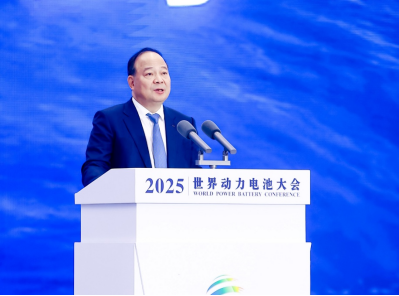
Core Insights - The A-share lithium battery sector experienced a collective surge, with indices for lithium battery electrolyte, lithium ore, power batteries, and lithium battery components all rising over 6.40% [3] - The 2025 World Power Battery Conference held in Yibin gathered over 800 industry leaders and experts to discuss new opportunities and ecosystems in the power battery sector [3][4] - China's power battery installed capacity is projected to grow significantly, with a rise from 63.6 GWh in 2020 to 548.8 GWh in 2024, accounting for 61.3% of the global total [3][5] Industry Growth and Trends - The penetration rate of new energy vehicles in China is expected to increase from 5.4% in 2020 to 45.28% in 2024, with a 48.78% average penetration rate in the first three quarters of 2025 [5] - The installed capacity of power batteries in China reached 493.9 GWh in the first three quarters of 2025, marking a year-on-year growth of 43.5% [5] - The conference highlighted that competition in the industry is shifting from mere capacity and technology to a broader ecosystem and international competition [3][5] Yibin's Role in the Industry - Yibin has attracted over 120 projects related to the power battery supply chain, with a planned capacity of 300 GWh and 210 GWh already built [4] - The power battery industry in Yibin is expected to exceed 100 billion yuan in output value for both 2023 and 2024, becoming the second billion-level industry after liquor [4] Technological Advancements - The conference emphasized the importance of expanding the application scenarios for power batteries, including electric commercial vehicles, electric ships, and electric aircraft [6] - AI technology is increasingly being integrated into the battery industry, enhancing efficiency and innovation across various stages, from materials to recycling [15][17] Global Expansion and Challenges - China's lithium battery exports exceeded 400 billion yuan in the first three quarters of the year, with CATL contributing nearly 120 GWh, representing almost 60% of the total [11] - Over 50 Chinese battery-related companies have established localized production overseas, with CATL leading the way in international expansion [11][12] - Challenges such as trade barriers and compliance requirements are noted as significant hurdles for Chinese companies looking to expand globally [12] Future Outlook - The new energy storage market is projected to grow significantly, with expectations that storage batteries will account for 50% of the overall battery market [6][10] - The integration of AI in battery research and development is anticipated to accelerate the transition to solid-state batteries and enhance overall industry efficiency [15][17]
2025世界动力电池大会宜宾开幕:180项目签约额超861亿元 业界聚焦固态电池发展
Zheng Quan Shi Bao Wang· 2025-11-12 13:40
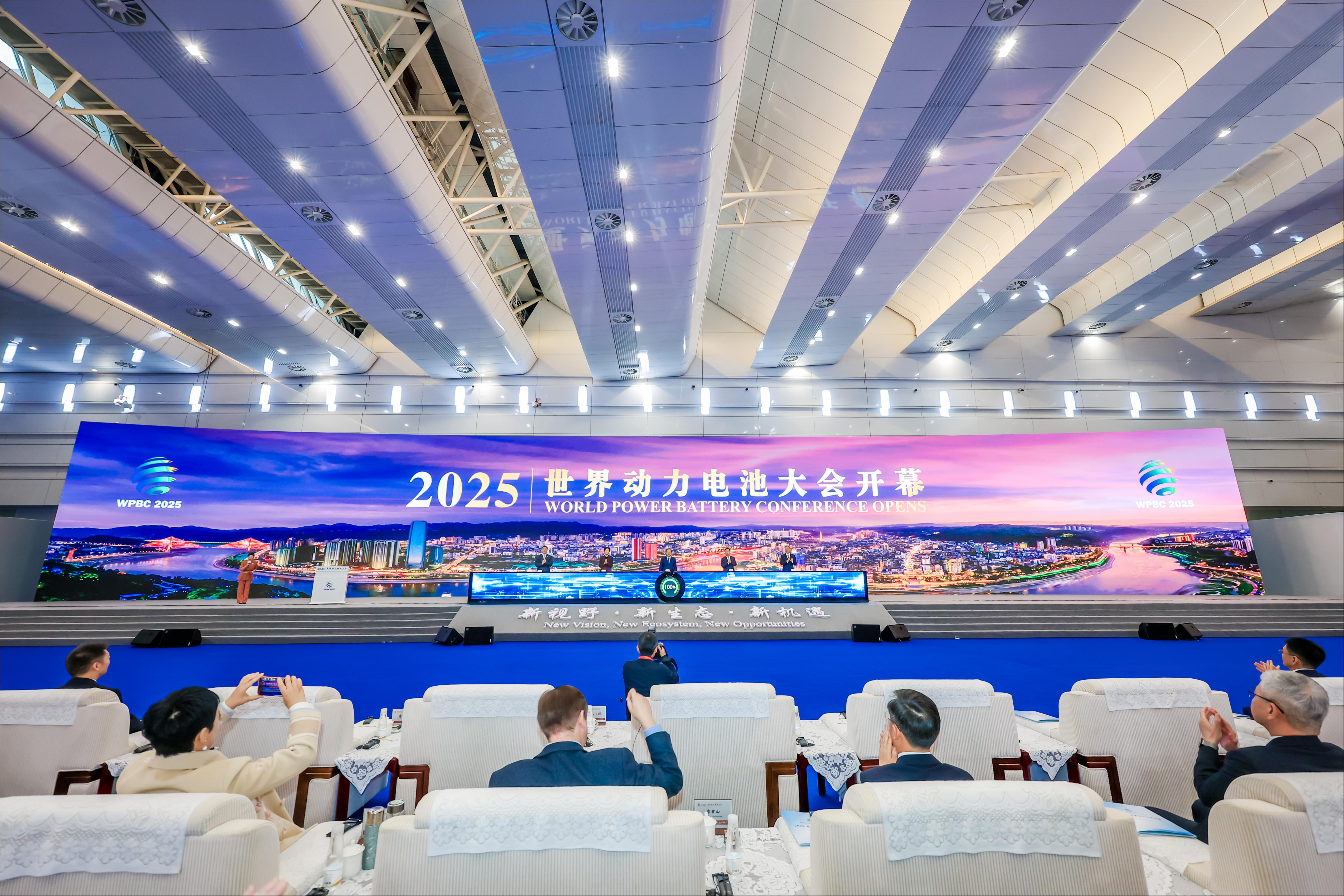
Core Insights - The 2025 World Power Battery Conference commenced in Yibin, Sichuan, focusing on "New Vision, New Ecology, New Opportunities" with key industry leaders presenting [1] - China's power battery sales increased by 48.9% year-on-year in the first three quarters of 2023, reaching 786 GWh, with exports growing by 32.7% to over 129 GWh [2] - The conference highlighted the importance of technological innovation and collaboration in the power battery industry to achieve high-quality development [1][2] Industry Performance - China's power battery industry has maintained its position as the world's largest for eight consecutive years, with significant advancements in key technologies such as module-free battery packs and integrated battery chassis [2] - The "New Three Items" (electric vehicles, lithium batteries, and photovoltaic batteries) have become crucial pillars of China's exports, contributing over 900 billion yuan in total export value in the first three quarters of 2023 [2] - The lithium battery sector alone contributed nearly 400 billion yuan, accounting for over 40% of the "New Three Items" export total [2] Technological Developments - Solid-state batteries are identified as a core future direction for the industry, with expectations for small-scale applications by 2030 [3] - Current challenges in solid-state battery development include interface resistance, cost, and manufacturing processes, with breakthroughs anticipated in energy density and key technologies [3][4] - The timeline for solid-state battery commercialization includes attempts at semi-solid battery applications by 2025 and small-scale demonstrations by 2027 [4] Regional Developments - Sichuan's power battery production reached 168.1 GWh in the first three quarters of 2023, marking a 49.2% increase, with expectations to exceed 200 GWh for the year [5] - Yibin is emerging as a major hub for the new energy vehicle and power battery industry, with over 120 projects and a planned capacity of 300 GWh [5] - The 2025 Power Battery Application Ecology Exhibition showcased over 230 exhibitors, highlighting the industry's strong growth and collaborative potential [6] Economic Impact - The signed projects at the conference total 180, with a combined value of 861.3 billion yuan, indicating robust industry momentum [6] - Once fully operational, these projects are expected to generate over 900 million yuan in annual output value and create nearly 30,000 new jobs [7]
宜宾三江潮涌“电”亮未来:2025世界动力电池大会开启“全域增量”新时代
Huan Qiu Wang· 2025-11-12 10:24
Core Insights - The 2025 World Power Battery Conference, themed "New Vision, New Ecology, New Opportunities," was held in Yibin, Sichuan, showcasing the industry's commitment to high-quality development [1] Group 1: Industry Trends and Innovations - Experts emphasized the need for diversified innovation, intelligent empowerment, and international cooperation to enhance sustainable development capabilities in the power battery industry [2] - The chairman of CATL highlighted a shift from high-speed growth to high-quality development, focusing on technological breakthroughs, scenario expansion, model innovation, and a zero-carbon ecosystem [2] - The conference revealed significant advancements in materials innovation, performance breakthroughs, intelligent manufacturing, and scenario extension, predicting rapid marketization of hybrid solid-liquid batteries and industrial demonstration of all-solid-state batteries [3] Group 2: Conference Highlights and Achievements - The conference featured six specialized meetings addressing key topics such as advanced technology, recycling, quality enhancement, new energy storage, multi-scenario applications, and international supply chains [5] - A record-breaking exhibition was held, covering 50,000 square meters and featuring over 230 key domestic and international enterprises, showcasing the entire value chain from materials innovation to recycling [5] - The conference resulted in the signing of 180 projects across critical sectors, demonstrating strong industrial clustering effects in Sichuan and Yibin [7] Group 3: Regional Development and Future Outlook - Sichuan's power battery sales reached 786 GWh in the first three quarters of this year, marking a 48.9% year-on-year increase, with expectations to exceed 200 GWh for the entire year [7] - Yibin is projected to surpass 100 billion yuan in industrial output value for the power battery sector in both 2023 and 2024, having attracted over 120 upstream and downstream projects [7] - The Sichuan provincial government emphasized the need to enhance industrial capabilities and promote high-quality development and international cooperation, positioning Yibin as a leader in the power battery industry [7]
事关磷酸铁锂 曾毓群透露技术大突破!年底将建成1000座换电站
Shang Hai Zheng Quan Bao· 2025-11-12 08:12
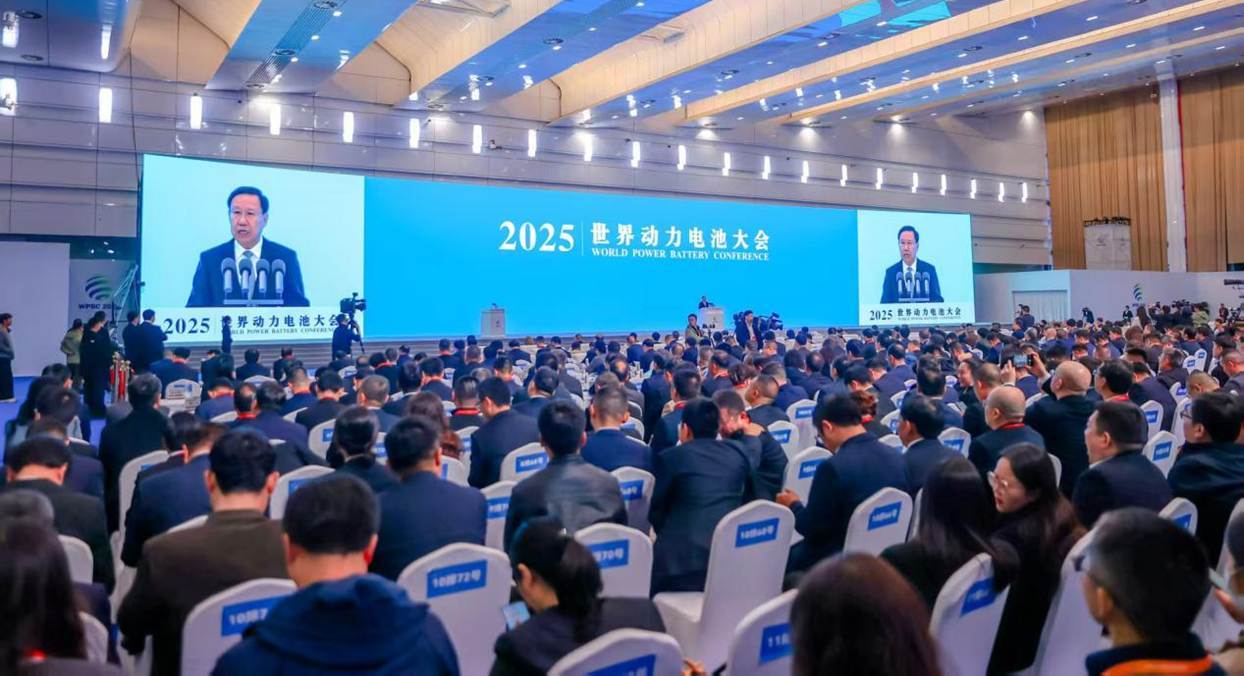
Core Insights - The company has achieved significant advancements in battery technology, with the fourth generation lithium iron phosphate battery leading the industry in high energy density, long lifespan, and high power, while the fifth generation has recently begun mass production, achieving new breakthroughs in energy density and cycle life [1][4]. Group 1: Technological Advancements - The fourth generation lithium iron phosphate battery is fully ahead of mainstream second and third generation products in terms of high energy density, long lifespan, and high power [1][4]. - The fifth generation product has started mass production, achieving breakthroughs in energy density and cycle life [4]. - The company maintains a long-term lead in ternary battery systems, widely applied in its Kirin and Xiaoyao batteries [4]. - The upcoming "sodium-ion" battery, set to launch in 2025, aims to reduce reliance on lithium resources, enhance safety, and address low-temperature performance issues [4]. Group 2: Business Model Innovation - The company is promoting a "separation of vehicle and battery" development model, transforming batteries from products into services [4]. - The "Chocolate Battery Swap Alliance" has established a presence in over 40 cities, with plans to build 1,000 battery swap stations by the end of the year [4]. Group 3: Market Expansion - The company's batteries are expanding from passenger vehicles to commercial vehicles, electric ships, and electric aircraft [6]. - In the commercial vehicle sector, the penetration rate of new energy heavy trucks has reached a historical high, with the company's Tianxing battery becoming the preferred choice for pure electric heavy trucks [6]. - Nearly 900 electric ships equipped with the company's batteries are operational, covering various inland and near-sea navigation areas [6]. Group 4: Sustainability Initiatives - The company is actively involved in creating a zero-carbon ecosystem, integrating wind, solar, and storage solutions to develop zero-carbon industrial parks [7]. - The company leads the formulation of national standards for battery recycling, achieving a nickel-cobalt-manganese recovery rate of 99.6% and a lithium recovery rate of 96.5%, both among the highest globally [8]. - The "Global Energy Cycle Plan (GECC)" will be launched in Europe in 2025 to promote circular economy transformation in collaboration with global partners [8].
事关磷酸铁锂,曾毓群透露技术大突破
Shang Hai Zheng Quan Bao· 2025-11-12 08:10
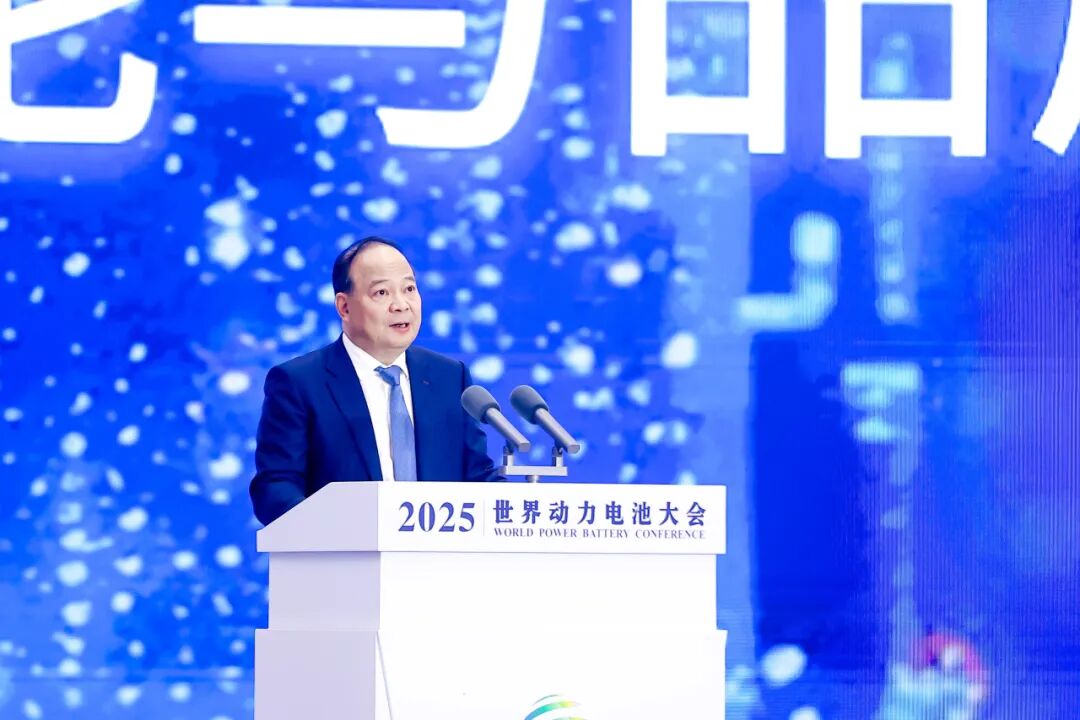
Core Insights - The company has achieved significant advancements in battery technology, particularly with the mass production of its fourth-generation lithium iron phosphate batteries, which outperform mainstream second and third-generation products in energy density, lifespan, and power [1][3] - The fifth-generation product has recently begun mass production, achieving breakthroughs in energy density and cycle life [3] - The company emphasizes the importance of high-quality development and innovation in both technology and business models to adapt to the global energy transition and competitive landscape [1][4] Technology Advancements - The company maintains a leading position in ternary battery systems, widely applied in its Kirin and Xiaoyao batteries [3] - The upcoming "sodium-ion" battery, set to launch in 2025, aims to reduce reliance on lithium resources, enhance safety, and improve low-temperature performance, providing new pathways for electric vehicle adoption in northern regions [3] - The "Xiaoyao" dual-core battery allows for customizable battery solutions, catering to individual user needs [3] Business Model Innovation - The company is promoting a "vehicle-battery separation" model, transforming batteries from products into services [4] - The "Chocolate Battery Swap Alliance" has established a presence in over 40 cities, with plans to build 1,000 battery swap stations by the end of the year [4] - A collaboration with JD.com and GAC has led to the launch of a new vehicle that utilizes the latest high-temperature resistant battery technology, enhancing safety and longevity [4] Market Expansion - The company's batteries are expanding beyond passenger vehicles into commercial vehicles, electric ships, and electric aircraft [5][6] - In the commercial vehicle sector, the penetration rate of new energy heavy trucks has reached a historical high, with the company's Tianxing battery becoming the preferred choice for pure electric heavy trucks [6] - Nearly 900 electric ships equipped with the company's batteries are operational, and the company is involved in developing China's first pure electric passenger ship and a battery swap project for cargo ships [6] Sustainability Initiatives - The company is actively working on a zero-carbon ecosystem, integrating wind, solar, and storage solutions to create zero-carbon industrial parks [8] - It leads the formulation of national standards for battery recycling, achieving a nickel-cobalt-manganese recovery rate of 99.6% and a lithium recovery rate of 96.5%, both among the highest globally [8] - The company plans to launch a "Global Energy Circular Economy Plan" in Europe by 2025, collaborating with global partners to promote circular economy transformation [9]