品牌忠诚度

Search documents
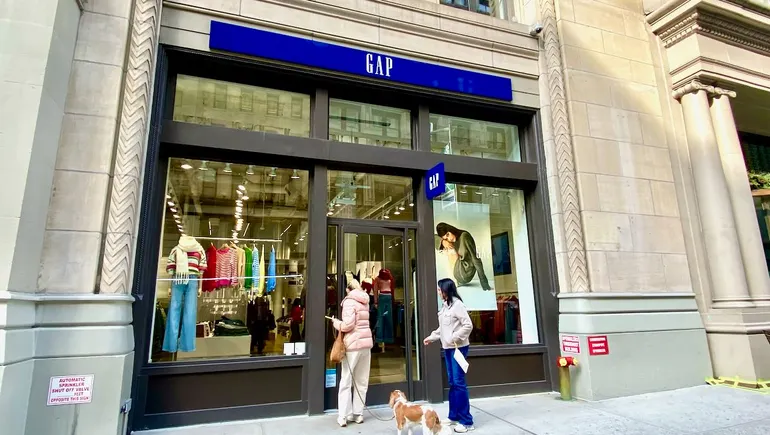
Will Gap’s new loyalty program meet the moment?
Marketing Dive· 2026-02-26 15:31
Gap Inc. on Tuesday unveiled a loyalty program that brings not only simplicity and a new identity, but also opportunities for meaningful connections to its customers. The update, “Encore,” applies to all the apparel company’s brands and arrives at a time when it is working on improvements across its portfolio.That includes a crusade to regain cultural cachet, especially at its once-iconic namesake.“Fashion is entertainment, and today's customers aren't just buying apparel, they're buying into brands that sh ...


United(UAL) - 2025 Q4 - Earnings Call Transcript
2026-01-21 16:32
Financial Data and Key Metrics Changes - United Airlines reported a fourth-quarter earnings per share (EPS) of $3.10, within the guidance range of $3-$3.50, despite a $250 million impact from the government shutdown [28] - Full-year 2025 EPS was $10.62, slightly up from 2024, marking the only U.S. airline to grow EPS year-over-year [28][29] - The company generated $2.7 billion in free cash flow in 2025, with expectations to maintain similar levels in 2026 [32] Business Line Data and Key Metrics Changes - Total revenues for Q4 increased by 4.8% to $15.4 billion, with premium cabin revenues up 12% year-over-year [19] - Premium cabin revenues outperformed main cabin revenues, which were up only 1% [19] - Cargo revenues increased by 2.1% year-over-year, while loyalty revenues rose by 9% in 2025 [20] Market Data and Key Metrics Changes - United Airlines ranked number one in on-time departures and arrivals during the holiday season, with less than 1% of flights canceled [18] - The company flew a record 189 million passengers in 2025, achieving the highest seat completion factor in its history [15] - All United hubs were profitable in Q4 and for the entire year, a unique position among large U.S. carriers [22] Company Strategy and Development Direction - The company aims to continue building a revenue-diverse, brand-loyal airline, with a focus on enhancing customer experience and operational efficiency [7][10] - United plans to introduce new seasonal capacity shaping for long-haul schedules and enhance merchandising of its product lineup in 2026 [23][24] - The company is committed to achieving investment-grade credit ratings and plans to reduce net leverage below two times by year-end 2026 [32] Management's Comments on Operating Environment and Future Outlook - Management expressed optimism about the strong start to 2026, particularly in business travel volumes, which are up significantly compared to early 2025 [38] - The company remains cautious about the impact of geopolitical events on bookings, particularly in the Caribbean, but expects overall sequential improvement across regions [64][22] - Management emphasized the importance of maintaining operational integrity and customer trust during disruptions, which contributed to high Net Promoter Scores [10][12] Other Important Information - United Airlines invested $1 billion in customer experience enhancements, which have been recognized by customers, contributing to brand loyalty [29] - The company is currently in negotiations with four labor unions to reach industry-leading contracts [11] Q&A Session Summary Question: Corporate travel strength in January - Management noted strong business volumes in January, with expectations for continued growth in February and March [38] Question: Main cabin performance outlook - Management expressed optimism that the main cabin segment will improve as unprofitable capacity in the market is expected to decrease [41] Question: Credit card ecosystem changes - Management is in constant communication with Chase regarding potential impacts on the MileagePlus program, emphasizing that United's co-brand holders are less affected than others [45] Question: Cost efficiencies and growth opportunities - Management highlighted ongoing efforts in procurement and technology to drive cost efficiencies, with expectations for continued improvements in 2026 [67] Question: 2026 guidance conservativeness - Management acknowledged that the guidance for 2026 may be conservative, but expressed confidence in the strong start to the year and improving business demand [72]

United(UAL) - 2025 Q4 - Earnings Call Transcript
2026-01-21 16:32
Financial Data and Key Metrics Changes - United Airlines reported a fourth-quarter EPS of $3.10, within the guidance range of $3-$3.50, despite a $250 million impact from the government shutdown [28] - Full-year 2025 EPS was $10.62, slightly up from 2024, marking the only U.S. airline to grow EPS year-over-year [28][29] - Total revenues for Q4 increased by 4.8% to $15.4 billion, with a 6.5% increase in capacity year-over-year [19] Business Line Data and Key Metrics Changes - Premium cabin revenues increased by 12% year-over-year, while main cabin revenues were up 1% [19] - For the year, premium revenues increased approximately 11%, while standard and basic economy revenues decreased by approximately 5% [19] - Cargo revenues for 2025 rose by $1.8 billion, a 2.1% year-over-year increase [20] Market Data and Key Metrics Changes - United's international flying saw a rebound in Q4, particularly in the Pacific and Atlantic regions, with PRASM turning positive [19] - All United hubs were profitable in Q4 and for the entirety of 2025, a unique position among large U.S. carriers [22] - The domestic capacity environment is expected to be favorable in the first half of 2026, with unprofitable capacity by competitors leaving the market [21] Company Strategy and Development Direction - The company aims to continue building a revenue-diverse, brand-loyal airline, with a focus on enhancing customer experience and operational efficiency [7][10] - Future strategies include new seasonal capacity shaping, enhanced merchandising, and improved connectivity [23][24] - The company plans to invest in premium capacity growth, with over half of growth in 2026 expected from premium offerings [25] Management's Comments on Operating Environment and Future Outlook - Management expressed confidence in the company's resilience and ability to navigate challenges, highlighting strong customer focus and operational performance [7][10] - The outlook for 2026 is optimistic, with expectations for continued earnings growth and margin expansion [30][34] - Management acknowledged the impact of geopolitical events on bookings, particularly in the Caribbean, but remains hopeful for recovery [21][22] Other Important Information - The company generated $2.7 billion in free cash flow in 2025, with expectations for similar levels in 2026 [32] - United Airlines is focused on achieving investment-grade credit ratings, having made significant progress in deleveraging [32] Q&A Session Summary Question: Corporate travel strength in January - Management noted strong business volumes in January, with expectations for continued growth in the coming months [38] Question: Main cabin performance outlook - Management expressed optimism that the main cabin segment will improve, driven by the exit of unprofitable capacity from competitors [40][42] Question: Credit card ecosystem changes - Management is in constant contact with Chase regarding potential impacts, believing United's portfolio will be less affected than others [44][46] Question: Unit cost efficiencies - Management highlighted ongoing efforts in operational efficiency and procurement, expecting continued improvements in cost management [51][56] Question: Capacity growth and guardrails - Management indicated that capacity will be managed according to demand, with no specific guidance provided [58] Question: Long-term targets and plans - Management is focused on achieving long-term goals, including double-digit margins and investment-grade status, with future plans to be communicated [76][77]
United(UAL) - 2025 Q4 - Earnings Call Transcript
2026-01-21 16:30
Financial Data and Key Metrics Changes - United Airlines reported a fourth-quarter earnings per share (EPS) of $3.10, within the guidance range of $3-$3.50, despite a $250 million impact from the government shutdown [27] - Full-year 2025 EPS was $10.62, slightly up from 2024, marking the only U.S. airline to grow EPS year-over-year [27][28] - The company generated $2.7 billion in free cash flow in 2025, with expectations to maintain a similar level in 2026 [32] Business Line Data and Key Metrics Changes - Top-line revenues increased 4.8% to $15.4 billion in Q4 2025, with a 6.5% increase in capacity year-over-year [18] - Premium cabin revenues rose 12% year-over-year, while main cabin revenues increased by only 1% [18] - Cargo revenues for 2025 were up $1.8 billion, reflecting a 2.1% year-over-year increase [19] Market Data and Key Metrics Changes - The company experienced a strong recovery in international flying in Q4, particularly in the Pacific and Atlantic regions, with positive PRASM [18] - Domestic capacity environment is expected to be favorable in the first half of 2026, with unprofitable capacity by competitors leaving the market [20] - All United hubs were profitable in Q4 and for the entirety of 2025, a unique position among large U.S. carriers [21] Company Strategy and Development Direction - United Airlines aims to enhance its revenue diversity and brand loyalty, continuing to build on its successful strategy from the past decade [5][7] - The company plans to focus on new seasonal capacity shaping, enhanced merchandising, and improved connectivity as part of its growth strategy for 2026 [23][24] - Investment in customer experience remains a priority, with over $1 billion spent in 2025 to enhance service offerings [28] Management's Comments on Operating Environment and Future Outlook - Management expressed optimism for 2026, citing a strong start to the year and improved business volumes compared to early 2025 [37][38] - The company remains focused on achieving double-digit margins and investment-grade credit ratings by year-end 2026 [32][33] - Management acknowledged ongoing challenges in the main cabin segment but remains confident in eventual improvements due to market dynamics [40] Other Important Information - United Airlines is currently in negotiations with four labor unions, aiming for industry-leading contracts [10] - The company expects to take delivery of over 100 narrowbody and approximately 20 widebody aircraft in 2026, with capital expenditures projected to be less than $8 billion [31] Q&A Session Summary Question: Corporate travel strength in January - Management noted strong business volumes in January, with expectations for continued growth in bookings [36][38] Question: Main cabin performance outlook - Management is optimistic about eventual improvements in the main cabin segment, driven by market adjustments [39][40] Question: Credit card ecosystem changes - Management is in constant communication with Chase regarding potential impacts, expressing confidence in the resilience of the MileagePlus program [42][44] Question: Unit cost efficiencies - Management highlighted strong cost performance in 2025, attributing it to operational efficiency and cultural shifts within the company [47][50] Question: 2026 guidance conservativeness - Management acknowledged that the 2026 guidance may be conservative, reflecting a cautious approach based on past experiences [64][68] Question: Long-term targets and plans - Management indicated that long-term goals will be communicated in the future, focusing on double-digit margins and investment-grade ratings [70][71]
Insulet (NasdaqGS:PODD) 2025 Investor Day Transcript
2025-11-20 15:02
Summary of Insulet's 2025 Investor Day Company Overview - **Company**: Insulet Corporation (NasdaqGS:PODD) - **Event**: 2025 Investor Day held on November 20, 2025 - **Focus**: Long-term strategy, innovation roadmap, and financial outlook for 2025-2028 [1][2] Core Industry Insights - **Industry**: Diabetes management and medical technology - **Product**: Omnipod, a tubeless automated insulin delivery system - **Market Position**: Insulet is the market leader in the U.S. with over 600,000 users and $2.7 billion in revenue [8][17] Key Points and Arguments 1. **Historical Context**: Insulet celebrates its 25th anniversary, highlighting its journey from a startup to a market leader in diabetes management [6][8] 2. **Product Evolution**: The Omnipod product line has evolved through several generations, with Omnipod 5 being the latest innovation, offering significant improvements in usability and technology [7][11] 3. **Market Growth**: Insulet has driven 66% of global market growth in the last five years, with a revenue CAGR of 26%, significantly outpacing competitors [18] 4. **Market Opportunity**: The total addressable market (TAM) for diabetes management is estimated at $30 billion, with significant growth potential in both type 1 and type 2 diabetes segments [20][33] 5. **Access and Affordability**: Insulet has pioneered a pay-as-you-go pharmacy model, making it easier for patients to access Omnipod without upfront costs [13][14] 6. **Innovation Pipeline**: Upcoming products include enhancements to Omnipod 5 in 2026, the launch of Omnipod 6 in 2027, and a fully closed-loop system for type 2 diabetes in 2028 [30][51][58] Financial Outlook - **Revenue Growth**: Projected 20% revenue CAGR over the next three years, supported by a scalable recurring revenue model [33][35] - **Operating Margin**: Expected annual operating margin expansion of 100 basis points [33] Additional Insights 1. **Patient-Centric Approach**: Insulet emphasizes empathy-led innovation, aiming to make diabetes management less burdensome for users [11][61] 2. **Technological Advancements**: The company is investing heavily in R&D, with over 700 patent applications pending, ensuring a strong competitive moat [47] 3. **Community Engagement**: Insulet has built a loyal community of users, which enhances brand trust and drives growth [17][25] 4. **Global Expansion**: Plans to expand access to Omnipod globally, targeting additional markets and patient populations [20][21] Conclusion - **Strategic Vision**: Insulet is committed to transforming diabetes management through innovative technology, strong market presence, and a focus on patient needs, positioning itself for sustained growth and leadership in the industry [35][61]

Viking Holdings Ltd(VIK) - 2025 Q3 - Earnings Call Transcript
2025-11-19 14:00
Financial Data and Key Metrics Changes - In Q3 2025, Viking Holdings reported a net yield increase of 7.1% year over year, reaching $617, the highest in the company's history [4][11] - Adjusted gross margin increased by 21.4% year over year, with the highest quarterly adjusted EBITDA recorded at $704 million, up 26.9% year over year [11][13] - Net income for Q3 2025 was $514 million, an improvement of almost $135 million compared to the same period in 2024 [13][14] Business Line Data and Key Metrics Changes - In the river segment, capacity PCDs increased by 5.2% year over year, with an adjusted gross margin of $1.4 billion, up 14.3% year over year [15] - For the ocean segment, capacity PCDs increased by 15.3% year over year, with an adjusted gross margin of $1.5 billion, up 28.5% year over year [15] Market Data and Key Metrics Changes - As of November 2, 2025, 96% of Viking's 2025 capacity was sold, with advanced bookings of $5.6 billion, a 21% increase compared to the same point in 2024 [4][18] - For 2026, 70% of capacity is already booked, with advanced bookings of $4.9 billion, 14% higher than the same point in 2024 [18][22] Company Strategy and Development Direction - Viking focuses on destination and cultural enrichment, aiming to create a new category of travel that emphasizes meaningful discovery rather than traditional tourism [8][10] - The company is committed to expanding its fleet and enhancing its product offerings, with a focus on maintaining high standards of service and customer experience [10][24] Management's Comments on Operating Environment and Future Outlook - Management expressed confidence in the strong booking environment and the resilience of their target customers, indicating a positive outlook for future growth [4][5] - The company remains focused on disciplined cost management while investing in talent and capacity to support long-term growth [12][17] Other Important Information - Viking has been recognized as the number one cruise line for oceans and rivers by Condé Nast Traveler for five consecutive years, reflecting strong brand loyalty and customer satisfaction [9][10] - The company has a total cash and cash equivalents of $3 billion and a net debt of $2.8 billion, with a net leverage ratio improved to 1.6 times [16] Q&A Session Summary Question: What is driving the pricing increase for 2026? - Management indicated that strong consumer demand and a resilient customer base are driving the pricing increase, with a focus on engaging consumers rather than aggressive pricing actions [26][28] Question: What does pursuing long-term growth mean for Viking? - Long-term growth is focused on organic growth through fleet expansion and potential inorganic growth opportunities that align with the brand ethos [31][32] Question: Can you elaborate on demand trends globally? - Management noted that demand remains strong, with a significant portion of bookings coming from repeat customers who appreciate the Viking experience [36][39] Question: How do you view the competitive landscape with new entrants? - Management expressed confidence in Viking's unique position and advantages, emphasizing a focus on delivering outstanding products rather than worrying about competitors [49][59] Question: What are the trends in repeat visitation and new-to-brand customers? - Approximately 53% of guests for the 2024 season had traveled with Viking before, with many guests booking additional trips while on board [74][78]

苹果“天价袜子”上架即售罄!1299元起售,除了贵还有啥?
Huan Qiu Wang Zi Xun· 2025-11-15 11:27
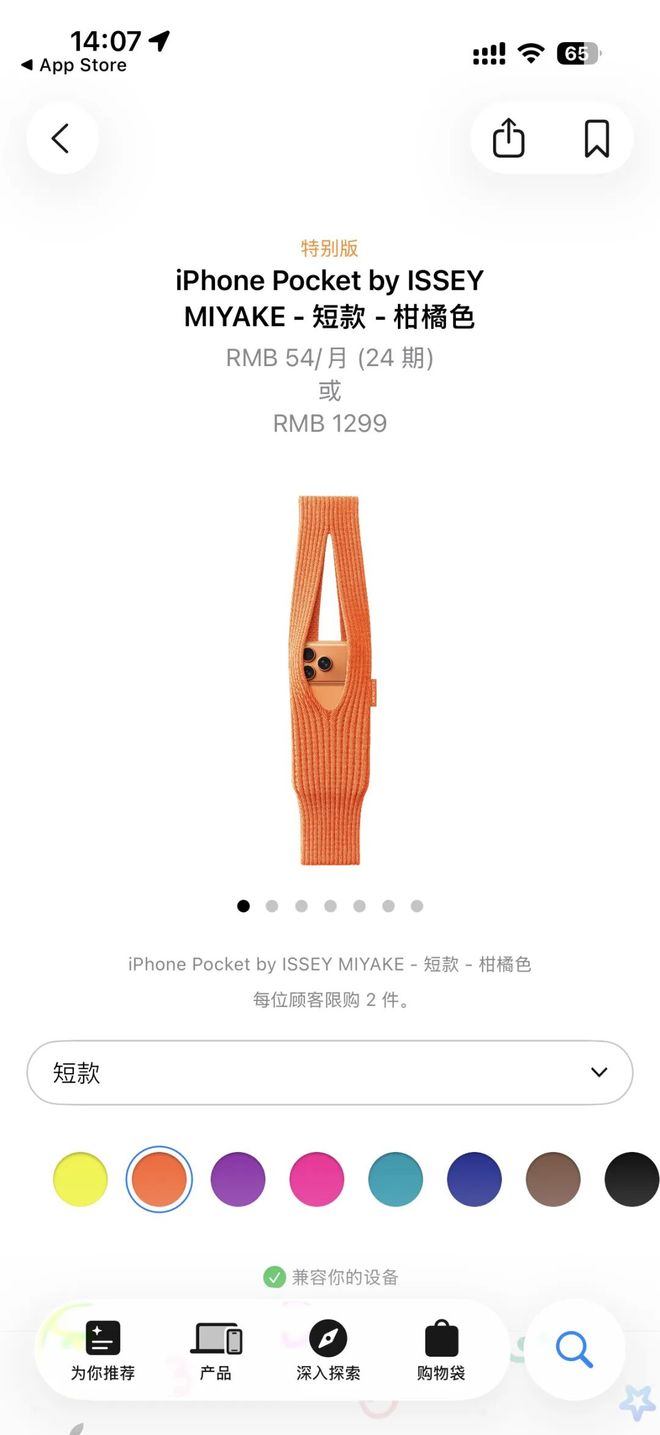
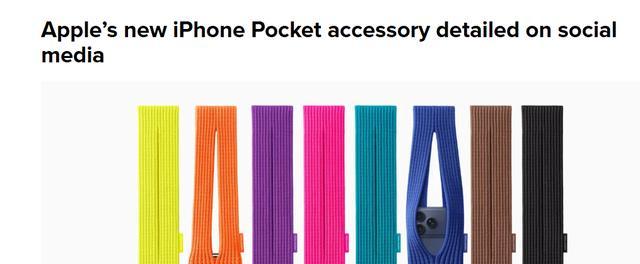
Core Viewpoint - Apple has launched the iPhone Pocket in collaboration with Japanese fashion brand Issey Miyake, which quickly sold out, sparking market discussions about its pricing and design [1][3]. Group 1: Product Details - The iPhone Pocket weighs only 38 grams and is available in eight fashionable colors, utilizing a 3D knitted one-piece technology inspired by Issey Miyake's "one piece of cloth" concept [3]. - The product is priced at 1,299 yuan for the short version and 1,899 yuan for the long version, leading to a rapid sell-out on the release day [1]. Group 2: Market Reaction - On second-hand platforms, the iPhone Pocket has seen a price premium of up to 500 yuan, particularly for the cinnamon-colored long version, while e-commerce platforms have introduced cheaper alternatives priced between 20 to 80 yuan [7]. - Social media has seen a surge in DIY trends, with users creatively replicating the design using socks and yarn, humorously critiquing the original product [7]. Group 3: Pricing Strategy and Brand Loyalty - The pricing strategy of the iPhone Pocket focuses on "form, brand, and uniqueness" rather than functionality, indicating Apple's testing of brand loyalty limits among consumers [9]. - Apple's history of high-priced accessories, such as the iPod Socks and Hermes Apple Watch bands, shows a trend of expanding the price boundaries of accessory products, often leading to these items becoming collectibles post-discontinuation [9][10]. - The phenomenon of high-priced ordinary products in the luxury sector is noted, with examples from other luxury brands, suggesting that Apple's strategy transcends mere accessory functionality to enhance brand premium [9]. Group 4: Consumer Behavior and Future Considerations - Despite ongoing controversies, the immediate market performance with price premiums indicates a significant consumer willingness to pay for design, brand, and sentiment [10]. - However, the potential for consumer fatigue and the risk of overextending brand loyalty due to high pricing of similar products remain long-term challenges for Apple [10].

被嘲 “剪碎袜子”,苹果联名袋iPhonePocket仍溢价热销
Huan Qiu Wang Zi Xun· 2025-11-14 05:31
Core Viewpoint - The collaboration between Apple and Japanese fashion brand Issey Miyake has sparked significant debate, particularly regarding the pricing of the iPhone Pocket, which ranges from 1299 to 1899 yuan, leading to discussions about brand loyalty and consumer perception in the luxury accessory market [1][4]. Product Overview - The iPhone Pocket is designed as a "new carrying method," inspired by a piece of cloth, featuring Issey Miyake's signature 3D knitted structure without seams, accommodating all iPhone models and small items like AirPods and cards [4]. - Available in short and long versions, the product comes in vibrant colors for the short version and more subdued tones for the long version, allowing for multiple usage methods [4]. Market Response - Despite the controversies, consumer enthusiasm remains high, with the long cinnamon version selling out on the first day and market prices reaching 2399 yuan for the long version and 1699 yuan for the short version, indicating a premium of up to 500 yuan [7]. - Supporters appreciate the unique design, which serves both as a fashion accessory and a functional item, while some users have creatively modified similar items to mimic the iPhone Pocket [7]. Brand Strategy - The pricing strategy reflects a focus on "form, brand, and uniqueness," rather than just functionality, positioning Apple as a brand testing the limits of consumer loyalty [7]. - Apple's history of high-priced accessories, such as the iPod Socks and the Hermès Apple Watch bands, illustrates a consistent strategy of elevating brand value through collaborations with luxury brands [8]. Industry Analysis - Apple's accessory strategy has evolved beyond mere functionality, continuously exploring the balance between "functional value" and "brand value" through luxury collaborations [9]. - The immediate market response indicates a willingness among consumers to pay for design and brand sentiment, although concerns about potential consumer fatigue and the sustainability of high pricing remain [9].
OPPO成三季度唯一增长的国产手机品牌 品牌忠诚度仅次于苹果
Di Yi Cai Jing Zi Xun· 2025-11-07 07:39
Group 1 - OPPO is the only leading brand in China to achieve growth in Q3, demonstrating strong resilience and growth capability [1] - The OPPO Reno series continues to be favored by young consumers, leading to OPPO's top position in shipment volume within the $400–$600 price range during the first three quarters of the year [1] - OPPO has a broad user base in the mid-to-high-end market, with global device activation exceeding 130 million [1] Group 2 - OPPO's brand loyalty is reflected in its nearly 50% same-brand replacement user ratio, the highest among Android brands [1] - The global memory chip market is experiencing significant price increases, with DRAM prices rising and cost pressures being passed on to end products [1] - Upcoming mid-range models are expected to face price hikes as new flagship models have already seen price increases of several hundred yuan [1]
OPPO成三季度唯一增长的国产手机品牌 品牌忠诚度仅次于苹果
第一财经· 2025-11-07 07:34
Group 1 - OPPO is the only brand among top manufacturers in China to achieve growth in Q3, demonstrating strong resilience and growth capability [1] - The OPPO Reno series continues to be favored by young consumers, leading the shipment volume in the competitive $400-$600 price range during the first three quarters of the year [1] - OPPO's global device activation has surpassed 130 million, indicating a broad user base for the Reno series [2] Group 2 - OPPO has a high brand loyalty with nearly 50% of its users being repeat customers, the highest among Android brands [2] - The global memory chip market is experiencing significant price increases, with DRAM prices rising, which is expected to impact the pricing of end products [2] - Upcoming mid-range models are anticipated to also see price hikes as new flagship models have already been launched with price increases [2]