
土地改革

Search documents
【史海回眸】美策动政变,危地马拉总统1954年被迫下台
Huan Qiu Shi Bao· 2026-01-08 22:40
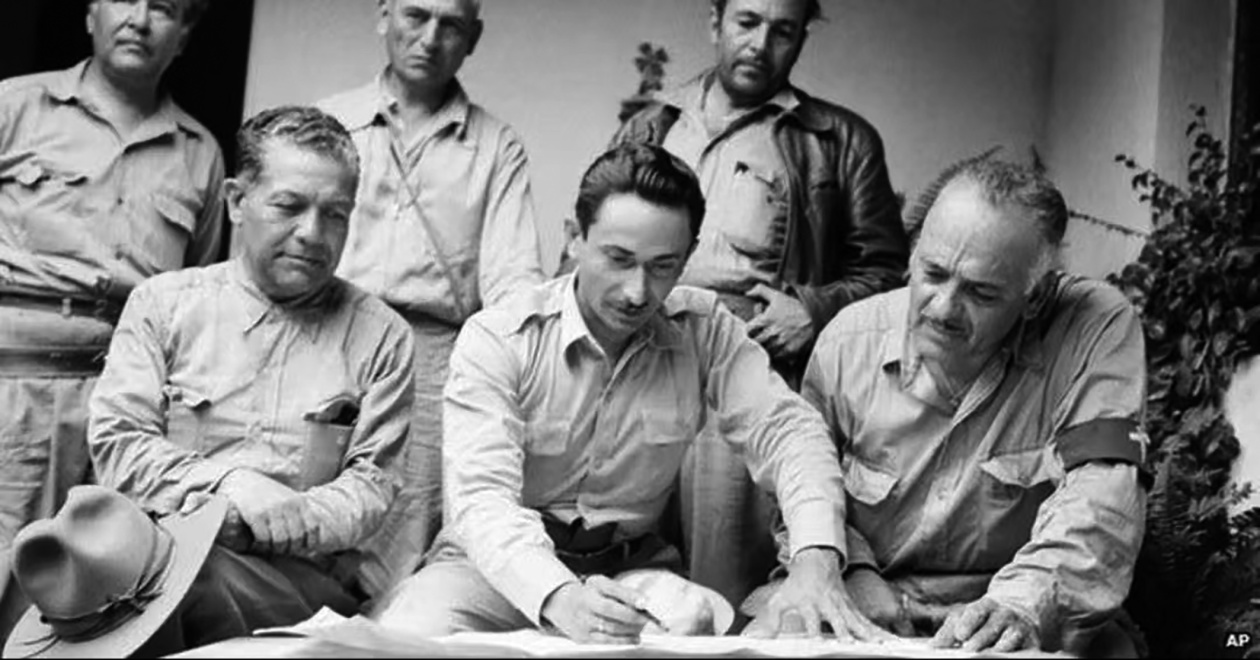
Core Viewpoint - The article discusses the U.S. government's covert operations during the Cold War, specifically focusing on the CIA's orchestration of the coup against Guatemalan President Jacobo Árbenz in 1954, which was driven by economic interests and political control in the region [1][3]. Group 1: Historical Context - Guatemala, located in Central America, gained independence from Spanish colonial rule in 1821 and saw significant U.S. capital investment starting in the late 19th century, particularly from the United Fruit Company, which controlled the country's economic lifelines [1]. - Jacobo Árbenz was democratically elected as President in 1951 and implemented reforms such as minimum wage laws, increased investment in education, and land redistribution, which garnered popular support but conflicted with the interests of the United Fruit Company [1][3]. Group 2: U.S. Intervention - The U.S. government, concerned about Árbenz's reforms and alleged ties to the Soviet Union, initiated a covert operation to overthrow his government, approving a budget of $2.7 million for this purpose [3][4]. - The CIA's strategy included psychological warfare, airstrikes, and the recruitment of a rebel army led by Carlos Castillo Armas, which ultimately failed to achieve military success against the Guatemalan army [4]. Group 3: Aftermath of the Coup - Following Árbenz's resignation on June 27, 1954, under pressure from the U.S. and military officials, Castillo Armas was installed as president, reversing many of Árbenz's reforms and establishing a pro-U.S. regime [5]. - Castillo Armas's government reallocated land back to the United Fruit Company, revoked labor rights, and initiated a campaign against perceived communists, leading to widespread arrests and executions [5].

“土地革命”创造新生与未来
Xin Lang Cai Jing· 2026-01-08 21:03
Core Viewpoint - The article highlights the transformative agricultural reforms in Jiamusi City, Heilongjiang Province, showcasing the shift from fragmented farming to large-scale, efficient agricultural practices, significantly enhancing productivity and income for local farmers [4][5][7]. Group 1: Agricultural Transformation - Jiamusi City has implemented an innovative model of "Party branch + family farm + farmers," leading to the unified management of 21,000 acres of farmland, with a scale operation ratio of 84.65%, generating over 3 million yuan for the village collective [4][5]. - The "land revolution" has addressed the challenges of traditional small-scale farming, allowing for the introduction of modern agricultural practices and technologies [5]. Group 2: Technological Empowerment - The establishment of a comprehensive technology service system has facilitated the integration of scientific research with practical agricultural needs, resulting in significant yield improvements [6]. - The average yield of demonstration fields reached 1,094.03 jin per mu, a 23.74% increase compared to the previous year, showcasing the effectiveness of advanced agricultural techniques [6]. Group 3: Systematic Efficiency Improvement - By 2025, Jiamusi aims for an average grain yield of 934.8 jin per mu, with total production expected to exceed 24 billion jin, while also enhancing soil quality through sustainable practices [7]. - The integration of mechanization and smart technology has been prioritized, with significant investments in agricultural machinery and precision farming tools, ensuring reduced losses during harvest [7]. Group 4: Inclusive Development - The reforms have created a more inclusive agricultural environment, with policy-driven insurance covering 15 million acres and models like "base + farmers" allowing farmers to participate in the industrial chain and share in the benefits [7][8]. - The systematic reforms in Jiamusi illustrate a clear path towards agricultural modernization and food security, driven by collective efforts at various levels [8].
南非外长怼鲁比奥:美国无权单方面将南非排除在G20框架外
Xin Hua She· 2025-12-05 02:03
Group 1 - South Africa's International Relations and Cooperation Minister, Naledi Pandor, responded to U.S. Secretary of State Rubio's criticisms regarding South Africa's internal affairs and its role as the G20 rotating presidency, emphasizing that no member has the right to unilaterally exclude South Africa from the G20 [1] - Pandor highlighted that during South Africa's presidency, the country has adhered to principles of unity, equality, and sustainable development, receiving positive evaluations from participants and the international community [2] - The U.S. has not attended relevant meetings and its accusations of South Africa "undermining consensus" are deemed unfounded and a distortion of the fundamental principles of multilateral cooperation [2] Group 2 - South Africa's presidential spokesperson, Vincent Magwenya, announced that the country will be absent from the G20 summit in Miami next year, humorously stating that they will "temporarily insert advertisements" until normalcy is restored [3] - Analysts suggest that during the U.S. presidency of the G20, South Africa may boycott all significant events, including the summit, due to ongoing tensions in U.S.-South Africa relations [4] - The U.S. has cut aid to South Africa, citing the government's land policies as discriminatory against the white minority, and has expelled the South African ambassador [4]
温铁军给出分析:中国农民三次力挽狂澜,下次再遇危机还得靠他们
Sou Hu Cai Jing· 2025-11-22 12:40
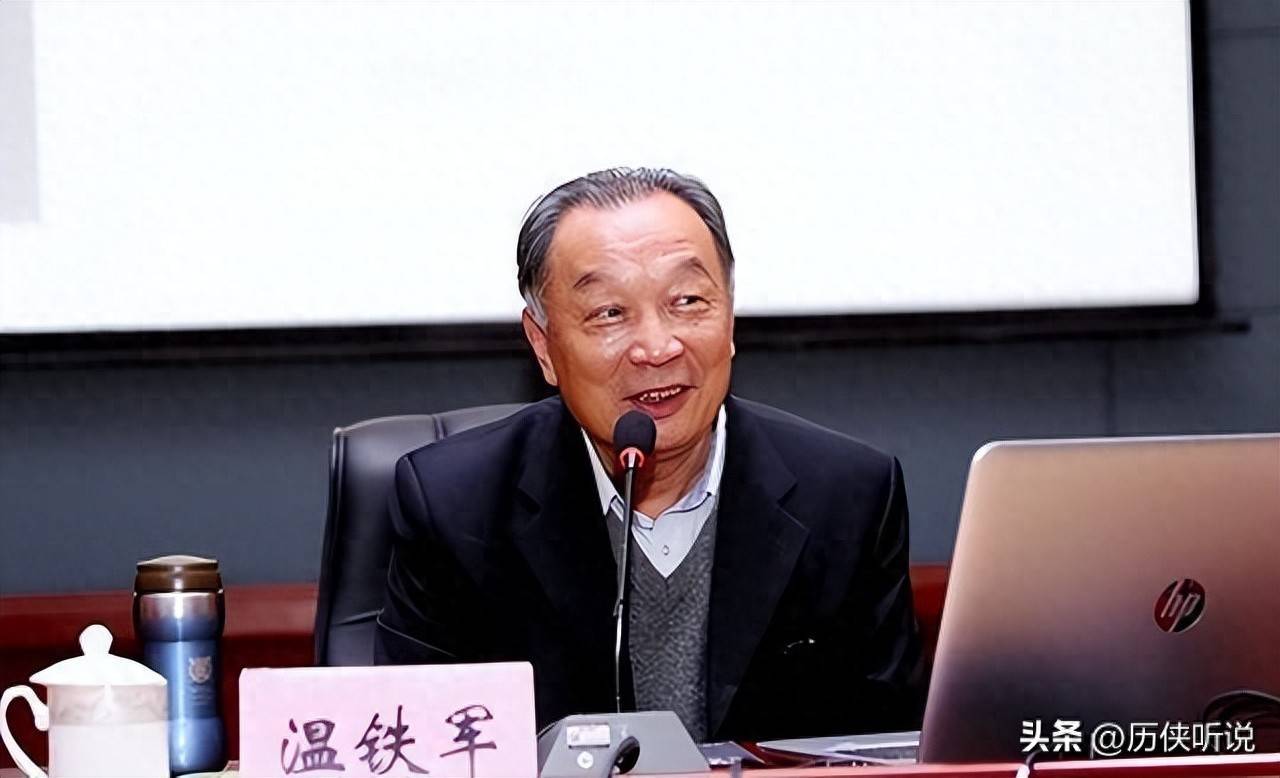
Core Viewpoint - The article emphasizes the crucial role of farmers in supporting China's economy through various crises, highlighting their contributions from historical reforms to current economic transformations [1][29]. Group 1: Historical Contributions of Farmers - After the establishment of New China in 1949, farmers became the "lifeline" of the economy amidst severe inflation and fiscal challenges [3]. - The successful implementation of land reform in 1949 allowed farmers to gain ownership of land, leading to increased agricultural production and market stability [7][11]. - Farmers absorbed excess currency through agricultural investments, helping to control inflation and stabilize the economy during the early years of the People's Republic [9][11]. Group 2: Economic Transformation in the 1970s - In the 1970s, as China opened up to foreign investment, farmers played a key role in the economic transition by driving rural productivity through the household responsibility system [15][19]. - The rise of township enterprises allowed farmers to become not just laborers but also entrepreneurs, significantly boosting rural incomes and urban consumption [17][19]. Group 3: Current Economic Challenges and Reforms - In the 21st century, farmers are again positioned as vital to economic transformation, particularly in the context of ecological and green transitions [21][27]. - The "Three Transformations" reform proposed by Wen Tiejun aims to convert rural resources into tradable assets, enabling farmers to participate in capital markets and share in economic benefits [23][25]. - This reform is expected to unlock the potential of rural resources, positioning farmers as key players in China's future economic growth [27][29].
改革破局、典型引路,打造“百千万工程”清新样板!
Nan Fang Nong Cun Bao· 2025-10-17 11:36
Core Viewpoint - The article discusses the successful implementation of the "Hundred Million Project" in Qingxin District, focusing on the cultivation of typical villages as a key driver for rural revitalization, integrating land activation, industrial fusion, resource mobilization, and governance upgrades [10][12]. Group 1: Typical Village Cultivation - Qingxin District has selected and cultivated 56 typical villages to explore replicable and scalable paths for rural revitalization [11][12]. - The district has successfully transformed several villages from "resource dormancy" to "industrial prosperity" and from "governance weakness" to "co-construction and sharing" models [14][15]. Group 2: Multi-Industry Development - The district promotes the integration of "agriculture + tourism" and "culture + tourism" to build a distinctive and profitable rural industrial system [20]. - Anqing Village has developed its homestay industry as a core focus, creating a collective economic model that encourages shared development among villagers [23][31]. Group 3: Land Reform and Economic Growth - The "three blocks of land" reform has led to significant increases in collective income, with one village's annual income rising from 2.3 million yuan in 2015 to 6.5 million yuan in 2024 [62][64]. - The village has also seen per capita disposable income increase from 6,380 yuan to 32,000 yuan [64]. Group 4: Governance and Community Engagement - The district emphasizes a governance model that combines party leadership with village autonomy, enhancing community participation in rural development [78][80]. - Innovative mechanisms, such as the "scenic village joint construction" model, have been established to enhance collective income through land leasing [89]. Group 5: Cultural Empowerment - Cultural activities and traditional practices are integrated into rural governance, fostering community cohesion and enhancing the local cultural identity [99][101]. - The promotion of tea culture in Pukeng Village has created a synergy between tourism and agricultural development, enhancing both economic and cultural vitality [56][59]. Group 6: Future Outlook - Qingxin District plans to deepen the results of typical village cultivation and promote the replication of successful reform paths across more villages to achieve high-quality development [103][105].

中证土地改革农业主题指数报791.96点,前十大权重包含市北高新等
Jin Rong Jie· 2025-07-21 15:40
Group 1 - The core viewpoint of the news is the performance of the CSI Land Reform Agricultural Theme Index, which has shown significant growth over the past month, three months, and year-to-date [1] - The CSI Land Reform Agricultural Theme Index has increased by 8.68% in the last month, 7.69% in the last three months, and 3.61% year-to-date [1] - The index reflects the overall performance of listed companies benefiting from agricultural land reform, including sectors such as agricultural land transfer, urban industrial land utilization, agricultural machinery, and water-saving irrigation [1] Group 2 - The top ten weighted companies in the CSI Land Reform Agricultural Theme Index include Shibei Gaoxin (9.87%), Luoniushan (8.15%), Jinyu Group (8.07%), and others [1] - The index's holdings are primarily concentrated in the Shenzhen Stock Exchange (59.62%) and the Shanghai Stock Exchange (40.38%) [1] - The industry composition of the index shows that consumer goods account for 37.68%, materials for 22.47%, and industrials for 22.16% [2] Group 3 - The index samples are adjusted biannually, with adjustments occurring on the next trading day after the second Friday of June and December [2] - Weight factors are generally fixed until the next scheduled adjustment, with special circumstances allowing for temporary adjustments [2] - Companies that are delisted or undergo mergers, acquisitions, or splits are handled according to specific calculation and maintenance guidelines [2]





南非变成穷国,是黑人的错还是白人的错?
Hu Xiu· 2025-06-08 08:30
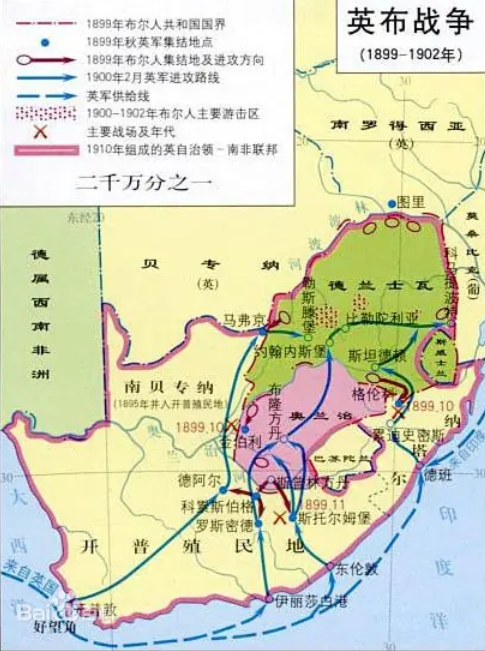
Group 1 - The article discusses the recent conflict between Trump and Musk, highlighting Musk's controversial statements regarding South Africa and land reform [1][3][26] - It emphasizes Trump's historical criticism of South Africa's land reform policies, labeling them as racial discrimination against white farmers [2][25] - The article argues that the portrayal of white South Africans as victims is misleading, as they still hold significant economic advantages over the black population [4][5][6] Group 2 - The land reform in South Africa is framed as a necessary response to historical injustices stemming from colonialism and apartheid, where white settlers appropriated land from indigenous populations [7][15][18] - The article outlines the slow progress of land reform since the end of apartheid, with only a fraction of the targeted land being redistributed to black South Africans [16][27] - It critiques the neoliberal policies adopted by the African National Congress (ANC), which have hindered effective land reform and exacerbated social inequalities [28][32][33]
特朗普白宫会晤“突袭”南非总统:指控“白人农场主遭屠杀”
Jin Shi Shu Ju· 2025-05-22 03:31
Core Viewpoint - The meeting between President Trump and South African President Ramaphosa escalated tensions due to Trump's unverified claims of violence against white farmers in South Africa, which Ramaphosa strongly denied while attempting to focus on trade cooperation [1][2][4]. Group 1: Trump's Claims and Actions - Trump accused South Africa of being a "graveyard" for white farmers and presented a video to support his claims, which was criticized as unverified by various media outlets [1][2][6]. - He highlighted the plight of white farmers, suggesting they are fleeing due to violence and land seizures, echoing a long-standing conspiracy theory within far-right circles [3][6]. - Trump insisted on the existence of widespread reports and documentaries that support his claims, despite Ramaphosa's counterarguments [6][8]. Group 2: Ramaphosa's Response and Position - Ramaphosa maintained a calm demeanor during the meeting, emphasizing that the majority of crime victims in South Africa are black, not white, and expressed a willingness to engage in dialogue about concerns raised by Trump [5][6]. - He brought along prominent white South African golfers to symbolize the diversity of the country and to counter Trump's narrative [2][6]. - Ramaphosa pointed out that the land reform policies in South Africa are aimed at correcting historical injustices and have not yet resulted in any actual land seizures [6]. Group 3: Media and Public Reaction - The White House later supported Trump's assertions, claiming they were correct, while major media outlets labeled Trump's accusations as unverified or baseless [6][7]. - Reports indicated a significant number of South African white farmers are considering immigration to the U.S. due to perceived threats, with nearly 70,000 expressing interest in relocating [9][10]. - The situation has sparked a broader discussion on race relations and land ownership in South Africa, with various media highlighting the ongoing violence against white farmers [10][11].
又见争执!特朗普白宫“伏击”南非总统
Xin Hua She· 2025-05-21 23:57
Group 1: Core Views - The meeting between Trump and South African President Ramaphosa highlighted tensions, with Trump accusing South Africa of a "racial genocide" against white farmers, which Ramaphosa denied, stating that violence affects all races, particularly black individuals [1][4] - The relationship between South Africa and the United States has been strained throughout the year, with Trump criticizing South Africa's land reform policies and cutting aid, while South African officials emphasize the need for mutual respect in diplomatic relations [2][4] Group 2: Recent Developments - The U.S. has begun accepting South African white "refugees," with Trump justifying this by claiming a "racial massacre" is occurring in South Africa, although he provided no evidence for these claims [3][10] - South Africa's government has strongly refuted allegations of persecution against white individuals, arguing that such narratives are misleading and ignore the historical context of colonialism and apartheid [4][9] Group 3: Historical Context - The historical backdrop of land ownership in South Africa reveals a legacy of colonialism and apartheid, where white individuals, constituting only 15% of the population, controlled over 87% of the land, leading to significant socio-economic disparities [5][6][7] - The land reform efforts initiated post-apartheid have faced numerous challenges, including resistance from white landowners and slow progress in redistributing land to black farmers, with the situation remaining largely unchanged by 2018 [7][8] Group 4: Current Legislative Efforts - The South African government has attempted to amend constitutional provisions to facilitate land reform, but these efforts have faced significant political hurdles and public backlash [8][9] - The new Expropriation Bill allows for land to be taken without compensation under specific circumstances, which has sparked controversy and concern among various stakeholders [8][9]
刚刚脱离封建社会20年,苏格兰人民又要搞土改
Hu Xiu· 2025-05-20 02:42
Core Viewpoint - The article discusses the historical and current land ownership issues in Scotland, highlighting the concentration of land in the hands of a very small percentage of the population, and the potential for a land reform movement among descendants of farmers [1][10][12]. Group 1: Historical Context - Scotland has a long history of feudal land ownership, where a small number of landowners held significant power over the majority of the population, leading to economic exploitation [3][4]. - The feudal system was officially abolished in Scotland in 2004, but the legacy of land concentration remains, with 0.025% of the population owning 67% of rural land [3][11]. Group 2: Current Land Ownership - The largest landowners in Scotland include the Buccleuch Duke and Danish billionaire Anders Holch Povlsen, who have amassed significant land holdings over the years [10][11]. - The concentration of land ownership has led to a decline in local populations, as seen in places like Applecross, where the number of villagers has decreased from 800 to 250 due to rising land prices and urban migration [9][10]. Group 3: Potential for Land Reform - There is a growing awareness among the descendants of Scottish farmers about the loss of land and the need for collective ownership models to ensure long-term security for local communities [12]. - The idea of establishing collective land ownership to protect local farmers from capitalistic pressures is gaining traction, suggesting a potential movement towards land reform in Scotland [12].