场景培育和开放

Search documents
2025年四季度刊:国资国企热点政策分析
KPMG· 2026-01-23 01:48
Policy Framework - The "14th Five-Year Plan" emphasizes high-quality development, focusing on modern industrial systems, technological self-reliance, and green transformation[4] - Key tasks include expanding domestic demand, deepening reform and opening up, and ensuring national security[4] Technology and Industry Integration - The State-owned Assets Supervision and Administration Commission (SASAC) aims to enhance the integration of technological and industrial innovation through high-quality supply and efficient transformation[6] - Focus areas include identifying bottlenecks in industrial chains and fostering collaboration with external institutions[10] Scene Cultivation and Application - The government has outlined 22 economic and social application scenarios across five categories to accelerate scene cultivation and large-scale application[17] - Emphasis on creating high-value application scenarios and integrating major projects as testing grounds for new technologies[18] Economic Work Priorities - The 2026 economic work plan highlights eight key tasks, including innovation-driven growth and maintaining stability while pursuing progress[25] - SASAC's focus will be on high-quality development, enhancing cooperation, and fostering new productive forces[25] State-Owned Enterprise Reform - The reform aims to deepen the role of state-owned enterprises (SOEs) in driving economic growth and enhancing their core competitiveness[26] - Strategies include optimizing state capital layout and breaking down internal barriers to promote the flow of production factors[26]
以场景为牵引推动科技创新和产业创新深度融合(专题深思)
Ren Min Ri Bao· 2025-12-15 22:52
Core Viewpoint - The integration of technological innovation and industrial innovation is essential for achieving high-quality development in China, emphasizing the importance of cultivating application scenarios to support this integration [1][2][5]. Group 1: Importance of Application Scenarios - Application scenarios serve as critical environments for validating new technologies and products, enabling the identification of technical demands and research opportunities within industrial applications [2][3]. - High-quality application scenarios can attract various resources, including talent, capital, and data, thereby facilitating the rapid emergence of high-value technologies and products [3][4]. Group 2: Strategies for Scenario Development - The government aims to cultivate and expand application scenarios in emerging fields such as digital economy, artificial intelligence, and clean energy, while also enhancing scenarios in traditional sectors like manufacturing and transportation [6]. - There is a focus on increasing the openness of application scenarios, promoting cross-sector collaboration, and ensuring that new scenarios are developed based on local resources and characteristics to avoid redundancy [6]. Group 3: Policy Framework and Implementation - The implementation of policies to support the integration of technological and industrial innovation includes establishing a clear path from technological breakthroughs to industrial applications [5][6]. - Enhancing the regulatory framework for resource allocation and improving the legal and standard systems are crucial for fostering a conducive environment for innovation [6].
【媒体报道】让场景更好赋能高质量发展,这场吹风会详细解读
Xin Hua She· 2025-12-01 02:28
Core Viewpoint - The State Council has issued an implementation opinion to accelerate the cultivation and opening of application scenarios, marking a systematic deployment at the national level for large-scale application of new scenarios [1] Group 1: Definition and Importance of Scenarios - Scenarios are defined as specific contexts for the innovative application of new technologies, products, and business models, serving as a bridge between technology and industry [2] - The cultivation of scenarios is aimed at leveraging China's vast market and rich application scenarios to create experimental fields for new technologies and products, thus accelerating their industrialization and development [2] Group 2: Multi-Party Efforts in Scenario Cultivation - The Ministry of Industry and Information Technology has supported 46 cities in promoting smart and green technologies, implementing insurance compensation policies for major technical equipment and new materials [3] - Anhui Province plans to establish nearly 300 application scenarios by the end of this year and aims for 1,000 by 2027 through its "thousand scenarios" initiative [3] Group 3: Regional Innovations and Collaborations - Guangdong Province has implemented scenario innovations across 20 key areas, continuously collecting and publishing application scenario supply and demand lists to match technology with scenarios [4] - Central enterprises have provided over 400 pilot services through 190 verification platforms, collaborating with various entities to enhance technological innovation and investment in key sectors [4] Group 4: Implementation and Future Directions - The Ministry of Science and Technology will focus on strengthening core technology breakthroughs and accelerating the conversion of major technological achievements into new industrial dynamics [5] - The State-owned Assets Supervision and Administration Commission aims to enhance the supply of high-value scenarios and broaden the scope of scenario openness, encouraging participation from various business entities [5] Group 5: Coordinated Approach to Scenario Development - The opinion emphasizes the need for coordinated efforts in market access, scenario development, and resource reform, exploring market-oriented approaches for new types of resource allocation [6] - A focus on building a comprehensive mechanism for scenario cultivation is essential, with government guidance and market leadership to support the establishment of high-value scenarios [6]
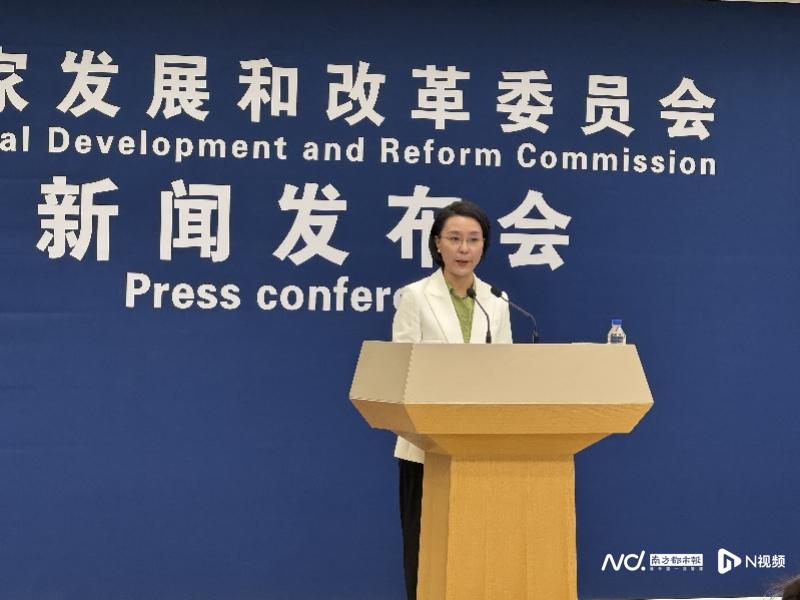
如何推动政府主动开放场景?国家发改委答南都:将分批推清单
Nan Fang Du Shi Bao· 2025-11-27 09:41
Core Viewpoint - The National Development and Reform Commission (NDRC) is set to promote the cultivation and opening of application scenarios, following the State Council's recent implementation opinions aimed at accelerating the large-scale application of new scenarios [1][4]. Group 1: Key Supportive Scenarios - The NDRC has identified three main categories of scenarios for support: comprehensive major scenarios, integrated industry scenarios, and high-value small-scale scenarios [2][3]. - Comprehensive major scenarios involve cross-industry and cross-field applications that have the potential to drive systemic changes across entire industrial chains, such as innovations in marine applications [3]. - Integrated industry scenarios focus on specialized internal scenarios within industries that have accumulated significant experience but lack interaction with new technologies, which can lead to technological and management innovations [3]. - High-value small-scale scenarios are smaller in scale but offer high returns on investment and strong demonstration effects, such as the use of new technologies in cultural tourism along ancient canals [3][4]. Group 2: Implementation and Policy Support - The NDRC plans to release application scenario project lists in batches and will encourage government agencies, public institutions, and state-owned enterprises to take the lead in opening their respective scenarios [4]. - The NDRC aims to enhance the fair and efficient allocation of resources by improving scenario resource allocation rules and matching supply and demand effectively [4]. - There will be a focus on policy support, utilizing various central funds to support infrastructure for major scenarios and promoting the integration of new technologies and products into new scenarios [4].

深耕“场景”激发科创“胜景”(纵横)
Ren Min Ri Bao· 2025-11-25 22:42
Core Insights - The State Council has issued a systematic deployment for scene cultivation and openness, highlighting the importance of "scenes" as a driving force for industrial transformation and disruptive technology [1][2] - The true value of scenes lies in cultivation and openness, which requires breaking down barriers to allow data, resources, and opportunities to flow freely [1][2] Group 1: Scene Cultivation and Openness - The document emphasizes the need for government departments to take the lead in opening up public scenarios such as urban management and public services to provide a testing ground for new technologies and products [1] - It calls for leading enterprises to open up their industrial and supply chain resources, fostering a collaborative innovation environment among large, medium, and small enterprises [1][2] Group 2: Current Challenges - There are still shortcomings in scene supply and openness across various regions, with some areas only showcasing projects without fostering a comprehensive ecosystem [2] - Issues such as data silos and industry barriers prevent quality scene resources from being fully accessible to society [2] Group 3: Policy and Innovation - The document advocates for a shift from a supply-driven approach focused on technology research to a dual-driven approach that aligns technology with market demand [2] - It stresses that scene cultivation and openness are essential for gaining a competitive edge in the new round of innovation [2]
这件事,首次在国家层面作出部署
Xin Lang Cai Jing· 2025-11-18 16:27
Core Viewpoint - The recent release of the "Implementation Opinions on Accelerating Scene Cultivation and Open Promotion for Large-Scale Application of New Scenes" marks the first systematic deployment at the national level in China regarding "scene cultivation and openness" [1] Group 1: Definition and Importance of Scenes - "Scenes" are defined as the application and verification of new technologies, products, and business models in specific contexts, serving as a systematic "social pilot" [2] - Scene cultivation and openness target the critical link in the transformation of scientific and technological achievements, providing a platform for emerging entities to accelerate industrialization and avoid stagnation [2] Group 2: Strategic Focus Areas - The "Implementation Opinions" emphasize the creation of application scenarios in new fields such as digital economy and artificial intelligence, as well as in manufacturing and transportation for industrial transformation [2] - Specific sectors highlighted include mining, emergency response, and social governance, aiming to enrich application scenarios in people's livelihoods [2] Group 3: Robotics and Unmanned Systems - The Ministry of Industry and Information Technology plans to implement the "Robot+" application initiative, promoting industrial and humanoid robots in complex production environments [4] - A humanoid robot training center in Beijing is operational, focusing on various real-world application scenarios, enhancing robots' capabilities through extensive training [5] Group 4: Collaborative Ecosystem - The establishment of scenes requires multi-party participation and collaboration, with government agencies, state-owned enterprises, and private sectors encouraged to engage in scene cultivation [6] - The initiative aims to leverage China's vast market and complete industrial system to gain strategic advantages in global technological competition [6]
海南出台科技创新尽职免责实施办法|营商环境周报
2 1 Shi Ji Jing Ji Bao Dao· 2025-11-13 10:23
Regulatory Developments - The Ministry of Justice has issued the "Code of Conduct for Administrative Law Enforcement Personnel" to enhance the sense of gain, happiness, and security for enterprises and the public, promoting high-quality economic and social development [2][3] - The Code consists of 10 articles focusing on prominent issues in administrative law enforcement, particularly in relation to enterprises, and includes both positive guidance and prohibitive measures [2][3] - Key prohibitions include unauthorized enforcement, inaction, and slow action, as well as strict adherence to legal procedures and objective facts in law enforcement [2][3] Digital Management in Certification - The State Administration for Market Regulation has released guidelines to enhance the digital management capabilities of certification bodies, aiming for the establishment of a digital management technical guideline by 2025 [4][5] - By 2029, the goal is for over 30 certification bodies to possess advanced and reliable digital infrastructure, utilizing data analysis and processing tools for innovative certification practices [4][5] Scene Cultivation and Application - The State Council has issued an implementation opinion to accelerate the cultivation and opening of 22 types of application scenarios, which are crucial for validating new technologies and products [6][7] - The opinion emphasizes the importance of leveraging China's large market and diverse application scenarios to support the construction of major comprehensive scenarios and promote large-scale application of new scenarios [7][8] Support for Private Enterprises - Shandong Province has introduced measures to support private enterprises in technology innovation, including 19 practical initiatives to enhance their innovation capabilities [15][16] - The measures aim to deepen private enterprise participation in technology decision-making and major technology tasks, as well as to facilitate the transformation of technological achievements [15][16]
国务院部署加快场景培育和开放,释放哪些信号?
第一财经· 2025-11-11 06:46
Core Viewpoint - The article discusses the recent implementation of the "Implementation Opinions" by the State Council, which aims to accelerate the cultivation and opening of application scenarios to promote large-scale application of new scenarios, thereby enhancing innovation and economic development [3][6]. Group 1: Key Principles and Objectives - The main objective of the "Implementation Opinions" is to leverage China's vast market and rich application scenarios to optimize the development environment for new industries and technologies, acting as a "testing ground" for new products and a "catalyst" for emerging industries [3][5]. - Six key principles are emphasized for the successful implementation of the opinions: innovation-driven, reform-oriented, localized adaptation, safety and order, systematic advancement, and integrated development [5][10]. Group 2: Policy Measures and Opportunities - The National Development and Reform Commission (NDRC) will support the construction of various application scenarios, including comprehensive major scenarios and high-value niche scenarios, to promote project-based and list-based application scenarios [6][9]. - The article highlights the importance of central enterprises in providing key infrastructure and industry data resources, which are crucial for scenario supply and innovation [8][9]. Group 3: Collaboration and Ecosystem Development - The NDRC encourages collaboration between central enterprises and various stakeholders, including private enterprises and research institutions, to co-build industrial ecosystems and enhance the supply of high-value scenarios [9][10]. - The article mentions that the NDRC will work with local governments to promote coordinated reforms related to market access and scenario development, ensuring a supportive institutional environment for cultivating new productive forces [10].

打造新技术新产品产业化“加速器”
Ren Min Ri Bao· 2025-11-11 06:41
Core Viewpoint - The State Council of China has issued a systematic deployment plan for scene cultivation and openness, aiming to accelerate the large-scale application of new scenarios, thereby enhancing the integration of technology and industry [1][2]. Group 1: Scene Cultivation and Open Policy - The main objective of the new policy is to leverage China's vast market and diverse application scenarios to facilitate the industrialization of new technologies and products, acting as a "testing ground" and "accelerator" for emerging industries [2][3]. - The policy emphasizes the importance of collaboration among various stakeholders and the establishment of a comprehensive application scenario list to enhance production, work, and life scenarios [2][4]. Group 2: Focus Areas for New Scene Applications - Key areas for application scene cultivation include "5G+", "Artificial Intelligence+", "Robotics+", "Industrial Internet+", and "Beidou+" to promote large-scale development in emerging industries [3][4]. - Specific initiatives include the promotion of 5G factory construction, the integration of AI in manufacturing processes, and the application of industrial robots in various operational scenarios [3][4]. Group 3: Role of Central Enterprises - Central enterprises are identified as crucial players in providing key infrastructure and industry data resources, facilitating the innovation of the industrial chain through scene and application empowerment [4][5]. - The State-owned Assets Supervision and Administration Commission (SASAC) has organized numerous activities to promote supply-demand matching in key industry chains, with over 10,000 items listed for collaboration [4]. Group 4: Technological Advancements and Local Adaptation - The development of new application scenarios is driven by breakthroughs in frontier technologies, with a focus on strategic emerging industries such as new energy, aerospace, and quantum technology [6][7]. - The approach emphasizes localized strategies that consider regional resources and reform foundations to optimize the layout of scene openness [6][7].
多部门协同强化场景供给 技术突破加速催生新领域新赛道应用场景
Yang Shi Wang· 2025-11-11 05:18
Core Viewpoint - The State Council has issued the "Implementation Opinions on Accelerating Scene Cultivation and Open Promotion for Large-Scale Application of New Scenes," marking the first systematic deployment at the national level for scene cultivation and openness [1] Group 1: Scene Cultivation and Open Promotion - The "Implementation Opinions" outlines innovative policy measures focusing on five main areas: digital economy and artificial intelligence applications, manufacturing and transportation industry upgrades, mining and emergency industry applications, comprehensive social governance services, and enriching livelihood application scenarios [3] - There is an emphasis on increasing the openness of various scenes, particularly in major projects like railways, water conservancy, and energy, as well as significant events such as sports meets and expos [5] - Government agencies, public institutions, and state-owned enterprises are encouraged to lead by example, with state-owned enterprises expected to open their main business areas to attract participation from private enterprises, small and medium-sized enterprises, and research institutions [6] Group 2: Policy Support and Infrastructure - The government will enhance policy support for scene cultivation and openness, utilizing government procurement to promote new technologies, products, and scenes, and providing support for infrastructure related to significant scenes through central funding [7] - The National Development and Reform Commission plans to release a project list for application scenes in phases, focusing on implementing major projects and evaluating the effectiveness of scene cultivation and openness [9] Group 3: Industry-Specific Applications - The Ministry of Industry and Information Technology aims to accelerate the cultivation of "5G+" application scenarios, targeting small, medium, and large enterprises, and promoting integrated solutions in key industries [11] - The "Artificial Intelligence+" application scenarios will extend AI into manufacturing processes, enhancing innovation and integration across various stages [13] - The "Industrial Internet+" application scenarios will focus on integrating industrial internet with AI, creating an upgraded version of "5G+ Industrial Internet" [15] - The "Robot+" application scenarios will prioritize the deployment of industrial and humanoid robots in factories, especially in hazardous environments [16] - The "Beidou+" application scenarios will promote the development of time-space information industries and deepen the integration of Beidou technology in smart cities and intelligent transportation [18] Group 4: Technological Innovation and Support - The Ministry of Science and Technology emphasizes the need for breakthroughs in core technologies to drive the large-scale application of new scenes, with a focus on key industries such as steel, electricity, and aviation [20][23] - A rapid iterative innovation mechanism will be established, promoting the gathering of innovation resources around enterprises and supporting them in national technology tasks [25]