干支通

Search documents
“兰嘉快线”正式启动 陇原出行“空中快道”提速
Zhong Guo Min Hang Wang· 2026-01-30 01:40
Core Viewpoint - The Civil Aviation Administration of China (CAAC) is implementing the "Dry-Branch Connectivity and Full Network Integration" strategy to enhance the aviation network by linking trunk airports with branch airports, facilitating regional economic development and improving travel convenience for the public [1][4]. Group 1: Strategic Initiatives - The launch of the "Lan-Jia Express Line" on January 29, 2026, marks a significant step in Gansu's implementation of the national strategy, connecting Lanzhou, Jiayuguan, and Jiuquan to enhance the regional aviation network [1][2]. - The "Lan-Jia Express Line" aims to create a comprehensive aviation service system focusing on high-frequency business travel, with a goal of achieving "morning departures and evening arrivals" for business flights [2][4]. Group 2: Operational Enhancements - The core route of "Jiayuguan-Lanzhou" will have an average of at least 5 flights per day, with plans to increase to 10 flights during the summer peak season, catering to both business and tourism travel needs [2][3]. - The collaboration between Lanzhou Zhongchuan International Airport and Eastern Airlines Gansu Branch aims to significantly reduce passenger wait times for check-in and security, enhancing overall travel efficiency [3]. Group 3: Economic Impact - The Jiayuguan and Jiuquan region, accounting for 41% of the GDP of the Hexi Corridor, will benefit from the "Lan-Jia Express Line" by accelerating the flow of people, capital, technology, and culture, thus promoting economic collaboration between the two cities [4]. - The initiative aligns with the CAAC's strategy to empower regional development through aviation, transforming regional resource advantages into developmental benefits [4].
“一干七支”创新高 龙江空港绘就“百花齐放”新图景
Zhong Guo Min Hang Wang· 2026-01-27 07:27
Core Insights - The Heilongjiang Airport Group is projected to achieve a record high in 2025 with 205,000 flight takeoffs and landings, 29.064 million passenger throughput, and 154,000 tons of cargo and mail throughput, representing year-on-year growth of 1.0%, 1.2%, and 4.8% respectively [1] - Harbin Taiping International Airport has become the first airport in Northeast China to operate dual runways, enhancing its hub capabilities and supporting the rapid development of civil aviation in the region [3] - The introduction of new international routes and the establishment of a bonded aviation fuel project at Harbin Airport are expected to significantly reduce operational costs for airlines [3][4] Group 1: Airport Development and Performance - In 2025, Harbin Airport is expected to handle 162,000 flight takeoffs and landings, with a passenger throughput of 24.651 million and cargo throughput of 149,000 tons, marking increases of 1.6%, 3.6%, and 6.1% respectively [3] - The Heilongjiang Airport Group has opened 292 domestic and international routes, connecting 114 points and 111 cities, positioning Harbin Airport as a key gateway for northern openness [3] Group 2: Route Expansion and Connectivity - New direct flights to Southeast Asia and the establishment of the "Air Express" routes to major cities like Shanghai and Beijing are enhancing travel convenience for passengers [4][6] - The launch of regular flights from Suifenhe Airport to Beijing and Dalian marks a significant shift from land to air travel in the region, contributing to a more integrated air transport network [6] Group 3: Cultural and Service Enhancements - Harbin Airport has initiated cultural events such as "music flash mobs" to enhance the travel experience, showcasing the city's cultural richness [9] - Various airports within the Heilongjiang province are implementing unique service systems to improve passenger experience, including specialized services for unaccompanied minors and other special travelers [9] Group 4: Infrastructure Development - The expansion projects at Qiqihar Airport and other regional airports are set to enhance service quality and connectivity, with a total of 23 airports planned in the province [10] - The ongoing upgrades and new constructions aim to cover over 90% of the province's land area and population within a 100 km radius, driving regional economic growth [10]
锡林浩特机场:翱翔草原天路 擘画空港新篇
Zhong Guo Min Hang Wang· 2026-01-26 07:58
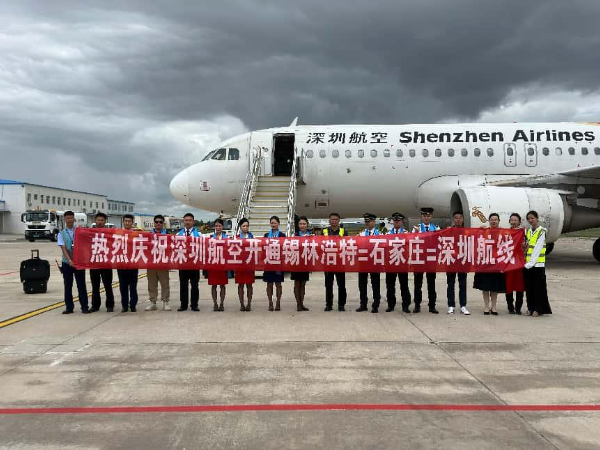
Core Viewpoint - The development of Xilin Hot Airport exemplifies the enhancement of air travel accessibility in Inner Mongolia, significantly improving the travel experience for local residents and contributing to the region's economic growth [1][3]. Group 1: Airport Development and Connectivity - Xilin Hot Airport has successfully established a "支支通" (branch-to-branch) air route network, addressing the long-standing travel challenges faced by local residents [3]. - The airport opened its first "支支通" route in September 2021, with a low ticket price of approximately 200 yuan, achieving an outbound passenger load factor exceeding 86% within the first ten days [3]. - By the end of 2023, the airport had opened a total of 21 "支支通" routes, accounting for 42.8% of the total routes in the region, solidifying its position as the leading branch airport in Inner Mongolia [3]. Group 2: Passenger Growth and Performance - In 2023, Xilin Hot Airport recorded a total of 81,181 transit passengers, representing a 956.42% increase compared to 2019, and successfully achieved the "百万空港" (million airport) target [3]. - The airport aims to handle 1.12 million passengers in 2024 and 1.185 million in 2025, with a projected growth rate of 5.8%, making it the fastest-growing million-level airport in the region [3][6]. Group 3: Safety and Service Enhancements - The airport has integrated safety and development, establishing a "党建+安全" (Party building + safety) model to enhance safety management [8]. - Service quality has been prioritized, with initiatives such as the "心心相锡" (Heart-to-Heart Service) brand, which empowers frontline staff to respond promptly to passenger needs [9]. - The airport achieved a passenger satisfaction score of over 4.75 for three consecutive years, reflecting its commitment to service excellence [9]. Group 4: Management Transformation - Xilin Hot Airport serves as a pilot for management transformation within the Inner Mongolia Airport Group, focusing on professional operations and market-oriented management [13]. - The airport has implemented a three-dimensional assessment mechanism that evaluates both hard and soft indicators, ensuring service quality while controlling labor costs [14]. - By 2025, the airport aims to improve labor productivity by 35.86% compared to 2020, while also reducing total losses by 5.6974 million yuan [14]. Group 5: Future Development Plans - The "十五五" (15th Five-Year Plan) outlines a clear path for high-quality development, emphasizing safety, service, innovation, and collaboration with other regional airports [16][17]. - The airport is set to expand its network further, connecting more regions and enhancing travel convenience for local residents [17].

中转行李系统技术升级破局增效 银川机场战略赋能“干支通,全网联”
Zhong Guo Min Hang Wang· 2026-01-25 07:07
Core Insights - The article highlights the significant productivity improvements in the aviation sector, particularly at Yinchuan Airport, driven by the breakthrough application of core technologies under the Civil Aviation Administration's "dry and branch integration, full network connection" strategy [1][4] - The implementation of a new transfer baggage information system has revolutionized the efficiency of baggage handling, addressing the bottlenecks in traditional service models [2][3] Group 1: Technological Advancements - The cargo support team at Yinchuan Airport developed a transfer baggage label printing system that integrates software and hardware upgrades to eliminate data barriers, resulting in a revolutionary increase in baggage handling efficiency [1][2] - The new system has successfully integrated data from smart transfer and departure systems, overcoming over 20 key technical challenges related to baggage data management [2] Group 2: Productivity Metrics - The volume of transfer baggage at Yinchuan Airport is projected to increase from 47,000 pieces in 2024 to 76,000 pieces in 2025, representing a 38% growth, which highlights the limitations of traditional handling methods [1] - The new baggage information system has reduced the handling process from seven steps to three core actions, achieving a 57% reduction in process time and a 90% improvement in individual baggage handling efficiency [3] Group 3: Operational Impact - The implementation of the new system has significantly decreased the daily operational intensity for sorting personnel, thereby enhancing labor productivity [3] - The system not only accommodates the increased baggage volume but also provides comprehensive advantages such as reduced labor needs and improved efficiency, supporting the ongoing expansion of the "dry and branch integration, full network connection" strategy [3][4] Group 4: Future Developments - The cargo support team plans to continue enhancing the baggage label printing system by focusing on differentiated and refined passenger needs, aiming to introduce new features such as smart reminders and anomaly alerts [3][4] - The ongoing technological innovations are expected to further improve service quality and operational efficiency, contributing to a better travel experience for passengers and enhancing the regional aviation network's competitiveness [4]

超600万人次旅客实现“一票到底、行李直挂” 2025年国内通程航班业务实现快速增长
Zhong Guo Min Hang Wang· 2026-01-20 10:34
Core Insights - The domestic through-flight business in China's civil aviation industry has shown remarkable growth in 2025, with 970,000 groups of flights and over 3.13 million passengers, representing year-on-year increases of 167% and 148% respectively [1] Group 1: Business Growth and Network Expansion - The domestic through-flight business continued to grow rapidly in 2025, with over 140,000 new flight registrations, including 26,300 cross-airline through-flights, marking a year-on-year increase of over 143% compared to 2024 [2] - The industry has seen a comprehensive enhancement in participation, with all 41 domestic airlines, 259 airports, and over 300 ground service units signing the "Through-Flight Service Agreement" [2] - A total of 11,107 groups of routes connecting cities without direct flights have been established, contributing to the creation of a "national civil aviation network" [2] Group 2: Airline Collaboration and Market Dynamics - A differentiated and positive development pattern has emerged, with major airlines leading and smaller airlines collaborating, enhancing the overall industry dynamics [3] - Major airlines such as China Eastern, China Southern, and Air China have collectively served 653,100 through-flight passengers, accounting for 65.31% of the total industry [3] - Hainan Airlines has integrated resources from 11 domestic passenger airlines to promote cross-airline joint transport products, with 86% of its through-flight passengers coming from cross-airline cooperation [3] Group 3: Hub Airport and Regional Connectivity - Hub airports like Beijing Daxing, Xi'an, and Urumqi have effectively utilized their route networks to gather and distribute passenger flows, ranking among the top five in terms of domestic through-flight passenger support [4] - Regional airports have leveraged the "multiplier effect" of hub airports, with Hetian Airport increasing its operational reach by 77% and serving over 80,000 through-flight passengers, a 4.1-fold increase year-on-year [4] Group 4: Standardization and Brand Development - The introduction of the "Domestic Through-Flight Service Part 1: Identification" standard has enhanced service recognition and brand building within the industry [5] - This standard has been recognized as a high-quality group standard in Beijing and is now applied across 21 airlines, 186 airports, and 6 OTA platforms, improving brand visibility throughout the passenger journey [5] Group 5: Innovative Service Models - A new service model for handling overweight luggage has been implemented to address industry pain points, allowing passengers to pay for overweight luggage fees at the departure station and ensuring seamless transfer [6][7] - The new model has been successfully trialed in Wuhan and Shijiazhuang airports, with plans for broader industry implementation expected by 2026 [7]
2025年甘肃省机场固定资产投资增速位居全国前列
Zhong Guo Min Hang Wang· 2026-01-20 01:01
Core Insights - Gansu Province is set to achieve significant growth in airport fixed asset investment by 2025, positioning itself among the top in the nation, driven by high-intensity investments and precise policy guidance to stimulate the aviation industry's internal dynamics [1][4] Investment and Infrastructure Development - The substantial increase in fixed asset investment is a core support for enhancing the quality and efficiency of Gansu's aviation industry, with a target of 120 billion yuan in national civil aviation investment by 2025 [1] - Gansu aims to strengthen its airport infrastructure, focusing on the construction of core hubs like Lanzhou Zhongchuan International Airport, while also improving regional airports to create a "core-led, branch-linked" airport layout [1] - By 2025, Gansu's civil aviation passenger throughput is expected to exceed 21 million, reaching 21.96 million, with cargo and mail throughput at 92,000 tons, marking a historic peak for key indicators [1] Policy and Collaborative Framework - Gansu's civil aviation transport network has been selected as a pilot for the "dry-branch connection, full network linkage" initiative by the Civil Aviation Administration of China, integrating Gansu's aviation development into the national high-quality development framework [2] - The province has established a collaborative framework involving policy guidance, enterprise cooperation, and service upgrades, partnering with major airlines to enhance operational efficiency and passenger convenience [2][3] Service and Operational Enhancements - Gansu has launched seven domestic flight routes, facilitating over 200,000 passengers and addressing travel challenges, while enhancing the "Yunlan Fly, Convenient Journey" service brand [3] - The province's approach emphasizes collaborative innovation, creating a mechanism where airports lead, airlines play a major role, and support units collaborate, fostering a competitive yet complementary environment [3] Economic and Cultural Integration - Gansu's aviation development is closely linked with economic growth and cultural tourism, utilizing its air network to connect key tourist attractions and develop unique products to convert transportation flow into tourism retention [3][4] - The ongoing pilot projects and investment initiatives are expected to continuously release development vitality, contributing to the high-quality economic and social development of the region [4]
“十四五”民航投资6300亿元,2026年力争实现旅客运输量8.1亿人次
Sou Hu Cai Jing· 2026-01-06 05:53
Group 1 - The aviation industry has added 49 runways and 2,232 parking spaces over the past five years, with terminal area increasing by 6.8274 million square meters [2] - By the end of the 14th Five-Year Plan, the number of transport airports in the country is expected to reach 270, with total capacity exceeding 1.8 billion passengers [2] - The total fleet of transport aircraft has grown to 4,574, with a net increase of 671 aircraft, and a robust air route network has been established [2] Group 2 - The industry aims to achieve a total transport turnover of 1,750 billion ton-kilometers, passenger transport volume of 810 million, and cargo mail transport volume of 10.7 million tons by 2026 [2] - Efforts will be made to accelerate the construction of domestic air express lines and develop a public transfer information platform [2] - The industry will explore differentiated aviation service products and enhance the integration of air and rail transport [2] Group 3 - The Civil Aviation Administration will strengthen basic capacity building and improve the certification management system, regulatory standards, and professional teams [3] - Key tasks include advancing the optimization certification of major aircraft models like C919 and C909, and enhancing bilateral cooperation for airworthiness [3] - The focus will also be on orderly advancing the certification of key products such as onboard equipment and auxiliary power units [3]

去年昆明机场旅客吞吐量达4969万人次
Xin Lang Cai Jing· 2026-01-04 22:08
Group 1 - In 2025, Kunming Changshui International Airport aims to handle 340,000 flight takeoffs and landings, with a passenger throughput of 49.69 million and cargo/mail throughput of 410,000 tons, representing year-on-year growth of 3.3%, 5.3%, and 7.0% respectively, achieving both quantity and quality improvements [1] - The airport plans to expand its international aviation network and enhance hub functions, opening new international passenger and cargo routes to destinations such as Manado, Luang Prabang, Yangon, Jakarta, Chennai, Mumbai, and Colombo, totaling 33 new routes, serving approximately 1.2 million inbound and outbound passengers, with 434,000 enjoying visa-free entry, a 48.9% increase year-on-year [1] - The implementation of a "24-hour direct transit without border inspection" policy significantly enhances international transfer convenience, with the proportion of international transfer passengers reaching 38%, up 48% year-on-year [1] Group 2 - Kunming Airport is activating internal dynamics through innovative mechanisms and model breakthroughs, introducing targeted support policies to balance seasonal capacity, and optimizing the "dry branch connection, full network linkage" service model to improve transfer efficiency and experience [2] - The airport is establishing a transfer facilitation cooperation with domestic airports that meet operational conditions, enhancing communication and coordination with base airlines to promote inter-airline joint operations, thereby improving the connectivity of transfer flights through Kunming [2] - The airport's express network will expand from 15 to 20 routes by 2025, ensuring stable coverage of core passenger sources while actively developing blind spot routes and strengthening strategic corridor construction [2] Group 3 - During the New Year holiday, Yunnan's airports collectively handled 4,461 flight takeoffs and landings, with a passenger throughput of 612,700 and cargo/mail throughput of approximately 3,349 tons, representing year-on-year increases of 3.60% and 13.34% respectively compared to the 2025 New Year holiday [2] - Kunming Airport specifically managed 2,675 flight takeoffs and landings, with a passenger throughput of 385,300 and cargo/mail throughput of approximately 2,668.30 tons during the same period [2] Group 4 - Yunnan's airports organized a series of special service activities to create a festive atmosphere for travelers, with staff dressed in celebratory attire offering warm wishes and gifts, and performances such as music and dance enhancing the travel experience [3] - The overall service quality and passenger satisfaction at the airports were improved through thoughtful and detailed service, ensuring a pleasant and convenient journey for travelers during the New Year [3]
创历史新高 石家庄正定国际机场2025年旅客吞吐量突破1200万人次
Zhong Guo Min Hang Wang· 2026-01-04 05:30
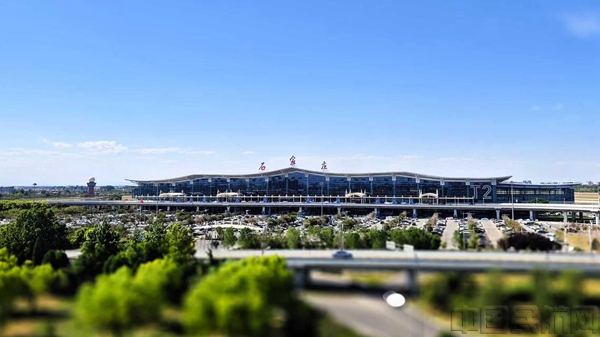
Core Insights - Shijiazhuang Zhengding International Airport achieved an annual passenger throughput of over 12 million by December 31, 2025, marking a 6.2% year-on-year increase and setting a historical record since its opening [1] - The airport aims to enhance its role as a regional aviation hub and is committed to building a "convenient airport" as part of the Beijing-Tianjin-Hebei world-class airport cluster [3] Route Network Enhancement - In 2025, the airport accelerated the construction of a high-quality domestic route network, focusing on interconnectivity and mutual access among airports [4] - Strategic partnerships with airlines led to the introduction of new routes, including Dali, Lhasa, and Manzhouli, and increased flight frequencies to key cities such as Chengdu (10 daily flights) and Shanghai (7 daily flights) [4] - The airport operated 134 passenger routes, connecting 85 cities, with 32 cities being provincial capitals or economically developed areas, creating a comprehensive route network across five major regions [4] Integration of Aviation and Tourism - The airport implemented eight major initiatives to enhance the integration of aviation and tourism, improving service quality and passenger experience [6] - A tourism service center was established to provide one-stop services, including information consultation and travel bookings, while cultural activities were introduced to enrich the travel experience [8] Operational Efficiency Improvements - The airport optimized five major flows (passenger, flight, baggage, traffic, and information) to enhance operational efficiency and service quality [9] - The domestic flight check-in cut-off time is set at 28 minutes, maintaining the top position among airports with over 10 million passengers [10] - The average delivery time for the first piece of luggage is 3 minutes, and for the last piece, it is 9 minutes, with 12% of flights achieving "baggage waiting for passengers" [10] Future Development Plans - The airport plans to continue enhancing its "convenient airport" services and strengthen its regional aviation hub functions, contributing to the economic development of Hebei province [11]
山东东营机场2025年客货运输生产数据再创历史新高
Zhong Guo Min Hang Wang· 2026-01-04 02:23
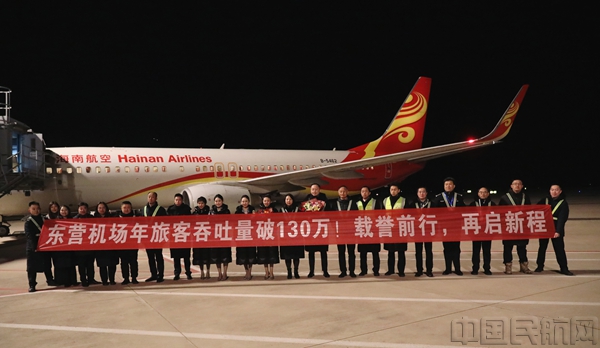
Core Insights - In 2025, Dongying Airport in Shandong Province achieved significant growth, with passenger throughput exceeding 1.3 million and cargo volume surpassing 1,300 tons, marking year-on-year increases of 11.8% and 18.8% respectively, setting new records since its inception [1][3] Group 1: Operational Performance - The airport maintained a flight execution rate of 96.5% and a passenger load factor above 80%, indicating strong operational efficiency [1] - In August 2025, the airport recorded a daily passenger throughput of 5,252, breaking its historical record [1] Group 2: Route Network Development - Dongying Airport strategically optimized its route network by focusing on major cities and tourist destinations, launching new routes such as Fuzhou-Dongying-Shenyang and increasing frequency on existing routes [3] - The airport is developing a comprehensive route network that connects the north and south, as well as the east and west, enhancing regional connectivity [3] Group 3: Market Engagement - The airport has implemented a marketing strategy centered around being a "local airport," creating an "Aviation Market" brand and conducting targeted promotional activities to attract passengers [5] - Collaborations with local attractions and events, such as the Yellow River Marathon, have been established to promote tourism and enhance passenger engagement [5] Group 4: Safety Management - Safety remains a top priority, with the airport enhancing its safety management systems and implementing rigorous risk prevention measures [8] - The airport has adopted a proactive approach to safety, focusing on key risks and conducting regular safety drills to improve emergency response capabilities [8] Group 5: Customer Service Enhancement - Dongying Airport is committed to improving service quality by implementing a "True Service" philosophy and upgrading service facilities [10] - The airport offers personalized services for various passenger groups, including special assistance for the elderly and disabled, ensuring a comfortable travel experience [10] Group 6: Future Outlook - Looking ahead to 2026, Dongying Airport plans to continue optimizing flight operations and expanding its route network to support local economic development and meet passenger demand [11]