技术

Search documents
中国去年毕业了130万工程师,美国呢?13万……
创业邦· 2026-02-12 10:30
Core Viewpoint - The article highlights the significant disparity in engineering graduate output between China and the United States, emphasizing the implications for future technological and industrial capabilities. It argues that while the U.S. relies on AI to compensate for a declining engineering workforce, this approach may lead to a detrimental "middle layer vacuum" in engineering expertise, ultimately undermining the country's industrial foundation [5][10][52]. Group 1: Engineering Graduate Statistics - In 2022, China graduated approximately 1.3 million engineers, while the U.S. produced only about 130,000 to 145,000 engineering bachelor's degrees annually [5][10]. - If broader categories like STEM are included, China's annual graduate numbers could reach up to 5 million [10]. - The U.S. has seen a loss of over 10,000 STEM PhDs in just one year, indicating a significant talent drain [12][28]. Group 2: U.S. Engineering Workforce Challenges - The U.S. engineering sector is experiencing a shift towards less practical roles, with many graduates opting for finance or tech sectors instead of traditional engineering jobs [22][20]. - The article notes that a significant portion of U.S. engineering graduates transition to coding or finance, leaving a shortage of essential engineering skills [22][20]. - The cultural perception of engineering jobs in the U.S. has deteriorated, making them less appealing to new graduates [20][22]. Group 3: AI as a Solution and Its Limitations - The article discusses the reliance on AI as a potential solution to the engineering workforce shortage, suggesting that AI could replace many basic engineering tasks [36][39]. - However, it raises concerns about the "apprenticeship paradox," arguing that essential hands-on experience is critical for developing engineering intuition, which AI cannot replicate [47][50]. - The potential over-reliance on AI could create a significant gap in practical engineering knowledge, leading to a future workforce lacking essential skills [50][56]. Group 4: Implications for China - The article posits that China's large pool of engineers serves as a strategic advantage, providing a robust foundation for its manufacturing and technological sectors [52][53]. - It emphasizes that despite criticisms of China's education system, the sheer volume of engineers contributes to its industrial strength [52][55]. - The article concludes that genuine industrial success relies on a combination of practical experience and the ability to leverage AI effectively, highlighting the importance of hands-on training for future engineers [55][56].


从考古学视角重新理解技术
Xin Lang Cai Jing· 2026-01-03 19:18
Core Viewpoint - The article discusses the evolving understanding of technology in archaeology, emphasizing its role as a practice embedded in social life, shaped by memory, tradition, and collective experience, rather than merely a means to achieve efficiency [1] Group 1: Technology as an Adaptive Tool - Archaeologists are exploring how ancient irrigation systems, terracing, and migration strategies helped human societies adapt to environmental changes over millennia [2] - Research on the El Niño phenomenon in Peru reveals that ancient Peruvians actively sought strategies to cope with natural disasters, such as the construction of sand dams to intercept flood-induced debris flows [2] - Recent findings in Central Asia indicate the existence of large, fortified urban complexes in high-altitude areas, challenging traditional views of the region's historical narrative [3] Group 2: Technology in Production Processes - Scholars at the forum focused on the production technologies of pottery, metallurgy, textiles, and stone tools, highlighting how technology influences labor organization, knowledge transfer, and the cultural significance of artifacts [5] - The study of Han dynasty bronze mirrors illustrates their cultural importance and the advanced bronze casting techniques of the time, reflecting daily life and external exchanges [5] - Comparative research on textile technology in the Eurasian steppes and the Caucasus reveals the complex interactions between manual techniques, industry, and society [6] Group 3: Technology as a Force for Social Change - The development of bronze technology is linked to the evolution of civilization, with bronze tools transitioning from production implements to ritual objects and trade mediums, facilitating regional trade networks [7] - Similar to bronze, the production of porcelain has influenced urbanization and social transformations, as evidenced by archaeological findings in Jingdezhen, which show the evolution of urban drainage systems alongside the growth of the porcelain industry [8] - The article concludes that technology is not merely a tool but a cultural and ethical practice, offering insights into how past societies adapted to changes, which may inform current challenges such as AI development and environmental shifts [8]
这是真有点技术
Xin Lang Cai Jing· 2025-12-27 02:18
Group 1 - The article discusses the advancements in technology and its implications for various industries [1] - It highlights the increasing integration of innovative technologies in everyday applications [1] - The piece emphasizes the importance of staying updated with technological trends to leverage investment opportunities [1]

从考古学看技术的价值与力量(博古知今)
Ren Min Ri Bao· 2025-12-27 01:49
Core Insights - The "6th World Archaeology Forum in Shanghai" focuses on the theme of "Technology, Society, and Archaeology," gathering scholars from 43 countries to explore how technology shapes ancient societies and how ancient paths can inspire modern understanding [1][2]. Group 1: Technological Influence on Society - The Niuhuangliang site in northern China exemplifies the intricate social organization behind jade craftsmanship, requiring cross-regional material coordination and standardized processes [1]. - The Yinxu royal tomb area demonstrates a "national-level organizational capability," where the selection and arrangement of sacrificial animals reflect complex political and religious meanings [1]. Group 2: Regional Adaptation and Innovation - The Qingjian Zhaigou site in Shaanxi shows a unique approach to adopting Central Plains bronze culture through "transformation" and "recreation," highlighting the impact of local environment and traditions on technological development [2]. Group 3: Interconnectedness of Technology and Human History - The rise of molecular archaeology allows for the reconstruction of prehistoric human migration and behavior patterns, revealing the interplay between human movement and technological networks [2]. - The study of ancient agricultural systems and climate change illustrates how technology not only innovates the material world but also profoundly alters human biological structures and lifestyles [2]. Group 4: Global Perspectives on Technology - In Central Asia, technologies in architecture, irrigation, and transportation create cross-regional networks, transforming mountains from barriers into connectors of civilization [3]. - The Nazca geoglyphs in South America showcase the use of precise surveying techniques to turn landscapes into ceremonial stages, reflecting ancient technological wisdom [3]. Group 5: Ethical Considerations and Future Implications - The current discussions on artificial intelligence, climate change, and the digital age echo historical patterns where technological advancements necessitate social structure adjustments and ethical considerations [4]. - Archaeology emphasizes that cooperation is the fundamental logic of technology, diversity is the foundation of civilization, and order and ethics are essential for societal longevity [4].
今日视点:三维度发力促商业航天产业化提速
Zheng Quan Ri Bao· 2025-12-26 23:08
Core Insights - The global space industry is transitioning into a "weekly launch era," with 325 launches and 4,026 operational spacecraft as of now, including 87 launches from China and 23 by private commercial rocket companies, which have placed 324 spacecraft into orbit [1] Group 1: Technological Development - China's commercial space sector needs to overcome key technological bottlenecks, particularly in reusable rocket technology, requiring enhanced collaborative innovation and resource integration [2] - There is a necessity to improve launch site capabilities to support high-density launches and to develop in-orbit fault diagnosis and repair technologies to meet the demands of regular operations [2] Group 2: Capital Investment - As commercial space moves into large-scale production and operation, there is a pressing need for patient capital to fill funding gaps for long-term R&D and capacity investments [3] - A diversified financing system should be established, combining government guidance funds and venture capital to provide long-term financial support for companies [3] - Companies should explore sustainable profit models under the support of capital [3] Group 3: Industry Collaboration - There is a need for improved collaboration across the upstream and downstream segments of the commercial space industry, focusing on domestic production of key components to reduce reliance on external supply chains [4] - The midstream sector should advance large-scale production of rockets and satellite assembly to lower costs through mass production [4] - The downstream sector must expand diverse application scenarios, integrating commercial space with digital economy and renewable energy sectors to create a feedback loop that enhances R&D through expanded applications [4] - The arrival of the "weekly launch era" signifies the start of competitive industrialization in commercial space, where breakthroughs in technology, stable capital expectations, and collaborative industry efforts are essential for unlocking the trillion-yuan space economy potential [4]
三维度发力促商业航天产业化提速
Zheng Quan Ri Bao· 2025-12-26 16:45
Core Insights - The global space industry is transitioning into a "weekly launch era," with a total of 325 launches and 4,026 operational spacecraft, including 87 launches from China and 23 by private commercial rocket companies, which have placed 324 spacecraft into orbit [1] Group 1: Technological Challenges - China's commercial space sector needs to overcome key technological bottlenecks, particularly in reusable rocket technology, requiring enhanced collaborative innovation and resource integration [2] - There is a necessity to improve launch site capabilities to support high-density launches and to develop technologies for in-orbit fault diagnosis and repair [2] Group 2: Capital Empowerment - As commercial space moves into large-scale production and operation, there is a pressing need for patient capital to fill funding gaps for long-term R&D and capacity investments [3] - A diversified financing system should be established, combining government guidance funds and venture capital to provide long-term financial support for companies [3] Group 3: Industry Collaboration - The collaboration across the upstream and downstream segments of China's commercial space industry needs enhancement, focusing on domestic production of key components to reduce dependency on external supply chains [4] - The midstream sector should advance large-scale production of rockets and satellite assembly to lower costs, while the downstream should explore diverse application scenarios to integrate commercial space with digital economy and renewable energy sectors [4] - The arrival of the "weekly launch era" signifies the start of competitive industrialization in commercial space, necessitating breakthroughs in technology, stable capital support, and expanded applications to unlock the trillion-yuan space economy potential [4]
26次提及“技术” 质量认证专业化提升路线图出炉
Zheng Quan Shi Bao Wang· 2025-12-10 13:17
Core Viewpoint - The National Market Supervision Administration has officially released the "Quality Certification Professional Capacity Improvement Action Plan (2025-2030)", marking a significant shift in China's quality certification industry from a quantity-based model to a quality and efficiency-oriented approach aimed at enhancing credibility, supporting high-quality development, and increasing international market influence [1][2]. Group 1: Action Plan Overview - The action plan aims to address issues of weak credibility, insufficient support for high-quality development, and limited international market influence in the quality certification industry [1][3]. - The plan outlines a clear three-stage goal: by the end of 2026, establish a traceable certification lifecycle; by the end of 2028, resolve issues of homogenized competition and insufficient effective supply; and by 2030, effectively address credibility and support issues, forming a professional capacity system guided by the government and supported by the industry and talent [3][4]. Group 2: Six Major Actions - The "Six Major Actions" include various initiatives such as promoting high-level openness in certification, building credibility, advancing digital development, and enhancing service capabilities for enterprises [2][4]. - The overall design emphasizes a people-centered approach and high-quality development, encapsulated in the concept of "one body, two wings, and three improvements" [2][3]. Group 3: Key Tasks - The action plan includes eight key tasks focusing on both compliance and professional enhancement, ensuring a solid foundation for certification quality while promoting innovation and service capabilities [4][5]. - Specific measures include strengthening compliance in certification institutions and personnel, enhancing technical foundations, and improving industry self-regulation [4][5]. Group 4: Importance of Technology and Personnel - Technology is highlighted as the "lifeline" of quality certification, with a focus on building a scientific and authoritative certification technology system [6][7]. - Personnel are identified as key transmitters of certification value, with initiatives aimed at improving compliance and professional capabilities among certification personnel [6][7]. Group 5: Recognition System - The recognition system is deemed essential for supporting the professionalism of certification, with plans to accelerate research in new fields and promote mutual recognition processes [8]. - Efforts will also focus on enhancing cooperation networks along the "Belt and Road" initiative to facilitate trust for domestic enterprises seeking to expand internationally [8].
王晗:技术不是封闭的壁垒而是共同进步的桥梁
Huan Qiu Wang Zi Xun· 2025-11-09 12:44
Core Insights - The article discusses significant developments in the industry, highlighting key trends and potential impacts on market dynamics [1] Group 1 - The industry is experiencing a shift due to recent regulatory changes, which may affect operational strategies for companies involved [1] - Companies are adapting to new consumer preferences, leading to innovative product offerings and marketing strategies [1] - Financial performance metrics indicate a positive growth trajectory, with several companies reporting increased revenues and market share [1]
对话愉悦资本刘二海:流量创业的时代过去了,现在是技术、软硬结合的时代
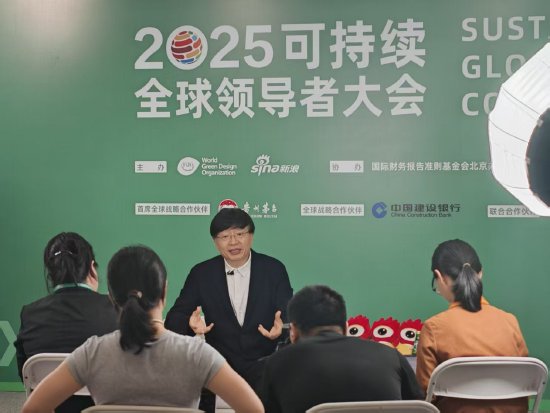
Xin Lang Cai Jing· 2025-10-17 09:24
Group 1 - The 2025 Sustainable Global Leaders Conference will be held from October 16 to 18 in Shanghai at the Expo Park [1] - Liu Erhai, founder and managing partner of Joy Capital, emphasized the importance of the commercialization of technology, stating that without revenue, a company has no value [3] - The investment logic has significantly changed, moving away from a user acquisition focus to a combination of technology and commercialization capabilities [3] Group 2 - Liu advised entrepreneurs to spend more time between customers and products, highlighting the increased importance of technology and product capabilities in the current era [3]

智动力:跨领域协同合作构建长期竞争力
Zheng Quan Ri Bao Wang· 2025-09-26 11:41
Core Insights - The chairman of Shenzhen Zhihui Technology Co., Ltd. emphasized the importance of a "technology, manufacturing, and ecosystem triangle collaboration" strategy to overcome mass production challenges in waveguide technology and transition AR from a niche product to a mainstream productivity tool [1] Group 1: Company Strategy - Zhihui Technology has made a strategic investment in Shenzhen Montong Intelligent Technology Co., Ltd., focusing on integrated AI+AR glasses products [1] - The company aims to enhance its annual strategy of "technological innovation and efficiency first" through product structure optimization, supply chain collaboration, and multi-channel layout [2] - Zhihui Technology plans to adopt a dual-driven model of "ODM + own brand" to capitalize on the upcoming AR market boom [2] Group 2: Industry Development - The chairman highlighted the critical significance of ecosystem co-construction for the industrialization of AR, advocating for cross-field collaboration among technology providers, manufacturers, and investors [1] - The integration of AI and AR is accelerating, positioning Zhihui Technology to play a significant role in the forthcoming AR popularization wave [2]