新能源汽车维修

Search documents
破解新能源汽车维修难题
Jing Ji Ri Bao· 2025-12-23 03:10
Group 1 - The maintenance costs for minor damages in electric vehicles can exceed thousands of yuan, while core component repairs can cost as much as half the price of a vehicle, highlighting the growing maintenance challenges in the electric vehicle industry [1] - The difficulties in maintenance stem from multiple factors, including high costs of core components, expensive precision parts, high integration of vehicles leading to extensive repairs for minor damages, monopolistic repair channels, and a significant shortage of skilled professionals [1] - If the after-sales maintenance system does not keep pace with industry development, it will hinder the high-quality growth of the electric vehicle sector in the long term [1] Group 2 - To address the maintenance challenges, it is essential to improve the market competition mechanism by establishing service standards and parts circulation rules for electric vehicle maintenance, promoting information transparency, and ensuring the legal operating rights of third-party institutions [2] - The vocational education system should adapt to industry trends by adjusting curricula to cultivate skilled technicians with both theoretical knowledge and practical skills, while also enhancing the professional qualification certification system to attract more talent to the electric vehicle maintenance sector [2] - Automotive companies should take responsibility during the product design phase to consider maintenance convenience, reduce design flaws, and lower component replacement costs [2]
如何破解新能源汽车维修难
Jing Ji Ri Bao· 2025-12-21 01:25
Core Insights - The rising maintenance costs for electric vehicles (EVs) are becoming a significant bottleneck for industry development and consumer experience [1][2] - The challenges in EV maintenance stem from high costs of core components, monopolistic repair channels, and a shortage of skilled technicians [1] - Improving the EV maintenance system is essential for the high-quality development of the industry [2] Group 1: Maintenance Challenges - Repair costs for minor damages can exceed thousands of yuan, while core component repairs can cost as much as half the price of a vehicle [1] - High costs are attributed to expensive core components, precision parts, and integrated vehicle designs that lead to extensive repairs for minor damages [1] - Monopolistic practices in repair channels hinder third-party access to essential parts and technical information [1] Group 2: Talent Development - There is a significant shortage of skilled technicians, with traditional mechanics struggling to adapt to new technologies [2] - Vocational schools need to align their curricula with industry trends to produce technicians with both theoretical knowledge and practical skills [2] - Improving the vocational qualification system and enhancing employee benefits can attract more talent to the EV maintenance sector [2] Group 3: Collaborative Solutions - Automakers should consider repair convenience during product design to minimize design flaws and reduce component replacement costs [2] - The insurance industry should develop specialized products for EVs that cover core component repairs and battery degradation, alleviating the financial burden on vehicle owners [2] - A collaborative effort among various stakeholders is necessary to break down technical barriers, lower maintenance costs, and improve service quality [2]
破解新能源汽车维修难
Jing Ji Ri Bao· 2025-12-20 22:06
Core Insights - The rising maintenance costs for electric vehicles (EVs) are becoming a significant bottleneck for industry development and consumer experience [1][2] - The challenges in EV maintenance stem from high costs of core components, monopolistic repair channels, and a shortage of skilled technicians [1][2] Group 1: Maintenance Challenges - Repair costs for minor damages can exceed thousands of yuan, while core component repairs can cost as much as half the price of a vehicle [1] - High costs are attributed to expensive precision components and integrated designs that lead to extensive repairs for minor damages [1] - Monopolistic practices by manufacturers control the flow of core parts and technical information, limiting third-party repair options [1] Group 2: Talent and Training - There is a significant shortage of skilled technicians, with traditional mechanics struggling to adapt to new technologies [2] - Vocational schools need to align their curricula with industry trends to produce technicians with both theoretical knowledge and practical skills [2] - Improving the vocational qualification system and enhancing employee benefits are essential to attract talent to the EV maintenance sector [2] Group 3: Collaborative Solutions - The industry requires a collaborative approach to improve the EV maintenance ecosystem, including establishing service standards and breaking parts monopolies [2] - Automakers should consider repair convenience during product design to reduce replacement costs and design flaws [2] - The insurance industry should develop specialized products for EVs that cover core component repairs and battery degradation, alleviating financial burdens on vehicle owners [2]
新能源汽车维修,要走出“小修花大钱”现状
Xin Hua She· 2025-12-15 08:05
Core Viewpoint - The article discusses the high maintenance costs associated with electric vehicles (EVs), particularly in comparison to traditional fuel vehicles, highlighting the need for improvements in the EV maintenance industry to provide better service and lower costs for consumers [1][2][3]. Group 1: Maintenance Cost Comparison - The maintenance cost for minor damages to electric vehicles is 2 to 2.5 times higher than that of fuel vehicles, causing frustration among EV owners [1]. - Minor repairs and part replacements for EVs can easily cost hundreds to thousands of yuan, contributing to the perception of high maintenance expenses [1]. Group 2: Factors Driving High Maintenance Costs - The exclusive reliance on 4S dealerships for repairs limits market competition and keeps prices high, unlike the diverse repair market for fuel vehicles which includes various service providers [1]. - The lack of standardization in EV parts across different manufacturers leads to higher repair costs, as parts are not interchangeable, increasing logistics and storage expenses [2]. - The high integration of components in some EV models means that minor issues may require the replacement of entire modules, resulting in significant costs [2]. - A shortage of qualified maintenance personnel, with a reported gap of approximately 842,000 technicians, exacerbates the high costs of EV repairs [2]. Group 3: Industry Development and Policy Support - Regulatory bodies are implementing policies to promote the development of the EV maintenance industry, aiming to reduce repair costs and diversify the supply of maintenance parts [3]. - Initiatives such as the "Ningjia Service" by CATL, which offers battery repair and replacement services, indicate a shift towards a more diversified maintenance market [3]. - The growth of companies specializing in EV maintenance reflects a response to the increasing demand for better service options in the EV sector [3].
新能源汽车维修,要走出“小修花大钱”现状
Xin Hua Wang· 2025-12-15 05:47
Core Viewpoint - The maintenance costs for electric vehicles (EVs) are 2 to 2.5 times higher than those for traditional fuel vehicles, particularly for minor damages and component replacements, causing concern among EV owners [1][2]. Group 1: Maintenance Cost Factors - The high maintenance costs for EVs are attributed to the use of new materials and technologies, which increase repair difficulty and prices [1]. - Repairs are primarily conducted at authorized 4S shops, limiting market competition and keeping prices high, unlike the diversified repair market for fuel vehicles [1]. - The lack of standardization in EV components leads to higher repair costs, as parts are not interchangeable across different manufacturers and models [1][2]. Group 2: Workforce and Market Development - There is a significant shortage of qualified maintenance personnel for EVs, with a reported gap of approximately 842,000 technicians needed, while fewer than 100,000 certified technicians are available [2]. - The development of a robust after-sales service system is essential for the growth of the EV market, as maintenance is a critical aspect of the vehicle lifecycle [2]. - Regulatory bodies are implementing policies to reduce maintenance costs and enhance the supply chain for EV parts, encouraging collaboration between manufacturers and service providers [2].
维修费比油车多花一倍!新能源车为何修不起?
Xin Lang Cai Jing· 2025-12-11 10:17
Core Insights - The high cost of maintenance for electric vehicles (EVs) is a significant concern for owners, with repair costs being 2-2.5 times higher than that of traditional fuel vehicles for minor damages [3][4][9] - There is a severe shortage of qualified EV maintenance technicians, with only about 100,000 certified technicians available and a gap of approximately 842,000 needed in the industry [4][20][40] - The combination of high repair costs, lack of skilled technicians, and monopolistic practices in the parts supply chain creates a challenging environment for EV owners [4][27][37] Group 1: High Repair Costs - Repair costs for EVs can reach thousands or even tens of thousands of yuan, with examples including a nearly 20,000 yuan cost for a minor rear trunk repair on a Tesla Model 3 [7][29] - Owners report that even minor repairs, such as replacing a bumper or headlight, can cost several thousand yuan, with some repairs involving battery or chassis replacements exceeding 10,000 yuan [8][30][31] - The average cost of battery replacement can account for 51% of the total vehicle price, indicating the high expense associated with core components [9][33] Group 2: Technician Shortage - The industry faces a significant shortage of EV maintenance technicians, with estimates indicating a need for over 842,000 additional skilled workers [4][20][40] - Many existing technicians lack the necessary training to handle the complexities of EV repairs, particularly those involving high-voltage systems and advanced electronic components [41][42] - The transition from traditional fuel vehicle maintenance to EV maintenance requires substantial retraining, which is currently not keeping pace with the rapid growth of the EV market [20][42] Group 3: Monopolistic Practices - The supply chain for EV parts is often controlled by manufacturers, making it difficult for independent repair shops to access necessary components [34][37] - Many EV manufacturers impose restrictions on warranty coverage if repairs are not conducted through authorized channels, discouraging owners from seeking third-party repair options [36][37] - The lack of transparency in pricing and repair processes contributes to the perception of high costs and limited options for consumers [44] Group 4: Recommendations for Improvement - Industry experts suggest establishing a centralized automotive service data platform to improve transparency and efficiency in the repair process [43][44] - There is a call for policy initiatives to support the development of a balanced aftermarket service ecosystem for EVs, similar to what has been achieved for traditional vehicles [44] - Long-term strategies should focus on reducing repair costs through improved technology and parts availability, ultimately enhancing consumer confidence in EV ownership [44]

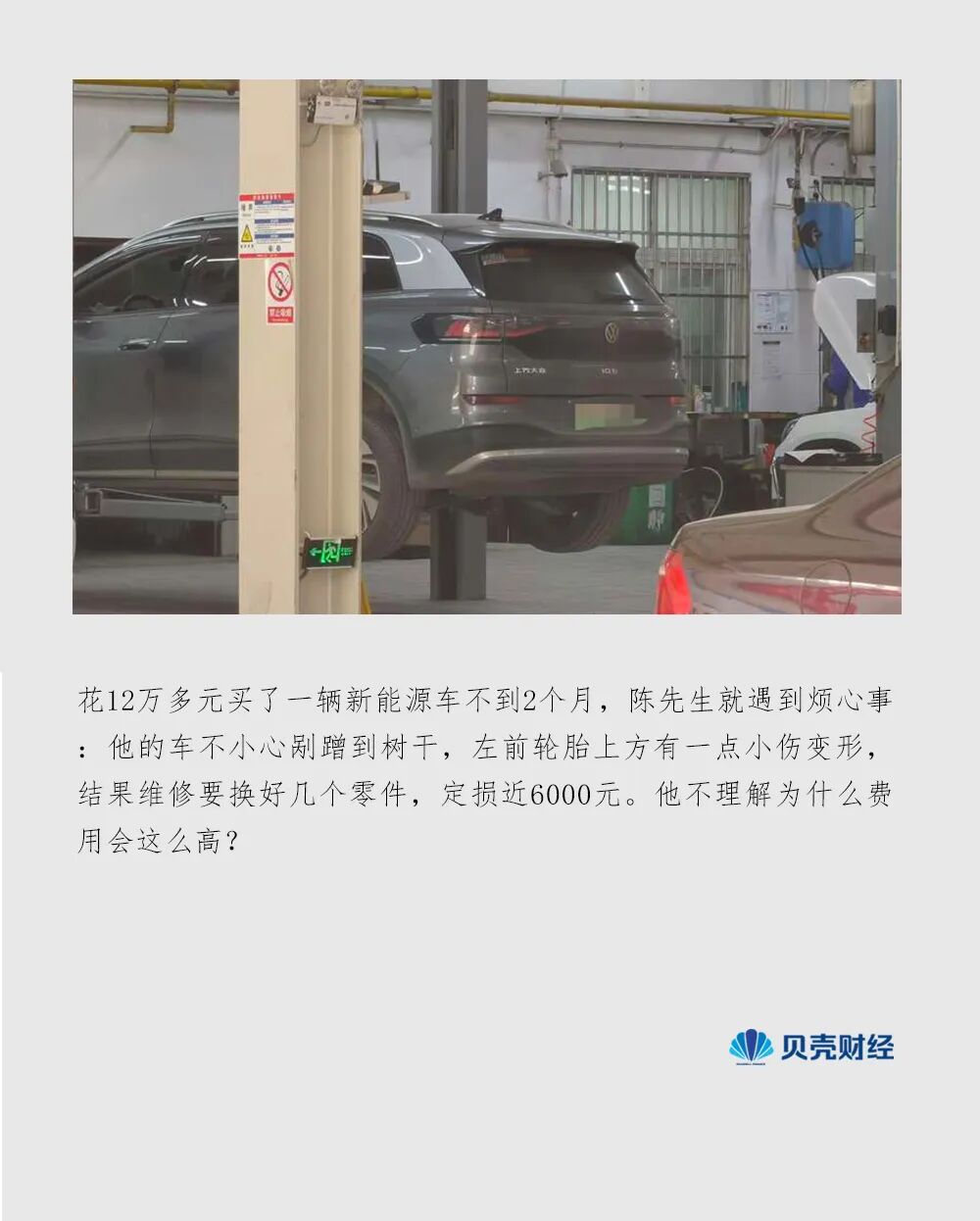
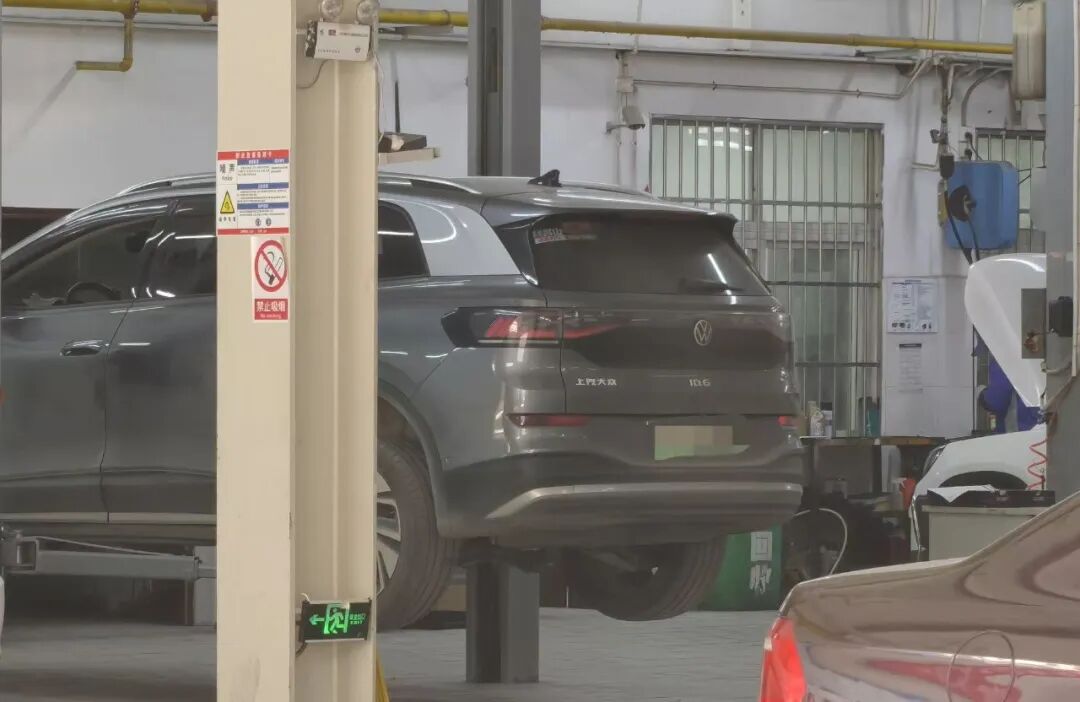
“小故障动辄上千,大维修堪比半辆车价”,新能源车为何修不起?
Xin Jing Bao· 2025-12-11 02:26
Core Viewpoint - The high cost and difficulty of repairing electric vehicles (EVs) have become a common concern among owners, with repair costs significantly exceeding those of traditional fuel vehicles, creating an "invisible barrier" between the rapid growth of the EV industry and user experience [1][21][22]. Cost of Repairs - Repair costs for EVs can be 2 to 2.5 times higher than for fuel vehicles, especially when involving battery and motor repairs [5][21]. - Specific examples include a Tesla Model 3 rear trunk repair costing nearly 20,000 yuan and minor damages leading to repair costs around 10,000 yuan [3][24]. - Common repair costs for EVs include 6,000 yuan for a headlight repair and 30,000 yuan for replacing multiple components after minor accidents [4][25]. High Repair Costs Factors - The high costs are attributed to several factors, including the expensive core components of EVs, which can account for over 50% of the vehicle's total cost [8][29]. - The integration of advanced technologies, such as laser radar and sensors, increases repair costs due to the complexity and high individual part prices [29][30]. - The monopolization of parts by manufacturers limits access for independent repair shops, further driving up costs [12][33]. Shortage of Skilled Technicians - There is a significant shortage of qualified EV repair technicians, with only about 100,000 certified technicians available and a gap of approximately 842,000 needed in the industry [21][37]. - Many traditional mechanics are hesitant to work on EVs due to the high voltage and complexity involved, leading to a reliance on specialized training [38][39]. Repair Channel Limitations - Many EV owners are reluctant to use third-party repair services due to concerns about warranty voiding and the potential loss of manufacturer support [12][33]. - The repair industry for EVs lacks the balance seen in the fuel vehicle sector, where independent repair shops and parts suppliers are more prevalent [41]. Recommendations for Improvement - Industry experts suggest establishing a centralized automotive service data platform to improve transparency and efficiency in the repair process [40]. - There is a call for policy initiatives to enhance the development of the EV repair market, ensuring it keeps pace with the rapid growth of the EV sector [40].
新能源车买得起,但修不起了
创业邦· 2025-10-17 03:24
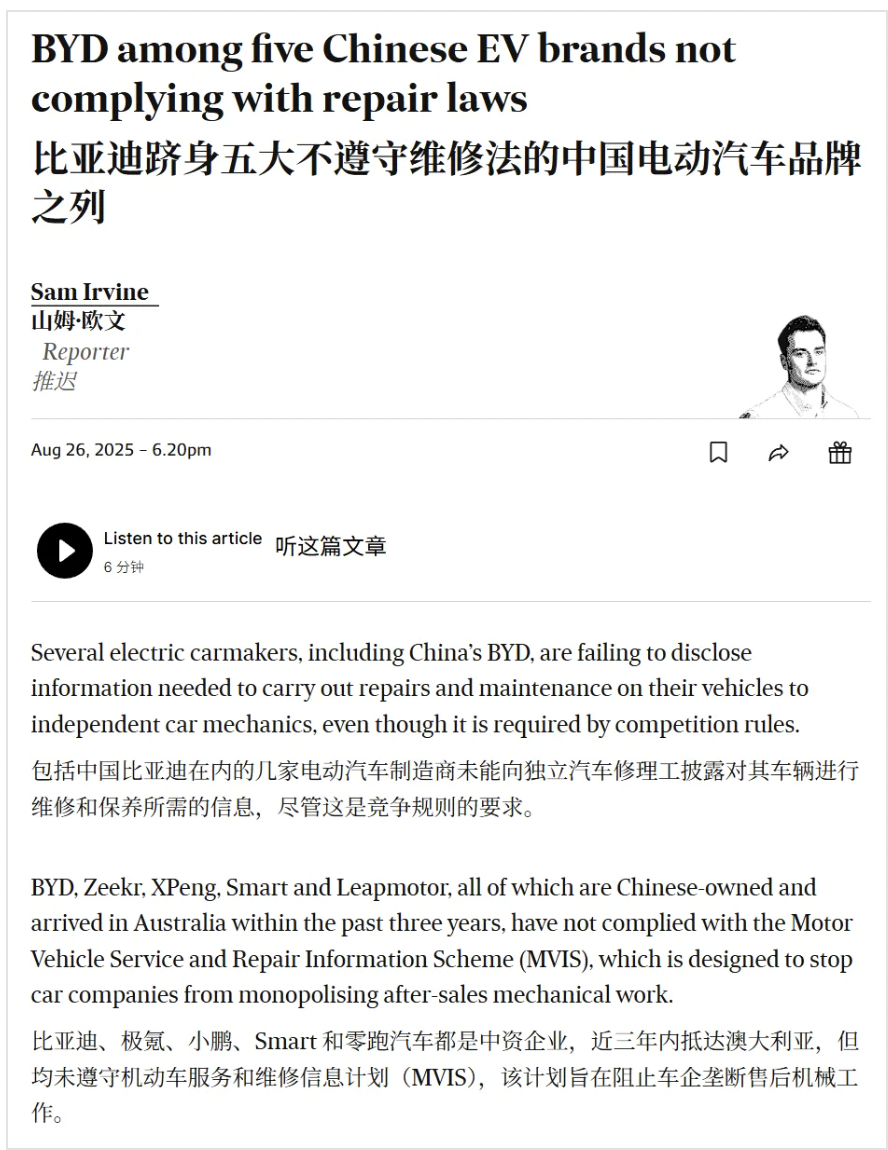
Core Viewpoint - Five Chinese automotive companies, including BYD and Zeekr, are facing potential fines in Australia for allegedly monopolizing after-sales services by not complying with local regulations regarding the disclosure of diagnostic software and repair parameters, which has made it difficult for independent repair shops to service these vehicles [5][7]. Group 1: Cost of Repair for New Energy Vehicles - The repair costs for new energy vehicles (NEVs) are significantly higher than those for traditional fuel vehicles, with minor accidents costing between 5,000 to 15,000 yuan for NEVs compared to 2,000 to 8,000 yuan for fuel vehicles [9]. - In severe collision cases, the repair costs for NEVs can exceed the cost of purchasing a new vehicle, while fuel vehicles can still be repaired for 50,000 to 150,000 yuan [9]. - The high repair costs are attributed to expensive parts, advanced technology, and the necessity of using official service centers to maintain warranty coverage [11][15]. Group 2: Challenges in After-Sales Services - Many automotive companies have strict warranty policies that require all maintenance and repairs to be conducted at authorized service centers, which can lead to high costs for consumers [15][16]. - Official service centers often prefer to replace parts rather than repair them, which increases overall repair costs [18]. - The integration of advanced technology in NEVs complicates repairs, as many independent repair shops lack access to necessary diagnostic tools and information [24][26]. Group 3: Market Dynamics and Future Outlook - The number of independent repair shops for NEVs is significantly lower than for traditional vehicles, with estimates of only 20,000 to 30,000 NEV repair shops compared to around 400,000 for fuel vehicles in China [37]. - The current high repair costs for NEVs are expected to persist until more vehicles are out of warranty and independent repair shops become more knowledgeable about NEV repairs [39]. - The automotive repair industry is facing challenges due to the rapid technological advancements in NEVs, which require specialized knowledge and skills that many traditional mechanics do not possess [39].


新能源车买得起,但修不起了
Hu Xiu· 2025-10-16 00:12
Core Points - Australian media reported that companies like BYD and Zeekr failed to comply with local regulations regarding the disclosure of diagnostic software and repair parameters, affecting the ability of external repair shops to service these vehicles [1][3] - These companies may face fines up to 10 million AUD, approximately 47 million RMB [3] Group 1: Repair Costs - The cost of repairing electric vehicles (EVs) is significantly higher than that of traditional fuel vehicles, with minor accidents costing between 5,000 to 15,000 RMB for EVs compared to 2,000 to 8,000 RMB for fuel vehicles [6] - In severe collisions, the repair costs for EVs can exceed the cost of purchasing a new vehicle, while fuel vehicles can still be repaired for 50,000 to 150,000 RMB [6][7] - The high repair costs for EVs are attributed to expensive parts and advanced technology, with battery packs often costing as much as 50.96% of the vehicle's total price [12][8] Group 2: Repair Process and Limitations - Most car manufacturers require repairs to be conducted at official service centers to maintain warranty coverage, which limits options for vehicle owners [15][16] - Many service centers prefer to replace parts rather than repair them, leading to higher costs for consumers [18][20] - The integration of advanced technology in EVs complicates repairs, as many repair shops lack access to necessary diagnostic tools and proprietary data from manufacturers [24][30] Group 3: Market Dynamics - The number of repair shops for EVs is significantly lower than for traditional vehicles, with only 20,000 to 30,000 EV repair businesses compared to around 400,000 for fuel vehicles in China [42][47] - The repair industry for EVs remains closed and limited, with few companies able to provide adequate service due to a lack of access to repair data [42][28] - The high costs of EV repairs are expected to persist until more vehicles are out of warranty and the repair market becomes more competitive [48]
被忽视的新能源维修迷局
Tai Mei Ti A P P· 2025-07-11 11:45
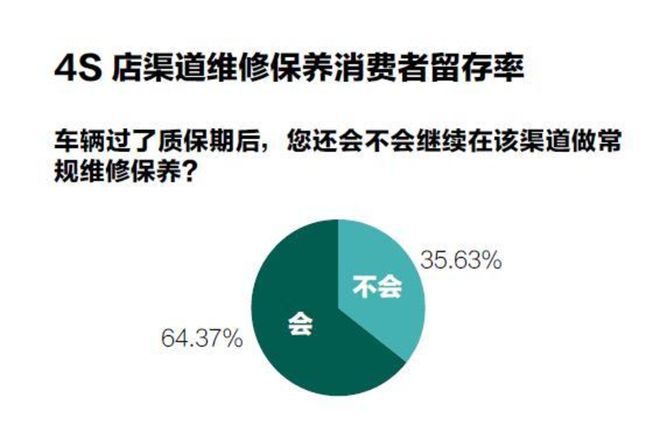
Core Viewpoint - The rapid sales growth of domestic electric vehicles is overshadowed by challenges in the after-sales service market, particularly regarding maintenance and repair options for owners [1][4]. Group 1: Market Dynamics - A recent court ruling in Shanghai highlights the legal risks associated with third-party repairs for electric vehicles, marking the first case where individuals were sentenced for unauthorized maintenance [4]. - Approximately 35.63% of electric vehicle owners opt for non-official repair channels after the warranty period, indicating a significant shift away from authorized service centers [1][5]. Group 2: Consumer Concerns - Electric vehicle owners express three main concerns regarding maintenance: 1. Ownership rights over vehicle data and the ability to manage it independently [7]. 2. High costs and long wait times associated with official service centers, leading to dissatisfaction [8]. 3. Anxiety over the future availability of services if the manufacturer ceases operations, potentially leaving vehicles unserviceable [9]. Group 3: Repair Channel Options - The repair market for electric vehicles is currently dominated by official service centers, with about 50% of owners using them, while the remaining choose third-party options [5][14]. - The legal implications of unauthorized repairs create a dilemma for consumers, as they risk legal consequences while seeking more affordable service options [10][21]. Group 4: Future Considerations - The industry faces a challenge in balancing consumer rights with manufacturers' control over repair processes, suggesting a need for clearer regulations and standards [18][21]. - Potential solutions include policy measures to ensure service continuity even if a manufacturer goes out of business, similar to insurance industry practices [19].