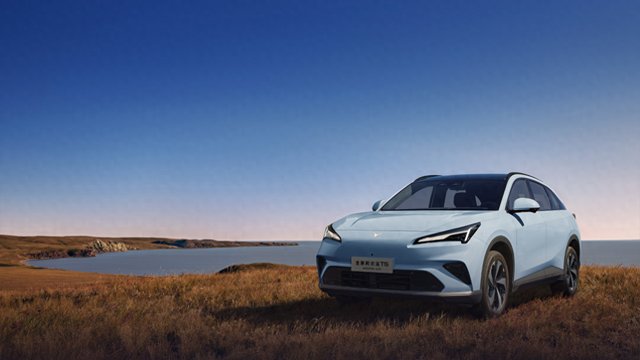
极狐阿尔法T5

Search documents
净利暴跌86%,李想要把“增程神话”换成AI+机器人
阿尔法工场研究院· 2026-03-13 08:04
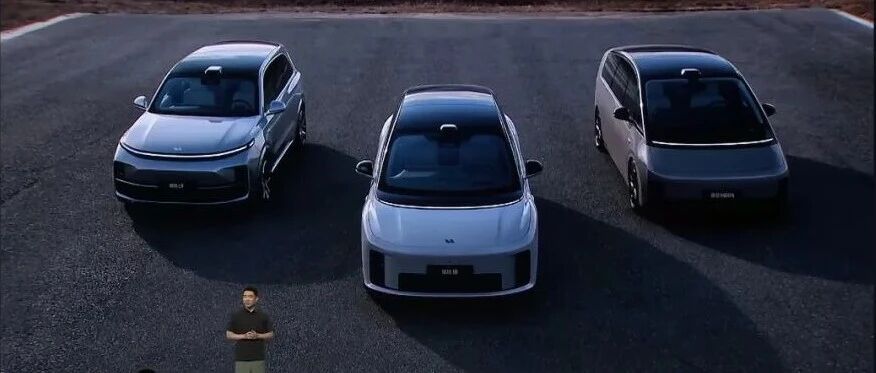
Core Viewpoint - Li Auto is facing significant challenges as its competitive advantage in range-extended technology diminishes, leading to a sharp decline in profits and revenues, while the market becomes increasingly saturated with competitors and pure electric vehicles [2][3][7]. Financial Performance - In 2025, Li Auto reported a net profit of 1.139 billion yuan, a staggering decline of 85.8% year-on-year, with revenue dropping 22.3% to 112.3 billion yuan [2][3]. - The total vehicle deliveries for 2025 were 406,300 units, down 18.8% from the previous year, failing to meet both the initial target of 700,000 and the revised target of 640,000 [3][4]. - The gross margin for 2025 fell to 18.7%, down from 20.5% in 2024, with vehicle gross margin decreasing from 19.8% to 17.9% [4]. Market Competition - The range-extended vehicle market has become increasingly competitive, with multiple automakers introducing similar technologies, diminishing Li Auto's previous advantage [7][8]. - In 2025, the sales of pure electric vehicles reached 7.877 million units, a 24.4% increase year-on-year, while range-extended vehicle sales only grew by 6% to 1.235 million units [8][9]. Internal Challenges - Li Auto has experienced significant management turnover, with several key executives leaving the company, raising concerns about operational stability [5]. - A recall of 11,000 units due to safety issues has negatively impacted the brand's image and consumer trust, further complicating its recovery efforts [5][6]. Strategic Initiatives - To combat declining sales, Li Auto aims to achieve a sales target of 500,000 units in 2026, focusing on both range-extended and pure electric vehicles [9][10]. - The company plans to launch a new range-extended model, the Li L9 series, in the second quarter of 2026, featuring advanced charging technology and improved electric range [10]. - Li Auto is heavily investing in AI technology, with 50% of its 11.3 billion yuan R&D budget in 2025 allocated to AI, indicating a strategic pivot towards integrating AI into its vehicle offerings [10][11].

北汽蓝谷(600733):重视自上而下变革下的国企改革机会
Hua Yuan Zheng Quan· 2026-02-28 05:44
Investment Rating - The report assigns a "Buy" rating for the company, marking its first coverage [5][11][13]. Core Insights - The transformation of Beijing Automotive Group from top to bottom is seen as a fundamental logic for the successful transition of BAIC Blue Valley. The company is expected to leverage its management team's youthfulness and industry experience to drive its new energy vehicle strategy [6][15][34]. - The "Xiangjie" brand is central to this transformation, with management emphasizing its development and sales potential. The introduction of new models and price adjustments are expected to enhance product competitiveness and sales volume [7][16][45]. - The "Arcfox" brand is undergoing significant reforms, with improvements in product offerings and marketing strategies leading to a substantial increase in sales and a potential path to profitability [9][36]. Summary by Sections Market Performance - As of February 27, 2026, the closing price of the stock is 7.99 yuan, with a market capitalization of approximately 50.87 billion yuan and a circulating market value of about 39.08 billion yuan [3]. Company Overview - BAIC Blue Valley focuses on new energy passenger vehicles, with its main products being the "Arcfox" and "Xiangjie" brands. The company has faced significant losses in recent years, necessitating a strategic overhaul [4][20]. Investment Thesis - The report highlights the importance of the management changes under Zhang Jianyong, who has initiated a series of organizational adjustments aimed at enhancing operational efficiency and supporting the development of new energy vehicles [6][28][34]. - The "Xiangjie" brand is positioned as a key growth driver, with plans for new model launches and a focus on improving brand recognition and market share [16][45]. Financial Projections - The company is projected to achieve a net profit of -4.4 billion yuan in 2025, improving to -1.8 billion yuan in 2026, and reaching a profit of 1.29 billion yuan by 2027. Revenue is expected to grow significantly, with a forecast of 28.41 billion yuan in 2025 [12][13][14]. Strategic Initiatives - The company is implementing a three-year leap plan with goals to increase production scale, enhance profitability, and improve brand recognition. The focus is on cost reduction and efficiency improvements across operations [33][34].

获易方达重仓22亿,北汽蓝谷此次有何不同?
Ge Long Hui· 2026-01-29 11:38
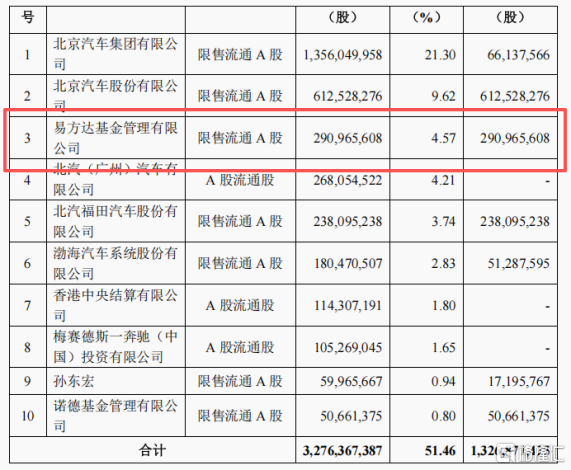
Core Viewpoint - The significant investment of 2.2 billion by E Fund in Beiqi Blue Valley, representing 36.67% of the total fundraising, indicates strong confidence in the company's potential for a turnaround in the competitive new energy vehicle market [1][19]. Group 1: Financial Performance and Growth - Beiqi Blue Valley is projected to incur a loss of 4.35 to 4.65 billion in 2025, with a reduction in losses by 33% to 37%, marking the best performance in six years [5]. - The company expects to sell 209,600 vehicles in 2025, a significant year-on-year increase of 84.06%, with revenue projected to reach approximately 28 billion, reflecting a 93% growth [5]. - The gross margin turned positive for the first time at 1.8% in Q3 2025, breaking the previous cycle of losses [6]. - Operating cash flow turned positive with a net amount of 754 million in the first three quarters of 2025, indicating improved financial health [7]. Group 2: Strategic Positioning and Market Dynamics - Beiqi Blue Valley is transitioning from a traditional automaker to a technology-driven company with dual brand strategies, supported by Huawei, focusing on both family vehicles and luxury segments [9][10]. - The "Extreme Fox" brand achieved a monthly sales record of over 24,000 units in December 2025, with an annual total of over 160,000 units, reflecting a 99% year-on-year growth [9]. - The "Enjoy" brand, developed in collaboration with Huawei, is gaining traction in the luxury car market, with significant sales milestones achieved [9]. Group 3: Investment Sentiment and Market Perception - The concentration of investment in Beiqi Blue Valley, with E Fund alone accounting for 36.67% of the total, suggests a strong commitment and thorough due diligence by institutional investors [15][16]. - The recent fundraising round saw 23 institutions competing, with a final issuance price of 7.56 yuan, reflecting a premium over the base price, indicating positive market sentiment [13][19]. - E Fund's investment strategy aligns with its historical approach of partnering with industry leaders, suggesting a long-term commitment to Beiqi Blue Valley's growth potential [11][19].
获易方达重仓22亿,北汽蓝谷(600733.SH)此次有何不同?
Ge Long Hui· 2026-01-29 11:36
Core Viewpoint - The significant investment of 2.2 billion by E Fund in Beiqi Blue Valley, representing 36.67% of the total fundraising, indicates strong confidence in the company's potential for a turnaround in the competitive new energy vehicle market [1][19]. Group 1: Financial Performance and Growth Potential - Beiqi Blue Valley's projected loss for 2025 is between 4.35 billion to 4.65 billion, with a reduction in loss margin of 33% to 37%, marking the best performance in six years [6]. - The company expects to sell 209,600 vehicles in 2025, a year-on-year increase of 84.06%, with revenue projected to reach approximately 28 billion, reflecting a 93% growth [6]. - The gross margin turned positive for the first time at 1.8% in Q3 2025, breaking the previous cycle of losses [8]. - Operating cash flow turned positive with a net amount of 754 million in the first three quarters of 2025, indicating improved financial health [9]. Group 2: Strategic Positioning and Brand Development - Beiqi Blue Valley is transitioning from a traditional automaker to a tech-driven company with dual brand strategies, focusing on the "Extreme Fox" and "Xiangjie" brands [11]. - The "Extreme Fox" brand targets the mid-to-high-end consumer market, achieving a monthly sales record of over 24,000 units in December 2025, a 103% year-on-year increase [11]. - The "Xiangjie" brand, developed in collaboration with Huawei, aims at the luxury car market, with significant sales growth and recognition [12]. Group 3: Governance and Investment Dynamics - The entry of E Fund is expected to optimize Beiqi Blue Valley's governance structure and enhance operational efficiency, opening up new capital operation possibilities [13]. - The concentration of shareholding in the recent fundraising round, with E Fund alone accounting for 36.67%, reflects a strong commitment and thorough due diligence [18][19]. - E Fund's investment strategy emphasizes long-term growth by aligning with industry leaders, suggesting confidence in Beiqi Blue Valley's future performance [13][19].
你的极狐,充电自由!牵手昆仑网电,纯电出行说走就走
Zhong Guo Qi Che Bao Wang· 2026-01-14 01:28
Core Insights - The key factor influencing electric vehicle (EV) owners' satisfaction is the charging experience, which has evolved from basic availability to a focus on widespread coverage, efficiency, and user-friendliness [1][2] - BAIC Arcfox achieved impressive sales of over 160,000 units in 2025, marking a 99% year-on-year increase, largely due to its commitment to enhancing the charging ecosystem [1][10] Charging Network Expansion - BAIC Arcfox has partnered with nearly 100 leading operators to improve charging accessibility, aiming to reduce user anxiety and enhance convenience [1][4] - The recent collaboration with Kunlun Network Electric Technology Co., Ltd. marks a significant expansion of their charging network, launching 15 charging stations and over 400 charging piles in Beijing [1][2] User Benefits - The partnership with Kunlun Network Electric allows Arcfox users to access a wide range of charging resources through the Arcfox app, offering a 5% discount on charging service fees and exclusive parking benefits [4][5] - This collaboration aims to eliminate charging barriers across different brands and platforms, enhancing the overall user experience [4] Technological Advancements - BAIC Arcfox has pioneered the use of liquid-cooled fast charging technology, establishing a network of 140 self-operated fast charging stations and connecting over 1 million public charging piles across more than 330 cities by 2025 [5][9] - The main models, Alpha T5 and Alpha S5, feature an 800V high-voltage fast charging platform, enabling rapid charging capabilities that allow for significant range replenishment in just 15 minutes [7][9] Quality and Safety - BAIC Arcfox emphasizes safety and quality, with the Alpha T5 achieving a five-star safety rating in C-NCAP tests and a commitment to 10 years or 240,000 kilometers without battery degradation [9][10] - The Alpha S5 has also received accolades for its quality, ranking highly in the new energy vehicle segment [9] Strategic Positioning - Backed by substantial investment from BAIC Group, BAIC Arcfox is solidifying its brand identity as a provider of high-quality and affordable electric vehicles through technological innovation and a robust product lineup [10] - The collaboration with Kunlun Network Electric enhances the overall travel ecosystem for Arcfox users, promoting a seamless and worry-free electric driving experience [10]
上汽,困在华为的「低价迷局」里!
Xin Lang Cai Jing· 2025-12-18 00:46
Core Insights - The article discusses the challenges faced by the Hongmeng Zhixing's Shangjie H5 electric vehicle, which, despite achieving record sales of 81,800 units in November, has not met its sales targets due to competitive pricing and product positioning issues [2] - The H5 was launched as a low-cost entry into the market, but it has struggled to gain traction against competitors like the Zhijie R7, leading to a disconnect between market expectations and actual performance [2][8] Group 1: Sales Performance and Market Positioning - The Shangjie H5 was expected to disrupt the market with its pricing strategy but has failed to achieve the planned sales volume of 20,000 units [2][8] - In November, the H5 delivered over 10,000 units, while the Zhijie R7 approached similar sales figures, indicating a competitive landscape in the 150,000 to 250,000 yuan segment [8] - Customers comparing the H5 and R7 often choose the R7 due to better features and overall value, despite the H5's lower price point [3][5][7] Group 2: Pricing Strategy and Consumer Perception - The H5 has undergone three significant price adjustments since its launch, with the latest changes aimed at enhancing perceived value through additional subsidies and financing options [11][13] - Many potential buyers perceive the H5's 400V architecture as outdated compared to competitors offering 800V systems, which affects their purchasing decisions [13][14] - The article highlights that even a small price difference does not sway consumers if the perceived value and technology are lacking, leading to a preference for higher-priced models with better specifications [5][13] Group 3: Strategic Challenges and Future Outlook - The collaboration between SAIC and Huawei faces challenges in balancing cost, pricing, and product quality, as pushing for lower prices could erode profit margins [16][18] - The H5's reliance on a 400V platform limits its competitiveness, and any attempt to upgrade to an 800V system could disrupt the existing product hierarchy within Huawei's offerings [16][18] - The strategic goal of achieving high sales volume while maintaining profitability creates a complex situation for both companies, as they navigate market demands and internal profit-sharing agreements [18]
小马智行王皓俊:财务指标不全反映技术价值,2023年或成商业化验证年
Zhi Tong Cai Jing· 2025-12-17 07:24
Core Insights - The announcement of the first batch of conditional L3 autonomous vehicle permits by the Ministry of Industry and Information Technology marks a clearer path for autonomous driving commercialization, particularly in the Robotaxi sector [1] - Companies like Mercedes, Stellantis, and Tesla are making significant advancements in Robotaxi testing and operations, with Waymo reporting a trip volume exceeding 14 million since 2025, and Xiaoma Zhixing achieving single-vehicle profitability [1][2] Group 1: Company Developments - Xiaoma Zhixing aims to achieve breakeven by 2030, emphasizing that financial metrics do not fully reflect technological value, and that profitability depends on cost control and revenue scale [2] - The company plans to operate fully autonomous Robotaxis in major cities, with an operational area exceeding 2,000 square kilometers and a projected 55 million kilometers of global autonomous driving testing mileage [2] - As of now, Xiaoma Zhixing has over 961 Robotaxi vehicles, with a target to exceed 1,000 by the end of 2025 and expand to over 3,000 by the end of 2026 [2] Group 2: Financial Performance - In Q3 2025, Xiaoma Zhixing reported total revenue of $25.4 million (approximately 181 million RMB), a 72% increase from $14.8 million in Q3 2024, driven by strong demand for autonomous driving services [3] - The gross margin improved to 18.4% in Q3 2025, up from 9.2% in the same period of 2024, attributed to an increase in high-margin autonomous driving service revenue [3] - The revenue from autonomous driving services grew by 89.5% year-on-year, with passenger fare income surging over 200% [3] Group 3: Autonomous Trucking Initiatives - Xiaoma Zhixing has accelerated its autonomous truck business, currently operating around 200 trucks and achieving over 1 billion ton-kilometers in freight transport [3][4] - The company has partnered with SANY Heavy Truck and Dongfeng Liuzhou Motor to develop a fourth generation of autonomous trucks, with plans for mass production of two models by 2026 [4] - The current scale of 200 trucks is strategically significant for meeting data needs for technological iteration, with plans for commercial scaling after 2-3 years of technology validation [4]
骁龙8775助力舱驾融合落地 多款新车型集中亮相
Huan Qiu Wang· 2025-12-12 04:57
Core Insights - The automotive industry is evolving towards architecture optimization and system collaboration, with cockpit and driving integration being a crucial step towards centralized computing [1][8] - Qualcomm has launched the Snapdragon Ride Flex SoC, the first platform to support both smart cockpit and advanced driver assistance systems (ADAS) simultaneously, at CES 2023 [1][8] - Several new models featuring the Snapdragon 8775, including the Arcfox Alpha T5, Dongfeng Nissan N6, and Buick models, indicate a shift towards large-scale production of integrated cockpit and driving systems [1][3][5] Group 1: Technology and Innovation - The Snapdragon 8775 platform enhances the performance and efficiency of vehicles, allowing for a streamlined architecture and improved computational resource allocation [1][8] - The integration of cockpit and driving functions through the Snapdragon 8775 enables a seamless user experience, reducing space usage by 52% and power consumption by 15% [3][5] - The platform supports high-speed communication, significantly shortening data transmission links and improving bandwidth and response times between cockpit and driving systems [3][8] Group 2: Model Launches and Features - The Arcfox Alpha T5 is notable for being the first mass-produced model to achieve cockpit and driving integration, supported by the Snapdragon 8775 [3][5] - The Dongfeng Nissan N6 features personalized configurations and advanced infotainment capabilities, including AI voice assistant functions and a comprehensive driving assistance system [5][8] - The Buick models leverage the Snapdragon 8775 for immersive and personalized smart cockpit experiences, with the Buick GL8 offering connectivity for up to eight displays [7][8] Group 3: Industry Collaboration and Future Outlook - Over a dozen automotive partners, including BAIC Group and Dongfeng Nissan, are developing next-generation smart vehicles based on the Snapdragon Ride Flex SoC [10] - The platform's ability to facilitate software reuse and cross-platform migration enhances flexibility in vehicle planning and software development [10] - As cockpit and driving integration continues to deepen, the Snapdragon platform is expected to provide a robust technological foundation for innovation in the automotive industry [10]

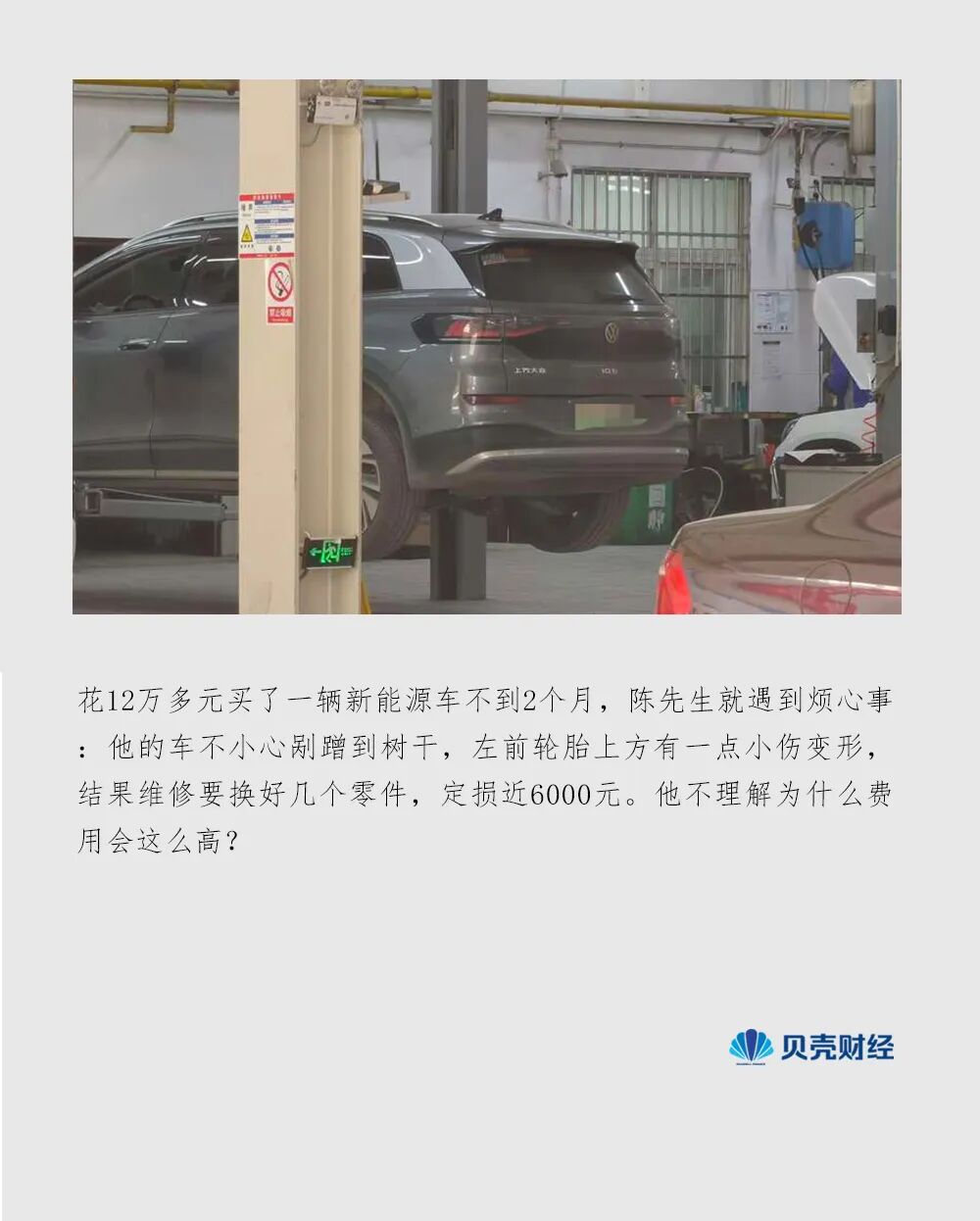
维修费比油车多花一倍!新能源车为何修不起?
Xin Lang Cai Jing· 2025-12-11 10:17
Core Insights - The high cost of maintenance for electric vehicles (EVs) is a significant concern for owners, with repair costs being 2-2.5 times higher than that of traditional fuel vehicles for minor damages [3][4][9] - There is a severe shortage of qualified EV maintenance technicians, with only about 100,000 certified technicians available and a gap of approximately 842,000 needed in the industry [4][20][40] - The combination of high repair costs, lack of skilled technicians, and monopolistic practices in the parts supply chain creates a challenging environment for EV owners [4][27][37] Group 1: High Repair Costs - Repair costs for EVs can reach thousands or even tens of thousands of yuan, with examples including a nearly 20,000 yuan cost for a minor rear trunk repair on a Tesla Model 3 [7][29] - Owners report that even minor repairs, such as replacing a bumper or headlight, can cost several thousand yuan, with some repairs involving battery or chassis replacements exceeding 10,000 yuan [8][30][31] - The average cost of battery replacement can account for 51% of the total vehicle price, indicating the high expense associated with core components [9][33] Group 2: Technician Shortage - The industry faces a significant shortage of EV maintenance technicians, with estimates indicating a need for over 842,000 additional skilled workers [4][20][40] - Many existing technicians lack the necessary training to handle the complexities of EV repairs, particularly those involving high-voltage systems and advanced electronic components [41][42] - The transition from traditional fuel vehicle maintenance to EV maintenance requires substantial retraining, which is currently not keeping pace with the rapid growth of the EV market [20][42] Group 3: Monopolistic Practices - The supply chain for EV parts is often controlled by manufacturers, making it difficult for independent repair shops to access necessary components [34][37] - Many EV manufacturers impose restrictions on warranty coverage if repairs are not conducted through authorized channels, discouraging owners from seeking third-party repair options [36][37] - The lack of transparency in pricing and repair processes contributes to the perception of high costs and limited options for consumers [44] Group 4: Recommendations for Improvement - Industry experts suggest establishing a centralized automotive service data platform to improve transparency and efficiency in the repair process [43][44] - There is a call for policy initiatives to support the development of a balanced aftermarket service ecosystem for EVs, similar to what has been achieved for traditional vehicles [44] - Long-term strategies should focus on reducing repair costs through improved technology and parts availability, ultimately enhancing consumer confidence in EV ownership [44]
“小故障动辄上千,大维修堪比半辆车价”,新能源车为何修不起?
Xin Jing Bao· 2025-12-11 02:26
Core Viewpoint - The high cost and difficulty of repairing electric vehicles (EVs) have become a common concern among owners, with repair costs significantly exceeding those of traditional fuel vehicles, creating an "invisible barrier" between the rapid growth of the EV industry and user experience [1][21][22]. Cost of Repairs - Repair costs for EVs can be 2 to 2.5 times higher than for fuel vehicles, especially when involving battery and motor repairs [5][21]. - Specific examples include a Tesla Model 3 rear trunk repair costing nearly 20,000 yuan and minor damages leading to repair costs around 10,000 yuan [3][24]. - Common repair costs for EVs include 6,000 yuan for a headlight repair and 30,000 yuan for replacing multiple components after minor accidents [4][25]. High Repair Costs Factors - The high costs are attributed to several factors, including the expensive core components of EVs, which can account for over 50% of the vehicle's total cost [8][29]. - The integration of advanced technologies, such as laser radar and sensors, increases repair costs due to the complexity and high individual part prices [29][30]. - The monopolization of parts by manufacturers limits access for independent repair shops, further driving up costs [12][33]. Shortage of Skilled Technicians - There is a significant shortage of qualified EV repair technicians, with only about 100,000 certified technicians available and a gap of approximately 842,000 needed in the industry [21][37]. - Many traditional mechanics are hesitant to work on EVs due to the high voltage and complexity involved, leading to a reliance on specialized training [38][39]. Repair Channel Limitations - Many EV owners are reluctant to use third-party repair services due to concerns about warranty voiding and the potential loss of manufacturer support [12][33]. - The repair industry for EVs lacks the balance seen in the fuel vehicle sector, where independent repair shops and parts suppliers are more prevalent [41]. Recommendations for Improvement - Industry experts suggest establishing a centralized automotive service data platform to improve transparency and efficiency in the repair process [40]. - There is a call for policy initiatives to enhance the development of the EV repair market, ensuring it keeps pace with the rapid growth of the EV sector [40].