旅游强国

Search documents
2025年出境游Z世代消费增长,免签入境游订单增幅达153%
第一财经· 2025-12-31 14:14
Core Insights - The outbound tourism market in 2025 has shown robust growth, with double-digit year-on-year increases in orders for various travel products, including tours, local experiences, and cruise services [3][4] - Inbound tourism has also surged, with ticket orders for inbound flights from overseas users increasing by over 100% year-on-year, particularly for flights to Shanghai, which saw a nearly 600% increase [3][8] Outbound Tourism Trends - Consumer preferences for outbound travel have become more diversified and personalized, with families preferring comfortable services like cruises and Z-generation consumers spending more on unique experiences [5][6] - Free independent travel remains the mainstream mode of outbound tourism, with a notable increase in small group tours that offer better value and experience compared to traditional large group tours [6] - Emerging destinations such as Sweden and Iceland have gained popularity, particularly for their unique attractions like the Northern Lights, indicating a shift in travel patterns [6][7] Inbound Tourism Growth - Inbound tourism has experienced significant growth, with a 100% increase in bookings for the first three quarters of 2025, and orders from visa-exempt countries rising by an average of 153% [8][9] - The Chinese government is enhancing the convenience and internationalization of inbound tourism, with measures such as extending transit visa exemptions and expanding applicable ports [8][11] - Key travel periods for inbound tourists include spring and autumn, with a trend of early bookings observed among travelers from Asia, Europe, and Australia [8][9] Market Potential - Currently, inbound tourism revenue accounts for less than 0.5% of China's GDP, compared to over 10% in Thailand and 1-2% in many Western countries, indicating a significant potential market increase of approximately 1 to 2 trillion yuan if it reaches comparable international levels [11][12] - The upcoming New Year and Spring Festival holidays are expected to further boost both outbound and inbound tourism, with many popular long-haul outbound tours already sold out [11]


年终盘点|2025年出境游Z世代消费增长,免签入境游订单增幅达153%
Di Yi Cai Jing· 2025-12-31 11:59
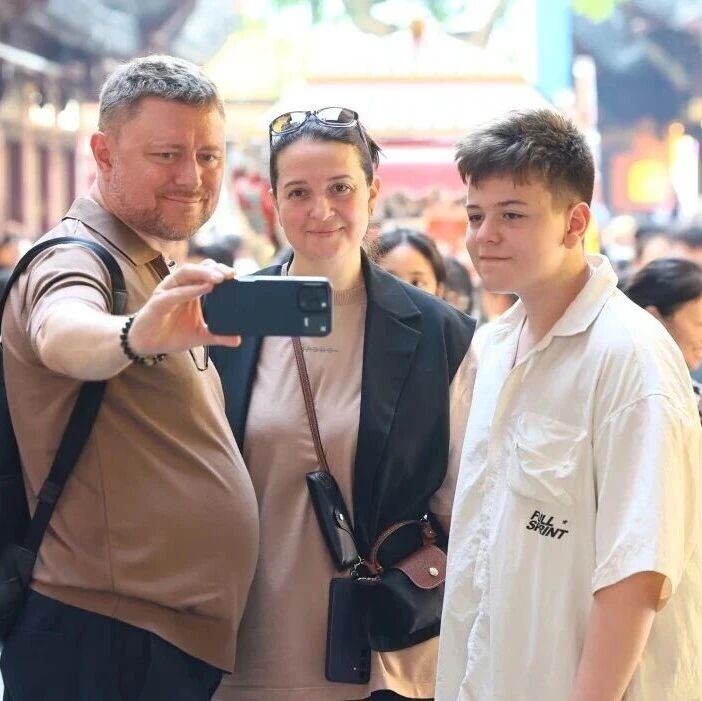
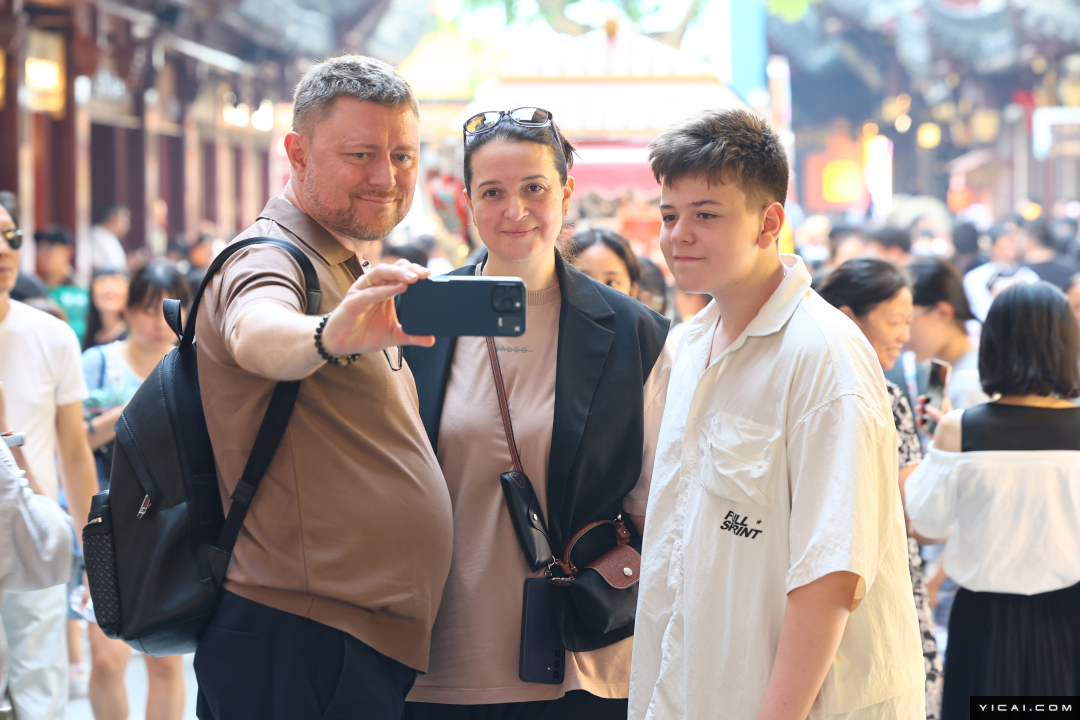
Group 1 - The outbound tourism market in 2025 is experiencing high-quality growth, with significant increases in orders for various travel products, including tours, local experiences, and cruise services, showing double-digit growth year-on-year [1] - Inbound tourism is witnessing explosive growth, with overseas flight bookings to China more than doubling compared to last year, particularly for flights to Shanghai, which have increased nearly sixfold [1] - The trend of personalized and diversified travel consumption is evident, with families preferring comfortable services like cruises, while Gen Z consumers are spending more on unique experiences [2] Group 2 - The demand for small group tours is rising, with a notable increase in the proportion of small group products in the overall outbound tour market, appealing to consumers seeking better experiences and more free time [2] - Instant group day tours are gaining popularity, and new long-haul destinations like Sweden and Iceland are emerging, indicating a shift in travel preferences [3] - Inbound tourism is experiencing a robust recovery, with a 100% increase in bookings in the first three quarters of 2025, and a remarkable 153% growth in orders from visa-exempt countries [5] Group 3 - International visitors are increasingly exploring inland cities in China, with Chongqing seeing a 170% increase in inbound traffic, and Datong experiencing a sevenfold increase in ticket sales due to its cultural attractions [6] - The potential market for inbound tourism in China is significant, with the current contribution to GDP being less than 0.5%, compared to over 10% in Thailand, suggesting a potential market increase of 1 to 2 trillion yuan if it reaches comparable international levels [7] - The upcoming New Year and Spring Festival holidays are expected to further boost both outbound and inbound tourism, with many popular long-haul outbound tours already sold out [7]
扎实推进文化强国、旅游强国建设——访文化和旅游部党组书记、部长孙业礼
Ren Min Ri Bao· 2025-12-21 01:58
Core Viewpoint - The construction of a cultural and tourism power is essential for China's modernization and national rejuvenation, as emphasized by General Secretary Xi Jinping [1][2]. Group 1: Importance of Cultural and Tourism Power - Cultural prosperity is a significant indicator of Chinese-style modernization, with the central government prioritizing cultural development since the 18th National Congress [2]. - Advancing cultural and tourism power enhances spiritual strength, improves quality of life, promotes high-quality economic and social development, and elevates national soft power and cultural influence [2][3]. Group 2: Enhancing Cultural Life - The cultural sector aims to provide richer and higher-quality cultural experiences for the public, ensuring cultural rights and promoting comprehensive human development [4]. - Creating contemporary artistic works that resonate with the times and enhancing public cultural services are key initiatives [4][5]. Group 3: Cultural Heritage and Industry Development - Systematic protection and innovative development of cultural heritage are crucial for preserving Chinese civilization [6]. - The cultural and tourism sectors are to be developed into pillar industries that drive domestic demand, create jobs, and enhance market vitality [7]. Group 4: International Cultural Exchange - The strategy includes deepening international cultural and tourism cooperation to enhance the global influence of Chinese civilization [9]. - Efforts will be made to improve inbound tourism services and promote China's image internationally through various cultural activities [10].
焦点访谈丨文旅融合再升级 “十五五”旅游新蓝图来了
Yang Shi Xin Wen Ke Hu Duan· 2025-12-11 14:07
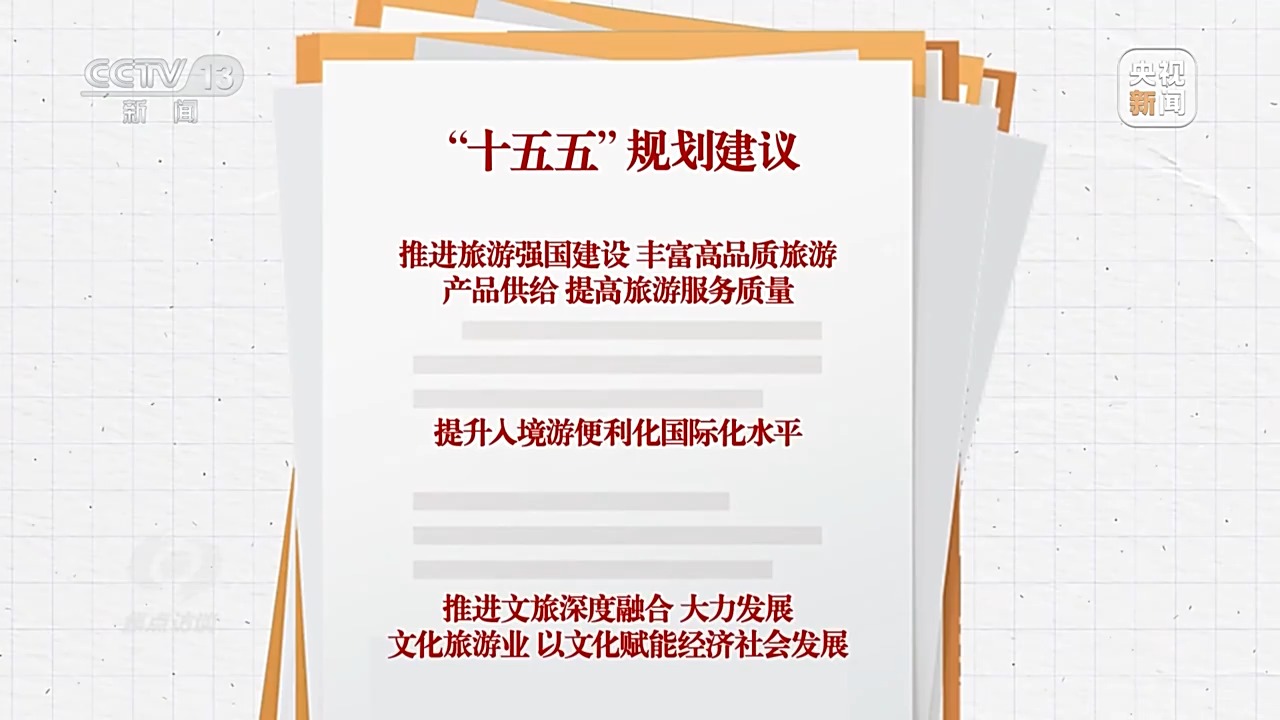
Core Viewpoint - The article discusses the development of China's tourism industry under the "14th Five-Year Plan," emphasizing the goal of building a "tourism powerhouse" to enhance the quality and competitiveness of tourism services and products [4][10][12]. Group 1: Tourism Development Goals - The "14th Five-Year Plan" proposes to advance the construction of a tourism powerhouse, aiming to enrich high-quality tourism product supply and improve service quality [4][10]. - The plan highlights the importance of integrating culture and tourism, promoting cultural tourism to empower economic and social development [4][32]. - The goal is to create a tourism industry that benefits both tourists and local residents, enhancing employment and local economies [12][13]. Group 2: Market Performance - In the first half of the year, domestic tourist trips reached 3.285 billion, a year-on-year increase of 20.6%, with spending amounting to 3.15 trillion yuan, up 15.2% [10]. - China has established itself as the world's largest domestic tourism market, reflecting the growing demand for diverse travel experiences [10]. Group 3: Quality Improvement Initiatives - The plan emphasizes the need for high-quality tourism products, encouraging regions to leverage their unique landscapes and cultural assets to create diverse offerings [19][20]. - Improving service quality is crucial, focusing on practical aspects such as cleanliness and safety in tourism facilities [24][25]. - The government has been enhancing tourism infrastructure, with over 3,500 service centers and approximately 150,000 upgraded toilets established nationwide [25]. Group 4: International Tourism - The plan aims to enhance the convenience and internationalization of inbound tourism, with policies to optimize visa processes and payment services for foreign visitors [27][28]. - In 2024, inbound tourist numbers are projected to reach 131.9 million, a 60.8% increase year-on-year, indicating a strong recovery in international tourism [27]. Group 5: Cultural Integration - The integration of culture and tourism is identified as a key strategy for enhancing the tourism experience, allowing for deeper connections between natural landscapes and cultural heritage [32][34]. - Various regions are exploring innovative approaches to cultural tourism, such as immersive experiences and heritage preservation, to attract visitors and enrich their travel experiences [34][36].
推进文化事业、文化产业和旅游业高质量发展
Xin Hua Wang· 2025-12-09 01:34
Core Viewpoint - The development of culture and tourism is crucial for China's modernization, with significant achievements during the 14th Five-Year Plan period, emphasizing the need for further high-quality development in these sectors [1][2]. Group 1: Achievements in Culture and Tourism - The cultural sector has seen vibrant growth, with enhanced artistic creation and public cultural services, including 3,248 public libraries and 7,046 registered museums by the end of 2024 [2]. - The cultural industry is expanding, with projected revenues of 19.14 trillion yuan in 2024, a 37.7% increase from 2020, while the tourism sector is recovering rapidly post-pandemic [3]. - International cooperation in culture and tourism has deepened, with 73 overseas Chinese cultural centers and tourism offices established, promoting initiatives like "Hello! China" [3]. Group 2: Future Considerations for Cultural Prosperity - The focus will be on creating high-quality artistic works that resonate with contemporary society, enhancing cultural originality, and fostering a robust cultural talent pool [4]. - Public cultural services will be improved to ensure broader access and higher quality, integrating technology and community needs into cultural offerings [5]. - Cultural heritage protection will be prioritized, emphasizing systematic preservation and innovative development to ensure the continuity of Chinese cultural legacy [6]. Group 3: Development of Cultural and Tourism Industries - The strategy aims to cultivate the cultural and tourism sectors as pillar industries, enhancing their roles in driving domestic demand and employment [7]. - High-quality tourism development will focus on diverse and personalized offerings, improving service quality and infrastructure to enhance visitor experiences [8]. - The integration of culture and tourism will be promoted, creating new business models and extending industry chains to generate additional value [8]. Group 4: Enhancing Global Cultural Exchange - Efforts will be made to establish a robust network for cultural dialogue and cooperation, facilitating international collaboration in cultural heritage and tourism [9]. - The promotion of Chinese culture abroad will be intensified through digital platforms and cultural events, making it more accessible to international audiences [10]. - The facilitation of inbound tourism will be improved, enhancing services and creating attractive travel products to welcome foreign visitors [11].
贯彻落实党的二十届四中全会精神权威访谈丨推进文化事业、文化产业和旅游业高质量发展——访文化和旅游部党组书记、部长孙业礼
Xin Hua She· 2025-12-08 11:46
Core Viewpoint - The development of cultural undertakings, cultural industries, and tourism is essential for achieving high-quality growth and fulfilling the cultural needs of the people, as emphasized by the Ministry of Culture and Tourism of China [1] Group 1: Achievements in Cultural and Tourism Development - During the 14th Five-Year Plan period, cultural and tourism sectors have shown robust growth, significantly contributing to economic and social development [2] - Cultural undertakings have become more vibrant, with 3,568 projects funded by the National Art Fund, and an increase in public cultural service facilities, including 3,248 public libraries and 7,046 registered museums by the end of 2024 [2][3] - The cultural industry achieved a revenue of 19.14 trillion yuan in 2024, marking a 37.7% increase from 2020, while the tourism sector has rapidly recovered post-pandemic [3] Group 2: Future Considerations for Cultural Development - The focus for the 15th Five-Year Plan will be on enhancing public cultural services, ensuring that cultural offerings are more accessible and relevant to the public [4][5] - There is a commitment to protect and inherit cultural heritage, with an emphasis on systematic protection and innovative development of cultural relics [5][6] Group 3: Integration of Culture and Tourism - The strategy aims to deepen the integration of cultural and tourism sectors, positioning them as pillar industries that enhance people's livelihoods and happiness [6] - Efforts will be made to improve the quality of tourism services and develop diverse, high-quality tourism products to meet the evolving demands of travelers [7] Group 4: Promoting Cultural Exchange and Global Influence - The initiative includes enhancing international cultural exchanges and cooperation, establishing a network for dialogue and collaboration in cultural and tourism policies [8] - There will be a focus on promoting Chinese culture globally through various cultural events and improving the convenience of inbound tourism services [9]
推进文化事业、文化产业和旅游业高质量发展——访文化和旅游部党组书记、部长孙业礼
Xin Hua Wang· 2025-12-08 10:52
Core Viewpoint - The prosperity of culture is a significant indicator of Chinese-style modernization, emphasizing the importance of cultural development in achieving socialist modernization [1] Group 1: Achievements in Cultural and Tourism Development - During the 14th Five-Year Plan period, cultural and tourism sectors have shown robust growth, contributing positively to high-quality economic and social development [2] - Cultural activities have become more vibrant, with 3,568 projects funded by the National Art Fund, and an increase in public cultural service facilities, including 3,248 public libraries and 7,046 registered museums by the end of 2024 [2] - The cultural industry is expanding, with projected revenue of 19.14 trillion yuan in 2024, a 37.7% increase from 2020, and the tourism sector is recovering rapidly post-pandemic [3] Group 2: Future Considerations for Cultural Development - The focus for the 15th Five-Year Plan includes creating high-quality cultural products that resonate with the times and enhancing public cultural services to meet the diverse needs of the population [4][5] - Emphasis on the protection and transmission of cultural heritage, ensuring systematic protection and innovative development of cultural assets [6] Group 3: Integration of Culture and Tourism - The strategy aims to deepen the integration of cultural and tourism sectors, positioning them as pillar industries that drive domestic demand and employment [7] - Plans include enhancing the quality of tourism services and products, promoting smart tourism, and integrating cultural content into tourism experiences [8] Group 4: International Cultural Exchange and Influence - The initiative focuses on enhancing the global influence of Chinese culture through international cooperation and cultural exchange programs [9] - Efforts will be made to improve the convenience of inbound tourism, including better visa and service systems to attract foreign visitors [11]
正佳董事长谢铁牛:以文旅深度融合推动中华文明现代化表达
Nan Fang Du Shi Bao· 2025-12-01 14:19
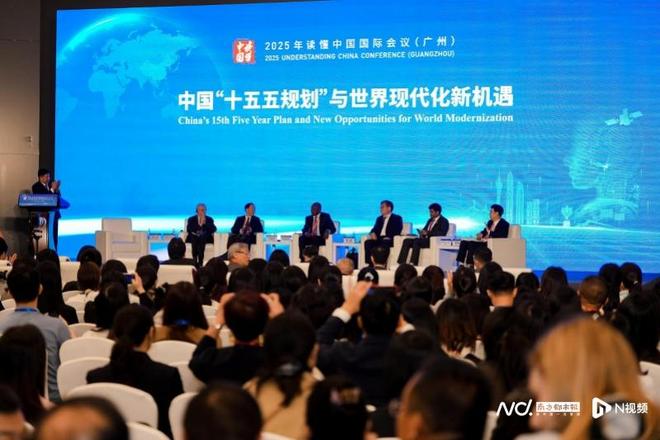
Group 1 - The "Read China" International Conference in Guangzhou highlights the role of private enterprises in China's modernization journey, emphasizing their new missions and practices in the context of the 14th Five-Year Plan [1] - The cultural tourism industry is identified as a key driver for expanding domestic demand and promoting consumption, requiring a shift from resource-based attractions to value resonance through cultural and innovative experiences [3][6] - Zhengjia Group's transformation of Zhengjia Plaza into a "city cultural living room" exemplifies the deep integration of culture, commerce, and tourism, providing a model for the industry's upgrade [3][6] Group 2 - Zhengjia Plaza has generated over 100 billion yuan in revenue and welcomed 980 million visitors over 20 years, showcasing its success as a platform for understanding Chinese modernization [6] - The Hatfeng Bay project, with a total investment of 4 billion yuan, aims to create a world-class cultural tourism destination that narrates the history and civilization of China through various thematic museums and outdoor experiences [7][8] - The project is expected to attract over 10 million domestic and international tourists annually, create 20,000 jobs, and generate nearly 10 billion yuan in annual revenue, serving as a catalyst for rural revitalization and economic growth [8][9]
关键词读懂“十五五”| 锚定旅游强国目标 推动入境游、“中国购”持续升温
Yang Guang Wang· 2025-11-13 06:36
Group 1 - The core viewpoint of the articles emphasizes the importance of building a strong tourism nation in China, focusing on high-quality tourism products and improved service quality as fundamental requirements [1][2] - The "14th Five-Year Plan" indicates that domestic tourism is expected to see 5.62 billion trips in 2024, representing a year-on-year growth of 14.8%, with total spending reaching 5.8 trillion yuan, up 17.1% [2] - The integration of culture and tourism is highlighted as a key strategy for enhancing the tourism industry, injecting cultural elements into tourism products to increase their appeal and economic value [3] Group 2 - Recent government policies aim to enhance the duty-free shop framework to stimulate consumption and attract foreign visitors, which is crucial for the development of inbound tourism [2] - The articles suggest that improving the convenience of inbound tourism through better payment options, visa policies, and multilingual services is essential for enhancing the travel experience [2] - The deep integration of culture and tourism is seen as a pathway to elevate the tourism industry, providing a market-driven approach to cultural resources and enhancing their economic and social value [3]
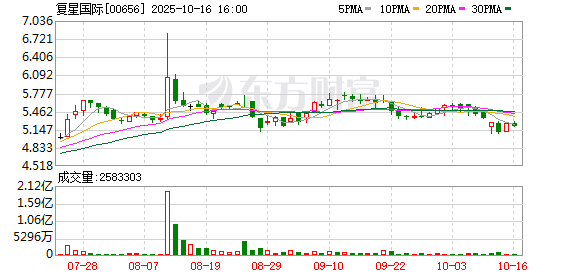
复星国际联席CEO徐晓亮:旅游业正从“观光游”迈向“度假游”
Zhong Guo Jing Ying Bao· 2025-10-16 08:27
Core Insights - The tourism industry is transitioning from "sightseeing" to "vacationing," emphasizing the need for high-quality tourism products to meet personalized and high-quality consumer demands [2] - The "14th Five-Year Plan" period is crucial for China to advance from a tourism power to a tourism strong nation, focusing on enhancing the quality of tourism offerings [2] - Fosun Tourism Group aims to create world-class vacation products and align with national tourism development goals [2] Company Overview - Fosun Tourism Group operates nearly 70 resorts and hotels across over 40 countries and regions, generating annual revenue exceeding 19 billion yuan and hosting over 8.6 million guests each year [3] - The company has developed four main product lines: Club Med Global, Club Med China, Super Vacation Zones, and Super Cultural Tourism Malls [3]