第三方支付

Search documents
观点集锦|投资新起点,价值新趋势——国泰海通非银&银行&地产3月专题论坛
国泰海通证券研究· 2026-03-09 14:03
Core Viewpoint - The forum highlighted investment opportunities in the context of a low interest rate environment, emphasizing the importance of asset allocation for both institutions and individuals [2]. Group 1: Investment Themes - The first investment theme focuses on the opportunities in financial technology and brokerage firms driven by the influx of retail funds into the market due to a low interest rate environment [4]. - The second theme anticipates a valuation recovery in the insurance sector starting in early 2026, particularly for companies with strong asset management and improving fundamentals [4]. - The third theme revolves around the digital RMB, supported by national development initiatives, which is expected to enhance banking system transformation, payment terminal upgrades, and increase service fees in the banking IT and third-party payment sectors [4]. Group 2: Banking Sector Outlook - The 2026 outlook for the banking sector suggests that government bond yields may enter a narrow fluctuation range, potentially reducing the volatility of banks' fair value gains and losses [5]. - The trend of "deposit migration" continues, primarily driven by the maturity of existing three-year and longer-term deposits, with a significant portion flowing into wealth management products [7]. - Stock selection for 2026 is expected to focus on companies with anticipated earnings growth, banks with convertible bond expectations, and a diversified approach to dividend stocks that balances yield certainty with asset quality stability [7]. Group 3: Real Estate Market Development - The government emphasizes stabilizing the real estate market as a top priority, with a focus on improving living standards and integrating housing policies with population growth strategies [10]. - Demand-side policies are expected to continue evolving, particularly in major cities, with adjustments to purchase restrictions and support for first-time homebuyers and families with multiple children [10]. - On the supply side, the current policy aims to reduce inventory, encouraging the revitalization of existing properties and accelerating the renovation of dilapidated housing to enhance living conditions [10].


涉“与身份不明客户交易” 新大陆旗下星驿支付被罚没847万
Zhong Guo Jing Ying Bao· 2026-02-26 14:18
Group 1 - The People's Bank of China, Fujian Branch, has imposed penalties on Fujian Xingyi Payment Technology Co., Ltd. for violating transaction management regulations, resulting in a warning, confiscation of illegal gains amounting to 3,421,878.39 yuan, and a fine of 5.05 million yuan [1] - The responsible individual, Lin, received a warning and a fine of 190,000 yuan due to his accountability for the violations [1] - Xingyi Payment, established in June 2010, is a subsidiary of the listed company Newland (000997.SZ) and holds a nationwide payment business license issued by the People's Bank of China, focusing on digital payment services and related digital solutions [1] Group 2 - Fujian Guotong Xingyi Network Technology Co., Ltd. was warned and fined 1.8 million yuan in March 2024 for violating transaction information management regulations, with the then Vice General Manager and General Manager also receiving warnings and fines [2] - In 2024, Guotong Xingyi reported revenue of 2.503 billion yuan, a year-on-year decrease of 23.71%, with a payment transaction volume exceeding 2 trillion yuan, and a 94% share of transactions conducted via QR codes [2] - In the first half of 2025, the company achieved revenue of 1.412 billion yuan, a year-on-year increase of 9.1%, and a net profit of 318 million yuan, reflecting a growth of 21.4% [2]

富友支付四战港股IPO:3.65亿巨额分红 曾与P2P、分期商城合作
Xin Lang Cai Jing· 2026-02-02 09:59
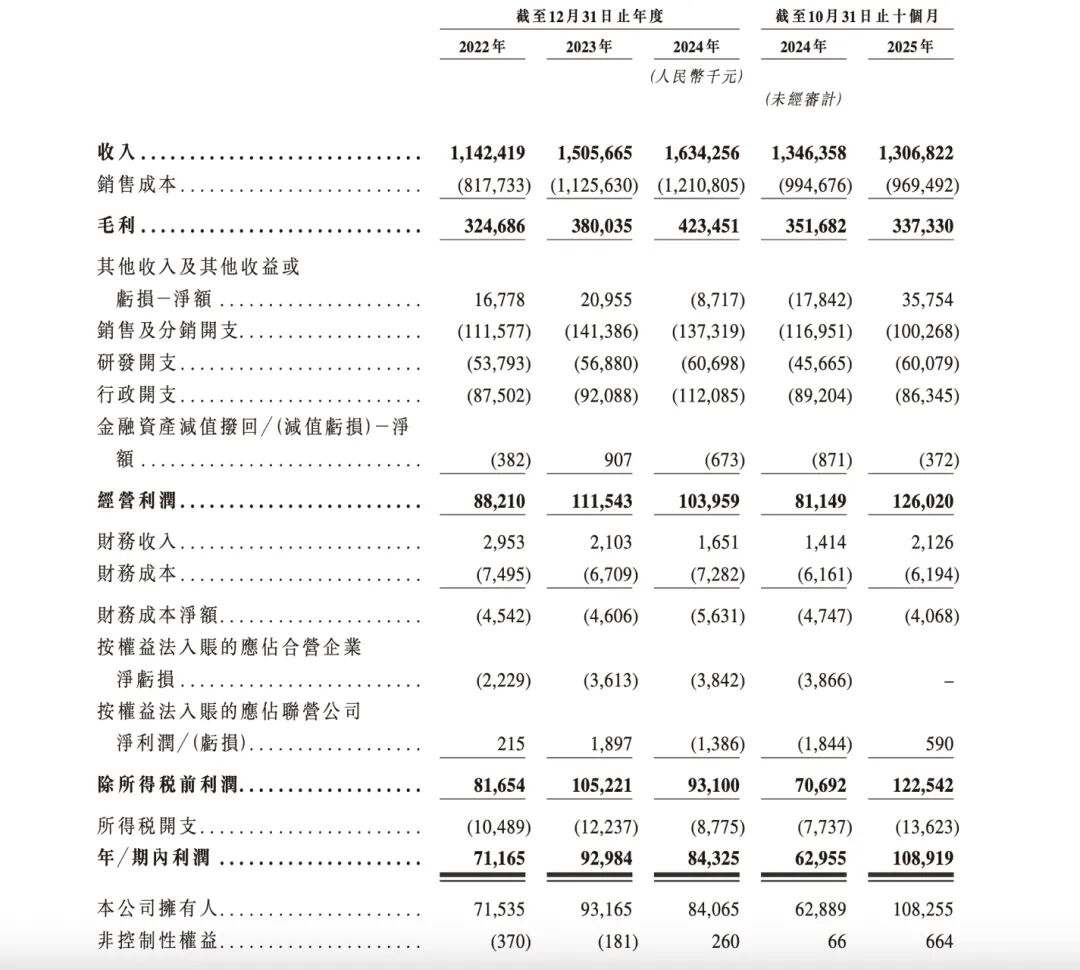
Core Viewpoint - Shanghai Fuyou Payment Service Co., Ltd. has submitted its fourth listing application to the Hong Kong Stock Exchange, facing challenges in its long journey to go public, including high reliance on acquiring business, slowing growth, and regulatory pressures [3][27]. Group 1: Business Overview - Fuyou Payment, established in 2011, holds various payment licenses, making it one of the few fully licensed third-party payment institutions in the industry [4][28]. - The company ranks eighth among comprehensive digital payment service providers in China with a market share of 0.8% based on 2024's Total Payment Volume (TPV) [4][28]. - Fuyou Payment's core business includes comprehensive digital payment services and digital business solutions, with merchant acquiring services contributing significantly to its revenue [8][30]. Group 2: Financial Performance - Revenue increased from 1.142 billion yuan in 2022 to 1.634 billion yuan in 2024, but the growth rate has significantly slowed, dropping from 31.87% in 2023 to 8.50% in 2024 [6][30]. - Net profit fluctuated, with a decrease from 93 million yuan in 2023 to 84 million yuan in 2024, despite a significant increase to 109 million yuan in the first ten months of 2025 [8][30]. - The gross profit margin has been declining, attributed to increased commission costs in the domestic payment service sector and reduced service fees in cross-border digital payment services [8][30]. Group 3: Dividend Policy and Financial Health - Fuyou Payment has distributed a total of 365 million yuan in dividends over five years, raising concerns about its financial strategy given its high debt ratio of 86.88% [12][36]. - As of October 2025, the company had cash and cash equivalents of only 317 million yuan against total assets of 5.338 billion yuan and total liabilities of 4.64 billion yuan [14][38]. Group 4: Regulatory and Compliance Issues - The company has faced four administrative penalties totaling approximately 6.9 million yuan since 2021 for non-compliance with regulations [16][40]. - Fuyou Payment has been involved in 47 P2P-related lawsuits, with most resolved favorably for the company, but it still faces ongoing regulatory scrutiny [17][41]. - Customer complaints have surged, with 1,739 complaints reported on a consumer complaint platform, highlighting issues with unauthorized deductions [18][41].

2025年中国第三方支付行业研究报告
艾瑞咨询· 2026-01-27 00:06
Core Insights - The comprehensive payment transaction scale in China is expected to reach 577 trillion yuan by 2025, with a year-on-year growth of 3.0%, driven by a 2.9% increase in personal payment transactions and a 3.2% increase in enterprise payment transactions, indicating that enterprise payment growth has surpassed personal payment growth [1][13]. Group 1: Industry Overview - The third-party payment industry in China has entered a stage of deepening stock competition, with regulatory normalization and compliance requirements becoming the foundation for industry development [1]. - The industry has evolved from a phase of rapid growth and diversification of services (2010-2019) to a more mature phase characterized by stricter regulations and stable development since 2019 [4][5]. Group 2: Market Dynamics - The personal payment market is nearing saturation, with a projected decline in the personal mobile payment market size from 205.2 trillion yuan in 2024 to 197.5 trillion yuan in 2025, a decrease of 3.7% [19]. - In contrast, the enterprise payment market is expected to show resilience, with a projected growth rate of 3.2% due to the ongoing digital transformation of enterprises and the expansion of cross-border e-commerce payment scenarios [13][33]. Group 3: Regulatory Environment - The implementation of the "Non-Bank Payment Institutions Supervision and Administration Regulations" in 2024 has led to a significant transformation in the industry, with a marked increase in compliance and accelerated consolidation [7]. Group 4: Technological Integration - The industry is actively embracing AI technology to enhance internal operational efficiency and external customer service, with AI being utilized for smart risk control, process automation, and personalized services [10][12]. - AI is expected to play a crucial role in reducing operational costs and improving service capabilities, thereby enhancing the overall competitiveness of the payment industry [10]. Group 5: Payment Trends - New payment methods are emerging, such as NFC payments, which simplify the payment process and enhance security, although challenges remain in terms of hardware requirements and user adoption [30][31]. - The promotion of digital currency and stablecoins is expected to create new growth opportunities in the cross-border payment sector, with stablecoins gaining regulatory clarity and becoming integral to global payment infrastructure [67][71]. Group 6: Enterprise Payment Strategies - Payment institutions are shifting from basic payment services to integrated solutions that provide cost reduction and efficiency enhancement tools, reflecting a consensus in the industry to explore deeper service values [35]. - The enterprise payment market is increasingly focusing on providing comprehensive solutions that integrate payment services with financial and operational management tools [41][49]. Group 7: Cross-Border Payment Growth - The cross-border payment market is projected to reach 3.3 trillion yuan by 2025, driven by the expansion of China's cross-border e-commerce market, which is expected to grow at an annual rate of 15.5% [55]. - Cross-border payment service providers are enhancing their offerings by integrating logistics and other essential services to create a comprehensive solution for businesses engaged in international trade [57][60].

富友支付第四次向港交所递表,十年IPO之路能否圆梦?
Guo Ji Jin Rong Bao· 2026-01-21 15:10
Core Viewpoint - Fuyou Payment has submitted its listing application to the Hong Kong Stock Exchange (HKEX) for the fourth time, indicating ongoing efforts to secure a public listing despite previous failures [1][2]. Group 1: Listing Attempts - Fuyou Payment has attempted to list on the HKEX multiple times since 2024, following unsuccessful attempts to go public in the A-share market since 2015 [2][4]. - The company has faced three previous failures of its IPO prospectus due to not completing hearings or listings within the required six-month period [4]. - The company emphasizes that multiple submissions to the HKEX are common and that it is following relevant laws and regulations in its listing process [2][5]. Group 2: Financial Performance - Fuyou Payment's revenue has shown a steady increase from RMB 1.14 billion in 2022 to RMB 1.63 billion in 2024, with a projected revenue of RMB 1.31 billion for the first ten months of 2025 [3][7]. - The gross profit for the same periods has also increased, from RMB 324.7 million in 2022 to RMB 423.5 million in 2024, with a gross profit of RMB 337.3 million reported for the first ten months of 2025 [3][7]. - The adjusted net profit has remained stable, with a net profit margin fluctuating between 7.1% and 9.5% in recent years [7][8]. Group 3: Business Challenges - Fuyou Payment's cross-border payment service has seen a decline in total payment volume (TPV), dropping from RMB 84.9 billion in 2022 to RMB 53.9 billion in the first ten months of 2025 [7]. - The company faces significant compliance pressures due to its involvement in prepaid card issuance and bank card acquiring services, which have led to multiple regulatory penalties over the years [10][11]. - The competitive landscape in the domestic payment service market has resulted in a decrease in gross margins, with the gross margin dropping from 28.4% in 2022 to 25.2% in 2023 [8][9]. Group 4: Future Outlook - The company aims to enhance its technology platform, expand cross-border business, and improve its ecosystem, which requires sufficient funding that could be obtained through the IPO [6][9]. - Analysts suggest that Fuyou Payment's ongoing listing efforts reflect a dual need for shareholder returns and business development, especially in a competitive industry environment [5][9]. - The company must address its compliance issues and improve its risk management capabilities to alleviate concerns from the HKEX regarding its operational stability and future growth potential [12].
富友支付第四次递表港交所 11年7次冲击IPO
Zhong Guo Jing Ying Bao· 2026-01-20 16:20
Core Viewpoint - Shanghai Fuyou Payment Service Co., Ltd. has submitted its fourth listing application to the Hong Kong Stock Exchange, aiming to capitalize on its position as a licensed third-party payment institution in China's digital payment market [1][2]. Company Overview - Fuyou Payment was established in 2011 and holds five types of licenses, including prepaid cards, internet payment, bank card acquiring, fund payment, and cross-border payment, making it one of the few fully licensed third-party payment institutions in the industry [1]. - The company ranks eighth among comprehensive digital payment service providers in China with a market share of approximately 0.8% and fourth among independent comprehensive digital payment service providers with a market share of about 4.5% [1]. Market Context - According to Frost & Sullivan, the total TPV (Total Payment Volume) of China's comprehensive digital payment service market is projected to reach RMB 268.6 trillion in 2024, with the top ten comprehensive digital payment institutions accounting for around 82.0% of the total market share [1]. - Fuyou Payment holds the first position in the aggregation acquiring market by transaction volume, with a market share of approximately 15.1% [1]. Financial Performance - The revenue figures for Fuyou Payment from 2022 to the first ten months of 2025 are as follows: RMB 1.142 billion, RMB 1.5 billion, RMB 1.634 billion, and RMB 1.307 billion, respectively [2]. - Profit figures for the same periods are RMB 71.17 million, RMB 92.98 million, RMB 84.33 million, and RMB 109 million, respectively [2]. - The merchant acquiring business has consistently been the primary revenue source, contributing over 80% of total revenue for several years [2]. - The gross margins for comprehensive digital payment services during this period were 25.6%, 22.1%, 22.2%, and 22.0%, while digital commercial solutions had gross margins of 84.4%, 76.5%, 75.2%, and 70.1% [2]. Listing Process - The submission of the listing application is just the initial step, with subsequent requirements including passing the Hong Kong Stock Exchange hearing and completing the overseas issuance listing filing with the regulatory authority [2].
十年坎坷上市路!富友支付第四次递表港交所,收单服务占比超八成
Bei Jing Shang Bao· 2026-01-20 15:10
Core Viewpoint - The payment institution, Fuyou Payment, has resumed its IPO process by submitting a new prospectus to the Hong Kong Stock Exchange, marking its fourth attempt to go public after multiple previous failures [1][4]. Company Overview - Fuyou Payment was established in July 2011 and obtained a payment license from the People's Bank of China in December of the same year. Its initial business scope included internet payment and card acquiring services [3]. - The company has faced challenges in its IPO journey, having attempted listings in both A-shares and H-shares since 2015, with the latest submission occurring on January 18, 2024 [4][3]. Financial Performance - For the first ten months of 2025, Fuyou Payment reported a slight decline in revenue to 13.07 billion RMB, while net profit increased by over 70% to 1.09 billion RMB [1][8]. - The company’s revenue for the years 2022, 2023, 2024, and the first ten months of 2025 were 11.42 billion RMB, 15 billion RMB, 16.34 billion RMB, and 13.07 billion RMB, respectively [6]. Business Structure - Fuyou Payment's core business includes comprehensive digital payment services and digital commercial solutions, with merchant acquiring services being the primary revenue source, accounting for over 80% of total revenue [9][6]. - The company has a relatively single business type, which may limit its ability to withstand external market risks and growth potential [9]. Market Environment - The payment industry has undergone significant changes, with tightening regulations and a shift from expansion to deepening existing market shares. The number of payment licenses has decreased to 164 [5]. - Analysts believe that the current regulatory environment and the maturity of the third-party payment industry may enhance Fuyou Payment's chances of a successful IPO compared to previous attempts [5]. IPO Strategy - The funds raised from the IPO are intended to enhance the company's product offerings, invest in technology platforms, expand payment networks, and develop overseas business [11]. - The company aims to leverage its IPO to strengthen compliance and risk management, upgrade technology, and improve brand competitiveness in a highly competitive market [11][12]. Future Outlook - Fuyou Payment is at a critical juncture for transformation, with potential directions including cross-border payments and digital solutions for merchants, which require substantial funding [5][12]. - The company is expected to continue refining its business structure and enhancing its compliance and risk management capabilities to meet the expectations of the Hong Kong Stock Exchange [12].

上海富友支付服务股份有限公司(H0328) - 申请版本(第一次呈交)
2026-01-17 16:00
香港聯合交易所有限公司及證券及期貨事務監察委員會對本申請版本的內容概不負責, 對其準確性或完整性亦不發表任何聲明,並明確表示概不就因本申請版本全部或任何部 分內容而產生或依賴該等內容而引致的任何損失承擔任何責任。 的申請版本 警告 本申請版本乃根據香港聯合交易所有限公司(「聯交所」)及證券及期貨事務監察委員會(「證監會」)的要 求而刊發,僅用作提供資訊予香港公眾人士。 本申請版本為草擬本,其內所載資訊並不完整,亦可能會作出重大變動。閣下閱覽本文件,即代表閣下 知悉、接納並向上海富友支付服務股份有限公司(「本公司」,連同其附屬公司統稱「本集團」)、本公司的 聯席保薦人、整體協調人、顧問及包銷團成員表示同意: 於本公司招股章程根據香港法例第32章公司(清盤及雜項條文)條例送呈香港公司註冊處處長登記前, 不會向香港公眾人士提出要約或邀請。倘在適當時候向香港公眾人士提出要約或邀請,有意投資者務 請僅依據於香港公司註冊處處長註冊的本公司招股章程作出投資決定。該文件的文本將於發售期內向 公眾人士派發。 (a) 本文件僅向香港公眾人士提供有關本公司的資料,概無任何其他目的。投資者不應根據本文件中 的資料作出任何投資決定; ...
2.4亿收购30%股权!儒意为何重金押注这家支付机构?
Sou Hu Cai Jing· 2025-12-18 07:49
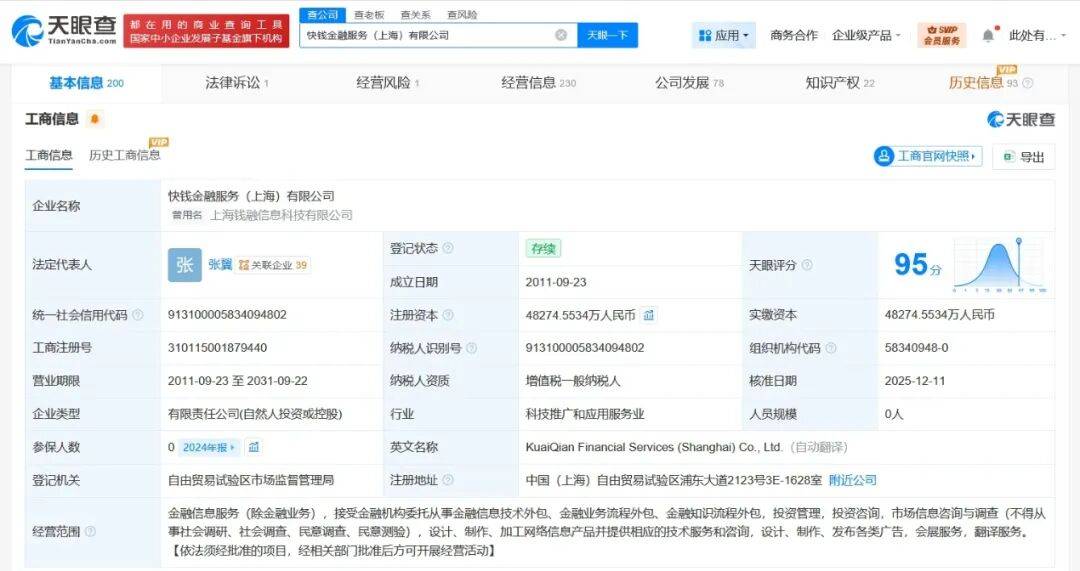
Core Viewpoint - Recently, Kuaiqian Financial Services (Shanghai) Co., Ltd. underwent a change in its shareholder structure, with Wanda's Shanghai Wanda Network Financial Services Co., Ltd. exiting its 30% stake, while Shanghai Ruyi Xingchen Enterprise Management Co., Ltd. increased its stake from 10% to 40% [1] Group 1: Company Overview - Kuaiqian Financial Services (Shanghai) Co., Ltd. was established in September 2011 and has a registered capital of approximately 480 million RMB [1] - The company is engaged in financial information services, including financial technology outsourcing, investment management, and market information consulting [1] Group 2: Shareholder Changes - Shanghai Ruyi Xingchen Enterprise Management Co., Ltd. plans to acquire a 30% stake in Kuaiqian Financial for 240 million RMB, making it the largest single shareholder post-transaction [1] - The current shareholders include Shanghai Ruyi Xingchen, Jin Yinfeng, and Du Minfeng [1]
小红书做支付:节流又开源,但难成“支付宝”
3 6 Ke· 2025-11-10 03:37
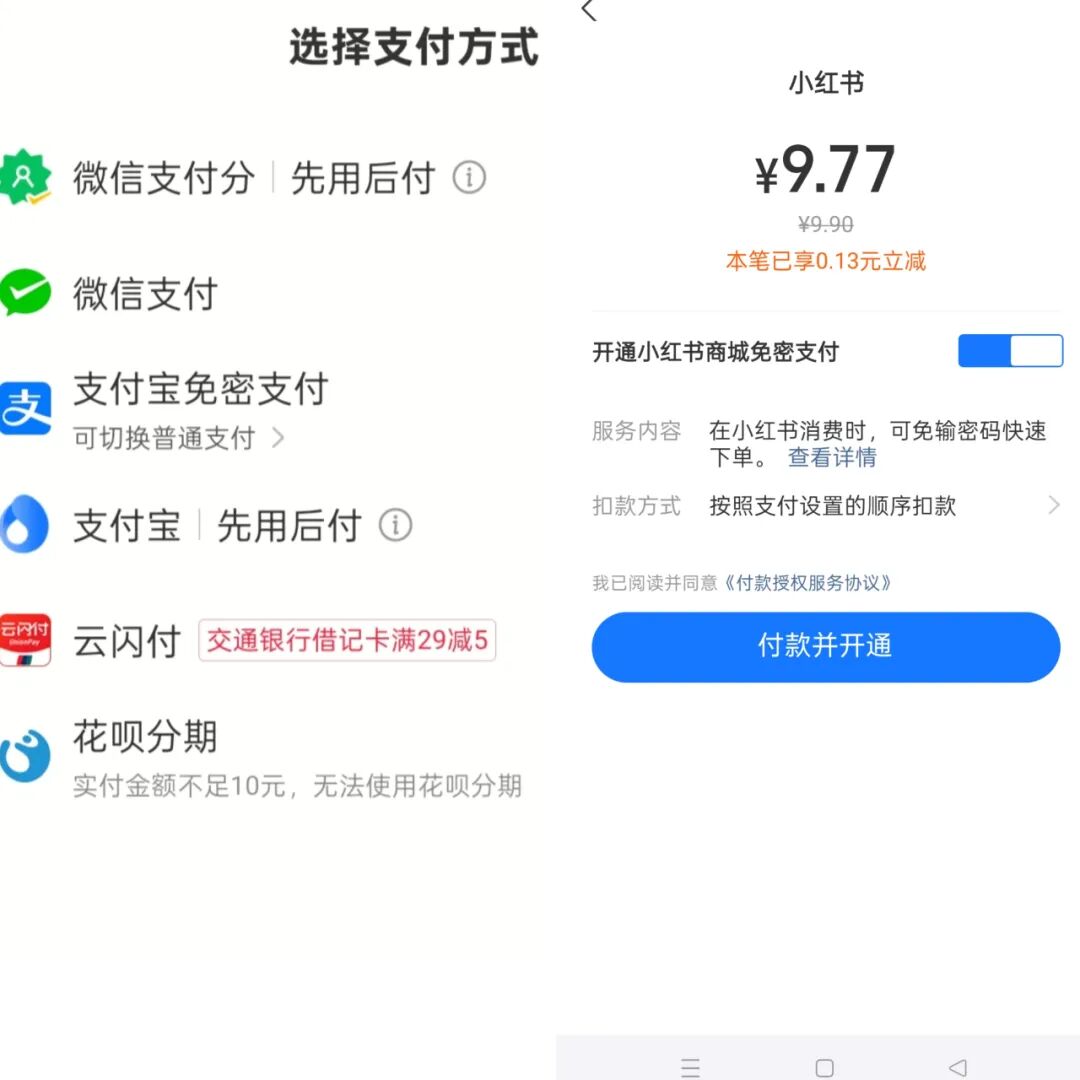
Core Viewpoint - The article discusses how Xiaohongshu is attempting to establish its own payment system by acquiring a payment license through the full acquisition of Dongfang Electronic Payment, aiming to create a payment platform similar to Alipay, but faces significant challenges due to established competitors like WeChat Pay and Alipay [3][4][5]. Group 1: Acquisition and Payment License - Xiaohongshu's subsidiary, Ningzhi Information Technology, has fully acquired Dongfang Electronic Payment, which holds a Class I payment license for operating stored value accounts [3][4]. - The acquisition cost is estimated to be around 1.48 billion yuan, which is relatively low compared to the potential returns from owning a payment license [9][6]. - The primary motivation behind this acquisition is to obtain the payment license rather than to integrate Dongfang's existing business operations, which have limited synergy with Xiaohongshu's core activities [8][7]. Group 2: Market Challenges - Xiaohongshu faces a significant challenge in changing user payment habits, as WeChat Pay and Alipay dominate the market with over 90% market share [4][5][20]. - The article highlights that while Xiaohongshu's entry into payments is strategic, replicating the success of Alipay is highly unlikely due to the entrenched ecosystem and user inertia [5][28]. - The payment landscape is saturated, making it difficult for new entrants like Xiaohongshu to capture market share, as the penetration rate of online payment users is already very high [20][18]. Group 3: Financial Implications - Owning a payment license could lead to significant cost savings on transaction fees, which currently range from 0.1% to 0.3% for e-commerce platforms [11][10]. - If Xiaohongshu can shift 30% of its GMV (estimated at 400 billion yuan for 2024) to its own payment system, it could save approximately 300 million yuan annually in transaction fees [11][10]. - The potential for additional revenue streams exists, such as offering credit services to users, which could further enhance the financial viability of Xiaohongshu's payment strategy [12][11]. Group 4: Strategic Focus - Xiaohongshu's strategic focus should remain on its e-commerce and local lifestyle services, rather than solely on building a payment platform [28][15]. - The company is already seeing significant growth in its e-commerce GMV, projected to exceed 400 billion yuan in 2024, indicating a strong market presence [15][16]. - The integration of payment services is viewed as a complementary move to enhance user experience and streamline transactions within its existing ecosystem [10][29].