
经济一体化

Search documents
德政客喊话欧洲:别再幻想了,得同时应对中美两大强国
Sou Hu Cai Jing· 2026-02-26 17:52
Core Viewpoint - Europe's geopolitical strategy has relied on three pillars: security through the US nuclear umbrella, economic benefits from the Chinese market, and cheap energy from Russia. However, the ongoing Russia-Ukraine conflict has shattered this illusion, leaving Europe in a precarious position facing pressures from both the US and China [1][2]. Group 1: Geopolitical Context - The US has shifted from multilateralism to an "America First" approach, raising doubts about its commitment to European security [1][4]. - Europe is caught between an unreliable ally in the West and a formidable adversary in the East, with the ongoing war in Ukraine draining resources and exposing its lack of defense autonomy [4][10]. - The EU's decision-making process is slow and inefficient, hindering its ability to respond to rapid geopolitical changes [4][12]. Group 2: Economic and Strategic Challenges - Europe's economic interdependence with China has become a potential leverage point, complicating its strategic autonomy [2][4]. - The EU must transform its economic scale into strategic capabilities, with Germany advocating for a banking and capital market union to facilitate free capital movement across member states [5][26]. - Military spending needs to shift from mere consumption to innovation, focusing on developing key technologies like digital tech and AI to regain competitive advantage [7][10]. Group 3: Internal Divisions and Identity Crisis - The EU faces significant internal divisions, with member states holding differing views on defense and economic policies, complicating unified action [11][12]. - There is an ongoing identity crisis within Europe regarding its role as an economic community versus a political entity, which hampers its ability to present a unified front [13][14]. - The lack of clarity in self-identification leads to weakened influence in key technology standards and global competitiveness [16][20]. Group 4: Urgency for Action - Europe must act swiftly to unify its capital markets, integrate defense industries, and rebuild critical supply chains to avoid being sidelined in global competition [24][28]. - The current geopolitical landscape demands a shift in mindset from conflict avoidance to competitive engagement, prioritizing collective European interests over individual national concerns [28]. - The economic potential of the EU, valued at €18 trillion, should be harnessed to create a robust strategic force rather than remaining passive [26][28].

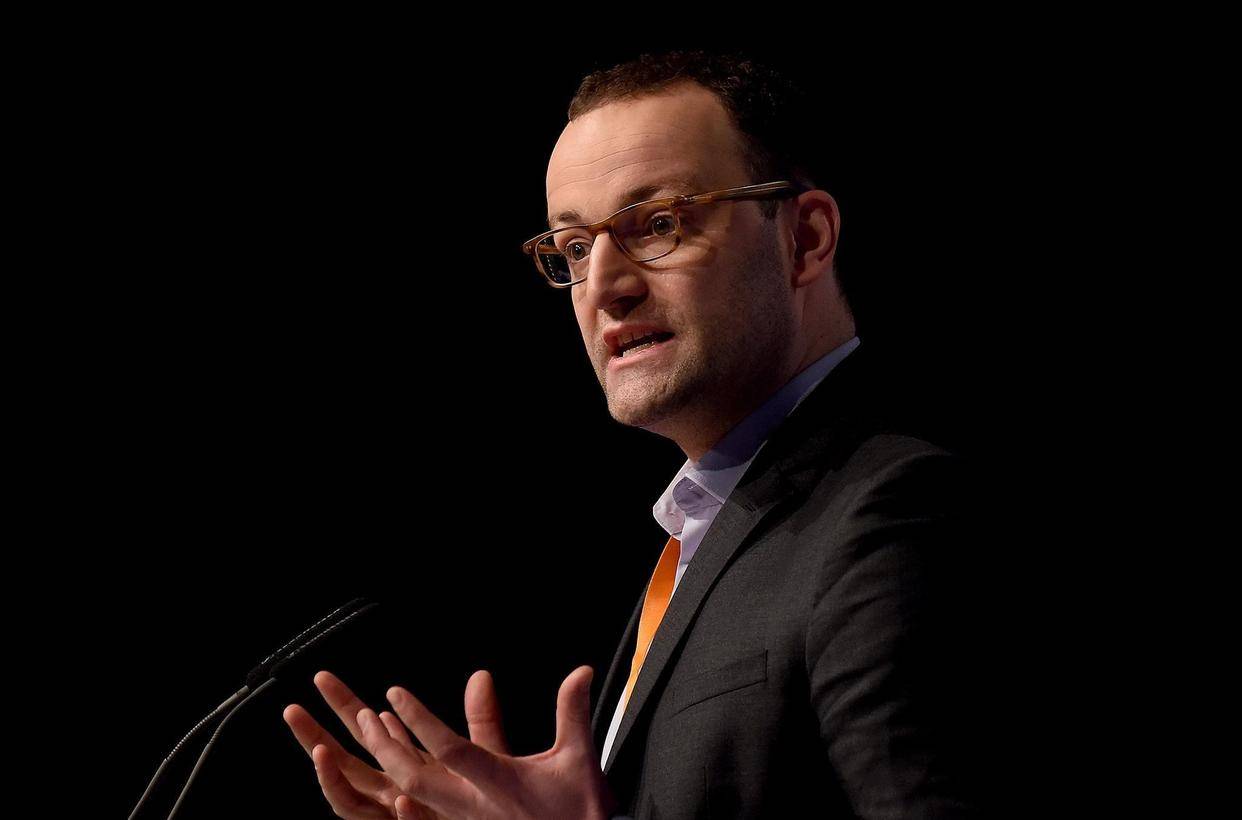
西方觉醒!加拿大总理含泪控诉:我们被美国骗了整整30年!
Sou Hu Cai Jing· 2026-02-17 16:49
马克·卡尼当上加拿大总理这件事,放在几年前谁都没想到。 他不是从政坛爬上来的,哈佛本科,牛津博士,早年在高盛干过,2003年进加拿大央行当副行长,2008年金融危机时直接接班行长,把加拿大经济稳住了。 2013年又跑去英国当央行行长,第一个外籍的,脱欧那阵子也让他给扛下来了。 2020年后他给特鲁多当新冠顾问,还管几个绿色基金。 2025年1月特鲁多扛不住压力辞职,卡尼3月9日拿下自由党领导权,14号就宣誓当总理。那时候美国关税压得加拿大喘不过气,他一上台就得面对这个烂摊 子。 卡尼就任后没多久就动手调整政策。他先是和中国谈电动车进口,设了初始配额,后来还计划往上加。这在北美汽车供应链里等于开了个口子,影响比数字 大多了。 美国那边当时正闹腾,说加拿大是第51州,关税威胁一天比一天狠。卡尼没硬碰硬,而是把精力放在多元化上。 2026年1月20日,他在达沃斯论坛上讲话,全球政商头面人物都在下面坐着。他直接把话说开了,以前大家信的那套规则为基础的国际秩序,其实早就破 了。 他讲得挺实在,说大国现在把经济一体化当武器,关税当杠杆,金融系统当胁迫工具,供应链当弱点来利用。 中等国家不能再抱着老观念,以为靠地理位置近美 ...
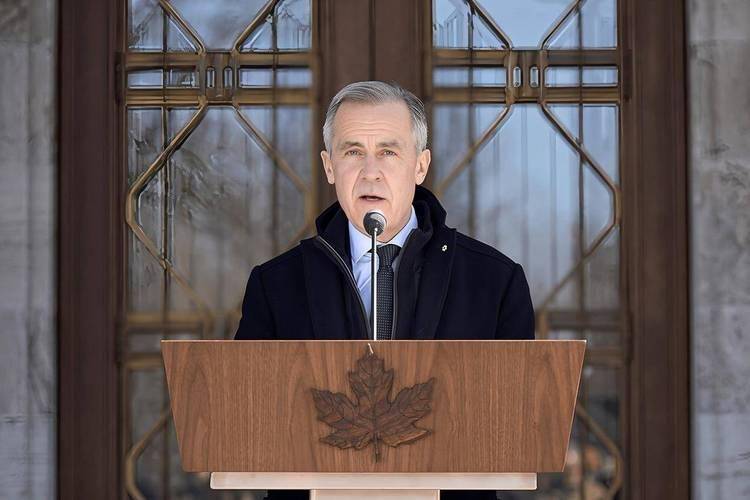
俄媒:访华浪潮凸显多国战略自主
Xin Lang Cai Jing· 2026-02-10 23:13
Core Insights - The article discusses the shift in geopolitical dynamics as medium-sized powers are increasingly turning to China for cooperation, reflecting a pragmatic adjustment to a fragmented international order [1][2][3] Group 1: Geopolitical Context - Medium-sized powers are awakening to a sense of strategic autonomy in response to the coercive foreign policy of the U.S. and multiple crises within Europe [1] - Countries like France, Ireland, Canada, Finland, and the UK are seeking to strengthen ties with China, viewing it as a more stable and reliable partner compared to the U.S. [1][2] - The visits to China by these leaders signify a collective response to the perceived decline of U.S. influence and the need for diversified partnerships [2][3] Group 2: Economic Cooperation - The outcomes of these visits are pragmatic, focusing on trade agreements, investment flows, and cooperation in sectors like healthcare and electric vehicles [2] - Canada aims to reduce its over-reliance on U.S. exports by expanding trade channels with China, while Finland emphasizes collaboration in technology and clean energy [2] - France is pursuing industrial access and climate cooperation, subtly hedging against the uncertainties of U.S. policies [2] Group 3: Strategic Implications - Medium-sized powers are not seeking protection from China but rather more options and leverage in their dealings with the U.S. [2] - The article highlights a rebalancing of relationships, where countries desire to engage with China’s vast market and industrial ecosystem while maintaining the ability to say "no" to Washington without severe repercussions [2][3] - The emerging multipolar world is characterized by a collective will among nations to resist subservience to a single power, with China positioned as a core pillar in this new order [3]
阿联酋是亚美尼亚最大的外国投资者
Shang Wu Bu Wang Zhan· 2026-02-10 16:59
Core Viewpoint - The signing of the services trade and investment agreement between the UAE and Armenia marks a significant step towards deepening economic integration and expanding bilateral cooperation [1] Group 1: Agreement Details - The agreement aims to improve market access for UAE service exports and promote reciprocal investment flows [1] - It provides a collaborative platform for industries such as finance, consulting, education, and healthcare [1] - The agreement is expected to boost foreign direct investment and public-private partnerships [1] Group 2: Economic Projections - The bilateral non-oil trade volume is projected to reach $4.5 billion by 2025 [1] - The UAE has surpassed Russia to become Armenia's largest source of foreign investment [1]
.阿联酋是亚美尼亚最大的外国投资者
Shang Wu Bu Wang Zhan· 2026-02-10 16:01
Core Points - The UAE has signed a service trade and investment agreement with Armenia, marking a significant step towards deepening economic integration and expanding bilateral cooperation [1] - The agreement aims to improve market access for UAE service exports and promote reciprocal investment flows, providing a platform for collaboration in sectors such as finance, consulting, education, and healthcare [1] - The bilateral non-oil trade volume is expected to reach $4.5 billion by 2025, with the UAE surpassing Russia to become Armenia's largest source of foreign investment [1]
特朗普在达沃斯论坛上抨击卡尼,称加拿大应该“感激”美国
Xin Lang Cai Jing· 2026-01-21 19:11
Core Viewpoint - President Trump criticized Canadian Prime Minister Mark Carney during a speech at the World Economic Forum in Davos, following Carney's remarks on the "breakdown" of international order, which received a standing ovation from the audience [1][5]. Group 1 - Trump stated that Canada should be grateful to the U.S., claiming that "Canada exists because of America," and advised Carney to remember this in future speeches [2][6]. - Carney emphasized the need for Canada to build new alliances with like-minded countries while navigating complex relations with the Trump administration, indicating that the current situation is one of "breakdown" rather than transition [2][6]. - Carney pointed out that major powers are using economic integration as a weapon and tariffs as a means of pressure, without directly naming Trump or the U.S. [2][6]. Group 2 - Trump previously threatened to annex Canada and shared an AI-generated map showing Canada and Greenland as part of the U.S. [3][7]. - Carney's office declined to comment on Trump's remarks [4][8].
加拿大总理达沃斯演讲,暗讽美国将经济一体化作为“武器”
Xin Lang Cai Jing· 2026-01-20 17:50
Core Viewpoint - The long-standing U.S.-led international order has ended, necessitating a strategic shift for middle powers like Canada to avoid becoming victims of stronger forces [2] Group 1: Strategic Shift - Canada must adopt a principled and pragmatic approach in response to the new global landscape [2] - There is a need for Canada to focus on domestic development while diversifying trade relationships to reduce dependency on countries like the U.S. [2] - The previous belief that geographical location and alliances would automatically ensure prosperity and security is no longer valid [2]
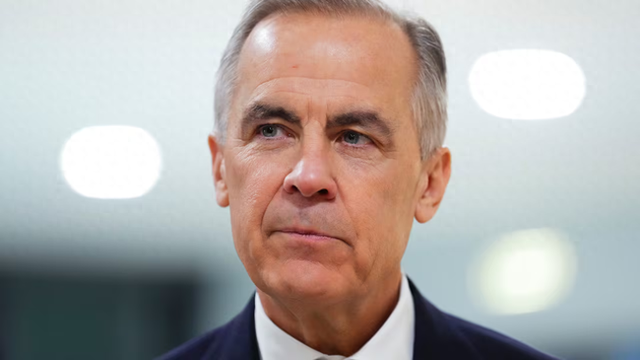
加拿大总理达沃斯演讲 暗讽美国将经济一体化作为“武器”
Yang Shi Xin Wen· 2026-01-20 16:32
Core Viewpoint - The long-standing US-led international order has ended, and medium powers like Canada must adapt their strategies to avoid becoming victims of stronger forces [1] Group 1: Strategic Shift - Canada must transition to a more principled and pragmatic approach in response to the new global landscape [1] - There is a need for Canada to focus on domestic development while diversifying trade relationships to reduce dependency on countries like the US [1] Group 2: Economic Integration Concerns - The concept of economic integration is being weaponized by major powers, leading to potential subordination of medium powers [1] - Canadians can no longer rely on geographical position and alliances to ensure prosperity and security, as this notion has become outdated [1]
智利希望将印度拓展为仅次于中国和美国的第三大贸易伙伴
Shang Wu Bu Wang Zhan· 2025-12-30 17:25
Core Viewpoint - Chile aims to expand India as its third-largest trading partner, following China and the United States, through enhanced economic cooperation and negotiations on the Comprehensive Economic Partnership Agreement (CEPA) [1] Group 1: Economic Cooperation - The recent fourth round of CEPA negotiations between Chile and India highlights both countries' commitment to deepening economic integration [1] - Future collaboration is expected to focus on sustainable development, food security, health, and energy sectors [1] Group 2: Challenges in Market Entry - Chilean fruits face three main challenges in entering the Indian market: 1. India does not automatically adopt international food safety standards, and its maximum residue limits are significantly low [1] 2. India does not accept Chilean phytosanitary technologies [1] 3. There is insufficient cold chain logistics for air and sea transport, necessitating the establishment of an efficient cold chain system within India [1]
沙特—卡塔尔启动高铁项目
Shang Wu Bu Wang Zhan· 2025-12-17 16:44
Core Insights - Saudi Arabia and Qatar have officially signed an agreement to launch a high-speed electrified railway project, with a maximum speed exceeding 300 km/h [1] - The railway network will span approximately 785 kilometers and is expected to carry over 10 million passengers annually [1] - The project is anticipated to be completed in phases over the next six years, reducing travel time between the capitals of Saudi Arabia and Qatar to about two hours [1] - During the construction and operational phases, the project will create over 30,000 direct and indirect jobs [1] - It is projected to contribute approximately 115 billion riyals to the GDP of both countries, making it one of the most significant strategic projects supporting regional economic integration [1]