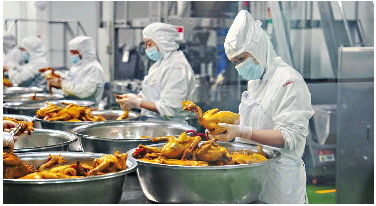
预制菜国家标准

Search documents
让人们吃得省心更安心
Xin Lang Cai Jing· 2026-02-11 20:51
Core Viewpoint - The Chinese government is seeking public opinion on national standards for pre-prepared dishes, focusing on food safety, consumer rights, and the definition and classification of pre-prepared dishes [1][9]. Group 1: Definition and Classification of Pre-prepared Dishes - Pre-prepared dishes are defined as products made from one or more edible agricultural products, processed industrially, and packaged for consumption after heating or cooking [1]. - The classification of pre-prepared dishes includes categories based on raw materials (meat, seafood, eggs, etc.), processing methods (grilling, frying, etc.), storage methods (frozen, refrigerated, etc.), packaging types (single or combination), and consumption methods (ready-to-cook or ready-to-heat) [2]. Group 2: Food Safety and Additives - The draft standard prohibits the use of preservatives in pre-prepared dishes, emphasizing the use of physical methods for food safety [3]. - The allowed food additives are strictly regulated to ensure they do not compromise nutritional value or mask quality defects [4]. Group 3: Nutritional Quality and Shelf Life - The draft encourages the retention of nutritional quality during production and cooking, advocating for balanced nutrition and minimal use of oil, salt, and sugar [5]. - The maximum shelf life for pre-prepared dishes is set at 12 months, balancing public expectations and production realities [4]. Group 4: Raw Material Safety - The safety of raw materials is crucial, requiring compliance with food safety standards and traceability to prevent the use of spoiled or contaminated ingredients [6]. Group 5: Packaging and Labeling Requirements - Packaging must be heat-resistant and safe for use, with encouragement for environmentally friendly materials [7]. - Labels must clearly indicate the preparation and consumption methods, ensuring consumers are informed about the product [8]. Group 6: Consumer Rights and Transparency - The draft encourages food service providers to voluntarily disclose the use of pre-prepared dishes, enhancing consumer knowledge and choice [9][10]. - Transparency in food sourcing and preparation methods is being adopted by some brands, positively impacting consumer trust [10].
经济日报谈预制菜:只要明明白白把选择权交给消费者,就能吃个安心
Jin Rong Jie· 2026-02-11 00:07
Core Viewpoint - The national standard for pre-prepared dishes has been released for public consultation, aiming to regulate pre-prepared dishes as industrial food primarily focusing on food safety [1] Group 1: Regulatory Framework - The pre-prepared dishes standard is essentially a food safety standard, intended to ensure safe production, transportation, and storage of these products [1] - The "Central Kitchen Operation Management Specification" outlines detailed requirements for processing, packaging, and storage, including mandatory labeling of kitchen name, food name, consumption methods, production date, storage conditions, and shelf life [1] Group 2: Consumer Perception - There is a noticeable gap between the national standard and consumer perception, largely due to some restaurants misrepresenting pre-prepared dishes as freshly cooked by chefs [1] - By clearly communicating the choice to consumers, the industry can enhance trust and ensure safety in the consumption of pre-prepared dishes [1] Group 3: Industry Context - The success of global chains like McDonald's and KFC demonstrates that a robust system for managing pre-prepared food can lead to consistent quality and safety [1] - Pre-prepared dishes have already become commonplace in households, indicating a growing acceptance and demand for these products [1]
预制菜将迎首个国家标准(政策解读)
Ren Min Ri Bao· 2026-02-09 06:26
Core Viewpoint - The rapid development of industrialized, standardized production of pre-prepared meals has raised public concerns about their safety and nutritional quality, prompting the National Health Commission to release a draft standard for pre-prepared meals focusing on food safety and nutrition [1] Group 1: Food Safety Standards - The draft standard specifies that pre-prepared meals do not include staple foods, fresh-cut vegetables, ready-to-eat foods, or dishes made in central kitchens, emphasizing that they must retain characteristics of cooked dishes [2] - The maximum shelf life for pre-prepared meals is set at 12 months, with a focus on maintaining quality and flavor, while encouraging companies to optimize production processes and storage methods [3] Group 2: Raw Material Safety - The standard mandates that raw materials such as meat, seafood, and eggs must meet specific food safety standards, prohibiting the use of spoiled ingredients and ensuring compliance with limits on pesticide residues, veterinary drug residues, and contaminants [4] - It emphasizes minimizing the use of food additives, ensuring they do not compromise nutritional value or mask spoilage, and encourages a thorough evaluation of their necessity [4] Group 3: Nutritional Quality and Consumer Information - The standard encourages the use of advanced technologies to preserve the nutritional components of raw materials and to control the amounts of cooking oil, salt, and sugar to meet consumer demands for healthier options [5] - Clear labeling requirements are established to inform consumers about the preparation methods, including indications for reheating or cooking, to prevent foodborne illnesses and ensure proper consumption [6]
预制菜国家标准来了,FBIF总结10大要点
3 6 Ke· 2026-02-09 00:04
Core Viewpoint - The introduction of national standards for pre-prepared dishes in China aims to clarify definitions, ensure food safety, and enhance consumer transparency in a rapidly growing market projected to reach 749 billion yuan by 2026 [3][34]. Group 1: National Standards Overview - The national standards include three main documents focusing on food safety, terminology, and consumer rights [3][4]. - The first document defines pre-prepared dishes as products made from one or more food ingredients that undergo industrial pre-processing and require heating or cooking before consumption [5][6]. - The standards categorize pre-prepared dishes into five major types based on raw materials, processing methods, storage, packaging, and consumption methods [10][12]. Group 2: Exclusions and Regulations - Four categories of food are explicitly excluded from the definition of pre-prepared dishes: staple foods, cleaned vegetables, ready-to-eat foods, and dishes made in central kitchens [13][15]. - The production of pre-prepared dishes is prohibited from using preservatives, ensuring that food safety is maintained through other methods like freezing and high-temperature sterilization [16][18]. - The maximum shelf life for pre-prepared dishes is set at 12 months, balancing consumer safety and production needs [19]. Group 3: Health and Nutritional Guidelines - The standards encourage reducing oil, salt, and sugar in pre-prepared dishes to meet consumer health demands [20]. - Nutritional quality and flavor preservation are emphasized, with guidelines suggesting the use of advanced technologies to maintain the nutritional value of ingredients [22][23]. Group 4: Safety and Transparency - The standards outline specific requirements for raw materials, production processes, packaging, and product specifications to ensure food safety [25][26]. - Clear labeling of consumption methods is mandated, helping consumers understand how to properly prepare and consume pre-prepared dishes [28]. - The promotion of transparency in the restaurant sector is encouraged, allowing consumers to know whether dishes are pre-prepared, with guidelines for restaurants to disclose this information [30][32].

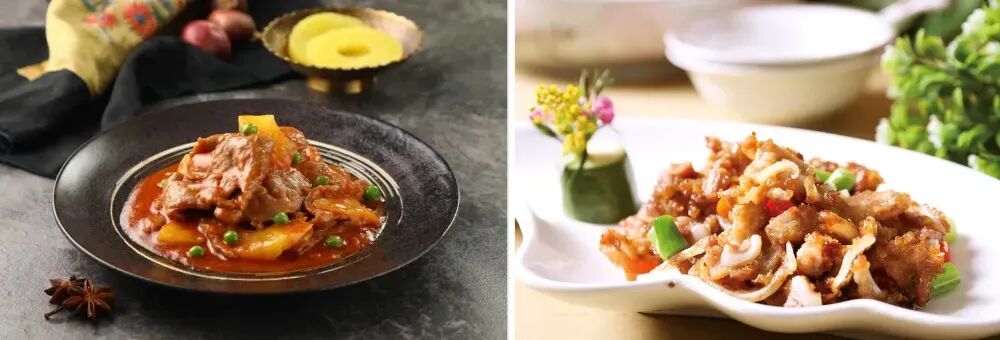
全国首个预制菜国标公开征求意见 排除四类食品兜牢食品安全底线
Chang Jiang Shang Bao· 2026-02-08 23:54
Core Viewpoint - The recent "Xibei incident" has reignited public concern over the safety and quality of pre-prepared dishes, leading to a demand for clearer regulations and standards in the industry [1][2] Group 1: Regulatory Developments - The National Standard for Food Safety regarding pre-prepared dishes has been officially released for public consultation, marking the first time regulations have been established for this sector [1][3] - The new standards define pre-prepared dishes based on four characteristics: dish attributes, industrial pre-processing, need for heating, and pre-packaging [1][3] - The standards categorize pre-prepared dishes into four management categories, including staple foods, cleaned vegetables, ready-to-eat foods, and dishes from central kitchens [1][3] Group 2: Industry Impact - The controversy surrounding pre-prepared dishes has led to significant financial repercussions for companies involved, with Xibei announcing the closure of 102 stores, representing 30% of its locations, and an expected loss of 600 million yuan over a seven-month period [2][3] - The new regulations aim to clarify definitions and standards, which will help companies navigate the market and promote high-quality development within the industry [3][4] Group 3: Safety and Transparency - The core highlights of the new standards focus on safety and transparency, addressing public concerns about the safety of pre-prepared dishes and the need for clear information [4][5] - The regulations prohibit the use of preservatives in the production of pre-prepared dishes and emphasize the importance of using safe and quality raw materials [5] - The standards encourage food service providers to transparently disclose the preparation methods of their dishes, enhancing consumer rights and choices [5]
预制菜国家标准征求意见了! 中央厨房制作的菜肴等不算预制菜
Xin Lang Cai Jing· 2026-02-08 11:21
Core Viewpoint - The release of the draft "National Food Safety Standard for Prepared Dishes" provides significant policy benefits for the standardization, professionalization, branding, capitalization, and future scaling of China's prepared dish industry [3]. Group 1: Regulatory Framework - The draft clarifies the definition and management scope of prepared dishes, integrating opinions from six departments to form a unified regulatory framework [5]. - Prepared dishes are defined as pre-packaged dishes made from one or more edible agricultural products, requiring heating or cooking before consumption, and must not contain preservatives [6][8]. Group 2: Safety and Quality Management - The draft emphasizes enhanced safety management, focusing on controlling food contaminants and managing food additives, which is crucial for regulating production practices in the restaurant industry [5]. - It sets a maximum shelf life of 12 months for prepared dishes, which is more scientifically reasonable compared to some products that previously had a shelf life of 18 months [4][5]. Group 3: Consumer Rights and Health Guidelines - The draft mandates clear labeling of prepared dish categories (lightly prepared, semi-prepared, fully prepared) to ensure consumer awareness and choice [5]. - It advocates for health principles by requiring reductions in oil, salt, and sugar during production, aligning with the "Healthy China 2030" strategy [5]. Group 4: Exclusions from Prepared Dishes - The draft specifies that prepared dishes do not include staple foods, fresh-cut vegetables, ready-to-eat foods, or dishes made in central kitchens, which are subject to different safety standards [6][7][8]. - This exclusion is intended to maintain the competitive edge of chain restaurants and reflect the broader industry development considerations [8].
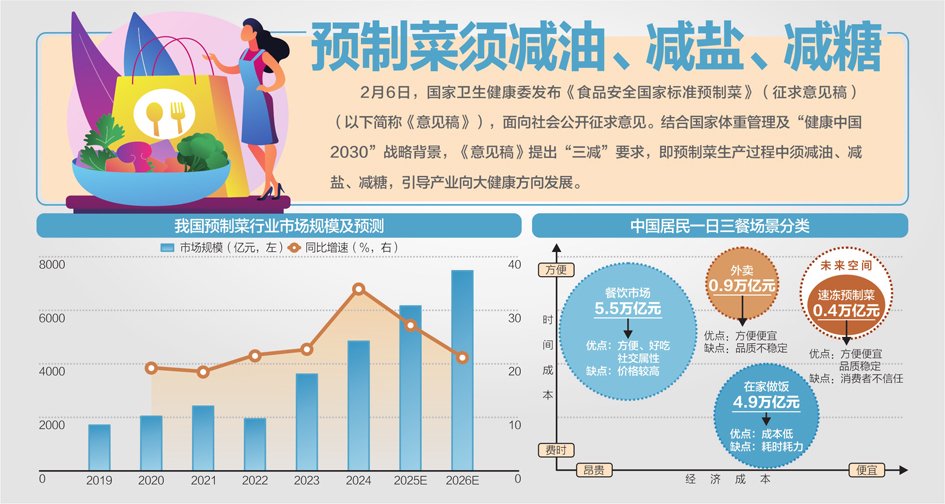
预制菜国家标准公开征求意见 明确不得添加防腐剂 保质期不应超过一年
Yang Guang Wang· 2026-02-07 01:32
Core Viewpoint - The national standard for pre-prepared dishes has been publicly solicited for opinions, clarifying the definition and management of pre-prepared dishes in terms of raw materials, production, operation, and storage [1] Group 1: Definition and Scope - The national standard defines pre-prepared dishes as "industrial pre-processed" and "requiring heating or cooking before consumption," excluding staple foods, washed vegetables, ready-to-eat foods, and dishes made in central kitchens from this category [1] Group 2: Regulatory Measures - The standard explicitly prohibits the use of preservatives in pre-prepared dishes and strictly controls the types of food additives that can be added, narrowing them down to those that are "appropriately used according to production needs" as per national standards [1] - The maximum shelf life for pre-prepared dishes is set at 12 months [1]
让预制菜吃得明白吃得放心
Xin Lang Cai Jing· 2026-02-06 21:59
Core Viewpoint - The recent establishment of national standards for pre-prepared dishes in China aims to enhance food safety, respond to consumer expectations, and promote high-quality industry development [4][9]. Group 1: Regulatory Framework - The National Health Commission and the State Administration for Market Regulation have initiated a consultation on national standards for pre-prepared dishes, defining terms, raw material requirements, food additive usage, and nutritional quality [4]. - The new standards will clarify the definition of pre-prepared dishes, distinguishing them from other food categories such as staple foods and ready-to-eat products [5]. Group 2: Safety and Quality Control - The standards emphasize the importance of raw material safety, requiring compliance with food safety regulations and encouraging traceability in supply chains [6]. - The use of preservatives in pre-prepared dishes is explicitly prohibited, and food additives should be minimized, only used when necessary [6][7]. Group 3: Nutritional Standards and Shelf Life - The standards advocate for the use of advanced technologies to preserve the nutritional content of raw materials, with a maximum shelf life of 12 months for pre-prepared dishes [8]. - Companies are encouraged to consider various factors such as nutritional quality and production processes when determining product shelf life, balancing public health needs with operational realities [8].
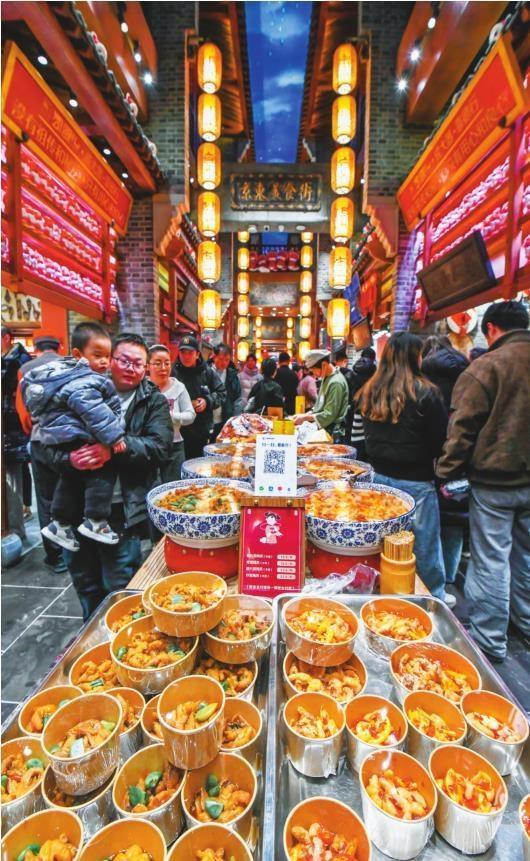
预制菜将迎首个国标,吃得省心更安心
Xin Lang Cai Jing· 2026-02-06 17:54
Core Viewpoint - The recent establishment of national standards for pre-prepared dishes in China aims to enhance food safety, respond to consumer expectations, and promote high-quality industry development [1][2]. Group 1: Definition and Scope - The draft opinion clarifies the definition of pre-prepared dishes, which are made from one or more edible agricultural products and require further cooking before consumption [2]. - The standards do not apply to staple foods, cleaned vegetables, or ready-to-eat foods, ensuring precise regulation and consumer understanding [2]. Group 2: Safety and Additives - Raw material safety is emphasized, requiring compliance with food standards and regulations, and discouraging the use of substandard ingredients [3]. - The draft explicitly prohibits the addition of preservatives during production, addressing public concerns [3]. - Food additives should be minimized, with a focus on not masking quality defects or using them for deceptive purposes [3][4]. Group 3: Nutritional Standards and Shelf Life - Advanced technologies should be employed to retain nutritional value, with a maximum shelf life of 12 months for pre-prepared dishes [5][6]. - The 12-month limit balances public expectations and operational realities for businesses, encouraging shorter shelf lives to ensure quality [6]. - The standards also promote transparency in food preparation methods by encouraging service providers to disclose cooking processes [6].
吃得省心更安心,预制菜将迎首个国标
Xin Lang Cai Jing· 2026-02-06 16:47
Core Viewpoint - The recent regulatory framework for pre-prepared meals in China aims to enhance food safety, respond to consumer expectations, and promote high-quality industry development through clear definitions and standards [2][3]. Group 1: Definition and Scope - The draft regulation provides a clear definition of pre-prepared meals, specifying that they are made from one or more food products and may include seasonings, but must not contain preservatives [3]. - It distinguishes pre-prepared meals from other food categories such as staple foods, washed vegetables, and ready-to-eat foods, ensuring precise regulation [3]. Group 2: Safety and Additives - The regulation emphasizes the importance of raw material safety, requiring compliance with food standards and regulations, and discouraging the use of substandard ingredients [4]. - It explicitly prohibits the addition of preservatives in the production process, addressing public concerns about food safety [4]. - Food additives should be minimized, with a focus on reducing both the variety and quantity used, ensuring they do not mask quality defects [4][5]. Group 3: Nutritional Standards and Shelf Life - The regulation mandates that the nutritional content of pre-prepared meals must be preserved, encouraging the use of advanced technologies to maintain ingredient quality [6][7]. - The maximum shelf life for pre-prepared meals is set at 12 months, balancing public health needs with practical production considerations [7]. - Companies are encouraged to consider various factors such as nutritional quality, production methods, and storage conditions when determining product shelf life [7]. Group 4: Consumer Transparency - The regulation encourages food service providers to transparently communicate the preparation methods of their dishes, enhancing consumer understanding and trust [8].