价值创造

Search documents
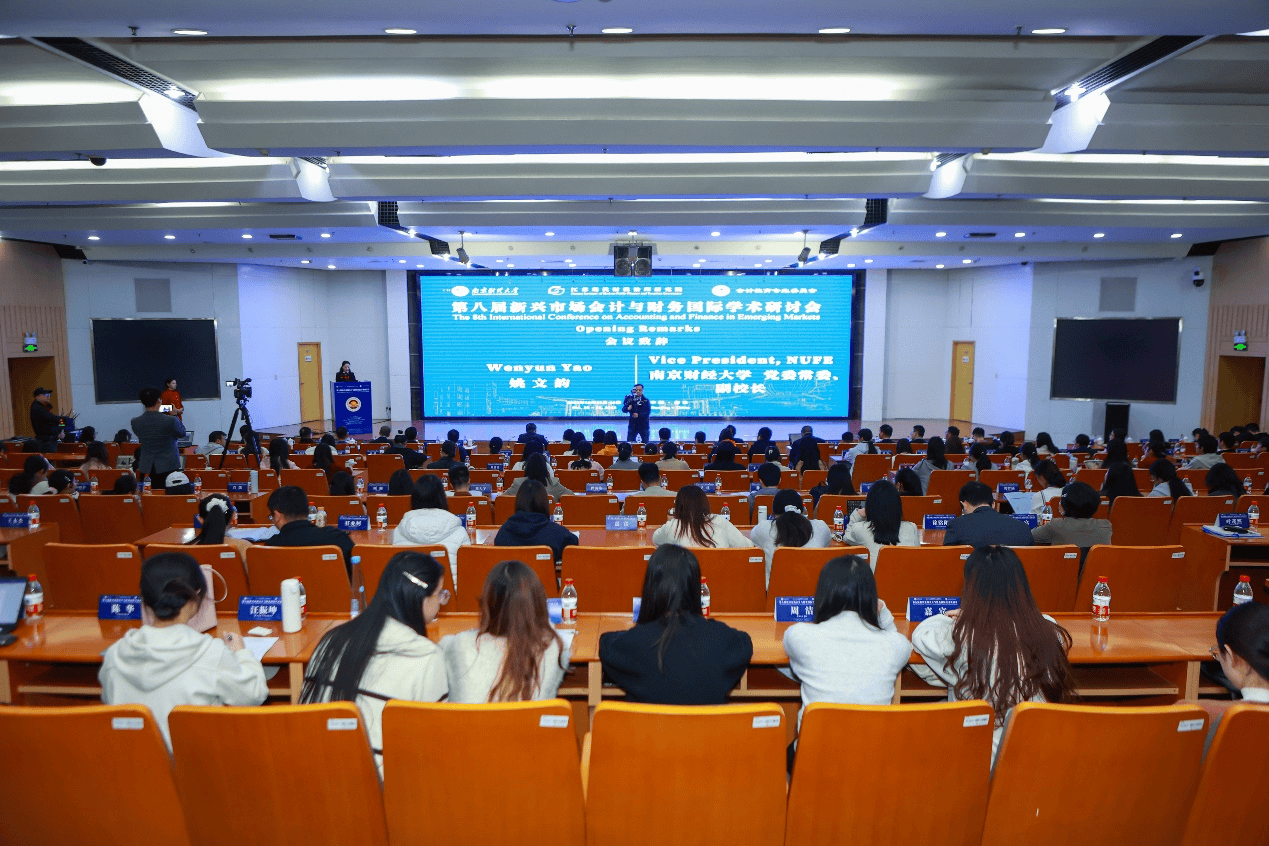
第八届新兴市场会计与财务国际学术研讨会举行
Sou Hu Cai Jing· 2025-10-27 07:43
Core Viewpoint - The eighth International Academic Seminar on Accounting and Finance in Emerging Markets was held at Nanjing University of Finance and Economics, focusing on "Financial Innovation and Transformation in the Era of Artificial Intelligence" [1] Group 1: Conference Overview - The seminar was organized by the Accounting School of Nanjing University of Finance and Economics, Jiangsu Modern Financial and Tax Governance Research Institute, and the Jiangsu Provincial Accounting Society's Accounting Education Professional Committee [1] - The event gathered domestic and international experts to discuss the integration of new technologies like big data and artificial intelligence with financial governance [1] Group 2: Key Insights from Speakers - The Vice President of Nanjing University of Finance and Economics, Yao Wenyun, highlighted the university's achievements in talent cultivation, discipline construction, scientific research, and faculty development, emphasizing the need for a new ecosystem of deep integration between finance and technology [3] - Yao stated that artificial intelligence is driving profound changes in data and algorithm usage, pushing accounting and finance beyond traditional boundaries towards strategic leadership and value creation [3] - Wu Lin, Secretary-General of the Jiangsu Provincial Accounting Society, noted that artificial intelligence is redefining the boundaries and value of accounting work, calling for innovative thinking to explore new paths for industry transformation [3] Group 3: Seminar Structure and Topics - The seminar featured 16 parallel forums covering topics such as AI-enabled financial development, sustainable development, new productivity, fintech, green finance, environmental finance, ESG, value creation, and corporate governance [4] - A total of 63 presenters from various universities shared their latest research findings, with experts providing objective and in-depth feedback on the presentations [4]

Yet Another GPIX Vs. SPYI Comparison: But Let's Be Fair To SPYI
Seeking Alpha· 2025-10-25 17:11
Core Insights - The article discusses the comparison between GPIX and SPYI, highlighting that GPIX is favored due to its more active and agile methodology, which is believed to lead to better long-term performance [1] Group 1: Analyst Background - The analyst has over 20 years of experience in quantitative research, financial modeling, and risk management, focusing on equity valuation, market trends, and portfolio optimization [1] - Previous experience includes serving as Vice President at Barclays, leading teams in model validation, stress testing, and regulatory finance [1] - The analyst collaborates with a research partner to deliver high-quality, data-driven insights, combining strengths in risk management and long-term value creation [1] Group 2: Research Focus - The research emphasizes macroeconomic trends, corporate earnings, and financial statement analysis [1] - The goal is to provide actionable ideas for investors aiming to outperform the market [1]
燕京啤酒:公司高度重视价值创造和市值管理
Zheng Quan Ri Bao Wang· 2025-10-22 14:11
Core Viewpoint - Yanjing Beer reported a positive financial performance for the first three quarters of 2025, indicating growth in revenue and profit metrics, while emphasizing its commitment to value creation and market management [1] Financial Performance - The company achieved operating revenue of 1,343,282.98 thousand yuan, representing a year-on-year increase of 4.57% [1] - The total profit reached 240,360.16 thousand yuan, showing a year-on-year growth of 36.18% [1] - The net profit attributable to shareholders was 177,045.53 thousand yuan, with a year-on-year increase of 37.45% [1] Strategic Focus - The company is focused on value creation and market capitalization management, exploring effective ways to enhance investment value [1] - The stock price is influenced by various factors including macroeconomic conditions, market environment, and investor risk appetite [1] - The company plans to continue systemic reforms to build a multi-dimensional value creation system and enhance management efficiency [1]

多家中小银行启动“年末收官”谋划明年开局
Zheng Quan Ri Bao· 2025-10-20 16:41
Core Insights - The fourth quarter is a critical period for banks to achieve year-end business goals, with many small and medium-sized banks adopting a dual strategy of closing out the year while preparing for a strong start in 2026 [1][2] Group 1: Strategy and Operations - Many small and medium-sized banks are shifting their focus from merely meeting year-end targets to simultaneously planning for the next year's performance [2][3] - Banks like Hengnan Rural Commercial Bank and Huai'an Rural Commercial Bank have set clear operational goals for the fourth quarter, emphasizing compliance, collaboration between core and diversified businesses, and risk management [2][3] - The operational focus for the fourth quarter includes increasing loan and deposit growth, reducing non-performing loans, stabilizing provisions, and enhancing revenue [3][4] Group 2: Market Dynamics - The early preparation for the "opening red" campaign by several banks indicates a significant shift in competitive strategy, moving away from traditional high-interest deposit attraction to optimizing deposit structures and low-cost funding [3][4] - The competitive landscape is evolving, with banks needing to adapt to external pressures from larger national banks and internal challenges such as narrowing net interest margins and a scarcity of quality assets [4][5] Group 3: Future Outlook - The overall growth trajectory for small and medium-sized banks in 2026 is expected to stabilize, with a greater emphasis on value creation rather than mere scale expansion [5] - Opportunities for banks are emerging from ongoing policy support, technological advancements, and the rising demand for customized financial services driven by rural revitalization [5]
海科新源:公司目前处于满产满销状态
Mei Ri Jing Ji Xin Wen· 2025-10-20 03:08
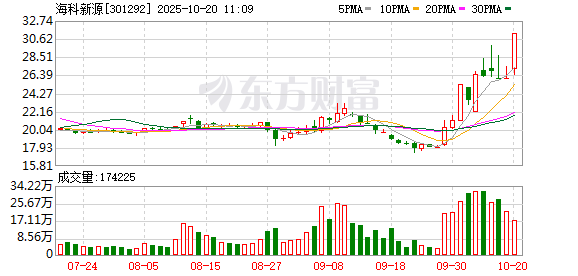
Core Viewpoint - The company is currently operating at full production capacity and sales, indicating strong market demand and supply stability [2]. Group 1: Production and Capacity - The company has confirmed that it is in a state of full production and sales [2]. - The current production capacity and utilization rate were inquired by investors, highlighting the company's operational efficiency [2]. Group 2: Market Dynamics and Pricing Strategy - The company emphasizes a market-oriented approach, closely monitoring market dynamics and industry trends [2]. - Pricing is determined based on a combination of cost structure, product quality, customer demand, and long-term partnerships, ensuring a stable and sustainable pricing system [2]. - The company acknowledges that product prices are influenced by multiple factors, including market demand strength, industry competition, and macroeconomic fluctuations [2]. Group 3: Supply Chain and Future Outlook - The company employs flexible capacity adjustments and meticulous cost management to effectively respond to price fluctuations and maintain supply chain stability [2]. - Future strategies will focus on tracking material price trends, supply-demand changes, and actual customer needs, with a commitment to value creation and optimizing operational strategies for long-term returns to customers and shareholders [2].
新股消息 | 首创证券(601136.SH)递表港交所 2024年平均总资产收益率在A股证券公...
Xin Lang Cai Jing· 2025-10-16 13:41
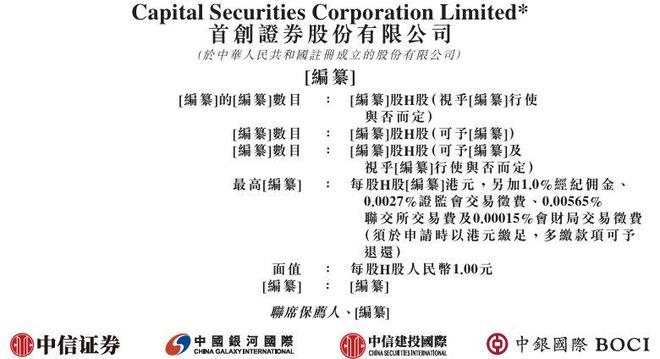
Core Viewpoint - 首创证券 has submitted its listing application to the Hong Kong Stock Exchange, with several major securities firms acting as joint sponsors [1]. Company Overview - 首创证券 is recognized for its strong value creation and asset management capabilities, focusing on differentiated financial services. The company operates a one-stop financial service platform based in Beijing, serving a diverse and steadily growing client base [3]. - According to Frost & Sullivan, from 2022 to 2024, 首创证券 ranks fifth and tenth among 42 A-share listed securities companies in China for revenue and net profit compound annual growth rates, respectively [3]. - By 2024, the company is projected to rank first in average total asset return and seventh in adjusted weighted average net asset return among the aforementioned A-share listed companies [3]. Business Segments - The company operates in four main business areas: - **Asset Management**: Includes asset management services, private investment funds, and public fund operations through joint ventures [4]. - **Investment**: Comprises fixed income trading, equity securities investment, New Third Board market making, and alternative investments [4]. - **Investment Banking**: Encompasses bond underwriting, stock sponsorship and underwriting, and financial advisory services [4]. - **Wealth Management**: Involves securities brokerage, investment consulting, financial product sales, credit services, research services, and futures business [4]. Financial Performance - For the six months ending June 30, 2022, 2023, 2024, and 2025, the company reported total revenues of approximately 2.519 billion, 2.970 billion, 3.588 billion, and 1.845 billion RMB, respectively. Corresponding profits for the same periods were about 555 million, 701 million, 985 million, and 490 million RMB [5]. - The breakdown of revenue sources for 2022, 2023, 2024, and the first half of 2025 includes: - Commission and fee income: 1.461 billion, 1.234 billion, 1.839 billion, and 689 million RMB [6]. - Interest income: 610 million, 577 million, 610 million, and 283 million RMB [6]. - Investment income: 447 million, 1.160 billion, 1.139 billion, and 873 million RMB [6]. - The company has maintained steady profit growth and a scientific capital operation strategy, consistently implementing high cash dividend ratios, which has led to its inclusion in influential market indices such as the CSI 300 Index and MSCI China Index [4].

新能源汽车的“心脏”博弈:驱动电机行业升维竞争与价值发现
3 6 Ke· 2025-10-14 06:14
Core Insights - The electric vehicle drive motor industry is experiencing intense competition, marked by technological advancements and cost control pressures, as companies strive for performance and efficiency [2][3][4] Group 1: Industry Transition - The industry is shifting from a phase of "scale expansion" to "value creation," driven by the reduction of subsidies, technological proliferation, and intensified competition [4][6] - The evolution of growth drivers includes a transition from policy-driven growth to market penetration and now to a dual focus on technological iteration and cost efficiency [5][6][10] Group 2: Key Challenges - The core challenge in the industry is balancing the dual pressures of "cost reduction" and "performance enhancement," reshaping supplier selection criteria [8][9] - Cost control has become essential for survival, with companies setting stringent internal cost reduction targets while simultaneously enhancing performance metrics [8][9] Group 3: Technological Advancements - Current technological pillars include flat wire motors, oil cooling technology, and multi-in-one deep integration, significantly improving electric vehicle performance and reliability [13][15][19] - Flat wire motors have achieved a significant increase in power density, with performance metrics surpassing industry targets [15][16] - Oil cooling technology addresses thermal management issues, allowing for sustained high power output and improved efficiency [17][18] Group 4: Cost Reduction Strategies - The cost structure of electric motors is heavily influenced by key materials, with neodymium-iron-boron magnets being the largest cost component [39][40] - Domestic substitution of core components is seen as a critical path for cost reduction, with local manufacturers gaining market share in power modules [41] - Scale and automation in manufacturing are pivotal for cost reduction, as demonstrated by successful case studies in large-scale production facilities [42][43] Group 5: Competitive Landscape - The market is characterized by a dichotomy between automakers' self-supply systems and third-party suppliers, each leveraging their strengths to capture market share [48][49] - The rise of self-supply systems has led to significant market share for companies like Fudi Power, showcasing the advantages of vertical integration [49][50] - Third-party suppliers are finding their niche through technology platformization and customer diversification, although they face challenges from automakers' in-house capabilities [51][52] Group 6: Future Market Dynamics - The market concentration is expected to increase, with the top ten suppliers projected to hold a larger share, driven by technological barriers and cost pressures [53] - Both vertical integration and specialized supply models will coexist, serving different segments of the market, with a trend towards hybrid supply chain strategies [54][55] - The growth potential for third-party suppliers is significant, particularly those with platform technology capabilities and diverse customer bases [55]

赋能式投资:德图资本创始人王子熙的长期主义“压舱石”
Xin Lang Cai Jing· 2025-10-10 06:58
Core Insights - The article highlights the unique investment philosophy of Ditu Capital, led by founder Wang Zixi, emphasizing "empowerment investment" as a means to create long-term value rather than short-term gains [2][3][4]. Group 1: Investment Philosophy - Ditu Capital's approach focuses on "empowerment investment," which positions capital as a strategic partner in business growth rather than a mere observer [3]. - The firm aims to link resources, optimize management, and plan strategies for invested companies, promoting a model of shared long-term value creation [3][4]. Group 2: Focus on Real Economy - Ditu Capital concentrates its investments in sectors critical to the national economy, such as new energy, new materials, healthcare, and technology, media, and telecommunications (TMT) [4]. - The company has successfully transformed struggling traditional manufacturing firms by identifying forward-looking directions, such as graphene materials, leading to significant market capitalization growth [4]. Group 3: Long-term Vision - Wang Zixi maintains a long-term investment belief based on deep research and future insights, resisting short-term market temptations [5]. - As China's economy transitions to high-quality development, companies that can create value and empower the real economy are expected to thrive, with Ditu Capital playing a crucial role in this landscape [5].
钛白粉行业步入调整期 龙头企业迎难上
Zheng Quan Ri Bao· 2025-10-09 16:09
Core Viewpoint - The titanium dioxide industry is currently facing significant challenges, including price declines, operational pressures on small and medium enterprises, and a need for consolidation and strategic acquisitions to enhance competitiveness and adapt to market changes [1][2][3]. Industry Overview - As of October 9, titanium dioxide prices in South China remain at 13,300 yuan per ton, unchanged from the end of September, indicating a low point in the price cycle [1]. - The price of titanium dioxide has decreased from 20,400 yuan per ton in June 2021 to the current level, leading to operational difficulties for companies in the industry [1]. - The industry is experiencing a deep adjustment period, with small and medium enterprises particularly vulnerable due to their weaker competitive positions [1]. Demand and Market Dynamics - The titanium dioxide industry has seen a decline in performance, with companies like Jinfeng Titanium Industry Co., Ltd. reporting negative net profits for three consecutive years, totaling over 500 million yuan in losses [2]. - Factors contributing to the industry's struggles include high costs, weak demand, and intense price competition, exacerbated by a supply-demand imbalance and a sluggish global economic recovery [2]. - In August, signs of recovery emerged as several companies announced price increases, marking the first significant price hike of the year, driven by rising production costs and marginal improvements in downstream demand [2]. Strategic Responses and Mergers - Leading companies are actively pursuing mergers and acquisitions to navigate industry challenges. For instance, Huayun Titanium Industry has made significant acquisitions, including a 70% stake in Guangnan Chenshang Mining Development Co., which is crucial for securing raw material supply [3][4]. - The company has also acquired a 35% stake in Guangxi Detian Chemical Recycling Co., enhancing its production capacity and competitiveness in the titanium dioxide market [3]. Industry Transformation - The industry is shifting from a focus on capacity expansion to value creation, emphasizing research and development to build technological barriers and enhance high-value products [6]. - Companies like Longbai Group have invested over 3 billion yuan in R&D over the past three years, achieving significant technological advancements [6]. - The implementation of "going global" strategies is also being pursued, with companies establishing overseas production facilities to mitigate trade barriers and enhance brand presence [6]. Competitive Landscape - The competitive landscape is evolving, with companies like Zhongke Huayuan Titanium Dioxide Co., Ltd. forming long-term partnerships with major overseas clients, leveraging stable supply and product quality [7]. - The integration of the industry chain is seen as a way to build a solid competitive advantage and enhance core competencies during this period of deep adjustment [7].


一级市场变形记:各方都在“渡劫”
母基金研究中心· 2025-10-05 09:03
Core Insights - The article discusses the systemic challenges faced by the venture capital industry in China, highlighting the paradox of a seemingly recovering macro environment contrasted with the harsh realities experienced by individual entrepreneurs and investors [12][22]. Group 1: Industry Challenges - The case of an entrepreneur, referred to as Mr. Li, illustrates the personal and professional consequences of unfavorable investment agreements, particularly the "redemption rights" clause that imposes personal liability [8][21]. - There is a significant shift in the operational model of General Partners (GPs) from "raising, investing, managing, and exiting" to "raising, investing, managing, returning," indicating a focus on returning capital rather than generating returns [14][20]. - The management fees for funds have drastically decreased, with some funds now charging between 0.5% to 1.5%, reflecting a challenging fundraising environment [16][18]. Group 2: Structural Issues - The dominance of government-led funds, which account for 81.2% of total Limited Partner (LP) commitments, has fundamentally altered the investment landscape, shifting GPs' focus from maximizing returns for LPs to ensuring the preservation of state assets [20][21]. - The requirement for personal guarantees from founders has become commonplace, with over 80% of domestic venture capital agreements including such clauses, which undermines the principle of shared risk in venture capital [21][22]. - The investment decision-making process has shifted from market-driven logic to government-influenced criteria, emphasizing return on investment in specific regions rather than the inherent value of projects [26][27]. Group 3: Market Adaptation - Dollar funds are struggling to adapt to the new environment, facing challenges in fundraising and communication with local LPs due to language barriers and differing expectations [24]. - Renminbi funds have shifted their focus from traditional investment questions to those centered around return on investment and project viability in specific locations, reflecting a broader change in investment logic [26][27]. - State-owned investment institutions face unique pressures, including mandatory co-investment requirements and the burden of accountability for both losses and gains, complicating their operational landscape [28][29]. Group 4: Systemic Deficiencies - The reliance on management fees rather than performance-based compensation has created a misalignment of incentives, leading GPs to prioritize fundraising over effective investment [30][31]. - The risk-sharing model is skewed, with GPs benefiting from successful investments while founders bear the brunt of failures, creating a high-risk environment for entrepreneurs [31][32]. - The contradiction between the need for certainty in government policies and the inherent uncertainty of innovation hampers the growth of truly innovative enterprises [35][36]. Group 5: Opportunities for Transformation - The current challenges may present opportunities for capable participants to emerge, as the industry shifts back to its core purpose of value creation and supporting innovative companies [38][39]. - The trend of Chinese companies expanding overseas is gaining momentum, with a 25% year-on-year increase in the number of companies going abroad in the first half of 2025, offering new investment avenues [40]. - The rise of AI and other technological advancements presents structural investment opportunities, requiring GPs to possess strong technical and industry insights to identify valuable projects [41][42]. Group 6: Future Directions - The article emphasizes the need for a shift from a focus on financial returns to a commitment to fostering innovation and supporting the growth of promising enterprises [45][46]. - The narrative suggests that the future of the venture capital market will belong to those who can create genuine value and adapt to the evolving landscape, moving away from purely financial motivations [49].