洗钱

Search documents
美国制裁柬埔寨“杀猪盘”电诈集团,查扣150亿美元比特币
Guan Cha Zhe Wang· 2025-10-15 14:42
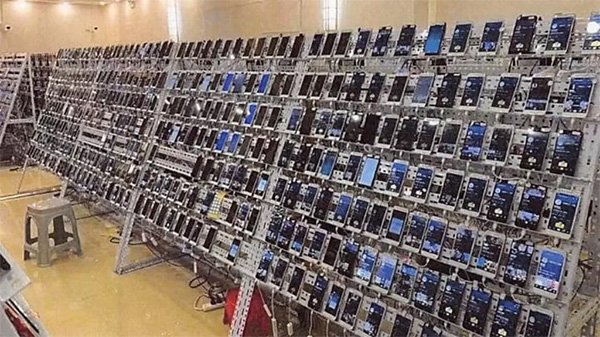
Core Points - The U.S. government has designated the Prince Group of Cambodia as a transnational criminal organization, accusing it of engaging in telecom fraud and imposing sanctions on it [1][5] - The U.S. Department of Justice has filed a lawsuit against the group's founder, Chen Zhi, and seized nearly $15 billion worth of Bitcoin [1][5] - The Prince Group claims to be a real estate and financial services company operating in over 30 countries, but U.S. prosecutors allege it runs telecom fraud operations in Cambodia [1][5] Summary by Sections Allegations and Operations - The Prince Group is accused of operating telecom fraud parks in Cambodia, where many individuals are forced to participate in scams under threats of violence [1][3] - Workers are often lured by false high-paying job offers and are kept in large dormitories surrounded by high walls and barbed wire [1][3] - The group employs a "phone farm" strategy, using 1,250 phones to control approximately 76,000 social media accounts for scamming purposes [1][3] Financial Aspects - The fraud operations reportedly generate over $30 million daily, with the group utilizing its extensive business network for money laundering, including online gambling and cryptocurrency mining [3][5] - The U.S. Department of Justice has seized 127,271 Bitcoins, valued at nearly $15 billion, believed to be proceeds from Chen Zhi's fraudulent activities [5] Legal Actions and International Response - Chen Zhi faces multiple charges, including telecom fraud and money laundering, with a potential maximum sentence of 40 years if convicted [3][5] - The U.S. Treasury has sanctioned Chen Zhi and over 100 entities associated with the Prince Group, freezing all assets in the U.S. [5][6] - The U.K. government has also taken action, freezing assets worth £130 million related to the fraud network in the U.K. [5][6] Broader Context - The U.S. government estimates that fraud activities from Southeast Asia will cause American citizens losses of at least $10 billion in 2024, a 66% increase from the previous year [6]

150亿美元比特币被抄!亚洲最大跨国电诈 “话事人”逃亡
凤凰网财经· 2025-10-15 14:19
Core Viewpoint - The article discusses the significant legal actions taken by the U.S. Department of Justice against Chen Zhi, the founder of the Prince Group in Cambodia, for telecommunications fraud and money laundering, highlighting the scale of the operation and its implications for global crime networks [2][22]. Group 1: Criminal Activities - Chen Zhi is accused of leading Asia's largest transnational crime organization, using a facade of legitimate business operations to cover up extensive fraud activities [6][7]. - The operation involved "phone farms" with 1,250 mobile devices and 76,000 social media accounts used to perpetrate scams, targeting victims through emotional manipulation [9][12]. - The criminal network is described as a combination of modern slavery and high-tech fraud, with hundreds of individuals reportedly trafficked and forced into labor within scam operations [16][18]. Group 2: Financial Implications - The U.S. authorities seized approximately 127,271 bitcoins, valued at around $15 billion, marking the largest asset forfeiture in the department's history [2][22]. - The financial operations included sophisticated money laundering techniques, with millions of dollars funneled through various accounts to evade detection [15][21]. - The U.S. Treasury reported that losses from online investment scams have exceeded $16.6 billion in recent years, with a projected $10 billion loss in 2024 alone, indicating a 66% increase from the previous year [26]. Group 3: Legal Actions and Consequences - The U.S. government has frozen the assets of 146 individuals and entities associated with the Prince Group, effectively cutting off their financial resources in the U.S. [25][26]. - Chen Zhi faces potential charges that could lead to a maximum sentence of 40 years if convicted of telecommunications fraud and money laundering [28]. - The U.K. has also taken action by freezing 19 properties owned by Chen Zhi in London, valued at over £10 million, reflecting international cooperation in combating such crimes [26][27].

150亿美元比特币被抄!亚洲最大跨国电诈 “话事人”逃亡
Feng Huang Wang Cai Jing· 2025-10-15 14:15
Core Points - The U.S. Department of Justice has formally charged Chen Zhi, founder of the Prince Group in Cambodia, with telecommunications fraud and money laundering, marking a significant crackdown on international crime [1][2] - The operation involved the seizure of approximately 127,271 bitcoins, valued at around $15 billion, making it the largest asset forfeiture in the department's history [1][2] Group 1: Criminal Activities - Chen Zhi, a dual citizen of the UK and Cambodia, was previously seen as a legitimate businessman but is now identified as a key figure in Asia's largest transnational crime organization [3][4] - The Prince Group has established companies in over 30 countries, which were used as fronts to conceal fraudulent activities [4] - The criminal network operated "phone farms" in Cambodia, utilizing 1250 mobile phones and controlling 76,000 social media accounts to perpetrate scams [5][6] Group 2: Victimization and Exploitation - Hundreds of individuals were reportedly lured or trafficked to Cambodia, forced to participate in cryptocurrency scams under threats of violence and coercion [10][11] - The operation is described as a combination of modern slavery and high-tech fraud, with many perpetrators also being victims of trafficking and forced labor [10][11] Group 3: Legal and Financial Consequences - The U.S. Treasury has frozen all assets and interests of individuals and entities associated with the Prince Group within the U.S., affecting 146 individuals and entities [13][14] - The U.S. has reported losses exceeding $16.6 billion due to online investment fraud in recent years, with an estimated $10 billion loss expected in 2024 alone, a 66% increase from the previous year [14] - The UK has also frozen 19 properties linked to Chen Zhi in London, valued at over £100 million, highlighting the international scope of the crackdown [15]
英美采取史上最大规模联合行动,打击东南亚网络犯罪集团,涉及原中国公民
制裁名单· 2025-10-15 01:37
Core Insights - The article discusses a significant joint action by the US and UK governments targeting transnational crime networks in Southeast Asia, particularly focusing on large-scale online fraud and money laundering activities involving Chinese nationals [1] Group 1: Crime Network Structure - The primary targets of the operation are the Taizi Group and Huione Group, with the US Treasury Department imposing comprehensive sanctions on 146 members of the Taizi Group, which is led by Chen Zhi, a former Chinese immigrant [2] - The Taizi Group, based in Cambodia, has established a business empire controlling billions of dollars in illegal funds through online investment scams targeting the US and other global regions [2] - The Huione Group has been isolated from the US financial system, having laundered at least $4 billion in illegal proceeds from August 2021 to January 2025, including $37 million from North Korean cyber theft and $36 million from fraudulent cryptocurrency investments [2] Group 2: Criminal Methods and Dangers - These crime groups employ "pig butchering" scams, where perpetrators build trust with victims over months before luring them into investing in fraudulent platforms [3] - The criminal activities are often linked to severe crimes such as human trafficking and forced labor, with workers being coerced into participating in scams under brutal control methods [3] Group 3: Involvement of Chinese Nationals - Chinese nationals are both participants and victims in these crime networks, with the Taizi Group blending illegal income with Cambodia's legitimate economy through a complex network of over 100 shell and holding companies [4] - Chinese citizens are a significant victim group in these scams, with successful joint operations between Chinese authorities and police in Myanmar and Thailand leading to the capture and repatriation of numerous Chinese fraud suspects [4]

个人存取款5万元登记再调整,意味着什么?银行员工透露详情
Sou Hu Cai Jing· 2025-10-13 18:05
Core Viewpoint - The recent fluctuations in the economy and the ongoing pandemic have led to increased public anxiety regarding personal income stability and employment prospects, resulting in a significant rise in personal savings in China, which now totals 227.21 trillion yuan, making China the leader in global deposit scale [1] Group 1: Regulatory Changes - The People's Bank of China (PBOC) has introduced a new regulation requiring commercial banks to inquire about the source and purpose of personal deposits exceeding 50,000 yuan, with detailed customer information to be recorded [4] - The regulation aims to combat money laundering, telecom fraud, illegal fundraising, and tax evasion, thereby maintaining the overall stability and security of the financial system [6] Group 2: Public Reaction - The new regulation has sparked discussions and dissatisfaction among depositors, who feel that their financial privacy is being infringed upon by the banks' inquiries into the purpose of large withdrawals [3] Group 3: Adjustments to the Regulation - Following the implementation of the regulation, the PBOC has adjusted the threshold for reporting large transactions, with some regions increasing the limit to 100,000 yuan or more, to balance regulatory effectiveness and operational efficiency [8] - The adjustments also reflect a consideration for depositor privacy, acknowledging that large cash withdrawals may involve sensitive personal matters [8] - The initial 50,000 yuan threshold was deemed to potentially overwhelm bank staff with excessive workload, prompting the need for a more manageable standard [8] Group 4: Future Regulatory Strategies - The PBOC is advancing its digital currency strategy as a means to enhance financial regulation, with digital yuan transactions being traceable, thus providing a robust tool for preventing financial crimes [9] - Digital yuan can facilitate transactions even in areas lacking traditional network coverage, expanding its application and offering more flexible regulatory options [9]

6.1万枚比特币被扣,价值500亿元,47岁女子钱志敏在伦敦当庭认罪
Mei Ri Jing Ji Xin Wen· 2025-09-30 14:04
Core Points - The case involves Zhimin Qian, the main defendant in the largest Bitcoin money laundering case in the UK, who admitted to charges related to Bitcoin laundering in court [1][3][5] - Over 128,000 victims were defrauded, with the case involving 61,000 Bitcoins, valued at approximately 49.35 billion RMB [1][15] - The investigation spanned seven years and involved multiple jurisdictions, highlighting the complexity of organized crime using cryptocurrencies [5][6] Group 1: Case Background - Zhimin Qian, also known as Yadi Zhang, is 47 years old and was involved in a major fraud scheme in China from 2014 to 2017, leading to over 128,000 victims [3][6] - The fraudulent scheme, known as the Tianjin Lantian Grey case, involved illegal fundraising exceeding 43 billion RMB, with Qian as the actual controller of the company [6][12] - Qian attempted to launder the illegal proceeds by converting them into Bitcoin and fleeing to the UK, where she was arrested in April 2024 [6][12] Group 2: Legal Proceedings - Qian has been detained and is awaiting sentencing, with the court proceedings expected to last 12 weeks [5][6] - The UK authorities are initiating asset forfeiture procedures due to Qian's guilty plea, and multiple Chinese victims will testify via video link [6][7] - The case is noted as one of the largest cryptocurrency seizures globally, with the UK police seizing over 61,000 Bitcoins, valued at approximately 6.932 billion USD [15] Group 3: Financial Implications - The investigation revealed that from 2014 to 2017, the fraudulent company raised over 40.2 billion RMB, with significant amounts used for purchasing Bitcoin [13] - The case has prompted discussions on the use of cryptocurrencies by organized crime to conceal and transfer assets, emphasizing the scale of criminal profits [5][6] - Victims have received partial compensation through a compensation plan established by China, but uncertainty remains regarding the recovery of their losses [5][6]

中国女子认罪比特币史上最大骗局,受害者约13万人!缴获比特币将被英国没收?
Sou Hu Cai Jing· 2025-09-30 13:27
Core Insights - A significant breakthrough occurred in a major cryptocurrency crime case in the UK, where Qian Zhimin, a Chinese national, admitted to money laundering in court, linked to a massive investment fraud case in China involving approximately 130,000 victims and illegal fundraising of 43 billion RMB [1][3][11] - The case has led to one of the largest cryptocurrency seizures in history, with over 61,000 bitcoins valued at nearly $7 billion at current market prices [1][7][11] - The ownership of the seized bitcoins has become a focal point, raising questions about whether they will be returned to the victims in China or appropriated by the UK government [7][8][11] Case Background - The fraudulent scheme orchestrated by Qian Zhimin took place between 2014 and 2017, where she sold high-yield investment products to over 128,000 investors, promising returns of 100% to 300% [3] - Following the crackdown on cryptocurrencies in China, Qian converted the illicit funds into bitcoins and fled to the UK in 2018, where she attempted to launder the money through luxury real estate and jewelry purchases [3][4] Investigation and Legal Proceedings - The investigation, described as "arduous," involved multiple jurisdictions and complex cryptocurrency tracking, ultimately leading to the seizure of over 61,000 bitcoins from Qian's electronic wallets [4][11] - Qian's accomplice, Jian Wen, was sentenced to over six years in prison for money laundering, while Qian has admitted to holding and transferring criminal property but denied any fraudulent actions [4][7] Ownership and Legal Challenges - The legal battle over the ownership of the seized bitcoins is complicated by the lack of an extradition treaty between the UK and China, making it difficult for victims to claim their losses [7][8] - Legal experts suggest that Chinese investors will face significant challenges in proving their rights to the bitcoins in UK courts, requiring extensive evidence and complex legal processes [7] Potential Implications for the UK - The seizure of the bitcoins could potentially double the UK's existing bitcoin holdings, raising discussions about the establishment of a "UK Bitcoin Reserve" to enhance national financial strength [8] - The case highlights the broader implications for international law, asset management, and cryptocurrency regulation, as it may set a precedent for how similar cases are handled in the future [11]

国内非法集资400多亿,换成6.1万枚比特币潜逃,钱志敏在英承认洗钱
Guan Cha Zhe Wang· 2025-09-30 02:18
Core Points - The central theme of the article revolves around the trial of Qian Zhimin, the main perpetrator of the largest Bitcoin money laundering case in the UK and the Tianjin Blue Sky Greit illegal fundraising case in China, who admitted to charges related to money laundering in a London court [1][3] Group 1: Case Details - Qian Zhimin appeared in Southwark Crown Court in London on September 29, where he changed his previous plea and admitted to charges of "possessing criminal property" and "transferring criminal property" [1] - The case involves 61,000 Bitcoins, valued at approximately 48 billion RMB based on the market price on September 28 [1] - Qian Zhimin is the actual controller of the Tianjin Blue Sky Greit illegal fundraising case, which began in 2017 and involved over 43 billion RMB, affecting nearly 130,000 victims across 31 provinces in China [3] Group 2: Legal Proceedings - The trial is expected to last 12 weeks and conclude before Christmas, with Chinese police officers set to testify in London and several victims participating via remote video from Tianjin [3] - Following the 2017 collapse of the fundraising scheme, Qian Zhimin converted illegal proceeds into Bitcoin and fled to the UK using a fake passport [3] - In May 2021, law enforcement seized and froze 61,000 Bitcoins from Qian Zhimin's equipment, marking it as the largest cryptocurrency seizure in UK history and one of the largest globally [3]

泰国黄金出口柬埔寨:前7月增19%引调查呼声
Sou Hu Cai Jing· 2025-09-13 05:50
Core Viewpoint - Thailand's gold exports to Cambodia have surged unusually, prompting calls for an investigation, which may threaten the country's export and tourism sectors [1] Group 1: Export Data - In the first seven months of 2025, Thailand's gold exports to Cambodia increased by 19% year-on-year, reaching 71.3 billion Thai Baht [1] - This growth rate could lead to this year's export volume exceeding last year's record of 106 billion Thai Baht [1] Group 2: Industry Concerns - The President of the Federation of Thai Industries, Kriengkrai Thiennukul, noted that the significant increase in gold and jewelry exports from Thailand to Cambodia does not align with Cambodia's market size and demand, raising suspicions [1] - Kriengkrai called for an investigation by the Bank of Thailand, customs, and the Ministry of Commerce, suggesting potential involvement in gray industries such as fraud and casinos, with gold possibly being used as a money laundering tool [1]
法治在线丨男子网络相亲一个月被骗500万 警方摧毁15人诈骗团伙
Yang Shi Xin Wen· 2025-09-10 12:01
Group 1 - The core incident involves a telecom network fraud case in Hefei, Anhui, where the victim lost 5 million yuan within a month through an online dating scam [1] - The victim, Mr. Chen, was lured into investing in gold by a fraudulent scheme that promised high returns based on insider information from a supposed relative working in a securities company [7] - The police discovered that the identities of the supposed "Ms. Lin" and her mother were fabricated by the fraud gang [5] Group 2 - The fraud gang employed a new money laundering technique by trading physical commodities like wheat, making it harder for law enforcement to track [8] - A total of 15 suspects were arrested across multiple provinces, and 1.51 million yuan of the defrauded money was recovered for the victim [10][11] - The case is still under investigation, with police advising the public to be cautious about sharing personal information and to be wary of seemingly familiar strangers in online interactions [13]