
险资举牌

Search documents
一周保险速览(8.15—8.22)
Cai Jing Wang· 2025-08-22 08:00
Regulatory Insights - The Financial Regulatory Bureau is developing guidelines to enhance the health insurance sector, focusing on supply-demand alignment, operational capacity, regulatory oversight, and environmental optimization [1] Industry Highlights - Insurance capital has made 30 significant investments this year, contributing to a bull market, with A-share market capitalization surpassing 100 trillion yuan for the first time. The investments are primarily in undervalued, high-dividend sectors like banking [2] Corporate Developments - China Ping An Life Insurance Co., Ltd. increased its stake in China Life by acquiring 29.92 million shares at a price of 24.0915 HKD per share, totaling approximately 721 million HKD, raising its holding to about 458 million shares, or 6.15% [3] - ZhongAn Online reported a net profit attributable to shareholders of 668 million RMB for the first half of 2025, a 1103.5% increase year-on-year, with total premiums reaching 16.661 billion RMB, up 9.3% [4] - Xinhua Insurance's cumulative original insurance premium income from January 1 to July 31, 2025, was 137.806 billion RMB, reflecting a 23% year-on-year growth [5] - Guoshou Real Estate and Caixin Life jointly established an equity investment fund with a total investment of 801 million RMB [6] - Dongwu Life plans to issue up to 3 billion RMB in capital supplement bonds to enhance its solvency, backed by a guarantee from its largest shareholder [7]



保险同行都“不放过”!险资频频举牌银行保险H股的“多重算盘”
经济观察报· 2025-08-21 10:12
Core Viewpoint - The insurance industry is adjusting its asset allocation strategies in response to a low interest rate environment, focusing on extending bond durations, credit downgrading, increasing equity allocations, and enhancing alternative assets [1][3][4]. Group 1: Asset Allocation Strategies - The overseas insurance industry has made four major adjustments to asset allocation: extending bond durations, credit downgrading, increasing equity allocations, and enhancing alternative assets [3][4]. - Domestic insurance companies are learning from overseas experiences to develop a diversified asset allocation strategy suitable for the domestic market, including increasing high-dividend assets through FVOCI accounts [1][3]. Group 2: Recent Investment Activities - Since August, insurance capital has frequently acquired shares in financial sector listed companies, with notable transactions including China Ping An's purchases of China Pacific Insurance H-shares [2][6]. - Insurance companies have made over 20 acquisitions of listed companies this year, marking the highest number in five years, primarily targeting high-dividend H-shares in the banking and insurance sectors [6]. Group 3: Financial Performance and Challenges - Insurance companies are striving to maintain high investment returns, with China Ping An achieving a comprehensive investment return rate of 5.8% in 2024, up 2.2 percentage points year-on-year [7]. - The average return rate of non-standard assets held by leading insurance companies has decreased from 6% in 2017 to 4.5% currently, indicating pressure to seek higher returns [8]. Group 4: Market Dynamics and Strategic Considerations - The high dividend yield of H-shares in the banking and insurance sectors, around 4%, is attracting insurance capital, especially in a low interest rate and asset scarcity environment [4][9]. - The narrowing AH share premium has prompted insurance capital to accelerate acquisitions to lock in lower holding costs before further declines [12][13]. Group 5: Risk Management and Asset Liability Matching - Insurance companies are using high-dividend stocks to mitigate risks associated with interest rate differentials and funding mismatches, as the average investment return rate has shifted down to 3%-4% [15][16]. - The phenomenon of "long money short matching" is prevalent, with many leading insurance companies facing a duration gap of 4-7 years, prompting a shift towards high-dividend H-shares as long-term assets [16][18].


保险同行都“不放过”! 险资频频举牌银行保险H股的“多重算盘”
Jing Ji Guan Cha Wang· 2025-08-21 06:26
Core Viewpoint - Insurance capital has been actively increasing stakes in financial sector listed companies, particularly in H-shares, driven by the need for stable high-yield investments amid low interest rates and asset scarcity [2][5][11]. Group 1: Recent Activities - Since August, insurance capital has frequently made significant purchases in the financial sector, including China Pacific Insurance and Zheshang Bank, triggering mandatory disclosures due to exceeding 5% ownership [2][5]. - In total, insurance capital has initiated over 20 stake increases in listed companies this year, marking the highest frequency in the past five years [5]. Group 2: Investment Strategy - The strategy behind these investments includes utilizing the FVOCI accounting method, which allows insurance companies to smooth out profit fluctuations by classifying high-dividend stocks as financial assets [3][11]. - The current low interest rate environment has prompted insurance companies to adjust their asset allocation strategies, focusing on increasing stock and alternative asset holdings to meet cash flow management needs [3][11]. Group 3: High Dividend Appeal - The banking and insurance H-shares offer attractive dividend yields of approximately 4% to 5%, which exceed the average return of insurance capital, making them appealing for maintaining higher investment returns [7][10]. - The trend of narrowing AH share premium has led insurance capital to expedite their investments in H-shares to lock in lower holding costs before further price increases [9][10]. Group 4: Risk Management - Insurance companies are also using these investments to mitigate risks associated with interest rate spreads and funding mismatches, as the current market conditions have shifted their focus from safety to yield [11][12]. - The long-term asset allocation strategy aims to address the structural mismatch between the long duration of insurance liabilities and the shorter duration of available high-yield assets [12][13].

险资密集举牌 长钱加速入市
Cai Jing Wang· 2025-08-20 08:28
Core Insights - Insurance capital has made over 30 equity stakes this year, marking the second-highest number since 2015, with a significant focus on bank stocks [1][2][3] - The main motivations for this trend include the need for high-dividend, low-volatility equity assets to lock in interest rate spreads, the impact of new financial instrument standards, and regulatory encouragement [1][5][10] Group 1: Insurance Capital Activity - Insurance companies have engaged in over 30 equity stakes this year, primarily in the banking sector, with 14 instances specifically targeting bank stocks [2][4] - Notable actions include Ping An Life's significant increase in holdings of Agricultural Bank of China H-shares, raising its stake to 14.08% [2][4] - The trend of insurance capital acquiring stakes in peer insurance companies has re-emerged after six years, with Ping An Life increasing its holdings in China Pacific Insurance and China Life [5][6] Group 2: Motivations Behind Equity Stakes - The shift to longer-duration liabilities and the need for stable returns in a low-interest-rate environment are driving insurance companies to seek high-dividend equities [1][5] - Regulatory policies encouraging insurance capital to allocate more to equity assets have also played a significant role in this trend [1][10] - The new accounting standards have increased the volatility of insurance companies' profit and loss statements, prompting a shift towards high-dividend equity assets to stabilize financial performance [7][8] Group 3: Characteristics of Targeted Stocks - Bank stocks are particularly attractive due to their high dividend yields (approximately 3.98%) and low valuations (0.60 times PB), making them suitable for insurance capital's risk management needs [5][6] - The characteristics of bank stocks align with insurance capital's investment strategy, which seeks stable returns and low volatility [5][6] - The insurance sector also exhibits similar traits, with low valuations and high dividend yields, making it a target for insurance capital [6][9] Group 4: Future Outlook - The demand for equity asset allocation among insurance companies is expected to continue, with potential for increased investment in high-dividend stocks [9][10] - The ongoing low-interest-rate environment and new accounting standards are likely to further influence insurance companies' investment strategies [9][10] - Regulatory support for insurance capital to enter the equity market is anticipated to enhance the allocation of funds to equity assets [10]

年内险资举牌28次 权益配置热情或将持续
Jin Rong Shi Bao· 2025-08-20 03:21
Core Viewpoint - Insurance funds are increasingly engaging in shareholding actions, with a notable rise in the frequency of such activities compared to the previous year [4]. Group 1: Recent Shareholding Actions - On August 11, Ping An Insurance purchased 1.7414 million shares of China Pacific Insurance at an average price of HKD 32.07 per share, increasing its stake from 4.98% to 5.04%, triggering a shareholding action [1]. - On August 12, Ping An Insurance further increased its stake in China Life Insurance to 5.04%, also triggering a shareholding action [2]. - On August 13, China Pacific Insurance announced its shareholding action in Dongyangguang Pharmaceutical, while Minsheng Insurance increased its stake in Zheshang Bank, triggering shareholding actions [3]. Group 2: Frequency and Trends - As of the report date, insurance funds have engaged in 28 shareholding actions this year, significantly surpassing the 20 actions recorded for the entire previous year [4][7]. - The increase in shareholding actions is attributed to multiple factors, including policy benefits, regulatory improvements, and the need for stable returns and asset optimization [7]. Group 3: Market Reactions and Implications - The recent shareholding actions by Ping An Insurance have led to a strong market response, with China Pacific Insurance's A-shares rising by 4.87% and H-shares by 4.71% as of August 14 [6]. - Analysts suggest that the actions reflect a re-evaluation of the insurance sector's value and indicate growing confidence in the industry's fundamentals [6]. Group 4: Future Outlook - The trend of insurance funds engaging in shareholding actions is expected to continue, supported by ongoing policy benefits and a favorable market environment [9]. - The diversification of shareholding methods, including participation in IPOs and asset swaps, highlights the flexibility and long-term investment focus of insurance funds [8].
民生人寿出手举牌、4家险企争相竞逐浙商银行 年内险资26次举牌11次涉及银行股
Zhong Guo Jing Ji Wang· 2025-08-20 02:14
Core Viewpoint - Minsheng Life Insurance increased its stake in Zheshang Bank, reaching 5% of the bank's H-share capital, triggering a mandatory disclosure under Hong Kong stock market rules. This move is aimed at achieving long-term investment returns while managing current profit volatility [1][2]. Group 1: Investment Activity - On August 11, Minsheng Life purchased 1 million shares of Zheshang Bank H-shares for HKD 2.7679 million, bringing its total holdings to 296 million shares [2]. - Other insurance companies, including Ping An Life, Xinhua Insurance, and Ruizhong Life, have also been actively increasing their stakes in bank stocks, with over 100 instances of share purchases this year, leading to multiple mandatory disclosures [1][9]. Group 2: Strategic Rationale - The low interest rate environment and changes in liability structures are driving insurance companies to seek better asset-liability matching, pushing them towards equity markets, particularly in stable banks with strong dividend returns [2][9]. - The strategic focus on bank stocks is also linked to the growing importance of bancassurance channels for insurance companies, aiming to enhance their business models through significant equity investments in banks [2][12]. Group 3: Historical Context - Minsheng Life has a history of involvement with Zheshang Bank, having acquired shares from the major shareholder, Wanxiang Holdings, in 2012 and participated in capital increases in 2015 [3]. - Zheshang Bank has consistently provided substantial cash dividends, totaling CNY 13.254 billion over the last three fiscal years, with annual cash dividend ratios exceeding 30% [3]. Group 4: Competitive Landscape - Other insurance companies, such as Taiping Life, Xintai Life, and Baidian Life, are also competing for stakes in Zheshang Bank, indicating a broader trend of insurance capital flowing into the banking sector [4][6]. - As of the end of 2024, Xintai Life and Taiping Life hold 1.37 billion shares and 922 million shares of Zheshang Bank, respectively, further illustrating the competitive interest in the bank [7]. Group 5: Future Outlook - Industry experts anticipate that insurance capital will continue to increase its allocation to bank stocks, driven by the need for stable, low-volatility assets in the current economic climate [12]. - The implementation of new accounting standards is expected to further encourage insurance companies to invest in high-dividend assets and long-term equity investments to stabilize profit fluctuations [12].

中国平安增持农业银行及中国人寿H股
Zhong Guo Ji Jin Bao· 2025-08-19 10:33
Core Viewpoint - China Ping An has increased its holdings in Agricultural Bank and China Life H shares, spending approximately HKD 465 million in total [1][2]. Group 1: Investment Activities - On August 13, Ping An Life purchased 26.515 million shares of Agricultural Bank H shares at an average price of HKD 5.5041 per share, totaling about HKD 146 million, raising its stake from 13.99% to 14.08% [2]. - On the same day, Ping An Life also acquired 14.067 million shares of China Life H shares at an average price of HKD 22.7439 per share, costing approximately HKD 319 million, increasing its ownership from 4.99% to 5.18% [2]. - On August 18, Ping An Life disclosed its previous acquisition of China Pacific Insurance H shares on August 11, raising its stake from 4.97% to 5.1% [2]. - Ping An Life has also increased its holdings in Postal Savings Bank H shares to 15% and has over 16% in China Merchants Bank H shares as of July 29 [2]. Group 2: Market Trends - Since the beginning of the year, Ping An has been actively acquiring bank and insurance stocks, with over 30 instances of stake increases, particularly favoring undervalued, high-dividend, and stable performance sectors [3][4]. - The insurance sector's allocation to stock assets has reached its highest level in recent years, with insurance funds' investment balance at CNY 36.23 trillion, a 3.73% increase from the previous quarter [5]. - The funds allocated to stocks increased to CNY 3.07 trillion, an 8.9% rise from CNY 2.81 trillion in the previous quarter, indicating a net purchase of approximately CNY 640 billion in the first half of the year, a 78% increase compared to the second half of last year [5].


时隔六年再现 中国平安举牌中国人寿、中国太保H股
Zhong Guo Jing Ying Bao· 2025-08-18 13:01
Core Viewpoint - Insurance funds have resumed cross-holding in the industry after six years, with China Ping An increasing its stakes in China Pacific Insurance and China Life Insurance, indicating a strategic financial investment approach [2][4]. Group 1: Investment Activities - China Ping An increased its holdings in China Pacific Insurance by approximately 1.74 million shares at an average price of 32.07 HKD per share, totaling around 55.84 million HKD, raising its stake to 5.04% [5]. - On August 12, Ping An Life further acquired 3.66 million shares of China Pacific Insurance at an average price of 33.29 HKD, bringing its total holdings to 140 million shares, or 5.1% of the issued H shares [5]. - Ping An Asset Management also bought 1.1 million shares of China Pacific Insurance at an average price of 32.28 HKD, increasing its total holdings to 138 million shares, or 5% of the issued H shares [5]. - Additionally, on August 12, China Ping An acquired 9.5 million shares of China Life Insurance, raising its total stake to 5.04% [5]. Group 2: Market Performance - As of August 18, China Life Insurance's H shares rose by 2.87% to 25.06 HKD, while China Pacific Insurance's H shares increased by 1.75% to 37.28 HKD [3]. - Year-to-date, China Pacific Insurance's H shares have surged over 50%, with a trailing twelve months (TTM) dividend yield of 3.22%, while China Life Insurance's H shares have risen over 70% with a TTM dividend yield of 2.92% [6]. Group 3: Industry Insights - The resurgence of insurance funds in cross-holding reflects confidence in the recovery and long-term value of the insurance sector, as indicated by the strong performance of H shares in both A-share and Hong Kong markets [4][6]. - The current market environment, characterized by declining interest rates, has prompted insurance companies to seek stable returns through long-term value investments [7][10]. - Regulatory encouragement for long-term capital investment has further opened up opportunities for insurance funds in the capital markets [10].
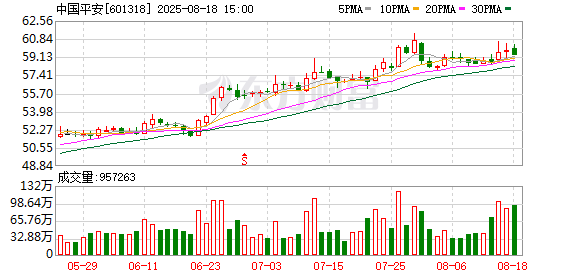
港股异动 内险股继续走高 险资举牌范围拓展至险企 有望提升投资收益率并推动保险股价值重估
Jin Rong Jie· 2025-08-18 07:59
民生证券指出,年初至今政策定调积极,财政政策更加积极,叠加货币政策适度宽松,有望持续提振市 场情绪。政策鼓励保险作为中长期资金入市,权益配置有望持续扩大,举牌范围拓展至保险股,有望提 升投资收益率并推动保险股价值重估,人身险预定利率调降有望降低险企负债成本。 内险股继续走高,截至发稿,中国人寿(02628)涨3.86%,报25.3港元;众安在线(06060)涨3.67%,报 19.75港元;中国太保(02601)涨2.57%,报37.58港元;中国平安(02318)涨1.13%,报58.25港元。 消息面上,近期中国平安增持中国太保H股约174万股,增持后持有太保H股比例达5.04%,同时增持中 国人寿H股约2.13亿港元,增持后持有国寿H股比例达5.04%,均达到举牌条件。招商证券指出,险资举 牌持续升温,时隔六年再现举牌同业,在提升投资组合回报的同时,也反映出对保险板块基本面修复和 长期价值的信心。 本文源自:智通财经网 ...
内险股继续走高 险资举牌范围拓展至险企 有望提升投资收益率并推动保险股价值重估
Zhi Tong Cai Jing· 2025-08-18 06:43
民生证券指出,年初至今政策定调积极,财政政策更加积极,叠加货币政策适度宽松,有望持续提振市 场情绪。政策鼓励保险作为中长期资金入市,权益配置有望持续扩大,举牌范围拓展至保险股,有望提 升投资收益率并推动保险股价值重估,人身险预定利率调降有望降低险企负债成本。 内险股继续走高,截至发稿,中国人寿(601628)(02628)涨3.86%,报25.3港元;众安在线(06060)涨 3.67%,报19.75港元;中国太保(601601)(02601)涨2.57%,报37.58港元;中国平安(601318)(02318) 涨1.13%,报58.25港元。 消息面上,近期中国平安增持中国太保H股约174万股,增持后持有太保H股比例达5.04%,同时增持中 国人寿H股约2.13亿港元,增持后持有国寿H股比例达5.04%,均达到举牌条件。招商证券指出,险资举 牌持续升温,时隔六年再现举牌同业,在提升投资组合回报的同时,也反映出对保险板块基本面修复和 长期价值的信心。 ...
