核聚变

Search documents
佳华科技的前世今生:2025年三季度营收1.66亿排112名,远低于行业平均
Xin Lang Cai Jing· 2025-10-30 16:12
Core Viewpoint - JiaHua Technology is a leading provider of IoT and big data technology in China, with a focus on smart environmental protection, smart cities, and other related services [1] Group 1: Company Overview - JiaHua Technology was established on September 14, 2007, and was listed on the Shanghai Stock Exchange on March 20, 2020 [1] - The company is headquartered in Beijing and holds multiple proprietary intellectual properties and core technologies [1] - Main business areas include building intelligence, smart desulfurization operations, smart environmental protection, smart cities, and environmental monitoring and information technology [1] Group 2: Financial Performance - For Q3 2025, JiaHua Technology reported revenue of 166 million, ranking 112 out of 131 in the industry [2] - The leading company in the industry, Digital China, achieved revenue of 102.365 billion, while the second, Unisplendour, reached 77.322 billion, with the industry average at 2.833 billion [2] - The revenue composition includes smart environmental protection at 74.388 million (67.98%), smart cities at 21.881 million (20.00%), and smart dual carbon at 12.454 million (11.38%) [2] - The net profit for the same period was -70.8285 million, ranking 109 out of 131, with the industry leaders reporting net profits of 1.723 billion and 1.133 billion respectively [2] Group 3: Financial Ratios - As of Q3 2025, JiaHua Technology's debt-to-asset ratio was 31.54%, an increase from 28.34% year-on-year, and below the industry average of 38.93% [3] - The gross profit margin for the same period was 18.93%, down from 24.81% year-on-year, and also below the industry average of 29.96% [3] Group 4: Executive Compensation - The chairman, Li Wei, received a salary of 457,600 in 2024, a decrease of 45,000 from 2023 [4] - Li Wei is a senior engineer with over 80 patents and has led 12 national project teams [4] Group 5: Shareholder Information - As of September 30, 2025, the number of A-share shareholders decreased by 13.36% to 4,397, while the average number of circulating A-shares held per account increased by 15.42% to 17,600 [5]


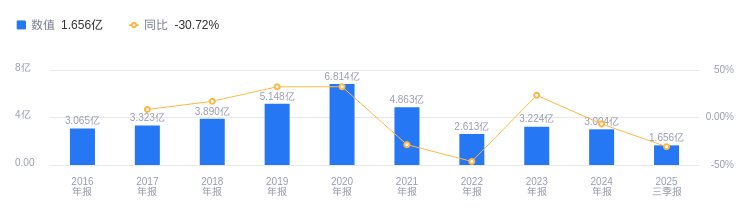
航天动力的前世今生:2025年三季度营收5.1亿低于行业平均,净利润 -1.23亿远逊同行
Xin Lang Cai Jing· 2025-10-30 16:12
Core Viewpoint - Aerospace Power, established in December 1999 and listed in April 2003, is a pioneer in the domestic aerospace fluid technology application industry, with a strong technical foundation and leading advantages in the civil application of aerospace technology [1] Business Overview - The main business includes smart gas meter measurement systems, pumps and pump systems, hydraulic transmission products, motors, construction installation, chemical equipment, and integrated energy-saving services [1] - The company operates in the mechanical equipment sector, specifically in general equipment and other general equipment categories, involving concepts such as large aircraft, aerospace military, margin financing, nuclear fusion, superconducting concepts, and nuclear power [1] Financial Performance - For Q3 2025, Aerospace Power reported revenue of 510 million yuan, ranking 37th among 51 companies in the industry, while the industry leader, Juxing Technology, achieved revenue of 11.156 billion yuan [2] - The company's net profit for the same period was -123 million yuan, placing it 50th in the industry, with the top performer, Juxing Technology, reporting a net profit of 2.211 billion yuan [2] Financial Ratios - As of Q3 2025, the asset-liability ratio was 52.46%, higher than the previous year's 46.43% and above the industry average of 38.24%, indicating increased debt pressure [3] - The gross profit margin was 8.66%, down from 10.72% year-on-year and significantly lower than the industry average of 26.36%, reflecting weak profitability [3] Management Compensation - The total compensation for General Manager Xue Xiaojun was 666,400 yuan in 2024, an increase of 58,600 yuan from 2023 [4] Shareholder Information - As of September 30, 2025, the number of A-share shareholders increased by 2.44% to 73,100, while the average number of circulating A-shares held per shareholder decreased by 2.38% to 8,730.59 shares [5]


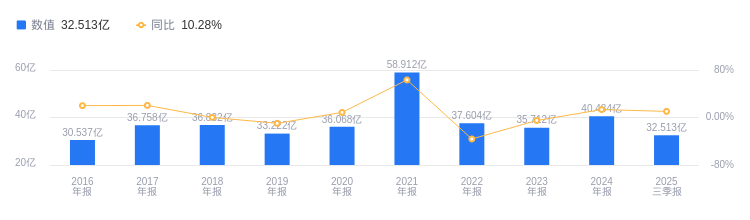
金安国纪的前世今生:2025年三季度营收32.51亿行业排19,低于行业平均16.62亿
Xin Lang Cai Jing· 2025-10-30 16:12
Core Viewpoint - Jin'an Guoji is a leading enterprise in the domestic copper-clad laminate industry, focusing on R&D, production, and sales of electronic industry basic materials [1] Group 1: Business Performance - In Q3 2025, Jin'an Guoji achieved a revenue of 3.251 billion yuan, ranking 19th among 44 industry companies [2] - The company's main business revenue from copper-clad laminates and related products was 1.835 billion yuan, accounting for 89.50% of total revenue [2] - The net profit for the same period was 179 million yuan, ranking 17th in the industry [2] Group 2: Financial Ratios - As of Q3 2025, Jin'an Guoji's debt-to-asset ratio was 44.11%, lower than the industry average of 44.70% [3] - The gross profit margin for the period was 12.11%, which is below the industry average of 20.58% [3] Group 3: Shareholder Information - As of September 30, 2025, the number of A-share shareholders increased by 39.65% to 61,900 [5] - The average number of circulating A-shares held per shareholder decreased by 28.39% to 11,700 [5] Group 4: Executive Compensation - The chairman and CEO, Han Tao, received a salary of 934,000 yuan in 2024, an increase of 174,000 yuan from the previous year [4]

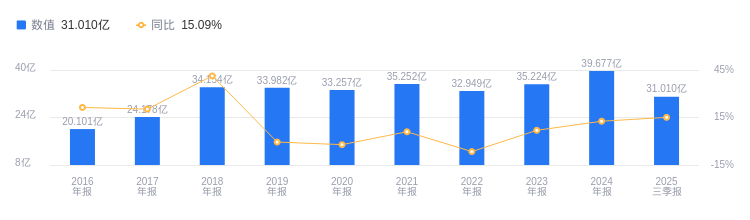
康尼机电的前世今生:2025年三季度营收31.01亿行业排第8,远低于第一名中国中车
Xin Lang Cai Jing· 2025-10-30 16:09
Core Viewpoint - 康尼机电 is a leading supplier of rail transit door systems in China, with a strong focus on research, manufacturing, and sales of rail transit equipment and related services [1] Group 1: Business Performance - In Q3 2025, 康尼机电 achieved a revenue of 3.101 billion yuan, ranking 8th in the industry, significantly lower than the top competitor, 中国中车, which reported 183.865 billion yuan [2] - The net profit for the same period was 278 million yuan, also ranking 8th, compared to 中国中车's 12.58 billion yuan [2] - The main business segment, rail vehicle equipment products and services, generated 1.039 billion yuan, accounting for 51.52% of total revenue [2] Group 2: Financial Ratios - As of Q3 2025, 康尼机电's debt-to-asset ratio was 43.82%, higher than the previous year's 38.30% and above the industry average of 38.16% [3] - The gross profit margin for Q3 2025 was 30.36%, down from 32.50% year-on-year but still above the industry average of 29.99% [3] Group 3: Executive Compensation - The chairman, 陈磊, received a salary of 1.594 million yuan in 2024, a decrease of 73,100 yuan from the previous year [4] - The president, 毕光明, saw an increase in salary from 1.8334 million yuan in 2023 to 1.8813 million yuan in 2024, an increase of 47,900 yuan [4] Group 4: Shareholder Information - As of September 30, 2025, the number of A-share shareholders decreased by 2.91% to 26,700 [5] - The average number of circulating A-shares held per shareholder increased by 3.00% to 31,700 [5] Group 5: Future Outlook - 康尼机电's rail transit and new energy businesses are performing well, with significant growth in maintenance and overseas projects [5] - The company is expected to generate revenues of 4.865 billion yuan, 5.891 billion yuan, and 7.010 billion yuan in 2025, 2026, and 2027 respectively, with corresponding EPS of 0.58, 0.73, and 0.90 yuan [5]

旭升集团的前世今生:徐旭东掌舵二十载,汽车零部件营收占比超八成,海外扩张开启新篇
Xin Lang Cai Jing· 2025-10-30 16:09
Core Insights - Xusheng Group is a leading manufacturer of precision aluminum alloy components in China, established in 2003 and listed on the Shanghai Stock Exchange in 2017, with a focus on automotive lightweight solutions [1] Financial Performance - For Q3 2025, Xusheng Group reported revenue of 3.226 billion yuan, ranking 20th among 103 peers, below the industry average of 3.82 billion yuan but above the median of 1.381 billion yuan [2] - The company's net profit for the same period was 300 million yuan, ranking 16th in the industry, lower than the top two competitors but above the industry average of 275 million yuan [2] Profitability and Debt - As of Q3 2025, the company's debt-to-asset ratio was 47.33%, down from 50.78% year-on-year but still above the industry average of 39.06% [3] - The gross profit margin for the period was 21.66%, slightly higher than the industry average of 21.53% [3] Shareholder Information - As of September 30, 2025, the number of A-share shareholders decreased by 8.71% to 54,600, while the average number of shares held per shareholder increased by 12.45% [5] Strategic Developments - In H1 2025, total revenue was 2.096 billion yuan, a year-on-year decrease of 2.47%, with net profit down 24.22% [6] - The company is focusing on growth in the energy storage and robotics sectors, with significant projects underway in Mexico and Thailand [6]

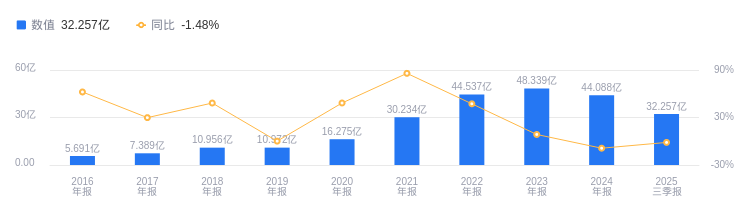
徕木股份的前世今生:2025年三季度营收11.45亿元,远低于行业第一名工业富联6039.31亿元
Xin Lang Cai Jing· 2025-10-30 16:07
Core Viewpoint - LaiMu Co., Ltd. is a leading automotive connector supplier in China, with a focus on precision electronic components, including connectors and shielding covers, serving major global automotive parts suppliers [1] Group 1: Business Performance - In Q3 2025, LaiMu's revenue was 1.145 billion yuan, ranking 56th among 88 companies in the industry, significantly lower than the top company, Industrial Fulian, which reported 603.931 billion yuan [2] - The net profit for the same period was 12.7099 million yuan, placing it 63rd in the industry, with the industry leader's net profit at 22.522 billion yuan [2] - Automotive precision connectors and components accounted for 69.51% of total revenue, amounting to 529 million yuan [2] Group 2: Financial Ratios - As of Q3 2025, LaiMu's debt-to-asset ratio was 51.70%, an increase from 45.64% in the previous year and above the industry average of 44.84% [3] - The gross profit margin was 15.98%, down from 22.70% year-on-year and below the industry average of 19.47% [3] Group 3: Management and Shareholder Information - The chairman, Zhu Xin'ai, received a salary of 1.5 million yuan in 2024, an increase of 204,000 yuan from the previous year [4] - As of September 30, 2025, the number of A-share shareholders decreased by 0.45% to 24,900, while the average number of circulating A-shares held per account increased by 0.45% to 17,200 [5] Group 4: Growth Prospects - The company expects significant growth in automotive products, with a projected revenue increase of 48.04% year-on-year in 2024, and a 101.91% increase in energy storage products [5] - LaiMu plans to adjust investments in its "New Energy Vehicle Connector Project" and allocate remaining funds to expand production capacity for new energy connectors and upgrade its R&D center [5]

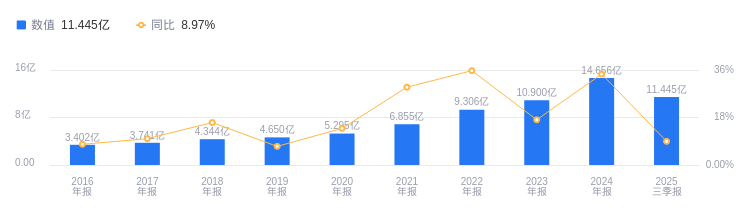
航宇科技的前世今生:2025年三季度营收15.17亿元行业排20,净利润1.48亿元行业并列20
Xin Lang Cai Jing· 2025-10-30 16:05
Core Viewpoint - Hangyu Technology is a leading enterprise in the field of aviation ring forgings, with advanced technology and significant market share, but it faces challenges in revenue and profitability compared to industry leaders [1][2]. Financial Performance - For Q3 2025, Hangyu Technology reported revenue of 1.517 billion yuan, ranking 20th out of 48 in the industry, significantly lower than the top competitors AVIC Xi'an Aircraft and AVIC Engine, which reported revenues of 30.244 billion yuan and 22.912 billion yuan respectively [2]. - The company's net profit for the same period was 148 million yuan, also ranking 20th, below the industry average of 224 million yuan [2]. Profitability and Debt - As of Q3 2025, Hangyu Technology's asset-liability ratio was 57.86%, higher than the industry average of 39.42%, indicating greater debt pressure [3]. - The gross profit margin was 26.84%, lower than the previous year's 29.09% and below the industry average of 30.54%, suggesting a need for improvement in profitability [3]. Shareholder Information - As of September 30, 2025, the number of A-share shareholders increased by 3.65% to 9,828, while the average number of shares held per shareholder decreased by 3.52% to 19,400 shares [5]. - Notable shareholders include E Fund Defense Industry Mixed A, which increased its holdings by 2.4048 million shares [5]. Business Highlights - Despite a revenue decline in the first half of 2025, there was a significant improvement in Q2, with total orders amounting to 5.968 billion yuan, a year-on-year increase of 24.10% [5][6]. - The company has successfully engaged in precision processing and development orders for key components in semiconductor equipment [6]. - Hangyu Technology is a core supplier for the C919 engine's ring forgings, contributing to domestic engine development [5].

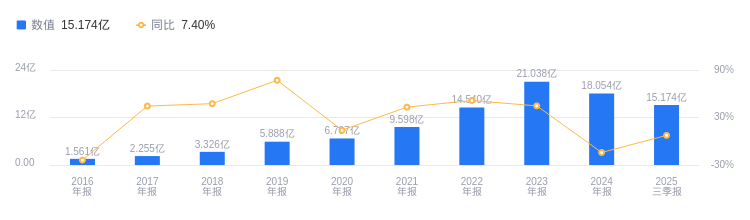
动力源的前世今生:2025年Q3营收行业第21,净利润垫底,资产负债率高于行业平均44.71个百分点
Xin Lang Cai Jing· 2025-10-30 16:04
Core Viewpoint - The company, Power Source, is a leading digital energy solutions provider in China, facing challenges in revenue and profitability compared to industry peers [1][2][3]. Group 1: Business Performance - In Q3 2025, Power Source reported revenue of 295 million yuan, ranking 21st among 25 companies in the industry, with the industry leader, China Power, generating 40.971 billion yuan [2]. - The company's net profit for the same period was -159 million yuan, placing it 25th in the industry, while the top performer, China Power, achieved a net profit of 2.502 billion yuan [2]. Group 2: Financial Ratios - As of Q3 2025, Power Source's debt-to-asset ratio was 86.95%, significantly higher than the industry average of 42.24%, indicating substantial debt pressure [3]. - The gross profit margin for Power Source was 14.24%, lower than the previous year's 29.96% and below the industry average of 25.60%, suggesting a need for improvement in profitability [3]. Group 3: Management Compensation - The chairman, Yang Bing, maintained his salary, while the general manager, He Xin, saw a reduction of 180,000 yuan in his compensation for 2024 compared to 2023 [4]. Group 4: Shareholder Information - As of September 30, 2025, the number of A-share shareholders decreased by 27.26% to 64,500, while the average number of circulating A-shares held per shareholder increased by 37.47% to 9,454.82 [5].

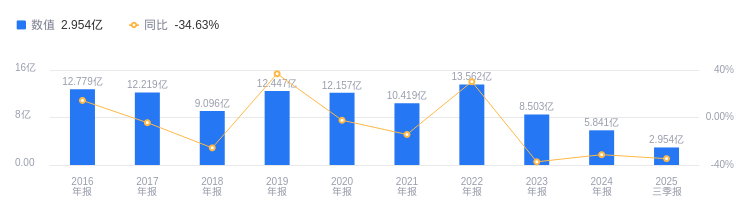
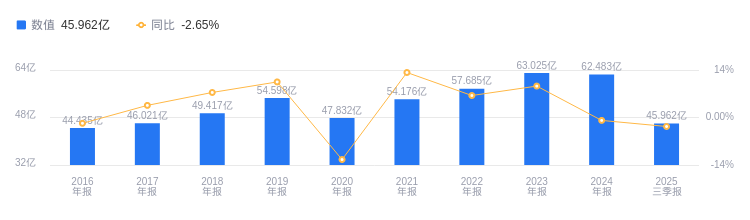
大众公用的前世今生:2025年三季度营收45.96亿行业第九,净利润6.27亿行业第五
Xin Lang Cai Jing· 2025-10-30 16:04
Core Viewpoint - Dazhong Public Utility, established in 1992 and listed in 1993, is a significant player in China's public utility sector, focusing on utility services and financial investment, benefiting from diversified business synergies [1] Group 1: Business Performance - In Q3 2025, Dazhong Public Utility reported a revenue of 4.596 billion, ranking 9th among 31 companies in the industry, with the industry leader, New Hope Group, generating 95.856 billion [2] - The company's net profit for the same period was 627 million, placing it 5th in the industry, while the top performer, New Hope Group, achieved a net profit of 7.057 billion [2] Group 2: Financial Ratios - As of Q3 2025, Dazhong Public Utility's debt-to-asset ratio stood at 54.06%, higher than the industry average of 46.36%, but improved from 56.22% in the previous year [3] - The gross profit margin for the same period was 18.60%, exceeding the industry average of 16.52% and up from 16.76% year-on-year [3] Group 3: Executive Compensation - The company's president, Liang Jiawei, received a salary of 3.564 million in 2024, an increase of 650,000 from 2.914 million in 2023 [4] Group 4: Shareholder Information - As of September 30, 2016, the number of A-share shareholders decreased by 5.42% to 228,500, with an average holding of 10,800 circulating A-shares, which increased by 5.74% [5] - By September 30, 2025, Hong Kong Central Clearing Limited was the ninth largest circulating shareholder, holding 2.02103 million shares, a decrease of 247,000 shares from the previous period [5]

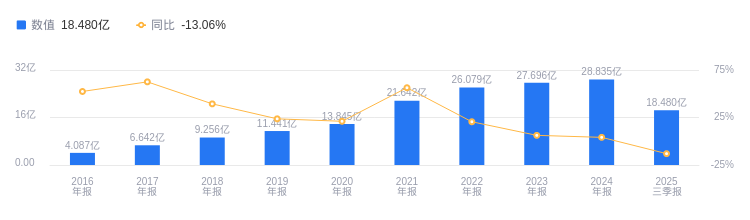
泰坦科技的前世今生:2025年三季度营收18.48亿行业排23,净利润270.83万行业排58,资产负债率高于同业
Xin Lang Zheng Quan· 2025-10-30 16:04
Core Viewpoint - Titan Technology is a leading company in the domestic scientific service industry, providing integrated technical solutions for innovative research and production quality control laboratories, with a differentiated advantage in full industry chain services [1] Group 1: Business Performance - For Q3 2025, Titan Technology reported revenue of 1.848 billion yuan, ranking 23rd among 79 companies in the industry, with the industry leader, Sinochem International, generating 35.716 billion yuan [2] - The revenue composition includes research reagents at 521 million yuan (42.70%), scientific instruments and consumables at 347 million yuan (28.42%), specialty chemicals at 323 million yuan (26.48%), laboratory construction and research information at 28.9049 million yuan (2.37%), and others at 289,100 yuan (0.02%) [2] - The net profit for the same period was 2.7083 million yuan, ranking 58th in the industry, with the top performer, Hangyang Co., achieving a net profit of 850 million yuan [2] Group 2: Financial Ratios - As of Q3 2025, Titan Technology's debt-to-asset ratio was 41.14%, higher than the previous year's 40.97% and above the industry average of 34.74%, indicating relatively high debt pressure [3] - The gross profit margin for Q3 2025 was 22.15%, an increase from 19.57% in the previous year and above the industry average of 19.93%, reflecting strong profitability [3] Group 3: Management and Shareholder Information - The chairman, Xie Yingbo, received a salary of 685,600 yuan in 2024, a decrease of 42,500 yuan from 2023 [4] - The number of A-share shareholders increased by 20.41% to 9,293 as of September 30, 2025, while the average number of circulating A-shares held per household decreased by 16.95% to 17,700 [5] Group 4: Strategic Developments - Titan Technology plans to enhance R&D investment, with a projected R&D expense ratio of 5% in Q1 2025 and 6% for 2024, alongside the application for 61 new patents and software copyrights [5] - The company completed acquisitions of three firms in 2024 and established two joint ventures, expanding its product matrix [5] - A strategic shift from prioritizing scale to focusing on profit is expected to positively impact cost control and cash flow [5]