
循环经济

Search documents
乐橘完成B++轮融资:聚焦循环经济与AI智能化布局,昆仑资本独家投资
Sou Hu Cai Jing· 2025-08-13 05:19
瑞财经 刘治颖 8月12日,上海乐橘科技有限公司(简称:乐橘)宣布完成B++轮融资,本轮融资由中国石油集团旗下昆仑资本独家投资。此前乐橘曾获中国 石化、万华化学和高瓴创投等机构投资。 实际控制人 ②(大数据分析): 石翔 表决权:33.6221% 担任职务:董事长 实际控制人 表决权:33.6221% 总持股比例:27.0559% 石翔 执行事务合伙人 51% 执行事务合伙人 3.424% 上海橘仔咨询管理合伙企业 上海派乐乐企业管理咨询合 0.1% 伙企业(有限合伙) (有限合伙) 99.9% 24.4974% 江苏恒加供应链管理有限公 4.4084% 司 4.7163% 上海乐橘科技有限公司 本轮融资资金将聚焦乐橘核心战略,驱动产业链绿色智能升级。包含扩大智能循环包装资产规模,优化运营体系,为客户提供更高效、低碳的包装循环服 务;加强绿色材料的研发创新与规模化应用,提升资源利用效率,践行循环经济;加大AI方向的投资,聚焦感知技术的研发,重点构建工业无人车及物流 无人化方案研发,配套智能装备机器人,实现复杂场景下方案规模化落地,推进物流无人化柔性变革。 乐橘成立于2018年,深耕于回收再生、循环物流、智能设 ...

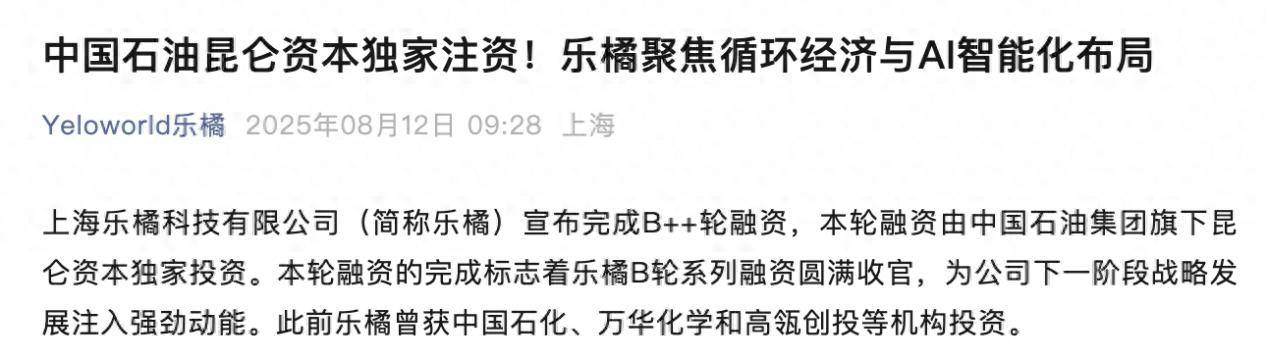
经济学家刘煜辉最新观点:大涨的全是我这里面的星辰大海,信心在上升
Xin Lang Zheng Quan· 2025-08-13 05:18
Group 1 - The A-share market opened strongly, with all three major indices showing significant upward momentum, particularly the Shanghai Composite Index, which surpassed its previous high from October 8, 2024, and reached its highest level since December 17, 2021, boosting market confidence [1] - Notable economist Liu Yuhui expressed optimism about the market through his Weibo account, indicating that the rising sectors align with his previous views and demonstrating confidence in the market's trajectory [1] - Liu Yuhui's earlier comments on August 12 reflected a positive outlook, suggesting that the current phase is just the beginning of a larger upward trend, emphasizing the importance of maintaining a Bayesian mindset in the face of global market synchronization [1] Group 2 - Key sectors such as circular economy, computing chips, RDA (data encryption assets), and Starlink are highlighted for their strategic significance and broad development prospects, attracting substantial capital inflow [2] - Investor enthusiasm has been ignited by the positive market performance and professional assessments, with comments from followers reflecting a collective sentiment of seizing a rare market opportunity [2] - As confidence builds among various stakeholders, the market is experiencing increased enthusiasm and attention, indicating a promising future development trend [2]
安徽金寨:废弃纺织品“变旧为新”,聚焦环保新质生产力
Zhong Guo Xin Wen Wang· 2025-08-12 17:39
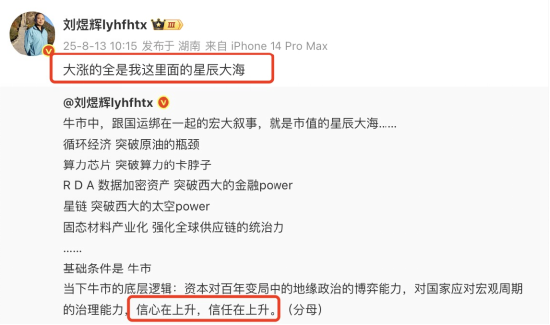
Group 1 - The article highlights the innovative practices of Anhui Xindengli Environmental Technology Co., Ltd. in transforming waste textiles into reusable materials through a fully automated production line [1][2] - The company utilizes a T2T (Textile to Textile) chemical decomposition technology that significantly reduces reliance on virgin resources and lowers carbon emissions by approximately 60%-85% compared to traditional petroleum-based methods [3] - The total planned production capacity of the project is 100,000 to 110,000 tons per year, with the potential to recycle over 120,000 tons of waste textiles annually, resulting in a reduction of greenhouse gas emissions by over 480,000 tons, equivalent to the carbon offset of 26 million trees [3] Group 2 - China is the largest producer and consumer of textiles globally, with over half of the world's textile fiber processing volume, leading to a substantial stock of waste textiles [2] - The national goal is to establish a waste textile recycling system by 2025, aiming for a recycling rate of 25% and a regenerated fiber output of 2 million tons [2] - The integration of technology and carbon neutrality presents structural opportunities for global environmental efforts, with the intersection of technology, materials, and circular economy being pivotal for the next industrial restructuring [3]
“反向开票”政策效应持续释放 仅上半年开票金额就达到5152亿元
Sou Hu Cai Jing· 2025-08-12 10:16
Core Insights - The "reverse invoicing" policy has significantly impacted the resource recovery industry, facilitating compliance and promoting the circular economy [1][3] - As of June 30, 2023, 13,300 resource recovery enterprises issued reverse invoices amounting to 515.2 billion yuan, with 5.11 million invoices issued [1] Group 1: Policy Implementation and Impact - The "reverse invoicing" policy was implemented to enhance the convenience for resource recovery companies in obtaining invoices when purchasing scrap products from individuals [1] - The policy has led to increased awareness of compliance among individuals and enterprises in the resource recovery sector [1][2] - Companies like Guangxi Fangsheng Paper Industry have benefited from reduced costs and minimized tax risks due to the elimination of intermediaries [2] Group 2: Industry Response and Adaptation - The policy has improved the efficiency of the supply chain by allowing direct transactions between enterprises and individual sellers, reducing costs and information barriers [2] - Tax authorities have increased efforts to educate individual sellers about the invoicing process, addressing initial concerns regarding complexity and personal information security [2] Group 3: Economic Benefits and Growth - Ningbo Supply and Marketing Recycled Resources Technology Co., Ltd. reported a 58% year-on-year increase in sales of recycled materials since the policy's implementation [3] - The smooth operation of the recycling chain has enhanced the resource utilization rate of construction waste and reduced reliance on natural resources, contributing to lower carbon emissions [3] - The promotion of the "reverse invoicing" policy addresses long-standing issues in the industry, encouraging more participation in waste recovery and supporting the implementation of new policies [3]
重庆:今年1—6月绿色税制减税降费超41亿元
Sou Hu Cai Jing· 2025-08-12 03:27
Group 1: Green Tax System Implementation - The establishment of a green tax system in China supports low-carbon development through various tax types and policies, resulting in over 4.1 billion yuan in tax reductions in Chongqing from January to June this year [1] - The implementation of the water resource tax starting December 2024 aims to encourage enterprises to improve water efficiency through differentiated tax rates based on water usage [2] - Chongqing's tax authorities have seen a 3.4% increase in water resource tax revenue compared to the previous fee system, with a 9% increase in the number of taxpayers [3] Group 2: Environmental Protection Tax Impact - The environmental protection tax law, effective since January 1, 2018, incentivizes companies to reduce emissions through a "more emissions, more tax" mechanism, leading to a tax reduction of 15 million yuan in Chongqing in the first half of this year [4] - Companies like Qiqi Aluminum have invested 245 million yuan in emission reduction technologies, resulting in significant decreases in pollutant emissions and operational costs [5] - The tax revenue from key air pollutants has decreased by 34.75% for sulfur dioxide and 22.72% for nitrogen oxides, indicating a shift in corporate attitudes towards emission reduction [5] Group 3: Circular Economy and Resource Utilization - The green tax system supports the development of the resource recovery industry, with policies in place to promote comprehensive resource utilization [6] - Huaneng Chongqing Luohuang Power Plant has invested approximately 500 million yuan in environmental projects, benefiting from over 17 million yuan in tax reductions, and has processed 1.4655 million tons of municipal sludge [7] - Chongqing's resource recovery enterprises have issued 88,600 invoices to 24,000 individuals, totaling over 7.1 billion yuan, supporting the healthy development of the resource recovery industry [8]
再生塑料技术公司出海、获英格卡集团投资,多数产品供应欧美头部品牌|硬氪首发
3 6 Ke· 2025-08-12 02:17
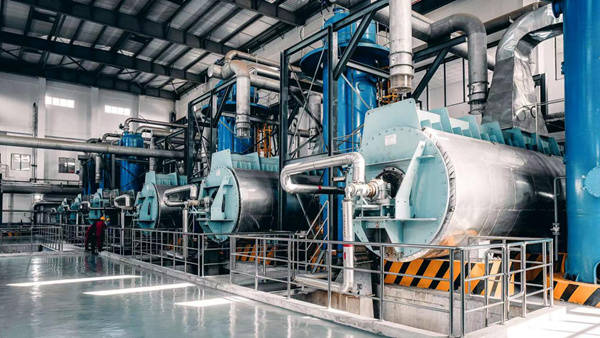
Company Overview - "RuiMo Environmental Protection" is a technology-driven high-tech enterprise in the recycled plastics industry, established in 2015, focusing on the high-value recycling of polypropylene (PP) and polyethylene (PE) through a "recycle-reuse-application" model [1][3] - The company utilizes physical recycling methods to achieve "same-level recycling," ensuring that recycled pellets perform close to virgin material levels, certified by the FDA and EU RoHS [1][3] Recent Developments - RuiMo Environmental Protection recently completed a new financing round led by Ingka Investments, with continued support from existing shareholder Asahi Kasei, and with Momentum Capital acting as the exclusive financial advisor [1] - The funds will primarily be used for technology research and development, capacity expansion, and market development [1] Market Context - Approximately 70% of plastic waste is either landfilled or incinerated, with increasing pressure on global plastic pollution management [2] - Various countries have set clear targets for the use of recycled materials in plastic packaging, with a goal of 30% by 2030 [2] - The global market for recycled plastic products is projected to reach $174.42 billion by 2030, with China accounting for about 60% of the global recycled plastics industry [2] Technological Innovations - RuiMo Environmental Protection has developed automatic sorting equipment for polyolefin food packaging waste, enhancing sorting efficiency through visual recognition and digital systems [3] - The company addresses quality and safety issues in recycled materials through deep cleaning, high-precision sorting, and melt filtration processes, enabling the production of recycled plastics suitable for high-demand applications [3] Industry Challenges - The recycled plastics industry is characterized by small, scattered, and polluting production practices, leading to low-quality recycled materials that often do not meet international brand standards [2] - The domestic production rate of food-grade recycled PP is low, with significant technical barriers and supply chain bottlenecks [2] Team Expertise - The founder and CEO, Zhu Kuan, has 8 years of experience in petrochemical marketing management and 10 years in the plastic recycling industry [4] - The CTO, Xiong Wei, holds a PhD in Polymer Science from the Chinese Academy of Sciences and has a background in multinational chemical enterprises [4] Investor Insights - Lukas Visser, head of circular investments at Ingka Group, highlighted RuiMo's strong supplier network and partnerships with leading local delivery platforms, aiming to expand its impact on the local recycling market [5] - Pontus Erntell, President and Chief Sustainability Officer of IKEA China, emphasized the commitment to long-term investment in the Chinese market and the opportunity to lead the transition to a circular economy [6]
协力推动全球塑料污染治理
Ren Min Ri Bao· 2025-08-12 01:18
Core Viewpoint - The global plastic consumption is projected to exceed 500 million tons in 2024, with nearly 399 million tons becoming waste, highlighting the urgent need for international agreements to combat plastic pollution [4][5]. Group 1: Plastic Pollution Situation - Nearly half of the plastic produced annually is single-use, with 18% to 20% of plastic waste entering the oceans [5]. - Without intervention, annual plastic waste entering the oceans could reach 37 million tons by 2040, with cumulative economic losses from plastic pollution estimated at $281 trillion from 2016 to 2040 [5][6]. - The impact of plastic waste is particularly severe in coastal developing countries and small island nations, with Easter Island experiencing an average of 500 pieces of plastic waste washing ashore every hour [6]. Group 2: Microplastics Impact - Microplastics pose significant long-term risks, with studies indicating they can reduce crop yields by 110 million to 360 million tons annually and seafood yields by 1.05 million to 2.43 million tons [7]. - The economic losses related to health issues from plastic pollution are estimated to exceed $1.5 trillion annually [7]. Group 3: Global Actions Against Plastic Pollution - The European Union has implemented the Single-Use Plastics Directive, leading to significant reductions in the use of lightweight plastic bags in countries like Sweden, Germany, and Austria [8][9]. - Ethiopia has enacted a law banning single-use plastic bags, with penalties for individuals and manufacturers [10]. - China has taken comprehensive measures to control plastic pollution, reducing plastic bag usage by over two-thirds since the implementation of the "plastic limit order" [11]. Group 4: Promoting Circular Economy - Experts emphasize that recycling alone cannot solve the plastic pollution crisis, advocating for a transition to a circular economy through innovation, policy coordination, and financial support [12]. - The global trade in non-plastic alternatives reached $485 billion in 2023, with developing economies showing a growth rate of 5.6% [12]. - Research institutions are developing biodegradable materials and sustainable practices to reduce greenhouse gas emissions associated with plastic production [12][13].

董事长专访|山东鸿承集团刘泽铭:做好“黄金危废终结者”
Sou Hu Cai Jing· 2025-08-12 01:08
Core Viewpoint - Shandong Hongcheng Group has transformed hazardous gold tailings into high-quality sulfur iron concentrate through a multi-stage flotation enrichment process, establishing itself as a leader in hazardous waste treatment in Hong Kong's stock market within 12 years of its founding [1][3]. Group 1: Company Background and Development - Founded in 2013 with a registered capital of 38 million yuan, Hongcheng Group was initiated by Liu Zeming, who was inspired by the potential of resource recovery from gold tailings [4]. - The company faced significant challenges in its early years, with two consecutive years of underperformance after its 2014 production launch, but achieved a breakthrough in 2017 with a utilization of over 500,000 tons of gold waste and revenue of 100 million yuan [4]. - By 2021, the company had transitioned from struggling to industry leader status, successfully listing on the Hong Kong Stock Exchange [4]. Group 2: Technological Innovations - The company developed a proprietary technology called "Selective Waste to Treasure Sulfur Iron Resource Efficient Enrichment Technology," which purifies sulfur and iron content from cyanide tailings from 40% to over 90% [6]. - The technology processes 1.2 million tons of tailings annually, producing 600,000 tons of sulfur iron concentrate with an annual revenue of 210 million yuan [6]. - The sulfur recovery rate from the process reaches 92%, and the sulfur content in the tailings is reduced to below 5%, exceeding national first-class product standards [6]. Group 3: Industry Impact and Future Plans - Hongcheng Group aims to create a complete gold industry chain, focusing on the high-value utilization of high-silica flotation tailings, which amount to millions of tons annually in Shandong [6][8]. - The company has initiated a project to process 1 million tons of high-silica flotation tailings, converting residual materials into construction aggregates and recovering iron elements [7]. - Future plans include establishing a comprehensive cyanide tailings utilization industrial park, with projects for producing 200,000 tons of nano-silicon-based materials and 600,000 tons of low-carbon cementing materials [10].
中国“反向开票”助力“两新”落地,促进循环经济
Zhong Guo Xin Wen Wang· 2025-08-12 00:54
Core Points - The "reverse invoicing" policy has been implemented to support the recycling industry and promote the circular economy in China, with significant positive effects being observed [1][2][3] Group 1: Policy Impact - As of June 30, 2023, 13,300 resource recovery companies issued reverse invoices amounting to 515.2 billion RMB, benefiting 1.67 million individuals [1] - The policy addresses the long-standing issue of "missing source invoices" in the recycling industry, facilitating smoother operations for resource recovery companies [2][3] - The implementation of the policy has led to a significant increase in the volume of recycled materials, with a reported 65% year-on-year increase in the recovery of scrapped vehicles [4] Group 2: Company Experiences - A scrapped vehicle recycling company reported issuing reverse invoices to over 4,000 individuals, with an invoicing amount nearing 8 million RMB, and expects a 100% increase in scrapped vehicle processing this year [2] - A construction waste processing company noted a 58% year-on-year increase in sales of recycled materials, enhancing the resource utilization rate and promoting collaboration across the supply chain [3] - A company specializing in the recycling of old appliances achieved a 98% utilization rate of recyclable materials, with reduced financial costs allowing for investment in deeper resource processing [3] Group 3: Industry Growth - The recycling system in China is becoming increasingly robust, with significant growth in various sectors, including a 25% increase in the recovery of old household appliances [4] - The recycling of discarded electrical and electronic products has seen a leading industry growth rate of 70% year-on-year [4]
助力“两新”政策落地,截至6月底1.33万户资源回收企业实现“反向开票”
Ren Min Ri Bao· 2025-08-12 00:09
Core Insights - The latest statistics from the National Taxation Administration indicate that as of the end of June this year, there are 13,300 resource recovery enterprises issuing "reverse invoices" to 1.67 million individuals, with a total invoice amount of 515.2 billion yuan and 5.11 million invoices issued [1] Group 1: Policy Impact - Starting from April 29, 2024, the tax authorities will implement a "reverse invoicing" policy in the resource recovery industry to facilitate the acquisition of invoices when recovering scrapped products from individuals, promoting a new round of large-scale equipment updates and the exchange of old consumer goods for new ones [1] - Over the past year, the "reverse invoicing" policy has positively impacted the implementation of the "two new" policies, regulated industry order, and promoted the development of the circular economy [1] Group 2: Industry Growth - Under the guidance of policy and market forces, the waste recovery, dismantling, and recycling industry chain has improved significantly [1] - In the first four months of this year, the domestic scrap vehicle recovery volume reached 2.767 million units, a year-on-year increase of 65% [1] - The number of standardized dismantled old household appliances exceeded 7 million units, reflecting a year-on-year growth of 25% [1] - The recovery volume of discarded electrical and electronic products led the industry with a year-on-year growth rate of 70% [1]