
多边主义

Search documents
庆祝中华人民共和国成立76周年招待会在京举行 习近平发表重要讲话
国家能源局· 2025-10-01 01:35
Core Points - The 76th anniversary of the founding of the People's Republic of China was celebrated with a reception in Beijing, emphasizing the importance of national unity and progress towards modernization [3][5][9] - Xi Jinping delivered a significant speech highlighting the achievements of the past 76 years and the need for continued efforts towards national rejuvenation and high-quality development [6][7] Summary by Sections Event Overview - The reception took place on the evening of September 30 at the Great Hall of the People, attended by around 800 guests, including both domestic and international figures [3][9] - The atmosphere was festive, with the national anthem sung and a warm welcome for the leaders [4][6] Key Messages from Xi Jinping - Xi Jinping expressed gratitude to various groups, including the military, ethnic minorities, and international friends, for their contributions to China's development [6][7] - He reflected on the historical journey of the Chinese nation from near collapse to great rejuvenation, emphasizing the importance of learning from history to build a better future [6][7] Future Directions - The speech outlined the commitment to deepening reforms and ensuring high-quality development while addressing social welfare [7] - Xi emphasized the importance of the "One Country, Two Systems" policy and the need for cooperation across the Taiwan Strait, as well as the defense of national sovereignty [7] - He called for promoting global cooperation and shared values, aiming to build a community with a shared future for mankind [7]

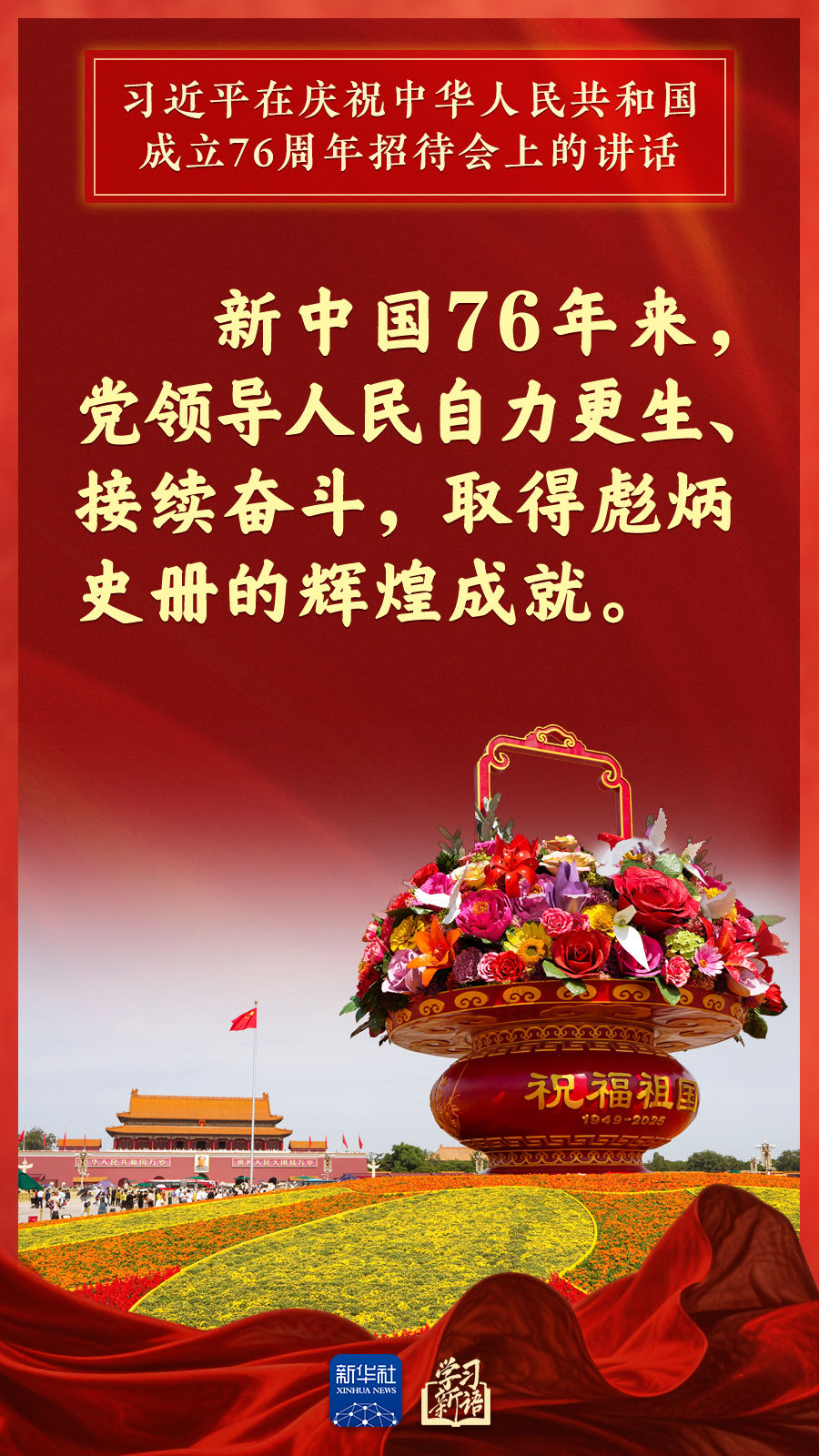
学习新语|国庆招待会,习近平总书记重要讲话金句来了
Xin Hua She· 2025-09-30 23:19
Core Points - The speech emphasizes the achievements of the Chinese Communist Party in leading the nation towards self-reliance and continuous struggle over the past 76 years [1][3][5] - It highlights the historical journey of the Chinese nation from a state of crisis to great rejuvenation, marked by hardships and triumphs [3][11] - The importance of utilizing historical experiences to improve national construction and honor the legacy of past leaders and revolutionaries is stressed [5][9] - The commitment to the "One Country, Two Systems" policy is reiterated, with a focus on supporting Hong Kong and Macau's integration into national development [11] - The speech calls for deepening cross-strait exchanges and cooperation while firmly opposing separatist actions and external interference [11][13] - It advocates for promoting common values among humanity and practicing true multilateralism in response to evolving international circumstances [13][15] - The aspiration for the great rejuvenation of the Chinese nation is framed as an unprecedented undertaking, inspiring a spirit of urgency and diligence [15]
新华时评丨联合国大会上的交锋与新声
Xin Hua She· 2025-09-30 14:36
Core Points - The 80th United Nations General Assembly focuses on "Working Together: Promoting Peace, Development, and Human Rights for Eighty Years, Continuing the Past and Opening Up New Chapters" [2] - The assembly reflects a deep global divide, with contrasting worldviews: one clinging to outdated hegemonic logic and the other embracing multilateralism and common development [2][3] - Israeli Prime Minister Netanyahu's speech was met with mass walkouts from representatives of various countries, symbolizing collective resistance and isolation [2] - UN Secretary-General Guterres warned of a "deep global divide" and urged leaders to choose between a world of power or a world governed by law [2][3] Global Dynamics - The root cause of the current crises and divisions stems from certain Western powers attempting to maintain their declining hegemony through destructive means [3] - These powers advocate for a "rules-based international order" while practicing double standards, undermining global cooperation and the authority of the UN [3] - Voices from the Global South are increasingly demanding fairness and justice, actively reshaping the international order rather than being passive recipients [3] Constructive Forces - In this context, China's proposed actions and ideas are seen as valuable, including stronger climate action goals and support for the development of Global South countries [4] - The 80th anniversary of the UN serves as a moment to reflect on history and make crucial choices for the future, emphasizing the need for open cooperation rather than isolationist policies [4] - China advocates for multilateralism and aims to work with other countries towards building a community with a shared future for mankind [4]
俄中能源合作前景如何?中国计划如何吸引更多俄游客?中国驻俄大使回应
Xin Lang Cai Jing· 2025-09-30 13:28
Group 1: Current State of China-Russia Relations - China-Russia relations are at their historical best, characterized by mutual cooperation and strategic collaboration, unaffected by third-party interference [1][2] - High-level visits between the two countries' leaders have deepened their friendship and set a clear direction for future cooperation [1][2] Group 2: Economic and Energy Cooperation - China and Russia are expanding cooperation in various sectors including trade, investment, energy, agriculture, and technology, aiming to create benchmark projects that enhance resilience and efficiency [2][3] - The energy partnership is crucial for both nations, providing China with diversified energy sources and contributing to global energy market stability [2][3] Group 3: Tourism and Cultural Exchange - A new visa-free policy for Russian passport holders is expected to significantly increase the number of Russian tourists visiting China, with estimates of a 20% to 30% rise in tourist numbers [3][5] - Popular tourist destinations for Russian visitors include major cities like Beijing, Shanghai, and Sanya, with efforts underway to improve services and enhance the travel experience [5] Group 4: Multilateral Cooperation - The BRICS and Shanghai Cooperation Organization (SCO) frameworks are seen as vital platforms for emerging markets to collaborate and counter unilateralism and protectionism [6][7] - The SCO has grown to include 26 member countries, focusing on practical cooperation in various fields, which enhances its global influence [6] Group 5: Trade and Economic Policies - China emphasizes that trade wars and tariff conflicts yield no winners and advocates for open trade to achieve mutual benefits [7] - The country is committed to resisting all forms of protectionism and promoting an open global economy, which aligns with its broader economic strategy [7]
外交部:全球治理倡议反映国际社会共同心声 得到广泛支持
Xin Hua She· 2025-09-30 10:29
郭嘉昆说,不久前,习近平主席提出全球治理倡议,强调奉行主权平等、遵守国际法治、践行多 边主义、倡导以人为本、注重行动导向,为破解世界治理难题提供了"中国方案"。倡议核心理念 同联合国宪章宗旨和原则一脉相承,展现了中国对联合国的坚定支持,反映了国际社会的共同心 声,得到广泛支持。 郭嘉昆表示,全球治理倡议和全球发展倡议、全球安全倡议、全球文明倡议各有侧重、相互促 进,是新时代的中国向世界提供的系统性国际公共产品,从四个维度为动荡不安的世界注入稳定 性和确定性,彰显了中国在国际事务中的担当作为。中方期待同各方一道努力,落实四大全球倡 议,让《联合国宪章》承载的和平愿景与发展梦想成为现实,惠及各国人民。 新华社北京9月30日电(记者邵艺博、董雪)外交部发言人郭嘉昆30日表示,全球治理倡议核心理 念同联合国宪章宗旨和原则一脉相承,展现了中国对联合国的坚定支持,反映了国际社会的共同 心声,得到广泛支持。 当日例行记者会上,有记者问:近期联合国秘书长古特雷斯、第80届联大主席贝尔伯克等均表示 中方提出的全球治理倡议内涵丰富,核心理念与联合国宪章宗旨和原则相契合。本届联大一般性 辩论期间,多国领导人发言赞赏全球治理倡议。与 ...
专访联合国驻华协调员常启德:多边主义并非奢侈品,而是必需品
Di Yi Cai Jing· 2025-09-30 10:29
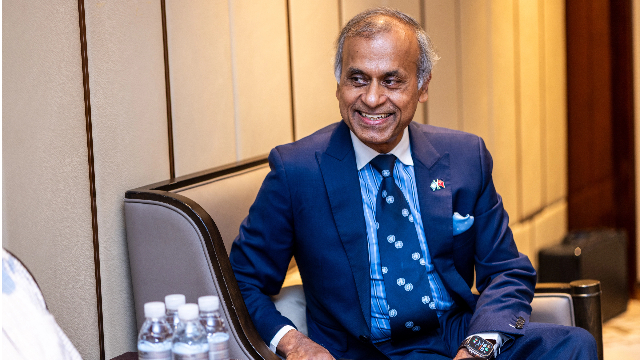
常启德表示,全球多边合作面临的最大挑战,并非是缺乏愿景和目标,而是信任与团结的缺失。 "这不仅是庆祝的时刻,更是反思的契机。"联合国驻华协调员常启德(Siddharth Chatterjee)在专访中 开门见山地向第一财经记者表示。 今年联合国迎来了成立80周年纪念,在这80年来,联合国在全球范围内促进了和平、社会进步和可持续 发展,不过也应看到,当今世界危机四伏,不平等现象愈演愈烈,各方对全球多边机构的信任赤字也在 持续扩大。 常启德在专访中传递出明确信息:"多边主义必须回归务实合作,这关乎我们能否共同迈向一个更可持 续、更公平的未来,而中国在此进程中可扮演关键角色。" 全球多边合作的挑战 第80届联合国大会在9月22日举行了纪念联合国成立80周年高级别会议,各方强调,要重申对多边主义 以及联合国宪章宗旨和原则的承诺,携手共进,强化联合国作用。 可持续发展 "联合国成立80周年:可持续商业与多边合作研讨会"9月29日在上海举办。本次研讨会聚焦"创新多边合 作机制""责任供应链建设"和"可持续商业转型"三大主题,为全球不同地区、不同发展模式的代表搭建 了跨界交流与共享的桥梁。 常启德在开幕致辞中强调了多边主义 ...
联合国成立80周年:共同捍卫真正的多边主义
人民网-国际频道 原创稿· 2025-09-30 09:35
Core Points - The article emphasizes the importance of the United Nations in global governance and the need to reaffirm commitment to multilateralism and the principles of the UN Charter [1][2][3] - It highlights the challenges faced by global governance, including rising unilateralism and protectionism, and the need for reform in the global governance system [2][3] - The four global initiatives proposed by China aim to address deficits in peace, security, development, and governance, providing a systematic Chinese solution for global governance reform [4][5] Group 1 - The United Nations is recognized as a key institution for maintaining global integrity and is seen as irreplaceable in the current international order [1][2] - The UN's role as a coordinator rather than a substitute for nations is emphasized, particularly in the context of rising global challenges [2][3] - The global South is identified as an important force in the transformation of global governance, contributing to a more balanced international power structure [3][4] Group 2 - The four global initiatives proposed by China are interconnected and aim to promote modernization and reform in the global governance system for developing countries [4][5] - China's successful experience in modernization, particularly in poverty alleviation, serves as a model for other developing nations [4][5] - The initiatives also create platforms for cooperation and communication among global South countries, enhancing their influence in international affairs [5]
中国驻肯尼亚大使馆举行庆祝中华人民共和国成立76周年招待会
人民网-国际频道 原创稿· 2025-09-30 08:50
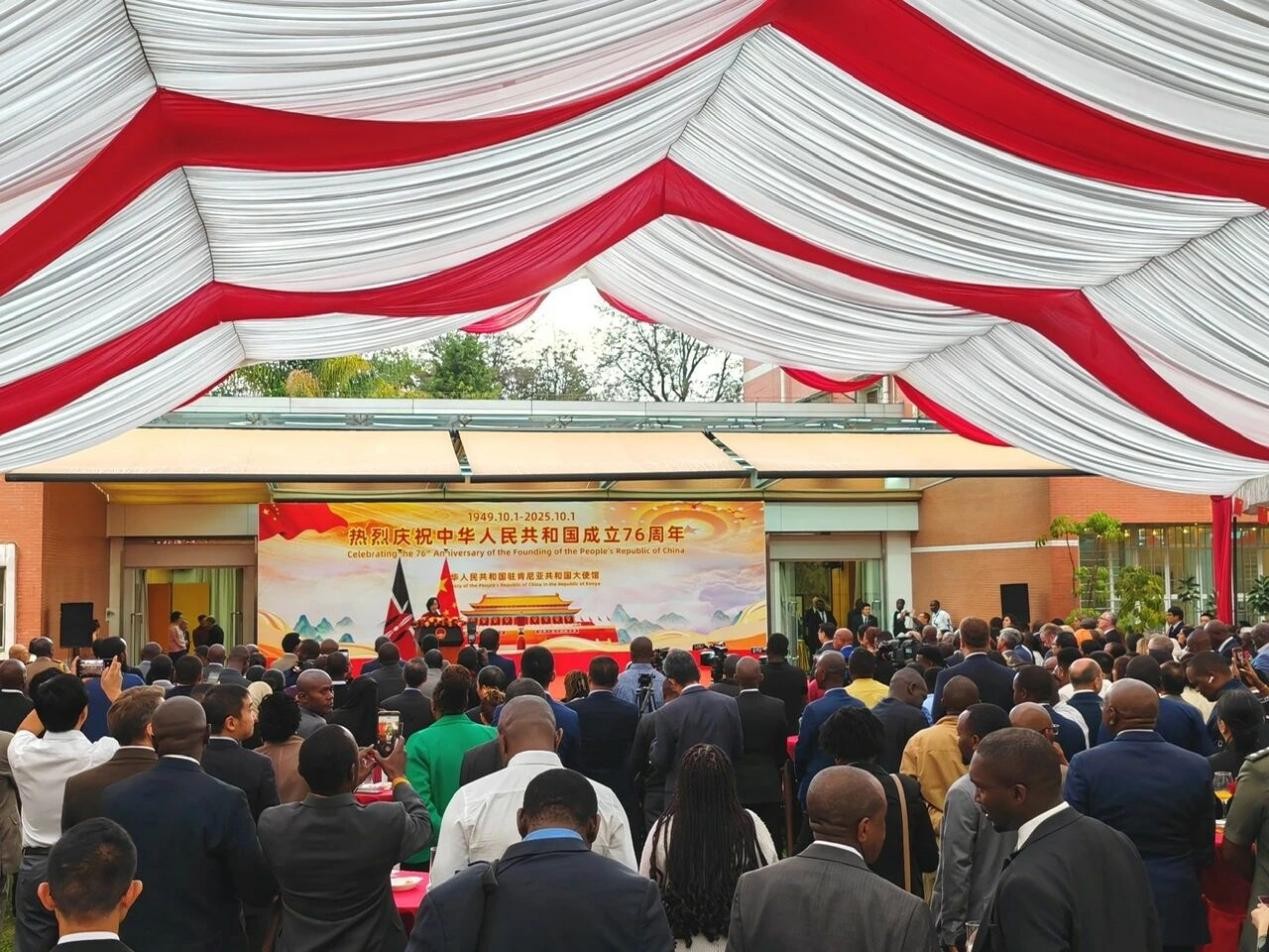
招待会现场。中国驻肯尼亚大使馆供图 穆达瓦迪代表肯尼亚政府和人民祝贺中国国庆,表示肯方钦佩中国取得举世瞩目成就。赞赏中方为包括肯尼亚在内非洲国家发展所作积极贡献,并表示 值此复杂多变的国际形势下,愿与中方一道,坚定维护多边主义和公平合理的国际秩序。 招待会现场。中国驻肯尼亚大使馆供图 郭海燕致辞回顾新中国76年来取得伟大成就,呼吁坚守多边主义并宣介全球治理倡议,表示中方愿同肯方一道,以两国元首重要共识为引领,共同打造 新时代中肯命运共同体。 人民网内罗毕9月30日电(记者黄炜鑫)中国驻肯尼亚大使馆29日举行招待会,隆重庆祝中华人民共和国成立76周年。中国驻肯尼亚大使郭海燕、肯尼 亚内阁首席部长兼外长穆达瓦迪、联合国内罗毕办事处总干事班古拉及肯政要和各界友好人士、外国驻肯使节、国际组织驻肯代表、中资机构和华侨华人等 500余人出席。 ...
外交部:联合国地位必须维护,全球治理需要加强
Sou Hu Cai Jing· 2025-09-30 07:54
总台央视记者提问,我们注意到,近期联合国秘书长古特雷斯、联大主席贝尔伯克等均表示中方提出的 全球治理倡议内涵丰富,核心理念与联合国宪章宗旨和原则相契合。本届联大一般性辩论期间,多国领 导人发言赞赏全球治理倡议。与此同时,古特雷斯直言多边主义"受到冲击",媒体也非常关注当前的全 球治理赤字和改革完善全球治理的紧迫需要。发言人对此有何评论?对此,郭嘉昆表示,在联合国成立 80周年这一历史节点,各国都在思考人类社会向何处去,是坚持多边主义还是纵容丛林法则回归,是重 振国际合作还是任由单边霸凌横行。从今年联大一般性辩论来看,国际社会的普遍共识是联合国地位必 须维护,全球治理需要加强。 9月30日,外交部发言人郭嘉昆主持例行记者会。 郭嘉昆指出,不久前,习近平主席提出全球治理倡议,强调奉行主权平等、遵守国际法治、践行多边主 义、倡导以人为本、注重行动导向,为破解世界治理难题提供了"中国方案"。倡议核心理念同联合国宪 章宗旨和原则一脉相承,展现了中国对联合国的坚定支持,反映了国际社会的共同心声,得到广泛支 持。全球治理倡议和全球发展倡议、全球安全倡议、全球文明倡议各有侧重、相互促进,是新时代的中 国向世界提供的系统性国际 ...
第80届联大一般性辩论闭幕
Zhong Guo Xin Wen Wang· 2025-09-30 06:24
Group 1 - The 80th United Nations General Assembly (UNGA) concluded with representatives from 189 member states discussing major issues such as peace and security, sustainable development, artificial intelligence, climate change, and UN reform [1][2] - The theme of this year's general debate was "Together for Peace, Development, and Human Rights: 80 Years On, Continuing the Journey" [2] - A significant focus was placed on the urgent need for political progress in the Israeli-Palestinian conflict, emphasizing the importance of converting diplomatic breakthroughs into concrete actions to support the two-state solution [2] Group 2 - The assembly featured speeches from notable figures, including Canada's Foreign Minister Anand and North Korea's Deputy Foreign Minister Kim Son-kyung, highlighting the importance of multilateralism and the principles of fairness and sovereignty [1] - The assembly also included high-level meetings on sustainable development goals, a climate summit, and discussions on global governance of artificial intelligence [2] - The UNGA serves as a primary platform for deliberation, oversight, and review among all member states, transitioning into a phase of discussing and reviewing agenda items following the general debate [2]