全国统一电力市场

Search documents
我国电力生产组织方式由计划全面转向市场
Zhong Guo Dian Li Bao· 2025-11-09 12:30
Core Viewpoint - The establishment of a provincial-level electricity spot market in China marks a significant shift from a planned electricity production organization to a market-oriented approach, indicating the preliminary completion of a unified national electricity market [1] Group 1: Market Development - The electricity spot market has achieved basic coverage across provinces, with Sichuan, Chongqing, and Qinghai recently entering continuous settlement trial operations [1] - Seven provincial-level spot markets, including Shanxi and Guangdong, have officially commenced operations, while others like Fujian and Shaanxi are in trial phases, completing the goal of provincial coverage two months ahead of schedule [1] - The transition to a unified national electricity market is a key aspect of deepening electricity system reform and constructing a new energy system [1] Group 2: Operational Efficiency - The spot market has demonstrated its value in ensuring supply stability and optimizing resources during peak summer demand, with significant reductions in non-operating rates and supply costs [2] - Inter-provincial spot trading has played a crucial role, with a maximum mutual assistance capacity of 14.32 million kilowatts, effectively supporting over 20 provinces during peak demand [2] - Price signals from the market have encouraged users to adjust their electricity consumption behavior, leading to substantial savings for businesses [2] Group 3: Future Outlook - The ongoing development of electricity spot markets is expected to enhance system regulation capabilities, ensure reliable grid operation, and promote the consumption of renewable energy [2] - The electricity spot market is anticipated to provide solid energy support for high-quality economic and social development as the construction of a new energy system accelerates [2]


【8点见】男子冒充民政局长采集村民个人信息,官方通报
Yang Shi Wang· 2025-11-08 00:13
Group 1 - China's first electromagnetic catapult aircraft carrier, Fujian, has been commissioned [2] - The national unified electricity market construction has achieved significant results, shifting from planning to market [2] - Hainan Free Trade Port is ready for customs closure [2] Group 2 - The third quarter saw the China Consumer Association handle 536,761 consumer complaints [2] - The railway department is offering discounts of up to 60% on over 1,300 train services during the off-peak season [2] - The State Council announced the initiation of a new water source project for the ancient Dujiangyan irrigation system [2]

国家电网经营区基本实现电力现货市场全覆盖
中关村储能产业技术联盟· 2025-11-07 10:28
Core Viewpoint - The article highlights the progress of the national unified electricity market in China, with the recent transition of the Sichuan and Chongqing electricity spot market to continuous settlement trial operation, achieving the goal set by the National Development and Reform Commission and the National Energy Administration ahead of schedule [2][3]. Group 1 - The continuous settlement trial operation of the electricity spot market in Sichuan and Chongqing began on November 1, marking the completion of 18 provincial-level spot markets in operation, two months ahead of the 2025 target for nationwide coverage [2]. - The inter-provincial electricity spot market, which started trial operation in 2022, is set to officially operate on October 15, 2024, significantly enhancing the optimization of cross-province electricity resource allocation [2]. - In October, the first inter-regional electricity spot trading with the Southern Power Grid was conducted, with a maximum transaction of 1.8 million kilowatts and a total electricity volume of 4.23 million megawatt-hours, marking a key step in the construction of a unified national electricity market [2]. Group 2 - The company has actively promoted the construction of a national unified electricity market under the guidance of the National Development and Reform Commission and the National Energy Administration, forming a multi-level unified electricity market system characterized by "unified market and two-level operation" [3]. - The inter-provincial and intra-provincial electricity spot markets are operating efficiently in coordination, effectively playing a regulatory role in the market and providing strong support for electricity supply and energy transition [3]. - As the construction of the electricity spot market continues to advance, the organization of electricity production has largely transitioned to a market-oriented model, optimizing production organization methods and improving the efficiency and refinement of electricity production [3].
11月7日证券之星午间消息汇总:深交所发声!事关创业板改革
Sou Hu Cai Jing· 2025-11-07 03:57
Macroeconomic News - China's total import and export value reached 37.31 trillion yuan in the first ten months of the year, showing a year-on-year growth of 3.6% [1] - Trade with countries involved in the Belt and Road Initiative amounted to 19.28 trillion yuan, up 5.9%, accounting for 51.7% of China's total foreign trade [1] - Private enterprises' import and export value was 21.28 trillion yuan, reflecting a year-on-year increase of 7.2% [1] Industry News - The construction of a nationwide unified electricity market in China has achieved significant results, with 28 provinces entering continuous operation of the electricity spot market [4] - The game IP market in China is expected to exceed 275.39 billion yuan by 2025, with a year-on-year growth of 2% [4] - Google's new AI chip, Ironwood, is set to launch soon, boasting speeds over four times faster than its predecessor and designed to eliminate data bottlenecks [5] Sector Insights - Citic Securities reports that global electrolytic aluminum supply and demand will remain balanced over the next three years, but any supply issues could lead to price increases [6] - Dongguan Securities indicates that the lithium battery industry is experiencing rapid demand growth, with net profits expected to increase by 30% year-on-year in the first half of 2025 [6] - The banking sector is currently undervalued in the A-share market, suggesting an opportunity for increased allocation in bank stocks [6]

白皮书:南方电力市场市场化交易电量超7成 绿证交易量占全国63%
Xin Lang Cai Jing· 2025-11-03 04:54
Core Insights - The Southern Power Market has transitioned from a pilot phase to full regional coverage over ten years, showcasing significant reform achievements and serving as a model for the national unified electricity market [1][2] Group 1: Development and Achievements - The Southern Power Market has achieved important breakthroughs in institutional mechanisms, with over 250,000 market participants and more than 70% of electricity traded through market transactions [1] - Cumulative electricity transmission from the West to the East has surpassed 30 trillion kilowatt-hours, with green certificate trading accounting for 63% of the national total [1] - In 2023, the trading volume of green electricity and certificates exceeded 250 billion kilowatt-hours, marking a year-on-year increase of 360% [1] Group 2: Strategic Role and Functionality - The Southern Power Market is a core component of the national unified electricity market, aligning with the strategic goal of a unified national market and adhering to the principles of "five unifications and one openness" [1] - It has pioneered a comprehensive trading mechanism and established a full-function market, contributing valuable practical experience for the operation of the national unified electricity market [1] Group 3: Future Projections and Market Efficiency - The Southern Power Market is expected to achieve a record electricity transmission of 2,384 billion kilowatt-hours in 2024, with cumulative transmission during the 14th Five-Year Plan projected to exceed 1.1 trillion kilowatt-hours [2] - Market optimization is anticipated to increase electricity transmission from the West to the East by 12.6 billion kilowatt-hours in the third quarter of 2025, representing a 15% increase [2] - The platform has facilitated the trading of over 350 billion kilowatt-hours of green electricity and certificates since the beginning of the 14th Five-Year Plan, accelerating the pace of green transformation [2]
国家能源局:前三季度全国能源消费总体延续增势
Xin Hua Cai Jing· 2025-10-31 10:49
Core Insights - The overall energy consumption in China has continued to grow in the first three quarters of the year, supported by strong energy supply and investment, contributing to economic recovery [1] - The electricity consumption has been primarily driven by the tertiary industry and urban residents, accounting for a combined contribution rate of 54.5% [1] - Coal consumption has weakened due to the rapid growth of clean energy sources, while refined oil consumption continues to decline [1][2] Energy Consumption and Supply - In the first nine months, the total electricity consumption showed steady growth, with the maximum power load hitting new highs four times during the peak summer months [1] - Natural gas consumption saw a slight increase, with urban gas and power generation gas continuing to grow, while industrial gas consumption remained stable compared to last year [1] - Coal production from large-scale industrial sources increased by 2%, while crude oil and natural gas production rose by 1.7% and 6.4% respectively, providing strong support for energy supply [1] Market Dynamics and Policy Initiatives - The National Energy Administration has effectively guided coal market expectations and regulated coal supply, leading to a steady recovery in coal prices, with the spot price for 5500 kcal thermal coal reaching approximately 704 yuan per ton [2] - The third quarter saw the release of several policies aimed at integrating artificial intelligence with the energy sector, promoting new energy storage, and enhancing electric vehicle charging infrastructure [2] - The introduction of policies such as the "three-year doubling" action plan for charging facilities and guidelines for the construction of a unified national electricity market aims to facilitate high-quality development in the energy sector [2]
新闻发布︱国家能源局举行季度例行新闻发布会
国家能源局· 2025-10-31 10:33
Core Viewpoint - The National Energy Administration (NEA) is actively implementing the spirit of the 20th National Congress of the Communist Party of China, focusing on building a new energy system and ensuring energy supply stability during peak seasons, while promoting renewable energy integration and electric vehicle charging infrastructure development [6][8][9]. Group 1: Energy Situation in the First Three Quarters - The energy supply in China has been stable and effective, with significant policy support leading to orderly industry development and a steady increase in energy investment [10][11]. - The maximum electricity load reached new highs during the summer peak, with July and August seeing electricity consumption exceed 1 trillion kilowatt-hours for two consecutive months [11][28]. - Coal production and oil and gas output have shown steady growth, with coal output increasing by 2%, oil by 1.7%, and natural gas by 6.4% year-on-year [11][12]. Group 2: Renewable Energy Integration - Renewable energy installed capacity has reached nearly 2.2 billion kilowatts, with wind and solar power exceeding 1.7 billion kilowatts, and a 47.7% year-on-year increase in new installations [13][14]. - Renewable energy generation has grown steadily, accounting for approximately 60% of industrial electricity consumption, with total generation reaching 2.89 trillion kilowatt-hours, a 15.5% increase year-on-year [14][15]. - The average utilization hours for hydropower reached 2,551 hours, with wind power achieving a utilization rate of 94% [15][16]. Group 3: Electric Vehicle Charging Infrastructure - The total number of electric vehicle charging facilities reached 18.06 million, a 54.5% increase year-on-year, effectively supporting the charging needs of 40 million electric vehicles [17][18]. - Policies have been implemented to enhance charging infrastructure, with a goal to build 28 million charging facilities by 2027 to meet the demand of over 80 million electric vehicles [18][19]. - New technologies in charging, such as high-power charging stations, have been rapidly adopted, significantly improving charging speed and efficiency [19]. Group 4: Market Mechanisms and Policies - The national unified electricity market has seen a steady increase in trading volume, with a total of 4.92 trillion kilowatt-hours traded, representing a 7.2% year-on-year growth [21][22]. - The NEA is focusing on enhancing the flexibility of the energy system through various measures, including the promotion of virtual power plants and the integration of electric vehicles into the energy grid [41][42]. - The NEA is also addressing the issue of negative electricity prices, which have become more frequent due to the increasing share of renewable energy, indicating a need for better market regulation [36][37]. Group 5: Future Plans and Goals - The NEA aims to achieve a clean, low-carbon, safe, and efficient new energy system by 2035, with specific targets for renewable energy capacity and consumption [37][38]. - Key strategies include expanding renewable energy supply, promoting integrated development, and enhancing the market mechanisms to support high proportions of renewable energy [38][39]. - The NEA is committed to ensuring energy security and stability during peak seasons, particularly in winter, by strengthening fuel supply and enhancing emergency management capabilities [30][31].

氢能、核能、新型储能写入规划 “十五五”能源产业要怎么干?
2 1 Shi Ji Jing Ji Bao Dao· 2025-10-30 23:08
Core Insights - The "14th Five-Year Plan" has significantly advanced China's energy transition, with a focus on enhancing energy supply capacity, accelerating green transformation, and optimizing energy layout [1] - The "15th Five-Year Plan" aims to achieve carbon peak targets and establish a clean, low-carbon, safe, and efficient new energy system [1] Energy Sector Development - The "15th Five-Year Plan" emphasizes the cultivation of emerging and future industries, particularly in new energy, new materials, aerospace, and low-altitude economy [2] - New energy is recognized as a key component of strategic emerging industries, with a shift towards improving industry quality and efficiency during the "15th Five-Year Plan" [2] - Hydrogen energy and nuclear fusion are highlighted as future industries, with plans to explore diverse technological routes and applications [2] Hydrogen Energy and Nuclear Fusion Progress - By the end of 2024, China's hydrogen production capacity is expected to exceed 50 million tons per year, with over 600 renewable energy hydrogen production projects planned [3] - The country has promoted 28,000 fuel cell vehicles and built over 500 hydrogen refueling stations, leading in the commercial vehicle sector [3] Modern Infrastructure Development - The "15th Five-Year Plan" calls for the construction of a modern infrastructure system, optimizing energy backbone channel layouts and enhancing new energy infrastructure [4] - Significant projects include high-voltage transmission channels and natural gas pipeline networks to support clean energy development [4][5] National Unified Market and Competition - The plan aims to eliminate barriers to building a national unified market and address "involution" competition, promoting a healthy market order [6] - The establishment of a unified electricity market is crucial for energy transition and resource optimization [6] New Energy System and Carbon Peak Goals - The plan focuses on building a new energy system, increasing the share of renewable energy, and ensuring the orderly replacement of fossil fuels [7] - By mid-2025, China's renewable energy installed capacity is projected to reach 2.159 billion kilowatts, accounting for 59.2% of total installed capacity [7][8] - The nuclear power sector is also expanding, with operational capacity reaching 60.91 million kilowatts, making China the world leader [8]
光伏设备板块强势拉升,阿特斯20cm涨停
2 1 Shi Ji Jing Ji Bao Dao· 2025-10-29 09:47
Core Points - The three major indices experienced a strong upward trend on October 29, with the ChiNext Index rising nearly 3% to reach a new high for the year, and the Shanghai Composite Index closing above the 4000-point mark [2] - The North Exchange 50 Index saw an increase of over 8% [2] - In the sector performance, photovoltaic equipment stocks surged in the afternoon, with companies like Arctech, Tongrun Equipment, Longi Green Energy, and Tongwei Co. all hitting the daily limit [2] Industry Developments - On October 29, the National Energy Administration announced the third energy regulatory work meeting for 2025, emphasizing the advancement of a unified national electricity market [2] - The meeting highlighted the need to improve the regulatory framework for the electricity market, promote regular transactions across different grid operating areas, and enhance market supervision while addressing local interference [2] - The goal is to ensure that provincial spot markets operate continuously and cover the entire region [2]




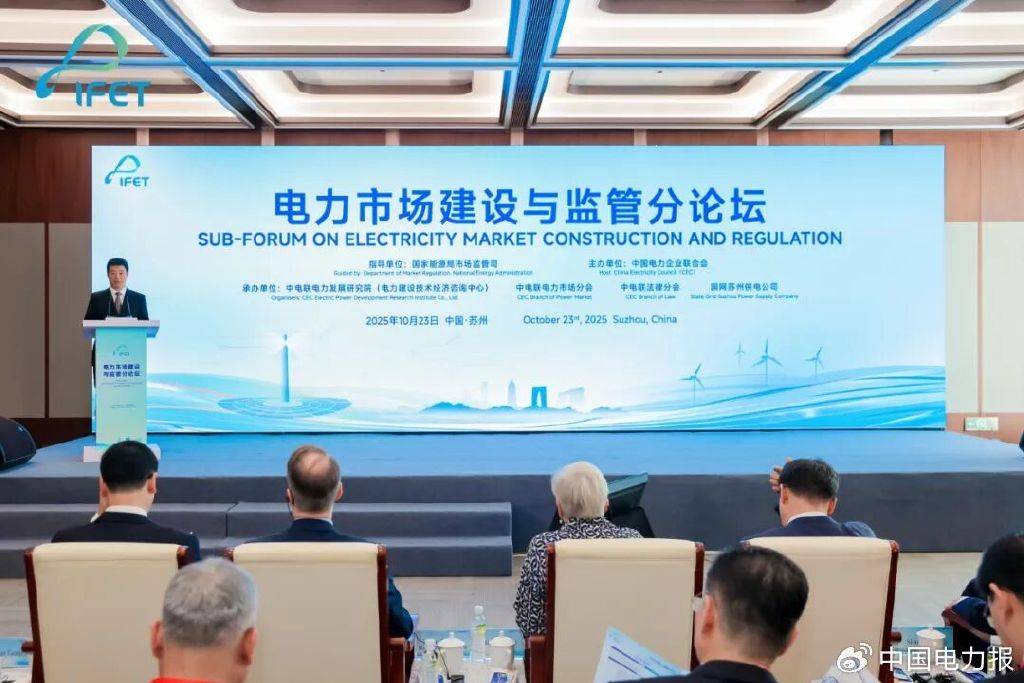
电力市场建设与监管分论坛:中国电力市场十年深化改革成效显著
Sou Hu Cai Jing· 2025-10-24 11:38
Core Viewpoint - The significant achievements of China's electricity market reform over the past decade have been highlighted, emphasizing the importance of efficient operation and scientific regulation in achieving high-quality energy development amid global energy transitions [4]. Market Rule Foundation - The design of the electricity market's foundational rules has been a primary task since the 2015 reform, with a series of basic rules established by the National Development and Reform Commission and the National Energy Administration [5]. - The newly revised "Basic Rules for Electricity Market Operation" in 2024 has laid the groundwork for a unified national electricity market rule system, addressing previous fragmentation and standardizing market operations across the country [5][6]. Efficient Market System - The medium- and long-term market has been crucial in stabilizing electricity supply, with provincial spot markets officially operating and the auxiliary service market expanding to support high proportions of renewable energy [7]. - The market-based pricing mechanism has been refined, with the National Energy Administration completing three regulatory cycles for the determination of transmission and distribution prices, facilitating market transactions [7]. - In 2024, market-based trading of renewable energy exceeded 1 trillion kilowatt-hours, accounting for 55% of total electricity generation, indicating a successful transition from a "single electricity market" to a more diversified market structure [7]. Diverse Market Structure - The volume of market-based electricity transactions has increased from 1.1 trillion kilowatt-hours in 2016 to 6.2 trillion kilowatt-hours in 2024, with the proportion of total electricity consumption rising from 17% to 63% [8]. - The number of registered operating entities has surpassed 1 million, a 20-fold increase since 2016, with various new market participants emerging, including independent storage and virtual power plants [8]. Strengthening International Cooperation - The forum released two English reports showcasing the progress and planning of China's electricity market, aiming to enhance international collaboration and knowledge sharing in this field [9]. - The need for countries to explore new electricity market construction and regulatory models in response to global energy transitions was emphasized, with China encouraged to continue strengthening international cooperation and learning from advanced experiences [9].