
无废城市

Search documents
“无废城市”建设进行时,政、企、媒等多方热议固体废物治理
2 1 Shi Ji Jing Ji Bao Dao· 2025-12-23 05:42
12月19日,"建设无废城市,共创绿色未来"第五期环境新闻茶座在北京成功举办。活动由中国环境新闻 工作者协会主办,北京市企业家环保基金会(SEE基金会)协办,阿里巴巴公益、蒙牛集团、上海浦东 乐芬环保公益促进中心(捡拾中国)支持。21世纪经济报道等媒体代表受邀参加本次茶座活动,结合一 线实践分享见解。 绿色发展是中国式现代化的鲜明底色。党的二十届四中全会提出,加快经济社会发展全面绿色转型,建 设美丽中国。城市作为人口与产业的核心载体,其绿色转型是美丽中国建设的重要一环,固体废物污染 防治则是筑牢城市生态底线的"硬支撑"、检验绿色发展水平的"试金石",也是连接生态保护、资源循环 与民生福祉的关键纽带。"十四五"以来,我国固体废物污染防治工作取得明显成效,无废城市建设持续 深化。 中国环境新闻工作者协会主席刘友宾在致辞中指出,为无废城市建设提供有力舆论保障,是生态环境新 闻肩负的一项重要职责使命。如何更好凝聚共识,助力固废治理与城市绿色发展,为建设美丽中国贡献 媒体力量?刘友宾提出三点建议:一是做美丽中国建设的积极传播者,在知与行之间架起认知桥梁。二 是做城市绿色转型的建设性监督者,在权与责之间找准定位。三是做环 ...
全国首个“无废交通枢纽”怎样炼成
Hang Zhou Ri Bao· 2025-12-23 02:02
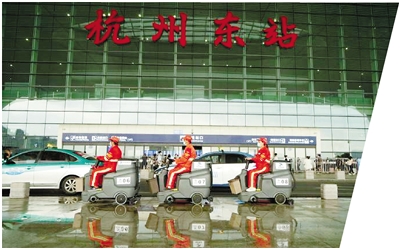
杭州东站总建筑面积达34万平方米,是华东最大的铁路枢纽站点之一,日均客流量超40万人次,单 日最高客流达59.4万人次。自杭州深化全域"无废城市"建设以来,杭州东站秉持新发展理念,从"最温 馨的国际枢纽驿站"迈向"无废标杆",全力打造交通领域"无废城市细胞"示范样板,努力探索建设全国 首个"无废交通枢纽",为杭州建设生态文明之都注入硬核动能。 以"减量化、精准化"为核心,如今杭州东站已构建起一套垃圾分类治理体系。公共区域实现分类桶 全覆盖,垃圾集置点统一设置清运公示牌,建立定点清运制度,制定《东站枢纽站内垃圾桶桶长清 单》,将分类职责精准落实到人;组建专门巡查团队,发现垃圾分类问题即时推送、立行立改;依 托"庭院式保洁法",构建常态化清洁机制,定期冲洗室外设施,公共区域环境整洁测评满意度98%以 上。 通过数字化改革破解枢纽治理难题,站内还构建了一套高效低碳出行生态。地铁安检上移实现"一 次安检、双向通行",人均换乘时间节约2到3分钟;打造"大型综合交通枢纽智治"应用,已实现客流预 警预测和智能化调度,周边道路通行效率提升15%,"最后一公里"平均通行时间从8分钟缩至2分钟;依 托城市大脑搭建停车诱导系统,通 ...

江苏“无废城市”建设多点开花
Xin Hua Ri Bao· 2025-12-18 23:47
□ 本报记者 杨民仆 "2024年,公司被纳入江苏省'无废城市'建设项目库,近期顺利获得财政奖励资金1241万元,这是对我 们深耕资源循环领域的莫大肯定!"近日,江苏海宝资源循环科技有限公司行政部主任卢飞告诉记者。 据了解,近两年江苏省级财政已累计投入2.498亿元,为全省"无废城市"建设注入资金动能。 项目入库,今年下达1亿元奖励资金 "过去减废多被视为环保部门的任务,推进'无废工厂'后才发现,它更像一套生产管理方法——从源头 把废物流量压下去,把可回用的资源重新拉回到制造体系里。"SEW-电机(苏州)有限公司相关负责人 表示。如今在苏州,"无废工厂"已变成企业、园区的行动指南,成为破解工业固废治理难题的"金钥 匙",财政的专项支持更成为破解工业固废治理难题的重要支撑。 在SEW-电机(苏州)有限公司的生产车间内,固体废物不再以"堆放区"的形态出现,而是以"工序节 点"的方式被纳入管控:哪里产生、如何分类、何时转运、去向何处,都被流程化、标准化固化。这些 措施并非单点"技改",而是贯穿采购、生产、仓储、物流的系统协同,形成"减量—回用—再生"的链 条,降本增效的同时,把环境风险降到可控、可追溯的范围内。 " ...
项目入库、工厂闭环、智能监管三箭齐发江苏“无废城市”建设多点开花
Xin Hua Ri Bao· 2025-12-18 23:01
作为绿色发展赛道上的新锐力量,位于南通如东县的江苏海宝资源循环科技有限公司,斥资10亿元 打造年处置60万吨废铅酸蓄电池(含铅废料)综合利用项目。凭借多项国际领先的核心技术,公司成功 构建起"回收—利用—再生产"的全链条闭环产业链,让废旧电池"变废为宝"。 "2024年,公司被纳入江苏省'无废城市'建设项目库,近期顺利获得财政奖励资金1241万元,这是 对我们深耕资源循环领域的莫大肯定!"近日,江苏海宝资源循环科技有限公司行政部主任卢飞告诉记 者。据了解,近两年江苏省级财政已累计投入2.498亿元,为全省"无废城市"建设注入资金动能。 项目入库,今年下达1亿元奖励资金 今年,省财政厅、生态环境厅联合下达2024年度"无废城市"建设项目奖励资金1亿元,专项支持各 地已完工且环保投资额500万元及以上的入库项目建设。 "无废工厂"的内核究竟是什么?苏州市生态环境局相关负责人解释,它不是简单追求"废物处理得 更干净",而是追求"生产系统更高效、更节约、更少外排"。根据《江苏省"无废城市"建设奖励办法 (试行)》,省财政采取"考核奖励"与"项目清单"相结合的方式,从省级生态环境保护专项资金中安排 奖励资金,其中支持苏 ...
“无废城市”建设大有可为
Xin Hua Ri Bao· 2025-12-18 22:15
Core Viewpoint - The construction of "waste-free cities" in Jiangsu is a crucial path to address the contradiction between rapid economic development and ecological protection, showcasing a unique green development model with significant potential for sustainable growth [1][2]. Group 1: Economic Investment and Support - Jiangsu's provincial finance has invested a total of 249.8 million yuan in the past two years to support the "waste-free city" initiative, providing strong financial momentum for its development [1]. - The province emphasizes systematic planning and technological empowerment, establishing a solid foundation for the development of the circular economy [2]. Group 2: Circular Economy as a Core Engine - The circular economy is identified as the core engine for the "waste-free city" construction, with local practices demonstrating the effective utilization of solid waste through technological innovation and industrial upgrades [1]. - In Suzhou Industrial Park, enterprises convert kitchen waste into natural gas and organic compost, while in Xuzhou, a comprehensive solid waste resource utilization system has been established, achieving both ecological and economic benefits [1]. Group 3: Technological Innovation and Smart Management - Jiangsu has initiated full-scale construction work at the provincial level and developed tailored plans for different regions, supported by the widespread application of digital technologies for efficient solid waste management [2]. - Platforms such as the "smart earthwork" in Wuxi and intelligent hazardous waste supervision in Taixing enhance the regulatory oversight of solid waste from generation to disposal [2]. Group 4: Community Engagement and Social Responsibility - The construction of "waste-free cities" is viewed as a collective mission, with Jiangsu actively promoting public participation through various initiatives and educational campaigns [2]. - Examples include the "waste-free book house" in Xuzhou and the intelligent recycling reward mechanism in Zhangjiagang, which help to embed the "waste-free" concept within the community [2]. Group 5: Challenges and Future Outlook - Despite the progress, challenges remain, such as difficulties in recycling low-value resources and the need for increased public awareness [3]. - Jiangsu's efforts in the circular economy provide a replicable model for other regions, and with ongoing technological advancements and heightened environmental awareness, the province is expected to make significant contributions to the construction of a beautiful China [3].
武汉“无废”答卷书写超大城市绿色嬗变
Zhong Guo Huan Jing Bao· 2025-12-18 02:00
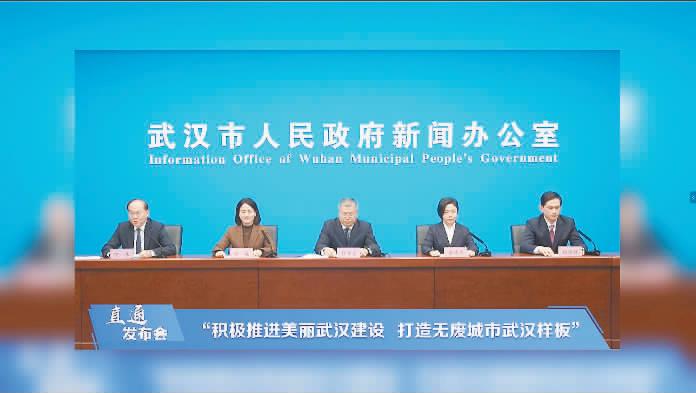
Core Viewpoint - Wuhan is advancing its "waste-free city" initiative, integrating solid waste management with ecological protection and urban development, contributing a replicable model for solid waste governance in large cities since its inclusion in the national "waste-free city" list in April 2022 [1] Group 1: Strategic Framework - Solid waste management is identified as a critical bottleneck for sustainable urban development and a key test of governance capabilities in mega cities [2] - Wuhan has established a comprehensive regulatory framework, including the "Implementation Plan for Waste-Free City Construction" and the "Environmental Protection Measures for Solid Waste Pollution," to support its waste management efforts [2] - The city has developed a robust legal and policy system covering five major solid waste areas, ensuring that waste management is legally compliant and systematically organized [2] Group 2: Organizational Support - A leadership group for the "waste-free city" initiative has been formed, led by the city's main government officials, to ensure coordinated efforts across 16 districts and 28 departments [3] - The city has implemented a multi-faceted governance model that includes government leadership, departmental collaboration, and community participation [3] - Wuhan has established the largest circular economy benchmark in Central China, the Qianzi Mountain Circular Economy Industrial Park, with an investment of approximately 5.6 billion yuan, capable of processing 2 million tons of solid waste annually [3] Group 3: Technological and Regulatory Advancements - The city is enhancing its digital regulatory capabilities by creating a comprehensive information management platform for solid waste, ensuring traceability and accountability in waste generation and disposal [4] - A closed-loop management model for hazardous waste has been developed, incorporating early warning systems and lifecycle risk management [4] Group 4: Sector-Specific Initiatives - In the industrial sector, Wuhan has established 204 municipal "waste-free factories" and 82 national-level green factories, reducing industrial solid waste generation intensity from 0.31 tons per 10,000 yuan in 2020 to 0.27 tons per 10,000 yuan by 2024 [5] - The agricultural sector has achieved a comprehensive utilization rate of 95.9% for crop straw, with a resource utilization system that includes over 40 resource utilization entities [6] - The city has built a recycling network for waste resources, achieving a recycling rate of 86.12% through a system of community recycling stations and sorting centers [7] - For construction waste, Wuhan has developed a comprehensive disposal system with a resource utilization rate projected to reach 70% by 2024 [8] - Hazardous waste management has been strengthened, with a 100% safe disposal rate and an increase in comprehensive utilization from 36% in 2020 to 60.24% by 2024 [9] Group 5: Community Engagement and Awareness - Wuhan has created 1,640 "waste-free cells" across various community settings, promoting the "waste-free" concept in daily life [10] - The city encourages the development of unique local brands for waste management, enhancing the effectiveness of the "waste-free city" initiative [11] - A comprehensive public awareness campaign has been launched, utilizing various media and community engagement strategies to promote the "waste-free" philosophy [11] Group 6: Future Goals - Wuhan aims to continue its "waste-free city" construction as a key support for high-quality urban development, focusing on collaborative efforts in waste reduction, resource utilization, and harmless disposal [12]
博盈特焊(301468) - 2025年12月17日投资者关系活动记录表
2025-12-17 09:54
Group 1: Company Overview and Competitive Advantages - The company focuses on special equipment manufacturing, particularly anti-corrosion and anti-wear welding equipment, with applications in energy, chemical, metallurgy, and paper industries [1] - It possesses key core technologies across materials, processes, and equipment, along with comprehensive production qualifications, including national and international certifications [1] - The management team has extensive industry experience and a stable core technical staff, contributing to the company's competitive edge [2] Group 2: Market Opportunities - The demand for waste incineration is increasing due to national strategies promoting ecological civilization and waste reduction, leading to a need for upgrading existing incinerators [4] - The coal-fired power generation sector is showing a demonstration effect, indicating significant growth potential [2] - The company is strategically expanding into overseas markets, with a focus on establishing subsidiaries to capture international opportunities [2] Group 3: Technology and Innovation - The company employs three welding techniques: MIG, TIG, and laser welding, each suited for different industrial applications [3] - Continuous R&D efforts have led to innovations in digital pulse MIG high-frequency oscillation welding technology, enhancing efficiency and stability [3] - The company is developing advanced technologies in laser welding and secondary remelting, broadening its application scope [3] Group 4: Specific Market Insights - The domestic waste incineration market is characterized by both stock and incremental demand, driven by urbanization and the need for modern facilities [4] - The global oil and gas pipeline market is experiencing structural growth, with increasing demand for composite pipelines due to challenges in oil and gas extraction [5] - The HRSG (Heat Recovery Steam Generator) equipment is primarily compatible with heavy-duty gas turbines, providing a competitive cost advantage over international counterparts [6] Group 5: Future Outlook - The HRSG market in the U.S. is expected to grow due to structural increases in electricity demand and the transition to cleaner energy sources [8] - The company is positioned to benefit from the rising demand for HRSG as it enhances the efficiency of gas turbines, contributing to lower carbon emissions [8]
美丽嘉定 绘就绿色发展新图景
Zhong Guo Huan Jing Bao· 2025-12-16 01:16
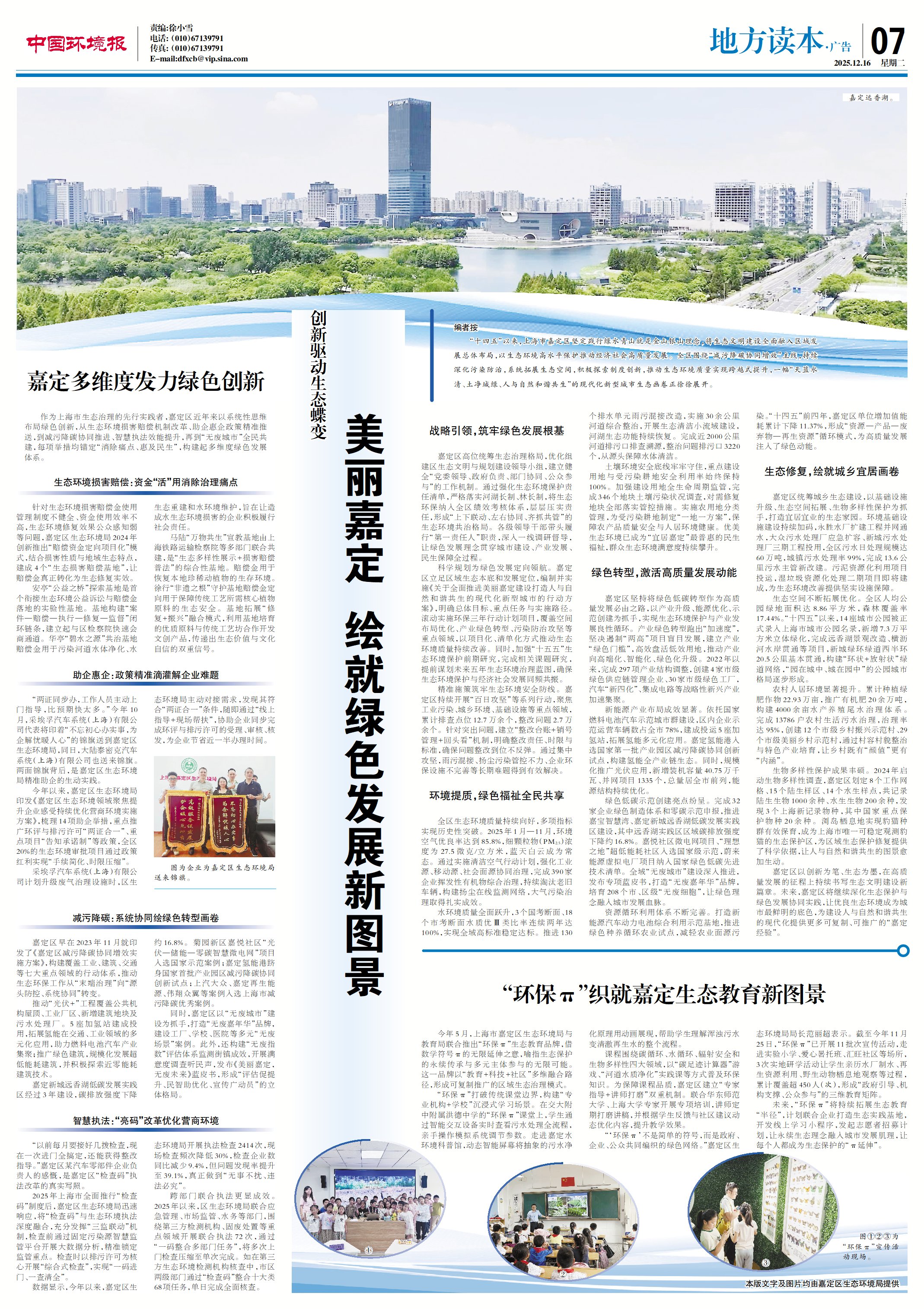
责编:徐小雪 电话:(010)67139791 传真:(010)67139791 E-mail:dfxcb@vip.sina.com 嘉定多维度发力绿色创新 作为上海市生态治理的先行实践者,嘉定区近年来以系统性思维 布局绿色创新,从生态环境损害赔偿机制改革、助企惠企政策精准推 送,到减污降碳协同推进、智慧执法效能提升,再到"无废城市"全民共 建,每项举措均锚定"消除痛点、惠及民生",构建起多维度绿色发展 体系。 生态环境损害赔偿:资金"活"用消除治理痛点 针对生态环境损害赔偿金使用 管理制度不健全、资金使用效率不 高,生态环境修复效果公众感知弱 等问题,嘉定区生态环境局2024年 创新推出"赔偿资金定向项目化"模 式,结合损害性质与地域生态特点, 建成4个"生态损害赔偿基地",让 赔偿金真正转化为生态修复实效。 安亭"公益之桥"探索基地是首 个衔接生态环境公益诉讼与赔偿金 落地的实验性基地。基地构建"案 件一赔偿一执行一修复一监督"闭 环链条,建立起与区检察院快速会 商通道。华亭"碧水之源"共治基地 赔偿金用于污染河道水体净化、水 生态重建和水环境维护,旨在让造 成水生态环境损害的企业积极履行 社会责任。 马 ...
“无废城市”的绿色引擎
Ren Min Wang· 2025-12-15 04:15
编者按 千万IP创科普,共筑科技强国梦。为普及科学知识,弘扬科学精神,提高全民科学文化素质,助力实现 高水平科技自立自强,中国科协科普部与人民网联合策划推出"见证科技之路"主题报道,聚焦国家科技 战略政策、重要科技奖项、"卡脖子"关键核心技术等,深入基层一线开展采访调研,推出一批生动鲜活 的科普精品,大力弘扬科学家精神,为建设科技强国汇聚磅礴力量。 0:00 城市,如同一个有机的生命体,建筑,则是这个生命体中的细胞。在雄安这座未来之城,有一个特殊 的"细胞"——雄安之翼,它正以其独特的生命韵律,参与着城市生态系统的循环,成为"无废城市"建设 的绿色引擎。 ...
“无废城市”的能源密码:如何用畜粪炼成船舶“绿能”?
Zhong Guo Xin Wen Wang· 2025-12-15 02:31
Group 1 - The core viewpoint of the articles highlights the transformation of waste into energy through the implementation of biogas purification technology at the Songlin pig farm in Shanghai, which is the largest scale pig farm in the city [1][2] - The pig farm generates over 45,000 pigs annually and has faced challenges in waste management, which have been addressed through anaerobic fermentation to produce biogas for energy needs [1] - The biogas purification project, initiated by Sheneng Environment, converts biogas into biomethane, which is then used as a green methanol fuel for ships, showcasing a successful waste-to-energy model [1][2] Group 2 - The byproduct of carbon dioxide from the biomethane production process is utilized in a nearby microalgae cultivation base, producing several tons of microalgae liquid annually for animal feed and health products [2] - A second phase of the biomass utilization demonstration base is set to begin in 2025, focusing on cow manure and vegetable waste, replicating the successful model established at the pig farm [2] - Shanghai is positioned as a pioneer in the development of biomass energy systems, actively addressing technological challenges and exploring sustainable development pathways for large urban areas [3]