
绿色环保

Search documents
从桌椅、茶点到出行,COP30中国角“拉满”绿色细节
2 1 Shi Ji Jing Ji Bao Dao· 2025-11-13 11:01
Group 1 - The COP30 conference in Brazil showcased China's commitment to sustainable practices through the "China Corner" activities, featuring eco-friendly materials for furniture [1] - The furniture at the "China Corner" is made from upgraded paper-based materials, emphasizing durability and aesthetic appeal, while also being lightweight and strong [1] - The event highlighted the use of agricultural waste, such as rice husks, to create biodegradable and safe disposable cups, aligning with low-carbon and practical solutions [1] Group 2 - The "China Corner" offered unique cultural products like "Ruyi Tea Cake" from Yunnan, promoting local ecological poverty alleviation and transforming tea leaves into valuable products [2] - Attendees were provided with various refreshments sourced from different regions of China, showcasing the achievements of low-carbon agricultural development [2] - The Chinese delegation utilized 230 domestic electric vehicles for transportation during the conference, including the official vehicle for the Brazilian president, highlighting the advancement of China's new energy vehicle industry [2]
中国铁建(601186):25Q3业绩增速转正,现金流改善:中国铁建(601186):
INDUSTRIAL SECURITIES· 2025-11-13 07:22
Investment Rating - The report maintains a "Buy" rating for the company, indicating a positive outlook compared to the market index [5]. Core Insights - The company is expected to see a narrowing decline in profits in Q4 2024, with stable growth in overseas business [3]. - The company reported a revenue of 728.40 billion yuan for the first three quarters of 2025, a decrease of 3.92% year-on-year, while the net profit attributable to shareholders was 14.81 billion yuan, down 5.63% year-on-year [5]. - New orders have shown a steady increase, with a total of 15,187.65 billion yuan in new contracts signed in the first three quarters of 2025, reflecting a 3.08% year-on-year growth [5]. - The company is diversifying into green and emerging industries, with new orders in these sectors growing by 15.44% and 66.78% respectively [5]. - Cash flow has improved, with a net cash inflow of 70 billion yuan in Q3 2025 compared to the previous year [5]. - The forecast for net profit attributable to shareholders for 2025-2027 is 21.379 billion yuan, 21.784 billion yuan, and 22.137 billion yuan respectively, with corresponding EPS of 1.57 yuan, 1.60 yuan, and 1.63 yuan [5]. Financial Summary - Total revenue for 2024 is projected at 1,067.17 billion yuan, with a year-on-year decline of 6.2% [4]. - The gross profit margin is expected to remain around 10.3% for 2024, gradually decreasing to 10.0% by 2027 [4]. - The return on equity (ROE) is forecasted to decline from 6.8% in 2024 to 5.1% in 2027 [4]. - The price-to-earnings (PE) ratio is projected to be 5.1 for 2025, 5.0 for 2026, and 4.9 for 2027 [4].

第八届中华设计奖在甬揭晓
Xin Hua Wang· 2025-11-13 01:47
Group 1 - The eighth China Design Award was held in Ningbo with the theme "Intelligent Creation for Future, Design Coexistence" [1] - The gold awards in the product and concept categories were won by iFLYTEK Co., Ltd. for its "iFLYTEK AI Dual-Screen Translator 2.0" and Fu Jen Catholic University for "Smart Traffic Mirror" [1] - The competition featured four categories: cultural innovation, rural revitalization, smart technology, and digital art & interaction, awarding a total of 2 gold, 4 silver, 6 bronze, 12 emerging talent awards, and 181 excellent works [1] Group 2 - The number of entries increased from 3,537 in the first edition to 22,624 in the current edition, with entries from Taiwan rising from 205 to 2,687 [1] - Over 12,000 Taiwanese young designers and students have participated, making it one of the most influential design competitions across the Taiwan Strait [1] - A salon discussion on "Design Empowering Urban Development" was held, featuring five experts in the intersection of design and technology [1]
南京建邺首座综合体垃圾分类驿站投用
Jiang Nan Shi Bao· 2025-11-12 23:55
Core Points - The renovation project of the garbage station in Nanjing's Jianye District has been successfully completed, transforming a previously unsightly waste disposal area into an aesthetically pleasing and functional "self-service waste sorting station" [1][2] - The new facility addresses the high demand for waste disposal in a mixed-use community, which includes 504 residential units and a commercial street, by providing a more efficient and organized waste management solution [1][2] Summary by Sections Project Overview - The project involved upgrading a garbage station to improve waste sorting and disposal in the Zhongtai International community, which previously had only 11 temporary garbage bins that were insufficient for the area's needs [1] - The renovation was initiated after a meeting with resident representatives to gather feedback and ensure community involvement in the decision-making process [1] Facility Features - The new waste sorting station covers approximately 32 square meters and features a stainless steel structure with two main disposal areas, accommodating 40 categorized garbage bins [2] - It includes advanced amenities such as an intelligent deodorizing system, an underground sewage network, and a dedicated washing area, effectively eliminating the issues of overflowing garbage and unsightly conditions [2] Community Impact - Residents have expressed satisfaction with the improvements, noting that the new facility has become a point of pride and a visual enhancement to the community [2] - The local authorities emphasize the importance of this upgrade in enhancing residents' quality of life and plan to use this station as a model for future waste management initiatives [2]
恒达新材(301469) - 2025年11月12日投资者关系活动记录表
2025-11-12 12:32
Company Overview - Hengda New Materials focuses on the production of medical and food packaging paper, emphasizing innovation and digital empowerment [3] - The company has developed over 20 provincial-level industrial new products and has been recognized as a "Digital Workshop" in Zhejiang Province [3] - As of September 2025, total assets are CNY 1.663 billion, total liabilities are CNY 286 million, and the debt-to-asset ratio is 17% [3] Financial Performance - Recent years have seen a decline in net profit due to increased supply and depreciation from new production lines [3] - In the first three quarters of 2025, the company achieved synchronized growth in revenue and profit [3] - Cash flow from operating activities has shown volatility, influenced by raw material price trends and customer order expectations [3] Market Trends and Opportunities - The "Plastic Ban" and the "14th Five-Year Plan" indicate a growing demand for sustainable and green packaging solutions [3] - The medical packaging sector is experiencing heightened quality demands, while the food packaging industry is expanding due to rising living standards and consumer preferences [3] Product Focus - Medical and food packaging paper accounts for over 80% of the company's revenue [4] - The company is committed to high-end medical packaging and functional food packaging, with ongoing research and development efforts [4] Competitive Landscape - The paper industry faces price pressures due to rapid capacity increases and intensified competition [4] - The company adopts a differentiated competition strategy, focusing on mid-to-high-end markets and sustainable development [4] Export Strategy - Current export business accounts for 5% to 10% of total revenue, with plans to increase this share [5] - The company faces barriers in entering overseas markets, including established supply chains and stringent environmental certifications [4][5] - Successful exports have been made to Germany, Turkey, South Korea, Malaysia, India, and Vietnam [4] Future Plans - The company aims to enhance brand influence through innovation, customer collaboration, and increased export ratios [3] - Strategic investments and mergers are being considered to boost company impact and shareholder value [4]
聚乙烯醇PVA发展现状:高端替代加速,谁是下一个增长引擎?(含PVA纤维)
材料汇· 2025-11-11 14:35
Core Viewpoint - The PVA industry in China is at a transformative crossroads, with the potential for high-end product domestic substitution and new green business opportunities arising from environmental regulations [2][9]. Group 1: PVA Industry Overview - PVA is a water-soluble polymer material with excellent properties such as adhesion, fiber formation, and biodegradability, widely used in various industries including fine chemicals, green construction, and pharmaceuticals [6][8]. - The production of PVA is technology-intensive, with major production methods including calcium carbide acetylene method, petroleum ethylene method, and natural gas acetylene method, with China primarily using the calcium carbide method [7][30]. Group 2: Development History of PVA Industry - The PVA industry in China began in the 1960s, with initial production capacity of 20,000 tons, but faced challenges such as low product quality and limited application fields [8][9]. - Since the 12th Five-Year Plan, increasing environmental standards have accelerated the exit of outdated production capacity, leading to a consolidation of the industry [9]. Group 3: Domestic Substitution Opportunities - The domestic PVA market is primarily composed of conventional products, with high-value specialty PVA products still reliant on imports, indicating a strong potential for domestic substitution [10]. - The demand for high-value PVA products in emerging sectors such as automotive, construction, and pharmaceuticals is rapidly increasing, presenting significant market potential [10][11]. Group 4: Supply and Demand Analysis - Global PVA consumption was approximately 134.3 million tons in 2015, with China accounting for about 50% of global consumption [23][25]. - The domestic PVA apparent consumption fluctuated, with a notable increase to 68.4 million tons in 2020, driven by recovery in downstream market demand [23][25]. Group 5: Market Supply Situation - Global PVA production capacity is around 1.85 million tons, with China holding approximately 60% of this capacity, making it the largest producer [26][27]. - The domestic PVA industry has seen a gradual increase in production and operating rates, with a projected capacity of 1.076 million tons and an operating rate of 81% by 2024 [27]. Group 6: Competitive Landscape - The global PVA market is concentrated in a few countries, with major players including Japan and the USA, while the domestic market is dominated by companies like Sinopec and Wanhua Chemical [34][35]. - The domestic PVA industry has undergone significant consolidation, with leading companies gaining competitive advantages [39]. Group 7: Investment Logic - The PVA industry has shifted from "incremental competition" to "value reconfiguration," focusing on technological innovation and high-value product substitution [63]. - Key investment themes include high-value product substitution, green demand driven by environmental policies, and integrated supply chain advantages [64][65]. Group 8: Future Outlook - The PVA industry is expected to experience a value reassessment, with a focus on high-end product development and green applications, creating new market opportunities [68][69].



又一汽车运输船建成交付
中国能源报· 2025-11-11 11:23
Core Viewpoint - The article highlights the delivery of a new dual-fuel car carrier built by Guangzhou Shipyard International, showcasing advancements in China's shipbuilding industry and its contribution to global automotive trade [1][3]. Group 1: Ship Specifications and Features - The newly delivered ship is an 8600-car dual-fuel car carrier, measuring 200 meters in length, 38 meters in width, with a designed draft of 9.2 meters and a speed of 19 knots [3][5]. - It utilizes an LNG/fuel oil dual-fuel propulsion system, meeting the International Maritime Organization's Tier III emission standards, emphasizing its green, energy-efficient, and reliable characteristics [5]. - The vessel is equipped with advanced intelligent ship systems for managing navigation, engine room, and cargo, enhancing operational efficiency and safety [5]. Group 2: Industry Impact and Achievements - China Shipbuilding Group's Guangzhou Shipyard International has received nearly 40 orders for car carriers, successfully delivering 23 vessels to date, which provide a total of 169,000 vehicle transport slots for global automotive trade [7].

当“顶流”吉祥物遇上岭南工美,这些艺术城景你打卡了吗?
2 1 Shi Ji Jing Ji Bao Dao· 2025-11-10 11:12
Core Viewpoint - The article highlights the integration of culture and sports through the artistic landscape created for the 15th National Games in Guangzhou, showcasing the efforts of Guangqing Holding Group in enhancing the event's atmosphere and promoting local culture [1][2]. Group 1: Event Overview - The 15th National Games has garnered national attention, with Guangzhou creating various artistic landscapes to elevate the event's atmosphere [1]. - Guangqing Holding Group has implemented a "culture + sports" development strategy, forming a professional design team to enhance the city's ambiance over three months [1]. Group 2: Artistic Installations - The team completed 19 large landscape installations, 30 sports-themed sculptures, and decorated 25 streets, including over 1,200 flags and more than 300 mascots [1]. - Key locations for these installations include Baiyun Airport, the Olympic Sports Center, Tianhe Stadium, and various city landmarks, creating a cohesive visual network throughout the city [1]. Group 3: Cultural Significance - A notable 15-meter floating mascot, crafted using traditional Lingnan "Cai Zha" techniques, symbolizes Guangzhou's cultural vitality and creativity [2]. - The large "Happy Sheep" installation at the Guangzhou Tower represents the spirit of innovation and success associated with the city [2]. Group 4: Environmental Initiatives - The "Beautiful Mascot" series emphasizes environmental sustainability by using recycled materials, including ocean waste plastics, to create public art that conveys social and educational values [2]. - Guangqing Holding Group's efforts in enhancing the visual experience of the National Games reflect a commitment to both cultural heritage and modern environmental consciousness [2].
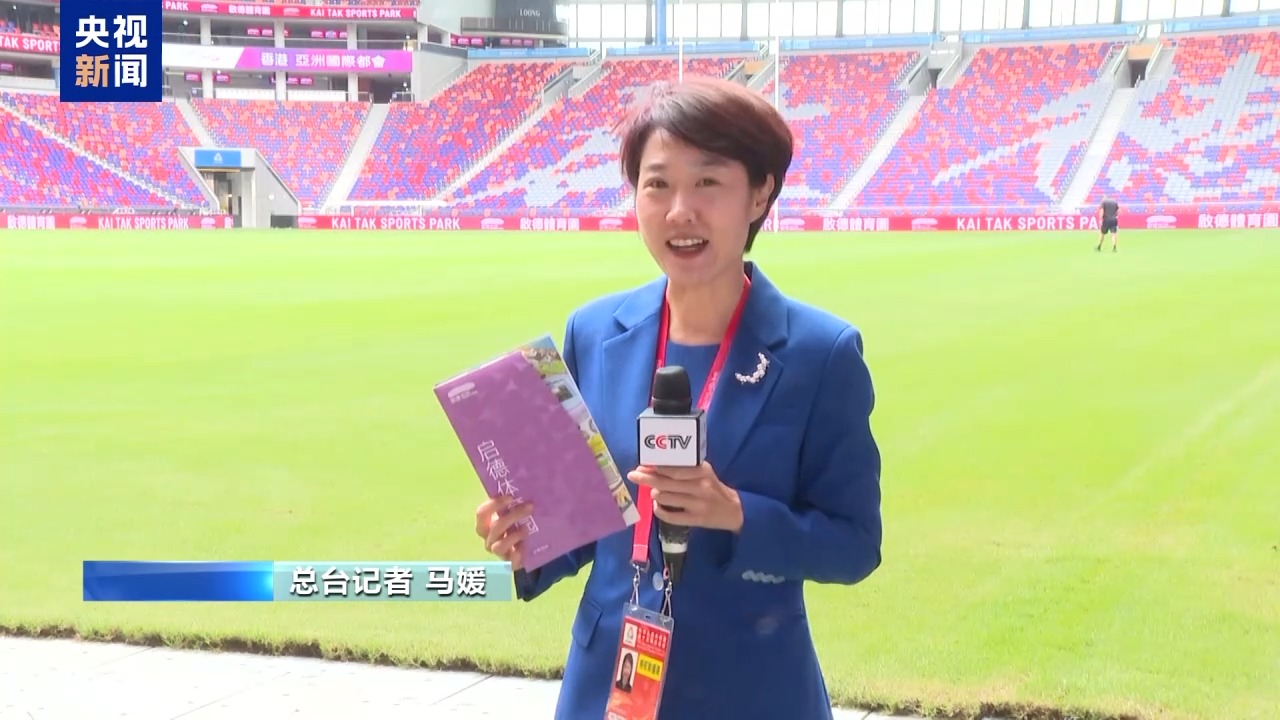
总台记者探访丨香港启德体育园:科技赋能 智慧场馆
Yang Shi Xin Wen Ke Hu Duan· 2025-11-08 01:55
Group 1 - The 15th National Games will open on November 9, with multiple events held in the Hong Kong venue, including rugby sevens, handball, and fencing [1] - The Kai Tak Sports Park, covering an area of 28 hectares, is located on the site of the former Kai Tak Airport [1] - The main venue features a flexible turf conversion system, allowing for the arrangement of the field based on the needs of different events [3] Group 2 - The sports park is equipped with artificial grow lights that can assist in turf growth 24 hours a day, ensuring optimal performance for athletes [4] - There are over 30 food stalls within the park, offering a variety of local Hong Kong delicacies during the National Games [6] - The main venue can accommodate over 65,000 spectators, necessitating a waste classification and recycling system to manage waste generated during large events [9] Group 3 - The park utilizes microbial technology to convert food waste and paper containers into compost for plant fertilization, promoting waste utilization and landscape maintenance [9] - Recycling ambassadors will be present during the National Games to promote environmental awareness among spectators [10] - The event aims to be a green and environmentally friendly sports occasion [10]
鹏辉能源(300438.SZ):子公司拟与专业投资机构共同投资金石沣盈
Ge Long Hui A P P· 2025-11-07 11:31
Core Viewpoint - Penghui Energy (300438.SZ) has signed a partnership agreement to invest in Jinshi Fengying (Qingdao) Equity Investment Partnership, with a total investment commitment of 100 million yuan, of which Penghui will contribute 3 million yuan, representing a 3% stake [1] Group 1: Investment Details - The investment in Jinshi Fengying will focus on advanced manufacturing, healthcare and biotechnology, next-generation information technology, new materials, new energy, green environmental protection, new consumption, and specialized and innovative sectors [1] - The total subscribed capital for Jinshi Fengying after this investment will amount to 100 million yuan [1] - Penghui's contribution of 3 million yuan indicates a strategic move to diversify its investment portfolio [1]
