脑机接口技术

Search documents
帮助高位截瘫患者稳定操控智能轮椅与机器狗 我国侵入式脑机接口技术迎来新突破
Huan Qiu Wang Zi Xun· 2025-12-17 12:39
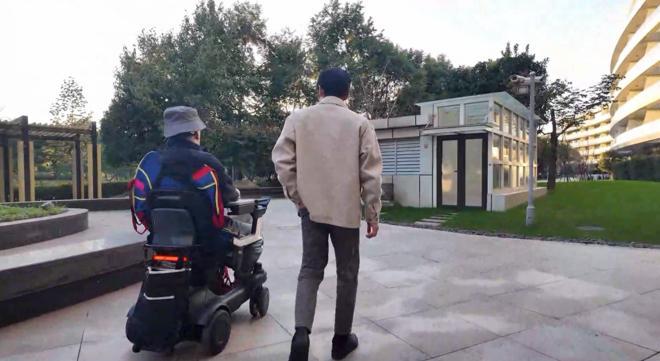
Core Insights - The article highlights the successful completion of China's second invasive brain-computer interface (BCI) clinical trial, enabling a high-level paraplegic patient to control a smart wheelchair and robotic dog using brain signals [1][2][5]. Group 1: Clinical Trial Achievements - The patient, who suffered from cervical spinal cord injury leading to high-level paraplegia, was able to control devices in real-life scenarios after undergoing training with the BCI system [2][5]. - The research team achieved significant advancements in technology, including a 15%-20% overall improvement in brain control performance through innovative data compression techniques [5][6]. - The trial demonstrated a shift from controlling electronic devices to managing physical objects, marking a significant step in the integration of BCI technology into daily life [7]. Group 2: Technological Innovations - The team developed a hybrid decoding model that efficiently extracts relevant information from noisy neural signals, enhancing the robustness of the system [6]. - An "online recalibration technology" was introduced, allowing the system to adjust parameters in real-time during use, improving user experience [6]. - The end-to-end latency of the BCI system was reduced to under 100 milliseconds, providing a seamless control experience for the patient [6]. Group 3: Future Developments - The research team is preparing for the first clinical trial of the upgraded BCI system (WRS02), which features an increase in channel count to 256 [8]. - The team is also focusing on the social integration of patients by involving them in online data annotation tasks, transforming them from recipients of care to contributors to society [9][11]. - Future goals include scaling applications for motor and speech function restoration within three years and achieving breakthroughs in sensory restoration and mental health conditions within five years [11][12].

中国侵入式脑机接口技术连续造福患者的背后:抱以希望、审慎看待
Zhong Guo Xin Wen Wang· 2025-12-17 12:02
Core Insights - The Chinese scientific team has conducted two additional clinical trials of invasive brain-machine interface (BMI) technology since the first trial began in March, providing hope for patients [1][3]. Group 1: Clinical Trials and Technology Development - The invasive BMI technology is still in its early clinical trial stages, with significant advancements needed for practical applications [3]. - A middle-aged patient with high-level paraplegia was able to control a smart wheelchair and a robotic dog using thoughts, showcasing the potential of BMI technology [5]. - The research team is employing techniques such as neural data compression and delay optimization to enhance the efficiency of information transfer from the brain to external devices [5]. Group 2: Future Applications and Ethical Considerations - The team aims to improve control levels and expand the range of devices that can be operated through BMI technology, including humanoid robots [5]. - Ethical considerations surrounding the use of BMI technology, including its application for medical purposes versus cognitive enhancement, are being discussed within the industry [3]. - The research team is focused on making the technology not only advanced but also practical and affordable for a wider range of patients [5].
我国脑机接口技术有新突破
Huan Qiu Wang Zi Xun· 2025-12-17 06:30
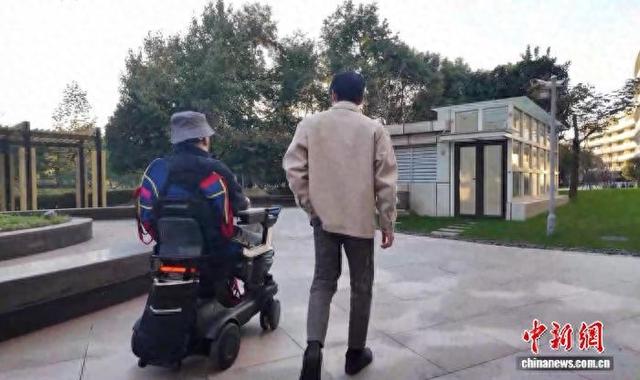
Core Viewpoint - Recent breakthroughs in invasive brain-machine interface clinical trials by Chinese scientists enable patients with motor disabilities to control wheelchairs and robotic dogs using their thoughts, moving beyond traditional two-dimensional screens to real-world three-dimensional actions [1] Group 1: Technological Advancements - Scientists have developed a neural data compression technology combined with a mixed decoding model, enhancing the overall performance of the brain control system by 15%-20% [1] - The implementation of neural manifold alignment technology allows for interference resistance, ensuring that the decoder consistently understands the core intentions of the user [1] - Online recalibration technology enables real-time parameter adjustments, making the tools increasingly user-friendly over time [1] - The system boasts a high synchronization rate with minimal latency, allowing machines to respond even more effectively than the user's own body [1]
中国全植入脑机接口临床试验成功 高位截瘫患者实现意念操控
Zhong Guo Xin Wen Wang· 2025-12-16 05:31
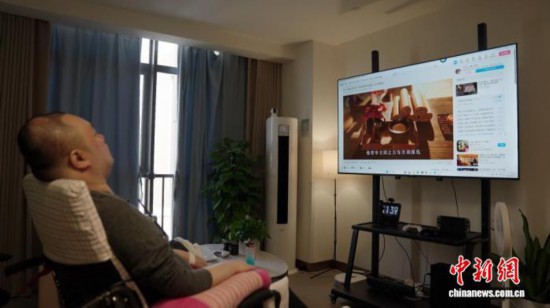
Core Insights - China has made significant clinical advancements in brain-computer interface (BCI) technology, with the first domestically developed fully implanted, wireless, and functional BCI product successfully tested on a high-level paraplegic patient [1][3] - The clinical trial, led by a team from Huashan Hospital, demonstrated that the patient could perform web browsing, click controls, and video playback through thought alone, achieving an international advanced brain control decoding rate [1][3] Group 1 - The BCI system features three core technological characteristics: fully implanted, fully wireless, and fully functional, which fundamentally reduces infection risks by having no external interfaces [1] - The innovative internal battery is placed subcutaneously in the chest, away from brain tissue, enhancing long-term safety during use [1] - The system integrates wireless power supply, wireless data transmission, and rechargeable batteries, allowing real-time interaction without external devices [1] Group 2 - The research team has incorporated AI large model algorithms to enhance signal decoding accuracy and generalization capabilities, making strides in real-time language decoding, which could help aphasia patients regain communication abilities [3] - The founder of the company emphasized that being the first domestic enterprise to validate the internal battery fully implanted solution is both a milestone and a responsibility, showcasing the potential for ethical and humanistic development in China's BCI industry [3] - The research received support from various institutions, laying a crucial foundation for the standardization and commercialization of BCI technology in China, with the potential to benefit more patients with neurological diseases in the future [3]
晚报 | 12月16日主题前瞻
Xuan Gu Bao· 2025-12-15 14:20
Group 1: Lithium Iron Phosphate - The lithium iron phosphate (LFP) industry is experiencing a price increase, with major manufacturers negotiating price hikes of 2000-3000 yuan per ton, expected to continue until Q4 2026 [1] - Current orders for LFP products are booked until Q1 2026, with some companies halting new orders due to tight supply of high-end products [1] - The supply side is constrained by the slow release of new capacity and the accelerated exit of low-end production, leading to a clear upward trend in processing fees [1] Group 2: Carbon Fiber - Toray Industries announced a price increase of 10% to 20% for its carbon fiber products starting January 2026, indicating a recovery phase in the global carbon fiber market [2] - The carbon fiber industry is recovering from a previous downturn, with demand in wind power and aerospace sectors showing strong growth [2] Group 3: Autonomous Driving - China has approved its first L3-level conditional autonomous driving vehicles for commercial testing in designated areas, marking a significant step towards commercialization [3] - Major companies are accelerating the commercialization of high-level autonomous driving technologies, supported by favorable policies in major cities [3] Group 4: Manganese - The domestic electrolytic manganese market has seen significant price increases, with prices rising by 300 yuan per ton recently, and a cumulative increase of 1800 yuan per ton over the past month [4] - The market is characterized by a supply-demand imbalance, with strong support for price increases due to rising raw material costs and seasonal demand [4] Group 5: Brain-Computer Interface - China's brain-computer interface industry is making significant progress, with advancements in core technologies and applications expected to support large-scale development by 2025 [5] - Breakthroughs in core components and decoding algorithms are enhancing the technology's stability and precision, paving the way for broader applications [5] Group 6: Outsourcing Services - The Ministry of Commerce and other departments have issued an action plan to promote high-quality development in the outsourcing services sector, aiming to cultivate competitive enterprises by 2030 [6] - The integration of emerging technologies like AI and cloud computing is expected to drive the transformation of the outsourcing industry towards digitalization and high-end services [6] Group 7: Elderly Care - A new action plan aims to enhance elderly care services in China by 2027, focusing on expanding resources and improving service quality [7] - The aging population is driving growth in the elderly care industry, with predictions indicating a market size exceeding 19.5 trillion yuan by 2029 [7]


工信部深化拓展制造业数字化转型,加快卫星互联网建设发展;国内首款!华山医院联合脑虎科技完成内置电池脑机接口人体植入——《投资早参》
Mei Ri Jing Ji Xin Wen· 2025-12-14 23:18
每经记者|杨建 每经编辑|彭水萍 3、12月13日,据媒体报道,据中国神经科学学会脑机接口与交互分会年会透露,上海脑虎科技研发的 一款内置电池全植入脑机接口产品已于近期在复旦大学附属华山医院完成首例患者植入。据了解,目前 全球范围内掌握并验证内置电池全植入方案的公司数量极少,脑虎科技是除科技富豪马斯克的脑机接口 公司Neuralink之外,提供此类设备的首家中国公司,不仅填补了国内相关领域技术空白,也标志着中国 脑机接口技术跻身全球顶尖行列。复旦大学附属华山医院院长毛颖教授介绍称,患者术后1天即转入普 通病房,术后5天首次开机便成功实现意念操控。 点评:脑机接口下游应用市场潜力大,全球脑机接口医疗应用市场规模有望在2030年达到400亿美元, 2040年达到1450亿美元。脑机接口技术在医疗健康领域展现巨大潜力,为庞大的神经系统疾病患者群体 带来了新的治疗希望和康复途径。尤其是针对肢体运动障碍、意识与认知障碍、癫痫和精神性疾病等的 治疗和康复,脑机接口技术取得重要突破和长足进展。概念股包括中科信息、冠昊生物、爱朋医疗等。 (三)避雷针 (一)重要市场新闻 12月13日,据新华社报道,在中国国际经济交流中心举办 ...
国内首款!华山医院联合脑虎科技完成内置电池脑机接口人体植入
第一财经· 2025-12-13 14:02
2025.12. 13 本文字数:1533,阅读时长大约2分钟 复旦大学附属华山医院院长毛颖教授向第一财经记者介绍称,首例植入患者是在获得严格伦理审批的 基础上进行的。患者为一名肩部以下完全不能动的高位截瘫者。患者术后1天即转入普通病房,术后 5天首次开机便成功实现意念操控。经过系统训练,在标准测试中,其脑控解码速率达到5.2BPS, 达到国际大脑解码的顶尖水平。 脑虎科技创始人兼首席科学家陶虎对第一财经记者表示,最新植入的这款脑机接口产品"全植入、全 无线、全功能"三大特征。过去的脑机接口产品往往需要将电池模块暴露在颅外,脑虎科技解决了这 一技术难题,实现了将含有电池的核心模块完全植入体内,集成无线供能与无线数据传输功能,使患 者使用时彻底摆脱体外设备的束缚,体表无任何线缆接口,也从物理层面根除了传统外露系统易导致 感染的风险。 作者 | 第一财经 钱童心 12月13日,第一财经记者在中国神经科学学会脑机接口与交互分会年会上获悉,上海脑虎科技研发 的一款内置电池全植入脑机接口产品已于近期在复旦大学附属华山医院完成首例患者植入。 据记者了解,目前全球范围内掌握并验证内置电池全植入方案的公司数量极少,脑虎科技是 ...
守护人民健康,脑机接口技术向“实”而行
Ke Ji Ri Bao· 2025-12-11 07:30
Core Insights - The integration of brain-computer interface (BCI) technology into clinical settings marks a significant advancement in medical diagnostics and treatment, allowing for real-time monitoring of intracranial pressure without invasive procedures [1][2] - The "Sixth Finger," developed by Tianjin University, utilizes non-invasive BCI technology to enable patients to control external prosthetics through thought, facilitating rehabilitation for those with motor impairments [2][3] - The BCI technology is recognized as a key future industry in China's 14th Five-Year Plan, alongside other advanced technologies, positioning it as a potential driver for economic growth [2][3] Company and Industry Summary - Tianjin University’s BCI team has successfully implemented a comprehensive approach to brain disease management, integrating diagnosis, monitoring, treatment, and prediction into a cohesive system [3] - The team has established the world's largest patent pool in the field of brain-computer interaction, with over 10% of patents held internationally, showcasing its leadership in innovation [3] - The university is committed to advancing original research and technology breakthroughs in BCI, aligning with national strategies to enhance technological self-reliance and productivity [3]
守护人民健康 脑机接口技术向“实”而行
Ke Ji Ri Bao· 2025-12-11 00:35
Core Insights - The integration of brain-computer interface (BCI) technology into clinical settings marks a significant advancement in medical diagnostics and treatment, allowing for real-time monitoring of intracranial pressure without invasive procedures [1][2] - The "Sixth Finger," developed by Tianjin University, utilizes non-invasive BCI technology to enable patients to control external prosthetics through thought, facilitating rehabilitation for those with motor impairments [2][3] - The BCI technology is recognized as a key future industry in China's 14th Five-Year Plan, alongside other advanced technologies, positioning it as a potential driver for economic growth [2][3] Company and Industry Summary - Tianjin University’s BCI team has successfully implemented a comprehensive approach to brain disease management, integrating diagnosis, monitoring, treatment, and prediction into a cohesive system [3] - The team has established the world's largest patent pool in the field of brain-computer interaction, with over 10% of patents held internationally, showcasing its leadership in innovation [3] - The university is committed to advancing original research and technology in BCI, aligning with national strategies to enhance technological self-reliance and productivity [3]
消息称Meta明年一季度发布全新AI模型Avocado牛油果;马斯克脑机接口公司引入监管专家丨AIGC日报
创业邦· 2025-12-11 00:11
更多AIGC资讯…… 1.【马斯克脑机接口公司引入监管专家,推动技术合规与应用】马斯克的脑机接口公司Neuralink已 聘请美国食品药品监督管理局(FDA)负责监管相关设备的高级官员,领导公司的医疗事务。 Neuralink在博客文章中表示,大卫·麦克马伦 将加入该公司,担任医疗事务负责人。他曾在FDA担任 神经与物理医学设备办公室主任,负责审查神经类设备的申请。麦克马伦在脑机接口领域有丰富经 验,曾多次作为FDA的行业代表公开发声。他也是"可植入脑机接口协作社区"的成员。(财联社) 2.【Mistral推出Devstral 2模型家族】Mistral AI昨日宣布推出新一代编程模型家族Devstral 2,包 括Devstral 2 (123B) 和Devstral Small 2 (24B)两种变体,均具备256K上下文窗口,分别以修改后 的MIT许可和Apache 2.0许可开源。Mistral表示,Devstral 2 (123B) 在开源的代码编程智能体 / 代理模型中拥有领先级别的性能表现 ,SWE-bench Verified测试中得到了72.2%的分数;同时其 参数规模远小于竞品 ,成本效益 ...