市值管理

Search documents
专访中绿电董事长周现坤:“双轮”驱动深耕新能源赛道,多措并举提升市值管理效能
Zheng Quan Shi Bao Wang· 2025-10-21 08:59
Core Viewpoint - The company has achieved significant breakthroughs in installed capacity, operational performance, and technological research since its asset restructuring and listing at the end of 2021, exceeding its "14th Five-Year Plan" goals and demonstrating confidence in its development through cash dividends and share buybacks [1][2][3]. Group 1: Company Achievements - The company has successfully acquired 32.3 million kilowatts from the Xinjiang large base project and is set to add 12.835 million kilowatts of new installed capacity in 2024, representing a year-on-year growth of 228.52% [2]. - The total installed capacity has increased over tenfold, surpassing 32 million kilowatts, and the company has achieved a compound profit growth of 28%, exceeding its three-year profit commitment [2][4]. - The company’s net profit is expected to exceed 1 billion yuan for the first time in 2024, reflecting the impact of expanded installed capacity and optimized investment layout [4]. Group 2: Market Strategies - The company has implemented a combination of cash dividends and share buybacks to enhance shareholder returns and market confidence, responding to regulatory calls and shareholder demands [3]. - Future plans include conducting equity refinancing to attract quality resources and funding while ensuring existing shareholder interests are protected [3][5]. Group 3: Competitive Advantages - The company’s unique competitive advantages lie in its industrial synergy capabilities and a strong focus on technology-driven development, leveraging its parent company’s diversified industrial layout [6]. - Key technological advancements include the self-synchronous voltage source technology, which enhances grid stability, and the development of large-scale long-duration energy storage technologies [6][8]. Group 4: Policy and Market Adaptation - The implementation of the "136 Document" has raised the bar for market participants, prompting the company to enhance its technical capabilities and reduce electricity costs through innovation [7]. - The company is cautiously evaluating investments in ongoing projects and increasing the rigor of feasibility studies for proposed projects to ensure satisfactory returns [7][9]. Group 5: Future Outlook - The company aims to improve financial performance by focusing on quality enhancement and new productivity, while also emphasizing innovation and the application of new technologies in renewable energy projects [5][9]. - The company views energy storage as a critical component for enhancing system regulation capabilities and overall competitiveness, planning to reduce storage costs through scale application and technological advancements [8][9].

专访中绿电董事长周现坤:“双轮”驱动深耕新能源赛道,多措并举提升市值管理效能
证券时报· 2025-10-21 08:47
Core Viewpoint - The article emphasizes the significant achievements of Tianjin Zhonglv Electric Investment Co., Ltd. (Zhonglv Electric) in enhancing its market value management effectiveness during the "14th Five-Year Plan" period, highlighting its rapid growth in installed capacity, operational performance, and technological innovation since its asset restructuring and listing at the end of 2021 [1][2]. Group 1: Company Achievements - Since the asset restructuring and listing at the end of 2021, Zhonglv Electric has made notable progress in three areas: acquiring 32.3 million kilowatts of projects in Xinjiang, achieving a 228.52% year-on-year increase in operational installed capacity with an additional 12.835 million kilowatts expected in 2024, and a compound profit growth of 28%, exceeding the three-year profit commitment post-restructuring [3][6]. - The company has completed a non-public offering raising approximately 1.8 billion yuan for photovoltaic and wind power projects in Qinghai, successfully issued green bonds to broaden financing channels, and improved governance and market recognition [3][4]. Group 2: Market Value Management - The recent implementation of a "cash dividend + share repurchase" strategy is based on three considerations: enhancing dividend awareness, responding to small shareholders' demands, and addressing market value management needs due to prolonged low stock prices [4][6]. - Future plans include conducting equity refinancing to introduce quality resources and funding support for long-term development while ensuring existing shareholders' interests are protected [4][6]. Group 3: Competitive Advantages - Zhonglv Electric's competitive edge lies in its unique industrial synergy capabilities and a strong technology-driven development strategy, leveraging its parent company’s diversified industrial layout to explore collaborative development models [7]. - The company is focused on continuous improvement in project development, investment, and operational quality while accelerating the application of new technologies and products in renewable energy projects [6][7]. Group 4: Response to Policy Changes - Following the implementation of the "136 Document," which promotes market-oriented pricing for renewable energy, Zhonglv Electric is enhancing its technical capabilities and competitiveness while cautiously evaluating investments in ongoing projects [9][10]. - The company is committed to reducing energy storage costs through collaborative advantages and technological advancements, ensuring that energy storage is viewed as a critical component for enhancing system regulation and overall competitiveness [10].


优化公司治理 持续提升上市公司质量
Jin Rong Shi Bao· 2025-10-21 01:35
Core Viewpoint - The enhancement of the quality of over 5,400 listed companies in the A-share market is essential for the high-quality development of the capital market, with a focus on improving corporate governance as a key aspect [1][2]. Group 1: Corporate Governance - The revised "Corporate Governance Guidelines for Listed Companies" by the China Securities Regulatory Commission (CSRC) will take effect on January 1, 2026, aiming to standardize the behavior of directors, senior management, and controlling shareholders [1][2]. - The revision emphasizes managing the "key minority" and addresses core contradictions and major aspects of corporate governance, marking a significant upgrade in regulatory systems [2]. - The CSRC has been focusing on enhancing the quality of listed companies, standardizing market operations, and protecting investor rights since the 14th Five-Year Plan [2][3]. Group 2: Regulatory Measures - The CSRC has implemented measures to strengthen constraints and promote returns, including the introduction of interim measures for shareholder share reductions to close loopholes [3]. - The total cash dividends distributed by listed companies exceeded 2 trillion yuan this year, maintaining a high level of returns to investors [3]. - The CSRC has revised the "Management Measures for Information Disclosure of Listed Companies" to enhance disclosure requirements related to corporate governance [3]. Group 3: Mergers and Acquisitions - The CSRC has intensified support for mergers and acquisitions, with 1,234 asset restructuring cases disclosed in the first eight months of this year, marking a 40% increase year-on-year [4]. - The "Six Guidelines for Mergers and Acquisitions" have led to significant activity in the market, with over 300.7 billion yuan in transaction value reported since their release [4]. - The focus on market value management is becoming increasingly important for listed companies, with the CSRC issuing guidelines to ensure that market value reflects the quality of the companies [4]. Group 4: Future Outlook - The ongoing implementation of policies is expected to continue optimizing the structure of listed companies, enhancing investor returns, and reinforcing the trend of improving quality and efficiency in the capital market [5].
锐科激光:投资者反馈股价背离问题,董秘回应经营及市值管理举措
Xin Lang Cai Jing· 2025-10-21 01:21
Core Viewpoint - The company acknowledges a disconnect between its stock price performance and the overall industry trends, particularly noting that its stock tends to underperform during market corrections while not responding positively during industry upswings [1] Group 1: Company Strategy - The company focuses on core business operations and aims to enhance profitability stability [1] - A tracking mechanism for market value management has been established to actively communicate the company's value logic to the market [1] Group 2: Investor Communication - The company commits to timely releasing significant corporate events to ensure investors are accurately informed [1] - It plans to utilize its official website and WeChat platform to convey daily operational updates, thereby reducing information asymmetry [1]
光大嘉宝:目前,公司暂未涉及股份回购或增持等相关事项
Zheng Quan Ri Bao Zhi Sheng· 2025-10-20 14:15
证券日报网讯 光大嘉宝10月20日在互动平台回答投资者提问时表示,公司高度重视市值管理工作,立 足于主责主业,通过优化合规治理、稳健发展经营、加强投资者关系管理等方式,开展市值管理相关工 作,积极向市场传递公司投资价值。目前,公司暂未涉及股份回购或增持等相关事项。 (编辑 任世碧) ...

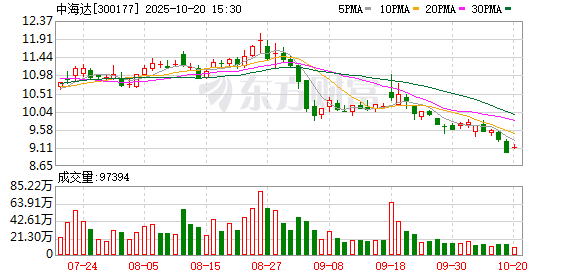
中海达:公司重视市值管理工作以及与投资者的沟通交流
Zheng Quan Ri Bao· 2025-10-20 14:13
Core Viewpoint - The company, Zhonghaid, emphasizes its commitment to core business development and enhancing profitability through various initiatives, including expanding into new application areas and improving management quality [2] Group 1 - The company will continue to focus on its main business and deepen its efforts in this area [2] - Initiatives to enhance profitability include advancing core business development and exploring new application fields [2] - The company places importance on market value management and communication with investors, adhering to regulations related to market value management [2]

中国海防:重视市值管理和投资者关系管理工作
Zheng Quan Ri Bao Wang· 2025-10-20 12:13
Group 1 - The company actively responds to policies aimed at enhancing the market value management of central state-owned enterprises [1] - A comprehensive assessment system has been established, which includes market value management [1] - The company emphasizes the importance of market value management and investor relations management, continuously improving the quality of these efforts [1]

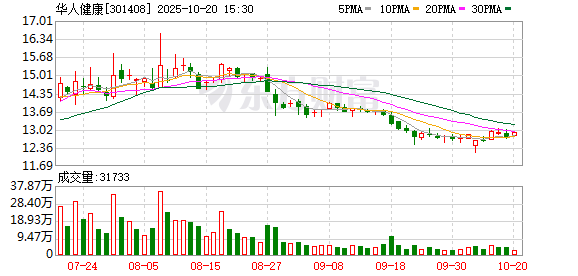
华人健康:公司股价受宏观经济等多种因素综合影响
Zheng Quan Ri Bao· 2025-10-20 10:40
证券日报网讯华人健康10月20日在互动平台回答投资者提问时表示,公司股价受宏观经济、行业政策、 市场情绪、资金流向等多种因素综合影响。公司董事会和管理层始终关注公司市值表现,同时也深知良 好的业绩是提升市值的关键因素。公司始终坚持高质量发展,加快产业布局,优化业务结构、提升运营 效率、管理水平和创新能力,致力于为股东创造价值,特别是今年以来营业收入、利润持续、稳定、快 速提升。未来,公司将持续加强市值管理工作,一是持续深耕主业,强化管理、稳打稳扎,通过技术创 新和市场拓展,为市值稳定提供坚实的业绩支撑;二是加大研发投入,在医药产品研发、数智化建设等 领域持续加强投入,实现产业快速升级;三是合理制定利润分配政策,落实"长期、稳定、可持续"的股 东回报机制,与投资者共享发展成果。四是加强投资者沟通交流,通过业绩说明会、投资者调研等多种 形式,主动加强与市场沟通,确保投资者充分理解公司的战略规划和经营策略,增进投资者对公司的了 解和认同。 (文章来源:证券日报) ...
红塔证券董事总经理许琳睿:市值为什么不是越高越好?市值管理的本质是价值管理,而非股价管理
Sou Hu Cai Jing· 2025-10-20 10:15
Core Concept - The concept of "market value management" has evolved dramatically over the past two decades, transitioning from a stigmatized notion to an essential practice for A-share listed companies, especially following the introduction of the "New National Nine Articles" in April 2024, which emphasizes the need for guidelines on market value management [2][3][11]. Group 1: Market Value Management Evolution - The recognition of market value management as a necessary practice marks the beginning of a new era for A-share listed companies [3][11]. - The "New National Nine Articles" and subsequent regulatory guidelines signify a pivotal moment for institutionalizing and standardizing market value management [2][11]. - Historical context shows that market value management has been a recurring theme in China's capital market development over the past 30 years, with significant milestones in 2004 and 2014 [10][11]. Group 2: Value Management vs. Price Management - Market value management is fundamentally about value management rather than merely managing stock prices, emphasizing sustainable development and long-term investor returns [3][8][34]. - The distinction between genuine market value management and "pseudo market value management" is crucial, with the latter often involving manipulative practices that do not enhance intrinsic company value [14][15]. Group 3: Importance of Value Creation - Value creation is central to effective market value management, focusing on a company's ability to generate free cash flow and the strategic allocation of that cash flow [16][19]. - The management of free cash flow is critical for sustaining company value over time, with return on invested capital (ROIC) serving as a key metric for evaluating management effectiveness [18][19]. Group 4: Value Communication - Effective value communication is essential for connecting companies with investors, ensuring that intrinsic value is accurately reflected in the market [20][21]. - Companies must prioritize transparent information disclosure and engage in proactive investor relations to enhance market perception and understanding [21]. Group 5: Value Management Tools - Various tools are available for managing market value, including reasonable refinancing, mergers and acquisitions, and strategic share buybacks, which can help align market expectations with intrinsic value [23][24]. - It is important to approach share reductions with a balanced perspective, recognizing that legitimate reductions can help stabilize market sentiment [24][25]. Group 6: Structural Challenges in A-share Market - The A-share market faces structural challenges, including the need for larger, stronger companies and the lack of distinctive characteristics among smaller firms [27][30]. - Despite significant growth in the number of listed companies and total market capitalization, there remains considerable room for improvement in terms of market efficiency and the quality of listed firms [30][31]. Group 7: Transition to Equity Era - The Chinese economy is transitioning from a real estate-driven model to an equity-driven model, necessitating a shift in capital market focus from financing to investment [37][40]. - This transition requires companies to prioritize investor returns and stable dividends, reflecting a broader change in market dynamics and expectations [39][41]. Group 8: Regulatory Implications - The regulatory framework now emphasizes the importance of market value management for all listed companies, particularly in maintaining their status and leveraging the benefits of being publicly traded [45][47]. - Companies must actively engage in market value management to ensure they can attract capital and sustain growth in the evolving market landscape [47][48].


市值为什么不是越高越好?
Sou Hu Cai Jing· 2025-10-20 10:00
Core Concept - The concept of "market value management" is undergoing a significant transformation in the A-share market, shifting from a negative perception to a recognized necessity for corporate value enhancement [2][3]. Group 1: Market Value Management Evolution - The introduction of the "New National Nine Articles" in April 2024 marks a pivotal moment for market value management, emphasizing the need for guidelines and integrating it into corporate evaluation systems [2]. - The release of the "Regulatory Guidelines for Listed Companies No. 10 - Market Value Management" in November 2024 signifies the institutionalization and standardization of market value management [2][3]. - The historical context shows that market value management has been a recurring theme in China's capital market development over the past 30 years, evolving through three distinct phases [10][11]. Group 2: Value Management vs. Price Management - Market value management is fundamentally about value management rather than merely managing stock prices, focusing on sustainable development and long-term investor returns [3][8]. - The distinction between genuine market value management and "pseudo market value management" is crucial, with the latter often involving manipulative practices that harm broader stakeholder interests [14][15]. Group 3: Importance of Value Creation - Value creation is central to market value management, emphasizing the need for companies to enhance their ability to generate free cash flow and ensure the sustainability of their value over time [16][19]. - Effective capital allocation and the management of free cash flow are critical for maintaining and enhancing company value [18][19]. Group 4: Value Communication - Value communication is essential for connecting companies with investors, ensuring that the intrinsic value created is accurately reflected in the market [20][21]. - Companies must prioritize transparent information disclosure and engage in effective investor relations to enhance market perception and value recognition [21]. Group 5: Value Management Tools - Companies should utilize various tools for value management, including reasonable refinancing, mergers and acquisitions, and strategic share buybacks, to optimize their market positioning [23][24]. - It is important to view share reductions not as negative actions but as potential tools for managing market expectations and stabilizing stock prices [24][25]. Group 6: Structural Challenges in A-share Market - The A-share market faces structural challenges, including the need for larger, stronger companies and the lack of distinctive characteristics among smaller firms [30][31]. - Despite significant growth in the number of listed companies and total market capitalization, there remains substantial room for improvement in terms of market efficiency and the quality of listed entities [27][30]. Group 7: Transition to Equity Era - The Chinese economy is transitioning from a real estate-driven model to an equity-driven model, necessitating a shift in capital market focus from financing to investment [37][40]. - This transition requires companies to prioritize investor returns and stable dividends, reflecting a broader change in market dynamics and expectations [39][41]. Group 8: Regulatory Implications - The "New National Nine Articles" and related guidelines emphasize the importance of market value management for all listed companies, particularly state-owned enterprises, to ensure asset preservation and value enhancement [45][46]. - Companies must recognize the critical role of market value in securing capital support and maintaining their listing status in the evolving capital market landscape [46][47].