
价值管理

Search documents
珠海港:公司积极推进港航物流与新能源双主业协同发展
Zheng Quan Ri Bao· 2026-01-27 14:11
Core Viewpoint - Zhuhai Port emphasizes its commitment to a dual-driven strategy, focusing on the synergistic development of port logistics and new energy sectors to enhance sustainable development capabilities [2] Group 1: Company Strategy - The company maintains that its stock price performance in the secondary market is influenced by multiple factors [2] - Zhuhai Port actively promotes the collaboration between its two main businesses: port logistics and new energy [2] - The company is engaged in value management initiatives tailored to its unique characteristics [2] Group 2: Investor Relations - Zhuhai Port is focused on providing returns to shareholders and enhancing communication with investors [2] - The company aims to continuously convey its operational results and development expectations to investors through various means [2]


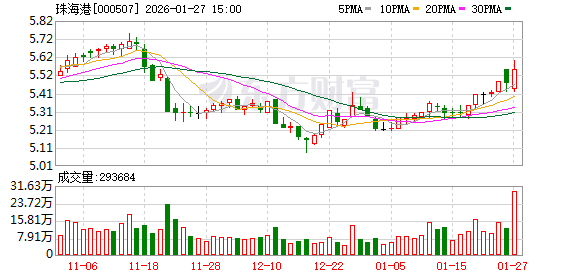
珠海港:坚持双轮驱动战略,积极开展价值管理工作
Jin Rong Jie· 2026-01-27 07:25
Core Viewpoint - The company acknowledges the disparity between its market value and intrinsic value, attributing stock price performance to various factors while emphasizing its commitment to sustainable development and shareholder communication [1]. Group 1: Company Strategy - The company adheres to a dual-driven strategy, focusing on the synergy between port logistics and new energy sectors to enhance sustainable development capabilities [1]. - The company actively engages in value management by returning value to shareholders and improving investor communication [1]. Group 2: Investor Communication - The company recognizes the importance of addressing investor concerns and commits to providing accurate responses within the framework of information disclosure requirements [1]. - The company aims to enhance the interaction platform's response mechanism to address core issues such as asset injection and business collaboration more effectively [1].
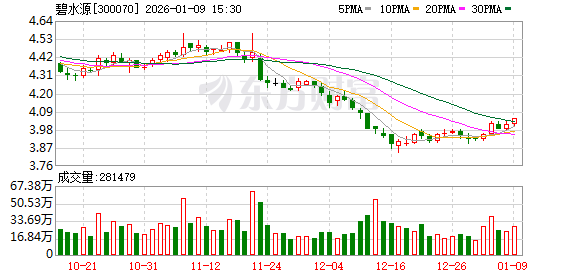
碧水源:公司高度重视价值管理
Zheng Quan Ri Bao· 2026-01-09 12:12
Group 1 - The company emphasizes the importance of value management and is committed to enhancing its core business operations [2] - The company aims to improve operational efficiency and profitability as part of its strategy for value enhancement [2] - The company is focused on deepening its main business activities to drive overall value growth [2]

宝立食品:公司上市以来已累计现金分红46601.17万元(含税)
Zheng Quan Ri Bao Wang· 2026-01-08 11:45
Core Viewpoint - Baoli Food (603170) emphasizes its commitment to value management and has consistently returned value to investors through cash dividends since its listing [1] Group 1: Dividend Policy - The company has cumulatively distributed cash dividends of 466.01 million yuan (including tax) since its listing [1] - The cash dividend amounts for the fiscal years 2022, 2023, and 2024 represent 46.43%, 49.83%, and 68.60% of the net profit attributable to shareholders, respectively [1] Group 2: Business Performance - Recent periodic reports indicate that the company has maintained a steady growth trajectory in its operations [1] - The company plans to continue optimizing its operational results to enhance intrinsic value and boost market confidence [1] Group 3: Information Disclosure - The major shareholder will fulfill its obligations regarding the disclosure of share reduction progress and changes in equity, and the company will provide timely updates through announcements [1]

茅台集团召开党委(扩大)会 党委书记陈华主持会议并讲话
Zheng Quan Shi Bao Wang· 2025-10-27 11:12
Core Viewpoint - The meeting emphasized that quality is the cornerstone of the company's survival and development, directly impacting brand reputation [1] Group 1: Quality and Innovation - The company must adhere to the principle that "quality is the soul of life" while balancing tradition and innovation [1] - There is a need to embrace modern science and technology to maintain the vitality of traditional craftsmanship and enhance technological innovation [1] Group 2: Market Management and Value Creation - The company aims to actively maintain the resilience of its channel ecosystem and continuously build a modern market management system to ensure healthy collaboration within the channel system and overall market stability [1] - Focus on value management and value creation to generate greater value for all stakeholders, fostering a sustainable development ecosystem based on shared interests and emotional connections [1] Group 3: Governance and Development Strategy - The company will further improve its modern enterprise system and governance structure, strictly following the direction of state-owned enterprise reform to enhance core competitiveness and risk resistance [1] - A commitment to ecological priority and green development is emphasized, with efforts to convert the value of "lucid waters and lush mountains are invaluable assets" into tangible benefits [1] Group 4: Long-term Planning - The company is focused on practical, long-term planning to serve broader goals, continuously promoting sustainable high-quality development [1]

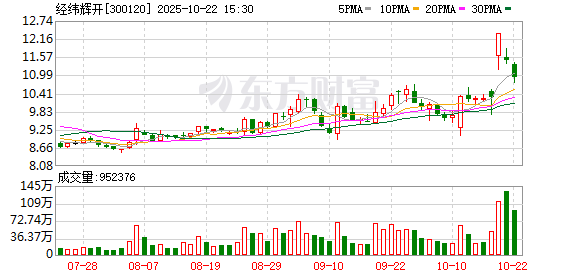
经纬辉开:公司积极开展价值管理工作
Zheng Quan Ri Bao· 2025-10-22 14:07
Core Viewpoint - The company's stock performance in the secondary market is influenced by multiple factors, and it is committed to steady development and strengthening its core business while actively engaging in value management [2] Group 1 - The company emphasizes a commitment to steady development and strengthening its core business [2] - The company is actively involved in value management initiatives [2] - The stock price performance is affected by various factors [2]

红塔证券董事总经理许琳睿:市值为什么不是越高越好?市值管理的本质是价值管理,而非股价管理
Sou Hu Cai Jing· 2025-10-20 10:15
Core Concept - The concept of "market value management" has evolved dramatically over the past two decades, transitioning from a stigmatized notion to an essential practice for A-share listed companies, especially following the introduction of the "New National Nine Articles" in April 2024, which emphasizes the need for guidelines on market value management [2][3][11]. Group 1: Market Value Management Evolution - The recognition of market value management as a necessary practice marks the beginning of a new era for A-share listed companies [3][11]. - The "New National Nine Articles" and subsequent regulatory guidelines signify a pivotal moment for institutionalizing and standardizing market value management [2][11]. - Historical context shows that market value management has been a recurring theme in China's capital market development over the past 30 years, with significant milestones in 2004 and 2014 [10][11]. Group 2: Value Management vs. Price Management - Market value management is fundamentally about value management rather than merely managing stock prices, emphasizing sustainable development and long-term investor returns [3][8][34]. - The distinction between genuine market value management and "pseudo market value management" is crucial, with the latter often involving manipulative practices that do not enhance intrinsic company value [14][15]. Group 3: Importance of Value Creation - Value creation is central to effective market value management, focusing on a company's ability to generate free cash flow and the strategic allocation of that cash flow [16][19]. - The management of free cash flow is critical for sustaining company value over time, with return on invested capital (ROIC) serving as a key metric for evaluating management effectiveness [18][19]. Group 4: Value Communication - Effective value communication is essential for connecting companies with investors, ensuring that intrinsic value is accurately reflected in the market [20][21]. - Companies must prioritize transparent information disclosure and engage in proactive investor relations to enhance market perception and understanding [21]. Group 5: Value Management Tools - Various tools are available for managing market value, including reasonable refinancing, mergers and acquisitions, and strategic share buybacks, which can help align market expectations with intrinsic value [23][24]. - It is important to approach share reductions with a balanced perspective, recognizing that legitimate reductions can help stabilize market sentiment [24][25]. Group 6: Structural Challenges in A-share Market - The A-share market faces structural challenges, including the need for larger, stronger companies and the lack of distinctive characteristics among smaller firms [27][30]. - Despite significant growth in the number of listed companies and total market capitalization, there remains considerable room for improvement in terms of market efficiency and the quality of listed firms [30][31]. Group 7: Transition to Equity Era - The Chinese economy is transitioning from a real estate-driven model to an equity-driven model, necessitating a shift in capital market focus from financing to investment [37][40]. - This transition requires companies to prioritize investor returns and stable dividends, reflecting a broader change in market dynamics and expectations [39][41]. Group 8: Regulatory Implications - The regulatory framework now emphasizes the importance of market value management for all listed companies, particularly in maintaining their status and leveraging the benefits of being publicly traded [45][47]. - Companies must actively engage in market value management to ensure they can attract capital and sustain growth in the evolving market landscape [47][48].


市值为什么不是越高越好?
Sou Hu Cai Jing· 2025-10-20 10:00
Core Concept - The concept of "market value management" is undergoing a significant transformation in the A-share market, shifting from a negative perception to a recognized necessity for corporate value enhancement [2][3]. Group 1: Market Value Management Evolution - The introduction of the "New National Nine Articles" in April 2024 marks a pivotal moment for market value management, emphasizing the need for guidelines and integrating it into corporate evaluation systems [2]. - The release of the "Regulatory Guidelines for Listed Companies No. 10 - Market Value Management" in November 2024 signifies the institutionalization and standardization of market value management [2][3]. - The historical context shows that market value management has been a recurring theme in China's capital market development over the past 30 years, evolving through three distinct phases [10][11]. Group 2: Value Management vs. Price Management - Market value management is fundamentally about value management rather than merely managing stock prices, focusing on sustainable development and long-term investor returns [3][8]. - The distinction between genuine market value management and "pseudo market value management" is crucial, with the latter often involving manipulative practices that harm broader stakeholder interests [14][15]. Group 3: Importance of Value Creation - Value creation is central to market value management, emphasizing the need for companies to enhance their ability to generate free cash flow and ensure the sustainability of their value over time [16][19]. - Effective capital allocation and the management of free cash flow are critical for maintaining and enhancing company value [18][19]. Group 4: Value Communication - Value communication is essential for connecting companies with investors, ensuring that the intrinsic value created is accurately reflected in the market [20][21]. - Companies must prioritize transparent information disclosure and engage in effective investor relations to enhance market perception and value recognition [21]. Group 5: Value Management Tools - Companies should utilize various tools for value management, including reasonable refinancing, mergers and acquisitions, and strategic share buybacks, to optimize their market positioning [23][24]. - It is important to view share reductions not as negative actions but as potential tools for managing market expectations and stabilizing stock prices [24][25]. Group 6: Structural Challenges in A-share Market - The A-share market faces structural challenges, including the need for larger, stronger companies and the lack of distinctive characteristics among smaller firms [30][31]. - Despite significant growth in the number of listed companies and total market capitalization, there remains substantial room for improvement in terms of market efficiency and the quality of listed entities [27][30]. Group 7: Transition to Equity Era - The Chinese economy is transitioning from a real estate-driven model to an equity-driven model, necessitating a shift in capital market focus from financing to investment [37][40]. - This transition requires companies to prioritize investor returns and stable dividends, reflecting a broader change in market dynamics and expectations [39][41]. Group 8: Regulatory Implications - The "New National Nine Articles" and related guidelines emphasize the importance of market value management for all listed companies, particularly state-owned enterprises, to ensure asset preservation and value enhancement [45][46]. - Companies must recognize the critical role of market value in securing capital support and maintaining their listing status in the evolving capital market landscape [46][47].

市值为什么不是越高越好?
和讯· 2025-10-20 09:49
Core Viewpoint - The concept of "market value management" has evolved dramatically over the past two decades, transitioning from a stigmatized notion to an essential practice for A-share listed companies, especially following the introduction of the "New National Nine Articles" in April 2024, which emphasizes the need for systematic market value management [2][3][4]. Group 1: Market Value Management - Market value management is fundamentally about value management rather than merely stock price management, focusing on sustainable development and long-term returns for investors [2][7][14]. - The essence of market value management lies in three aspects: value creation, value communication, and value operation, with an emphasis on enhancing intrinsic value as the primary goal [3][15][18]. - The historical context of market value management in China shows its importance has been recognized since the first "National Nine Articles" in 2004, but it gained significant traction after the second "National Nine Articles" in 2014 [9][10]. Group 2: Value Creation - Value creation is centered on a company's ability to generate free cash flow, which is crucial for determining its value and requires clear strategic positioning and effective governance [15][16]. - The ability to allocate free cash flow effectively is vital for sustaining value creation over time, with return on invested capital (ROIC) serving as a key metric for assessing management's capital allocation decisions [16][17]. Group 3: Value Communication - Value communication is essential for ensuring that a company's intrinsic value is accurately reflected in the market, necessitating effective information disclosure and investor relations [18][19]. - Companies must prioritize annual reports and performance briefings as critical channels for communicating with investors, ensuring that management is actively involved in these processes [19]. Group 4: Value Operation - Value operation focuses on managing through market cycles, employing strategies to mitigate risks associated with industry and financial cycles [20]. - Tools for effective value operation include reasonable refinancing, mergers and acquisitions, and managing shareholder expectations through legitimate share reductions [21][22]. Group 5: Structural Challenges in A-share Market - The A-share market faces structural challenges, including the need for larger, stronger companies and the lack of distinctive characteristics among smaller firms, which necessitates regulatory and market-driven efforts for value reassessment [4][26]. - Despite significant growth in the number of listed companies and total market capitalization, the A-share market still has considerable room for improvement in terms of market efficiency and investor returns [24][25]. Group 6: Transition to Equity Era - The Chinese economy is transitioning from a real estate-driven model to an equity-driven model, with capital markets needing to adapt to this shift by focusing on investor returns and sustainable growth [32][33]. - This transition emphasizes the importance of capital markets in supporting new economic drivers and ensuring that companies prioritize long-term value creation over short-term financing needs [34][35]. Group 7: Importance of Market Value Management - Market value management is now a critical focus for all listed companies, as it directly impacts their ability to attract capital and maintain their listing status [38][42]. - As the market evolves, the significance of market value will continue to grow, making effective market value management an essential strategy for companies aiming to thrive in the equity era [42].

广东建工(002060) - 002060广东建工投资者关系管理信息20250919
2025-09-19 09:38
Group 1: Company Strategy and Operations - The company emphasizes a dual main business strategy of construction and clean energy investment, aiming for synergistic development [3] - It plans to leverage its qualifications to increase project undertakings and expand its clean energy generation business [3] - The company is committed to improving operational performance and increasing shareholder returns through effective management and communication with investors [4] Group 2: Investor Relations and Communication - The company prioritizes cash dividends and actively engages with investors to communicate its investment value [4] - It conducts regular investor activities, including online Q&A sessions, to address investor concerns and enhance transparency [2] - The company acknowledges the impact of macroeconomic policies and provincial government projects on its market value management [3] Group 3: Market Performance and Shareholder Concerns - There has been a noted decline in company performance and shareholder dividends since the merger with Guangdong Water and Electricity [3] - The company is aware of stock price fluctuations influenced by industry trends and macroeconomic conditions, and it has not engaged in stock buybacks [4] - The upcoming release of 2.191 billion restricted shares is anticipated to affect the stock price [4]
