人形机器人

Search documents
日发精机(002520) - 2026年3月19日至20日投资者关系活动记录表
2026-03-20 09:24
Group 1: Company Overview - The company, Zhejiang Rifa Precision Machinery Co., Ltd., is involved in the production of high-precision CNC thread grinding equipment for various industries, including new energy vehicles and industrial automation [2]. - The company has established production capabilities for high-precision CNC thread grinding equipment used in the processing of lead screws and nuts, receiving recognition from clients [2]. Group 2: Product Development and Market Progress - The company has signed contracts or formed strategic partnerships with clients such as Best, Wuzhou New Spring, and Sanlian Forging, indicating progress in market expansion [2]. - The CNC grinding equipment for lead screws and nuts has been delivered to several clients, although large-scale production in some downstream industries, like humanoid robots, is still in early stages [2]. Group 3: Competitive Advantages and Innovations - The company is committed to innovation and has increased R&D investment to enhance its competitive edge in the bearing equipment sector, achieving domestic leadership in precision and performance [3]. - The focus for the current year includes improving product details, optimizing processes, and enhancing machine quality to accelerate product transformation and increase market competitiveness [3]. Group 4: Future Outlook - The demand for machine tools is expected to recover due to equipment renewal needs and the effects of industrial policies, with a continuous growth in demand for mid-to-high-end CNC machine tools anticipated [3].

车企最强“实习生”上岗
汽车商业评论· 2026-03-19 23:07
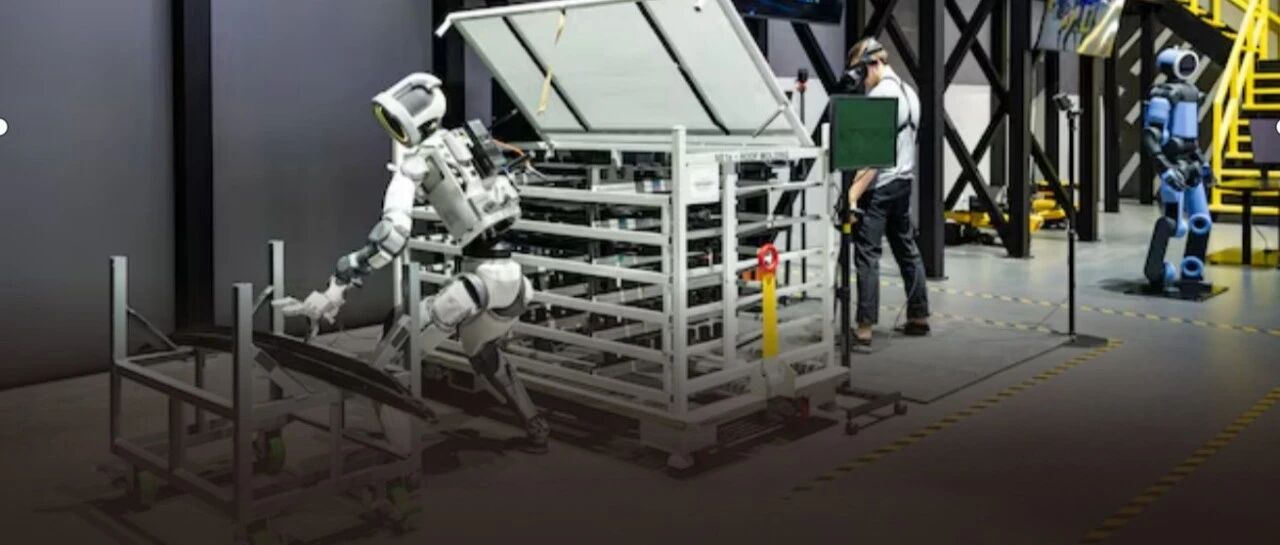
Core Viewpoint - Humanoid robots are transitioning from experimental phases to practical applications in automotive factories, marking a significant shift in manufacturing processes and labor dynamics [3][4][5]. Group 1: Industry Adoption - Major automotive companies like Hyundai, Toyota, BMW, and Tesla are integrating humanoid robots into their production lines, with Tesla's third-generation Optimus robot set to begin production in summer 2023 [5][6]. - By 2028, Boston Dynamics' Atlas robots will be deployed in Hyundai's Georgia factory for tasks such as parts sorting and material handling, with plans for a factory producing 30,000 robots annually [3][4]. - In China, Xiaomi's CyberOne has begun its internship in the automotive factory, while XPeng's IRON robot is set for mass production by 2027 [4]. Group 2: Current Capabilities and Limitations - Currently, humanoid robots are primarily performing repetitive tasks such as screw fastening and material sorting, and are still in a "trainee" phase due to issues like high hardware costs and process stability [8][9]. - Xiaomi's CyberOne achieved a 90.2% success rate in a three-hour task, meeting production line rhythm requirements, while XPeng's IRON robot improved factory efficiency by 30% and reduced labor costs by 35% [9][11]. - Despite their limitations, humanoid robots are addressing labor issues related to repetitive strain injuries in production lines [8]. Group 3: Future Potential - The ultimate goal for humanoid robots is to tackle the complex assembly line tasks that traditional automation has struggled with, particularly in the context of electric vehicles with increasing wiring complexity [13][18]. - Humanoid robots are expected to adapt to various assembly requirements through software updates, enabling them to work collaboratively on large components [22][41]. - The automotive industry anticipates that by 2035, the deployment of humanoid robots could reach 1.6 million units globally [5]. Group 4: Challenges to Full Automation - Achieving "dark factories," where production runs without human oversight, faces challenges such as the limited battery life of humanoid robots, which currently cannot match the 8-12 hour shifts of human workers [26][40]. - Solutions like modular battery systems and rapid charging technologies are being developed to enhance operational efficiency [28][31]. - The cost of humanoid robots is decreasing, with prices dropping to around 100,000 RMB (approximately $14,000) in early 2026, making them more appealing for automotive manufacturers [40][41]. Group 5: Labor Market Implications - The rise of humanoid robots raises concerns about job displacement in the automotive sector, with predictions of significant labor cost reductions as robots become more prevalent [45][47]. - However, the industry is also facing a labor shortage, and humanoid robots may fill roles that are increasingly difficult to staff due to the repetitive nature of the work [49]. - The transition to automated factories will require new skill sets, emphasizing the need for workers who can manage and maintain robotic systems rather than simply replacing human labor [56][57].

国泰海通|机械:GTC 2026发布了一个完整的“机器人训练流水线”
国泰海通证券研究· 2026-03-19 14:05
Core Insights - NVIDIA is transitioning from technology exploration to engineering implementation and ecosystem development in the field of embodied intelligence by 2026, focusing on software models, simulation infrastructure, hardware deployment, and collaborative ecosystems [1][2]. Group 1: Investment Recommendations - GTC serves as a barometer for the development of embodied intelligence, marking the humanoid robot industry entering the "engineering implementation" phase [2]. - NVIDIA is building a robot version of the "CUDA ecosystem" to attract developers through Cosmos (data generation), Isaac (simulation training), and GROOT (robot base model), facilitating the commercialization of embodied intelligence and converting robot model training demands into DGX computing sales [2]. Group 2: Robotics Data and Training Strategies - Cosmos 3 integrates synthetic world generation, visual reasoning, and action simulation, automating the entire process from raw data to final training datasets [3]. - The release of Isaac Lab 3.0 beta features a new Newton physics engine 1.0 and NVIDIA PhysX® SDK, enhancing multi-physics simulation capabilities and support for complex dexterous operation scenarios [3]. Group 3: Computing Infrastructure and Ecosystem - The DGX™-AI training server platform is characterized by the integration of multiple high-end GPUs, NVLink high-speed interconnect, and optimization for AI training, allowing for the formation of GPU clusters [4]. - Collaborations with industry leaders such as 1X, Agility, Boston Dynamics, and others are focused on developing the next generation of humanoid robots using Cosmos world models, Isaac Sim, and Isaac Lab, accelerating robot development and validation processes [4]. - NVIDIA aims to promote the commercialization of humanoid robots by enhancing development efficiency, reducing costs, addressing data bottlenecks, and enabling thousands of simulated robots to run concurrently on NVIDIA DGX, thereby increasing training scale [4].


白领和蓝领,同时站在了悬崖边
财富FORTUNE· 2026-03-19 13:04
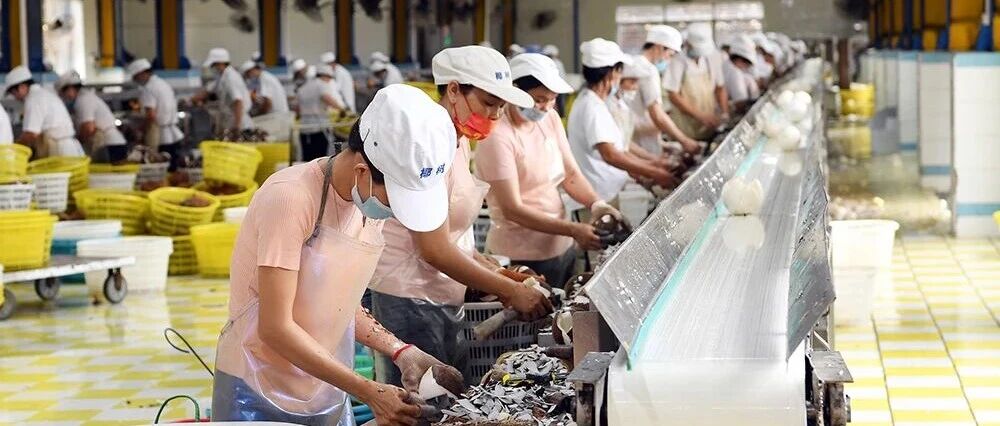
Core Viewpoint - The procurement of humanoid robots by a traditional food company, Coconuts Group, signals a significant shift in the labor market, indicating a trend towards automation and AI-driven processes that could replace both manual and white-collar jobs [1][3]. Group 1: Automation and Labor Market Impact - Coconuts Group plans to purchase 50 humanoid robots capable of peeling 360 coconuts per hour, which could replace dozens of skilled workers, indicating a potential restructuring of labor in the industry [1]. - The rise of humanoid robots and AI in production lines suggests a "no-difference replacement" in the labor market, affecting jobs across various sectors, including engineering and banking, particularly those with repetitive and quantifiable tasks [3][4]. - The unemployment rate for recent graduates aged 22 to 27 has reached 5.6%, the highest since 2013 (excluding the COVID-19 pandemic), highlighting the growing job market pressures driven by technological advancements [3][4]. Group 2: Structural Changes in Employment - The employment pressure is not due to economic recession but rather a structural adjustment driven by technology, as evidenced by HSBC's plan to cut around 20,000 jobs, primarily in back-office roles that AI can easily replace [4][5]. - The trend of job cuts is not isolated; Meta is also planning significant layoffs, indicating a broader wave of job reductions in the tech sector as companies seek to manage costs amid rising automation [4][5]. - The traditional labor market structure is changing, with the middle layer of jobs disappearing due to the dual impact of AI and humanoid robots, creating a significant skills gap between available jobs and those being replaced [6]. Group 3: Corporate Responses and Future Outlook - Corporate leaders express mixed responses to the changes; while some encourage embracing AI, others warn of the impending job crisis, emphasizing the need for society to adapt to the rapid technological changes [7]. - BlackRock has committed to investing $100 million in training for technical jobs, aiming to prepare 50,000 workers for roles in skilled trades, but this effort is still insufficient compared to the number of jobs at risk [7]. - The urgency for societal adaptation to technological advancements is highlighted, as companies like Coconuts Group are already implementing AI-driven automation, pushing the need for a clear path forward in workforce development [7].




谁为特斯拉的百万机器人造「关节」?
36氪· 2026-03-19 09:38
Core Viewpoint - Tesla's "O Chain" is emerging as a critical supply chain for the production of humanoid robots, with several Chinese suppliers establishing factories in Thailand to support this initiative [4][30]. Group 1: Overview of the "O Chain" - The "O Chain" consists of five Chinese suppliers: New Sword Transmission, Bet Technology, Sanhua Intelligent Control, Top Group, and Xusheng Group, who will produce various components for Tesla's humanoid robots [4][5]. - These suppliers have a history of collaboration with Tesla in the electric vehicle sector, leveraging their expertise in precision manufacturing to enter the humanoid robot market [5][32]. Group 2: Key Suppliers and Their Roles - Sanhua Intelligent Control is set to produce actuators, which are essential for the robot's movement, and has invested 3.8 billion yuan in a new facility for this purpose [7][8]. - Top Group, another long-time Tesla supplier, is expanding into the robotics sector with plans to invest 5 billion yuan in a production base for robot drive systems [11][12]. - Xusheng Group will manufacture joints and skeletal components for the Optimus robot, having previously supplied lightweight solutions for Tesla's electric vehicles [15][16]. - New Sword Transmission is responsible for producing planetary roller screws, a critical component for the robot's limbs, with plans for a new facility to produce 1 million units annually [17][19]. Group 3: Market Dynamics and Future Outlook - The shift from automotive to robotics supply chains is seen as a natural progression, given the technological similarities between electric vehicle components and those required for humanoid robots [34]. - The global humanoid robot market is projected to grow significantly, with estimates suggesting a market value exceeding that of the automotive sector, providing a new growth avenue for suppliers [36]. - Chinese suppliers are crucial to Tesla's plans, as they hold a significant share of the manufacturing capabilities and core component technologies needed for humanoid robots [38][39]. Group 4: Challenges and Preparations - Despite the optimistic outlook, suppliers have not confirmed any large-scale orders from Tesla, and there is uncertainty regarding production timelines [40][41]. - The suppliers are preparing for potential orders by planning production capacities ranging from 100,000 to 1 million units annually, awaiting Tesla's move towards mass production [40][42].



瑞声科技2025年营收318.2亿元,净利润同比大增39.8%
Shang Hai Zheng Quan Bao· 2026-03-19 08:24
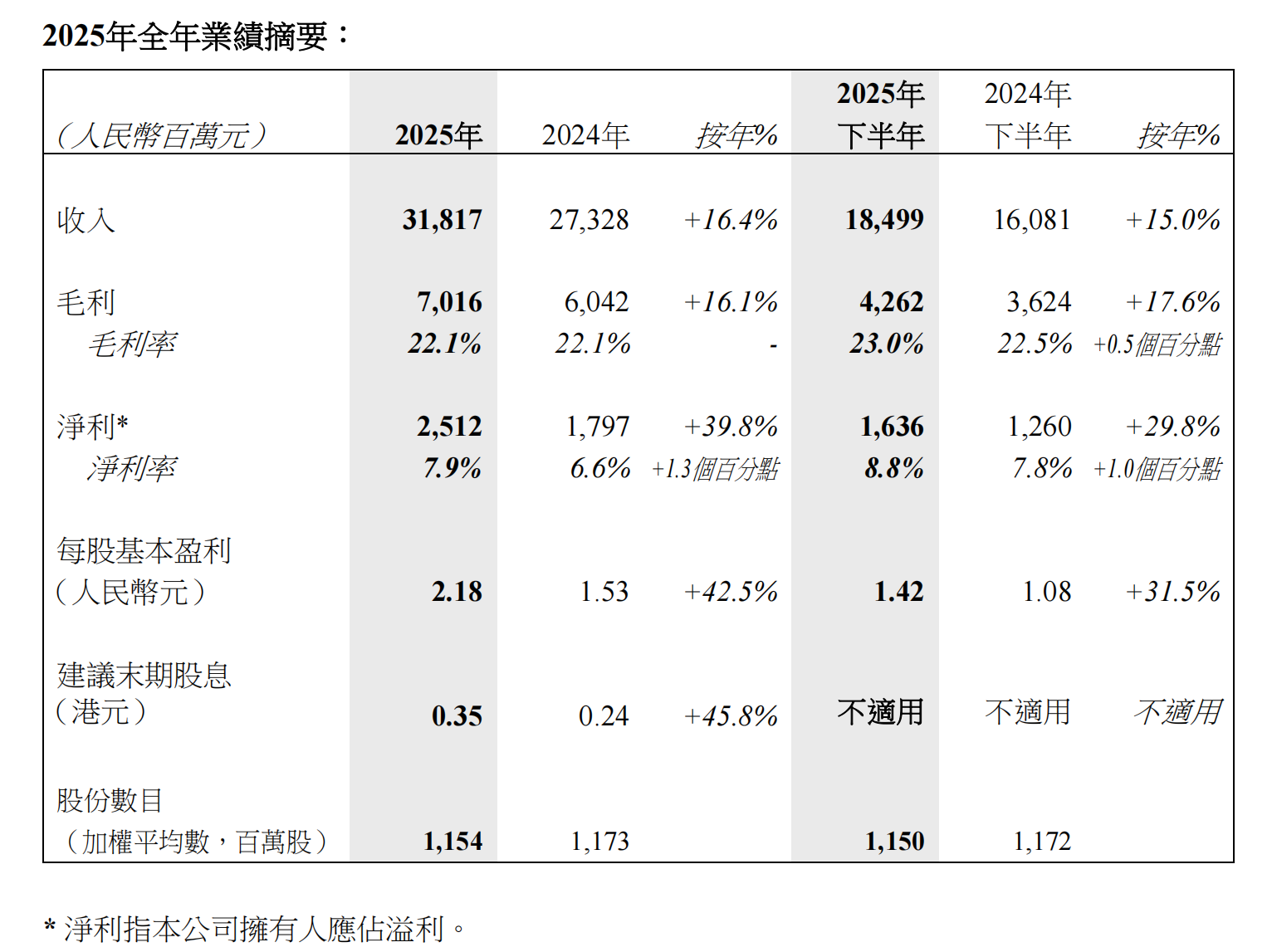
Core Viewpoint - 瑞声科技 reported a strong financial performance for the year 2025, with significant growth in revenue and net profit, indicating robust operational health and strategic advancements in various business segments [1][2]. Financial Performance - The company achieved a revenue of 31.82 billion yuan, representing a year-on-year growth of 16.4% [1]. - The net profit attributable to shareholders reached 2.51 billion yuan, marking a substantial increase of 39.8% compared to the previous year [1]. - Basic earnings per share increased by 42.5% to 2.18 yuan [1]. - A final dividend of 0.35 HKD per share was proposed, reflecting a growth of 45.8% from the previous year [1]. Business Segments - The company has established a core business matrix including acoustics, optics, electromagnetic transmission, and precision structural components, all showing steady performance in 2025 [2]. - Revenue from the electromagnetic transmission and precision structural components segment was 11.77 billion yuan, with a year-on-year growth of 21.3% [2]. - The optics segment generated revenue of 5.73 billion yuan, with a gross margin increase of 5 percentage points to 11.5% [2]. - The sensor and semiconductor business saw a remarkable year-on-year revenue surge of 103.1% [2]. Strategic Initiatives - In 2025, the company accelerated its transformation from a basic hardware provider to a leader in AI perception and interaction systems, with R&D investment reaching 2.31 billion yuan, a 14.3% increase year-on-year [2]. - The acquisition of Hebei Chuguang and Pioneer Group enhanced the company's vertical integration capabilities in the automotive acoustics sector [2]. - The company applied its core micro-motor technology in the development of robotic joints for XR and humanoid robots, achieving mass production with annual revenue exceeding 100 million yuan [2]. Financial Health - Operating cash flow reached 7.18 billion yuan, reflecting a year-on-year growth of 38.1% [2]. - The net debt-to-equity ratio stood at a low 2.1%, indicating a strong financial position [2].
汽车零部件板块近期调研更新
2026-03-19 02:39
Summary of Key Points from the Conference Call Industry Overview - The automotive parts sector is currently in a left-side layout phase, expected to rebound as demand recovers after digesting Q1 exchange rate and freight fluctuations, and awaiting valuation recovery from OEMs [1][2] - The overall automotive parts industry is anticipated to face pressure in 2026 due to weak terminal demand and significant annual price reductions, alongside short-term cost pressures from rising commodity prices and export challenges from exchange rate fluctuations [2] Company-Specific Insights 福莱新材 (Fulei New Materials) - Fulei New Materials is leading in humanoid robot electronic skin development, securing an order for 100,000 "dexterous hands," with expected shipments reaching tens of millions by 2026 [4] - The company has begun small-scale shipments in 2025 and is collaborating with over 40 companies, with a high gross margin expected as production scales up [4] 雷迪克 (Redick) - Redick has entered the humanoid robot sector through the acquisition of Tengzhan, focusing on micro-screw capabilities and has entered the supply chain of a North American client for bearings, with initial orders expected to exceed 10,000 units [5] - The company is also developing dexterous hands in collaboration with Aoyi, which has seen rapid growth in medical applications [5] 速联公司 (Sulean) - Sulean's automotive business is expected to remain stable, with new client acquisitions and growth in non-automotive sectors like energy storage and air suspension [7] - The company is advancing in the data center liquid cooling sector, establishing a factory in Huizhou, with products expected to ship in 2026 [8] 中自科技 (Zhongzi Technology) - Zhongzi Technology is projected to see a significant rebound in 2026, driven by the catalyst business benefiting from the implementation of national standards, with potential value increases of 30%-50% per vehicle [9] - The energy storage business is expected to grow significantly, with a net margin close to 20% for domestic sales [9] 天诚自控 (Tianceng Control) - Tianceng Control's growth in 2026 will be driven by the passenger car seat business, which has entered a recovery phase, and the engineering machinery seat business, which has a net margin of 10% [10] - The company is also expanding into the low-altitude economy sector, with new orders expected to provide additional growth [10] Additional Insights - The automotive industry is experiencing a reversal at the OEM level, with companies like BYD launching new models and demand gradually recovering, although the transmission of this recovery to the parts sector may be delayed [3] - The market is advised to gradually position itself in the parts sector, with a focus on left-side strategies as the overall sentiment may improve post Q1 report [3]
中原证券晨会聚焦-20260319
Zhongyuan Securities· 2026-03-19 00:16
Core Insights - The report highlights the ongoing adjustments in various industries, particularly in the semiconductor and photovoltaic sectors, driven by geopolitical tensions and domestic policy shifts [5][9][23]. Domestic Market Performance - The Shanghai Composite Index closed at 4,062.98, with a slight increase of 0.32%, while the Shenzhen Component Index rose by 1.05% to 14,187.80 [4]. - The average price-to-earnings ratios for the Shanghai Composite and ChiNext are 16.74 and 47.98, respectively, indicating a favorable long-term investment environment [11][12]. International Market Performance - The Dow Jones Industrial Average fell by 0.67% to 30,772.79, while the S&P 500 and Nasdaq also experienced declines of 0.45% and 0.15%, respectively [5]. - The report notes that global semiconductor sales continue to grow, with a year-on-year increase of 46.1% in January 2026, indicating strong demand in the sector [18]. Industry Analysis - The semiconductor industry is experiencing a recovery, with domestic storage module manufacturers exceeding expectations in Q1 2026, driven by rising prices in the global market [17]. - The photovoltaic industry is undergoing a significant adjustment phase, with a focus on reducing internal competition and enhancing value through technological advancements [34][36]. Investment Recommendations - The report suggests focusing on sectors such as communication equipment, semiconductors, and IT services for short-term investment opportunities, given their current performance and market conditions [10][11]. - In the food and beverage sector, investment opportunities are identified in upstream raw material companies, particularly as inflationary pressures shift investment focus from oil and chemicals to agricultural products [28][30].
金安国纪(002636) - 2026年3月17日投资者关系活动记录表
2026-03-18 08:14
Group 1: Market Trends and Pricing - The price of copper-clad laminates has been rising due to increased raw material costs and growing demand in the PCB market [1] - The company maintains an optimistic outlook for the copper-clad laminate market in 2026, driven by the rapid development of industries such as consumer electronics, AI terminals, and new energy vehicles [1] - The company's pricing strategy for copper-clad laminates is adjusted based on market conditions and raw material price fluctuations, making it difficult to predict future price trends [1] Group 2: Production Capacity and Applications - The current annual production capacity of the company is approximately 60 million sheets [2] - The copper-clad laminate products are widely used in various sectors, including home appliances, computers, lighting, automotive, communications, and new energy generation and storage [2] - The company plans to invest in a project to produce high-grade copper-clad laminates, focusing on high-frequency, high-speed, and high-temperature special laminates [2] Group 3: Financial Activities - The company's application for a specific stock issuance was accepted by the Shenzhen Stock Exchange on February 12, 2025, and is currently under review [2]

新共识!特斯拉Optimus V3发布时间
Robot猎场备忘录· 2026-03-18 07:54
Core Viewpoint - The article emphasizes the significance of the upcoming release of Optimus V3 by Tesla, suggesting that March is a critical period for T-chain companies, with expectations for the V3 performance to exceed market predictions [2][5]. Summary by Sections Optimus V3 Release - The anticipated release of Optimus V3 is expected to occur at the end of March or early April, with Elon Musk indicating that production will begin in summer and large-scale manufacturing is projected for next year [2][5]. Market Sentiment and T-chain Performance - T-chain companies have experienced a downward trend, with only a brief rally on March 10. The overall sentiment in the sector remains low, attributed to external uncertainties and the need for a washout before the V3 announcement [6][10]. - The article notes that the T-chain companies are currently facing "left-side" opportunities, indicating potential for investment before the expected positive developments [10]. T-chain Companies' Developments - Recent developments among T-chain companies include significant progress in securing PPA agreements and entering Tesla's supply chain, with specific companies like H and Z making notable advancements [7][8]. - The article highlights a shift in investor focus towards new and emerging T-chain companies, as older suppliers face pressure from new entrants in the market [8]. Future Outlook - The article suggests that until the release of Optimus V3, T-chain companies will continue to struggle, and investors should focus on core, high-certainty companies while waiting for the right opportunities to emerge [10].