
资本补充

Search documents
超长期特别国债,明起发行
新华网财经· 2025-04-23 10:06
值得注意的是,前期,中央财政预拨消费品以旧换新资金810亿元,带动以旧换新开局良好。国家统计 局数据显示,一季度,限额以上单位通讯器材类、家用电器和音像器材类、家具类商品零售额同比分别 增长26.9%、19.3%和18.1%,增速分别比1—2月份加快0.7个、8.4个和6.4个百分点;文化办公用品类零 售额增长21.7%,持续保持快速增长。 此外, 4月24日还将发行首期2025年中央金融机构注资特别国债 。根据前期公布的发行安排,2025年中 央金融机构注资特别国债共4只,其中2只为5年期、2只为7年期。 据介绍,2025年财政部将发行首批中央金融机构注资特别国债5000亿元,积极支持中国银行、中国建设 银行、交通银行、中国邮政储蓄银行补充核心一级资本。此次资本补充工作将按照市场化、法治化原则 稳妥推进。 按照财政部有关安排, 2025年超长期特别国债、中央金融机构注资特别国债将于4月24日启动发行 。 按照2025年超长期特别国债发行安排,4月24日将首发20年期和30年期超长期特别国债,付息方式均为 按半年付息。 记者注意到,今年超长期特别国债集中在4月至10月发行,较去年集中在5月至11月发 行,整体 ...
年内首家银行公告“拒赎”二级资本债券
Zheng Quan Ri Bao· 2025-04-22 16:47
Core Viewpoint - Nanchang Rural Commercial Bank has chosen not to exercise the redemption option for its first tranche of subordinated capital bonds issued in 2020, marking the first commercial bank to announce such a decision this year [1][2]. Company Summary - Nanchang Rural Commercial Bank was established on March 26, 2009, and is the first rural commercial bank in Jiangxi Province, formed from the original Hongdu Credit Cooperative [1]. - The bank raised a total of 1.83 billion yuan in targeted fundraising in June and December 2023, with Nanchang Financial Holding Co., Ltd. being the largest shareholder, holding a 9.99% stake as of the end of 2023 [1]. Bond Issuance Details - The bank issued 500 million yuan of subordinated capital bonds on May 18, 2020, with a fixed interest rate of 4.90% and a 10-year term, including a conditional redemption option at the end of the fifth year [1]. - The conditions for exercising the redemption option include replacing the redeemed bonds with capital instruments of equal or higher quality or maintaining a capital level significantly above regulatory requirements [1]. Reasons for Not Exercising Redemption - The decision not to redeem the subordinated capital bonds indicates that the bank did not meet the necessary conditions for redemption [2]. - Experts suggest that factors influencing this decision include insufficient capital adequacy ratio, challenges in net interest margin, and rising non-performing loan rates, which hinder the bank's ability to internally generate capital [3]. Industry Context - The trend of banks opting not to redeem subordinated capital bonds has become more frequent, particularly among small and medium-sized banks [3]. - In the previous year, several small banks, including Yinkou Bank and Hubei Xiaogan Rural Commercial Bank, also chose not to redeem their subordinated capital bonds [3]. - The ongoing situation reflects a significant demand for capital replenishment among small and medium-sized banks, with expectations that they will increasingly issue subordinated capital bonds for capital supplementation [4].
南京银行(601009):利息净收入高增超预期,聚焦资本补充推进节奏
Shenwan Hongyuan Securities· 2025-04-22 09:24
Investment Rating - The report maintains a "Buy" rating for Nanjing Bank [6] Core Views - Nanjing Bank's revenue growth in 2024 and Q1 2025 exceeded expectations, driven by significant increases in net interest income, with revenue growth of 11.3% and 6.5% year-on-year respectively [6] - The bank's asset quality remains strong, with non-performing loan ratios stable at 0.83% and a provision coverage ratio of 324% [6] - The report highlights the bank's focus on retail lending and credit growth, with a notable increase in loan issuance in key sectors such as technology and green finance [6] Financial Data and Profit Forecast - Total revenue (in million) is projected to grow from 45,159.51 in 2023 to 52,873.78 in 2025E, with a year-on-year growth rate of 1.24% in 2023 and 11.32% in 2024 [5] - Net profit attributable to shareholders is expected to increase from 18,502.08 in 2023 to 21,788.20 in 2025E, with a year-on-year growth rate of 0.51% in 2023 and 9.05% in 2024 [5] - The report anticipates a steady decline in the price-to-earnings ratio from 6.21 in 2023 to 5.59 in 2025E, indicating improved valuation [5] Loan Growth and Structure - Nanjing Bank's loan growth is projected to remain robust, with a year-on-year increase of 14.3% in Q4 2024 and 14.6% in Q1 2025, driven primarily by corporate lending [6][10] - The bank's loan issuance strategy focuses on key areas such as technology, green finance, and inclusive finance, with over 50% of new loans expected to be allocated to Shanghai and Beijing branches [9][11] Interest Margin and Cost of Liabilities - The net interest margin is expected to stabilize, with a slight increase in Q1 2025 to 1.44%, supported by a decrease in the cost of liabilities [8][13] - The report notes a decline in the cost of interest-bearing liabilities, which is projected to enhance the bank's profitability [13] Asset Quality and Risk Management - Nanjing Bank's non-performing loan ratio has remained stable at 0.83%, with proactive measures taken to manage asset quality [8] - The report indicates that the bank's focus on asset disposal has contributed to maintaining a leading position in asset quality within the industry [8]

南京银行(601009):利息净收入高增超预期 聚焦资本补充推进节奏
Xin Lang Cai Jing· 2025-04-22 08:27
Core Viewpoint - Nanjing Bank reported strong financial performance for 2024 and Q1 2025, with revenue and net profit growth driven by increased interest income and non-interest income, despite some challenges in asset quality and capital adequacy [1][2][8]. Financial Performance - For 2024, Nanjing Bank achieved revenue of 50.3 billion yuan, a year-on-year increase of 11.3%, and a net profit of 20.2 billion yuan, up 9.1% [1]. - In Q1 2025, revenue reached 14.2 billion yuan, growing 6.5% year-on-year, with net profit at 6.1 billion yuan, reflecting a 7.1% increase [1][2]. - The bank's non-performing loan (NPL) ratio remained stable at 0.83% for both Q4 2024 and Q1 2025, while the provision coverage ratio decreased to 324% [1][7]. Revenue Drivers - The significant increase in net interest income was a key contributor to the revenue performance, with 2024 and Q1 2025 net interest income growing by 4.6% and 17.8% year-on-year, respectively [2]. - Other non-interest income saw a substantial increase of 31% in 2024 but declined by 11% in Q1 2025, impacting overall revenue growth [2][6]. - The bank's proactive provisioning efforts aimed at maintaining asset quality negatively impacted profit growth by 2.3% in 2024 and 2.9% in Q1 2025 [2][7]. Loan Growth and Structure - Loan growth remained robust, with a year-on-year increase of 14.3% in Q4 2024 and 14.6% in Q1 2025, driven primarily by retail lending [4][5]. - In 2024, approximately 1.6 billion yuan in new loans were issued, with over 1.2 billion yuan directed towards corporate lending in key sectors such as technology and green finance [4][5]. - The bank's branch network expanded to 290 locations by the end of 2024, with a focus on enhancing service delivery in key urban areas [5]. Interest Margin and Cost of Funds - The bank's interest margin for 2024 was estimated at 1.34%, a slight decrease of 10 basis points year-on-year, while Q1 2025 saw a marginal increase to 1.44% [6]. - The decline in funding costs contributed to the stabilization of the interest margin, with funding costs dropping to 2.31% in the second half of 2024 [6][7]. Asset Quality and Capital Adequacy - Nanjing Bank maintained a leading position in asset quality, with a stable NPL ratio and a slight increase in the attention rate [7]. - The core Tier 1 capital adequacy ratio fell to 8.89% in Q1 2025, indicating potential capital pressure amid rapid asset growth [3][7]. - The bank's proactive approach to asset disposal has helped maintain overall asset quality despite some challenges in the retail segment [7]. Investment Outlook - The strong performance in Q1 2025 sets a solid foundation for the year, with expectations for sustainable profit improvement driven by volume growth and stable pricing [8]. - The bank's projected net profit growth rates for 2025-2027 are 8%, 9.2%, and 9.4%, respectively, reflecting a cautious adjustment in profit forecasts [8].
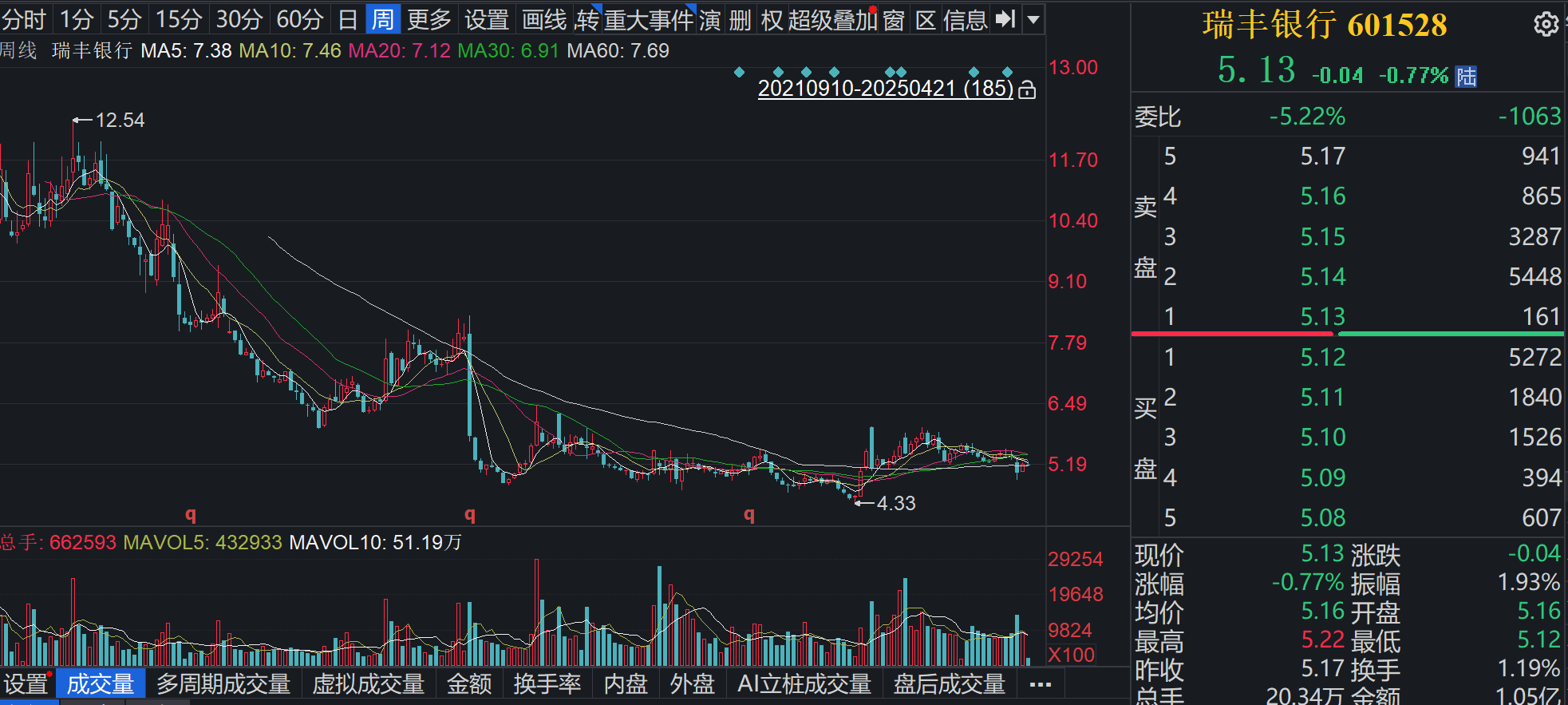
瑞丰银行50亿可转债三度延期:股价破发近40%,资本充足率警报未解
Jin Rong Jie· 2025-04-21 16:59
瑞丰银行的可转债发行计划最早可追溯至2021年上市初期。彼时该行通过IPO募集资金11.8亿元,但快速扩张的业务规模很快让资本充足率承压。2022年4 月,上市未满一年的瑞丰银行即抛出50亿元可转债发行预案,计划通过六年期债券补充核心一级资本。根据当时测算,若可转债全额转股,可将资本充足率 提升3-4个百分点。 该计划在推进过程中遭遇多重阻力。2023年4月,因发行工作未获实质性进展,瑞丰银行首次将授权有效期延长至2024年4月19日。2024年4月年度股东大会 上,面对仍未落地的发行计划,董事会再度将有效期延长至2025年4月19日。如今第三次延期至2026年的决议,意味着这场资本补充行动已跨越三个完整会 计年度。 监管问询函揭示了核心矛盾。上交所在审核中重点关注融资必要性,瑞丰银行回应称需维持核心一级资本充足率不低于13.50%的管理目标。然而现实数据 显示,2021-2023年间该指标从15.41%持续下滑至12.68%,直至2024年回升至13.67%。尽管最新数据暂时达标,但较管理目标仍存在1.83个百分点的安全边 际损耗。 浙江绍兴瑞丰农村商业银行股份有限公司(以下简称"瑞丰银行(601528)" ...

杭州银行(600926):业绩领跑、信贷高增,关注资本补充节奏
Shenwan Hongyuan Securities· 2025-04-13 09:45
Investment Rating - The report maintains a "Buy" rating for Hangzhou Bank [1] Core Views - Hangzhou Bank's revenue for 2024 reached 38.4 billion yuan, a year-on-year increase of 9.6%, with net profit attributable to shareholders of 17 billion yuan, up 18.1% year-on-year [4][6] - The bank's non-interest income grew significantly, contributing to revenue acceleration, while net interest income showed marginal recovery [6][8] - The bank's asset quality remains strong, with a non-performing loan (NPL) ratio of 0.76% and a provision coverage ratio of 541% [9][11] Financial Data and Profit Forecast - Total revenue and net profit forecasts for 2025-2027 are adjusted, with expected growth rates of 15.1%, 13.1%, and 13.5% respectively [9][10] - The bank's net interest margin (NIM) for 2024 is projected at 1.41%, with a slight year-on-year decline of 9 basis points [9][11] - The bank's total assets are expected to grow to 2,112.36 billion yuan by the end of 2024, reflecting a 14.7% increase year-on-year [13] Loan and Deposit Growth - The bank's loan growth was driven by corporate lending, with a year-on-year increase of 16.2% in Q4 2024 [6][10] - Total deposits reached 1,272.55 billion yuan, marking a 21.7% increase year-on-year [13] Capital Adequacy and Dividend Policy - The core tier 1 capital adequacy ratio improved to 8.85% in 2024, with a dividend payout ratio increased from 22.5% to 24.5% [9][11] - Timely capital replenishment remains necessary despite the improved capital adequacy ratios [9][10]

注资后有何计划?如何保护中小投资者利益?四大行最新回应!
券商中国· 2025-03-31 12:05
"发行对象、发行价格如何确定?""如何保护中小投资者利益?""此次资本补充有何重要意义?"…… 3月31日收盘后,2025年国有大型商业银行定向增发投资者说明会召开。中国银行、建设银行、交通银 行、邮储银行管理层主要成员通过上证路演中心与投资者进行在线沟通交流,就财政部注资一事回应市场 关切。 市场对此予以积极回应。截至3月31日收盘,中行、建行、交行、邮储银行A股股价当日分别收涨 1.82%、3.64%、1.22%和0.19%。 根据相关监管规定,财政部等机构通过此次定增认购的前述四家大行股份自取得股权之日起5年内不得转 让。 值得一提的是,四家银行发行价格均为不低于定价基准日前20个交易日A股均价的80%,且较现行股价有 不同程度溢价,在二级市场市价与1倍净资产之间寻求平衡点。 发行对象如何确定? 根据此前公告,前述四家大行拟发行规模均不超过发行前总股本的30%,合计募资规模达5200亿元。其 中,财政部合计出资5000亿元,与此前《政府工作报告》中"拟发行特别国债5000亿元,支持国有大型商 业银行补充资本"的表述相符。 在"量"的分配上,财政部统筹考虑了四家大行现有资本充足率水平,对资本相对稀缺的银行 ...




四家大行发声:保护中小股东权益!
21世纪经济报道· 2025-03-31 11:37
作 者丨林秋彤 编 辑丨周炎炎 建设银行、中国银行、交通银行、邮储银行 ,四家国有大行注资后,日内股价迅速上涨。截 至 3 月 3 1 日 1 5 时 收 盘 , 建 设 银 行 、 中 国 银 行 、 交 通 银 行 、 邮 储 银 行 股 价 分 别 收 涨 3 . 6 4 % 、 1 . 8 2%、1 . 2 2%和0 . 1 9%。 具体来看,建设银行股价已达8 . 8 3元每股,总市值突破1 . 6万亿元。中国银行总市值也突破1 . 5 万亿元,日内成交额为1 6 . 9 6亿元。交通银行股价为7 . 4 5元每股,日内成交额也达到了1 6 . 9亿 元,邮储银行日内成交额突破2 2亿元。 大行注资补充核心一级资本 3月3 0日,建设银行、中国银行、邮储银行、交通银行相继发布定增公告,拟向财政部发行A 股股票,分别募集资金1 0 5 0亿元、1 6 5 0亿元、11 7 5 . 8亿元和11 2 4 . 2 0 0 6亿元。此外,中国烟 草拟认购交通银行4 5 . 7 9 9亿元,双维投资拟认购交通银行3 0亿元;中国移动集团拟认购邮储 银行7 8 . 5 4亿元、中国船舶集团拟认购邮储银行4 5 ...

兴证银行 国有大行注资影响解读
2025-03-31 05:54
Summary of the Conference Call on State-Owned Banks' Capital Injection Industry Overview - The conference call discusses the capital injection plan for state-owned banks in China, specifically focusing on four major banks: China Construction Bank (CCB), Bank of China (BOC), Bank of Communications (BoCom), and Postal Savings Bank of China (PSBC) [2][10]. Key Points and Arguments - **Capital Injection Scale and Structure**: The total capital injection amounts to 520 billion yuan, with the Ministry of Finance contributing 500 billion yuan and other shareholders, including China Tobacco and China Mobile, contributing approximately 20 billion yuan [2][3]. - **Pricing and Premium**: The issuance price is set below one times price-to-book (PB) but above the market price, indicating a premium issuance. The premium rates for each bank vary, with CCB at 8.8%, BOC at 8.3%, BoCom at 21.5%, and PSBC at 17.2% [2][3][7]. - **Core Capital Adequacy Ratios**: Post-injection, the core capital adequacy ratios are projected to be 15% for CCB, 13% for BOC, 11.5% for BoCom, and 11% for PSBC. The dilution ratios are approximately 4.3% for CCB, 8.5% for BOC, 15.6% for BoCom, and 17.2% for PSBC [3][4]. - **Dividend Yields**: After dilution, the dividend yields for A-shares are 4.5% for CCB, 4.4% for BOC, 4.3% for BoCom, and 4.2% for PSBC. The yields for H-shares are higher, with CCB at 6.2%, BOC at 5.2%, BoCom at 5.55%, and PSBC at 4.7% [3][4]. - **Comparison with 1998 Injection**: Unlike the 1998 capital injection aimed at addressing high non-performing loan rates, the current injection focuses on future growth and stability, with the six major banks generating annual profits of 100 to 150 billion yuan and total assets reaching 200 trillion yuan [5]. - **Focus on A-Shares**: The capital injection is primarily concentrated in the A-share market to minimize the impact on the secondary market and leverage the pricing power of A-shares, as well as to simplify the funding process [6]. - **Use of Funds**: The funds will be allocated for traditional lending, bond investments, and potentially increased equity investments, particularly in technology innovation projects [8][9]. - **Impact on Investors**: The capital injection is expected to provide short-term support for earnings per share (EPS) and return on equity (ROE), while enhancing long-term capital strength, profitability stability, and dividend sustainability for investors [11]. - **Support for Technology Enterprises**: The injection may also lead to increased investments in technology-related companies, reflecting the government's emphasis on supporting technological innovation [12]. Other Important Considerations - **Future Capital Injections**: Industrial and Agricultural Bank of China (ICBC) and Agricultural Bank of China (ABC) are expected to undergo capital injections in a second phase, pending regulatory policies [10]. - **Strategic Arrangements**: CCB has indicated potential strategic arrangements for equity investments to support the development of technology enterprises [8]. This summary encapsulates the essential insights from the conference call regarding the capital injection into state-owned banks, highlighting the implications for the banking sector and investors.
大行资本补充落地,助力长期稳健经营
Ping An Securities· 2025-03-31 02:12
Investment Rating - The industry investment rating is "Outperform the Market" which indicates that the industry index is expected to perform better than the market by more than 5% over the next six months [9]. Core Viewpoints - The report highlights that the capital replenishment by major banks will support long-term stable operations, with a sustainable growth outlook for profitability post-capital increase [4][5]. - The report notes that the current dividend yield for the banking sector is at 4.2%, which remains high compared to the risk-free rate, indicating continued value in dividend allocation [6]. - The report emphasizes the importance of policy support for the banking sector, particularly in relation to real estate and consumer sectors, which could catalyze improvements in bank performance [6]. Summary by Sections Capital Increase Details - On March 30, 2025, four major state-owned banks announced a capital increase plan totaling 520 billion yuan, with the Ministry of Finance contributing 500 billion yuan [2][5]. - The individual issuance sizes for the banks range from 105 billion to 165 billion yuan, with premium issuance rates between 9% and 22% based on the closing price on March 28 [5][7]. Capital Adequacy Ratios - Post-capital increase, the core Tier 1 capital adequacy ratios for the banks are projected to improve: CCB to 15.1%, BOC to 12.7%, BC to 12.0%, and PSBC to 11.0% [5][8]. - This capital enhancement is expected to better support the real economy and improve risk absorption capabilities, particularly in retail asset quality [5]. Earnings and Dividend Impact - The capital increase is expected to slightly dilute earnings per share (EPS) and dividend yields, with EPS for the banks projected to decrease by 2.2% to 9.4% post-issuance [5][8]. - The static dividend yields are expected to decline marginally, with CCB at 4.6%, BOC at 4.2%, BC at 4.7%, and PSBC at 4.6% after the capital increase [5][8]. Investment Recommendations - The report recommends focusing on cyclical stocks with high dividends, as the banking sector's static price-to-book (PB) ratio is currently at 0.66, indicating a significant margin of safety [6]. - Specific banks are highlighted for investment based on their fundamentals and expected recovery from policy support, including regional banks and those with strong dividend profiles [6].