普惠金融

Search documents
86万家社会组织贷款可及性仅8% 普惠金融支持待破局
Di Yi Cai Jing· 2025-11-06 13:43
Core Insights - The report highlights the urgent need for a diversified funding support system for social organizations in China, which currently number 865,000 and employ over 10 million people [1] - Only 8% of social organizations can obtain bank loans as institutions, with most relying on personal loans or borrowing from friends and family [1][3] - The report emphasizes the necessity for policy clarity and product innovation to address the loan demand of social organizations [2] Group 1: Loan Accessibility and Challenges - The majority of banks refuse to lend to social organizations due to uncertainty about their status as legitimate borrowers [3][4] - Existing banking regulations do not clearly define social organizations as eligible loan recipients, leading to confusion in credit approval processes [3][4] - Social organizations face structural mismatches with traditional bank credit assessment models, which are based on profitability and collateral, while these organizations operate on a non-profit basis [4] Group 2: Recommendations for Improvement - Short-term solutions include clarifying the legal status of social organizations as borrowers and developing tailored credit products [6][7] - Financial institutions are encouraged to create specialized credit assessment frameworks that align with the unique characteristics of social organizations [6][7] - Collaboration among financial regulators, civil affairs, and social work departments is essential to establish a supportive ecosystem for social organization financing [7]
“共建普惠金融新质服务体系·助力 共同富裕”全国性专场活动在甬成功举办
Xin Lang Cai Jing· 2025-11-06 13:32
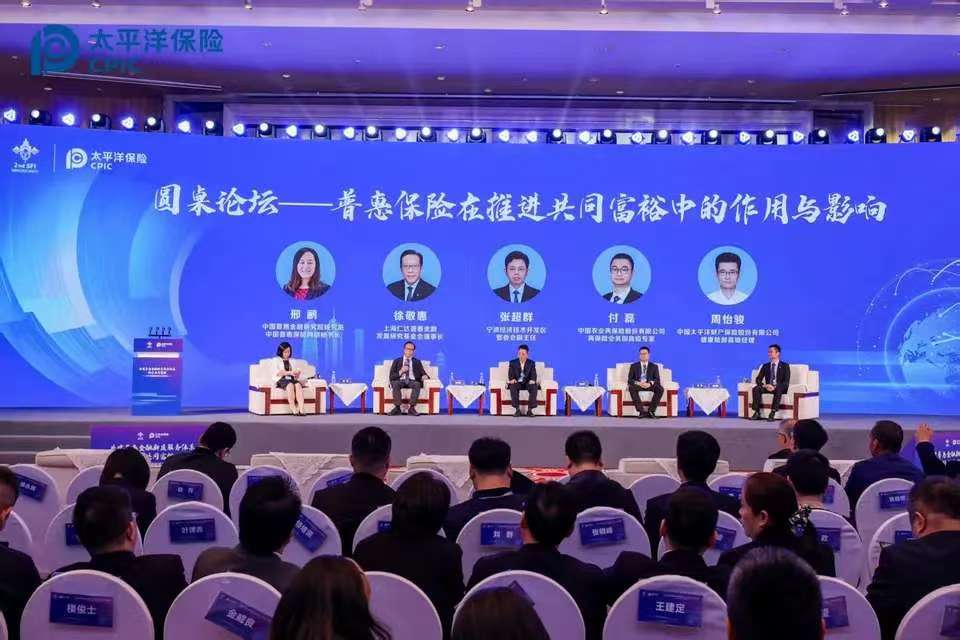
Core Insights - The event focused on "Inclusive Insurance, Intelligent Services, and Common Prosperity," highlighting the importance of inclusive finance in supporting local economic development [1][3] - The Ningbo government is leveraging its status as a national insurance innovation pilot zone to explore new paths and models for inclusive insurance services [3][7] Group 1: Event Overview - The event was co-hosted by the Ningbo Municipal Government and the China Insurance Society, attracting over 180 participants from various sectors [1] - Key speakers included Ningbo's Deputy Mayor Xu Qiang and China Pacific Insurance Group's Secretary Su Shaojun, who emphasized the significance of inclusive finance in achieving high-quality development [3] Group 2: Key Presentations - Dr. Xing Li from the China Inclusive Finance Research Institute compared international practices in inclusive insurance and their implications for China's insurance industry [5] - Zheng Yimin from China Pacific Insurance highlighted the company's efforts in product innovation and service empowerment to meet public needs [5] - Professor Qiu Bo from Ningbo University presented a book detailing over 30 innovative inclusive insurance products developed in Ningbo [5] Group 3: Roundtable Discussion - A roundtable discussion was held, featuring experts discussing the role and impact of inclusive insurance in promoting common prosperity [6] Group 4: Ningbo's Insurance Innovations - Ningbo has launched over 80 inclusive insurance products, establishing a mature operational mechanism characterized by low premiums and high coverage [7] - The "Flexible Insurance" product, aimed at flexible employment individuals, has covered over 500,000 people and has been recognized as a best practice [7] - The "Tianyi Ningbao" medical insurance product has served over 12 million participants since its launch, effectively reducing citizens' medical burdens [7]


86万家社会组织贷款可及性仅8%,普惠金融支持待破局
Di Yi Cai Jing· 2025-11-06 13:26
Core Insights - The majority of banks refuse to lend to social organizations primarily due to the inability to confirm their status as legitimate borrowers [1][3] - Only 8% of social organizations can obtain bank loans as institutions, with most relying on personal loans or borrowing from friends and family [1][3] - The report emphasizes the need for a clear policy framework and innovative financial products to address the loan accessibility issues faced by social organizations [2][5] Summary by Sections Current Loan Situation - As of now, there are 865,000 social organizations in China, employing over 10 million people, which require diverse funding support for their operations and projects [1] - The report indicates that banks lack understanding of the characteristics and conditions of social organizations, leading to information asymmetry [4] Challenges in Financing - The existing loan regulations do not clearly include social organizations as eligible borrowers, causing banks to face legal ambiguities during credit approval [3][4] - Social organizations often fall into low credit ratings within banks' internal systems due to their non-profit nature, which conflicts with traditional profit-oriented lending criteria [4] Recommendations for Improvement - Short-term solutions include clarifying the legal status of social organizations as borrowers and developing tailored credit assessment systems [2][5] - Financial institutions are encouraged to innovate and create loan products specifically designed for social organizations, ensuring compliance and effective use of funds [5][6] - Collaboration among financial regulators, civil affairs, and social work departments is essential to establish a supportive ecosystem for social organization financing [6]
广东华兴银行:多元金融赋能全运保障,实干担当聚力湾区建设
Nan Fang Du Shi Bao· 2025-11-06 12:26
多元协同发力,赋能全运生态全链条 广东华兴银行自成立以来,始终坚守"服务实体经济"的初心,十四年间深耕民营经济、产业升级、区域 协调发展等核心领域,为全运保障筑牢了坚实的金融基础。 作为民营实体经济的坚定同行者,广东华兴银行以《民营经济促进法》为指引,持续优化服务体系,截 至2024年,合作民营实体企业贷款规模超1400亿元,占对公贷款余额的70%。为企业提供灵活的资金调 度支持,帮助企业释放资产价值,提升再投资能力,为企业发展与项目建设等注入持续资金动力。 镇街经济作为粤港澳大湾区经济的"毛细血管",其产业与商业集群已成为全运会消费拉动和服务保障的 重要基层支撑之一。广东华兴银行创新打造"镇街金融2.0"策略,围绕"产业赋能、场景融合、生态共 建",探索出一条以"区域图谱+专属服务+创新模式"相结合的区域化金融新路径,为广东省镇街经济体 量身定制金融服务。以佛山为例,广东华兴银行佛山分行深研镇街经济特点,推出"长期授信+国资增 信"综合金融服务模式。该模式通过中长期限的专项融资与镇街国企强力担保结合,为佛山三水区白坭 镇核心项目注入稳定资金流,有力激活区域发展潜力。通过"一镇一策"精准服务体系,该行深入对接 ...

《浦发银行进博会综合金融服务方案8.0》正式发布
Di Yi Cai Jing· 2025-11-06 11:13
Core Insights - The Shanghai Pudong Development Bank (SPDB) launched the "Comprehensive Financial Service Plan 8.0" at the current Import Expo, focusing on "digital intelligence-driven, ecological integration, and full-chain coverage" [1] - The plan integrates the concept of "five major tracks" with "three super" innovative services, aligning with the "digital intelligence strategy" [1] - SPDB aims to merge green finance, technology finance, inclusive finance, supply chain finance, and personal cross-border financial resources to create a comprehensive solution encompassing "settlement + financing + risk management + treasury management + ecological services" [1] - The services will extend to a normalized service period of 365 days post-expo, ensuring the continuous release of benefits from the expo [1]

社会组织贷款陷资格困扰 千亿普惠市场待激活
2 1 Shi Ji Jing Ji Bao Dao· 2025-11-06 08:46
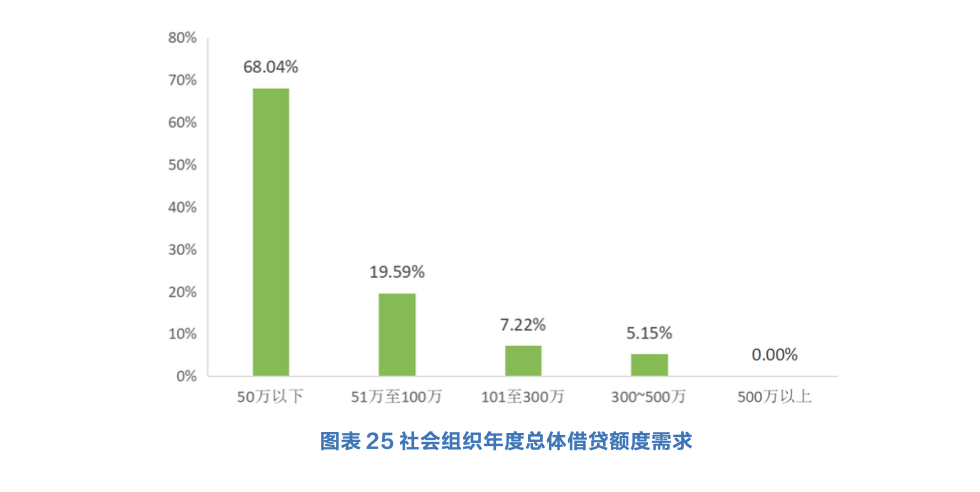
Core Viewpoint - The rapid development of social organizations in China has become a significant force in social construction and livelihood security, but they face challenges due to a single source of funding [1][2]. Funding Sources and Challenges - As of the end of 2024, the total number of social organizations in China is expected to reach 871,800, employing over 11 million people and playing crucial roles in various sectors such as poverty alleviation, education, elderly care, environmental protection, and rural revitalization [2]. - Social organizations primarily rely on social donations and government purchasing services for funding, leading to a bottleneck in financial resources [4]. - Economic conditions, fluctuations in donation willingness, and delays in government funding have exacerbated the financial strain, causing many organizations to struggle with project initiation due to lack of funds [5]. Loan Demand and Accessibility - A survey covering 213 social organizations across 28 provinces revealed that 45.54% of these organizations have clear borrowing needs, mainly due to delayed government project funding, cash flow imbalances, and the need for startup capital for new projects [6]. - Nearly 90% of social organizations have annual loan demands below 1 million yuan, with over 90% able to handle interest rates of 5% or lower, indicating a preference for small, short-term, and low-risk loans [6]. - Despite the clear demand, only 32.86% of organizations successfully obtained loans, with 75.71% relying on personal loans from founders or friends, and only 8% securing loans as social organizations [8]. Barriers to Loan Acquisition - Loan qualification issues are the primary barrier for social organizations, with over 40% of rejected applications due to "inconsistent social organization identity," significantly higher than other reasons such as lack of collateral or unstable income [9]. - The current loan regulations do not explicitly include social organizations as eligible borrowers, leading to banks' reluctance to lend [10][15]. - A lack of a clear credit assessment system for social organizations further complicates the situation, as banks struggle to evaluate repayment capabilities [15]. Market Potential - The total annual loan demand from social organizations is estimated at approximately 151.69 billion yuan, indicating a substantial untapped market for inclusive finance in the public welfare sector [18]. - While some regions have initiated pilot programs for social organization loans, such as in Shenzhen and Zhejiang, there is a lack of nationwide specialized financial products [18]. - Expanding inclusive finance to cover public welfare services could not only support the growth of social organizations but also activate the potential for social and economic benefits [18].

社会组织贷款陷资格困扰,千亿普惠市场待激活
2 1 Shi Ji Jing Ji Bao Dao· 2025-11-06 08:22
Core Viewpoint - Expanding inclusive finance to the public welfare sector can enhance the development of social organizations and activate the potential of inclusive public welfare, achieving a win-win situation for social and economic benefits [1][3]. Group 1: Current Status of Social Organizations - Social organizations in China have rapidly developed over the years, becoming a significant force in social construction and livelihood security, with a total of 871,800 organizations by the end of 2024, employing over 11 million people [2]. - These organizations primarily rely on social donations and government purchasing services for funding, facing a bottleneck due to the single source of funding [2][3]. Group 2: Financing Challenges - A survey covering 213 social organizations across 28 provinces revealed that 45.54% of these organizations have clear borrowing needs, mainly due to delayed government project funding, cash flow imbalances, and the need for startup capital for new projects [4]. - Nearly 90% of social organizations have annual loan demands below 1 million yuan, with over 90% able to bear interest rates of 5% or lower, indicating a preference for small, short-term, and low-risk loans [4]. Group 3: Loan Acquisition Issues - Despite clear demand, the actual loan acquisition rate for social organizations is low, with only 32.86% successfully obtaining loans, primarily relying on personal credit loans from founders or relatives [8]. - The main barrier to obtaining loans is the "social organization identity," with over 40% of rejected applications due to this issue, significantly higher than other reasons such as lack of collateral or unstable income [8]. Group 4: Policy and Regulatory Environment - Current policies do not clearly define social organizations as loan recipients, leading to banks' reluctance to lend, despite recent regulatory changes that theoretically include them [9][12]. - The lack of a clear credit assessment system for social organizations further complicates the situation, as banks struggle to evaluate repayment capabilities [12][13]. Group 5: Market Potential - The total annual loan demand from social organizations is estimated at approximately 151.69 billion yuan, with 70% of the demand under 1 million yuan [15]. - There is a significant untapped market for inclusive public welfare loans, with only a few regions having initiated pilot programs, indicating a need for clearer policies and dedicated financial products [15].
山东:精准滴灌实体经济 助力普惠金融提质增效
Qi Lu Wan Bao· 2025-11-06 08:16
2025年以来,中国人民银行山东省分行深入贯彻落实党中央、国务院关于金融支持实体经济发展的决策 部署,坚持金融工作的政治性、人民性,聚焦提升民营小微企业金融服务质效,创新机制、搭建平台、优化 模式、打造品牌,推动金融服务从"广覆盖"向"精准滴灌"升级。截至2025年9月末,全省普惠小微贷款余额 同比增长14.39%,高于全部贷款5.91个百分点,民营小微企业、涉农主体等重点群体金融服务可得性、获 得感显著增强,为全省经济高质量发展提供了有力金融支撑。 打造"金融+商会+企业"政会金企合作品牌 畅通金融服务精准直达民营企业的常态化路径 聚焦发挥各级工商联"联"的作用和商会的组织、资源、信息等优势,探索建立并不断完善"金融+商会+企 业"工作机制,通过"银行行长进商会访企业"等具体活动形式,广泛开展以"送知识、送政策、送产品、送 服务"为核心的"四送"服务,加大面向民营企业政策解读、产品推广、融资对接、发债辅导等工作力度。 结合金融"五篇大文章"重点领域,开展精细化走访对接,推动提升民营企业金融服务的覆盖面、便利性和 满意度。2025年以来,累计走访企业17307家,提供授信1077.47亿元,发放贷款637.5 ...
直通进博会|柬埔寨商业部:推动数字贸易与电商发展,为出口导向型企业提供重要商机
Xin Hua Cai Jing· 2025-11-06 08:07
新华财经上海11月6日电 11月5日,第八届虹桥国际经济论坛"金融助力全球经贸发展"分论坛举办。柬 埔寨商业部国务秘书桑兴波拉在作主旨发言时表示,柬埔寨近年来通过一系列措施支持普惠金融和数字 化转型,推动数字贸易和电子商务发展,为出口导向型企业提供重要商机。 桑兴波拉表示,金融一直是贸易的生命线,在当今互联互通的世界中,金融创新、数字支付、金融科技 解决方案以及跨境结算系统,都在重塑着贸易和投资方式。柬埔寨政府高度重视促进普惠金融和数字互 联互通,协同推进多项关键举措加快数字化转型,包括开发数字贸易平台、简化海关手续和贸易流程, 提升贸易便利化水平;启动出口服务中心,协助中小企业获取市场信息,了解出口程序和要求;致力于 推广电子商务和跨境商务,使企业家尤其是妇女和青年可直接参与国际市场。 桑兴波拉指出,柬埔寨已与中国电商平台合作,通过该平台直接在中国市场以及东盟国家销售柬埔寨产 品并推广电子商务。同时,柬埔寨也致力于加强数字支付系统,这对于培育无缝连接的数字经济起到关 键作用。他表示,基于区块链的银行间移动支付平台,用户可使用智能手机进行跨银行、跨平台的实时 资金转账,不仅促进了安全高效的数字交易,也使得柬埔 ...
民生银行:这届双十一,省钱又有了新“神器”
Sou Hu Cai Jing· 2025-11-06 07:44
Core Insights - The 2025 Double Eleven shopping festival has started earlier than in previous years, with major platforms like Douyin and JD.com launching promotions on October 9, and Taobao starting from October 15, lasting until November 14, creating a 28-day shopping event [1] Group 1: Consumer Trends - The discount mechanisms for this year's Double Eleven have simplified, with "official discounts" and "direct price cuts" becoming mainstream, reflecting a shift away from complex discount strategies towards transparent pricing and efficient shopping experiences [1] - Instant retail has emerged as a significant trend, with JD.com incorporating its "JD Instant Delivery" into the Double Eleven promotions, and Alibaba's Taobao introducing thousands of brands for instant delivery options [1][7] Group 2: Financial Services and Promotions - China Minsheng Bank's credit card center has partnered with major platforms like JD.com, Douyin, and Alipay to offer promotional activities, including a "one-click card binding gift package" and "Happy Birthday for Minsheng" events, providing consumers with various discounts [2][9] - The credit card center's initiatives include a wide range of discounts across multiple sectors, such as dining, entertainment, and shopping, enhancing the consumer experience through tangible savings [5][8] Group 3: Economic Impact - Consumer spending has become increasingly vital for economic growth, contributing 53.5% to the economy in the first three quarters of 2025, as reported by the National Bureau of Statistics [9] - The government has issued policies aimed at stimulating consumption, emphasizing the importance of consumer spending as a key driver for economic recovery and improvement of living standards [9][10] Group 4: Integration of Financial Services - The collaboration between banks and internet platforms has created a seamless consumer experience, enhancing the convenience and practicality of financial services while stimulating market vitality [7][8] - The Minsheng credit card center's initiatives during Double Eleven exemplify the integration of financial services with consumer needs, aiming to boost consumer confidence and spending [12]