产业协同

Search documents
开润股份拟全资控股上海嘉乐 加速业务整合及产业协同
Zheng Quan Shi Bao Wang· 2025-12-29 13:48
Core Viewpoint - Kairun Co., Ltd. is acquiring the remaining 28.15% stake in Shanghai Jiale Co., Ltd. for 394 million yuan, aiming to enhance operational efficiency and resource optimization, establishing a solid foundation for its "fabric + garment" growth strategy [1] Group 1: Acquisition Details - Kairun's wholly-owned subsidiary, Chuzhou Mirun Technology Co., Ltd., will hold 100% of Shanghai Jiale after the acquisition [1] - The transaction price for the 28.15% stake is 394 million yuan [1] Group 2: Business Integration and Performance - Since gaining control of Shanghai Jiale, Kairun has focused on business integration and synergy, leading to improved operational efficiency and performance [2] - In 2024, Shanghai Jiale achieved revenue of 1.489 billion yuan, a year-on-year increase of 15.81%, and net profit of 48.92 million yuan, marking a turnaround [2] - From January to September 2025, Shanghai Jiale reported revenue of 1.1 billion yuan and net profit of 64.61 million yuan, with a net profit margin of 5.88% [2] Group 3: R&D and Product Innovation - Kairun is enhancing Shanghai Jiale's management and technology capabilities, accelerating digital upgrades and refined management [2] - Shanghai Jiale's R&D efforts have led to several awards in 2024, including recognition for innovative and sustainable fabric products [2] Group 4: Financial Performance - In the first three quarters of the year, Kairun reported revenue of 3.719 billion yuan, a year-on-year growth of 22.94%, and a net profit of 256 million yuan, up 13.81% [3] - The operating cash flow reached 430 million yuan, a significant increase of 258.66% [3] - The gross margin for the third quarter was 23.8%, an increase of 1.84 percentage points year-on-year [3]
年内A股控制权变更持续升温 产业协同和治理优化成主线
Zheng Quan Ri Bao· 2025-12-29 13:06
Group 1 - The core viewpoint of the article highlights the increasing trend of control rights transactions in the A-share market since 2025, with nearly 170 companies disclosing plans for control changes this year, indicating a significant resource optimization in the capital market [1] - The entry of state-owned capital has become a notable trend, with new controlling shareholders often bringing in capital injections and governance optimizations, which contribute to the high-quality development of companies [1][4] - Control rights changes are seen as market-driven behaviors for resource reallocation, with quality capital entering to empower companies and promote industrial integration, aligning with the current demand for high-quality development in the real economy [1] Group 2 - Specific cases illustrate that new controlling shareholders often accompany capital injections and governance optimizations, leading to substantial benefits for company development [2] - For instance, Guo Ao Technology announced a control change with a capital raise of up to 432 million yuan to enhance liquidity, while Xue Rong Biotechnology's control change aims to improve governance and operational capabilities [2] - The driving factors behind the increase in control rights changes include a resonating effect between policy and market forces, with regulatory changes providing a more inclusive environment for mergers and acquisitions [3] Group 3 - State-owned capital has emerged as a strategic partner for many listed companies, leveraging financial strength and industrial resources [4] - Examples include Jiangxi Xinsheng Investment's acquisition of control in Lianchuang Electronics, and Jiang Pharmaceutical's investment of over 1 billion yuan in Tai Long Pharmaceutical to enhance strategic development in the healthcare sector [4] - The deep involvement of state-owned capital reflects the top-level design direction of deepening state-owned enterprise reform and optimizing the layout of the state economy [5] Group 4 - Looking ahead, the A-share control rights market is expected to remain active, shifting focus from "scale expansion" to "quality improvement," emphasizing ownership structure optimization to drive technological upgrades and modern governance [6] - Strengthening corporate governance will become a crucial aspect of high-quality development for listed companies [6]



龙佰集团:子公司增资20亿元引入七大战略投资者
Zheng Quan Shi Bao Wang· 2025-12-29 12:03
Core Viewpoint - Longbai Group's subsidiary, Baili Lian New Materials, plans to raise 2 billion yuan through equity expansion by introducing seven strategic investors to enhance its capital strength and optimize its financial structure in the chlorination titanium dioxide industry [1][2]. Group 1: Investment and Financial Structure - The total investment scale of 2 billion yuan aims to strengthen the subsidiary's capital and improve its financial structure [1]. - The audited owner's equity of Baili Lian New Materials as of June 30, 2025, was 4.127 billion yuan, with a third-party valuation of its equity at 4.370 billion yuan [1]. - The funds raised will primarily be used to repay bank loans, effectively reducing financial leverage [1]. Group 2: Strategic Investors - The strategic investors include several well-known financial institutions and investment funds, with CITIC Financial Asset Management holding 10.99% post-investment, making it the largest investor [2]. - Other investors include Jiao Yin Financial Asset Investment Co., Ltd. (6.28%) and Xing Yin Financial Asset Investment Co., Ltd. (3.61%) among others [2]. - After the capital increase, the registered capital of Baili Lian New Materials will rise from 1.7 billion yuan to 2.478 billion yuan, with Longbai Group retaining 68.6% ownership [2]. Group 3: Future Operations and Governance - The investment agreement stipulates that Baili Lian New Materials will set reasonable performance expectations based on actual operations, with annual shareholder meetings starting in 2026 to review profit distribution [2]. - The agreement includes exit arrangements allowing Longbai Group or designated third parties to acquire the investors' shares within five years post-closing, ensuring investment security [2]. - Longbai Group believes that the introduction of strategic investors aligns with national policy and will enhance the subsidiary's market competitiveness, ultimately creating greater value for the company and its shareholders [3].

鹏程食品成为顺商猪肉生鲜品独家供应商,7家直营专柜开业
Bei Ke Cai Jing· 2025-12-29 05:21
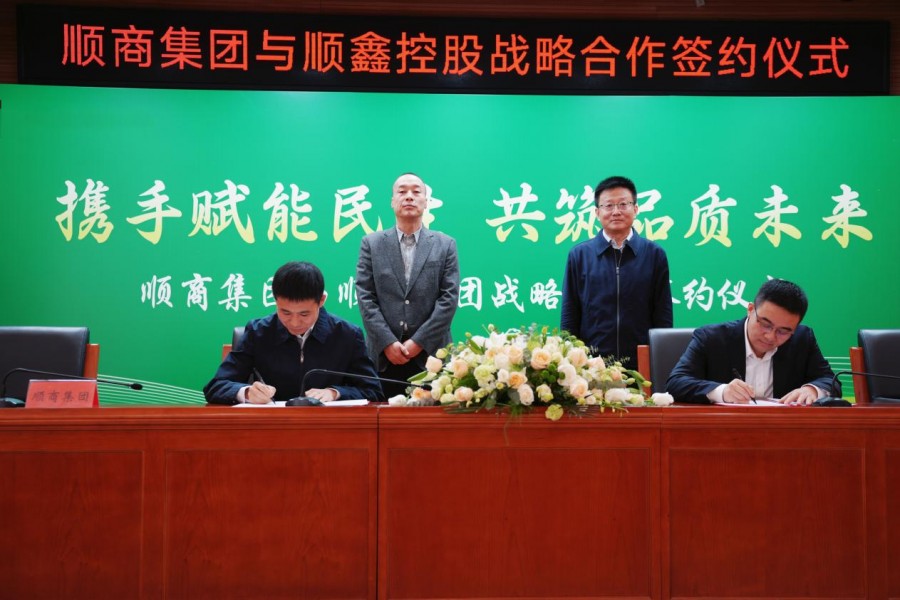
Core Insights - Beijing Shunxin Holdings Group Co., Ltd. has signed a strategic framework cooperation agreement with Beijing Shunyi Commercial Group Co., Ltd. to supply pork products exclusively through its subsidiary, Pengcheng Food [1] - The collaboration aims to connect high-quality local agricultural products with consumer channels, enhancing the availability of safe and healthy pork products for residents in the capital [1] Group 1 - The partnership will allow all stores under Shunyi Commercial Group to exclusively offer pork products from Pengcheng Food, which has a 60-year history in the pork industry and a comprehensive supply chain management system [1] - The direct supply model reduces intermediaries, ensuring consumers receive high-quality pork at competitive prices [1] - The initiative is positioned as a significant step towards strengthening the capital's livelihood security and promoting high-quality regional industrial development [1] Group 2 - On the first day of operation, seven direct sales counters sold 40 whole pigs and 3.5 tons of pork cuts, with sales increasing to 60 whole pigs and 4 tons of cuts on the signing day, which coincided with a weekend [2] - The integration of agricultural industry leaders with local supermarket chains is expected to break down barriers in agricultural product sales, providing a model for regional agricultural and commercial integration [2] - Pengcheng Food plans to expand its direct sales network across Beijing, aiming for a grid-like coverage within 1.5 kilometers of urban areas, thereby enhancing its service to the community and contributing to the modernization of livelihood security in China [2]

城记 | 从错位竞争到协同创新突围,上海如何下好产业发展“一盘棋”
Xin Lang Cai Jing· 2025-12-28 18:23
Core Insights - Shanghai's 14th Five-Year Plan has led to the emergence of distinct regional industrial brands, such as "Mosu Space" in Xuhui and "G60 Sci-tech Corridor" in Songjiang, establishing a foundation for differentiated competition and avoiding internal conflicts [1][2] - The city aims to enhance its core competitiveness and urban capabilities during the 15th Five-Year Plan by promoting regional coordination and integrating innovation, industry, finance, and talent chains [1][10] Group 1: Regional Industrial Development - Various districts have introduced new industrial labels during the 14th Five-Year Plan, indicating a focus on innovation and technology, with examples including "Shanghai Silicon Alley" in Changning and "Central Sci-tech Innovation Zone" in Huangpu [2][3] - Some districts have deepened and expanded their existing industrial layouts, such as Pudong's emphasis on being a "leading area" and Songjiang's elevation of the G60 Sci-tech Corridor to a national strategic platform [2][3] Group 2: Innovation and Collaboration - The trend of innovation is increasingly concentrated in urban centers, with characteristics such as lightweight transformation and high-frequency interactions among scientists, entrepreneurs, and investors [3] - The integration of urban renewal and innovation is exemplified by Xuhui's simultaneous efforts in urban redevelopment and the establishment of major strategic industrial clusters [3][6] Group 3: Technology Transfer and Talent Development - Districts have established partnerships with universities and research institutions, creating new mechanisms for market-oriented collaboration and enhancing the technology transfer chain from laboratories to markets [7][9] - Talent attraction initiatives, such as "Chunshen Talent Plan" in Minhang and various district-level industrial funds, are being implemented to support startups and reduce living costs for entrepreneurs [9] Group 4: Strategic Positioning for Future Growth - The concept of "first-move advantage" is emphasized as Shanghai prepares for the 15th Five-Year Plan, with districts acting as strategic pieces on a chessboard to foster collaboration and competitive positioning in key industries like semiconductors and AI [10][11] - The differentiated positioning and collaborative experiences developed during the 14th Five-Year Plan are expected to provide a foundation for avoiding homogenization in the upcoming planning period [10]


顺鑫与顺商战略合作 打造农产品产销协同示范
Zhong Guo Shi Pin Wang· 2025-12-27 07:50
Core Viewpoint - The strategic partnership between Shunxin and Shunyi Commercial Group aims to enhance local agricultural product supply and improve consumer access to high-quality pork products in Beijing [1][3][5]. Group 1: Partnership Details - Shunyi Commercial Group will exclusively supply pork products from Shunxin Agricultural's Pengcheng Food division across all its stores [1]. - The collaboration focuses on "people's livelihood as the foundation and industrial synergy" to connect high-quality local agricultural products with consumer channels [3]. Group 2: Market Impact - The partnership allows residents to conveniently purchase safe and high-quality local pork products, reinforcing the capital's livelihood security and promoting high-quality regional industrial development [3][5]. - Pengcheng Food has established a closed-loop management system in the pork industry, ensuring stable supply and quality traceability [3]. Group 3: Sales Performance - On the opening day of seven direct-sale counters, 40 whole pigs and 3.5 tons of pork cuts were sold, with sales increasing to 60 whole pigs and 4 tons of cuts on the signing day, which coincided with the weekend [3]. Group 4: Future Plans - Pengcheng Food plans to expand its direct-sale store network across Beijing, aiming for a grid coverage of 1.5 kilometers to enhance service reach and fulfill social responsibilities [8].

合成橡胶“十五五”发展值得期待
Zhong Guo Hua Gong Bao· 2025-12-26 00:36
Core Insights - The synthetic rubber industry in China is entering a new phase of high-quality development during the "14th Five-Year Plan" period, with clear future directions and expectations for growth [1][2]. Group 1: Industry Development Strategies - The industry is focusing on five major transformations: industrial collaboration, structural optimization, technological leadership, green low-carbon initiatives, and enhanced global competitiveness [1]. - The market share of high-performance synthetic rubber and specialty elastomers has increased from 30% at the end of the "13th Five-Year Plan" to 40% [2]. - There is a need for structural adjustments in the industry, supported by national policies and enterprise development, to address the reliance on imports for certain high-end synthetic rubber products [2]. Group 2: Technological Innovation - The industry requires collaborative efforts between the government and enterprises to drive the research and development of key technologies, such as high-end catalysts and green production technologies [6]. - Companies are encouraged to increase R&D investment, with leading firms aiming to allocate over 5% of their revenue to research [7]. - Establishing a national-level synthetic rubber technology innovation center is recommended to tackle critical technological challenges [6]. Group 3: Green Development - Green development is essential for the industry's transition from scale expansion to quality improvement, enabling integration into international high-end green supply chains [8]. - The industry has made significant progress in green transformation during the "14th Five-Year Plan," with the development of bio-based synthetic rubber and cleaner production processes [8]. - Companies are urged to increase the proportion of renewable energy used and aim for a 25% to 30% reduction in carbon emissions per unit product by 2025 [9]. Group 4: Internationalization Strategy - The synthetic rubber industry faces challenges from global trade protectionism, making international development strategies crucial for overcoming growth bottlenecks [11]. - The average export price of domestic styrene-butadiene block copolymer products has increased by 39%, now exceeding the import price by 12% [11]. - Continuous internationalization is expected to enhance the overall competitiveness of the industry and improve quality control and supply chain management [12].
300291重组复牌!并购拟IPO公司
Shang Hai Zheng Quan Bao· 2025-12-25 22:56
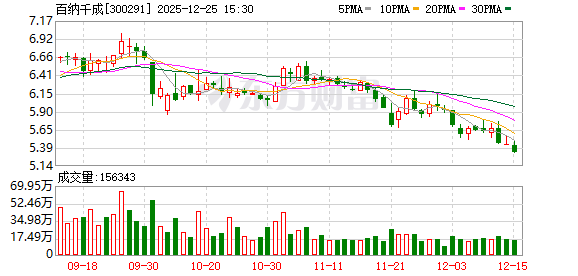
Core Viewpoint - The company Baina Qiancheng plans to acquire 100% of Zhonglian Century through a combination of share issuance and cash payment, aiming to enhance its digital marketing capabilities and achieve synergy in operations [2][4][11]. Group 1: Acquisition Details - Baina Qiancheng intends to issue shares and pay cash to acquire 100% of Zhonglian Century, along with raising matching funds from no more than 35 specific investors [2][4]. - The transaction's final price will be based on an evaluation report from a qualified asset appraisal agency, which is still pending completion [4]. Group 2: Zhonglian Century Overview - Zhonglian Century is a digital marketing service provider leveraging AI and big data, focusing on one-stop digital marketing solutions for industries such as telecommunications, finance, and e-commerce [2][4][5]. - The company has developed a robust R&D system and core technologies, including various intelligent marketing systems and algorithms, aimed at enhancing customer acquisition and operational efficiency [5]. Group 3: Financial Performance - In the first three quarters of the current year, Zhonglian Century reported a net profit of 178 million, surpassing its total net profit for the previous year [7]. - Financial data indicates that Zhonglian Century's total assets reached approximately 102.14 billion, with total liabilities of about 56.07 billion, and owner’s equity of around 46.07 billion as of September 30, 2025 [8]. Group 4: Strategic Rationale - Baina Qiancheng aims to enhance its competitive edge by integrating Zhonglian Century's advanced digital marketing technologies with its existing media resources and brand services [11]. - The acquisition is expected to optimize Baina Qiancheng's business structure and improve its overall competitiveness in the market [11].


搭上优必选,A股割草机公司复牌涨停,封单近百亿
2 1 Shi Ji Jing Ji Bao Dao· 2025-12-25 13:06
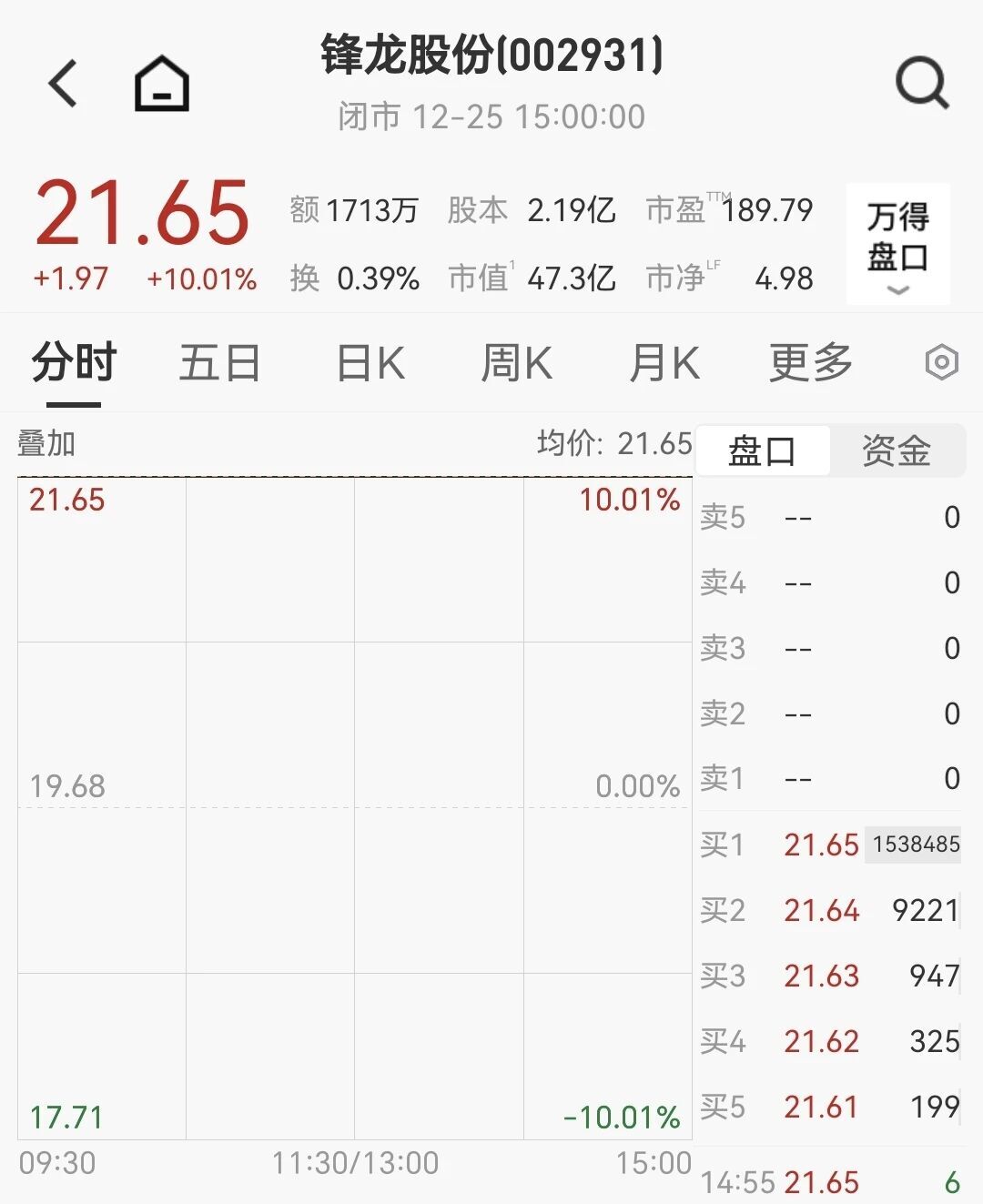
Core Viewpoint - A significant acquisition wave led by technology companies in the A-share market has commenced, highlighted by the acquisition of approximately 43% of shares in Fenglong Co., Ltd. by UBTECH Robotics through a combination of agreement transfer and tender offer [1][2]. Summary by Sections Acquisition Details - UBTECH plans to acquire 43% of Fenglong's shares at a price of 17.72 CNY per share, which represents a 10% discount from the pre-suspension price of 19.68 CNY, totaling approximately 1.665 billion CNY [2][8]. - Following the announcement, Fenglong's shares hit the daily limit up, closing at 21.65 CNY, with a total market capitalization of 4.731 billion CNY [2][4]. Control and Strategy - The acquisition strategy involves a two-step process, where UBTECH first acquires 29.99% of shares through an agreement transfer, avoiding the obligation for a full tender offer [7][8]. - The second step includes a partial tender offer for an additional 13.02% of shares, maintaining the same price of 17.72 CNY per share [7][8]. Future Listing Considerations - There are speculations about UBTECH potentially using Fenglong as a vehicle to return to the A-share market; however, current regulations and the company's financial status make this unlikely in the short term [10][12]. - UBTECH has not achieved profitability, which is a requirement for a reverse merger to qualify for A-share listing [12]. Industry Context - The acquisition reflects a trend where technology companies seek control of stable A-share companies to leverage their manufacturing capabilities and market presence [16][17]. - Fenglong's established manufacturing capabilities in garden machinery and automotive components may provide synergies with UBTECH's focus on humanoid robotics, enhancing the potential for industry integration [16][17]. Financial Strategy - The acquisition will be funded through UBTECH's own capital, including cash reserves and proceeds from a recent placement of 3.056 billion HKD, with plans to allocate a significant portion for mergers and investments in the robotics sector [17].

002420,拟易主国资!明日复牌
中国基金报· 2025-12-25 13:02
Core Viewpoint - Yichang Technology's controlling shareholder will change to Chuzhou Weiran Technology Development Partnership, with the actual controller becoming the Chuzhou State-owned Assets Supervision and Administration Commission, effective from December 26 [2][6]. Group 1: Shareholder Changes - Yichang Technology announced that its controlling shareholder, Gaojin Technology Industry Group, has signed a share transfer agreement with Weiran Partnership to transfer 25.3347% of its shares at a price of 8.16 yuan per share, totaling 850 million yuan [10][11]. - After the transaction, Gaojin Group will no longer hold shares in Yichang Technology, while Weiran Partnership will hold 25.3347% of the shares [11][16]. Group 2: Corporate Governance - Weiran Partnership will have the right to recommend candidates for five non-independent directors and three independent directors for Yichang Technology's board [14]. - The partnership and Gaojin Group will promote the appointment of the chairman and audit committee members from the directors nominated by Weiran Partnership [14]. Group 3: Business Outlook - The share transfer is expected to optimize the company's equity structure and enhance collaboration with key industries in Chuzhou, improving business expansion, supply chain optimization, and technological upgrades [16]. - Yichang Technology reported a net profit attributable to shareholders of 38.08 million yuan for the first three quarters of 2025, a decrease of 46.84% year-on-year, with a net profit of 27.30 million yuan after deducting non-recurring gains and losses, down 47.08% [15][17].