
大数据

Search documents
上海80后“卖螺丝”:9个月收入11亿,港股IPO
3 6 Ke· 2026-02-13 13:11
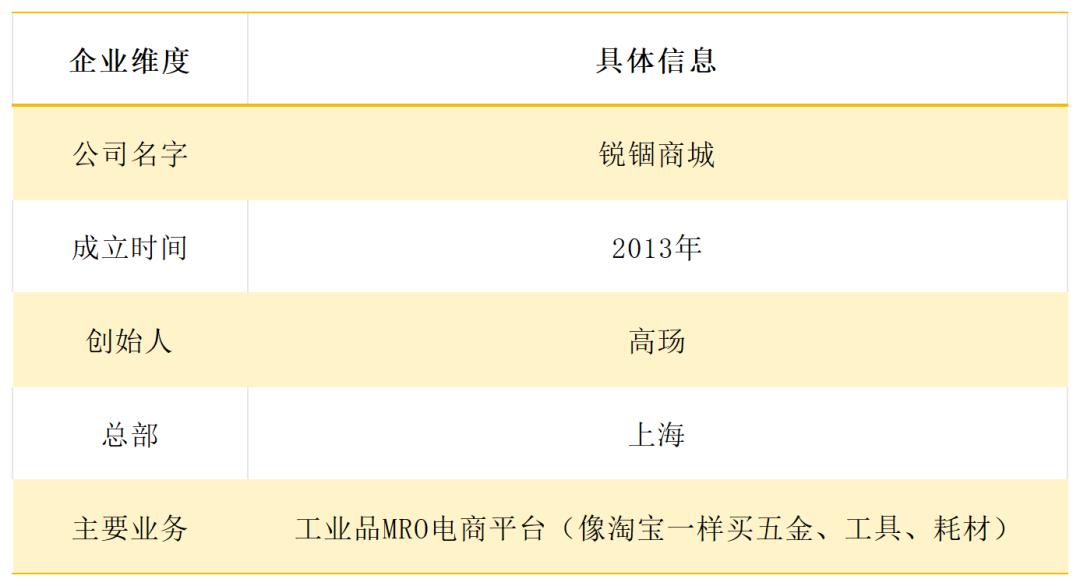
Core Insights - RuiGu Mall, founded in 2013, has become a significant player in the industrial MRO e-commerce sector, serving as an "invisible supplier" to 220,000 hardware stores, but has yet to achieve profitability, with a cumulative net loss of nearly 1.9 billion yuan from 2023 to the first nine months of 2025 [1][8]. Company Overview - Company Name: RuiGu Mall [2] - Founded: 2013 [2] - Founder: Gao Chang [2] - Headquarters: Shanghai [2] - Main Business: Industrial MRO e-commerce platform [2][3] Business Model and Market Position - RuiGu Mall targets the industrial MRO market, facilitating online transactions for various factory components and tools, akin to a Taobao for industrial supplies [3][6]. - The platform connects upstream suppliers with downstream hardware stores and factories, enhancing procurement efficiency [6][12]. - As of 2022, RuiGu Mall was valued at over 6.9 billion yuan and holds an 8.1% market share in the domestic online MRO procurement sector, ranking second [8][17]. Financial Performance - In 2023, RuiGu Mall reported total revenue of 5.05 billion yuan with a net loss of 6.38 billion yuan [9]. - For 2024, projected revenue is 8.77 billion yuan with a net loss of 7.74 billion yuan [9]. - As of September 30, 2025, the company generated approximately 11.24 billion yuan in revenue with a net loss of 5.24 billion yuan [9]. Industry Context - The MRO procurement service market in China reached 3.7 trillion yuan in 2024, expected to grow to 4.5 trillion yuan by 2029, with a compound annual growth rate of about 4.2% [17]. - The MRO sector has evolved through various stages, with RuiGu Mall emerging during the rise of industrial e-commerce post-2010 [10]. Technological Trends - The MRO procurement landscape is being transformed by AI and big data, which are expected to streamline processes such as sourcing, price comparison, and ordering [18][22]. - Future advancements may significantly reduce procurement cycles and errors, enhancing overall efficiency in the sector [20][22].

全球与中国数据中心冷却设备行业市场调研及趋势分析报告
QYResearch· 2026-02-13 09:30
Core Viewpoint - The data center cooling equipment market is experiencing significant growth driven by advancements in AI, cloud computing, and the increasing demand for energy efficiency, with a projected compound annual growth rate (CAGR) of 13.50% from 2021 to 2025 and 12.97% from 2026 to 2032 [3][6]. Industry Overview - In 2021, the global data center cooling equipment market size was $6.257 billion, expected to reach $10.385 billion by 2025, and $24.408 billion by 2032 [3][6]. - The Chinese market for data center cooling equipment is rapidly developing, projected to reach $1.761 billion by 2025, with intense competition among local brands such as Infinera, Yimikang, and Shenliang [6]. Market Dynamics - The market is influenced by the rapid development of AI, the internet, cloud computing, and big data, leading to increased demand for cooling solutions [6]. - Major global brands in the data center cooling equipment market include Vertiv, Schneider, and Mitsubishi Electric, with the top ten manufacturers holding a 43.08% market share by 2025 [7][8]. Product Types and Trends - The cooling equipment includes precision air conditioning, liquid cooling systems, and chillers, with a trend towards modular and compact designs to save space and enhance efficiency [2][8]. - The industry is shifting from traditional air cooling to more efficient liquid cooling solutions, particularly in high-density computing environments [11]. Competitive Landscape - The competitive landscape is characterized by a mix of foreign and domestic brands, with domestic brands rapidly innovating to reclaim market share through energy-efficient technologies [10][12]. - The leading domestic brand, Shenliang, holds approximately 14.21% market share, indicating a strong presence in the local market [10]. Growth Drivers - The continuous growth of the digital economy and computing power demand is providing a stable and sustainable market for cooling equipment [12]. - The trend towards higher power density in servers necessitates advanced cooling solutions, increasing the importance of cooling systems in overall data center investments [12]. Challenges - High initial investment costs and long payback periods for advanced cooling solutions can deter adoption, particularly among smaller data centers [13]. - The complexity of liquid cooling technologies and the need for mature operational frameworks pose challenges for widespread implementation [13].
江苏翼海云兴科技有限公司成立,注册资本1000万人民币
Sou Hu Cai Jing· 2026-02-13 09:17
Core Viewpoint - Jiangsu Yihai Yunxing Technology Co., Ltd. has been established with a registered capital of 10 million RMB, fully owned by Shenzhen Yihai Yunfeng Technology Co., Ltd. [1] Company Summary - The legal representative of Jiangsu Yihai Yunxing Technology Co., Ltd. is Chen Lei [1] - The company is classified as a limited liability company with natural person investment or control [1] - The business scope includes technology services, development, consulting, software development and sales, artificial intelligence application system integration services, big data services, and more [1] Industry Summary - The company operates in the scientific research and technical services industry, specifically in technology promotion and application services [1] - The registered address is located at 200 Huolong Business Center, Yicheng Street, Yixing City [1] - The business license allows for independent operation of activities not requiring approval [1]
健康险发展关键词:破茧向新、守护安康、智行致远、合规笃行
Huan Qiu Wang· 2026-02-13 04:22
Core Insights - The insurance industry is increasingly recognized as a stabilizer and booster for economic and social development, particularly in the context of building a multi-level healthcare system in China [1][3] - Commercial health insurance is evolving from traditional critical illness coverage to a comprehensive service model that spans the entire lifecycle of health management [4][5] Group 1: Market Growth and Transformation - The commercial health insurance sector has experienced an average annual compound growth rate of over 20% in premium income over the past decade, with more than 11,000 medical insurance products currently available [3][5] - The shift in consumer expectations is driving the transformation of health insurance from a "post-event compensation" model to a "full-cycle protection" approach, emphasizing prevention, support during illness, and post-recovery care [4][5] Group 2: Policy Support and Industry Development - Recent government policies, such as the establishment of a long-term care insurance system and guidelines for high-quality development in health insurance, are fostering a more robust health insurance framework [4][5] - The introduction of the first commercial health insurance innovation drug list, which includes 19 drugs from 18 innovative pharmaceutical companies, highlights the ongoing efforts to enhance the health insurance product offering [5] Group 3: Technological Empowerment and Consumer Engagement - The integration of technology, including artificial intelligence and big data, is reshaping the insurance landscape, improving user experience and service satisfaction through streamlined processes [6][9] - The industry is also focusing on making services more accessible to older consumers, with initiatives aimed at enhancing the usability of online platforms for this demographic [7][8] Group 4: Challenges and Regulatory Compliance - Despite the growth of internet insurance, challenges such as inadequate disclosure and non-compliant sales practices persist, potentially harming consumer trust [8][9] - Companies are taking proactive measures to address these issues, including enhancing compliance protocols and improving customer service responsiveness [9]

市监总局召开餐饮服务连锁企业行政指导会:对突破道德底线、造成恶劣影响的坚决从严从重惩处
Cai Jing Wang· 2026-02-13 03:19
Group 1 - The National Market Supervision Administration held a meeting on February 11 to guide chain catering enterprises in ensuring food safety and fulfilling their responsibilities [1] - The meeting emphasized that chain catering enterprises must strictly implement legal regulations and standards to ensure compliance and food safety [1] - A dynamic management mechanism based on food safety risk prevention should be established, including a food safety risk control checklist for different operational levels [1] Group 2 - Local market supervision departments are encouraged to focus on key food safety risks in chain catering and innovate regulatory methods [2] - The use of big data, artificial intelligence, and "Internet+" technologies is promoted to enhance food safety regulation efficiency [2] - Representatives from various provinces and chain catering enterprises participated in the meeting to discuss food safety measures [2]
大数据揭秘:七大车站春运旅客停留时间比三年前同期缩短超10%
Xin Lang Cai Jing· 2026-02-13 02:50
格隆汇2月13日|据央视,2026年春运启动以来,大数据发现旅客在火车站的停留时间出现了明显变 化。广州南站作为全国最繁忙的铁路枢纽之一,在这个春运平均每天承受着超过53万人次旅客的考验, 比三年前春运时的同期增长了14%。虽然人数增加了,但车站却没有变得更拥挤,信令大数据对这次春 运以来的分析发现,旅客在广州南站的平均停留时间比三年前春运同期大幅缩短了17%。 ...
大数据指数盘中拉升,成分股普涨
Mei Ri Jing Ji Xin Wen· 2026-02-13 02:13
Group 1 - The core viewpoint of the news is that the big data index experienced a strong surge, with constituent stocks showing a broad-based increase [1] - Notable stocks that reached the daily limit include Green Alliance Technology and Huasheng Tiancheng, indicating strong market performance [1] - Other stocks that followed the upward trend include Guotou Intelligent, Bohui Technology, and Anheng Information, reflecting a positive sentiment in the sector [1]


科技赋能保畅通 温情守护团圆年江苏交通执法护航春节出行幸福路
Xin Hua Ri Bao· 2026-02-13 00:26
Core Insights - The article discusses the measures taken by the provincial traffic enforcement bureau in collaboration with police and transportation authorities to ensure safe and efficient travel during the 2026 Spring Festival holiday, focusing on free passage, traffic flow management, and enhanced services [1][2]. Group 1: Traffic Management Initiatives - The provincial traffic enforcement bureau has implemented innovative joint control measures to address traffic congestion during the holiday, focusing on five major corridors and employing tailored strategies for each [2][3]. - A "three synchronizations" mechanism has been established for cross-province traffic management, allowing for real-time monitoring and coordination with neighboring provinces to alleviate congestion at border areas [2][3]. - Dynamic traffic control measures, including a "358" warning system, have been introduced to manage congestion based on the length of traffic jams, with specific interventions at toll stations and junctions [3]. Group 2: Technological Enhancements - The bureau has upgraded its smart management system using AI technology to monitor highway conditions, enabling real-time identification of traffic incidents and automatic dispatch of emergency responses [4]. - A fleet of 160 drones has been deployed for routine monitoring and emergency response, enhancing the ability to manage traffic and respond to incidents effectively [4]. Group 3: Public Service Improvements - The bureau has increased the number of charging stations by 750 fixed and 312 mobile units, improving electric vehicle support during the holiday [5][6]. - Public areas at toll stations have been opened to provide free parking, restrooms, and other services, addressing common traveler concerns during peak times [6][7]. - A series of community service initiatives have been launched, including emergency supplies and free roadside assistance, to enhance traveler support during the Spring Festival [7].
青岛啤酒借助人工智能技术,实现全流程数据畅通 搭建与时间赛跑的极速保鲜链
Ren Min Ri Bao· 2026-02-12 22:24
Core Insights - Qingdao Beer, with over 100 years of history, is leveraging artificial intelligence technology to enhance its production and distribution processes, creating a more efficient supply chain [1] Group 1: Production Innovations - The brewery has established seven intelligent management systems utilizing IoT, AI, and big data, which differ from traditional brewing methods, allowing for rapid response in production [2] - An intelligent scheduling system automates production planning and interacts with material delivery systems to specify the types, quantities, and timing of required raw materials [2] - The production line can quickly switch between over 500 different product varieties, reducing the time for product changeovers by 70% and shortening order delivery times by 50% [2] - Production efficiency has increased by 60%, and carbon emissions density in the factory has decreased by 40% over three years [2] Group 2: Logistics and Warehousing - The brewery's intelligent vertical warehouse, standing 34 meters tall, utilizes robots and automated systems for efficient inventory management, handling over 200,000 boxes daily [3] - The system allows for automatic binding of products to orders and delivery vehicles, facilitating rapid dispatch to consumers [3]
职业教育将积极 增新、裁撤过剩、升级改造现有专业
Xin Lang Cai Jing· 2026-02-12 17:28
Core Viewpoint - The Ministry of Education has issued guidelines to reform key elements of vocational education, focusing on dynamic adjustment of professional settings and enhancing the alignment with industry needs [1] Group 1: Professional Adjustment - Vocational education will dynamically adjust professional settings, increasing new programs while eliminating excess and upgrading existing ones [1] - New programs will be established in emerging and future industries, including low-altitude economy, artificial intelligence, high-end equipment, urban renewal, and areas with critical labor shortages [1] - Programs with weak teaching conditions, low quality, and poor employment rates will be promptly removed to avoid a "large but scattered" and "weak but comprehensive" professional layout [1] Group 2: Curriculum and Teaching Enhancement - The reform requires the development of a course list for new and upgraded programs, along with the creation of capability maps [1] - A mechanism for diverse textbook development will be established, focusing on the creation of urgently needed educational materials [1] - There will be targeted improvements in teacher capabilities and the establishment of a dual-flow mechanism for teachers and industry talent [1] Group 3: Long-term Goals - By 2027, a standardized system for vocational education in terms of programs, courses, textbooks, teachers, and practical training will be established [1] - By 2035, a vocational education practice model with Chinese characteristics will be developed, leading to significant changes in the operational structure of vocational schools [1]