
耕地保护

Search documents
严守耕地红线的“河南实践”——为奋力谱写中原大地推进中国式现代化新篇章提供土地保障系列报道之一
He Nan Ri Bao· 2025-06-25 05:11
Core Viewpoint - The articles emphasize the importance of land as a fundamental resource for human survival and development, highlighting the need for strict land protection measures in Henan Province to ensure food security and support high-quality development in line with China's modernization goals [1][2]. Group 1: Land Protection Policies - Henan Province has established a "1+N" policy system for farmland protection, which includes strict accountability measures for local governments and a comprehensive framework for protecting farmland quantity, quality, and ecology [2][4]. - The provincial government aims to maintain a minimum of 10,955.2 million mu of farmland by 2035, with at least 9,837.89 million mu designated as permanent basic farmland [2]. Group 2: Implementation Measures - The province has implemented rigorous measures to enforce farmland protection responsibilities, including regular assessments and a compensation incentive system for effective farmland protection [4][5]. - There is a strong emphasis on controlling land use, particularly for permanent basic farmland, with strict regulations on land occupation and project approvals [4][5]. Group 3: Systematic Approach and Technological Support - A systematic approach is adopted for farmland protection, balancing the needs for protection and development while addressing existing issues through comprehensive management [6]. - The use of technology, such as satellite remote sensing and IoT, enhances monitoring and enforcement efficiency, contributing to improved farmland quality and productivity [6]. Group 4: Current Status and Achievements - As of the 2024 national land change survey, Henan's current farmland area is 11,437.85 million mu, which is a net increase of 2.0563 million mu since 2020, exceeding national targets by 3.3877 million mu [7]. - The province's permanent basic farmland protection area also surpasses national requirements, supporting stable grain production above 1,300 billion jin [7].
农行广东分行:浇灌金融“活水” ,守护沃土粮安
Nan Fang Nong Cun Bao· 2025-06-25 02:32
Core Viewpoint - Agricultural Bank of China Guangdong Branch is actively supporting food security and land protection in Guangdong province through innovative financial services and products, contributing to the implementation of the provincial land protection plan [6][64]. Group 1: Financial Support for Agricultural Development - Agricultural Bank of China Guangdong Branch has provided 22.5 million yuan in credit support for high-standard farmland construction projects in Nanhua City, enhancing the financial capacity of five construction units [34][35]. - The bank has developed a unique financial service model for high-standard farmland construction, facilitating the integration of government and enterprise efforts [28][30]. - The bank's financial support has enabled the establishment of a provincial-level modern agricultural industrial park, improving land productivity through advanced agricultural practices [31][32]. Group 2: Enhancing Market Stability - The stable development of the grain industry is crucial for protecting farmland and improving land utilization efficiency [41]. - Chengsheng Rice Industry, a key grain enterprise, has benefited from 16 million yuan in pure credit loans from the bank, allowing it to expand production and enhance storage capacity [58][60]. - The bank's support has helped stabilize the grain procurement mechanism, fostering close ties between the company and local farmers, thereby ensuring food security [62][63]. Group 3: Commitment to Food Security - As of now, Agricultural Bank of China Guangdong Branch has a loan balance of 36 billion yuan in key grain sectors, supporting over a thousand grain enterprises [64]. - The bank's actions reflect its commitment to safeguarding farmland and ensuring food security, contributing to rural revitalization and the "Hundred Thousand Project" in Guangdong [66].



见证,土地与变迁——写在第三十五个全国“土地日”之际
Zhong Guo Zi Ran Zi Yuan Bao· 2025-06-25 01:16
Core Viewpoint - The establishment of a national "Land Day" in China marks a significant step in recognizing and protecting land resources, reflecting the harmonious relationship between humans and nature over the past 35 years [2][3]. Group 1: Historical Context - The first specialized law regulating land relations in China, the Land Management Law, was enacted in 1986 to address issues of land misuse and wastage amid rapid economic development [3]. - The annual observance of "Land Day" was officially established in 1991 to commemorate the enactment of the Land Management Law, which has undergone four revisions to adapt to changing socio-economic needs [3][4]. Group 2: Policy and Legislation - The Land Management Law emphasizes the importance of conserving and rationally utilizing land, which is a fundamental national policy, especially given the scarcity of arable land in relation to the population [5]. - The law has led to the implementation of strict land use and agricultural protection measures, including the establishment of a comprehensive system for land use rights and responsibilities [6]. Group 3: Current Initiatives - Recent reforms focus on integrating land use planning with ecological protection, aiming to address issues of disordered and excessive development that threaten quality farmland and ecological spaces [7][8]. - The "multi-planning integration" reform has created a unified national land space planning system, facilitating coordinated management across various levels of government [8]. Group 4: Future Outlook - The ongoing efforts to protect arable land and promote sustainable land use are expected to support high-quality economic development and ensure food security for the population [6][9]. - The vision for a "Beautiful China" emphasizes the interconnectedness of land, water, and ecological systems, aiming for a balanced and sustainable development model [7][9].
全国土地日:严守耕地红线 共筑粮食安全与生态根基(视频)
Zhong Guo Jing Ji Wang· 2025-06-25 00:10
Group 1 - The theme for the 35th National Land Day is "Conserving and Intensively Using Land, Strictly Protecting Arable Land" [1] - Since the beginning of the new era, the level of land resource utilization in China has steadily improved, with the area of construction land per unit of GDP continuously decreasing [1] - The total arable land in the country has net increased for three consecutive years, with over 10 million acres of ecological protection and restoration completed [1] Group 2 - During the 14th Five-Year Plan period, the scale of newly added construction land will be controlled at 29.5 million acres, a reduction of about 3 million acres compared to the 13th Five-Year Plan [2] - The area of construction land per unit of GDP is expected to decrease by approximately 15% compared to 2020 [2] - The goal is to complete the protection and utilization of 10 million acres of black land, with an average increase of over 10% in soil organic matter content [2]
守好粮食生产的“耕”基——写在第35个全国“土地日”之际
He Nan Ri Bao· 2025-06-24 23:45
悠悠万事,吃饭为大。说到河南,绕不开粮食和耕地。 中原熟,天下足。可喜的是,通过持续努力,2021年以来,我省粮食生产的"命根子"——耕地面积连年 增长。 2024年较2020年耕地净增加205.63万亩,占全国新增耕地数量的7.5%;耕地保有量达到11294.29万亩, 超出国家下达耕地保护目标338.77万亩;永久基本农田保护面积9915万亩,超出国家下达目标任务77.45 万亩,牢牢守住了耕地保护红线,筑牢了保障粮食安全的根基。 今年6月25日是第35个全国"土地日",主题是"节约集约用地严守耕地红线"。 "净增长"和"两超额",凸显的是河南的责任、担当和奉献,更是对河南耕地保护成效最好的诠释。 牢牢守住耕地保护红线 粮食安全是"国之大者",耕地是粮食生产的"命根子"。 "三夏"期间,中通快递上海总部的滕飞到河南出差,当时速300多公里的高铁驶入河南境内,窗外是一 望无际的麦田,金色麦浪翻滚。"中原粮仓具象化了!"长期生活在南方的滕飞忍不住感叹。 中原粮仓稳了,中国粮仓也就稳了! "省委、省政府将耕地保护作为重大政治任务,纳入党委和政府重要议事日程,建立了'党委领导、政府 负责、部门协同、公众参与'的耕 ...
守耕地红线,夯实粮食安全“耕”基 促节约集约,为高质量发展拓展空间
Xin Hua Ri Bao· 2025-06-24 23:41
Group 1 - The 35th National "Land Day" emphasizes the importance of land protection and efficient land use to promote high-quality economic and social development [1] - Jiangsu Province has implemented various measures to strengthen farmland protection and improve land use efficiency, contributing significantly to the province's economic development [1] - The event aims to raise awareness in society about the need to protect arable land and save land resources [1] Group 2 - Nanjing has transformed a public transport station into a multifunctional urban space by adjusting land use from single street use to mixed commercial and office use [2] - The project ensures continuity and professionalism in development by transferring land use rights to a wholly-owned subsidiary [2] - The design allows for the integration of public transport functions with commercial and cultural services [2] Group 3 - Wuxi focuses on becoming a model city for resource conservation by optimizing industrial space and promoting efficient land use [3] - The city has repurposed 1,500 acres of low-efficiency land for a billion-level integrated circuit park, achieving a 400% increase in average tax revenue per acre compared to 2020 [3] - The use of a smart resource application platform aids in precise land selection for industrial projects [3] Group 4 - Xuzhou promotes economic development through changes in land use methods, enhancing both land conservation and output efficiency [4] - The city has revitalized 64,700 acres of existing construction land since 2024, focusing on high-standard factory construction [4] - A total of 3,687 million square meters of standard factories have been built, with 790 million square meters being high-standard [4] Group 5 - Changzhou is implementing an ecological environment improvement project along the Qianzi Lake, integrating agriculture with tourism [5] - The project has increased the arable land area to over 20,000 acres, with wheat yields exceeding 400 kilograms per acre, 67 kilograms higher than the regional average [5] - The city promotes the planting of new oilseed varieties to enhance agricultural productivity [5] Group 6 - Suzhou has developed a model for updating old industrial parks through collaborative enterprise renovation, increasing land utilization efficiency [7] - The project has transformed multiple land parcels into a cohesive development, significantly increasing the floor area ratio from 0.47 to 2.15 [7] - The expected new output value from the renovated park is 800 million yuan, with a tenfold increase in tax revenue per acre [7] Group 7 - Nantong is enhancing resource utilization efficiency through a three-dimensional approach of controlling quantity, managing existing resources, and improving quality [8] - The city has disposed of 61,000 acres of undeveloped land over the past three years, promoting market-oriented resource allocation [8] - Nantong's model for spatial redevelopment has been recognized as a typical case by the Ministry of Natural Resources [8] Group 8 - Lianyungang is focusing on improving farmland quality through comprehensive regulatory measures and strict enforcement of land protection laws [9] - The city has implemented a balanced compensation system for farmland occupied by construction projects, with 3,458 acres of compensation indicators established for 2024 [9] - Cross-regional cooperation has been enhanced to strengthen law enforcement and land protection efforts [9] Group 9 - Huai'an is establishing a detailed management model for farmland compensation projects, ensuring the quality and quantity of new farmland [10] - The city has developed a monitoring mechanism for soil pollution and a responsibility system for farmland compensation [10] - Research outcomes have been recognized as an excellent report in the provincial natural resources system [10] Group 10 - Yancheng has the highest farmland preservation figures in Jiangsu Province, with 11.75 million acres of farmland and 10.39 million acres of permanent basic farmland [11] - The city incentivizes regions with significant farmland protection achievements and implements regulations to enhance the quality of reclaimed farmland [11] - Continuous monitoring and enforcement have led to a significant reduction in reported issues over the past four years [11] Group 11 - Zhenjiang has successfully completed its farmland protection tasks for 2024, establishing a comprehensive responsibility network for land protection [14] - The city is implementing innovative land use models to promote concentrated and efficient farmland protection [14] - Collaboration with various departments has strengthened law enforcement against illegal land use [14] Group 12 - Taizhou is fostering a new paradigm for farmland protection by establishing a multi-level responsibility mechanism [15] - The city prioritizes the restoration of high-quality farmland and has designated 36,400 acres of premium farmland for preservation [15] - Ongoing projects ensure compliance with regulations regarding the adjustment of permanent basic farmland [15] Group 13 - Suqian is optimizing land use through innovative design and technology integration in industrial parks [16] - The implementation of smart storage solutions has significantly reduced land requirements while increasing production capacity [16] - The city has achieved a 13% increase in production capacity per unit area and an 11% reduction in costs compared to industry averages [16]
完善耕地保护制度体系
Jing Ji Ri Bao· 2025-06-24 22:14
Core Viewpoint - The article emphasizes the importance of land conservation, particularly arable land, in ensuring national food security, highlighting the need for a robust system to protect and utilize land efficiently [1][2]. Group 1: Current Status of Arable Land - As of 2023, China's arable land area is reported to be 1.929 billion acres, with a shift from a trend of "decrease in the south and increase in the north" to "increase in both south and north," resulting in a net increase of 2.105 million acres in southern regions [1]. - The area of sloped arable land (over 25 degrees) has decreased by 1.3219 million acres, while flat arable land (under 2 degrees) has increased by 7.147 million acres [1]. Group 2: Challenges in Arable Land Protection - The country still faces challenges such as low per capita arable land, poor quality of arable land, and insufficient backup resources, with issues of "non-agriculturalization" and "non-grainization" of arable land remaining prominent [2]. - Problems like farmland abandonment, soil erosion, groundwater over-extraction, soil degradation, and increased agricultural pollution are prevalent, indicating that the foundation for protecting arable land is not solid [2]. Group 3: Policy and Institutional Framework - There is a need to enhance the arable land protection system, focusing on quantity, quality, and ecological balance, with responsibilities clearly defined for provincial and local governments [3]. - The "National Land Spatial Planning Outline (2021-2035)" has been completed, setting clear tasks for the protection of arable land and permanent basic farmland [3]. Group 4: Strategies for Improvement - The article suggests reforms in the balance of arable land occupation and compensation, integrating various land use activities into a unified management system [3]. - Efforts are being made to improve arable land quality, with plans to convert all permanent basic farmland into high-standard farmland and establish a management mechanism to optimize land layout [3]. Group 5: Economic Incentives - To combat the issues of "non-agriculturalization" and "non-grainization," it is crucial to enhance the income security mechanism for grain farmers and promote modern, intensive agricultural practices [4]. - Establishing a compensation mechanism for major grain-producing areas is essential to create a collaborative effort in arable land protection [4].
焦点访谈|严守红线 优化布局!各地探索“三位一体”耕地保护新路径
Yang Shi Wang· 2025-06-24 13:36
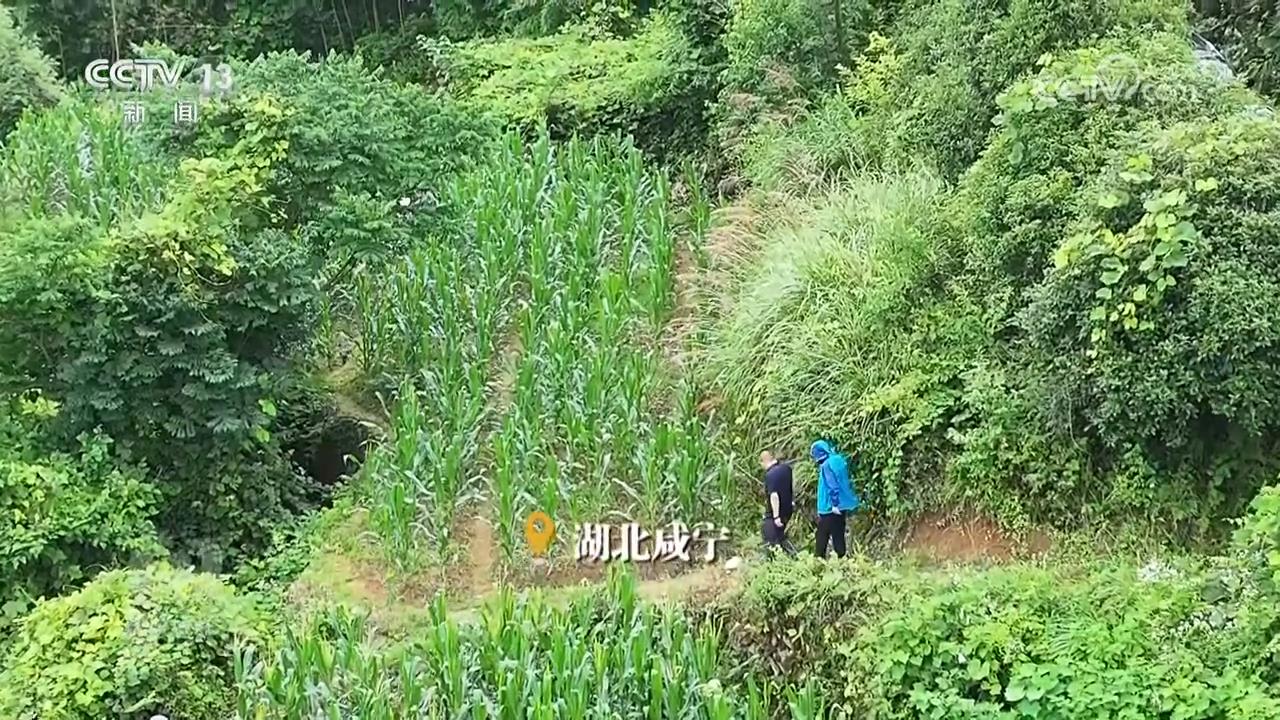
Core Viewpoint - The protection of arable land is crucial for ensuring food security in China, emphasizing the need for a systematic approach that integrates quantity, quality, and ecological considerations [1][17]. Group 1: Current Situation of Arable Land - In Hubei's Xianning City, significant loss of arable land has been observed, with the area decreasing from over 3,600 acres to around 1,200 acres due to fragmentation and abandonment [3]. - The decline in rural labor force and low returns from fragmented arable land have led to severe abandonment issues in both mountainous and flat areas [3][5]. - Historical practices have left many arable lands occupied by economic forests, further complicating the situation and leading to fragmentation [5]. Group 2: Policy and Management Strategies - The local government is considering a strategy to optimize land use by relocating arable land from mountains to plains and vice versa, aiming for contiguous development of arable land [5][7]. - The natural resources department emphasizes the need for a structured approach to classify and manage arable land, including recognizing, restoring, and replacing land as necessary [9]. - Recent data indicates that from 2009 to 2019, approximately 117,800 acres of arable land were converted to forest land, highlighting the urgency of addressing land use policies [7]. Group 3: Improvement Initiatives - In Yunnan's Chuxiong City, land improvement projects have successfully increased the area of irrigated land and improved overall arable land quality, resulting in a grain yield increase of 148 million kilograms [11]. - The establishment of cooperative platforms for agricultural operations has enhanced the efficiency and profitability of farming activities [11]. - The implementation of land reclamation projects has allowed for the recovery of arable land, with a focus on maintaining a balance between land occupation and compensation [13][15]. Group 4: Future Directions - The government aims to strengthen the protection of arable land through strict enforcement of policies and a focus on sustainable land use practices [17]. - A holistic approach to land management is being promoted, integrating various ecological factors to ensure the long-term viability of arable land [17].
耕保成果“粤”精彩!第35个全国土地日广东全景展逛展全攻略
Nan Fang Nong Cun Bao· 2025-06-24 09:03
Core Points - The 35th National Land Day in Guangdong focuses on the theme of "saving and intensive land use, strictly adhering to the red line of arable land" to raise awareness about land protection [3][4] - Guangdong, as a major economic province, accounts for 1.9% of the national land area, supporting 8.9% of the population and 10.9% of the economic total [6] - The province has achieved a balance in arable land for 25 consecutive years and has seen a net increase in arable land for four consecutive years [8] Event Details - A "Land Protection Panorama Exhibition" will be held from June 23 to July 1 at the Guangzhou Library, featuring five themed exhibition areas and interactive experiences [10][11] - The exhibition is free to the public, with operating hours from 9:00 AM to 5:30 PM, except for Wednesdays when the library is closed [17][19] Exhibition Highlights - The first station focuses on the policy navigation of land protection led by the Party, showcasing the top-level design and commitment of Guangdong [23][25] - The second station presents the achievements of land protection across 21 cities in Guangdong, highlighting innovative practices such as "forest-crop replacement" and "multiple cropping" [28][30] - The third station emphasizes the digital and intelligent innovations in land protection, demonstrating the operation of smart systems for land management [32][34] - The fourth station encourages social participation in land protection, showcasing innovative models and contributions from various stakeholders [37][39] - The fifth station features a photography art space that narrates the stories of land protection through visual storytelling [42] - The sixth station offers interactive experiences, including engaging with an AI digital character and immersive activities related to rice cultivation [47][50][56]
人保财险:为耕地保护和质量提升提供全方位支持
Zheng Quan Ri Bao· 2025-06-22 15:10
Core Viewpoint - The Ministry of Agriculture and Rural Affairs of China has announced the top ten innovative financial support models for agriculture in 2024, with "China Pacific Insurance's comprehensive agricultural insurance products supporting farmland protection and quality improvement" being recognized as one of the innovative models [1] Group 1: Innovative Products - China Pacific Insurance has developed three major insurance products: quality defect liability insurance for high-standard farmland construction, comprehensive insurance for farmland facility damage, and soil fertility index insurance, providing comprehensive protection for transforming ordinary farmland into high-yield farmland [2] - The quality defect liability insurance for high-standard farmland construction covers material damage caused by quality defects and natural disasters, as well as repair costs due to operational failures [2] - As of the end of 2024, these three agricultural insurance products have been promoted in all 31 provinces, providing risk coverage of 14.4 billion yuan for quality defect liability insurance, 2.9 billion yuan for comprehensive insurance, and over 800 million yuan for soil fertility index insurance, with total claims exceeding 135 million yuan [3] Group 2: Service Innovation - China Pacific Insurance has introduced professional services to enhance farmland facility management, intervening throughout the entire process of farmland construction, management, and maintenance [4] - The company has established specialized service teams in Sichuan Province to conduct risk assessments and provide maintenance suggestions, resulting in the identification of 585 risk points and 164 hidden risks in completed projects in 2024 [4] Group 3: Technology Empowerment - The company is enhancing service efficiency through technology, developing a "Farmland Management" platform that integrates risk control technology for digital processes and online operations [5][6] - The platform allows for the recording of insured farmland project information and facilitates regular inspections and risk reporting through a mobile app [6] Group 4: Risk Reduction - China Pacific Insurance is shifting its insurance model from traditional loss compensation to risk reduction, exploring integrated service mechanisms that combine preemptive measures and post-event compensation [7] - In Liaoning Province, the company is promoting soil quality improvement by providing farmers with free materials for soil enhancement and technical guidance from third-party soil restoration companies [7]
