VLA

Search documents
车企、科技企业VLA研发进展
Zhong Guo Qi Che Bao Wang· 2025-08-13 01:33
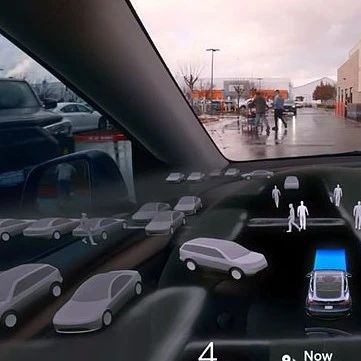
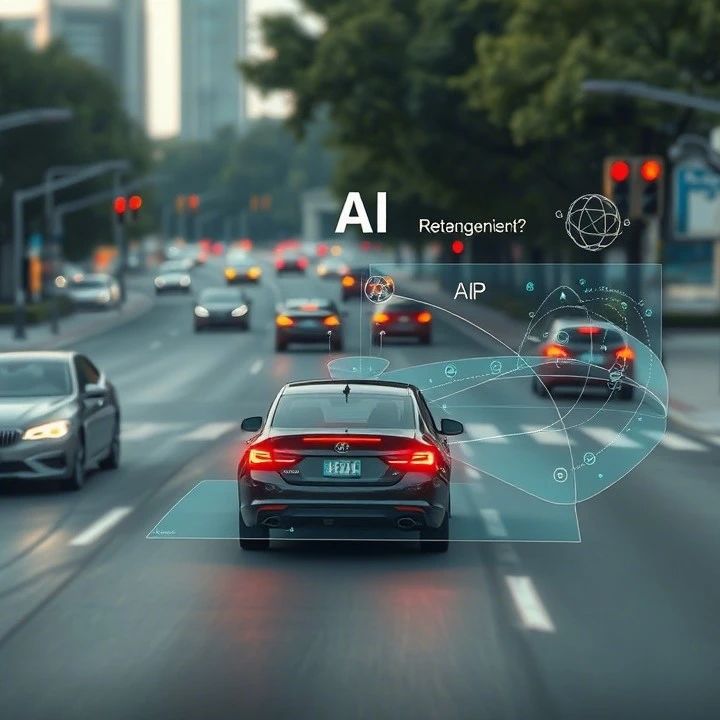
Group 1: Li Auto - Li Auto's i8 features the VLA "driver model," marking a significant advancement in intelligent driving following the previous VLM introduction [1] - The VLA model includes a newly designed spatial encoder that utilizes language models and logical reasoning to provide driving decisions, predicting trajectories of other vehicles and pedestrians through a diffusion model [1] - The inference frame rate of the VLA is approximately 10 Hz, more than tripling the previous VLM's rate of 3 Hz [1] Group 2: XPeng Motors - XPeng G7 officially commenced deliveries on July 7, with a clear timeline for the Ultra version's VLA and VLM software updates [2] - The VLA software OTA update is scheduled for September 2025, with VLM software upgrades following in November 2025, and personalized recommendations by December 2025 [2] - The XPeng G7 Ultra version is equipped with three self-developed Turing AI chips, boasting a total computing power of 2250 TOPS, positioning it as a leader among mass-produced models [2] Group 3: Chery Automobile - Chery plans to introduce the VLA and world model technology into fuel vehicles by 2025 through its Falcon 900 intelligent driving system, aiming to set a new benchmark for "oil-electric intelligence" [3] - The Falcon 900 system utilizes a self-developed VLA model that integrates visual perception, language understanding, and action execution [3] - The model has been trained on 20 million kilometers of real-world data, capable of understanding over 5000 traffic scenarios, achieving a 92% accuracy rate in recognizing non-standard traffic signals in complex urban conditions, a 37% improvement over traditional systems [3] Group 4: Geely Automobile - Geely is actively developing VLA technology, integrating it with world models to create a comprehensive world model system [4] - The Qianli Haohan system features a "dual end-to-end model" design, enabling a multi-modal VLA general scene model and an end-to-end model to back each other up [4] - This system is powered by dual NVIDIA Thor chips, with a total computing power of 1400 TOPS and over 40 perception units capable of detecting objects 0.75 meters in size from 300 meters away [4] Group 5: Yuanrong Qihang - Yuanrong Qihang is also investing in the VLA model, with five models expected to feature it by the third quarter of this year [5] - The company was among the earliest to publicly announce its VLA development in June of last year [5] - The VLA model focuses on defensive driving with four core functions: spatial semantic understanding, recognition of irregular obstacles, comprehension of text-based guide signs, and voice control of the vehicle, which will be gradually released with mass production [5]
VLA还是VTLA?这家企业用“超人类触觉”技术颠覆机器人未来!
具身智能之心· 2025-08-13 00:04
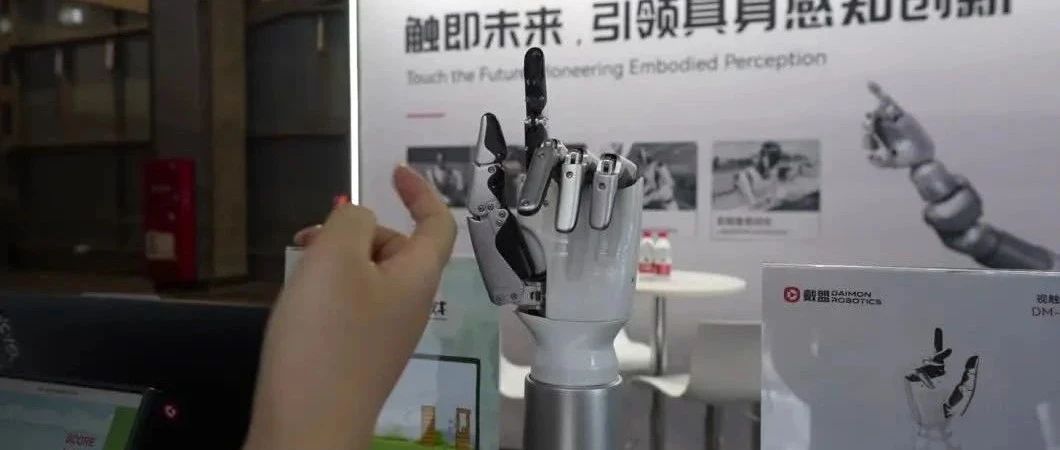
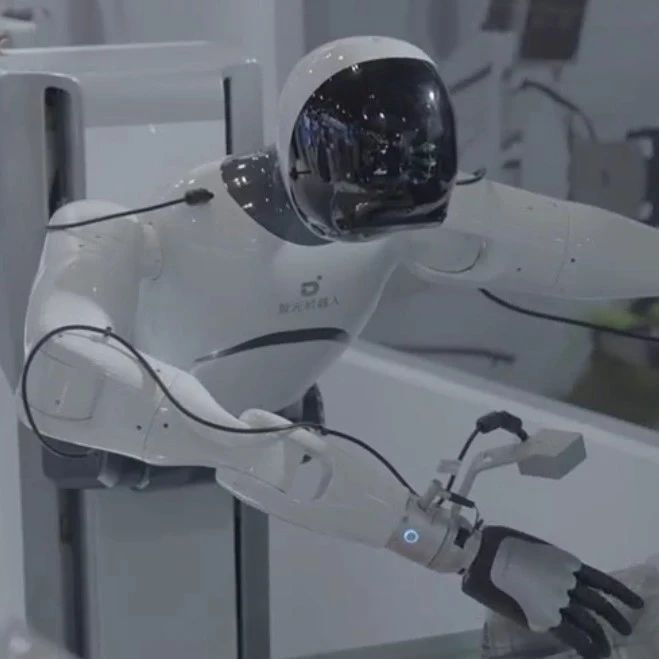
Core Insights - The article highlights significant advancements in hardware and technology for robotics, particularly in tactile sensing, which is crucial for precise physical interactions in various applications [1][3][10] - Daimon Robotics has achieved a breakthrough in tactile sensor technology, addressing key issues such as resolution, real-time performance, and durability, which are critical for the industry's growth [2][9] Group 1: Technology Advancements - The VLA model (Visual-Language-Action) is a focus for many companies, but there are limitations in physical interaction capabilities, necessitating the integration of tactile sensing to enhance performance [1] - Daimon Robotics has developed a new high-resolution visual-tactile sensing technology that captures minute optical changes, enabling robots to possess human-like tactile perception [4][10] - The DM-Tac W sensor, a pioneering product, features 40,000 sensing units per square centimeter, significantly surpassing human capabilities and traditional sensors [4][9] Group 2: Product Development - Daimon Robotics has introduced the DM-Hand1, a dexterous robotic hand that integrates ultra-thin visual-tactile sensors, enhancing flexibility and precision in tasks such as delicate handling and assembly [6] - The company showcased its products at the World Robot Conference (WRC), demonstrating their practical applications and attracting significant interest from attendees [8] Group 3: Market Position and Future Outlook - Daimon Robotics has successfully completed a significant financing round, raising hundreds of millions, which will be used to further develop and commercialize its tactile sensing technologies [3][10] - The company has transitioned from prototype development to large-scale production, achieving certifications and passing extensive durability tests, positioning itself for commercial success in the tactile sensing market [9][10]

具身智能之心技术交流群成立了!
具身智能之心· 2025-08-11 06:01
Group 1 - The establishment of a technical exchange group focused on embodied intelligence technologies, including VLA, VLN, remote operation, Diffusion Policy, reinforcement learning, VLA+RL, sim2real, multimodal large models, simulation, motion control, target navigation, mapping and localization, and navigation [1] - Interested individuals can add the assistant's WeChat AIDriver005 to join the community [2] - To expedite the joining process, it is recommended to include the organization/school, name, and research direction in the remarks [3]
对话千寻智能高阳:科学家创业不太「靠谱」,但创业就像一场游戏
36氪· 2025-08-08 09:28
智能涌现 . 直击AI新时代下涌现的产业革命。36氪旗下账号。 具身智能创业,要做苹果,而不是安卓。 文 | 邱晓芬 编辑 | 苏建勋 来源| 智能涌现(ID:AIEmergence) 封面来源 | 视觉中国 不管是刚刚结束的WAIC(世界人工智能大会),还是本周要开幕的WRC(世界机器人大会),如何在展会上识别一个机器人的真正实力? 具身智能公司"千寻智能"的联合创始人高阳,提供了这样几个tips: 以下文章来源于智能涌现 ,作者邱晓芬 对于号称能叠衣服的机器人,你可以尝试把衣服团成一团,随意丢在桌上,观察它是否能继续完成动作;或者是再给它裤子、外套,看它能否具备跨品类 的泛化能力; 在机器人操作时,可以观察其动作是否足够丝滑流畅,而不是一卡一卡,这代表了思维和动作的协调性…… 给我们提出指引的高阳,是当前具身智能领域炙手可热的创业者之一——从美国加州大学伯克利分校博士毕业后,他选择回国成为清华大学交叉信息研究 院助理教授。 2023年,他又与前珞石机器人CTO韩峰涛一起,创办了具身智能公司千寻智能——韩峰涛硬件经验丰富,过往操盘过数万台机器人量产出货,高阳则有 AI的研究基础,学术和产业界的搭配,使得千寻 ...
对话千寻智能高阳:科学家创业不太“靠谱”,但创业就像一场游戏
3 6 Ke· 2025-08-08 01:49
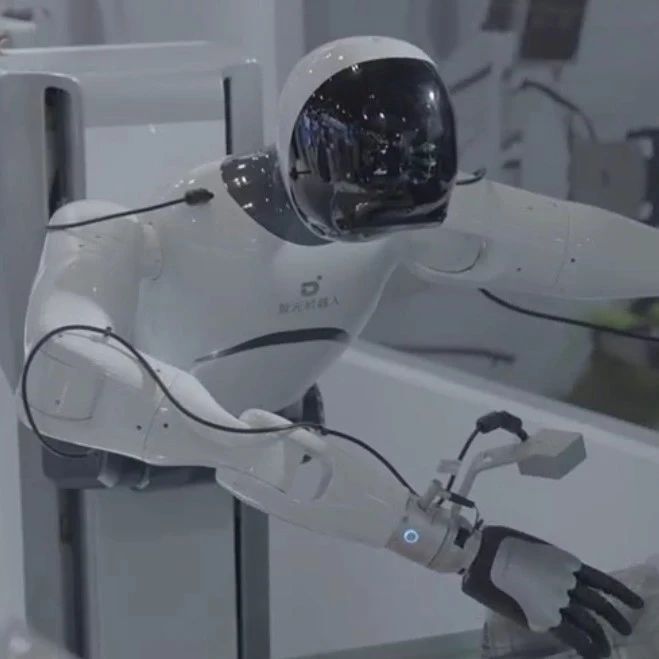
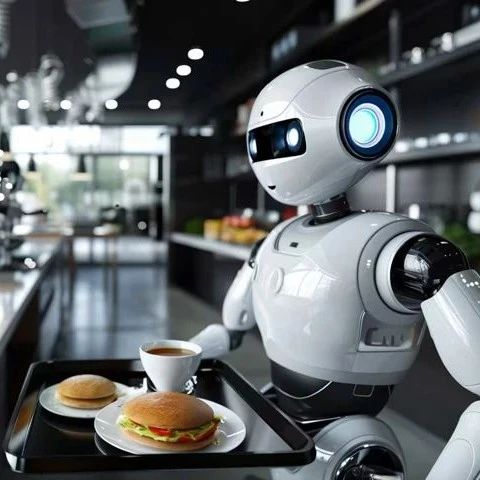
Core Viewpoint - The article discusses the emergence of embodied intelligence in robotics, emphasizing the importance of creating integrated hardware and software solutions, akin to Apple's approach, rather than a fragmented one like Android's [5][6]. Group 1: Company Overview - Qianxun Intelligent, co-founded by Gao Yang and Han Fengtao, has raised over 1 billion RMB in funding within 19 months, with investors including Huawei Hubble, JD.com, and CATL [4]. - Gao Yang, a former assistant professor at Tsinghua University, transitioned from academia to entrepreneurship, highlighting the challenges and learning experiences in this shift [5][12]. Group 2: Market Insights - The robotics market is currently competitive, with established companies focusing on hardware while neglecting the software aspect, which Gao Yang believes is crucial for long-term success [9]. - The potential for embodied intelligence is seen as inevitable, driven by advancements in AI technologies like ChatGPT, which have shifted perceptions about the capabilities of AI [8]. Group 3: Technical Perspectives - The integration of hardware and software is deemed essential in the early stages of robotics development, as seen in historical examples like IBM's approach to personal computers [6][7]. - Gao Yang emphasizes the importance of algorithms and data in evaluating the performance of robotic systems, noting that models must be capable of handling complex tasks rather than just simple ones [28][29]. Group 4: Future Outlook - The anticipated development of robots capable of performing complex tasks, referred to as Robot GPT-3.5, is expected to significantly enhance their functionality in everyday scenarios [32]. - The article suggests that the current focus on large-scale data collection in robotics may not be as valuable due to the rapid evolution of robot forms, indicating a need for more effective pre-training methods [41][42].

具身智能之心技术交流群成立了!
具身智能之心· 2025-08-07 02:38
Group 1 - The establishment of the Embodied Intelligence Heart Technology Exchange Group focuses on various advanced technologies including VLA, VLN, remote operation, Diffusion Policy, reinforcement learning, VLA+RL, sim2real, multimodal large models, simulation, motion control, target navigation, mapping and localization, and navigation [1] - Interested individuals can add the assistant's WeChat AIDriver005 to join the community [2] - To expedite the joining process, it is recommended to include a note with the institution/school, name, and research direction [3]
新势力提前批,跪了。。。
自动驾驶之心· 2025-08-06 11:25
Core Viewpoint - The article emphasizes the importance of preparing for non-technical interview questions in the autonomous driving industry, highlighting the need for candidates to articulate their interests, communication skills, and learning abilities effectively [6][10][11]. Group 1: Interview Preparation - Candidates should reflect on their interests and experiences to answer open-ended questions, as interviewers are often looking for personal insights and opinions [6][10]. - Communication skills are crucial; candidates should demonstrate their ability to engage with mentors and express their thought processes when seeking guidance [6][10]. - Learning ability is assessed through candidates' approaches to acquiring new technical knowledge, emphasizing the importance of establishing a comprehensive understanding before diving into specifics [7][10]. Group 2: Community and Resources - The "Autonomous Driving Heart Knowledge Planet" community provides a platform for technical exchange, featuring members from renowned universities and leading companies in the autonomous driving sector [23][11]. - The community offers a wealth of resources, including over 40 technical routes and numerous open-source projects, aimed at facilitating learning and career development in the autonomous driving field [11][19]. - Members can access job opportunities and industry insights, fostering a complete ecosystem for autonomous driving professionals [21][22]. Group 3: Learning and Development - The community has curated a comprehensive learning path for beginners and advanced researchers, covering various aspects of autonomous driving technology [17][19]. - Regular discussions and Q&A sessions are held to address common industry challenges and share knowledge on emerging technologies [24][87]. - The platform also features live sessions with industry experts, providing members with direct access to cutting-edge research and practical applications [86][11].
自动驾驶秋招&社招求职群成立了!
自动驾驶之心· 2025-08-04 23:33
Core Viewpoint - The article emphasizes the convergence of autonomous driving technology, highlighting the shift from numerous diverse approaches to a more unified model, which indicates higher technical barriers in the industry [1] Group 1 - The industry is moving towards a unified solution with models like one model, VLM, and VLA, suggesting a reduction in the need for numerous algorithm engineers [1] - The article encourages the establishment of a large community to support industry professionals, facilitating growth and collaboration among peers [1] - A new job-related community is being launched to discuss industry trends, company developments, product research, and job opportunities [1]
开课倒计时!国内首个自动驾驶端到端项目级教程来啦~
自动驾驶之心· 2025-08-02 06:00
Core Viewpoint - End-to-end (E2E) autonomous driving is currently the core algorithm for mass production in intelligent driving, with significant advancements in the VLM/VLA systems leading to high demand for related positions and salaries reaching up to 1 million annually [2][11]. Group 1: Industry Trends - The concept of E2E has evolved significantly, with various technical schools emerging, yet many still struggle to understand its workings and distinctions between single-stage and two-stage approaches [2][4]. - The introduction of VLA (Vision-Language Architecture) is seen as a new frontier in autonomous driving, with companies actively researching and developing new generation mass production solutions [21][22]. Group 2: Educational Initiatives - A new course titled "End-to-End and VLA Autonomous Driving" has been launched to address the challenges faced by newcomers in the field, focusing on practical applications and theoretical foundations [14][27]. - The course aims to provide a comprehensive understanding of E2E autonomous driving, covering various models and methodologies, including diffusion models and reinforcement learning [6][19][21]. Group 3: Job Market Insights - The job market for VLA/VLM algorithm experts is robust, with salaries for positions requiring 3-5 years of experience ranging from 40K to 70K monthly, indicating a strong demand for skilled professionals [11][12]. - Positions such as VLA model quantization deployment engineers and multi-modal VLA model direction experts are particularly sought after, reflecting the industry's shift towards advanced algorithmic solutions [11][12].
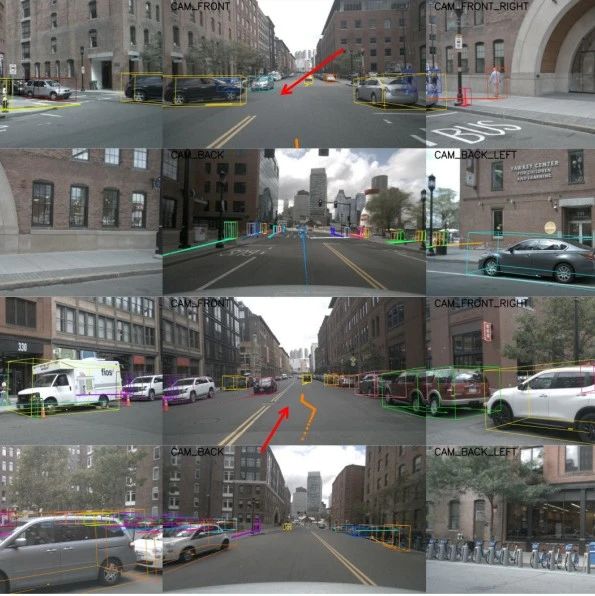
自动驾驶之心技术交流群来啦!
自动驾驶之心· 2025-07-29 07:53
Core Viewpoint - The article emphasizes the establishment of a leading communication platform for autonomous driving technology in China, focusing on industry, academic, and career development aspects [1]. Group 1 - The platform, named "Autonomous Driving Heart," aims to facilitate discussions and exchanges among professionals in various fields related to autonomous driving technology [1]. - The technical discussion group covers a wide range of topics including large models, end-to-end systems, VLA, BEV perception, multi-modal perception, occupancy, online mapping, 3DGS, multi-sensor fusion, transformers, point cloud processing, SLAM, depth estimation, trajectory prediction, high-precision maps, NeRF, planning control, model deployment, autonomous driving simulation testing, product management, hardware configuration, and AI job exchange [1]. - Interested individuals are encouraged to join the community by adding a WeChat assistant and providing their company/school, nickname, and research direction [1].