
数字金融

Search documents
中国银行原行长李礼辉:当前金融业应用大模型的现状、存在问题与解决路径 | 银行家论道
清华金融评论· 2025-08-12 08:46
Core Viewpoint - The article discusses the advancements and challenges in the application of large AI models in the financial industry, emphasizing the importance of high-quality development and the integration of digital finance in Chinese commercial banks [2][10]. Group 1: Progress and Challenges in AI Application - Recent advancements in AI, particularly the launch of ChatGPT by OpenAI and DeepSeek-V3 in China, highlight the rapid integration of AI in finance, focusing on three key areas of innovation [4][10]. - The transition from unimodal to multimodal AI models allows for the processing of various types of unstructured data, enhancing the capabilities of financial services [5][10]. - The development of AI agents has shifted from mere assistance to autonomous decision-making capabilities, enabling more sophisticated financial analysis and risk assessment [8][10]. Group 2: Algorithm Innovations and Efficiency - DeepSeek-V3 demonstrates significant cost efficiency in training, consuming only 278.8 million GPU hours at a cost of $5.576 million, compared to $100 million for similar models like GPT-4o [9][10]. - Innovations in algorithms, such as the native sparse attention mechanism and mixed precision techniques, have drastically improved training speed and resource efficiency [9][10]. Group 3: Security and Trust in Financial AI - The financial sector must prioritize security and trustworthiness in AI applications, addressing issues such as data security risks, model hallucinations, and algorithmic biases [11][12]. - The need for explainability in AI models is crucial for enhancing trust and compliance with regulatory requirements, as complex algorithms can obscure decision-making processes [13][12]. Group 4: Digital Financial Innovation and Governance - The article emphasizes the necessity of establishing a robust regulatory framework for digital finance that balances innovation with risk management [17][18]. - Smaller financial institutions face challenges in digital innovation due to resource constraints, necessitating collaboration and technology sharing to bridge the digital divide [18][12].


PLDT(PHI) - 2025 Q2 - Earnings Call Transcript
2025-08-12 08:30
Financial Data and Key Metrics Changes - Service revenues net of interconnection costs reached PHP 97.1 billion, slightly higher year on year [3][4] - EBITDA was PHP 55.5 billion, up 3% from last year, with an EBITDA margin steady at 52% [4][24] - Telco core income decreased by 4% primarily due to higher depreciation and financing costs, while core income rose to PHP 17.6 billion, up 1% [5][25] - Cash operating expenses decreased by PHP 1.4 billion or 3% year on year, reflecting disciplined cost management [22][24] Business Line Data and Key Metrics Changes - Home segment revenues grew 4% year on year to PHP 30.4 billion, driven by strong fiber demand [6][8] - Enterprise revenues slightly declined by 1% due to legacy business declines, but Corporate Data and ICT revenues remained stable, with ICT growing 15% year on year [10][11] - Individual revenues were down 1%, with mobile data revenues stable at PHP 37.4 billion, making up 89% of the segment [13][14] Market Data and Key Metrics Changes - Fiber revenues in the Home segment increased by 7% year on year, now accounting for 97% of total home revenues [8] - Data center colocation grew by 36%, and cybersecurity services expanded by 24% [11] - Five G traffic surged 84% year on year, with five G devices now making up 70% of the base [14] Company Strategy and Development Direction - The company is focused on disciplined cost management while continuing to innovate in product offerings, particularly targeting younger consumers with new mobile services [15][17] - PLDT aims to position the Philippines as a regional hub for digital services and AI innovation through investments in AI-ready data centers [12][29] - The company is also exploring asset monetization strategies for legacy assets, including copper and 3G equipment [66][69] Management's Comments on Operating Environment and Future Outlook - Management expressed confidence in the market position despite near-term challenges, supported by strong operational fundamentals and strategic investments [37] - The outlook for the second half is positive, with expectations for improved enterprise deal closures and new product traction [24][75] - Management highlighted the importance of customer-centric innovations to drive revenue growth [45] Other Important Information - The company declared an interim cash dividend of PHP 48 per share, reflecting a commitment to stable shareholder returns [30] - Maya, the fintech arm, reported its first profitable semester, contributing significantly to PLDT's core income [25][31] Q&A Session Summary Question: What is driving the softness in mobile revenues? - Management indicated that the dip is a normal fluctuation and expects revenues to rebound in the second half [44][45] Question: Update on the Connectatum Cranoe Bill? - The bill will become law by August 24 if not signed by the president, with concerns raised about its constitutionality [48][50] Question: Guidance on refinancing activities for maturing debt? - Interest rates are currently high, but the company has negotiated better terms for refinancing [60][62] Question: Updates on 5G cities? - The company is expanding 5G services to provinces, starting with Cebu, and expects ARPU for 5G users to be significantly higher than LTE users [63][65] Question: Updates on asset monetization plans? - The company is actively negotiating the sale of legacy assets, including copper and 3G equipment [66][69] Question: Plans for prepaid services? - Prepaid services are seen as a strategic entry point into price-sensitive markets and are not expected to cannibalize postpaid offerings [70][71] Question: Anticipated return to growth in enterprise revenues? - Management expects a return to growth in the second half, particularly in the public sector following election delays [72][74] Question: Insights on Maya's loan disbursement growth? - Maya is focusing on a diversified product suite to drive loan growth, targeting millennials and Gen Z customers [96][98]

从新市民等群体需求入手提升服务——数字科技赋能消费金融
Xin Hua Wang· 2025-08-12 06:26
Group 1 - The core viewpoint emphasizes the importance of boosting consumption and expanding domestic demand for economic stability, with the government implementing policies to support small and micro enterprises, individual businesses, and affected individuals through loan deferments and increased financial support [1] - Financial institutions are leveraging digital financial technology to provide inclusive financial services, particularly targeting new citizens, small businesses, and individual entrepreneurs, while addressing their unique financial needs [2][4] - The China Banking and Insurance Regulatory Commission has issued several documents to enhance financial services for new citizens and support logistics and transportation, indicating a proactive approach to stimulate consumption and alleviate burdens on market entities [1][5] Group 2 - The financial industry is focusing on non-contact financial services to cater to the needs of new citizens and small businesses, utilizing emerging technologies like artificial intelligence and the Internet of Things to expand customer reach [2] - Financial institutions are encouraged to innovate their risk control systems to better serve new citizens, utilizing big data to enhance service quality and broaden customer bases [3][4] - There is a significant opportunity for consumer finance companies to fill gaps in traditional banking services, offering online financial solutions that cater to the needs of new citizens without requiring physical branches [4]
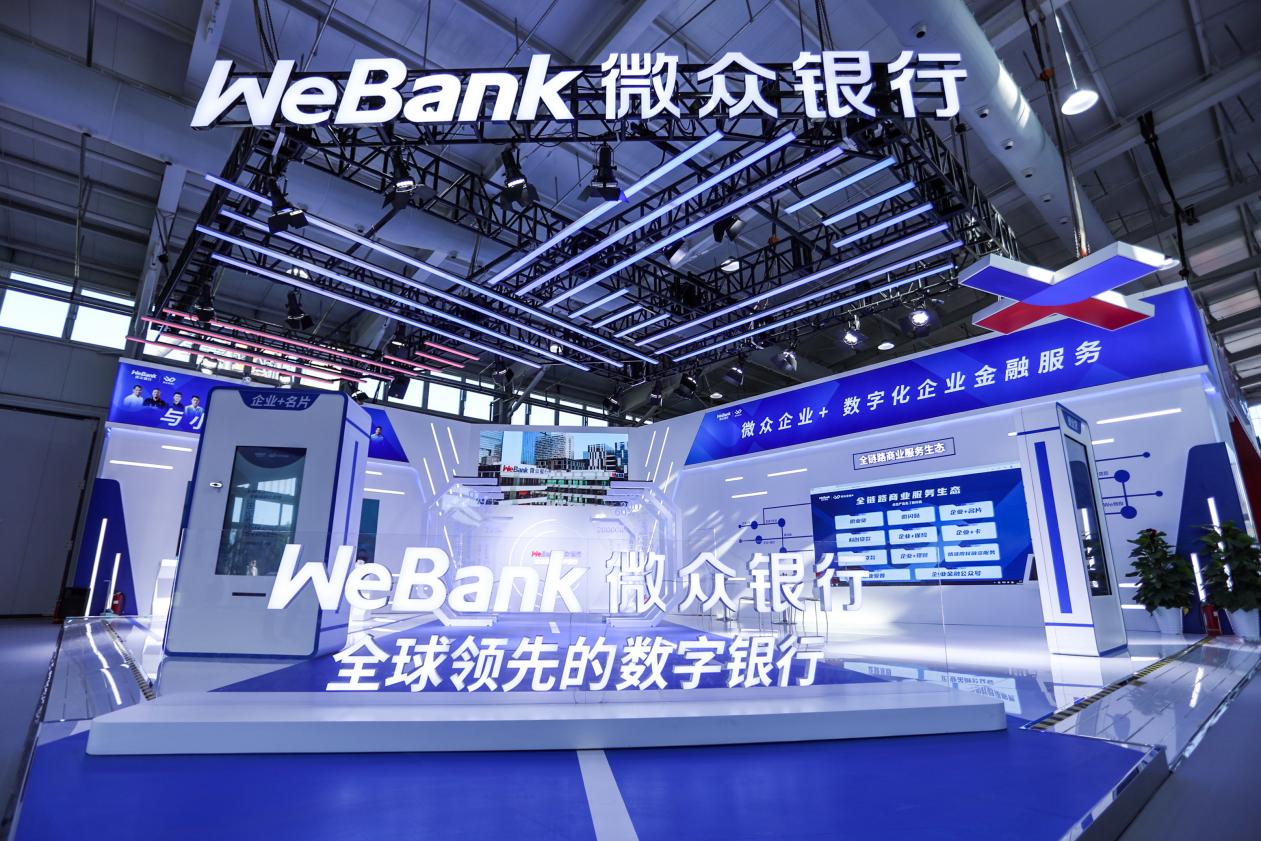
探馆2022服贸会:微众银行彰显数字化企业金融服务创新力
Xin Hua Wang· 2025-08-12 06:19
Core Viewpoint - The China International Fair for Trade in Services (CIFTIS) showcased the achievements of China's financial industry under the theme "Open Integration, Green Future," with a focus on digital banking and services for small and micro enterprises [1][12]. Group 1: Event Overview - The financial services exhibition at CIFTIS featured over 130 domestic and international financial institutions, organizations, and fintech companies [1]. - The event highlighted the development of China's financial industry amid reforms and innovations [1]. Group 2: Micro Bank's Digital Services - WeBank, as a digital bank, emphasizes providing differentiated and high-quality financial services to small and micro enterprises, showcasing its brand "WeBank Enterprise+" at the exhibition [1][12]. - The exhibition featured an interactive "digital tunnel" that represented WeBank's milestones, including being the first digital bank in China and attracting over 3 million applications for its micro-loan product [3][5]. Group 3: Comprehensive Business Services - WeBank's "WeBank Enterprise+" offers a full-chain commercial service ecosystem, including products like micro-loans, insurance, and digital marketing services [5][9]. - The core product, "Micro Loan," is the first online unsecured working capital loan for enterprises, featuring a fast, paperless application process [5][10]. Group 4: Support for Small and Micro Enterprises - The exhibition showcased promotional videos featuring small and micro enterprise clients, highlighting their innovative products and entrepreneurial spirit [7][9]. - WeBank has tailored services to enhance the visibility of small enterprises through digital marketing, providing them with a larger platform at the fair [9][10]. Group 5: Future Directions - The integration of digital technology with the real economy is a key focus for the financial services industry, with WeBank committed to supporting small and micro enterprises in this transition [10][12]. - WeBank aims to leverage its digital technology advantages to foster growth alongside small enterprises, contributing to the deep integration of digital and real economies [12].
百信银行2023年高质量发展取得积极成效 数字银行高质量服务书写金融五篇大文章
Xin Hua Wang· 2025-08-12 06:13
近日,中信银行披露了旗下百信银行2023年经营业绩。2023年,百信银行坚决贯彻党中央、国务院 重要决策部署,以数智科技为牵引、以用户经营为核心、以价值创造为根本,坚持数字普惠战略方向不 动摇,锻造行业领先的数智金融核心能力,锤炼审慎稳健的经营体系,服务实体经济高质量发展进入佳 境,奋力书写五篇大文章。 数智创新持续领跑行业。百信银行依托数智化金融科技能力,探索推进跨法人金融机构间数据融合 试点应用,行业内首次开辟数据融合安全合规路径,数据要素跨机构流动探索取得突破性进展;行业领 先探索AIGC技术和大模型应用,推出业内首个3D数字人直播平台,打造数字人导购应用场景;率先推 出行业首个3D数字营业厅"零度空间",革新金融服务交互模式,成功亮相2023世界人工智能大会;全 年完成发明专利受理126件,发明专利授权13件;"基于人工智能技术的普惠信贷服务项目"入选人民银 行第三批监管沙箱。 智能风控能力持续增强。百信银行持续提升智能风控核心能力,不断完善"六位一体"智能风控体 系,通过"预训练和迁移学习"算法创新,进一步加强风险智能识别和管控能力,风控特征数提升至6.3 万;推进风控策略敏捷迭代,迭代频次提升33 ...
信银理财:以普惠金融作答中国特色金融文化内涵
Xin Hua Wang· 2025-08-12 06:13
坚持"四稳"原则 为居民财富增值保驾护航 普聚金融服务,惠及千企万户,是普惠金融根本的意义。银行理财作为中国资产管理市场的主力, 是连接资金和资产市场的核心纽带,践行普惠金融具有天然优势。 信银理财坚持贯彻中央金融工作会议精神和《国务院关于推进普惠金融高质量发展的实施意见》, 在积极推动普惠金融发展过程中,进行了诸多探索和实践,主动适应市场形势和普惠金融需求变化,构 建类别齐全、策略丰富、层次清晰的理财产品和服务体系,拓宽居民财产性收入渠道,满足居民多元化 资产管理需求,拓展理财业务辐射的广度和深度。 银行理财的客户受众面广、门槛低、客群基数大、对资产波动敏感度较高,信银理财牢牢把握"四 稳"核心要求,坚持投资稳健、风格稳定、收益稳当、消保稳妥,始终以客户为中心,以建设产品全面 质量管理体系为抓手,真正帮助客户实现资产的保值增值,同时有效控制客户投资的风险,实现给客 户"稳稳的幸福"的目标。 搭建以"稳健"为核心的产品谱系:聚焦绝对收益目标主力产品线,有序推动固收+产品发行,加大 中长期低波产品供给,重点研发绝对收益型策略,建立产品风险监测系统,动态监测产品风险。 清晰定位各类产品风格:建立产品标准图谱,通过 ...
以时代为卷 写四载风华
Xin Hua Wang· 2025-08-12 06:13
Core Viewpoint - The evolution of the wealth management industry in China has transformed from service-oriented to product-oriented, significantly contributing to the economic development and providing diverse wealth accumulation channels for investors [1][2]. Group 1: Development of Wealth Management - In 1996, Citic Bank established a private wealth management center, introducing the concept of "wealth management" to the public [1]. - By 2002, the balance of urban and rural residents' deposits reached 86,911 billion yuan, a year-on-year increase of 17.8%, highlighting the growing savings culture [2]. - Citic Bank launched its first foreign currency wealth management product in 2002, which performed well, raising public awareness of investment alternatives beyond deposits [2]. - The establishment of the first personal wealth management product in 2004 marked a significant milestone in the industry [1][2]. - In 2020, Xinyin Wealth Management was established, inheriting Citic Bank's wealth management legacy and focusing on serving the real economy [2][3]. Group 2: Commitment to National Strategy - Xinyin Wealth Management aligns its operations with national strategies, emphasizing the importance of serving the real economy and contributing to common prosperity [3][5]. - The company has developed a "green finance" strategy, investing over 40 billion yuan in green projects and supporting the national "dual carbon" goals [4][10]. - Xinyin Wealth Management has launched various products aimed at enhancing residents' property income and addressing the aging population's needs through pension investment products [4][11]. Group 3: Customer-Centric Approach - The company has established a robust consumer protection framework, prioritizing customer education and engagement through various initiatives [7][8]. - As of 2023, bank wealth management has generated nearly 700 billion yuan in investment returns for over 100 million clients [8]. - Xinyin Wealth Management has developed a comprehensive product system, including a diverse range of investment options to meet customer needs [6][8]. Group 4: Social Responsibility - Xinyin Wealth Management integrates ESG principles into its operations, being the first in the industry to regularly publish sustainability reports [10]. - The company has initiated charitable wealth management products, raising over 10.5 billion yuan for children's development projects [11]. - Xinyin Wealth Management emphasizes employee welfare and engagement, creating a supportive workplace environment [10][11].
平安产险:坚持党建引领 奋力书写“五篇大文章”年度答卷
Xin Hua Wang· 2025-08-12 06:11
深耕绿色金融 努力守护绿水青山 2024年,四川省广元市剑门关翠云廊景区里的7803棵千年古柏,广东江门巴金笔下小鸟天堂那棵独 木成林的水榕树,广东韶关南华古寺中的206株古树......第一次有了保险守护。 古树名木被认为是"有生命的文物"。平安产险积极深耕绿色金融,持续扩大古树名木救治综合保险 的覆盖面。截至2024年12月31日,平安产险已为2万余棵古树名木提供风险保障超3亿元,让古树名 木"老有所依"。 金融是国民经济的血脉。2024年,平安产险深入贯彻中央金融工作会议精神,在平安产险党委领导 下,成立"平安产险可持续发展委员会",积极筑牢经济安全网、社会保障网和灾害防护网,全力做好金 融"五篇大文章",积极融入国家发展大局,奋力书写金融服务高质量发展的新答卷。 发力科技金融 助力培育新质生产力 科技是第一生产力。为助力培育新质生产力,护航科技创新,平安产险首单"科技攻关专项保险"、 首单"低空领域政府救助保险"、首单"科技中试综合保险"等护航科技企业向新而行的创新保险产品相继 面市。 "科技研发一般前期投入大、项目周期长、未知风险高,光靠企业投入压力很大。有了保险兜底, 心里就有底了。"宁波一家科技 ...

建行生活:做好数字金融大文章 坚持人民金融为人民
Xin Hua Wang· 2025-08-12 06:07
Core Viewpoint - The news emphasizes the significant role of financial services in promoting China's modernization, highlighting the importance of digital finance and the initiatives taken by China Construction Bank (CCB) to enhance consumer experiences through its "CCB Life" platform [1][10]. Group 1: Digital Finance Initiatives - CCB is actively implementing the spirit of the Central Financial Work Conference by focusing on digital transformation and enhancing its online service platform, "CCB Life," which has expanded to 367 cities and serves over 130 million users [1][10]. - The "CCB Life" platform integrates various consumer services, allowing users to access discounts and benefits across different daily life scenarios, thus embedding financial services into everyday activities [2][13]. Group 2: Consumer Engagement and Government Support - "CCB Life" has facilitated the distribution of government consumption vouchers in 275 cities, with over 60 billion yuan allocated, significantly boosting consumer spending [5][6]. - The platform's zero-commission model attracts merchants, allowing them to benefit from increased customer traffic without the burden of fees, thus fostering a collaborative ecosystem [7][8]. Group 3: Enhancing User Experience - The platform offers a wide range of services, from dining to travel, and has introduced cultural and tourism initiatives to enhance user engagement and satisfaction [3][4]. - CCB Life's promotional activities, such as the "717 Beautiful Life Festival," aim to enhance the public's sense of well-being and access to quality services [10][12]. Group 4: Future Outlook - CCB plans to continue its digital transformation, focusing on integrating financial services with everyday life, while maintaining a commitment to risk management and serving the broader economy [14][15].

数字化帮你实现指尖上的财富自由?信银理财五周年的数字金融答卷有哪些惊喜?
Xin Hua Wang· 2025-08-12 06:06
在广西柳州一家企业担任文员的00后陆晓(化名)未曾料到,自己四年前在信银理财App随手购买 的理财产品,不仅支撑了她大学时期的"旅行自由",更在毕业后化为一把车钥匙——那是她用理财收益 解锁的人生首辆汽车。 与此同时,34岁的重度残障人士张宁(化名)在信银理财App上完成了从零到百万持仓的蜕变。无 法外出工作的她通过指尖操作实现了财富稳健增值:"在手机上就能操作,产品选择自由,信银理财 App像亲人一样给了我安全感和温暖鼓励。" 在信银理财成立五周年之际,这两个普通人的财富故事,成为中国资管行业数字化变革的生动注 脚。当金融"五篇大文章"的国家战略照进现实,这家管理规模近2万亿元的头部机构,正用科技的温度 与专业的厚度,将金融服务嵌入千万人的生活肌理。 四年前,读大一的她在信银理财App上的初始投入5000元,此后每年定投2万,最终在复利增长中 悄然沉淀,化作毕业季的方向盘——这不仅是个人财富的增值轨迹,更是金融科技重构资管逻辑的微观 普惠的温度 金融为民 残障人士持仓百万收获满满幸福感 近年来,党中央、国务院高度重视发展普惠金融,多次指出大力发展普惠金融可提高金融服务的覆 盖率、可得性和满意度,增强广大人民 ...