银行理财

Search documents
银行理财2月报 | 权益理财指数收益弹性凸显,新发产品持续结构长期化
Wind万得· 2026-03-13 02:10
Core Viewpoint - The bank wealth management market shows a stable increase in returns, with equity-based products outperforming the CSI 300 index over the past month and three months. The trend towards long-term and closed-end products continues, with products of 1-3 years accounting for over 55% and closed-end products nearing 95% of the total [3][12][23]. Group 1: Market Overview - The bank wealth management market experienced a slight contraction in scale at the beginning of 2026, with a decrease of 114.2 billion yuan in January. However, the long-term recovery trend remains intact, supported by a preference for stable products like fixed income and cash management [12][38]. - The market structure reflects a "stability first" characteristic, with fixed income and cash management products being the main contributors to growth, while equity products are under pressure due to market volatility [12][23]. Group 2: Product Types and Structures - The investment type distribution shows a continuous expansion of stable products, with fixed income products growing by 184.3 billion yuan from the end of 2025 to February 2026, indicating a strong preference for low-volatility, stable-return products [7][8]. - The proportion of equity products has decreased, with a decline of 1.93 billion yuan from the end of 2025 to February 2026, reflecting investors' cautious approach towards high-risk assets amid market fluctuations [8][11]. Group 3: New Product Issuance - In February 2026, the new issuance scale of bank wealth management products was 440.04 billion yuan, showing a decrease from January but indicating a shift towards long-term, closed-end, and stable products [23]. - The proportion of new products with a duration of 1-3 years has increased to 55.16%, up 5.12 percentage points from December 2025, reflecting a trend of extending product duration to lock in yields in a low-interest environment [15][20]. Group 4: Performance Metrics - The average performance benchmark for newly issued products in February 2026 was 2.46%, a slight increase of 1 basis point from the previous month, indicating stable overall performance [18]. - The performance of equity products has shown significant recovery, with the Wande Equity Wealth Management Index rising by 7.94% over the past three months, outperforming the CSI 300 index by 4.06% [31]. Group 5: Regulatory and Market Trends - The implementation of the "Management Measures for Information Disclosure of Asset Management Products by Banking and Insurance Institutions" in September 2026 is expected to standardize information disclosure, enhancing the stability of bank wealth management products [12][39]. - The market is witnessing a strong demand for low-volatility, stable-return products, with institutions actively promoting these products to attract idle funds during the post-holiday period [12][39].


2月理财月报:总量止跌回升,混合类产品增长放缓
GUOTAI HAITONG SECURITIES· 2026-03-04 00:25
Investment Rating - The report assigns an "Overweight" rating for the industry, indicating a potential increase of over 15% relative to the CSI 300 index [2][18]. Core Insights - As of the end of February 2026, the total scale of bank wealth management products reached 31.66 trillion yuan, reflecting a year-on-year growth of 5.6% and a slight month-on-month increase of 0.3%, ending a two-month trend of net outflows [4][11]. - The mixed product category continues to show positive growth, although the monthly increase is less than half of January's figures, totaling only 10.8 billion yuan [7]. - In February, 2,015 new wealth management products were launched, with an initial fundraising scale of 299.5 billion yuan, which is less than half of January's due to the impact of the long holiday [7][8]. Summary by Sections Wealth Management Scale - The total scale of bank wealth management products is 31.66 trillion yuan, with a year-on-year growth of 5.6% and a month-on-month increase of 0.3%. The net inflow for the month was 94.8 billion yuan, ending the previous two months of net outflows [4][11][7]. Product Structure - Cash management and fixed-income products have rebounded, with net increases of 7.7 billion yuan and 77 billion yuan, respectively. Mixed products maintained positive growth but saw a significant decrease in monthly increments, totaling only 10.8 billion yuan [7]. - In February, 2,015 new wealth management products were issued, with a total initial fundraising of 299.5 billion yuan. The breakdown includes 32 cash management products, 1,941 fixed-income products, 36 mixed products, and 6 equity products [7][8]. Average Yield - The weighted average yield of bank wealth management products in February was 2.8%, a decrease of 6 basis points from January. Cash management and pure fixed-income products saw further declines in average yields, while equity products experienced an increase in yield to 11.84% [9][7].
银行理财产品利息哪家高?最新调研来了→
Sou Hu Cai Jing· 2026-02-28 03:36
Core Viewpoint - As the 2026 construction season approaches, the demand for investment in bank wealth management products is increasing, with a focus on which banks offer higher interest rates amid a declining overall interest rate environment [2] Group 1: State-owned Banks - The six major state-owned banks maintain low interest rates, with a focus on safety, making them suitable for conservative investors [3] - The interest rates for demand deposits are set at 0.05%, while fixed-term deposits yield 0.95% for 1 year, 1.05% for 2 years, 1.25% for 3 years, and 1.30% for 5 years [3] - For a 3-year fixed deposit of 100,000 yuan, the interest earned is only 3,750 yuan, appealing to those with very low risk tolerance [3] Group 2: Joint-stock Banks - Joint-stock banks like Pudong Development Bank and CITIC Bank offer higher interest rates compared to state-owned banks, making them a popular choice for the general public [4] - The interest rates for demand deposits are approximately 0.2%, which is 0.15 percentage points higher than state-owned banks, while fixed-term deposits yield between 1.1%-1.3% for 1 year and 1.55%-1.85% for 3 years [4] - A 3-year fixed deposit of 100,000 yuan in joint-stock banks can yield up to 5,550 yuan, which is 1,800 yuan more than state-owned banks, suitable for those seeking a balance between service experience and safety [4] Group 3: Private Banks - Private banks, leveraging online operations, generally offer higher interest rates, with Suzhou Bank leading the market [5] - For example, Suzhou Bank offers a 7-day notice deposit at an annual interest rate of 1.05%, and fixed-term deposits yield 1.1% for 3 months, 1.4% for 6 months, 1.5% for 1 year, 1.7% for 2 years, and 2.0% for 3 years [5][6] - A 3-year fixed deposit of 100,000 yuan at Suzhou Bank can yield 6,000 yuan, which is 2,250 yuan more than state-owned banks, appealing to investors willing to lock in funds for higher returns [6] Group 4: Investment Recommendations - Investors are advised to choose products based on their risk tolerance and liquidity needs, with state-owned banks suitable for conservative investors, joint-stock banks for those seeking a balance, and private banks for those pursuing higher returns [7] - All bank deposits are protected under the deposit insurance system (up to 500,000 yuan), while wealth management products are non-guaranteed and subject to market risks [7]

理财市场交出年度“成绩单”
Jin Rong Shi Bao· 2026-02-24 01:31
Core Insights - The report indicates that the bank wealth management market reached a record scale of 33.29 trillion yuan by the end of 2025, marking an 11.15% increase from the beginning of the year [1][2] - The number of investors holding wealth management products rose to 143 million, a 14.37% increase year-on-year, reflecting a growing interest in the market [1][3] Market Size and Investor Growth - By the end of 2025, the wealth management market's scale was 33.29 trillion yuan, up 11.15% from the start of the year [2] - There were 159 banks and 32 wealth management companies offering 46,300 products, a 14.89% increase from the previous year [2] - The wealth management company segment accounted for 30.71 trillion yuan, a 16.72% increase, representing 92.25% of the total market [2] - The market exhibited a "V" shaped recovery, with significant growth in the second half of the year [2] Investor Composition and Preferences - The number of individual investors reached 141 million, making up 98.64% of total investors, while institutional investors numbered 1.94 million, accounting for 1.36% [3] - The majority of investors (33.54%) preferred a moderate risk profile, indicating a trend towards conservative investment strategies [3] Product Structure and Trends - In 2025, 136 banks and 32 wealth management companies launched 33,400 new products, raising 76.33 trillion yuan, an expansion from 2024 [4] - Fixed-income products dominated the market, comprising over 97% of total offerings, while mixed, equity, and commodity products saw slight increases [4] - The "fixed income plus" products saw a 16% growth to 10.8 trillion yuan, outpacing the overall growth of fixed-income products [4] Performance and Returns - Wealth management products generated a total return of 730.3 billion yuan in 2025, a 2.87% increase from the previous year [5] - The average yield of wealth management products was 1.98%, down 0.67 percentage points from 2024 [5] - Equity and mixed products performed better due to a strong equity market, with "fixed income plus" products yielding an annualized return of 2.8% since inception [5] Contribution to the Real Economy - Wealth management products supported the real economy with approximately 21 trillion yuan allocated to various sectors, including green bonds and small and micro enterprises [6] - Investments included over 3.8 billion yuan in green bonds and 5.4 trillion yuan for small and micro enterprises [6] Innovation and Market Evolution - Wealth management companies are innovating with products focused on technology finance and ESG themes, reflecting a shift towards sustainable investment [7] - The average duration of newly issued closed-end products increased to between 322 and 489 days, indicating a trend towards longer-term investments [7] - The market saw a significant rise in ESG-themed products, with a balance of 311 billion yuan, up 29.96% year-on-year [8]
银行理财1月报 | 规模突破33万亿,新发环比增长21%
Wind万得· 2026-02-13 02:00
Core Viewpoint - The bank wealth management market is experiencing steady growth, with the total scale exceeding 33.29 trillion yuan by the end of 2025, reflecting an 11.15% increase from the beginning of the year, indicating a robust growth trend in the industry [3][8]. Group 1: Market Overview - As of the end of 2025, the bank wealth management market's total scale reached 33.29 trillion yuan, marking an 11.15% growth compared to the beginning of the year, continuing the trend of steady growth observed in recent years [3]. - The growth momentum is strong, with the market showing a consistent recovery in scale, particularly in the second half of the year, which reflects increased investor confidence amid the deepening asset management regulations [3][8]. Group 2: Investment Type Changes - Fixed income products dominate the market, with fixed income + and cash management products maintaining stable growth, reaching 16.47 trillion yuan and 6.44 trillion yuan respectively by January 2026, indicating a preference for low-volatility, stable-return products [5]. - The scale of mixed-asset products has increased for three consecutive months, rising from 2389.43 billion yuan in November 2025 to 2885.28 billion yuan in January 2026, reflecting a moderate increase in equity allocation to enhance returns [5][6]. - Equity products saw a slight decline, dropping to 94.87 billion yuan in January 2026, accounting for less than 0.1% of the total, indicating a cautious approach to equity asset allocation in a volatile market [5][6]. Group 3: New Product Issuance - From November 2025 to January 2026, the new issuance of bank wealth management products showed a fluctuating growth trend, with the total new issuance reaching 5674.73 billion yuan in January 2026, a 21.07% increase from the previous month [12]. - Long-term products (1-3 years) accounted for the highest proportion of new issuances, reaching 50.89% in January 2026, reflecting a growing preference for medium to long-term products [12][25]. - The average performance benchmark for newly issued products in January 2026 was 2.43%, slightly down from 2.46% the previous month, indicating a trend where longer-term products generally offer higher benchmarks [15]. Group 4: Performance Tracking - The overall performance benchmark compliance rate for wealth management products was 66.99% in January 2026, a slight increase of 1.42 percentage points from the previous month, reflecting marginal improvements in market conditions [35]. - The compliance rate for products with a holding period of 6-12 months was the highest at 75.62%, while products with a holding period of over 3 years had the lowest compliance rate at 25.0%, indicating improved stability in long-term product performance [35]. - Short-term products also showed significant recovery, with the compliance rate for 1-3 month holding period products rising from 50.0% to 58.33%, demonstrating enhanced liquidity management capabilities [35].

银行花式“抢客” 理财“春节档”营销热闹登场
Shang Hai Zheng Quan Bao· 2026-02-11 17:50
Core Viewpoint - The banking industry is intensifying its marketing efforts for the upcoming Spring Festival, focusing on attracting customers through various promotional activities and tailored financial products aimed at year-end bonuses and traditional "lucky money" [1][2][4]. Group 1: Marketing Strategies - Banks are leveraging both online and offline channels for marketing, with mobile apps featuring festive themes and special investment links, while physical branches are decorated and hosting engaging activities [2][4]. - The marketing campaigns are primarily targeting year-end bonuses and "lucky money," with banks creating specialized financial products and services to cater to these seasonal funds [2][3]. Group 2: Product Offerings - Financial products designed for year-end bonuses include short-term, high liquidity, and stable return options, with some products offering annualized returns 0.3 to 0.8 percentage points higher than regular offerings [2][4]. - For "lucky money," banks are promoting children's exclusive bank cards and educational savings accounts, along with low-threshold fund investment plans [3]. Group 3: Industry Challenges - The current banking environment is characterized by declining interest rates and a scarcity of quality assets, leading to increased competition for "quality liabilities" [4]. - Banks are facing dual challenges of rising liability costs and profitability pressures, as the macroeconomic transition has made stable, high-return assets scarce [4]. Group 4: Investment Recommendations - Suitable short-term investment options for the Spring Festival include money market funds, government bond reverse repos, and bank cash management products, each with varying risk and liquidity profiles [5]. - Investors are advised to focus on product risk levels, asset allocation clarity, and redemption rules to ensure effective fund utilization during the holiday period [6][7].
国泰海通|银行:1月理财月报:总量微降,现金管理和混合类产品规模上升
国泰海通证券研究· 2026-02-04 14:28
Core Viewpoint - The report indicates a slight decline in the total scale of bank wealth management products, with a year-on-year growth of 5.7% but a month-on-month decrease, primarily driven by fixed income products [1]. Group 1: Wealth Management Scale - As of the end of January 2026, the total scale of bank wealth management products was 31.55 trillion, reflecting a year-on-year increase of 5.7% and a month-on-month decrease of 0.2% [1]. - The decline in scale was mainly attributed to fixed income products, which saw a decrease of 891 billion, while cash management and mixed products increased by 141 billion and 204 billion respectively compared to the beginning of the year [1]. Group 2: New Product Issuance - In January, 2,513 new wealth management products were issued, which is a decrease of 324 from December, with an initial fundraising scale of 4,238 billion, down 22.0% month-on-month [1]. - The breakdown of new products includes 54 cash management, 2,411 fixed income, 32 mixed, and 16 equity products, with respective month-on-month changes of -4, -261, -41, and -8 [1]. Group 3: Average Yield - The weighted average yield of bank wealth management products in January was 2.86%, an increase of 8 basis points from December [1]. - Specifically, the average yields for cash management and pure fixed income products were 1.78% and 2.65%, showing decreases of 8 basis points and 2 basis points respectively; while the yields for fixed income + type and mixed products increased by 5 basis points and 78 basis points to 2.89% and 4.19% respectively [1]. - Equity products saw a significant rise in yield from 4.57% to 12.33%, highlighting a pronounced shift in market dynamics [1]. Group 4: Product Performance - The number of underperforming wealth management products returned to a lower level in January, with 1,074 products breaking net value, accounting for 1.5% of the total, marking the lowest level in nearly two years [2].


你的“年终奖”到账了吗?银行打响理财市场“抢收”大战
Xin Lang Cai Jing· 2026-01-30 00:54
Core Viewpoint - Multiple banks are targeting the year-end bonuses of workers by launching exclusive financial products and promotional activities to attract customers [2][5][10]. Group 1: Year-End Bonus Financial Products - Several banks, including Postal Savings Bank, Bank of Communications, and China Merchants Bank, have introduced dedicated sections in their mobile banking apps for year-end bonus financial products [5][6][7]. - For example, Postal Savings Bank offers products like "Daily Earnings" with a maximum annualized rate of 1.52% and a low-risk product with an annualized rate of 4.28% [6]. - China Merchants Bank has a "Year-End Bonus" section that includes tasks for customers to unlock rewards, specifically targeting customers with salary accounts [7]. Group 2: Asset Allocation Strategies - Some banks are providing asset allocation strategies for year-end bonuses, suggesting a breakdown of funds into categories such as daily expenses, safety nets, stable investments, and growth investments [8]. - For instance, the Guangdong branch of China Construction Bank recommends allocating 10%-20% for daily expenses, 5%-10% for safety, 40%-60% for stable investments, and 10%-20% for growth [8]. Group 3: Market Trends and Data - As of the end of 2025, the total scale of the bank wealth management market reached 33.29 trillion yuan, an increase of 11.15% from the beginning of the year, with the number of investors growing by 14.37% [12][13]. - The report indicates that low-risk and medium-low-risk products dominate the market, with 95.73% of the total wealth management products falling into these categories [14]. - In 2025, wealth management products generated a total return of 730.3 billion yuan for investors, with an average yield of 1.98% [14].



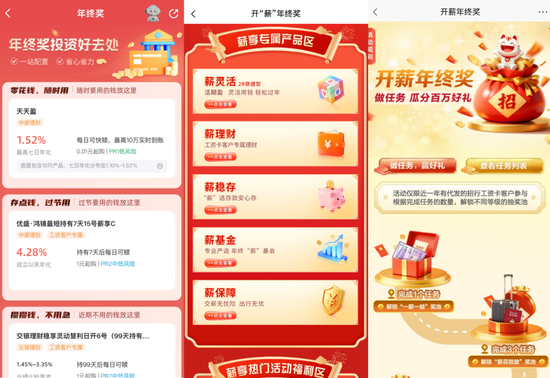
2025年银行理财透视:1800万投资者跑步入场,市场规模突破33万亿元!理财收益率跌破2%
Xin Lang Cai Jing· 2026-01-27 00:39
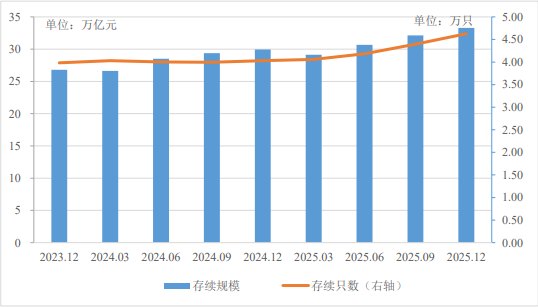
Core Insights - The banking wealth management market in China reached a total scale of 33.29 trillion yuan by the end of 2025, reflecting an 11.15% increase from the beginning of the year [1][4][3] - A total of 3.34 million new wealth management products were launched in 2025, raising 76.33 trillion yuan in funds [1][3] - The number of investors holding wealth management products grew to 143 million, a 14.37% increase year-on-year, with individual investors accounting for the majority [1][13] Market Size and Growth - By the end of 2025, the total number of wealth management products in existence was 46,300, an increase of 14.89% from the start of the year [3] - The wealth management market's scale is expected to continue expanding, with projections suggesting an increase of around 3 trillion yuan in 2026, potentially reaching between 36 trillion and 37 trillion yuan by year-end [4][6] Investor Demographics - The number of individual investors reached 141 million, making up 98.64% of total investors, while institutional investors numbered 1.94 million [13][14] - The risk preference among individual investors showed a shift, with an increase in both conservative and aggressive risk profiles [14][17] Product Performance and Returns - Wealth management products generated a total return of 730.3 billion yuan for investors in 2025, a 2.87% increase from the previous year [1][19] - The average yield of wealth management products fell to 1.98%, down 0.67 percentage points from 2024, primarily due to a high proportion of fixed-income products [21][22] Asset Allocation - Fixed-income products dominated the asset allocation, accounting for 97.09% of the total scale, with only a small portion allocated to mixed, equity, and other asset types [21][22] - The allocation to public funds increased, with assets directed towards public funds rising to 5.1%, up 2.2 percentage points from the previous year [10][11] Distribution Channels - Wealth management companies expanded their distribution channels, with 31 out of 32 companies offering products through banks other than their parent institutions [17]
银行黄金类产品成“吸金王”
Bei Jing Shang Bao· 2026-01-25 17:18
Core Insights - The surge in gold prices, nearing $5000 per ounce, has led to a significant increase in demand for gold-related financial products from banks, which are responding to the pressure of maturing deposits [1][3][8] Group 1: Gold Price Trends - London gold prices have seen a dramatic rise, with a maximum price of $4990.17 per ounce, marking a 64.56% increase in 2025 and over 15% in 2026 [3] - The ongoing bullish trend in gold prices is driving banks to rapidly launch gold-related financial products [3][8] Group 2: Bank Product Offerings - Multiple banks, including Bank of China, China Merchants Bank, and others, are launching gold structured deposits with investment thresholds starting at 10,000 yuan and annualized returns ranging from 0.5% to 3.55% [3][4] - Banks are diversifying their product strategies, with some offering both bullish and bearish structured products to cater to different investor sentiments [4][5] Group 3: Investor Strategies - Investors are advised to choose structured deposits for capital safety and potential returns, while "gold+" products, which do not guarantee capital protection, are suitable for those willing to accept higher risks for potentially greater returns [7] - The current market environment suggests that conservative investors should prioritize structured deposits, while more aggressive investors may consider "gold+" products as part of their asset allocation [7] Group 4: Market Dynamics and Future Outlook - The current surge in gold-related products is not only a response to rising gold prices but also a strategic move by banks to manage the impending maturity of a significant volume of fixed-term deposits, estimated at 45-50 trillion yuan in 2026 [8][9] - The sustainability of this "investment feast" will depend on future gold price movements, with potential adjustments in product design to mitigate risks if prices stabilize or decline [9]